

Key Takeaways
Do the hard thinking that earns simplicity beyond easy answers
Complex problems have many causes. Peck’s central argument is that personal and social harm often begins when people mistake a partial explanation for the whole truth. He calls this simplism: reducing a complicated reality to one cause, one label, or one tidy rule. Better thinking looks for what has been omitted and can hold apparently opposing truths together. Peck uses the term overdetermination for the idea that important events usually have multiple contributing causes.
Integrate before you conclude. When a stockbroker attributed Los Angeles riots solely to declining family values, Peck answered with a broader account that included history, economic hardship, racism, and political conditions. The lesson is not that every explanation is equally good, but that a satisfying story is not necessarily a sufficient one. Complexity may be uncomfortable, yet it makes judgment more honest.
What's valuable here is the distinction between earned simplicity and premature certainty. Complex systems often produce outcomes through interacting causes, so single-cause stories can misdirect both blame and remedies. Yet complexity can also become a refuge from judgment: listing many contributing factors does not mean each factor matters equally. The practical test is whether an explanation helps identify evidence, responsibility, and possible action. Peck’s approach invites a wider view without requiring endless indecision.
Slow down, listen actively, and test what your assumptions leave out
Thinking takes time. Peck argues that people often expect serious problems to yield to quick answers, then neglect the reflection those problems require. A patient complained for years about the drive to therapy while refusing to try a shorter route. When they finally measured both routes, the shortcut saved five minutes each way. His resistance was not really about travel time. Changing a familiar routine was the harder issue.
Listening is active work. Peck describes bracketing as temporarily setting aside one’s own assumptions and agenda to understand another person’s experience. It requires attention, not just silence. He found that patients sometimes improved simply because someone listened carefully. The same discipline applies to one’s own reasoning: pause, check the facts, and notice when pride, fear, or convenience is supplying the conclusion.
The shortcut story makes avoidance visible in a way abstract advice rarely can: a small, measurable inconvenience concealed a much larger resistance to change. Active listening offers a related discipline because it interrupts the reflex to fit another person’s words into a pre-existing story. This does not mean suspending judgment indefinitely or treating every account as accurate. It means understanding first, then evaluating. In workplaces and families, that sequence can prevent disagreement from turning into misdiagnosis.
Bring hidden motives into awareness before they injure someone
Unacknowledged wrongdoing spreads. Peck uses the Shadow to mean parts of the self people refuse to recognize, including selfish motives and failures. He distinguishes ordinary sin, the inevitable shortfall between conduct and one’s best standards, from evil, which he associates with persistent denial and the displacement of blame onto others. In his account of a teenager whose brother died by suicide, the parents gave the boy the same type of rifle used in the death, despite his depression. They defended the choice as a practical gift.
Responsibility still matters. Peck reads the parents’ refusal to face the likely impact as more than an ordinary mistake. His broader warning is that intelligence and respectable status do not prevent harm when people protect their self-image instead of examining consequences. Naming a failure does not erase it, but it can interrupt the habit of repeating it.
The case highlights how harm can be carried by ordinary decisions, not only dramatic acts of cruelty. It also shows why motive and impact must be examined together: good intentions do not guarantee safe outcomes, while a harmful outcome alone does not prove malicious intent. Peck’s moral vocabulary is forceful, but diagnosing another person as evil carries real risks. The useful first step is more modest and testable: ask what evidence was ignored, who was harmed, and whether accountability follows.
Treat adulthood as a chance to unlearn what childhood installed
Growth requires revision. Peck rejects the idea that personality is permanently fixed in childhood. Early experience shapes people, but adults can still learn deliberately, especially when they are willing to question old habits and tolerate the discomfort of change. He describes a period of psychological depression that can arise when an old way of living no longer works and a new one still feels frightening.
A chess game exposed the choice. Peck wanted to connect with his teenage daughter, but kept insisting on finishing a slow game even as she pleaded for bed. He eventually saw that winning had mattered more to him than the relationship he hoped to strengthen. Giving up some competitiveness was not a denial of his character; it was an adjustment to what the moment required. Peck calls the capacity to observe feelings and choose how to respond a transcendent ego.
This account makes change concrete: the task is not to condemn a trait, but to notice when it has stopped serving the relationship or purpose at hand. That resembles learning in any skilled practice, where improvement often requires temporarily abandoning a familiar technique. Peck’s account of depression as part of transition can be illuminating, but it should not turn serious depression into a presumed sign of progress. Distress deserves care in its own right, even when it also accompanies meaningful change.
Love people by honoring their differences, not projecting your needs
Other people are not extensions. Peck describes narcissism as a failure to take another person’s separate needs seriously. He recalls noticing, as a teenager, that a conversation with a classmate had been organized almost entirely around impressing him. The realization began a long effort to attend to other people for their own sake. In marriage, Peck and his wife had to learn that treating each other as they themselves wanted to be treated was not enough. Care also required learning what the other actually wanted.
Value yourself without self-deception. Peck distinguishes self-love, which can include admitting mistakes while retaining a sense of worth, from self-esteem understood as needing to feel good about oneself at all times. This allows humility without self-erasure. The goal is neither self-absorption nor self-contempt, but a more accurate regard for oneself and others.
The movement from projection to curiosity is a powerful interpersonal shift. It helps explain why well-meant care can still feel controlling: the giver may be offering what would comfort them, not what the other person needs. At the same time, honoring difference does not require abandoning shared standards or tolerating abuse. Healthy relationships need both recognition of individuality and boundaries. Peck’s distinction between self-worth and a permanently positive self-image supports honest repair without making every mistake a verdict on the whole person.
Choose necessary pain over the avoidable misery of evasion
Not all suffering teaches. Peck calls unavoidable hardship tied to human life existential suffering. Loss, growing up, and accepting limits may hurt while still requiring a response that supports growth. He calls unnecessary suffering neurotic suffering: distress maintained by avoidance, distorted beliefs, or repeated self-defeating behavior. His idea of smart selfishness is choosing the constructive difficulty over the short-term relief that keeps a person stuck.
Responsibility needs balance. Peck describes the neurotic as taking too much responsibility and the person with a character disorder as taking too little. Neither extreme allows clear choice. The same discernment applies to vocation, which he treats as a calling that may or may not match one’s paid job. A talented Army sergeant who painted beautifully dismissed art as only a hobby, illustrating how fear can disguise itself as practicality.
The distinction helps separate pain that accompanies a real task from pain sustained by avoidance. It can clarify decisions about work, relationships, and responsibility, where short-term comfort often competes with longer-term integrity. The danger is that people may label their own suffering constructive simply because they value endurance. Pain is not automatically ennobling, and external constraints can limit options. A useful question is whether a difficult experience is expanding agency and understanding, or merely reproducing harm that could be changed.
Let aging and death strip away control, not dignity
Mortality changes the scale. Peck argues that confronting death can loosen self-importance and focus attention on what matters. He describes an older woman who became nearly blind and initially experienced needing help as an assault on her independence. In therapy, she began to consider whether accepting assistance could be part of a meaningful spiritual life, rather than proof that her life had lost value.
Acceptance is not a shortcut. Peck draws on a five-part account of responses to dying: denial, anger, bargaining, depression, and acceptance. He treats these as possible movements through grief and change, not a guarantee that everyone follows the same order. He argues against denying mortality or treating death as only a medical inconvenience. For him, preparing for death means facing losses honestly and making room for humility, connection, and, for believers, faith.
Peck’s emphasis on preparation gives aging a role beyond decline, and his patient’s story shows how accepting help can preserve connection rather than erase personhood. Still, spiritual meaning should not be imposed on disability, and dependence is not a moral failure that must be reframed as a lesson. Medical care, pain relief, autonomy, and meaning can all matter at once. The strongest version of Peck’s point is that facing mortality honestly may deepen life, not that suffering itself should be romanticized.
Design organizations for accountability, flexible structure, and honest connection
People work inside systems. Peck treats families, workplaces, and communities as interconnected systems: changing one part affects others. He defines civility as ethical behavior undertaken with awareness of its organizational effects, not mere politeness. Real community, in his usage, involves communication honest enough to include disagreement and vulnerability, rather than people simply sharing a building or institution.
Structure can support trust. As an Army psychiatrist, Peck tried to lead a department without much hierarchy. Morale later declined because staff members were unsure where they stood. He assigned offices and clarified roles, and the group’s morale improved. The lesson is not that strict hierarchy is always best, but that people need enough structure to know who is responsible for what. Boundaries and accountability work best when they permit communication rather than seal it off.
The account resists two tempting extremes: assuming that kindness means avoiding authority, and assuming that authority requires rigidity. Organizational research often treats role clarity and psychological safety as complementary conditions. Peck’s example captures that balance intuitively: employees need both a dependable structure and room to speak honestly. His definition of civility also raises a demanding question for leaders: not only whether an action is courteous, but whether the system makes its consequences visible and distributes responsibility fairly.
Take responsibility for society without pretending you can carry everything
Good and evil coexist. Peck refuses both despair and a rosy view of society. He points to institutional racism, poverty, and abuse while also noting changes such as stronger child-protection efforts and growing attention to human rights. His point is that seeing harm clearly need not mean believing improvement is impossible. Social wrongdoing can become normalized when institutions divide tasks so narrowly that no one feels responsible for the whole.
Choose a workable scale. Peck urges people to act where they can, while admitting that nobody can study or repair every problem. Rosa Parks’s refusal to surrender her bus seat became part of a longer collective struggle; one person’s act mattered, but it was not the whole movement. Civic responsibility can mean local service, speaking up, voting, or giving resources. The challenge is to act without confusing responsibility with omnipotence.
This is a useful antidote to both spectator cynicism and the fantasy of personal rescue. Collective problems require institutions and coordinated action, yet institutions can diffuse responsibility until everyone is a bystander. Local action makes participation possible, while global awareness guards against mistaking one’s neighborhood for the whole world. The tension is real: choosing a manageable sphere can become an excuse to ignore distant suffering. A durable civic practice needs both limits and periodic reconsideration of what those limits leave unseen.
Let reason and faith correct each other without claiming certainty
Keep inquiry open. Peck argues that measurement is powerful but cannot answer every question of meaning. He distinguishes spirituality, a search for relationship with an unseen order, from religion, an organized system of belief and membership. He also sketches spiritual development as movement from impulsive or rule-bound belief, through skepticism, toward a more mature comfort with mystery. These are his interpretive categories, not a scientific test of anyone’s worth.
Make room for the unplanned. Peck calls grace the pattern of unexpected events that support life or growth, and links it to gratitude. He does not present such experiences as laboratory proof of God. His account of receiving an insistent inner nudge to read the Book of Daniel shows how he interprets an unanticipated idea as guidance. Kenosis, or self-emptying, names the effort to loosen the ego’s demand for control and become receptive to a reality larger than oneself.
Peck’s most persuasive epistemic move is to distinguish scientific limits from scientific failure: not every meaningful question is measurable, but unmeasurable experiences do not thereby establish a supernatural cause. His spiritual language can help believers interpret uncertainty without pretending it has disappeared. The same discipline benefits skeptics, who need not dismiss every experience as meaningless. Still, an inner voice or coincidence can reflect ordinary cognition as well as divine guidance. Peck’s emphasis on humility is essential precisely because interpretation remains uncertain.
Analysis
This book is a late-career synthesis organized around a demanding sequence: think more carefully, become more conscious of what thinking avoids, learn through revision, then carry that discipline into relationships, institutions, citizenship, and spiritual life. Its unifying claim is not simply that life is hard. It is that evasion of complexity produces avoidable harm, while sustained attention can make action more responsible. Peck’s clinical stories give the argument traction: the wasted drive exposes resistance to change; the chess game reveals a father’s misplaced priority; the management anecdote shows how benevolent intentions can fail when a group lacks structure.
The book’s distinctive strength is its refusal to isolate private virtue from public systems. A person’s habits of denial, entitlement, or listening shape families and organizations, while organizational norms can reward the very simplifications individuals must resist. This makes the work more socially ambitious than a conventional self-help guide. Its spiritual argument also rests on a disciplined tension between empiricism and faith. Peck acknowledges that improbable events and private revelations do not amount to conventional proof, even as he treats them as evidence in a broader personal interpretation of reality.
That tension is productive but not always resolved. Peck sometimes presents psychological categories as more comprehensive than the evidence in the text can support, especially when he describes psychiatric disorders primarily as failures of thinking. Trauma, neurobiology, and material circumstances can constrain reflection without making a person simply unwilling to think. His references to brain hemispheres and gendered thinking also reflect claims that contemporary neuroscience treats with substantial caution. These limits do not undo the book’s practical insight: reflection, accountability, and openness to correction matter. They do argue for separating that insight from its more sweeping diagnoses. The most durable reading is neither literal acceptance of every claim nor dismissal of the whole synthesis, but a practice of examining experience while staying modest about what it proves.
Review Summary
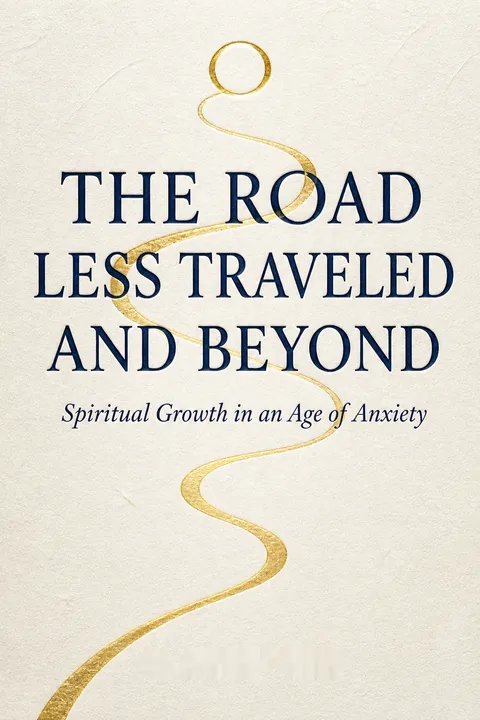
The Road Less Traveled And Beyond receives mixed reviews, with an average rating of 4.12/5. Many readers find it insightful and life-changing, praising Peck's approach to spiritual growth, discipline, and love. Some appreciate his blend of psychology and spirituality, while others criticize his religious focus and self-referencing. Positive reviewers highlight the book's practical advice on personal development and coping with life's challenges. Critics argue that it lacks depth in certain areas and can be repetitive. Overall, readers value Peck's unique perspective on human behavior and spiritual growth.
People Also Read









Glossary
Simplism
Oversimplifying complex realityPeck’s term for reducing complicated situations to easy answers, single causes, rigid labels, or assumptions that go unexamined. Simplism can feel efficient, but it hides relevant evidence and encourages poor decisions. He contrasts it with a simpler understanding reached after carefully considering complexity.
overdetermination
Multiple causes shape outcomesThe idea that significant events usually arise from several interacting causes rather than one sufficient explanation. Peck uses it to argue that responsible judgment must consider different dimensions of a situation, including history, social conditions, and individual choices. It is a defense of causal breadth, not a claim that all causes matter equally.
bracketing
Temporarily setting assumptions asideA listening discipline in which a person temporarily sets aside personal prejudices, expectations, and desires to understand another person’s experience as fully as possible. Bracketing does not require permanent agreement or abandoning judgment. Its purpose is to make genuine understanding possible before responding.
the Shadow
Disowned parts of oneselfA Jungian term Peck uses for aspects of the self that a person would rather conceal or refuse to acknowledge, including failures, selfish motives, and morally troubling impulses. In Peck’s account, recognizing the Shadow can support responsibility and growth, while persistent denial may lead a person to blame or harm others.
existential suffering
Pain inherent in human lifePeck’s term for pain that comes with unavoidable features of existence, such as growing up, losing what matters, accepting limits, and facing aging or death. Such suffering is not automatically beneficial, but it cannot be removed simply through avoidance. Meeting it can create opportunities for learning and change.
neurotic suffering
Avoidable, self-perpetuating distressPeck’s term for emotional suffering that is not an unavoidable part of existence and is sustained by patterns that restrict life, such as distorted beliefs, phobias, or avoidance. He argues that it should be addressed rather than praised as inherently meaningful. The distinction is conceptual and should not substitute for professional assessment.
smart selfishness
Choosing growth-serving difficultyPeck’s phrase for caring about one’s own well-being by distinguishing useful, unavoidable difficulty from unnecessary distress. Smart selfishness accepts effort or emotional pain when it supports learning, responsibility, or fuller living, while resisting suffering that only narrows a person’s life. It contrasts with trying to avoid all discomfort.
transcendent ego
Flexible command of emotionsPeck’s term for a mature capacity to recognize one’s thoughts and feelings while choosing how and when to express them. It builds on self-observation and allows emotional responses to be managed without denying or repressing them. The person can act with flexibility rather than obeying each passing impulse.
the hole in the mind
Blindness to group systemsPeck’s phrase for people’s limited awareness of the organizations and systems in which they participate. Individuals may understand their own work while overlooking how their actions affect a family, workplace, or society. This lack of group awareness can sustain dysfunction because people fail to see shared responsibility and interdependence.
kenosis
Spiritual self-emptyingA theological term Peck uses for loosening the ego’s dominance through humility and openness. Kenosis does not mean erasing personality or becoming incapable of action. It means relinquishing the demand to control everything so that a person can become receptive to spiritual growth and to purposes beyond personal self-interest.
grace
Unexpected help toward growthPeck uses grace for experiences or patterns of events that seem to support human life and spiritual development, often in ways that are improbable or outside conscious control. He interprets such events as signs of divine care, while acknowledging that they do not constitute conventional scientific proof. Recognizing grace, in his account, can foster gratitude.
FAQ
What's The Road Less Traveled And Beyond about?
- Exploration of Spiritual Growth: The book examines spiritual growth in a modern world filled with anxiety, building on themes from Peck's earlier work, The Road Less Traveled.
- Three Main Parts: It is divided into sections that address the complexity of life, the importance of embracing challenges, and the journey toward greater consciousness.
- Integration of Psychology and Spirituality: Peck combines psychological insights with spiritual teachings, emphasizing that emotional maturity and spiritual growth are interconnected.
Why should I read The Road Less Traveled And Beyond?
- Insightful Perspective: The book offers profound insights into human existence, encouraging readers to confront fears and embrace personal growth.
- Practical Guidance: It provides practical advice on navigating personal choices, relationships, and societal issues, emphasizing critical thinking and conscious decision-making.
- Timeless Themes: Themes of love, responsibility, and the quest for meaning resonate with anyone seeking deeper understanding in their lives.
What are the key takeaways of The Road Less Traveled And Beyond?
- Embrace Complexity: Peck stresses the importance of embracing life's complexity rather than seeking simplistic answers.
- Consciousness and Choice: Increasing awareness allows for better decision-making, with consciousness preceding choice.
- The Role of Suffering: Suffering is seen as a necessary part of life that can lead to growth and understanding.
What are the best quotes from The Road Less Traveled And Beyond and what do they mean?
- "Life is difficult.": This sets the tone for the book, emphasizing that accepting life's challenges is crucial for growth.
- "The will to grow is in essence the same phenomenon as love.": It connects love and growth, suggesting that true love involves a commitment to development.
- "To think well is a radical activity.": Peck highlights the importance of critical thinking in navigating life's complexities.
How does M. Scott Peck define love in The Road Less Traveled And Beyond?
- Love as Extension: Defined as "the will to extend oneself for the purpose of nurturing one's own or another's spiritual growth."
- Complexity of Love: Explores the balance between self-love and love for others, emphasizing that one must value oneself to truly love others.
- Tough Love: Discusses making difficult choices for the benefit of others, sometimes requiring setting boundaries and making sacrifices.
What is the concept of "simplism" in The Road Less Traveled And Beyond?
- Definition of Simplism: Refers to the tendency to oversimplify complex issues, leading to misguided beliefs and actions.
- Impact on Society: Simplism contributes to societal problems like prejudice and intolerance by promoting stereotypes and assumptions.
- Crusade Against Simplism: Peck urges readers to embrace complexity and engage in thoughtful analysis to overcome simplism.
How does The Road Less Traveled And Beyond address the concept of consciousness?
- Consciousness as Awareness: Defined as the awareness of one's thoughts and feelings, crucial for personal growth.
- Levels of Consciousness: Discusses different levels, from basic awareness to deeper self-understanding, allowing for informed choices.
- Connection to Spirituality: Links consciousness to spirituality, suggesting that greater awareness leads to a closer relationship with the divine.
What role does suffering play in personal growth according to The Road Less Traveled And Beyond?
- Suffering as a Teacher: Suffering is integral to life and can lead to significant personal growth.
- Existential vs. Neurotic Suffering: Distinguishes between necessary existential suffering and self-imposed neurotic suffering.
- Embracing Pain: Encourages embracing suffering as a pathway to deeper understanding and resilience.
What is the concept of grace in The Road Less Traveled And Beyond?
- Definition of Grace: Described as "the gift of finding valuable or agreeable things not sought for," an unearned blessing.
- Connection to Gratitude: Recognizing grace leads to gratitude, fostering happiness and positive contributions to the world.
- Role in Personal Growth: Experiencing grace is essential for spiritual development, encouraging openness to the unexpected.
How does The Road Less Traveled And Beyond address the concept of community?
- Community as Healing: True community is essential for healing and personal growth, fostering an environment where individuals can thrive.
- Stages of Community Development: Outlines stages from pseudocommunity to true community, representing different levels of understanding and connection.
- Importance of Communication: Effective communication is crucial for building community, encouraging open dialogue and embracing differences.
What are the stages of spiritual growth described in The Road Less Traveled And Beyond?
- Stage I: Chaotic, Antisocial: Characterized by a lack of principles and disconnection from community.
- Stage II: Formal, Institutional: Involves adherence to established beliefs without questioning, offering structure but lacking depth.
- Stage III: Skeptic, Individual: Focuses on questioning traditional beliefs, often adopting a secular worldview.
- Stage IV: Mystical, Communal: Represents a mature understanding of spirituality, embracing mystery and interconnectedness.
How does The Road Less Traveled And Beyond define the relationship between the ego and the soul?
- Ego as the Governing Part: Governs self-image and behavior, often focused on external validation.
- Soul as the Core of Being: Represents the true essence and potential for growth, deeper than the ego.
- Interaction Between Ego and Soul: A healthy spiritual life involves nurturing the soul while allowing the ego to evolve positively.
About the Author
Other books by M. Scott Peck



Download PDF
Download EPUB
.epub digital book format is ideal for reading ebooks on phones, tablets, and e-readers.








