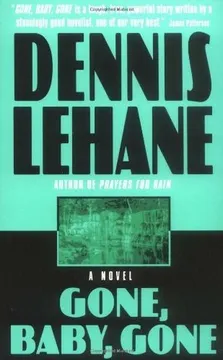


Plot Summary
Prologue
Port Mesa, Texas, in 1998: Rachel Smith tends bar in a rough fishing town, keeping men at a distance with a gun and a look that warns them not to test her. Her little blond boy clings to her, and an old local watches them play in the Gulf, struck by the fierce tenderness between them.
Rachel’s past remains hidden, but her devotion is plain. When the men in the bar debate what is worth dying for, she answers that her family is worth killing for, without hesitation.
The prologue places care beside danger before the Boston story begins. Rachel’s weapon and guarded manner suggest that tenderness has not made her safe; it has made her responsible for something she refuses to lose. The boy’s attachment gives the coming investigation an image of what Patrick and Angie cannot know about Amanda: what a child looks like when she feels protected. The framing also complicates the idea that devotion is automatically innocent. Rachel’s absolute promise to defend her family is loving, but it carries the same potential for violence that drives the novel’s adults to claim authority over children.
The Empty Bed
Four-year-old Amanda McCready has vanished from her Dorchester home, and the city has spent three days searching without finding a trace. Her mother, Helene, says she left Amanda in bed while she visited a neighbor, but the unlocked door and Helene’s failure to join the search have made her a target of public suspicion.
Amanda’s aunt Beatrice and uncle Lionel ask private investigators Patrick Kenzie and Angie Gennaro to help. Patrick and Angie doubt that two more investigators can improve on a police search already consuming the city. Beatrice refuses to accept their dismissal, insisting that her niece deserves every possible effort. Their insistence forces Patrick and Angie to confront why they have avoided dangerous cases.
The disappearance begins as a case with an apparent vacuum at its center: Amanda is missing, while adults fill the space with publicity, suspicion, and explanations. Beatrice’s persistence gives the investigators a moral entry point, but it does not settle what help means. Patrick and Angie have built a safer practice after earlier violence, and their hesitation is both self-protection and recognition that a missing child can expose them to consequences they cannot control. Their eventual involvement starts not from confidence in their abilities, but from accepting that uncertainty itself is no excuse to refuse the search.
The Mother on Television
At Lionel and Beatrice’s home, Patrick and Angie meet Helene as she watches a news replay of herself appealing for Amanda’s return. She drinks beer, smokes, and keeps her attention on the television even as her family tries to question her. When they finally speak, Helene describes Amanda as endlessly cheerful, but neighbors and relatives later recall a quiet child who often sat alone and seemed accustomed to being ignored.
Lieutenant Jack Doyle, who leads the police child-crimes unit, warns the detectives not to obstruct the search or exploit the family. Patrick and Angie leave without a lead, yet Amanda’s bare, sparse bedroom and Helene’s detachment make the case harder to dismiss as a straightforward abduction.
Helene’s televised grief and private indifference are not simply two versions of the same performance. Public attention briefly gives her a role, while ordinary responsibility asks for sustained attention she has rarely shown. The contradiction matters because the investigation initially treats a parent’s emotional display as evidence, even though neither visible grief nor its absence can prove what happened. Amanda’s room supplies a more unsettling measure: not evidence of a crime, but signs of a child whose needs may have gone unnoticed. Doyle’s warning introduces the institutional boundary that the investigators will repeatedly cross.
A Bar With No Answers
Patrick and Angie visit the Filmore Tap, where Helene is known to drink and where drug dealers gather. The patrons offer little about Amanda, then turn hostile when Angie refuses the bartender Big Dave’s sexual advances.
A man blocks the exit, and Patrick draws his pistol before the room can close around them. Big Dave finally admits Helene had not spent the disappearance night at her friend Dottie’s apartment. She had been at the bar with Dottie and Ray Likanski, a local lowlife who helped his father keep quiet.
Two Crimes Against Children detectives, Nick Raftopoulos, called Poole, and Remy Broussard, arrive after Ray reports the armed confrontation. They confirm the official search has produced no reliable lead and share photographs of three missing sex offenders.
The Filmore scene makes threat physical before it makes the case clearer. Angie’s refusal to accommodate Big Dave’s entitlement provokes a group response, while Patrick’s gun interrupts the men’s attempt to control the room. The encounter exposes how easily an investigation can become another danger for the people conducting it, especially when a woman’s independence is treated as an invitation to punish her. Yet the bar also yields a concrete discrepancy in Helene’s account. Poole and Broussard’s arrival shifts the story from a private inquiry into a fragile partnership between civilians and police, each side wary of the other’s methods.
A Child Almost Unseen
At Amanda’s T-ball field, Patrick and Angie ask coaches and parents what the missing girl was like. They hear that Amanda rarely showed excitement, sat quietly when adults left her with other families, and did not behave like the smiling, lively child Helene described on television.
One mother remembers Helene dropping Amanda off for hours without warning. The child’s seeming passivity now looks less like temperament than adaptation to neglect.
Angie, still shaken by the Filmore men’s threat, recognizes that Amanda has no dependable advocate if the adults around her fail her. She commits to finding the girl even if the search leads back to Helene. Patrick agrees, though he fears that another violent case will reopen the wounds left by serial killer Gerry Glynn.
The parents’ memories revise the case without turning Amanda into a diagnostic puzzle. Her quietness may reflect temperament, neglect, or both; what matters is that adults have mistaken a low-demand child for an easy one. A child who does not protest can be overlooked precisely because she creates little inconvenience. Angie’s decision to continue is therefore not only a reaction to danger at the Filmore. She understands that the search is also about a child whose silence has already been misread. Patrick’s reluctance shows the personal cost of returning to violence, even when withdrawal would feel like a betrayal.
The Name on the Tape
With no useful witness, Angie obtains television recordings of the coverage and spots Chris Mullen repeatedly in the early footage near Amanda’s building. Mullen works for imprisoned drug boss Cheese Olamon, making his presence more than a coincidence.
Confronted by Patrick, Angie, and the police, Helene admits she has known Cheese and Mullen for years and has occasionally carried drugs for them. She reveals that she and Ray stole two hundred thousand dollars from Cheese shortly before his arrest.
On the night Amanda disappeared, Helene says, she and Ray escaped a police raid and stopped at a house in Charlestown. Her account is hazy, but she remembers Amanda being scratched by a cat there. The cash theft gives the disappearance a dangerous possible motive.
The videotapes turn public spectacle into investigative evidence: the news crews have recorded a detail they did not know to look for. Mullen’s appearance changes the likely scale of the case, linking a child’s disappearance to an organized criminal network. Helene’s confession also shows how her self-protective habits create practical danger for Amanda. Yet her drug history cannot by itself establish culpability in the disappearance. The narrative keeps motive and proof separate, compelling the investigators to pursue a plausible connection without treating a damaged parent as a guilty one.
Garfield Marks the Hideout
Helene remembers that the Charlestown house stood at the end of an alley beside a rusting car with a Garfield decal. Patrick, Angie, Poole, and Broussard search the neighborhood until they find the car and enter the house. Inside, cats have fed on the body of David Martin; his girlfriend Kimmie Niehaus lies nearby, tortured and murdered.
The killers have searched the rooms, but Angie notices the television has not been opened. Outside, Helene recalls that Ray’s shoes were clean when they left, suggesting he and Martin had been in the yard. The police find a handwritten ransom message hidden on Kimmie and a fresh mound of dirt. Beneath it lies the stolen money, still buried, making a child-for-cash exchange seem likely.
A trivial cultural detail becomes a locator: the dated Garfield decal survives when Helene’s memory cannot supply an address. The discovery of Martin and Niehaus exposes the cost of treating criminal neighborhoods as places where violence is expected and therefore unremarkable. Their neighbors may have heard a gunshot and found reasons not to name it. Meanwhile, the money and ransom message appear to organize the clues into a familiar transaction. The investigators’ decision to follow that apparent logic is understandable, but the grave, the bodies, and the concealed cash also warn that the story has already been shaped by people willing to kill.
Cheese Rejects the Trade
Poole and Broussard propose quietly returning the two hundred thousand dollars in exchange for Amanda, keeping federal authorities out of the negotiation. Patrick warns that Cheese may value his reputation more than the money, but the plan proceeds.
At Concord Prison, Cheese denies knowing where Amanda is and refuses to trust a deal with police. His right-hand men, Mullen and Pharaoh Gutierrez, are under surveillance, and the detectives soon see the supposed rivals meet warmly in South Boston. Their new alliance suggests they may be preparing to take over Cheese’s organization.
Lieutenant Doyle learns the police have withheld evidence and authorizes a large, unofficially fragile operation at Granite Rail Quarry. The callers demand four specific people bring the money, ensuring Patrick and Angie are drawn into the exchange.
The attempted bargain rests on a dangerous assumption: that the money can make a criminal behave predictably. Cheese’s refusal reveals that the conflict is not just financial. His identity is built around never appearing to be cheated, so accepting a police-designed exchange could be a deeper loss than the cash. Mullen and Gutierrez’s sudden alliance adds a second power struggle, but the investigators cannot tell whether it explains the kidnapping or merely runs alongside it. Doyle’s authorization preserves a chance to recover Amanda while creating institutional liability. Each participant now has a different definition of success, and the child remains the least powerful person in the negotiation.
The Quarry Takes the Money
At Granite Rail Quarry, Poole collapses on the steep approach, coughing blood, and insists the others continue without him. Patrick and Angie climb to the water’s edge while Broussard follows a separate instruction. They find Amanda’s doll, Pea, floating below the cliff.
Angie dives to retrieve it as shooters open fire from the opposite shore and helicopters flood the quarry with light. Broussard is pinned down; the police return fire, but no child appears. At the road below, Mullen and Gutierrez are found shot dead in their Lexus.
The ransom bag is empty, and the gunmen vanish despite a large police perimeter. Bubba Rogowski, who was meant to provide backup, later reports that an attacker knocked him unconscious before he reached the hills.
The doll changes the quarry from a location for a planned exchange into a possible grave. Angie’s dive is an act of hope, but it cannot answer whether Amanda is in the water, and the rescue operation itself threatens to make the search more dangerous. The empty bag and dead dealers dismantle the assumed transaction without revealing who controlled it. Even the police force, overwhelming in numbers, cannot secure the terrain or account for every participant. Poole’s collapse and Bubba’s assault expose the human cost of a plan built on incomplete information. The scene ends with evidence of violence, but not knowledge of the child’s fate.
Another Missing Boy
A month-long search of the quarry finds nothing, and the case cools as winter sets in. Poole returns to duty but is demoted; Broussard loses his detective rank and is sent to the motor pool. Ray remains missing, and Beatrice worries that without a body Amanda may eventually disappear from memory as well. In April, eight-year-old Samuel Pietro vanishes from a playground, renewing Angie’s fixation on the unsolved case.
Patrick accompanies Bubba on a weapons sale in Germantown and recognizes the buyer as Leon Trett, a suspected child molester whose wife, Roberta, is also known to police. Leon wears a small Red Sox cap. Angie checks Samuel’s missing-person details and confirms that the boy vanished wearing one just like it.
The passage of winter does not resolve the first disappearance; it converts uncertainty into routine. Amanda’s photograph fades on poles and in public attention, while Beatrice fears that memory itself will fail to preserve the child’s existence. Samuel’s disappearance breaks that uneasy quiet and makes Angie’s persistence newly consequential. The cap is a small clue, but it joins a known offender, a recent missing child, and a region near the earlier search. Patrick’s accidental encounter with Leon also shows how criminal networks and private investigation overlap in his life. The case returns not through a planned breakthrough, but through a second child in danger.
The House Behind the Garden
Patrick, Angie, Poole, and Broussard approach the Tretts’ house, hoping the Red Sox cap connects Leon to Samuel. Poole knocks at the front while Broussard circles toward the back. A burst of automatic gunfire tears through the doorway, throwing Poole onto the porch and badly wounding him. Patrick and Angie return fire; Patrick enters the house and finds Leon bleeding, then shoots Corwin Earle when he threatens him with a crossbow.
Roberta kills Leon during the confusion, and Broussard kills Roberta before she can reach Patrick. In an upstairs bathroom, Patrick finds Samuel’s mutilated body. Broussard discovers two more children’s skeletons in the basement. Poole is rushed to hospital, where he later dies from his injuries.
The Trett house turns a lead into a confrontation with the limits of rescue. The adults who could have answered questions are armed, and the child the investigators hoped to save is already dead. Patrick’s violence is tactical in the moment, but the discovery leaves him unable to separate necessary action from moral injury. The additional skeletons make Samuel’s death part of a pattern rather than an isolated atrocity. Poole’s fatal wound also removes the investigator who had insisted on prioritizing a child’s return over procedural advantage. The house’s cared-for garden, outside its ugliness, sharpens the contrast between cultivated appearances and concealed harm.
A Cop's Story Frays
After Samuel’s death, Patrick and Broussard drink together, and Broussard describes having planted evidence to imprison a violent rapist. Patrick later recognizes that Broussard had lied about Ray Likanski being Poole’s informant. At a police football game, Broussard warns Patrick to forget what he has heard.
When Patrick and Angie go to see Poole, they learn he has died; in the hospital garage, federal agent Neal Ryerson identifies Pharaoh Gutierrez as his long-term informant, not a DEA agent, and suspects Broussard arranged the quarry killings. Patrick then sees Broussard’s wife, Rachel, with a small blond boy. Oscar confirms the couple could not have a child. The hidden son suggests Broussard has taken a child from an abusive home.
The mystery shifts from a criminal conspiracy to a question about the investigator’s own moral identity. Broussard’s confession of planted evidence shows that he has already chosen personal judgment over legal process, while his lie about Ray suggests the missing-child case contains more concealed history. Ryerson supplies institutional context, but not a complete explanation. The boy with Rachel gives Patrick a concrete reason to suspect Broussard has intervened in a child’s life before. This inference is emotionally tempting because it could make the detective a protector, yet it also warns that benevolent intent can become a private claim of ownership.
Lionel's Hidden Rescue
Patrick, Angie, and Ryerson confront Lionel after learning that he was involved in Amanda’s removal. Lionel explains that Helene repeatedly neglected his niece, once leaving her badly sunburned and treating her injuries with beer.
He feared Helene would take Amanda out of state, so he accepted Broussard’s plan to remove the girl and place her with Jack and Tricia Doyle, a couple who wanted to raise a child. Lionel carried Amanda from the apartment while Broussard waited in a car.
Mullen saw them and Cheese used that knowledge to force Broussard into retrieving the stolen money. As Lionel finishes, masked gunmen storm the bar. One is police detective John Pasquale; Broussard is the other. They try to kill the witnesses, but Ryerson and Patrick shoot back, and Broussard flees wounded.
Lionel’s confession changes the meaning of the disappearance without making it uncomplicated. He acted out of fear for Amanda, but chose secrecy rather than a legal process he believed could not protect her. Broussard’s plan offered a loving home and required the child’s former life to be erased. The resulting conspiracy is therefore neither a simple rescue nor a conventional kidnapping for profit. The masked attack forces that private moral dispute into public violence: Pasquale and Broussard attempt to silence the people who can expose their choices. Lionel’s fear of Helene may be justified, but his decision has also deprived others of the right to know where Amanda is.
Broussard's Last Account
Patrick follows Broussard’s blood trail to the roof of an abandoned warehouse. Broussard admits he arranged Amanda’s placement with the Doyles and orchestrated much of the violence to conceal it.
He used Ray to draw Helene away, killed Ray when the plan became compromised, and involved Pasquale in the murders of Mullen, Gutierrez, Martin, and Niehaus. He insists Poole never became a shooter, preserving the dead man’s boundary. Broussard also describes rescuing a neglected infant, Nicholas, and raising him with Rachel under forged records.
He refuses to tell Patrick where Amanda is because he fears Patrick will return her to Helene. After revealing that Rachel and Nicholas are safe, Broussard dies from his wounds, leaving Patrick to locate the Doyles himself.
Broussard’s final account makes his care and his crimes inseparable. He has rescued children from neglect, but has also decided that his judgment outranks law, family, and the children’s future consent. His distinction between rescuing a child and kidnapping one depends on who is doing the naming. The revelation about Nicholas gives his actions a history of compassion, but it cannot erase the killings he engineered or the threats he authorized. His insistence that Amanda remain hidden is emotionally intelligible and ethically coercive at once. Patrick inherits not a clean answer, but a decision about whether love can justify taking control of someone else’s life.
The Child Goes Home
Patrick, Angie, Oscar, and Devin find Jack and Tricia Doyle in their remote West Beckett home with Amanda. The child eats with Tricia, plays with the family bulldog, and leans into Jack with the ease of a loved daughter. Angie begs Patrick and the others not to take her away, convinced Helene will return Amanda to neglect.
Patrick argues that the Doyles have no right to decide a child belongs to them, especially after Jack helped conceal a kidnapping and violence. Devin calls the sheriff. When the officers arrive, Amanda fights Oscar as he carries her from the house, calling for Tricia. Jack weeps while Tricia clings to him. The investigators have recovered Amanda, but the rescue destroys the family she knows.
The climax refuses the comfort of a clearly benevolent choice. The Doyles appear to give Amanda affection, safety, and the attention she lacked, yet their home depends on a child being kept from her mother without lawful consent. Angie’s protest is not abstract sentiment; she has watched Amanda’s ease with the Doyles and fears the cost of returning her. Patrick instead insists that a child’s welfare cannot be decided by whoever claims to love her most. The sheriff’s arrival restores legal custody while inflicting immediate grief. Amanda’s fear makes visible the difference between recovering a missing child and repairing the life from which she was taken.
Epilogue
The televised reunion makes Helene and Amanda look joyful, but later Patrick finds Amanda quiet before the television while Helene prepares to leave her with Dottie again. Beatrice resents Patrick for helping expose Lionel, and Angie moves out after he chooses the law over her plea.
Jack Doyle, Tricia, and Lionel face federal charges; Remy Broussard and Poole are dead, while Ryerson survives with a damaged arm. Rachel disappears with Nicholas and the money. The Tretts’ cellar skeletons are identified as two other missing children. In Texas, Rachel lives under another name with her son and declares that she would kill to protect her family.
The aftermath denies the reader a clean reward for solving the case. Amanda is found, but the reunion does not transform Helene into a reliable parent or restore the years of neglect. Patrick’s decision protects a principle of lawful custody while costing him Angie and leaving him unsure whether he has protected the child in practice. Rachel’s survival with Nicholas offers a contrasting future, but her willingness to kill for family echoes the violence that defined Broussard’s version of rescue. The final question is not whether love matters, but who may act in its name and who bears the cost when care becomes authority.
Analysis
Gone, Baby, Gone builds its mystery around a question that cannot be answered by location alone: when a child is found, what does it mean to bring her home? The search first seems to concern an abduction for money, because Helene’s criminal associations and the buried cash supply a convincing motive. Each apparent explanation, however, exposes a different adult claim over Amanda. Helene’s biological bond coexists with neglect. Lionel’s love for his niece produces a secret removal. Broussard’s experience of abused children fuels a rescue that becomes kidnapping, murder, and the deliberate erasure of a child’s past. The book’s most disturbing insight is that harmful conduct can grow from care as readily as from greed, because conviction about another person’s welfare can disguise the desire to control them.
Patrick and Angie carry the ethical conflict into their relationship. Angie focuses on the child’s observable safety and attachment to the Doyles; Patrick fears that allowing private judgment to replace law creates a power no investigator can reliably limit. Neither position is emotionally sufficient. The rule of parental custody returns Amanda to a mother who may still neglect her, while the loving household she knows rests on secrecy and coercion. Patrick’s decision therefore produces no triumphant certainty. It protects the principle that no one may secretly assign a child to a new family, but the child experiences the decision as another separation imposed by adults.
The novel also treats memory as a form of care. Beatrice covers the city with Amanda’s image because she fears the missing child will fade from public thought. Patrick and Angie search records and video because every overlooked detail can matter. Yet attention cannot undo what happened, and evidence cannot resolve every moral question. The final reunion is televised as a happy ending, while Patrick’s later visit shows that the old neglect remains. The book’s title finally names both disappearance and the emotional distance between legal recovery and genuine rescue. Finding Amanda closes the case, but leaves the people who found her responsible for living with what their choices mean.
Review Summary
Gone, Baby, Gone is widely praised as a masterwork of crime noir, with most readers awarding it 4-5 stars. Reviewers consistently highlight Lehane's exceptional character development, morally complex storytelling, and emotionally devastating narrative surrounding the disappearance of four-year-old Amanda McCready. Many describe being profoundly shaken for days after finishing, particularly by themes of child neglect and abuse. The book's central ethical dilemma — whether doing the right thing can simultaneously be wrong — is frequently cited as its most powerful and lingering element. The 2007 Ben Affleck film adaptation is also widely praised.
People Also Read



Characters
Patrick Kenzie
Reluctant child finderA Dorchester private investigator whose instincts are sharpened by local knowledge, old loyalties, and a history of violence. Patrick prefers to believe people are difficult to judge, partly because judgment has led him to actions he cannot easily forget. His partnership and love for Angie give him a source of trust, but they also expose a deep difference between them over what justice should require. He is compassionate without being innocent about the world, and his habit of following uncomfortable clues makes him effective as well as vulnerable. Patrick’s central tension is between personal certainty and the limits he believes should govern anyone who takes power over another person.
Angie Gennaro
Unflinching investigatorPatrick’s partner and lover, Angie is a perceptive investigator whose confidence can harden into fierce moral conviction. She has survived violence and understands how neglect can injure a child without leaving visible marks. Amanda’s disappearance reaches her personally because she cannot accept that a child may be left without an advocate. Angie is loyal, sharp-tongued, and physically brave, but her compassion does not always make her patient with uncertainty. She wants Patrick to share both her conclusions and her willingness to defy convention when a vulnerable person appears to need protection. Their intimacy is deep, yet the case tests whether love can survive a fundamental disagreement about justice.
Amanda McCready
The missing childA four-year-old Dorchester girl whose disappearance drives the investigation. Adults describe Amanda in conflicting ways: Helene presents a cheerful child, while neighbors remember someone quiet, undemanding, and often left with other people. Her stillness makes her easy to overlook, which is part of what makes the search so disturbing. Amanda is not merely the object of competing adult claims; her visible comfort, fear, and attachments become evidence that no single adult account can contain her needs. The investigators’ challenge is to protect her without confusing their own ideas about a good life with her experience of one.
Helene McCready
Neglectful motherAmanda’s mother, Helene is impulsive, self-absorbed, and accustomed to managing hardship through distraction rather than responsibility. Alcohol, drugs, television, and unreliable relationships crowd out the steady attention a young child needs. Helene can display grief when the loss becomes visible, but she also resists confronting how her choices have shaped Amanda’s life. Her history makes her easy to condemn, yet she is not a simple villain: she has survived a damaging upbringing and lacks the emotional tools to build stability. The central question surrounding Helene is whether awareness of failure can become sustained change, or whether remorse remains another passing feeling.
Beatrice McCready
Amanda's relentless auntLionel’s wife and Amanda’s aunt, Beatrice is a determined organizer who refuses to let the city’s attention drift away from the missing girl. She canvasses neighborhoods, presses police and businesses for updates, and challenges Patrick and Angie when they hesitate. Her forcefulness comes from practical care rather than a desire to control the investigation. Beatrice sees Amanda as a child whose welfare matters independently of Helene’s reputation or the family’s finances. She also values the law and the stability of her own household, commitments that make the case’s later revelations especially painful. Her resolve gives the search a human center and a cost.
Lionel McCready
Protective uncleHelene’s older brother, Lionel works as a delivery driver and takes pride in being a steady husband and father. His childhood was marked by an alcoholic mother and an absent father, but he believes people can outgrow damage if they are given time and support. That belief shapes how he speaks about Helene and how he thinks about Amanda’s future. He is gentle and reluctant to condemn his sister, though his concern for the child can become more urgent than his respect for ordinary boundaries. Lionel’s presence connects family loyalty to the question of whether care sometimes demands intervention.
Remy Broussard
Charismatic police detectiveA polished Boston detective assigned to crimes against children, Broussard combines social ease with formidable investigative intelligence. He reads people quickly, notices small details, and can move between official procedure and the street with practiced confidence. His work has exposed him to repeated harm against children, leaving him impatient with systems that fail to protect them. He is ambitious and proud, but also capable of loyalty and tenderness. His marriage and private life reveal a longing for family that he rarely discusses openly. Broussard’s strongest quality, his willingness to act when institutions hesitate, is also the trait that makes his judgment dangerous.
Nick Raftopoulos
Wry veteran detectiveKnown as Poole, Raftopoulos is Broussard’s older partner in the child-crimes unit. His humor, eccentric habits, and unhurried manner soften a deeply serious commitment to finding missing children. He is experienced enough to distrust easy theories and practical enough to bend rules when he believes a child’s safety is at stake. His partnership with Broussard carries the intimacy of years spent working dangerous cases together. Beneath his jokes lies a man who has seen the aftermath of child abuse and cannot treat another missing child as an abstract statistic. He prizes loyalty, but also has boundaries he will not cross.
Jack Doyle
Child-crimes lieutenantThe head of Boston’s Crimes Against Children unit, Doyle is a compact, forceful administrator who has built his career around finding endangered children. His past experience as a frightened parent gives his work emotional urgency, while his authority makes him responsible for balancing procedure, manpower, and risk. He is blunt with Patrick and Angie but recognizes that their help may matter. Doyle’s presence represents an institution at its best and most compromised: dedicated to protecting children, yet shaped by rules and decisions made under pressure.
Tricia Doyle
Warm foster motherJack Doyle’s wife, Tricia is a caring, grounded woman whose warmth is evident in the way she attends to a child’s small needs. She and Jack have long wanted a family, and she brings patience and delight to ordinary domestic routines. Her affection is sincere, not theatrical, which makes the moral questions around her home difficult to reduce to good intentions versus bad ones. Tricia’s role highlights how deeply a child can attach to someone who offers safety and attention, even when the circumstances that brought them together are contested.
Neal Ryerson
Federal investigatorA Justice Department agent working organized crime, Ryerson approaches Patrick and Angie with confidence, humor, and a clear sense of institutional leverage. He knows how criminal networks operate and understands that police corruption can be harder to investigate than street crime. His polished manner masks a serious commitment to protecting informants and building cases that can survive scrutiny. Ryerson brings federal knowledge to a local investigation while remaining personally exposed to its violence.
Bubba Rogowski
Armed childhood friendPatrick’s enormous, dangerous friend, Bubba moves through Boston’s criminal world with the relaxed confidence of someone few people dare challenge. He is loyal to Patrick and Angie, and his capacity for violence is balanced by unexpected kindness toward familiar people. Bubba’s humor and bluntness make him seem simpler than he is; he notices when a situation does not add up and understands the cost of crossing powerful people. He provides protection, though his methods rarely fit comfortably within the law.
Cheese Olamon
Imprisoned drug bossA powerful Dorchester drug dealer, Cheese combines neighborhood generosity with a ruthless need to control his organization and reputation. His size, self-invented persona, and theatrical humor can make him seem absurd, but he understands loyalty and retaliation with cold precision. He remembers old humiliations and treats being cheated as a personal challenge. Cheese’s influence persists even from prison, where his interests shape the danger surrounding Amanda. He is neither a simple monster nor a secret benefactor; his occasional generosity does not undo the damage created by his business.
Chris Mullen
Cheese's calculating lieutenantMullen is a capable, careful operator in Cheese Olamon’s organization. Unlike many of the men around him, he is disciplined and observant, paying attention to routines, appearances, and opportunities. His polished clothes and measured manner conceal a willingness to use intimidation when challenged. Mullen’s position makes him a link between Helene’s drug history and the larger criminal world, but his motives are not immediately clear to the investigators.
Pharaoh Gutierrez
Ambitious crime lieutenantA stylish, tightly wound figure in Cheese’s organization, Gutierrez manages criminal business beyond Boston and cultivates an image of authority. He is ambitious and conscious of status, with an insecurity that can make him seem eager to prove his danger. His relationships within the organization shift the balance of power around the kidnapping. To Patrick and Angie, he represents how much of the criminal world remains hidden behind a confident public surface.
Leon Trett
Predatory fugitiveA convicted child molester who has disappeared from police view, Leon Trett is feared for his ability to evade accountability. He cultivates an unassuming, even pathetic manner that can obscure the danger he poses. His criminal history makes him a potential suspect when another child disappears, but the investigators initially possess only fragments of evidence. Leon’s presence turns the search toward the possibility that children can vanish into private spaces where neighbors and institutions fail to look.
Roberta Trett
Trett's formidable wifeLeon’s wife, Roberta is physically imposing and capable of making a room feel smaller simply by entering it. Her past includes criminal involvement, but she also has a history as a florist and a gift for tending plants. That contrast suggests a capacity for patience and delicacy alongside a fierce, protective temperament. Roberta’s marriage to Leon binds her to a household whose appearance conceals its true character.
Corwin Earle
Convicted child predatorA small, anxious man recently released from prison, Corwin Earle has a history of sexually abusing children and has spoken of joining Leon and Roberta Trett. His confused manner can invite underestimation, but his fantasies and associations make him dangerous. Corwin represents the way a threatening person may appear weak or pitiable without becoming harmless.
Ray Likanski
Helene's criminal associateA low-level criminal who socializes with Helene and works within Cheese Olamon’s orbit, Ray is known for evading trouble and relying on family connections. His presence on the night Amanda disappeared gives the investigators a useful but elusive lead. Ray’s uncertain loyalties make him difficult to locate or trust.
Dottie Mahew
Helene's drinking companionHelene’s closest friend, Dottie shares her habits of drinking, smoking, and seeking distraction. She is loyal to Helene in a possessive, sometimes combative way, but does not provide the steady care Amanda needs. Dottie’s presence illustrates how friendship can reinforce a person’s routine without challenging its consequences.
Devin Amronklin
Patrick's police friendA hard-edged Boston detective and longtime friend of Patrick, Devin is direct, guarded, and loyal to other officers. His friendship with Patrick carries unresolved tensions, especially when a case puts police conduct under scrutiny. He has little patience for hesitation when he believes someone has crossed a legal line, but he is capable of seeing the human cost of enforcement.
Oscar Lee
Powerful police allyA large, formidable detective and friend to Patrick, Oscar has a calm manner that makes his physical presence all the more intimidating. He is loyal to his friends and deeply experienced in Boston’s criminal and police worlds. Oscar can help Patrick understand how officers behave behind the badge, but he also knows the cost of turning against the institution that gives them their identity.
Plot Devices
Amanda's missing-person photograph
A fading public traceAmanda’s photograph is reproduced on flyers, television reports, and neighborhood walls. At first it serves the practical purpose of helping strangers identify a missing child. As weeks pass, torn paper and repeated broadcasts turn the image into a measure of public attention: the face remains visible while the story behind it fades. The photo also contrasts with the adults’ contradictory descriptions of Amanda. It invites people to believe they know her while revealing how little they noticed when she was present. Its recurrence links the urgency of the opening to Beatrice’s fear that a child without a body may eventually vanish from memory as well.
News footage and surveillance
A recorded clue trailLocal broadcasts initially appear to offer repetitive coverage, but Angie’s careful viewing reveals Chris Mullen in the background near Amanda’s home. Later surveillance of Mullen, Gutierrez, and their associates helps expose shifting alliances and keeps the investigators close to the criminal network. The device makes looking an active skill: a detail ignored by reporters becomes significant because Angie knows where and when to look. It also reflects the book’s broader distrust of appearances. Cameras preserve movement, but investigators still have to interpret what the image does not explain.
The two hundred thousand dollars
A criminal bargaining chipThe stolen money connects Helene’s drug dealing to Cheese Olamon’s organization and gives the investigators a plausible motive for Amanda’s disappearance. Found buried in the yard of two murdered associates, it appears to support a ransom exchange. Its movement through the attempted quarry deal then becomes evidence of hidden alliances and police misconduct. The cash is not merely a financial prize: it represents reputation, leverage, and the power to decide who owes whom. Because the investigators assume the money explains the child’s disappearance, it also distracts them from the more personal motive concealed within the case.
The Quincy quarries
A treacherous meeting groundThe abandoned granite quarries offer cliffs, hidden paths, deep water, and countless places to conceal bodies or escape a search. Their terrain makes the proposed exchange difficult to monitor even with helicopters and a large police force. The floating doll and sudden gunfire transform the landscape into a physical expression of the investigation’s uncertainty: every light reveals only a fragment, and every route may be a trap. The quarries also connect the first disappearance to the later discovery of evidence, keeping Amanda’s fate unresolved through winter.
The custody decision
Law versus lived safetyThe final choice is structured around competing claims to protect Amanda. Helene is her legal mother but has repeatedly neglected her. Jack and Tricia give her a secure, loving home but have kept her through an illegal removal. Angie judges the Doyles by the child’s evident happiness; Patrick insists that good intentions do not confer the right to decide a child’s identity and family. The device turns the mystery’s solution into a moral crisis rather than a clean victory. Finding Amanda answers where she is, but not which adults can be trusted to shape her future.
Kenzie & Gennaro Series

About the Author
Other books by Dennis Lehane




Download PDF
Download EPUB
.epub digital book format is ideal for reading ebooks on phones, tablets, and e-readers.








