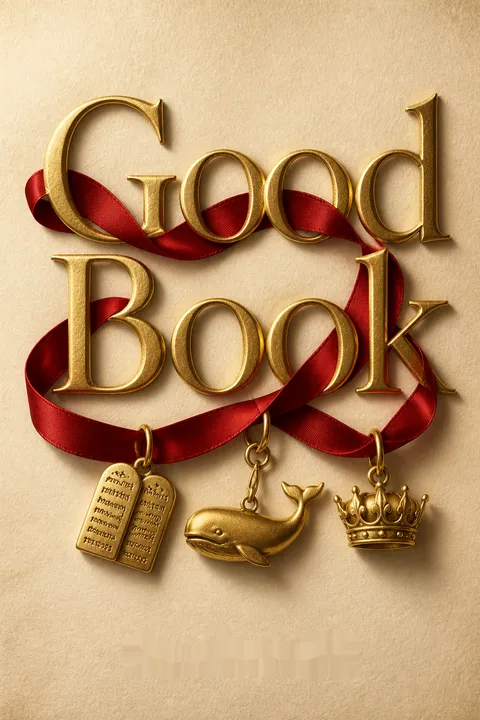


Key Takeaways
Read the Bible whole before trusting its familiar, child-friendly version.
The familiar stories omit plenty. Plotz begins reading the Hebrew Bible after stumbling on Dinah’s story: her brothers answer her rape by tricking and murdering a whole town, then enslaving its women and children. It is not a hidden footnote. It sits in Genesis, amid stories many people think they know. That discovery sends Plotz through all 39 books, chapter by chapter, with the unprepared reader’s advantage: no inherited expectation of what a passage is supposed to mean.
A year changes the reader. The project reveals violent, funny, tender, tedious, and troubling material that sermons and children’s lessons often leave out. The point is not that a novice outranks religious scholars. It is that secondhand familiarity can conceal how strange the source actually is.
What's striking is how much interpretation begins before a reader opens the book: teachers select, traditions emphasize, and popular retellings turn difficult episodes into manageable lessons. Plotz's surprise at Dinah shows the cost of that editing. A whole-text encounter does not make every reader an expert, but it makes inherited summaries easier to question. The caution is that shock can distort too: a provocative episode may dominate attention simply because it was previously unfamiliar. Reading widely, then checking interpretations against context, is more valuable than treating either Sunday-school reassurance or a first reaction as final.
Treat biblical inconsistency as evidence, not an inconvenience to explain away.
The seams show. Genesis gives two creation accounts with different sequences and different portrayals of woman’s creation. Exodus calls one set of laws the Ten Commandments, while Deuteronomy presents another version as the central decalogue. Chronicles retells the history in Samuel and Kings but omits major failures, including David’s affair with Bathsheba. These contrasts make the Bible read less like a single author’s seamless argument and more like a collection assembled over time.
Editing creates meaning. Plotz discusses scholar James Kugel’s term “junk sculpture” for a text made from pieces joined together. Once stories sit beside one another, readers can find patterns the original storytellers may not have intended. That does not make interpretation worthless; it makes certainty about one unified message harder to defend.
A layered text invites a different kind of reading from a rulebook. Contradictions can preserve competing memories and priorities rather than merely signal failure. That makes the Bible intellectually richer, but it also complicates claims that a single verse settles a modern dispute. Readers still need standards for interpretation: attention to genre, historical setting, and the surrounding passage. Otherwise, “the text is complex” can become permission to select whichever fragment supports a preferred conclusion.
Demand justice even when a sacred story puts God on trial.
The human voice pushes back. When God considers destroying Sodom, Abraham argues that the innocent should not die alongside the guilty. Moses repeatedly pleads with God to spare the Israelites. In Job, a righteous man loses his children, wealth, and health, then rejects his friends’ claim that suffering proves guilt. He insists that God’s treatment of him is unjust, even though challenging divine power could cost him everything.
The answers remain unsettled. Job’s friends defend a tidy moral order in which good people prosper and wrongdoers suffer. Job points to the world around him, where that plainly does not happen. God answers by describing creation’s scale and power, then acknowledges Job’s friends were wrong. The book does not neatly explain innocent suffering, but it makes protest part of the religious conversation.
The important move is not simply that characters question authority. It is that moral reasoning remains meaningful even when the authority being questioned is ultimate. That distinction matters in any institution where loyalty can be confused with virtue. Yet the stories do not make protest an easy victory: Abraham bargains, Moses pleads, and Job is overwhelmed by God’s response. Their example is less a formula for solving injustice than a refusal to pretend that power and goodness are automatically identical.
See religious boundaries as survival tools with serious human costs.
Distinctiveness is deliberate. The Torah repeatedly emphasizes practices that set Israelites apart: circumcision, Sabbath observance, food restrictions, exclusive worship, and limits on intermarriage. Plotz reads these rules as more than private spirituality. They help a small people resist absorption by neighboring cultures. The covenant also binds the people to a particular land, making property, inheritance, and belonging recurring concerns from Abraham’s negotiations to later disputes over territory.
Protection can become exclusion. The conquest stories describe dispossession and mass killing, while laws distinguish Israelite servants from foreign slaves. Ruth offers a striking counterexample: a Moabite widow joins Naomi’s people through loyalty and action, and is welcomed into the community. The Bible therefore contains both strong boundary-making and stories that unsettle the boundaries.
The account is strongest when it treats identity as a social practice, not merely an idea. Shared rituals can maintain continuity across generations, especially for a vulnerable minority. But the same mechanisms can define outsiders as threats and make exclusion appear sacred. Ruth complicates any simple claim that belonging is purely inherited, while conquest and slavery expose the violence such claims can authorize. The tension is not incidental: communities often preserve themselves by drawing lines, and moral scrutiny must ask who pays for those lines.
Separate moral wisdom from ritual rules instead of calling every law timeless.
The laws are not one moral package. Leviticus combines prohibitions that feel strange to modern readers with demands for fair judgment, prompt wages, care for disabled people, and help for the poor. One passage tells farmers to leave some harvest for those in need; another forbids mixing fabrics. Plotz praises the social justice in Leviticus 19 while questioning other rules that impose severe penalties or unequal treatment.
Interpretation has consequences. Ezra responds to intermarriage by sending foreign wives and their children away. Nehemiah also opposes intermarriage, but does not break up existing families. Their different responses show how religious commitments meet practical governance. Plotz argues that most modern readers already select among biblical laws, whether they admit it or not. The difficult task is to explain why some principles endure and others do not.
This is a useful challenge to selective literalism. People who cite scripture as if it speaks with one voice often overlook how much judgment is already involved in deciding which passages apply. Plotz’s own preferences are not a universal solution, though; choosing the humane laws while discarding the repellent ones requires reasons beyond personal taste. A defensible approach makes those reasons explicit, weighs harms, and acknowledges that inherited traditions can guide moral judgment without replacing it.
Let the Bible’s genres complicate its heroes and its easy lessons.
No single mood contains the book. Joseph rises from slavery and prison to power in Egypt, then forgives the brothers who sold him. Ruth offers a quiet family story in which loyalty and practical kindness matter more than miracles. The Song of Songs is frank love poetry, while Proverbs gives advice about work, restraint, and honesty. Psalms move between trust, loneliness, gratitude, and calls for revenge.
The contradictions are human. Ecclesiastes questions whether achievement matters when everyone dies; Job challenges the idea that suffering is deserved. Esther saves the Jews from extermination, then the victory turns into a massacre of their enemies. These books do not reduce neatly to one lesson. Their sharply different forms make room for competing accounts of faith, justice, pleasure, grief, and power.
Genre is a moral clue. A poem of anguish should not be read as a legal statute, and a court tale may expose politics more than offer a clean model of conduct. The range also explains why readers can find consolation and offense in the same collection. Plotz’s irreverent attention helps restore that variety, though humor can make grotesque events easier to consume than they should be. A strong reading can appreciate literary craft without mistaking vivid storytelling for moral approval.
Build institutions to restrain chaos, then watch who controls them.
No government has a clean alternative. In Exodus, Moses spends each day hearing minor disputes until his father-in-law Jethro advises him to delegate routine cases to capable judges. Numbers later separates religious authority, given to the priest Eleazar, from political leadership under Joshua. The divisions make governing more manageable, rather than leaving every decision to one leader.
Order can also become abuse. Judges portrays tribes in repeated cycles of violence, ending with rape, revenge, and the warning that everyone acted by private judgment. That disorder helps explain why the Israelites ask for a king. Samuel warns that monarchy will take their labor, land, and children, but they choose it anyway. The kings then include both capable rulers and disastrous ones, showing that centralized power can solve coordination problems while creating new dangers.
The book resists both easy anti-government sentiment and blind faith in strong leaders. Fragmented authority can leave the vulnerable exposed to local violence; concentrated authority can turn public resources into a ruler’s possession. Jethro’s delegation offers a practical insight: institutions need limits, capable administrators, and clear responsibility. But structure alone does not guarantee justice. The stories repeatedly ask whether authority is accountable to law, or merely effective at getting its way.
Preserve cultural memory without confusing artifacts with proof of faith.
The evidence has limits. In Israel, Plotz sees pottery from Maresha and examines a disputed structure sometimes identified as David’s palace. The pottery makes ancient life tangible, but it cannot establish that God acted in those events. Archaeologists he meets find little physical support for many early biblical episodes, while later periods leave firmer traces. Even the possible palace remains uncertain, with scholars disagreeing about its date and identity.
The book itself endures. The Dead Sea Scrolls preserve early biblical texts, and Plotz comes to see textual survival as central to Jewish continuity. He leaves Israel moved by history and tradition, not newly convinced of divine intervention. The distinction matters: an artifact can connect people to a past, and a text can sustain a community, without proving every claim made in either.
Material remains and sacred narratives answer different questions. Archaeology can test claims about settlements, objects, and dates; it cannot directly measure whether a community’s beliefs are spiritually true. Plotz’s distinction avoids two common errors: treating every biblical detail as confirmed history, or assuming uncertain history makes the text culturally empty. The political stakes also deserve attention. In contested places, archaeological interpretations can support modern claims to land, so uncertainty should be stated plainly rather than hidden behind the authority of a spade.
Use argument, not certainty, to stay in conversation with scripture.
Reading changes belonging, not necessarily belief. Plotz begins as a culturally Jewish, loosely observant reader who believes in God without much conviction. Learning why a Shabbat blessing invokes Ephraim and Manasseh, and finding the Shema in Deuteronomy, gives familiar rituals historical depth. He feels more connected to Jewish life, even as the Bible’s cruelty leaves him angry and less certain about God.
Doubt becomes engagement. Plotz rejects the idea that readers must excuse disturbing passages or surrender moral judgment to divine mystery. His conclusion is not that the Bible has made him more pious. Rather, reading the whole text has forced him to ask serious questions and argue with its claims. The book’s invitation is to encounter the difficult text directly, whether the result is faith, skepticism, or a changed relationship to tradition.
The distinction between belief and belonging is central to this account. Ritual can transmit memory and connection even when metaphysical conviction remains unresolved. That offers a more realistic picture of religious life than the assumption that practice always follows certainty. It also leaves a demanding question: when a tradition carries both beauty and violence, what does faithful participation require? Plotz does not settle that question, but treats honest engagement as more meaningful than either passive acceptance or uninformed rejection.
Analysis
Good Book is not a guide to biblical doctrine so much as a record of what happens when a culturally connected but underinformed reader meets the Hebrew Bible without the usual protective summaries. Its organizing tension is between inherited belonging and moral resistance. Plotz discovers ritual and literary continuity, yet also finds episodes that challenge the image of scripture as a stable source of uncomplicated virtue. That double response gives the book its narrative arc: curiosity becomes immersion, immersion deepens cultural connection, and connection does not resolve theological doubt.
The approach is especially effective because the reader’s surprise supplies momentum through a text whose books vary radically in genre and pace. Humor makes unfamiliar details memorable, while the recurring comparison between a familiar biblical image and its unsettling context exposes how cultural memory edits its sources. The method also has limits. A first-time reader can mistake shock for discovery, and Plotz’s topical analogies sometimes simplify ancient settings or make interpretive judgments sound more certain than the evidence permits. His own emphasis on the Bible’s assembled character helps correct that tendency: no single reaction exhausts a text with competing voices.
The book’s deepest claim is experiential. Reading the whole Bible need not produce belief to produce consequence. It can clarify how rituals acquire meaning, how texts shape public language, and how communities inherit both wisdom and harm. The unresolved argument with God becomes a form of intellectual and cultural participation, rather than a failure to arrive at certainty. That is a more demanding invitation than either devotional reassurance or skeptical dismissal. Readers are asked to know what they are accepting, rejecting, or carrying forward.
Review Summary
Good Book provides a humorous and irreverent look at the Old Testament through the eyes of a secular Jewish journalist. Plotz's chapter-by-chapter commentary offers insight into often overlooked or sanitized biblical stories. While some readers appreciate his candid approach and cultural observations, others find his tone disrespectful. The book sparks discussion about faith, morality, and the Bible's relevance in modern society. Despite occasional unevenness, many reviewers found it engaging and thought-provoking, recommending it for both religious and non-religious readers interested in exploring the Bible's cultural impact.
People Also Read


Glossary
Messy Bible
Bible’s unresolved complexityPlotz’s term for the Hebrew Bible as it appears when read in full, including contradictory accounts, morally troubling actions, uneven storytelling, and disagreements among its voices. It contrasts with a polished version in which heroes are reliably virtuous, God’s judgments are always easy to defend, and every passage reinforces one coherent lesson.
junk sculpture
Texts joined from fragmentsA phrase Plotz attributes to biblical scholar James Kugel for a work assembled from separate stories and materials. The pieces may have originated independently, but their placement together creates new patterns and meanings. The image emphasizes that the Bible can be read as a layered compilation rather than the unified product of one author.
Sunday-school problem
Teaching disturbing Bible storiesPlotz’s label for the difficulty of presenting biblical stories that resist a simple, child-friendly moral. Episodes involving rape, incest, mass killing, or divine punishment may not offer an obvious lesson, and conventional retellings often omit or soften the very details that make the stories ethically difficult.
theophoric names
Names containing a deity’s nameNames formed from or incorporating the name of a god. Plotz uses the term while discussing names connected to El or Yahweh, and notes that such naming patterns can offer clues about the religious setting of a text. The name Ishbaal, for example, suggests that Baal remained culturally significant among some Israelites.
Sheol
Abode of the deadA biblical term for the realm of the dead, mentioned in Numbers and discussed by Plotz as an early Hebrew idea of the afterlife. Its appearance complicates his assumption that Judaism had no conception of life after death. The text does not present it as a fully developed heaven-and-hell system.
Download PDF
Download EPUB
.epub digital book format is ideal for reading ebooks on phones, tablets, and e-readers.








