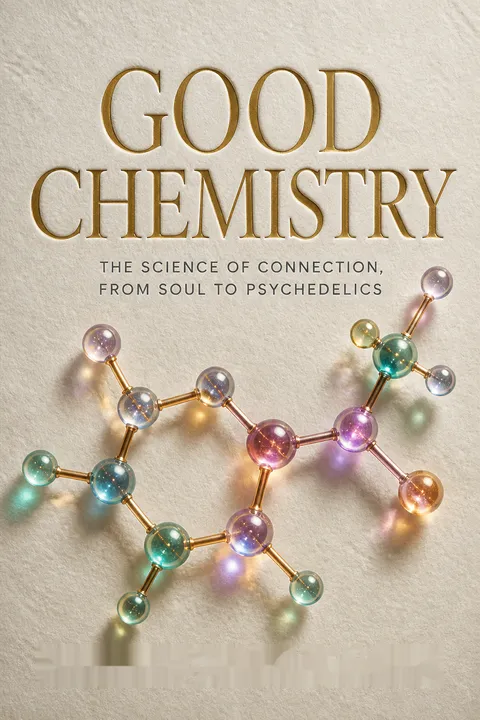


Key Takeaways
Build real connection as essential biology, not optional social polish
Belonging affects health. Holland’s central argument is that humans need connection as surely as they need food and shelter. Affection, caregiving, and helping a neighbor can activate the body’s systems for reward, calm, and safety. Loneliness, by contrast, keeps the body on alert. The book cites research linking isolation to heart disease, cognitive decline, and earlier death, and compares its health risk to smoking about fifteen cigarettes a day.
Screens imitate, but cannot replace. Holland points to studies associating heavier social-media use with greater loneliness and depression, while one study found that reducing screen time by thirty minutes a day helped lessen those feelings. The distinction is not between technology and no technology, but between contact and the experience of being known.
What's compelling is the shift from treating loneliness as a character flaw to treating it as information about a person's social environment. That reframing makes connection a public-health concern, not merely a private self-improvement project. It also clarifies why a crowded calendar or a large follower count may not relieve isolation: belonging requires mutual recognition, not just exposure to people. The screen-time argument is most useful when kept precise. Digital tools can sustain real relationships, but passive, compulsive use may offer stimulation without the reciprocity that makes contact feel secure.
Notice your body's signals before distraction teaches you to ignore them
Self-connection starts with sensing. Holland distinguishes proprioception, awareness of where the body is in space, from interoception, awareness of internal sensations such as hunger, tension, or emotion. Trauma, shame, and habitual distraction can make those signals harder to notice. Her patient Josh, a successful lawyer who struggled to identify feelings, began to recognize bodily sensations and, eventually, anger. The point is not to chase a dramatic breakthrough, but to recover useful information from the body.
Practice settling first. Holland calls the calmer, restorative mode of the parasympathetic nervous system “para.” She suggests simple ways to encourage it: breathe through the nose with a slightly longer exhale, pause and attend to the breath, sing, stretch, or use self-soothing touch. These practices can help someone become present before deciding what a feeling means.
The chapter treats bodily awareness as a skill that can be rebuilt, connecting emotional literacy with attention to physical sensation. That is a useful correction to the idea that feelings are simply thoughts waiting to be named. It also invites a practical question: what information is being missed when a person automatically overrides discomfort or desire? Still, bodily signals are clues, not infallible instructions. Anxiety can resemble intuition, and pain can have many causes. The strongest application is curious observation followed by reflection, rather than treating every sensation as a verdict.
Use connection to heal pain, not chemistry as a substitute for it
Isolation can feed addiction. Bruce Alexander’s “Rat Park” experiments compared rats kept alone in bare cages with rats living in a richer, social environment. The isolated animals used morphine more heavily, while the social animals generally preferred plain water when given a choice. Holland uses the story to argue that addiction can be an adaptation to distress and disconnection, not simply a failure of willpower.
A case shows the possibility, not a guarantee. David, a successful business owner with years of opioid addiction and childhood pain, reported stopping opioids after a psilocybin session with a guide. His fear of emotional connection eased, and his marriage improved. Holland presents the episode as a striking clinical story, while advocating harm reduction and careful support. Psychedelic experiences are not a do-it-yourself cure, and one person’s outcome cannot establish a treatment’s general effectiveness.
Rat Park remains memorable because it makes the environment part of the addiction equation. It encourages a humane question: what need is a substance or behavior meeting, even at great cost? That perspective can improve treatment by addressing housing, trauma, and relationships alongside drug use. The animal study cannot show that connection alone resolves human addiction, nor does it make pharmacology irrelevant. Likewise, David’s outcome is suggestive rather than conclusive. The book’s more durable contribution is its insistence that treatment should reduce harm and rebuild sources of belonging, not rely on punishment or shame.
Slow your nervous system before trying to win a relationship argument
Love changes with time. Holland describes early infatuation as a high-intensity state involving dopamine, which helps focus attention and pursue rewards. As attraction settles into attachment, familiarity and security become more prominent. The changing chemistry can explain why early romance feels consuming, but it does not determine whether a relationship is healthy.
Conflict often carries old stories. Projection is the process of attributing disowned feelings or traits to another person. A partner’s behavior may touch a painful pattern from childhood, turning a small disagreement into a much larger threat. Holland recommends slowing down, reflecting back what the other person said, and acknowledging why it makes sense to them. Practicing eye contact, shared breathing, or a welcoming ritual during calm moments can make it easier to reconnect during conflict.
The chapter's useful move is to treat relationship conflict as both a communication problem and a regulation problem. When people feel threatened, listening becomes harder; a pause or accurate reflection can create room for a less defensive response. That is not the same as agreeing, surrendering a boundary, or diagnosing a partner's behavior as projection. Childhood history may illuminate a reaction, but it should not erase present-day responsibility. Mirroring is most effective when it communicates genuine attention, rather than serving as a technique for steering someone toward a preferred outcome.
Build a baby's capacity for calm through repeated, responsive care
Caregivers help regulate infants. Holland uses “coregulation” for the way a caregiver’s attention, touch, voice, and bodily calm can help settle a baby. She describes the early mother-infant bond as a feedback loop: contact and feeding can support relaxation in both, while the infant gradually develops the ability to settle independently. Fathers and other caregivers can also build attachment through attentive play, touch, and time together.
Support matters as much as biology. Birth and feeding do not create an instant, identical bond for every parent. Holland recalls that her connection with her newborn strengthened through nursing, while also emphasizing the importance of practical help and a safe environment. Her advice for older children follows the same logic: hear what they say, set limits calmly, and treat much misbehavior as a possible bid for connection rather than a reason to withdraw it.
Coregulation offers a vivid model of how emotional capacities are learned in relationship: calm is not only an individual achievement, but something practiced with another person. That insight applies beyond infancy, including to stressed adults who borrow steadiness from a trusted companion. The model needs a nonjudgmental frame, however. Parents vary in health, resources, feeding choices, and access to support; none should be made to feel that one prescribed birth or feeding path guarantees secure attachment. The more actionable lesson is responsive care, backed by conditions that make care possible.
Create belonging across differences without needing an enemy to unite against
Groups can care and exclude. Holland emphasizes that oxytocin, often associated with bonding, can strengthen loyalty to an in-group while also sharpening suspicion of outsiders. A group may feel close because its members share rituals and purpose, but it can also tighten its bonds by shunning a rule-breaker or blaming another group. Her own middle-school ostracism illustrates how exclusion can make one group feel more unified at another person’s expense.
Build contact, not caricatures. Holland recalls chatting with a neighbor before noticing his political hat, and argues that face-to-face interaction can interrupt reflexive “us versus them” thinking. She also describes restorative-justice circles, where victims, offenders, families, and community members discuss harm and what repair requires. Shared music, volunteering, and group support can create belonging without making an outsider the price of membership.
The insight complicates the easy slogan that more bonding is always better. Social trust has boundaries, and a close group can provide care while also authorizing exclusion. That makes the quality of belonging a moral question: who is welcomed, who gets to speak, and who bears the cost of cohesion? The book's emphasis on proximity is strongest when it leads to sustained, equal participation, not a single friendly encounter offered as proof that structural conflicts have vanished. Shared projects and fair processes can turn contact into a more durable basis for trust.
Let awe and nature widen the circle of who counts as us
Nature can restore perspective. Holland cites research associating time in green spaces with improved mood and lower stress, and introduces “biophilia,” the idea that people have an inborn tendency to connect with living things. She also borrows “querencia,” a term for a place that restores a person’s strength and sense of belonging. Gardening, walking outside, or spending time near water can make that relationship tangible rather than abstract.
Awe can motivate care. The book connects experiences of vastness, from wilderness to the view of Earth from space, with a stronger sense of interdependence. Holland reports that some psychedelic studies find increased nature connectedness after an experience, but the practical route need not involve drugs: noticing a landscape or tending a garden can also invite attention and responsibility. Small household changes may help, though the climate crisis also requires collective action.
The ecological argument gains force by connecting personal restoration to a wider sense of responsibility. Nature is not presented only as scenery or a wellness amenity; it is a living system on which human life depends. The concept of a personally meaningful place can also make environmental concern concrete, giving people something specific to protect. Yet private habits should not be mistaken for sufficient climate policy. Gardening or buying less can express integrity, but large-scale environmental damage requires coordinated political and institutional responses. Awe can widen concern; organization is needed to translate it into change.
Treat psychedelic insight as a beginning that needs everyday integration
The experience is only one phase. “Integration” means both bringing separated parts of the self together and applying insights from an altered state to ordinary life. In a study of psilocybin-assisted therapy for treatment-resistant depression, 17 of 20 participants reported substantial benefit. Researcher Rosalind Watts heard many describe a shift from feeling disconnected to feeling connected with themselves, other people, and the world. Her connectedness scale was developed to measure those changes.
Support helps change endure. The book describes follow-up groups, preparation, and therapy as ways to help people make sense of difficult or transformative experiences. It also recounts group treatment for eighteen long-term HIV/AIDS survivors, where participants reported reduced demoralization and greater willingness to reconnect socially. These are promising accounts, not proof that every person benefits. Holland argues that a life-changing session without supportive relationships or practical changes may leave its lessons difficult to sustain.
This emphasis on integration is an important safeguard against treating an intense experience as a finished cure. Insight has to meet habits, relationships, and living conditions before it becomes durable change. The community dimension is especially persuasive: a person who feels newly open may struggle if daily life offers no place to practice that openness. At the same time, striking percentages from small studies and self-reports require restraint. Participant enthusiasm and measured improvement matter, but they do not establish long-term outcomes for all populations. The strongest claim here is procedural: preparation and follow-up deserve serious attention.
Let mortality sharpen attention to the ordinary life still available
Facing death can clarify priorities. In the book’s account of psilocybin research with people confronting cancer, participants describe renewed attention to loved ones, beauty, and ordinary pleasures. Psychiatrist Jeff Guss frames connection and love as ways to respond to fear of death, not by denying mortality but by returning to life while it remains available. Holland also recounts researcher Katherine MacLean’s care for her dying father, showing how presence and ritual can make room for intimacy at the end of life.
The closing image is a lesson in attention. While paddleboarding through morning mist, Holland keeps steering toward the fog, only to find it remains around her and invisible from the wrong angle. She uses the scene to question endless striving: sometimes what feels missing is already close, but unnoticed. The book’s final invitation is to practice attention and connection now, rather than waiting for a perfect future or a mystical experience.
Mortality makes the book’s broad theory of connection concrete: relationships, sensory pleasures, and attention matter because they are finite. The mist image is a fitting counterweight to the pursuit of ever-stronger experiences; it suggests that meaning can emerge from a changed viewpoint, not just a dramatic event. This is not an argument against ambition or treatment. For people facing illness, suffering may remain severe, and connection does not erase it. The more defensible point is that care and attention can coexist with fear, offering something real without promising a cure for impermanence.
Analysis
Good Chemistry is an argument about connection told through expanding circles: self, partner, family, community, Earth, and cosmos. Its organizing insight is not simply that relationships feel good. Holland proposes that social bonding is biologically reinforced, that isolation creates distress, and that many compulsive behaviors can function as imperfect attempts to soothe that distress. The book’s clinical stories give this claim emotional force: a person who cannot name feelings discovers anger in the body; a man with addiction reconnects with his wife; a group of older HIV/AIDS survivors finds reasons to re-enter social life.
The book is strongest when it translates that perspective into humane practice. Attend to bodily cues, regulate before arguing, respond to children rather than merely punish them, and create community around experiences that might otherwise isolate people. Its attention to the downsides of belonging is equally valuable. Oxytocin and group identity can strengthen care within a circle while intensifying suspicion beyond it, so connection is not automatically ethical or inclusive.
The scientific narrative requires more caution than the prose sometimes supplies. Neurotransmitters rarely map neatly onto single emotions, and associations between loneliness, screens, health, or political temperament do not by themselves establish causation. Rat studies and individual patient stories illuminate possibilities but cannot prove that a proposed intervention will work broadly. The author’s enthusiasm for cannabis and psychedelic treatments also exceeds what small or preliminary studies alone can warrant. Clinical supervision, screening, consent, and follow-up remain essential, and some claims in the book should be read as hypotheses or advocacy rather than settled medical guidance.
That tension does not erase the book’s value. Its most durable contribution is a social model of mental health: distress may be carried in an individual body, but recovery often depends on relationships, material support, and meaningful participation. The metaphor of good chemistry is useful when it points back toward reciprocal human care, rather than encouraging readers to reduce complex lives to molecules or seek a chemical shortcut around difficult change.
Review Summary
Good Chemistry receives mostly positive reviews for its exploration of connection and psychedelics. Readers appreciate Holland's scientific approach, personal anecdotes, and insights into neuroscience and mental health. The book is praised for its accessible writing and comprehensive coverage of topics like relationships, parenting, and environmental connection. Some criticisms include political tangents and oversimplification of complex issues. Overall, reviewers find the book informative and thought-provoking, recommending it to those interested in psychedelics, neuroscience, and human connection.
People Also Read






Glossary
para
restorative nervous-system modeHolland’s shorthand for the parasympathetic nervous system’s calmer mode of functioning, associated with rest, digestion, repair, and social receptivity. She contrasts it with the sympathetic fight-or-flight response. Breathing slowly, singing, yoga, touch, and feeling safe with others are presented as ways to support this state.
Rat Park
social setting addiction experimentThe name Bruce Alexander gave to an enriched environment built for laboratory rats, with space, objects, and other rats. In experiments described by Holland, rats in this social setting used morphine less than isolated rats and often chose plain water when given the option. The book uses the study to emphasize social context in addiction.
Interoception
awareness of inner sensationsAwareness of sensations arising within the body, including hunger, tension, arousal, and physical feelings associated with emotion. Holland presents interoception as one route to recognizing and understanding feelings. It differs from proprioception, which concerns the body's position and movement in space.
Integration
joining parts or applying insightsA term Holland uses in two connected senses. It can mean bringing divided or disowned aspects of the self into a more coherent whole. It also means working the lessons of a psychedelic experience into ordinary life through reflection, changed behavior, relationships, and continuing support.
Watts Connectedness Scale
measure of felt connectionA scale developed by researcher Rosalind Watts from interviews with people who took part in psilocybin-assisted therapy. It measures reported disconnection or connection across several domains, including the self, senses, other people, the world, and spiritual principles. The book describes it as a developing measure, not a definitive clinical test.
REBUS
psychedelics loosen entrenched beliefsAn acronym for “relaxed beliefs under psychedelics,” a model associated in the book with neuroscientist Robin Carhart-Harris. It proposes that psychedelics temporarily reduce the influence of strongly held assumptions, allowing more bottom-up information, emotion, and new interpretation. Holland uses the model to explain how old patterns may become open to revision.
psychoplastogens
compounds that promote brain changeA term used for substances discussed in the book, including MDMA, CBD, and classical psychedelics, that may promote neuroplasticity: the brain's capacity to form or reorganize connections. Holland connects this capacity with learning and behavior change. The category describes a proposed therapeutic mechanism, not a guarantee of clinical benefit.
querencia
place that restores strengthA term Holland borrows from bullfighting and environmental writing for a place to which a person returns for strength, orientation, or a sense of belonging. She applies it to meaningful natural places and to practices such as gardening, which create sustained attention and care for a particular piece of land.
Overview Effect
astronauts' Earth-wide perspectiveThe reported shift in perspective some astronauts experience when seeing Earth from space. National borders recede, while the planet's beauty and fragility become vivid. Holland links this response to awe, humility, and a sense of connection to a larger whole, while noting that the experience does not require psychedelic drugs.
FAQ
What's Good Chemistry: The Science of Connection, from Soul to Psychedelics about?
- Exploration of Connection: The book examines the various forms of human connection, from self-connection to relationships with others and the environment.
- Role of Chemistry: It highlights the biological and chemical processes, particularly neurotransmitters like oxytocin and dopamine, that facilitate these connections.
- Psychedelics and Healing: The author discusses the therapeutic potential of psychedelics in fostering deeper connections and healing emotional wounds.
- Interconnectedness with Nature: It also explores our relationship with the Earth, advocating for a deeper connection to nature for personal and planetary healing.
Why should I read Good Chemistry?
- Addressing Loneliness Epidemic: The book tackles the growing loneliness crisis, offering insights into cultivating meaningful connections.
- Practical Strategies: It provides practical advice for enhancing personal and interpersonal connections, making it a useful guide for deeper relationships.
- Scientific Backing: Julie Holland, MD, combines personal anecdotes with scientific research, making complex psychological concepts accessible.
- Timely Topic: In an era of social isolation, it addresses the urgent need for connection and community.
What are the key takeaways of Good Chemistry?
- Connection is Essential: Human beings are inherently social, and connection is vital for mental and physical health.
- Psychedelics as Tools: Psychedelics are presented as valuable tools for enhancing self-awareness and fostering connections.
- Oxytocin's Role: The book highlights the importance of oxytocin in forming bonds and its effects on emotional well-being.
- Nature's Role in Healing: Connecting with nature is emphasized as a means of improving mental health and fostering ecological awareness.
What are the best quotes from Good Chemistry and what do they mean?
- “Loneliness does not come from having no people around you, but from being unable to communicate the things that seem important to you.”: Emphasizes the need for open communication for true connection.
- “You can never get enough of something that almost works.”: Warns against seeking substitutes for genuine connection, like excessive screen time.
- “The first connection is with the self.”: Highlights the importance of self-awareness as foundational to forming healthy relationships.
- “We are all connected, and the more we understand that, the better we can navigate our lives.”: Stresses the interconnectedness of all beings and the importance of recognizing shared humanity.
How does Good Chemistry address the use of psychedelics?
- Therapeutic Potential: Discusses the resurgence of research into psychedelics as breakthrough therapies for conditions like PTSD and addiction.
- Biochemical Mechanisms: Explains how psychedelics interact with serotonin and oxytocin systems, promoting empathy and connection.
- Cautions and Considerations: Emphasizes the importance of supervised settings and the need for further research to ensure safety and efficacy.
What is the significance of oxytocin in Good Chemistry?
- Bonding and Attachment: Oxytocin, the "love hormone," plays a crucial role in forming emotional bonds and fostering trust.
- Physiological Effects: It can lower stress levels, enhance calm, and promote social behaviors, essential for nurturing relationships.
- Impact on Parenting: Its release during childbirth and breastfeeding is vital for establishing strong mother-child bonds.
How does Good Chemistry explore the connection between addiction and disconnection?
- Addiction as a Response: Presents addiction as a symptom of disconnection, where substances fill the void left by a lack of meaningful relationships.
- Neurochemical Mechanisms: Explains how substances mimic the effects of connection, providing temporary relief but leading to greater isolation.
- Pathways to Recovery: Emphasizes fostering genuine connections as a pathway to recovery, highlighting community support and therapeutic interventions.
What practical strategies does Good Chemistry offer for improving connections?
- Mindfulness Practices: Suggests techniques like breathing exercises, yoga, and meditation to connect with oneself and others.
- Affiliative Behaviors: Recommends simple acts of kindness, such as hugging or making eye contact, to enhance feelings of connection.
- Communication Techniques: Encourages open dialogue and active listening as essential tools for fostering understanding and intimacy.
How does Good Chemistry relate connection to mental health?
- Loneliness as a Crisis: Links loneliness to increased rates of depression, anxiety, and physical health issues.
- Connection as Healing: Posits that fostering connections can protect against mental health struggles, promoting resilience.
- Role of Community: Emphasizes the importance of community and social support systems in maintaining mental health.
What role does self-connection play in Good Chemistry?
- Foundation for Relationships: Argues that connecting with oneself is a prerequisite for forming healthy relationships with others.
- Techniques for Self-Connection: Suggests exercises like journaling and mindfulness to explore inner selves and enhance emotional intelligence.
- Healing from Trauma: Highlights how self-connection can aid in processing past traumas, allowing for healthier relationships.
How do psychedelics enhance emotional connections according to Good Chemistry?
- Biochemical Mechanisms: Interact with serotonin and oxytocin systems, promoting empathy and connection.
- Facilitating Vulnerability: Lower defenses and encourage vulnerability, allowing for freer emotional expression.
- Therapeutic Context: Emphasizes the importance of a supportive environment to enhance the experience and promote healing.
How does Good Chemistry address the connection with nature?
- Biophilia Concept: Introduces the idea that humans have an innate tendency to connect with nature, essential for mental health.
- Nature's Healing Power: Discusses research showing that natural environments reduce stress and improve mood.
- Psychedelics and Nature: Notes that psychedelics can enhance feelings of connection to nature, leading to increased ecological awareness.
Download PDF
Download EPUB
.epub digital book format is ideal for reading ebooks on phones, tablets, and e-readers.








