

Key Takeaways
Treat leadership as a lifelong capacity, not a title earned once.
The story starts with loss. Blake is a new graduate grieving his father, a respected leader who died suddenly after telling him he could lead. His mentor, Debbie, helps him see that leadership is not limited to people with impressive titles. Whenever someone influences another person’s thinking, beliefs, or development, that person is exercising leadership. Blake’s first task is not to prove himself worthy of a promotion, but to decide whether he will keep learning.
Growth keeps leadership viable. The book argues that influence erodes when leaders stop developing, because yesterday’s strengths may not meet today’s demands. Blake’s journey shows growth beginning in ordinary choices: asking questions, learning coworkers’ stories, and taking on a difficult team project. Leadership is therefore less a rank to reach than a capacity to renew.
The distinction between title and influence usefully broadens leadership beyond organizational charts. It helps explain why parents, teachers, and peers can shape people more deeply than supervisors do. But influence alone is not enough to make someone a good leader: manipulation also changes what others think and do. The book’s emphasis on service supplies the missing ethical test. A practical consequence is that leadership development should include both skill and scrutiny of whose interests that skill serves. The lifelong framing is also a corrective to promotion-based career thinking, which can mistake a new title for evidence of continued capability.
Set direction, then use authority to help people deliver it.
Service is active leadership. Debbie challenges Blake’s assumption that a servant leader is simply agreeable or soft. Leadership has two linked jobs: clarify where the group is going, then help people gain the ability and support to get there. Service does not mean surrendering judgment or avoiding standards. It means directing effort toward shared results while helping others succeed. Debbie identifies ego and fear of losing control as common obstacles.
The SERVE Model makes this concrete. The book’s companion framework asks leaders to describe a desired future, bring in and develop capable people, keep improving, care about both outcomes and relationships, and behave consistently with stated values. Blake also models service in a difficult moment: learning that his supervisor’s mother is dying, he presses her to visit rather than treating their conversation as a work-only transaction.
This account joins two leadership traditions that are often separated: setting direction and supporting people. The first guards against kindness without coordination; the second guards against goals pursued through expendable employees. In organizational psychology, perceived support can strengthen trust and willingness to contribute, but support is not a substitute for clear expectations. The useful test is whether service increases other people’s ability to act, not merely whether the leader feels generous. The framework also implies a real tension: leaders must sometimes make unpopular decisions. A service ethic is strongest when it explains those decisions honestly and shares their costs fairly.
Choose work that fits your values, not someone else’s ambition.
A career should be chosen, not inherited. Debbie warns Blake not to pursue leadership merely because his father believed he could do it. She once became a teacher to honor her parents, who were teachers, and discovered after a year that the job did not fit her. Her story makes the point sharper: a noble profession can still be the wrong choice for a particular person. Leadership, she says, requires a genuine desire to serve.
Look beyond the offer. Blake weighs two jobs by considering the work, the people, the company’s values, and whether it invests in employees. Dynastar’s extended interview process lets him compare answers from staff across departments and hear why they like working there. He chooses it partly because the culture seems consistent, while Debbie reminds him that no organization is flawless. A promising start is evidence, not a guarantee.
The book treats fit as a meeting point between personal motivation and institutional culture, rather than a search for prestige alone. That is valuable because job choice shapes what behaviors are rewarded and which values are repeatedly tested. Blake’s careful interviews also show selection as a two-way process: candidates can examine an employer instead of merely performing for it. Still, stated values and polished interview answers can diverge from daily practice. A prudent candidate looks for observable examples, consistent accounts from different employees, and ways the organization responds when things go wrong. Alignment should be tested over time, not assumed from a good first impression.
Study yourself, your people, your industry, and leadership itself.
Knowledge has four targets. Debbie asks leaders to learn about their own strengths and preferences, the individuals they hope to lead, the realities of their industry, and the craft of leadership. Knowing people includes more than their job descriptions: their goals, concerns, experience, and preferred forms of recognition can all affect how they work. Industry knowledge means noticing not only what is true now, but what may stop being true.
Speed can hide ignorance. Debbie compares learning to a skier navigating slalom gates. A competitor may miss a gate by going too fast, failing to prepare, or losing focus. Leaders can make the same mistake by taking on too much and neglecting learning. Blake begins with manageable steps: workplace assessments, conversations with coworkers, research into competitors, and leadership materials in a format that suits him. The point is steady study, not collecting credentials or reading for its own sake.
The four domains prevent a common learning bias: studying leadership slogans while ignoring the people, market, or self that determine whether a practice works. The emphasis on context resembles systems thinking, where outcomes depend on interactions rather than one isolated variable. It also makes the framework adaptable: a new employee and a senior executive need different information, even if both must remain curious. Self-assessments can help start reflection, but they are imperfect maps, not objective verdicts. The strongest self-knowledge comes from comparing stated preferences with behavior and consequences, especially when colleagues can point out patterns that feel invisible from the inside.
Teach what you learn, and turn ordinary interactions into growth.
Teaching deepens learning. Debbie describes a learning practice that goes beyond taking notes: revisit the important ideas, make them clear, then explain them to someone who was not present. Teaching exposes gaps in understanding and helps knowledge travel through a team. It need not happen in a classroom. Leaders can teach by asking a useful question, telling a relevant story, or helping a colleague draw a lesson from experience.
Blake learns by contributing. When he and Sam organize interviews about declining customer service, Blake asks the team to agree on core questions so their findings can be compared. Later, he helps the group stop chasing a hundred observations and prioritize the most important lessons. Sam tells Blake that mentoring him also pushes Sam to perform at his best, and asks him to help another newcomer someday. Development moves in both directions.
This is a compelling account of learning as a social process rather than private information storage. Explaining an idea requires retrieval and organization, while questions reveal whether the learner can apply it beyond the original example. The team’s shared interview questions add another benefit: they make individual observations more comparable. Yet teaching is not automatically good teaching. A confident novice can spread an error as efficiently as an insight. The practice works best when teaching includes uncertainty, invites correction, and stays close to evidence. Mentorship also becomes more sustainable when it is reciprocal, as Sam’s experience suggests, rather than framed as a one-way favor.
Collect unfamiliar experiences to widen the choices you can see.
A wider life feeds leadership. Debbie encourages Blake to expand his experiences both at work and beyond it. At work, that could mean shadowing another department, listening to customers, joining a cross-functional project, or learning from successful locations. Outside work, travel, volunteering, unfamiliar hobbies, the arts, and time with people from different backgrounds can expose a leader to unfamiliar problems and perspectives.
Blake tests the idea personally. Because he enjoys working with children and wants to help someone else, he begins tutoring Deshi, a student learning English. Their first meeting is difficult because they share little language, but the effort itself communicates care. The book compares life experiences to colors available to an artist: each experience adds material a leader may draw on when facing a new challenge. These activities are not boxes to check; their value depends on what a person learns from them.
The argument is that varied experience increases the range of analogies and responses available to a leader. This connects to cognitive flexibility: people who encounter different contexts may notice options that a narrow routine leaves hidden. Blake’s tutoring also shows how an activity can serve another person while developing the volunteer. Novelty alone, however, does not guarantee insight. A trip or assignment can remain a story without changing judgment. Reflection, discussion, and attention to what felt unfamiliar help convert exposure into learning. The book’s strongest implication is not to pursue experience as decoration, but to seek situations that make assumptions visible.
Turn experience into judgment through candor, counsel, and reflection.
Wisdom is applied knowledge. Debbie distinguishes knowing facts from using knowledge, discernment, experience, and judgment when the right answer is unclear. She identifies four supports for developing this ability: rigorous self-examination, honest feedback, advice from others, and time. Self-examination means looking directly at strengths, weaknesses, and actual contribution, rather than accepting a flattering self-story.
Outside views correct blind spots. Debbie recalls a hotel-chain owner who said he had never personally experienced poor service in his own hotels, despite customer complaints. His position insulated him from the very evidence he needed. Leaders can ask colleagues what they should begin, stop, and continue doing. Feedback concerns past behavior; counsel draws on another person’s experience to inform future choices. Neither is effortless: people may soften criticism, and leaders may resist hearing it. Wisdom accumulates through repeated attempts to face both.
The framework usefully treats wisdom as practice rather than a mysterious gift reserved for unusually gifted people. It also identifies a structural problem: seniority can reduce contact with the work and people that would correct a leader’s assumptions. Feedback systems, direct observation, and trusted advisers can counter that insulation. But time by itself does not produce good judgment; it can merely harden habits. Nor is every adviser equally informed or candid. The practical challenge is to seek disconfirming evidence from people with relevant experience, then compare their perspectives instead of mistaking the loudest or most reassuring voice for truth.
Make organizational learning keep pace with customers and competitors.
Dynastar’s crisis is a learning failure. The company loses major customers because its service no longer meets rising expectations. Marketing focuses on attracting new clients while assuming another department will retain existing ones. Blake and Sam form a cross-functional team, interview unhappy and former customers, and discover how little the organization understands the changing standard. The evidence helps the group prioritize its findings and recommend action.
Personal learning is not enough. Blake tells senior leaders that the company has been applying old answers to new problems. The president accepts that his own commitment to learning has not created a culture where the organization learns. That distinction matters: leaders need systems that bring customer evidence across departments and turn it into decisions. The story also shows Blake’s influence growing through careful listening, useful questions, and candor, even though he is junior. His supervisor, Maggie, later credits his personal concern with helping her see her dying mother.
The organizational arc extends the book’s individual-development message into a sharper institutional claim: a learning leader cannot compensate indefinitely for a company that fails to learn. Customer interviews serve as external feedback, while the cross-functional team challenges the assumption that retention belongs to someone else. This resembles organizational learning, where information must move across boundaries and alter routines, not merely reach a meeting. There is a limit to the fable’s optimism: Blake receives unusual access and recognition from senior leaders. In less receptive workplaces, truth-telling may carry real risk. Leaders need both individual courage and structures that protect dissent and make evidence consequential.
Analysis
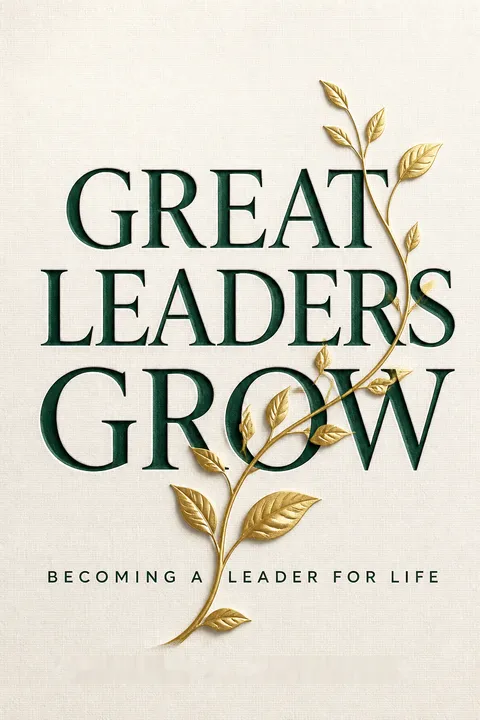
Great Leaders Grow is a business fable built around a clear proposition: leadership capacity depends on continued development. Its story gives that proposition emotional traction. Blake inherits a painful, ambiguous challenge from his father’s last encouragement, then learns leadership through relationships rather than a sudden promotion. Debbie’s mentoring supplies the framework; Dynastar’s customer crisis supplies the test. This narrative form makes abstract advice memorable, especially the progression from learning about oneself and the business to teaching, widening experience, and pursuing judgment.
The book’s strongest move is connecting personal growth to service. Learning is not presented as self-improvement for its own sake. It should help a leader understand people, respond to customers, and increase the group’s ability to perform. Blake’s work on customer interviews demonstrates that a junior employee can lead through inquiry and synthesis before gaining formal authority. The distinction between individual learning and a culture of learning is equally important: an executive’s curiosity does not automatically become an organization’s capacity.
The fable’s simplicity also creates its main limitation. Blake’s sincerity and initiative receive support from Sam, access to senior leaders, and eventual praise from the president. Real workplaces may punish candor, withhold time for development, or reward short-term output over reflection. The framework is most useful when treated as both a personal practice and a design problem. Leaders can seek knowledge and feedback, while organizations must make those activities possible and safe. Otherwise, lifelong growth risks becoming a demand placed on individuals for failures created by their institutions.
The book also leaves an important question for practice: how can growth be distinguished from activity? More books, experiences, and conversations do not necessarily produce better leadership. The answer implied by the story is application: learning should change a decision, a relationship, a process, or the organization’s response to evidence. That test preserves the framework’s energy while resisting the idea that development is simply another item to add to an overloaded schedule.
Review Summary
Great Leaders Grow receives mostly positive reviews for its accessible leadership lessons presented through a narrative format. Readers appreciate the GROW model and practical advice for developing as a leader. Some criticize the story as unrealistic or cheesy, but many find it an engaging way to convey leadership principles. The book is seen as particularly useful for new or aspiring leaders. While not groundbreaking, it's praised for distilling key leadership concepts into a quick, memorable read that emphasizes continuous growth and serving others.
People Also Read




Glossary
GROW
Leadership development frameworkA four-part approach to lifelong leadership development. It directs leaders to deepen their knowledge of themselves, other people, their industry, and leadership; help others develop through teaching and mentoring; seek varied experiences at work and outside it; and build judgment through reflection, feedback, advice, and time. The framework presents development as part of leadership work, not an optional extra.
SERVE Model
Servant-leadership behaviorsA leadership framework associated with the idea that effective leaders serve people while pursuing shared results. Its five elements are communicating a future direction, selecting and developing people, continuously improving, attending to both results and relationships, and acting consistently with stated values. The model treats service as an active responsibility, not as avoiding decisions or trying to please everyone.
Wisdom
Sound judgment amid uncertaintyThe capacity to apply knowledge, discernment, insight, experience, and judgment to make a good decision when the answer is not obvious. In the book, wisdom is developed rather than assumed to appear automatically with age or knowledge. Rigorous self-evaluation, honest feedback, counsel from others, and time all contribute to its growth.
FAQ
1. What is "Great Leaders Grow: Becoming a Leader for Life" by Ken Blanchard and Mark Miller about?
- Leadership Through Growth: The book explores how personal and professional growth is essential for effective, lifelong leadership.
- Story-Driven Approach: It follows the journey of Blake, a young professional, as he learns about leadership from his mentor, Debbie Brewster.
- GROW Framework: The core of the book is the GROW model—Gain Knowledge, Reach Out to Others, Open Your World, and Walk toward Wisdom.
- Servant Leadership Emphasis: The narrative emphasizes that great leaders serve others and that leadership is about influence, not just position or title.
2. Why should I read "Great Leaders Grow" by Ken Blanchard and Mark Miller?
- Practical Leadership Advice: The book offers actionable steps and real-world examples for anyone aspiring to lead, regardless of experience level.
- Lifelong Learning Focus: It stresses the importance of continuous personal and professional development for sustained leadership success.
- Relatable Storytelling: The fable format makes complex leadership concepts accessible and memorable.
- Servant Leadership Insights: Readers gain a deeper understanding of servant leadership and how it can transform teams and organizations.
3. What are the key takeaways from "Great Leaders Grow" by Ken Blanchard and Mark Miller?
- Growth Fuels Leadership: Your capacity to grow directly determines your capacity to lead.
- GROW Model: Effective leaders continually Gain Knowledge, Reach Out to Others, Open Their World, and Walk toward Wisdom.
- Leadership is Influence: Leadership is not about titles but about positively influencing others.
- Servant Leadership Matters: The best leaders are motivated by serving others, not self-interest.
4. What is the GROW model in "Great Leaders Grow" and how does it work?
- Gain Knowledge: Leaders must be committed to learning about themselves, others, their industry, and leadership itself.
- Reach Out to Others: Growth is accelerated by teaching, mentoring, and helping others develop.
- Open Your World: Leaders should seek diverse experiences both inside and outside of work to broaden their perspectives.
- Walk toward Wisdom: Wisdom is cultivated through self-evaluation, seeking feedback, counsel from others, and time.
5. How does "Great Leaders Grow" by Ken Blanchard and Mark Miller define servant leadership?
- Serving First, Leading Second: The book, echoing Robert Greenleaf, states that great leaders are servants first and leaders second.
- Others-Centered Motivation: Servant leaders focus on helping others and the organization succeed, not on personal gain.
- Vision and Implementation: Leadership involves setting direction (vision) and serving others to help them achieve shared goals.
- Daily Choice: Every day, leaders choose between serving or being served, and the best leaders consistently choose to serve.
6. What are the four components of the GROW model in "Great Leaders Grow" and what do they mean?
- Gain Knowledge: Continuously learn about yourself, your team, your industry, and leadership best practices.
- Reach Out to Others: Proactively invest in the growth of others through teaching, mentoring, and sharing knowledge.
- Open Your World: Expand your experiences by seeking new challenges, roles, and perspectives both at work and in life.
- Walk toward Wisdom: Pursue wisdom through honest self-reflection, seeking feedback, learning from others, and accumulating experience over time.
7. How does "Great Leaders Grow" by Ken Blanchard and Mark Miller suggest leaders can Gain Knowledge?
- Self-Awareness: Understand your strengths, weaknesses, learning styles, and passions.
- Know Your Team: Learn about the hopes, fears, and backgrounds of those you lead to serve them better.
- Industry Mastery: Stay informed about industry trends, competitors, and changes affecting your organization.
- Leadership Learning: Regularly read, seek mentors, and pursue ongoing education in leadership.
8. What does "Reach Out to Others" mean in the context of "Great Leaders Grow" by Ken Blanchard and Mark Miller?
- Teaching to Learn: Leaders solidify their own learning by teaching and mentoring others.
- Seizing Teachable Moments: Look for both formal and informal opportunities to help others grow.
- Storytelling and Questions: Use stories and probing questions to facilitate learning and development in others.
- Paying It Forward: Helping others is not just altruistic—it also reinforces and deepens your own leadership skills.
9. How can leaders "Open Your World" according to "Great Leaders Grow" by Ken Blanchard and Mark Miller?
- At Work: Shadow other departments, join cross-functional teams, travel with leaders, and seek diverse projects.
- Outside Work: Engage in travel, volunteer work, new hobbies, learning languages, and exposure to the arts.
- Broaden Perspectives: The more varied your experiences, the more creative and effective you become as a leader.
- Continuous Exploration: Treat every new experience as a way to add "colors to your leadership palette."
10. What does "Walk toward Wisdom" involve in "Great Leaders Grow" by Ken Blanchard and Mark Miller?
- Rigorous Self-Evaluation: Regularly assess your strengths, weaknesses, and impact with honesty.
- Seek Feedback: Proactively ask for input from colleagues, mentors, and those you lead.
- Counsel from Others: Learn from the experiences and advice of others, especially those with more experience.
- Time and Patience: Recognize that wisdom is accumulated over years and through a commitment to lifelong learning.
11. What are some of the best quotes from "Great Leaders Grow" by Ken Blanchard and Mark Miller and what do they mean?
- "Your capacity to grow determines your capacity to lead." – Growth is the foundation of effective leadership.
- "Great leaders don’t think less of themselves; they just think of themselves less." – True leaders are humble and others-focused.
- "If you stop growing, your influence will erode; and over time, you can even lose the opportunity to lead at all." – Stagnation is the enemy of leadership.
- "Every leader is a learner." – Lifelong learning is non-negotiable for leaders.
12. How can readers apply the lessons from "Great Leaders Grow" by Ken Blanchard and Mark Miller in their own lives?
- Self-Assessment: Use the book’s personal assessment tools to identify strengths and areas for growth.
- Create a Growth Plan: Choose one area from the GROW model to focus on and develop a concrete action plan.
- Mentor and Teach: Look for opportunities to help others grow, which reinforces your own learning.
- Commit to Lifelong Growth: Treat growth as a continuous journey, not a one-time event, and revisit the GROW model regularly.
About the Author
Other books by Kenneth H. Blanchard




Download PDF
Download EPUB
.epub digital book format is ideal for reading ebooks on phones, tablets, and e-readers.








