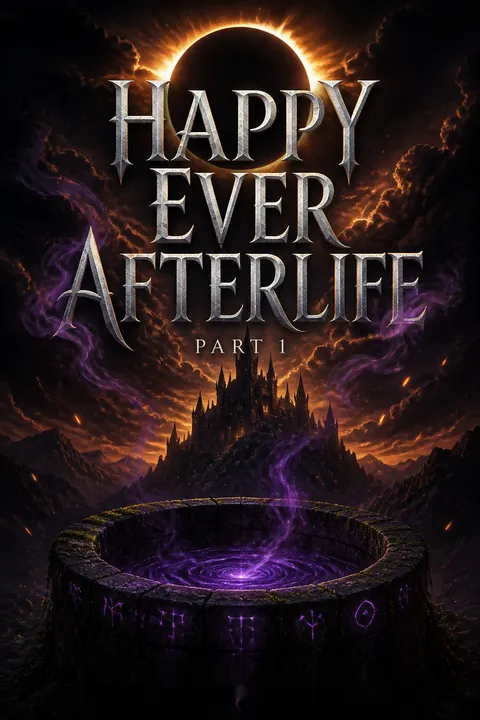


Plot Summary
Prologue
Twelve hours after giving birth, Keira holds Amelia Faith Draven and imagines the ordinary childhood moments she once feared she would never witness. The joy is incomplete: two other children are present only as souls without bodies, yet Keira and Draven love them as fully as their daughter.
After years of war between Heaven, Hell, and the mortal world, a newborn’s tiny needs bring their survival down to something intimate: a family in a room, trying to begin.
The opening measures victory not through territory or power, but through the small future Keira can now picture: baths, swings, and a child learning to ride. That domestic scale does not erase the cost of the supernatural war. The two bodiless souls make grief part of the family’s first happiness, refusing a neat division between triumph and loss. Keira’s attention to ordinary care also changes what survival means. She once fought to keep the world from ending; now the world matters because it contains a life she can hold and help raise.
Keira Returns from Hell
After the battle in the Janus Temple, Lucifer removes the god’s blood that had altered Keira and returns her to herself. Draven holds her, shattered by the belief that he killed her, but Keira insists his act helped save the world. She also confirms that she is carrying his child, and his grief gives way to astonished joy.
The victory has not spared everyone: Ranka lies dead, while Jack’s body is alive but his mind remains locked away after Cronus is expelled. RJ collapses beside her brother, and Seth leaves after she blames him. Keira promises to protect RJ; Draven vows to find a way to bring Jack back.
The reunion turns rescue into an argument about responsibility. Draven interprets his forced act as a personal failure, while Keira places it inside the larger chain of choices that defeated the threat. Neither view cancels the cost. Ranka’s death and Jack’s suspended state prevent romantic relief from becoming a false restoration of everything lost. Keira’s promise to RJ also marks a change in her place among the immortals: she is no longer simply someone they protect. She accepts obligations toward the wounded people their victory has left behind.
The Seventeen-Day Secret
On the couple’s wedding day, Draven asks how Keira became pregnant. She admits that she travelled into the past because she believed conception by his younger self was required to complete a prophecy and prevent catastrophe. She kept the pregnancy from him because she thought it meant her death, and she feared watching him endure that knowledge.
Her explanation leaves Draven feeling betrayed: he believes she slept with another man and made a decision about their future without him. Keira insists the younger man was still Draven, but neither the identity nor her desperate motive immediately quiets his anger. The confession opens the history of her missing seventeen days and forces their new marriage to confront its first secret.
Keira’s deception grows from a protective impulse, but protection here becomes a form of control: she decides what Draven can bear and what risks he may take. Draven’s anger likewise comes from love, yet his possessiveness threatens to turn care into confinement. Their disagreement is not simply about sexual fidelity. It exposes competing ideas of partnership, one based on shared knowledge and one on unilateral sacrifice. The prophecy has trained Keira to treat her own body as an instrument for averting disaster; her confession begins the harder work of recognizing that love cannot be managed like a mission.
Persia’s Captive Queen
Keira’s account reaches back to ancient Persia, where she arrived through the Janus Gate with her identity concealed from Draven. When a royal official grabs her, she punches him; Draven responds by drawing a blade and publicly forcing the official to accept her apology as well as his own judgment. Keira is brought into Draven’s harem, then tries to escape.
He catches her, chains her, and carries her away, but his threats are a performance meant to frighten rather than injure her. Their attraction overcomes the danger and they sleep together. Keira returns to her own time seventeen days late for the wedding, still believing the encounter caused her pregnancy.
The Persian episode reverses the usual fantasy of a powerful ruler simply claiming the woman he desires. Draven has the authority to imprison Keira, but the account makes his restraint as important as his force: he protects her even while trying to control the situation. Keira’s refusal to become passive is equally central. She strikes back when seized and continues to resist even when captured. Their intimacy is therefore born inside a conflict over agency, a history that helps explain why the present-day Draven reacts so strongly to her secret and why Keira resists being treated as a possession.
Vows After the Argument
As Keira explains her journey, Draven fixates on the younger version of himself and struggles to accept that she sees the encounter as sex with the same person. Keira reminds him that he, too, crossed an intimate boundary without knowing the full circumstances. Their anger subsides when she explains that she went back because she believed the world depended on it, not because she wanted to leave him.
Draven admits that if he had known about the pregnancy, he might have hidden her away rather than let her choose danger. They recognize that both prophecy and their own attempts to protect each other have distorted their judgment, then promise not to abandon one another again.
The reconciliation does not settle the morality of time travel or erase the imbalance in their choices. Instead, it makes the hidden fear explicit: Keira expects to die, while Draven expects to lose her and therefore imagines drastic forms of protection. Their promises matter because they answer the specific behavior that has damaged trust, secrecy and imagined separation. The scene also resists the idea that destiny excuses everything. They may be caught in a prophecy, but they remain accountable for how they treat each other inside it.
Ari Finds the Child
At the family meal after the wedding, Draven announces that Keira is pregnant. Ari, Keira’s closest friend, pulls her aside in tears because she believes she failed to be present when Keira needed her. Keira refuses to let Ari’s guilt stand unchallenged; Pip and Sophia help confirm that the baby is still there.
Draven then remembers that he and Keira conceived in Jared’s office on the night before the wedding, in their own time, not in ancient Persia. The news restores the couple’s joy and gives Ari a reason to stop blaming herself. Meanwhile, Keira notices Vincent’s intense attention to Ari, whose uncertainty about him complicates the celebration with a quieter, still unresolved romance.
Ari’s fear shows how prophecy can make friendship feel like a duty with a pass-or-fail outcome. She measures her worth by whether she performed the role she thinks Keira needed, even though she lacks the information to judge what happened. Keira’s refusal to accept that guilt turns sisterhood into reciprocal care rather than another supernatural assignment. The baby’s present-day conception also shifts the couple away from the past-tense logic that has governed their choices. Their child is not proof that the ancient scheme worked; the child comes from a moment of shared intimacy in their own lives.
The Birthmark Burns
Away from the crowded celebration, Draven touches the mark at the back of Keira’s neck. Pain seizes them both. His eyes and veins flare with infernal light, his claws lengthen, and he stops responding to Keira as himself. When he begins to wound her, she calls for Lucius, her vampire maker and former protector.
Lucius arrives and overpowers Draven, ordering the demon inside him to yield. Keira sees Lucius hold Draven against the wall and then force him into unconsciousness. The intervention saves her, but leaves her shaken by what the mark has triggered and by the fact that Draven’s inner demon could seize control so completely.
The scene makes bodily intimacy dangerous in a way the couple cannot resolve through affection alone. A familiar touch becomes the trigger for a force neither Keira nor Draven understands, and her own body becomes the site where their private bond meets an older supernatural threat. Lucius’s intervention is both protective and unsettling: he can stop Draven, but only by exercising power over him that Draven cannot resist. The episode therefore complicates the romance’s central promise of safety. Love remains real, but it is no longer sufficient knowledge to predict what either supernatural body may do.
Lucius Conceals the Encounter
Lucius recognizes that the mark has connected Keira to Hell and warns that the loss of control may happen again. Keira asks him to keep the episode from Draven until they understand it; Lucius reluctantly alters Draven’s immediate memory and agrees.
Before they return to the family, Lucius also tells Keira that the future she once seemed to offer him belongs to someone else, releasing her from the hope that their bond could become a life together. Later, when Draven asks why she and Lucius were alone, Lucius invents a story about a man harassing Keira and claims he dealt with him. Draven accepts the explanation, while Keira carries the guilt of letting a second lie enter their marriage.
Lucius’s choice is protective but ethically unstable. He prevents Draven from reacting blindly to an unexplained danger, yet he also removes Draven’s ability to participate in the decision. Keira’s request repeats the same pattern that caused their earlier fight: she withholds painful knowledge because she fears what Draven will do with it. Lucius’s revelation about his future love offers emotional closure, but it does not make the cover story harmless. Instead, the scene shows how secrecy can become a temporary tool that quietly lays the groundwork for a larger breach of trust.
Domhnall Castle Awaits
Draven takes Keira north to his hidden Scottish castle, Domhnall, where visitors who leave the grounds forget they saw it. Mack, the castle’s tattooed butler, welcomes them. Draven explains that his wealth comes from centuries of ownership, investments, art, and books, while Keira insists that money should support people rather than sit unused.
He offers to let her help direct charitable work. Keira also learns that Draven has kept the castle for a thousand years and regards it as theirs now. As they discuss how their younger selves differed from the people they have become, Draven tells her that loving her has made him a better man. The castle becomes a rare refuge where they can imagine a shared life beyond crisis.
The castle materializes the unequal scale of their histories: Draven has accumulated centuries of property and memory, while Keira is still negotiating what it means to share his life. Her discomfort with wealth is not simple modesty. It reflects a need to retain authorship over what she receives, so Draven offers participation rather than merely a gift. The castle’s secrecy also makes it a shelter that belongs to their private world. Yet the emotional center is not his inheritance. It is his claim that their relationship changed him, which makes love an influence on character rather than a reward for power.
The Willow Turns Black
During their first week at Domhnall, Keira enjoys a rare stretch of sightseeing, shared meals, and private affection with Draven. One night, unable to sleep, she follows a lantern into the castle gardens and feels compelled toward the weeping willow where they had earlier shared an intimate moment. As she walks, plants wither and the ground darkens beneath her feet.
A horned demon waits in the tree, calls her a threat to the King, and says she has imprisoned someone who belongs to him. He calls her an enslaver and promises to take Draven back to Hell. Keira escapes when Draven calls her from the castle, but wakes with the encounter lodged in her mind as more than an ordinary nightmare.
The demon corrupts a place Keira associates with tenderness, turning the willow from a private refuge into a stage for accusation. His language recasts her love as captivity, directly attacking the couple’s belief that their bond is freely chosen. The withering garden externalizes Keira’s fear that her presence may damage the world around her, a fear intensified by prophecy and the birthmark’s unexplained power. The scene deliberately leaves uncertainty about what she has experienced. Its force comes from making dream logic feel consequential before Keira can prove that anything happened.
A Shard Proves the Dream
The next morning, Keira finds dirt on her feet and a dark shard lodged in her heel, evidence that the garden encounter may have crossed into waking life. She removes it but tells Draven nothing, afraid that his protectiveness will turn the discovery into another crisis. Instead, she accepts his efforts to make their honeymoon feel ordinary.
He arranges a television, snacks, and a screening of Jane Eyre, a story that lets them recognize parts of their own history in its lovers. They travel around Scotland and prepare for a medieval banquet inside the castle. Keira’s happiness is genuine, but it now rests beside a secret: something from the nightmare has left a physical trace, and she has chosen to carry it alone.
The shard changes the problem from subjective terror into evidence, but Keira responds by concealing rather than investigating it. Her silence is not indifference. She is trying to protect the fragile ordinary life she and Draven have only just begun to enjoy, while also fearing the consequences of his response. The television and Jane Eyre episodes are not merely leisure; they give the couple a shared language for revisiting their history without immediately reopening its dangers. That comfort is precarious. The shard remains a material counterargument to Keira’s attempt to treat the threat as a dream.
Portraits Conceal a Passage
As Sophia prepares Keira for the banquet, she leads her through a gallery of Draven’s portraits, each showing him in a different century. Keira learns that Sophia fought for the portraits because she believed they would help Draven’s future partner understand the long life he had lived before her.
While exploring alone, Keira notices that a sword displayed beneath one portrait matches the weapon in the painting. A hidden switch in its hilt releases the portrait from the wall, revealing stairs cut into the mountain. Keira descends into a vault filled with Draven’s journals, old armor, statues, and treasured objects. The room offers a record of the life he has never fully been able to explain to her.
The portrait gallery turns history into something Keira can encounter rather than merely hear about. Each image testifies to Draven’s long existence, but Sophia’s reason for preserving them makes that history relational: she wants Keira to understand the person she chose. The concealed mechanism shifts the scene from looking at the past to entering it. That Keira finds the way in through a sword is apt; Draven’s public identity as a ruler and warrior opens onto a more private archive of longing, habit, and memory. Her discovery promises intimacy, but it also takes her into a space where she has no guide.
Journals Name His Longing
Inside the vault, Keira opens one of Draven’s old journals and finds him writing about the Electus he has not yet met. The entry reveals that his search for a destined partner had occupied his thoughts long before Keira entered his life. She is overwhelmed by the discovery that his waiting was recorded across centuries, not invented afterward to flatter her.
Further inside, a well of clear water begins clouding with blackness. Keira hears an insistent pull toward something beneath its surface and approaches before she can fully resist it. The vault has changed from a collection of meaningful objects into a place of active danger, and Keira’s curiosity has brought her close to the threat already marked by her nightmare.
The journal gives Keira proof of a history she could otherwise only take on trust. That proof deepens intimacy, but it also risks turning destiny into a burden: if Draven waited centuries for her, she may feel responsible for fulfilling the meaning he attached to that absence. The well’s appearance interrupts that emotional revelation before she can settle into it. The scene links memory to danger, suggesting that the past is not safely stored merely because it has been written down or hidden underground. Keira’s desire to know Draven more fully draws her toward the force that may endanger him.
The Well Takes Keira
A demonic arm erupts from the well and drags Keira beneath the black water. The horned figure from her nightmare holds her under, calls her the enslaver, and says he intends to free Draven from her and reclaim him for Hell. Keira now understands that the figure is Draven’s own demon, the force he normally keeps contained.
She cannot tell whether the demon has fully escaped or is reaching her through the mark, but his threat is unmistakable: he is coming for the King. As Keira struggles for breath, the chapter ends without Draven reaching her or the threat being resolved. Her honeymoon has become a trap, and the danger is bound to the very person she loves.
The final attack collapses the boundary between Keira’s nightmare and her waking world. The demon’s accusation turns Draven’s divided nature into the central danger: the threat is not an outside enemy alone, but a force within the person she trusts most. Keira’s designation as enslaver also reverses the couple’s familiar language of possession, making her wonder whether love and captivity can be distinguished from the outside. The ending refuses reassurance. Keira has discovered what the threat claims to be, but not why the mark connects them or whether Draven can resist it. Part one closes at the moment trust must confront uncertainty.
Analysis
Happy Ever Afterlife, Part 1 places its apparent reward, a marriage and a child, beside the unresolved costs of reaching them. Keira and Draven have survived a war, but survival has not made them emotionally safe. They bring different forms of fear into marriage: Keira hides information to prevent catastrophe, while Draven imagines that love grants him authority to confine and protect her. Their tenderness is genuine, yet the plot repeatedly asks whether devotion remains ethical when it excludes the beloved from consequential decisions.
The supernatural machinery gives those conflicts physical form. Keira’s birthmark turns a caress into an eruption of demonic power; Lucius can rescue her only by controlling Draven and withholding the memory. The resulting lie is not a detached subplot. It repeats the novel’s central pattern of care becoming secrecy. Each character believes that withholding knowledge will spare someone pain, but the hidden knowledge accumulates until it becomes a threat of its own.
The novel also treats prophecy as an interpretive trap. Keira’s journey to ancient Persia follows what she believes the Fates require, yet the child is conceived in her own time. Her costly attempt to force destiny therefore reveals the limits of acting on incomplete instructions. The present becomes meaningful not because prophecy has vanished, but because Keira and Draven begin to claim ordinary choices within it: a home, a film, a meal, a family.
The Scottish honeymoon seems to promise a sanctuary where the couple can enjoy the life they fought for. Instead, the nightmare, the shard, and the vault expose how little they understand about Draven’s divided nature or Keira’s mark. Ending with the demon’s attack rather than a resolution makes the title’s promised happiness provisional. The book’s most consequential question is not whether Keira loves Draven, but whether love can hold when part of him may be beyond either of their control.
Review Summary
People Also Read


Characters
Keira Draven
The stubborn immortal queenKeira is a quick-witted, emotionally candid woman whose humor survives even the most frightening turns of her life. She loves Draven fiercely, but she resists being treated as someone whose choices can be made for her, whether by a prophecy, a protective husband, or supernatural rulers. Her instinct is to take responsibility for other people’s pain, often before she has understood what is truly hers to carry. That generosity makes her brave and sometimes reckless. She has learned to move between mortal relationships and immortal politics without surrendering her ordinary sense of fairness. Her affection for family, friends, and small domestic pleasures gives emotional weight to the dangers she faces.
Dominic Draven
The possessive demon kingDraven rules the supernatural world with immense authority, yet his deepest commitments are personal. He is devoted to Keira and expresses that devotion through practical care, physical tenderness, and a fierce urge to protect her. That instinct can become controlling when fear overwhelms his judgment; he is inclined to imagine that keeping Keira safe is worth overriding her wishes. His angelic and demonic nature makes self-command an ongoing struggle, though he works to be more than the power he wields. Centuries of rule have made him wealthy and formidable, but Keira’s irreverence exposes the warmth and humor beneath his guarded manner. He wants a lasting home with her, not merely her obedience.
Lucius
The protective vampire makerLucius is Keira’s vampire maker, a powerful ruler, and a former protector whose bond with her remains emotionally complicated. He acts decisively when she is in danger, even when doing so puts him at odds with Draven. His composure can make him seem calculating, but he is capable of tenderness and carries the cost of hopes he cannot pursue. Lucius values loyalty while understanding that protection can demand difficult choices. His history with Keira gives him unusual insight into her fears, and his long friendship with Draven makes his interventions both personal and politically charged.
Sophia
Draven’s sharp-eyed sisterSophia is Draven’s sister and one of Keira’s closest allies. She is practical, perceptive, and unafraid to challenge her brother when his stubbornness threatens to eclipse good sense. Her loyalty often takes the form of intervention: arranging help, offering Keira context, and making room for her inside the family. Beneath her dry wit is a strong capacity for affection and a desire to see the people she loves find happiness. Sophia knows Draven’s history well, but she also recognizes that Keira must be allowed to form her own understanding of him.
Pip
The irrepressible shadow impPip is a mischievous shadow imp and Keira’s devoted friend. Her eccentric jokes, impulsive behavior, and love of costumes make her a source of comic disruption, but she is more than comic relief. Pip understands the supernatural world and uses her abilities to protect the people she considers family. Her loyalty is exuberant rather than solemn, and she often eases tension by refusing to behave as though immortality requires constant gravity. Keira trusts her enough to share vulnerable moments, while Pip’s closeness to Adam gives her a life and relationship of her own.
Ari
Keira’s searching sister-friendAri is Keira’s closest friend and chosen sister, bound to her through shared danger and an intimate history. She is compassionate but uncertain about her place in the supernatural world, and she often interprets what she cannot control as a personal failure. Her concern for Keira is genuine, though guilt can make her withdraw or struggle to explain herself. Ari’s connection with Vincent complicates her search for identity: attraction and fear arrive together, leaving her unsure whether closeness will bring comfort or harm. She brings tenderness to Keira’s circle while carrying questions that she has not yet learned how to answer.
Vincent
The guarded angelic kingVincent is Draven’s brother, an angelic ruler whose self-control conceals a powerful emotional life. He is perceptive and commanding, and his attention to Ari suggests a vulnerability he does not openly explain. His authority can feel intimidating, especially to someone still learning the rules of the supernatural world. Vincent tends to act from conviction rather than ease, which makes his interest in Ari both compelling and difficult for her to read. His relationship with Draven is shaped by brotherhood, shared power, and a familiarity that lets each recognize the other’s weaknesses.
Draven’s Demon
The buried other selfDraven’s demon is the volatile force within him, a presence associated with power, appetite, and the danger of losing control. It is usually contained beneath Draven’s cultivated authority, but its existence shapes how he understands himself and how others approach him. The demon is not merely an emblem of evil; it is part of a divided nature that Draven must continually govern. Its relationship to Keira is especially charged because she brings out both his deepest attachment and his most protective instincts. The boundary between Draven’s will and the demon’s influence is not always easy to see.
Jack
RJ’s devoted brotherJack is Keira’s friend and RJ’s brother, a resilient person whose importance to their circle is clear even when he is not present to speak for himself. His bond with RJ gives her a source of hope and responsibility. Jack’s history with Keira also makes his well-being personal to her, not simply another supernatural problem to solve.
RJ
Jack’s fiercely loyal sisterRJ is Jack’s sister and one of Keira’s friends. She is emotionally direct, fiercely attached to her brother, and unwilling to disguise grief behind politeness. Her trust can be badly shaken when someone she depends on appears to fail him. Keira’s instinct to comfort and protect her grows from recognizing that RJ needs companionship as much as answers.
Seth
A burdened supernatural allySeth is a powerful figure connected to RJ and her brother, and he carries a strong sense of personal responsibility for their safety. He can appear stern and distant, especially when events leave him feeling that he has failed someone he loves. His reserve masks a deep capacity for loyalty, though guilt can make him retreat rather than accept comfort.
Ranka
The masked warrior allyRanka is a formidable ally whose public manner conceals a more complicated inner life. He is committed to the people around him and to the causes they share, even when his own desires remain difficult to reveal. Keira sees beyond the role he presents to the world and values the person beneath it.
Adam
Pip’s devoted partnerAdam is a powerful supernatural ally and Pip’s partner. His formidable reputation sits beside a patient, affectionate nature, particularly in the way he responds to Pip’s eccentricity. He is intelligent, capable, and comfortable moving through ordinary human settings despite his frightening strength. His steadiness helps balance Pip’s improvisational energy.
Ragnar
The watchful Viking protectorRagnar is a Viking king and trusted protector within Draven’s circle. He is imposing, direct, and more tender than his stern presence first suggests, especially toward Keira and those he considers family.
Mack
The castle’s biker butlerMack is the loyal butler at Domhnall Castle. His heavy Scottish accent, mohawk, tattoos, and formal service create a comic contrast, while his warmth makes him feel like part of the household.
Libby
Keira’s mortal sisterLibby is Keira’s sister and a devoted mother. She brings the affectionate noise of Keira’s mortal family into the supernatural group’s celebrations.
Frank
Libby’s easygoing husbandFrank is Libby’s husband and Keira’s brother-in-law. He is sociable and good-humored, helping the mortal and supernatural sides of the family share space without ceremony.
Joyce and Eric
Keira’s loving parentsJoyce and Eric are Keira’s parents. Their warmth, teasing, and steady affection preserve the ordinary family life Keira fears losing, even as supernatural upheaval enters their daughter’s world.
Jared
A trusted supernatural allyJared is a leader among Draven’s allies and provides the office that becomes an unexpectedly important setting in Keira and Draven’s personal history. He is part of the loyal network surrounding the couple.
Plot Devices
The Janus Gate
A passage through timeThe Janus Gate allows Keira to travel into the past and return to her own era. Her journey is driven by a prophecy she believes requires her to conceive a child with Draven’s younger self. The gate makes that belief actionable, but time travel also fractures the couple’s shared knowledge: Keira returns carrying experiences Draven did not live through and a secret he cannot initially interpret. Her account of ancient Persia supplies history, danger, and the source of their marital argument. The device is therefore not only a route between eras. It creates an intimacy gap that must be repaired through confession.
The Prophecy
A fate-shaped pressureProphecy gives Keira a reason to believe that her private choices determine the survival of the world and the future of people she loves. Its instructions are incomplete, encouraging her to act on fear and inference rather than clear knowledge. Keira interprets pregnancy as both a necessary condition and a possible death sentence, while Draven sees the danger as grounds to override her choices. The prophecy also gathers separate supernatural relationships around Keira, making her feel responsible for more than her own future. Its function is double-edged: it propels the time-travel plot, but its ambiguity reveals how readily people can mistake uncertainty for an order.
Keira’s Birthmark
A tether to HellThe mark at the back of Keira’s neck is first treated as part of her unusual supernatural identity. When Draven touches it, both of them experience pain and his demonic side takes control. Lucius later recognizes the contact as a link to Hell, and Keira’s nightmare suggests that the mark may allow something to reach her. The mark turns an intimate gesture into a supernatural trigger, making it a physical clue rather than an abstract omen. Its exact mechanism remains unexplained at the end of the book, so it drives suspense into the next part without resolving the threat.
Memory and Mind Shields
A veil over dangerous knowledgeSupernatural minds can be shielded, entered, or altered. Keira lowers her mental barriers so Pip and Sophia can sense whether her pregnancy remains, while Lucius uses his power to suppress Draven’s memory of losing control. This ability offers immediate protection, but it also makes consent and trust complicated. A hidden thought can prevent a loved one from panicking; a manipulated memory can keep that same person from responding to a threat. The device recurs alongside Keira’s habit of withholding information, linking supernatural privacy to the emotional secrecy that troubles her marriage.
The Portrait Passage
A hidden route to the pastA sword displayed in Draven’s portrait gallery contains a concealed switch that releases a large painting from the wall. Behind it, stairs descend into a chamber cut into the mountain. The passage leads Keira to Draven’s journals and personal treasures, revealing a history that the public portraits only suggest. Deeper in the vault, a well of darkening water becomes the point from which the demon seizes her. The passage transforms Keira’s curiosity about her husband into the means by which she encounters the book’s final danger.
Afterlife Saga Series

About the Author
Other books by Stephanie Hudson

Download PDF
Download EPUB
.epub digital book format is ideal for reading ebooks on phones, tablets, and e-readers.








