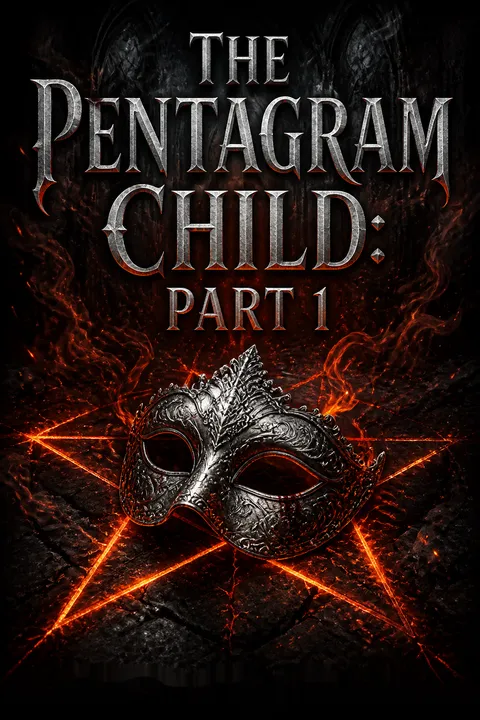


Plot Summary
Prologue
Ten months after Draven left her, Keira dreams that a peaceful clearing has become a slaughter ground. Human body parts lie arranged in a pentagram, while a storm turns the garden to ash. Draven appears across the blood, first beckoning and then threatening her as symbols burn through his sleeves.
When he speaks of the Pentagram Child, Keira wakes with the image of the symbol lodged in her mind. The dream binds her grief to the book’s coming danger: the violence is not only a memory or a nightmare, but a warning she cannot yet interpret.
The prologue makes Keira’s separation from Draven feel like an active wound rather than settled history. Her mind revisits the place where they first met, then contaminates it with blood and decay, turning romantic origin into a scene of anticipated catastrophe. Draven’s shifting voice also gives the dream its central uncertainty: the beloved man and the dangerous force inside him appear inseparable. The pentagram is presented before Keira can explain it, so the reader meets the threat first as an image that has invaded her private grief. The warning about the child turns mourning into suspense.
Ten Months in Ruins
Draven has spent ten months alone in the wrecked villa where Keira last saw him, refusing to repair the room that holds the memory of their separation. His sister Sophia challenges his self-imposed punishment: Keira is alive, but a circle of supernatural allies cannot protect the heart Draven broke.
Their brother Vincent tries to stop the argument, yet Sophia reveals that their father predicted this turn and that Draven must seek the truth. The name Asmodeus jolts Draven out of numbness. He has avoided learning about Keira because distance seemed safer than hope, but his sister’s warning suggests that avoidance is now another form of harm. He heads for Hell to confront their father.
Draven’s untouched wreckage is less a memorial than a chosen sentence. By refusing to repair the room, he keeps guilt physically present and avoids the risks of acting in a world where Keira might have moved on. Sophia’s challenge distinguishes protection from care: guards can preserve Keira’s body, but they cannot undo the emotional injury Draven caused. Her insistence is not merely romantic matchmaking; it exposes how his withdrawal lets fear masquerade as sacrifice. The mention of their father becomes a pressure point because it offers Draven a reason to act without yet promising that action will restore the relationship.
A Duel in Hell
Draven enters his father Asmodeus’s kingdom and fights through the guards, welcoming the violence as an outlet for months of restraint. Asmodeus answers his son’s challenge with a duel, then explains that the Fates misled both Draven and Keira. Draven still believes the Oracle’s warning that he may cause Keira’s death, so the revelation does not immediately free him from his fear.
Asmodeus instead presses him to recognize that Keira fought for their love while Draven surrendered it to terror. When Asmodeus claims Keira has a new supernatural lover, Draven loses control, then agrees to return to Afterlife with Sophia. The possibility of seeing Keira again defeats the isolation he had treated as permanent.
The duel turns Draven’s internal conflict into a physical contest with the one person whose authority he cannot dismiss. Asmodeus does not simply tell him to reclaim Keira; he uses his own concealed devotion to Keira’s mother to show that love and restraint can coexist without surrender. Draven’s anger at the news of a rival reveals how little his claimed renunciation has changed his attachment. Yet jealousy alone is not growth. His return matters because he accepts uncertainty as a reason to investigate rather than treating the Oracle’s warning as an unquestionable command.
Afterlife's Unwanted Reunion
Keira has tried to build an ordinary life after the breakup. She studies at college, works in a library, and has been dating Alex Cain, a polished architect who calls her Catherine, for six months. When Sophia persuades her to return to Afterlife, Keira expects to see old friends, not Draven. Alex surprises her by arriving too, and she introduces him to Draven as her boyfriend.
The gathering tightens at once: Draven questions Alex’s intentions, Alex calmly claims a place beside Keira, and the family watches the two men measure each other. Keira feels guilty for having moved on and angry that Draven seems to believe he still has a say in her choices. The reunion makes her private grief public again.
Keira’s new routines are concrete attempts at self-reconstruction, not evidence that she has stopped loving Draven. Alex offers a relationship with fewer reminders of the supernatural danger and emotional intensity that defined her past, while the name Catherine gives her a small refuge from associations she cannot escape. The club reunion removes that refuge in front of an audience. Both men treat the encounter as a contest over Keira, while she must manage the social consequences of their rivalry. Her guilt shows how easily an abandoned partner can feel responsible for the other person’s pain, even when she is exercising the right to continue living.
The Bedroom Door
Draven carries Keira toward his private rooms, but she panics at the thought of entering the chamber tied to their happiest memories. He takes her instead to his office and holds her while she admits she cannot bear to remember being loved by him. Their playful reunion briefly restores their old ease, then Draven warns that Alex is a Nephilim and may hurt her.
Keira tells him she already knows what Alex is, because Alex disclosed it himself. Draven’s demon side breaks through; he orders her away, and she leaves in tears. Vincent finds her in the corridor and carries her out on his motorcycle. Behind the door, Draven hears her confess that she still loves him, but does not follow.
The room change makes Keira’s trauma spatial: she can face Draven in an office, but the bedroom carries an emotional history too intense to revisit. Their teasing shows that intimacy survives, though it cannot yet be trusted. Alex’s disclosure complicates Draven’s protective role, because Keira has chosen to accept a truth from Alex that she believes Draven would use against her. His eruption confirms that love has not made him emotionally safe. Vincent’s rescue gives Keira a way out without forcing her to decide whether leaving Draven means abandoning him forever.
Vincent's Cliffside Truth
Vincent takes Keira to the cliff near Draven’s hidden cave and explains that his brother’s anger and jealousy come from love, not indifference. Keira recognizes the parallel with her own bond with her sister Libby: watching someone you love suffer can hurt almost as much as suffering yourself. She returns to Afterlife, where Draven waits, and they agree to try being friends.
His sister Sophia arranges a rooftop gathering, and Keira reconnects with Zagan and Ragnar, her former bodyguard. She falls asleep among the group and wakes in Draven’s arms. The old closeness returns so easily that neither can pretend the friendship is emotionally simple, even as Keira leaves the next day for Italy with Alex.
Vincent translates Draven’s silence into a form Keira can recognize without asking her to excuse it. His comparison to Libby gives emotional evidence rather than a supernatural explanation: love makes another person’s pain difficult to witness, but it does not erase responsibility for causing it. Keira’s return and the group’s welcome restore a sense of family, while waking in Draven’s arms shows how quickly physical safety can revive attachment. The Italy trip then functions as a test of distance. Keira tries to keep her new relationship intact even as her body and memory keep returning to Draven.
A Library Warning
At Keira’s library job, Draven appears and confronts her about Alex, then loses his temper when she confirms she knows Alex is a Nephilim. He warns that Alex is dangerous; Keira accuses Draven of treating everyone outside his family as an enemy and refuses to let him control whom she dates. Alex arrives at the library, and Draven watches them together.
Later, Alex’s work interrupts their dinner in Portland, leaving Keira alone with food she dislikes and no ride home. Draven takes the empty seat and turns the failed date into an evening together. He spends lavishly on dinner, then asks Keira to accompany him to a masked ball in Venice. She does not answer immediately, but the invitation unsettles her resolve.
The library scene places Draven’s protective instincts inside an ordinary institution, where his power and anger cannot be mistaken for neutral concern. Keira’s refusal is an important act of boundary-setting: she knows Alex’s nature and rejects Draven’s assumption that knowledge gives him authority over her. Yet Alex’s repeated absences weaken the stability he represents. Draven’s arrival after the failed dinner offers attention precisely where Alex has withdrawn it, making care difficult to separate from competition. The ball invitation raises the emotional stakes beyond a casual reunion, while Keira’s hesitation shows that wanting Draven is not the same as trusting him.
Milan's Painted Nightmare
Keira and Alex reach Milan after a booking error sends them to a more expensive hotel, and Alex’s irritation quickly strains their holiday. In her suite, Keira dreams of a grim artist’s studio filled with violent paintings, including the murdered campers whose bodies were arranged in a pentagram. A skeletal face appears in a portrait, and the dream connects it to Alex before she wakes.
At a gallery event, Alex gives her an elaborate dress and takes her to admire the artwork, but the night becomes tense when Lucius arrives. Lucius warns Keira about Alex and insults him; Alex reacts with hostility. Keira tries to defend both men, then wanders away, increasingly uneasy about the images and supernatural warnings surrounding her.
Milan’s polished luxury cannot keep the violence out of Keira’s inner life. The dream turns a public mystery, the slaughtered campers, into personal imagery by attaching it to a portrait that resembles Alex. At this point the image is not proof, but it makes Keira’s intuition impossible to dismiss. Alex’s gifts and planned outing appear caring, yet his temper and insistence on controlling the evening complicate that surface. Lucius’s warning adds another voice to the pattern Keira has resisted hearing. The gallery becomes a threshold where aesthetic objects carry evidence, and where beauty no longer guarantees innocence.
The Letter in the Cave
After Keira leaves for Italy, Draven remains behind and visits the cave where they once shared a private life. Vincent has brought him there to face what Keira left behind. Beneath a pillow, Draven finds a lock of her hair and a letter explaining that she cannot keep waiting for an ordinary future that excludes him.
She intends to find him again, whatever the Fates have decided. The message changes the meaning of her departure: Keira had not simply accepted his rejection or chosen to forget him. Draven finally understands that she continued fighting for their bond after he stopped. He decides to go to Italy and reclaim the chance he had wrongly assumed she no longer wanted.
The lock of hair and the letter give Draven material proof that his interpretation of Keira’s silence was incomplete. He had mistaken her attempt to survive without him for a final choice against him. Her words do not remove the harm he caused, but they expose the asymmetry of their sacrifice: she remained willing to cross distance while he treated distance as protection. The cave, once a refuge for their intimacy, becomes an archive that revises his memory. His decision to travel is therefore not simply an act of jealousy. It is an answer to evidence that Keira had kept choosing him.
Seventy-Seven Thousand Reasons
At the gallery, Keira finds a sculpture of two lovers that she desperately wants but cannot afford. Draven appears after Alex leaves to handle work, joins Keira for dinner, and replaces the meal Alex abandoned. He admits he has been watching over her, then bids seventy-seven thousand dollars for the artwork when Keira’s single bid falls short.
The purchase is both a gift and a reminder of the intimacy they still share. In the hotel pool later, Draven finds Keira swimming alone after Alex leaves in a huff. Their teasing turns physically charged, but Draven stops short of asking for more than she can give. He renews his invitation to the Venetian ball, and Keira begins to consider choosing him.
The sculpture gives the couple an external form for a feeling Keira has tried to keep private, while the extravagant bid turns Draven’s attention into an unmistakable act. His spending risks reproducing the imbalance of power between them, but he frames the purchase around what Keira wanted rather than what he can command. Alex’s departure and sulking make his support feel less reliable by comparison. The pool scene shows that desire remains mutual, but restraint matters: Draven cannot treat attraction as permission. Keira’s decision is still pending, so the section holds romance and caution in the same breath.
The Masked King's Choice
Keira agrees to travel with Draven to Venice after Alex cancels their plans, choosing the man she still loves despite her fear of being hurt again. In Draven’s palazzo, she meets Pip and Adam, then joins Sophia and Pip in preparing for the supernatural ball. A lavish gown and a lace mask make Keira feel out of place, while Draven gives her a diamond heart set between sculpted wings.
During the fitting, she admits she once imagined becoming Mrs. Draven. He hears her. When she later sees him dressed to match her, their unspoken feelings become harder to deny. The preparations transform a tentative invitation into a public evening where Keira will have to decide whether she can stand beside him.
The Venice invitation is a choice made under imperfect conditions: Alex’s cancellation creates the opening, but Keira’s longing supplies the reason she walks through it. The gown and mask intensify the contrast between her private vulnerability and the public role Draven is preparing to claim for her. The winged heart is not merely an expensive ornament; it offers a physical sign of the bond she has tried to declare dead. Her confession about marriage escapes before she can police it. Draven’s hearing of it shifts the evening from flirtation toward commitment, though neither has yet resolved the danger that divided them.
Queen of the Square
At the ball in St Mark’s Square, Draven presents Keira to his supernatural court as his queen, then dances with her before the crowd. For a brief time she accepts the closeness and believes their love may survive the past. The moment breaks when Keira sees Aurora, Draven’s former lover, and hears that he needs her.
Keira runs into the masked crowd, where a stranger tries to seize her. Her power surges and throws people away, but she escapes only when Sigurd finds her and takes her to safety in the bell tower. He tells her to stop fleeing from the truth. Meanwhile, Draven searches the square, unaware where she has gone. The ball ends with Keira’s faith shaken and her protectors scattered.
Draven’s public declaration gives Keira status but cannot give her emotional security. The dance briefly makes their private history visible as shared joy; Aurora’s appearance then demonstrates how quickly that joy can be destabilized by an unresolved past. Keira’s flight is not simply jealousy. It repeats her familiar strategy of escaping before she can hear an explanation that might expose her to another rejection. Her uncontrolled power suggests that her body is changing faster than her understanding of it. Sigurd’s counsel helps her see that flight preserves neither safety nor clarity.
The Moth's Hidden Army
Draven searches for Keira while Lucius explains that her journey has drawn unlikely supernatural allies into motion, including Sigurd and Cerberus. He suspects the Fates sent Keira among them to awaken rulers who had refused their responsibilities. Keira returns after the attempted abduction and Sigurd’s advice, keeping her promise not to run from Draven again.
Draven, shaken by the danger and by how close he came to losing her, tells her he will stop waiting. Their reunion is no longer a cautious agreement to be friends. The two choose each other physically and emotionally, but Draven still has to explain why he abandoned her and what the Oracle told him. Keira demands the truth rather than another beautiful evasion.
Lucius reframes Keira’s encounters as political as well as romantic: her effect on others may be part of a larger design, not just a sequence of lucky rescues. This enlarges her role without making her a passive instrument, since each ally responds to the person she has actually met and treated with trust. Her return directly answers Sigurd’s challenge and alters the pattern of the relationship. Draven’s promise to stop waiting matters because it replaces withdrawal with participation. Yet intimacy cannot settle the central conflict; Keira’s insistence on explanation makes truth the next test of their renewed bond.
Tartarus Between Them
After they make love, Draven finally tells Keira why he believed leaving would save her. The Oracle said the Fates foresaw him causing her death, and he trusted the warning because he thought the Fates could not lie. He also explains the scars on his arms: when longing drove him to project himself into Keira’s dreams, Aurora bound his demonic side and sent it to Tartarus, the prison beneath Hell.
Aurora is Eos, a Titaness, which makes the process possible. Draven now suspects the Fates manipulated them both, using Keira’s journey to bring powerful allies together. Their closeness lets Keira shield him from the destructive force in his scars, but the truth also reveals how fear governed his choices.
Draven’s confession recasts abandonment as an ethically consequential decision, not an innocent misunderstanding. He chose certainty about a prophecy over trust in Keira’s ability to face danger with him. The account of Tartarus makes that choice bodily: his desire became something he believed had to be imprisoned, and the scars keep the cost visible. Keira’s power to shield him reverses their familiar roles, making her an active participant in his safety. Still, the explanation does not absolve him. The section’s emotional work lies in separating motive from consequence: Draven meant to protect Keira, but his fear deprived her of agency.
Cain's Borrowed Trust
Draven leaves to investigate the threats surrounding Keira, and Alex arrives at his palazzo with breakfast. He claims the Fates sent him to protect her and says his connection to her was meant to provoke Draven into returning. Keira notices that his account does not match the Oracle she knows, but she follows him before she can test the lie.
Alex knocks her unconscious and takes her back to Afterlife. There, he forces her to open the hidden Temple entrance with her blood, then explains that his mother was Eveleen and that he is the last Cain. He intends to use Keira’s blood and Draven’s access to reach Tartarus. His story turns the supposedly safe boyfriend into the architect of the danger.
Alex’s betrayal works because it borrows the language of care. He presents control as protection, exploiting Keira’s desire to believe that her relationships can exist outside Draven’s danger. Her skepticism arrives, but too late to prevent her capture, showing that insight alone is not power when another person controls the situation physically. The blood-activated door makes her body the literal instrument of access to a hidden history. Alex’s Cain lineage connects personal betrayal to a mythic plan, transforming the romance triangle into a struggle over who may use Keira’s agency and blood.
Caliburnus Comes Home
As Draven’s family learns Keira is missing, the Oracle returns and reads a message written in Keira’s blood and Draven’s: Eveleen. Draven and his siblings connect the name to Alex’s lineage and rush toward Afterlife. Lucius enters through a concealed passage and finds Caliburnus, the sword once taken from him, embedded in a stone hand.
He reclaims it by giving the statue his blood. In the Temple, Alex has tied Keira beside the ancient tree and begins spreading blood through a pentagram. He tells her that Draven killed his parents and that he intends to release the Titans. Lucius reaches Keira and tries to take her out, but Alex attacks before they can escape.
The return of Eveleen’s name converts a family mystery into an urgent clue, while Caliburnus gives Lucius a recovered instrument of identity and action. Both discoveries arrive as the story narrows toward the Temple, where old history is no longer safely symbolic. Alex’s ritual makes the pentagram from Keira’s prologue concrete: the image that first haunted her is now part of a deliberate operation. His accusation against Draven also personalizes the threat, grounding world-ending ambition in inherited grievance. The section gathers separate clues without resolving their contradictions, increasing urgency as the past becomes a weapon.
Blood Opens Tartarus
Alex uses Keira’s blood to awaken the ancient dead, and Lucius fights through them with Caliburnus while Keira absorbs their energy and blasts open a path to him. Alex reveals that the Nephilim he impersonated was his brother, whom he killed, and that he is the Venom of God. His bite poisons Lucius, who collapses as Alex claims victory.
Alex then tortures Keira through the wounds she has suffered before, forcing Draven to take his place on the altar. He sends Draven to Tartarus with a vial of his blood, demanding that he free Sammael and the Titans before Keira can be returned. Alex identifies Sammael as his father. Part One ends with Lucius apparently dead, Keira captive, and Draven trapped below.
The climax fuses the novel’s recurring images into mechanisms: Keira’s blood opens the Temple, her accumulated injuries become instruments of coercion, and the pentagram converts private trauma into political ritual. Her energy blast shows that she is not merely a victim, but her power cannot protect everyone; Lucius’s apparent death marks the limits of individual courage against a prepared system. Draven’s sacrifice repeats his original attempt to save Keira through separation, except now Alex controls the terms. The ending withholds resolution deliberately. Love has brought the couple together, but the same bonds give their enemy leverage over both.
Analysis
The novel places a romance inside a struggle over who has the right to decide what another person can survive. Draven’s original separation is framed as protection, but its psychological cost is imposed on Keira without her consent. The later reunion does not erase that asymmetry; it makes the couple confront it. Keira’s demand for the truth and her ability to shield Draven reverse the assumption that supernatural power belongs only to kings. Her influence comes less from command than from repeated acts of recognition, which draw isolated rulers and former enemies into relation.
Prophecy complicates this agency. The Fates appear to provide certainty, yet their manipulation encourages characters to mistake fear for knowledge. Draven’s obedience to the prediction produces the very rupture he hoped would prevent harm. Alex exploits a similar confusion by presenting coercion as protection and using Keira’s trust as a route to power. The story therefore distinguishes care from control by asking whether a protector can tolerate the other person’s informed choice.
The recurring pentagram, blood, and damaged bodies make private suffering legible as political infrastructure. Keira’s wounds are not decorative proof of toughness; they are repeatedly used by others to open doors and compel obedience. Her power interrupts that pattern but does not abolish vulnerability. The ending sharpens the cost of the novel’s central bargain: Draven once left Keira to save her, then returns and is forced away again under threat to her life. Part One closes before either lover can know whether sacrifice has finally become solidarity, leaving that distinction as the story’s unresolved test.
Review Summary
People Also Read

Characters
Keira Williams
The heart that gathers kingsKeira is a young woman whose humor, stubbornness, and instinctive kindness draw supernatural beings into her orbit. She has survived abduction, violence, and the loss of the man she loves, yet resists being reduced to either a victim or a prophecy. Her coping strategy is often to joke, retreat, or insist that she can manage alone. Those habits protect her from overwhelming feelings, but they can also keep her from asking for help or demanding the truth. Keira’s central need is not simply to be loved by Draven; it is to remain an active chooser in a life that powerful forces keep trying to arrange for her.
Draven
The divided Demon KingDraven, also called Dominic, is a powerful King whose demonic and angelic natures contend within him. He is intensely protective, emotionally controlled in public, and capable of tenderness that sits uneasily beside his authority and temper. His defining weakness is the belief that love gives him the right to make dangerous choices on another person’s behalf. He leaves Keira because he fears a prophecy, then struggles with the harm his secrecy caused. Draven’s devotion is genuine, but the story tests whether he can replace unilateral sacrifice with honesty and shared risk.
Alex Cain
The charming false refugeAlex enters Keira’s life as a handsome, courteous architect with a French upbringing and an apparent preference for conventional romance. He offers her a version of ordinary life, and his distance from Draven’s family initially makes that offer appealing. Yet Alex’s reserve about his past and his growing irritability complicate the image of the dependable partner. He is intelligent enough to manage impressions and confident enough to challenge Draven directly. His presence forces Keira to distinguish between seeming safe and being trustworthy, while his relationship with her exposes how easily care can be used to disguise control.
Lucius
The dangerous loyalistLucius is an ancient supernatural ruler and Draven’s former lieutenant, proud, sardonic, and accustomed to surviving through force and calculation. His history with Draven is marked by betrayal and resentment, yet Keira’s compassion changes the terms of their connection. He speaks bluntly, often using humor to conceal vulnerability, but his actions reveal a fierce loyalty to those he accepts as his own. Lucius is a practical reader of hidden motives and a formidable fighter. His willingness to follow Keira’s trail shows that he can choose responsibility over old grievance, even when doing so means returning to a place he once rejected.
Vincent
The steady Angel brotherVincent is Draven’s Angelic brother and one of Keira’s most reliable confidants. Calm where Draven is volatile, he offers comfort without pretending the truth is simple. He understands the cost of his brother’s choices and helps Keira interpret the love beneath Draven’s behavior without excusing the damage. His motorcycle rides and quiet presence give Keira a safe space to grieve and think.
Sophia
The sister who intervenesSophia is Draven and Vincent’s sister, sharp-tempered, affectionate, and unwilling to let family members hide indefinitely inside their mistakes. She pushes Draven toward the truth and welcomes Keira back into the family’s circle. Her humor and elaborate hospitality soften the supernatural household, but she can also be manipulative when she believes reconciliation is needed.
Pip
The bright Imp friendPip, also known as Winifred, is Keira’s exuberant Imp friend, recognizable by her vivid clothes, blunt jokes, and fearless appetite for fun. Her loyalty is expressed through action as much as affection. She brings levity to tense gatherings and belongs to a supernatural world that does not always welcome her individuality.
Adam
Pip's devoted husbandAdam is Pip’s husband and a grounded presence among the supernatural gathering. He is patient with Pip’s unruly humor and protective without trying to diminish her. His affection shows in the way he follows her schemes, even when they leave him in inconvenient situations.
Zagan
Sophia's shadowed partnerZagan is Sophia’s partner and a member of Draven’s trusted circle. Hooded and reserved, he watches more than he says, but his loyalty is clear in the way he supports Sophia and helps hold the family together.
Asmodeus
Draven's infernal fatherAsmodeus rules a kingdom in Hell and is Draven’s father. He is flamboyant, irreverent, and deeply powerful, but beneath the spectacle he understands the pain of loving someone beyond possession. His challenge to Draven draws on that experience rather than simple authority.
Sigurd
The guarded Viking KingSigurd is a Viking warrior King who resists the role his power suggests he should accept. He is blunt, formidable, and unexpectedly perceptive about fear. His bond with Keira is built on trust earned through protection and candor.
Ragnar
Keira's giant protectorRagnar is Keira’s former bodyguard, a towering demon whose intimidating appearance gives way to warmth around her. He treats her with affection and a familiar teasing ease, reminding her that the people who once protected her have not forgotten her.
Pythia
The child OraclePythia is the Oracle, a young-looking figure whose visions and statements influence the Fates’ designs. Her apparent childishness contrasts with the authority of her role. She can be exasperatingly direct, but her interventions point toward consequences larger than any one relationship.
Takeshi
The vision-bearing masterTakeshi is Draven’s council member and former martial arts master. His visions arrive at physical cost, making him a vulnerable source of warnings.
Sammael
A name beneath HellSammael is a powerful figure in the history of Draven’s world and a presence whose name carries danger. His connection to the infernal order makes him central to the struggle over Tartarus.
Eveleen
The ancient bloodline's motherEveleen is an ancient figure connected to the Cain bloodline and the story’s mythology of the first humans. Her name surfaces as a clue linking personal history to the threat against the Titans.
Seth
The masked artistSeth is a mysterious figure associated with disturbing paintings and a sudden act of protection. His appearances suggest that Keira is watched by forces beyond Draven’s household.
Cerberus
The Hellhound rulerCerberus is the ruler of the Hellhounds, a powerful and guarded figure whose grief has kept him from embracing his wider authority. Keira’s presence challenges his isolation and makes him part of her expanding circle of allies.
RJ
Keira's outspoken friendRJ is one of Keira’s close friends at Afterlife. She is outspoken and loyal, and her presence connects Keira’s supernatural life to the friendships she built before Draven returned.
Libby
Keira's protective sisterLibby is Keira’s sister, a new mother, and a practical source of love and support. Her concern for Keira is direct, sometimes skeptical, and rooted in having witnessed the damage left by Draven’s disappearance.
Frank
Libby's steady partnerFrank is Libby’s partner and the father of their daughter, Ella. He is protective of Keira and wary of Alex, while his humor keeps family life warm and grounded.
Plot Devices
The Fates' prophecy
Fear disguised as certaintyThe Oracle warns Draven that he may cause Keira’s death, and he treats the warning as an unavoidable truth because he believes the Fates cannot lie. That belief drives his ten-month separation from Keira and shapes his imprisonment in Tartarus. Later revelations suggest that the Fates manipulated what both lovers understood, turning prophecy into a means of steering them toward encounters and alliances. The device makes fate psychologically potent: the characters do not merely fear a prediction, they make choices that help create its consequences. Its function is also to test whether love can survive when certainty is replaced by trust and shared risk.
Keira's pentagram blood
A living keyKeira’s birthmark and blood connect her to the pentagram that haunts her dreams and appears in the ritual imagery. Her blood opens the hidden Temple entrance and helps awaken the ancient dead, making her body a key to supernatural spaces and plans she does not understand. The symbol appears first as a nightmare, then as a clue in paintings and finally as an active instrument in Alex’s ritual. Its repeated use links private vulnerability to public danger. The device also reflects the conflict over agency: Keira’s blood can be exploited, but her emerging power can redirect the forces that attempt to use it.
Tartarus and its chains
Desire turned prisonTartarus is the deepest prison in Hell, where the most dangerous beings are bound. Draven chooses to have his demonic side confined there when he fears that his longing for Keira may harm her. The chains and scars become physical evidence of the belief that love must be controlled through separation. Alex later turns the prison into a route toward releasing the Titans, using Draven’s access and a vial of blood as part of his scheme. Tartarus therefore carries two meanings: an attempted safeguard against Draven’s power and a possible gateway to catastrophic freedom.
The painted murders
Dreams as forensic cluesKeira dreams of a studio filled with violent images, including a depiction of the slaughtered campers whose bodies were arranged in a pentagram. The paintings introduce the visual language of the coming threat before Keira can identify its source. A recurring carved dagger, a skeletal face, and messages about demons blur the boundary between art, warning, and evidence. When Keira encounters the artist outside her dream, she still cannot fully interpret what she has seen. The device makes her intuition narratively important while preserving uncertainty about which figures are dangerous and which are trying to help.
The masked ball
Public identity made visibleThe supernatural ball in Venice uses masks and elaborate costumes to turn concealed identity into the event’s central language. Draven gives Keira a mask crowned with his own insignia, then publicly presents her as his queen. The spectacle transforms their private reconciliation into a declaration before his court. Yet masks also heighten uncertainty: Keira sees danger, former attachments, and unfamiliar protectors among the crowd, while faces are difficult to read. The ball’s pageantry cannot guarantee emotional security. It makes Draven’s claim visible, but Keira must still decide whether she can trust the man making it.
Afterlife Saga Series

About the Author
Other books by Stephanie Hudson

Download PDF
Download EPUB
.epub digital book format is ideal for reading ebooks on phones, tablets, and e-readers.








