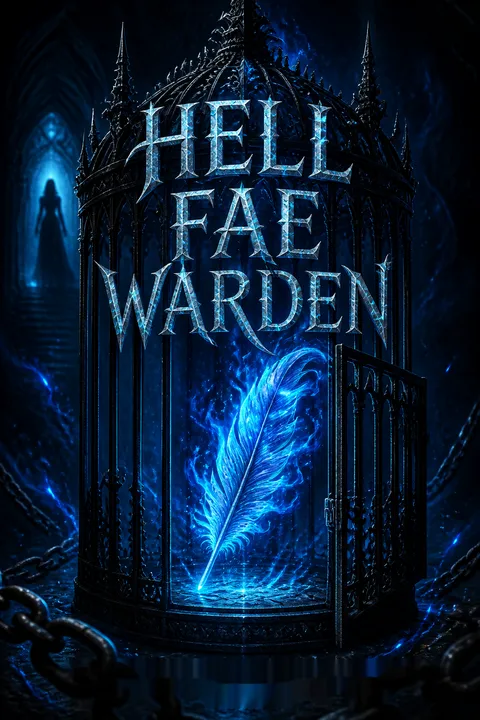


Plot Summary
Prologue
Typhos Lucifer, ruler of the Hell Fae Realm, wakes from a nightmare of his ancient fall with the sense that something has fractured the source of his power. A portal has opened into an unfamiliar human world, and Nightmare Fae have crossed through it.
Before Typhos can investigate, his Commander, Azazel, reports that Camillia De la Croix has escaped the bridal trials. Typhos suspects she exploited the disturbance and orders her captured, while the source’s darkened strand hints that the two crises may be connected.
The prologue makes Typhos’s private wound and public responsibility feel inseparable. His dream returns him to the betrayal that made him a ruler, while the breach threatens the realm he built to shelter rejected beings. Camillia enters this crisis first as a suspected cause, not a person with her own account. That framing establishes the book’s central conflict: authority responds to uncertainty by tightening control, even when the evidence is incomplete. The darkened strand and the portal promise a mystery, but Typhos’s immediate instinct is to punish the nearest disruption.
Thirty Days Gone
Camillia De la Croix is a Halfling Hell Fae forced into Lucifer’s bride trials after her father bargains away her soul. She has been trying to escape, but the last thing she remembers is reading in her cell after an intimate encounter with Ajax and Azazel. Now Ajax and Az have tied her to a chair and accuse her of disappearing for thirty days.
She insists only hours have passed, but neither believes her. Az’s blade and Ajax’s cold watchfulness make clear that her captors see her as a threat, not a confused prisoner. In a sealed, freezing room in the Midnight Fae Realm, Cami focuses on loosening her bonds while trying to understand how she returned to captivity.
Cami’s missing time turns an escape story into a problem of competing realities. The men measure her absence by the consequences they endured, while she can only testify to the hours she remembers. Their certainty gives them institutional power; her confusion leaves her unable to prove even her own experience. The scene also places desire beside coercion without resolving the conflict between them. Cami has shared intimacy with her captors, but that history does not cancel their custody of her or make their interrogation benign. Her attempt to free her hands is a small but decisive act of self-definition.
Truth Has Teeth
Ajax brings in his old friend Shade, the Fortune and Midnight Fae, along with Zakkai, the powerful Source Architect, and Zeph, a Warrior Blood. Zakkai’s magic forces an account from Cami, who describes the trials, her reading, and her bewildering return. He confirms that she is not lying, though her nature remains unclear.
Ajax gives her food and a bed, then leaves to think through what the spell has shown him. He had treated her as a calculating escapee, but now wonders whether he punished an innocent woman because her story threatened his wounded pride. For the first time, the interrogation has produced a fact rather than another accusation: Cami herself does not know where the missing month went.
Zakkai’s spell does more than verify Cami’s testimony. It removes the usual refuge of suspicion, forcing Ajax to confront how much of his certainty came from injury rather than evidence. His status as Warden gives him the power to define her actions, but the spell exposes the emotional history shaping that definition. Cami’s candor does not instantly free her; it changes the moral terms of her confinement. The food and bed Ajax provides are modest gestures, yet they mark the first shift from punishment toward care. Trust here begins not with affection, but with accepting that another person’s account may be true.
The Phoenix Chooses
When Ajax admits that Cami is angry because he and Az interrogated her instead of listening, Az’s Black Phoenix takes control and attacks him. The beast believes Cami belongs to them and treats Ajax’s harm to her as betrayal.
Rather than flee, Ajax offers himself to Cami as the one who should answer for the snake bites. She gives him a truth serum and learns why he mistook her escape for betrayal: he once loved Emelyn, whose death and family’s destruction left him afraid to care again.
Ajax admits that his concern for his Warden reputation concealed a deeper hurt. Cami’s anger softens, and she and the two men share an intimate reconciliation. Az regains control, but the Phoenix’s possessiveness has made Cami’s importance impossible to ignore.
The Phoenix externalizes the conflict Az cannot yet manage: his animal spirit acts on attachment before his conscious self can accept it. Its violence is dangerous, but it also exposes how thoroughly Cami has unsettled the men’s assumptions. Ajax’s confession gives his cruelty a history without excusing it; grief explains his suspicion, while his willingness to submit to Cami’s judgment makes repair possible. The intimacy that follows is emotionally consequential because it occurs after testimony, not instead of it. Cami is no longer only the object of their competing desires. She has heard their vulnerabilities and chosen, provisionally, to meet them there.
The Source Remembers
Melek, Prince and mate to Typhos, visits Cami, heals her wounds, and listens as she recounts the book’s vision of Typhos’s fall and the power source she touched. He concludes that the source tested her for thirty days, then expelled her to the human world when she could not withstand its power.
Her disappearance was not the same event as the first illegal portal, which Maliki and Ghouls created to reach an alternate reality during Monsters Night.
While Melek brings this distinction to Typhos, another portal opens in the Underwater Kingdom and drags dragons into foreign waters; several die. Typhos summons Az and Ajax to investigate, while the bridal trials remain delayed. Cami’s strange experience is now tied to the realm’s power, but not to the portal attacks.
This revelation disentangles two mysteries that had been fused by fear. The portal is a political and physical threat, while Cami’s disappearance is a personal encounter with the source. Separating them prevents the convenient conclusion that she caused every crisis simply because she is unusual. Melek’s role is crucial: he listens where the others interrogate, then translates Cami’s experience into a hypothesis Typhos can consider. Yet the source’s decision to expel her remains ambiguous. It could be rejection, protection, or an unfinished test. The uncertainty shifts the question from whether Cami is guilty to what her survival means.
A Room in Hell
Melek brings Cami to Typhos’s palace, where he gives her a protective talisman and shows her the ruler’s private wing. A statue of Typhos’s wounded fall helps her understand why he built a refuge for beings other realms reject. When she finally meets the king, Vita, Typhos’s sentient book, displays images she says never happened.
Typhos reads them as possible future events and recognizes that the book sees unusual potential in her. He disqualifies Cami from the bride trials but does not release her, warning her to stay away from the source. Ajax is temporarily removed as Warden and assigned to teach and guard her. The change offers Cami better shelter, but places her within the reach of the king whose power she touched.
The palace replaces the dungeon with comfort, but not with freedom. Cami’s new room is a more humane form of custody, and Typhos’s warning makes clear that her survival remains conditional. His statue gives political architecture an intimate meaning: the realm’s haven was built by someone who remembers rejection. Yet his capacity for protection coexists with a readiness to threaten. Vita’s images unsettle the boundary between memory and prophecy, making Cami’s future another object powerful men interpret for her. The reassignment also brings Ajax closer to her, turning surveillance into a relationship that might become mutual rather than merely imposed.
Melek’s Intended
Melek tells Cami that Typhos’s book is part of the king’s soul and that her ability to read it may signal a deeper connection. He says he intends to court her, leaving her unsure whether his directness is another game. Typhos resists Melek’s belief that Cami could be an ally, but agrees to keep her under observation rather than kill her.
Ajax teaches her about the Hell Fae kingdoms and the trials’ stated purpose: finding women the source will accept as mates for endangered species. Over several days, Cami and Ajax build a routine, share meals, and grow closer. Ajax admits he believes her and that his restraint had been an attempt to obey Typhos. When the king announces the trials will resume, their fragile domestic calm becomes temporary.
This section turns the palace into a negotiation over who gets to define Cami’s future. Melek offers choice in the language of courtship, while the trial system remains founded on bargains she never made. Ajax’s teaching gives her practical knowledge, but his explanation also asks her to understand a structure that has constrained her. Their growing closeness is not simple escape from that structure; it develops within its rooms and rules. Typhos’s reluctant tolerance is similarly double-edged. He has not accepted Cami, but he has delayed judgment, creating just enough time for relationships and evidence to complicate his initial suspicion.
The Graveyard Window
After Melek kisses her and leaves Ajax a drawing meant to guide her training, Cami returns to Vita despite her fear of another dangerous vision. The book shows her father beside a star, then presents a spell.
Using Melek’s talisman, she opens a portal, hoping to locate her father; instead, she sees Az and Melek in a Netherworld graveyard discussing Virtuous magic and the portals. They believe this ancient power is behind the breaches and that Monsters Night was only a distraction.
Ajax catches Cami before the opening fades and assumes she is escaping again. She explains what she saw, and he listens rather than restraining her. The glimpse gives the investigation a possible culprit, while confirming that Vita and the talisman can lead Cami into events she does not control.
Cami’s use of Vita is neither obedience nor simple recklessness. She tries to turn an opaque magical system toward a personal need, finding her father, but the book redirects her toward a larger danger. Her accidental window into Az and Melek’s conversation makes knowledge itself unstable: she can witness secrets without being able to participate or verify what she sees. Ajax’s response marks a meaningful contrast with the first interrogation. He still has reason to doubt her, yet he chooses conversation over force. The scene also sharpens the book’s central problem of agency: Cami can act, but the consequences of her actions exceed her intention.
Purgatory’s Golden Cage
Typhos takes Cami and Ajax to Purgatory, the Hell Fae club where the resumed trials will be shown. He orders Cami to wear enchanted chains beneath an embroidered coat, then exposes her before the gathered Hell Fae and imprisons her in a golden cage. He publicly claims Ajax violated the rules by sleeping with a candidate and uses that breach to explain Cami’s disqualification.
Ajax is immobilized by Az’s magic, unable to defend her or stop the crowd from watching. Cami refuses to bow or plead, holding herself rigid as the trials unfold on the screens. The display humiliates them both, but it also shows Typhos’s political calculation: he can keep Cami close while giving his subjects a reason for her removal.
Typhos converts private uncertainty into public spectacle. By framing Cami’s removal as a disciplinary matter, he protects the realm from questions about the source while maintaining the appearance of control. The lie is politically useful and personally brutal. Cami’s body becomes evidence in a case she did not choose, while Ajax’s enforced silence echoes the helplessness at the center of his past trauma. Her refusal to perform submission is not a victory over the cage, but it denies Typhos the emotional response he seems to be testing for. The scene makes the difference between protection and possession impossible to ignore.
The Bridal Garden Breaks
A huge portal opens in the Marsh Lands during the trial, swallowing water, ruins, Unseelie, Nagas, and brides. The blast destroys Cami’s cage and transports her into the Unseelie Bridal Garden, where she finds Veronica trapped beneath fallen stone.
Ajax reaches her, but Cami’s magic resists Az’s attempt to teleport her away. She senses a pull toward the destruction and refuses to abandon the injured bride. King Erebus appears, searching for another bride, and warns that the grounds are unstable before vanishing.
Cami and Ajax move toward the courtyard, where Typhos and Melek are struggling to close the vortex with force and water. The crisis has carried Cami into the heart of the attack, and her strange connection to Typhos’s power begins to surface.
The portal turns the trial’s controlled danger into indiscriminate catastrophe. Its victims are not judged by the source or tested for worthiness; they are simply caught in a force that consumes whatever lies nearby. Cami’s refusal to leave Veronica marks a shift from self-preservation toward chosen responsibility, but it does not erase her anger at the people who have controlled her. Ajax now supports her decision rather than overriding it, a small but important repair to their power imbalance. Erebus’s concern for claiming a bride amid a collapsing kingdom exposes how the trial system can persist even when its human cost is visible.
Warmth Against the Vortex
As Typhos’s Hellfire and Melek’s force only widen the vortex, Cami recognizes that brute power is worsening the breach. The enchanted chains around her react to Typhos’s magic, and she uses Melek’s talisman as a conduit to draw that energy through herself.
Her attempt to help triggers a painful contact with the source, which accepts her before she can turn its power against the portal. Cami releases a balanced surge that seals the vortex like glass and makes it disappear.
The blast hurls Typhos away and leaves the Marsh Lands devastated. Instead of thanking her, the furious king seizes her and takes her away for a private reckoning. Cami has saved the realm from the immediate breach, but the book ends before Typhos decides what she is to him.
Cami’s solution depends on reading the crisis differently from its rulers. Typhos and Melek answer the vortex with the powers they know, while she recognizes that their force is feeding it. Her success comes through balance and mediation, not supremacy; she becomes a conduit among the talisman, Typhos, and the source. Yet the moment does not deliver uncomplicated liberation. The source’s acceptance deepens the danger around her, and Typhos’s anger replaces any public recognition of her action. The ending preserves the conflict between usefulness and autonomy: Cami can save the realm, but that achievement does not guarantee that its king will let her choose her place in it.
Analysis
Hell Fae Warden makes the conflict between protection and control literal. Typhos built a realm for beings rejected elsewhere, but he governs it through bargains, trials, surveillance, and the threat of punishment. The contradiction is not incidental: the system’s benevolent purpose does not erase the coercion through which it operates. Cami exposes that gap because she needs shelter from the realm’s dangers while refusing to mistake shelter for consent.
The book also treats uncertainty as a test of character. Ajax and Typhos initially respond to missing information by imposing explanations: Cami must have escaped deliberately, or she must be a threat. Zakkai’s truth magic interrupts that reflex, but accepting evidence still requires emotional work. Ajax must recognize that grief and humiliation shaped his judgment; Typhos must consider that the source’s response may mean more than danger. Their authority is strongest when they can revise an interpretation, not merely enforce it.
Romance develops through repeated struggles over who may act and who must submit. Cami’s attraction to Ajax, Az, and Melek does not make her captivity harmless, and the story distinguishes desire from the power to choose. The public cage at Purgatory sharpens that distinction by turning her body into political theater. Her eventual intervention in the Marsh Lands is therefore more than a display of magical strength. She chooses to help, identifies what the rulers’ forceful solution misses, and directs power toward a result she considers necessary.
The ending withholds the expected reward of simple acceptance. Cami saves the realm from the immediate portal, yet Typhos takes her away in anger, and the larger threat remains unresolved. Her competence has made her indispensable without making her free. That tension gives the novel its forward pull: the next question is not only what Cami is, but whether a kingdom founded on refuge can recognize her agency when its survival depends on her.
Review Summary
Hell Fae Warden received mixed reviews, with an overall rating of 4.33/5. Readers praised the world-building, character development, and steamy scenes. However, some criticized the slow plot progression and repetitive internal dialogue. Many enjoyed Cami's character but felt frustrated with the male leads' treatment of her. Opinions varied on the romance dynamics and pacing. Several reviewers expressed excitement for the next book, while others were unsure about continuing the series. The cliffhanger ending left many readers eager for more.
People Also Read
Characters
Camillia De la Croix
Defiant Hell Fae candidateCami is a determined Halfling whose father’s bargain places her in the Hell Fae bride trials against her wishes. She is observant, quick to improvise, and suspicious of anyone who offers help without explaining its cost. Her instinct is to resist being treated as property, even when doing so makes her situation more dangerous. She can be funny and self-aware, but those traits do not soften her anger at coercion. Her emerging connection to Hell Fae magic complicates her effort to escape: the realm may need what she can do, but that does not mean she owes it obedience. She is most compelling when she acts from her own judgment rather than the role others assign her.
Ajax
Warden with old griefAjax is a Midnight Fae Warden who has built his identity around duty, control, and loyalty to Typhos. Beneath his intimidating restraint lies grief from losses he rarely discusses, and that history makes him wary of attachment. His feelings for Cami unsettle the defenses that once helped him survive, especially when he mistakes her actions for a personal betrayal. He is capable of cruelty when fear and wounded pride take over, but he can also acknowledge harm and accept responsibility. Ajax’s bond with Az mixes friendship, combat, and intimacy, while his growing connection with Cami challenges his belief that emotional distance is safer than risk.
Azazel
Commander and Black PhoenixAzazel is Typhos’s formidable Commander, a mixed-heritage Hell Fae who shares his spirit with a Black Phoenix. He values discipline because he knows how destructive his power can become when emotion overtakes it. His relationship with Ajax is built on trust, rivalry, and a long familiarity with each other’s darker impulses. Cami unsettles the balance between Az and his animal spirit, bringing out a protectiveness he cannot easily explain or control. Az is more comfortable acting than confessing, so his attempts to make amends tend to come through intervention, protection, or physical closeness. His inner conflict is not simply whether to trust Cami, but whether his own instincts can be trusted.
Melek
Prince and strategic confidantMelek is Typhos’s prince and mate, an elegant, perceptive strategist who often disguises serious intentions beneath playful misdirection. He understands the pressure Typhos carries and tries to persuade him to share that burden rather than meet every uncertainty with force. Melek is also unusually attentive to Cami, believing her importance exceeds her status as a candidate. His tendency to arrange circumstances without fully explaining them can make his care feel like manipulation. He is generous, clever, and difficult to read, even when he is being sincere. His loyalty to Typhos does not prevent him from challenging the king when he believes fear is obscuring a better judgment.
Typhos Lucifer
King of the Hell FaeTyphos Lucifer rules the Hell Fae Realm and created its source as a refuge for beings rejected elsewhere. Powerful, deliberate, and fiercely protective, he believes order is necessary to keep vulnerable kingdoms safe. His history of betrayal has made trust difficult, particularly when women or outsiders approach the core of his power. He often treats uncertainty as a threat to be contained, and his public severity helps preserve his authority. Yet the realm he built reflects a capacity for protection and care that complicates his harsh methods. His relationship with Melek gives him an intimate counterweight, though accepting that counsel means confronting fears he would rather manage alone.
Zakkai
Midnight Fae Source ArchitectZakkai is the Midnight Fae Source Architect, a powerful figure able to work directly with fae magic. He approaches Ajax’s interrogation with skepticism toward its premise and uses his truth magic to distinguish Cami’s honest confusion from deliberate evasion. His dry humor does not blunt his willingness to intervene when a prisoner is being mistreated. Zakkai is perceptive enough to recognize that Cami’s nature may exceed what she understands about herself, but he does not pretend to have all the answers. He represents a form of authority based on reading evidence rather than enforcing obedience.
Zeph
Warrior Blood witnessZeph is a Warrior Blood and one of the Midnight Fae allies who accompanies Zakkai to Ajax’s interrogation. He helps direct Cami toward a full account of her recent experience and recognizes the difference between questioning and intimidation. His confidence comes from strength and experience, but he is not invested in Ajax’s wounded pride. Zeph’s presence helps turn the scene into an examination of facts rather than a private contest between captor and captive.
Shade
Fortune Fae friend and fatherShade is Ajax’s old friend, a Fortune and Midnight Fae whose sharp wit and command of secrets make him difficult to predict. He arrives with his young daughter, Florica, and his ease with her reveals a tenderness that contrasts with his ruthless reputation. Shade uses humor to puncture Ajax’s self-seriousness, though his presence also reminds Ajax of the complicated Midnight Fae history he left behind. He tends to act according to his own sense of timing rather than anyone else’s demands.
Maliki
Defiant Ghoul advocateMaliki is Az’s half-brother, connected by mixed ancestry to the Ghouls and Corpse Fae. He is stubborn, politically inconvenient, and sympathetic to the needs of beings whose hunger has been neglected. His loyalty does not always align with Typhos’s rules, and he is willing to take risks on behalf of the Ghouls. Maliki’s motives complicate the distinction between rebellion and care: his decisions may threaten the realm, but they arise from a belief that its vulnerable inhabitants cannot simply be left to suffer.
Veronica Scottsdale
Bride with a stubborn streakVeronica is one of the Hell Fae bride candidates Cami encounters during the trials. She has a sharp tongue and a practical instinct for protecting herself, even when she is injured or disoriented. Her presence reminds Cami that the trial candidates are individuals with distinct fears and preferences, not a faceless group being sorted by the source. Veronica’s resistance to being controlled mirrors Cami’s own, though she expresses it in her own blunt, irreverent way.
King Erebus
Unseelie king and hunterKing Erebus rules the Unseelie and moves through the crisis with a dangerous charm that makes it difficult to tell whether he is amused or threatening. His attention is fixed on finding a bride who has caught his interest, even as his kingdom is in peril. He is beautiful, powerful, and accustomed to pursuing what he wants. His brief encounter with Cami shows how quickly his charisma can become a form of pressure, and why appearance is a poor measure of safety.
Emelyn
Ajax’s defining past loveEmelyn is a formative figure in Ajax’s past, remembered as strong-willed and unwilling to abandon what she believed was right. His memories of her shape his fear of attachment and his sensitivity to betrayal. She serves as a measure of the kind of courage Ajax recognizes in Cami, while also reminding him that love and loss have become tangled in his mind.
Onyx
Corpse Fae king and messengerOnyx is the Corpse Fae King who reports the first portal breach to Typhos. His concise warning sets the realm’s emergency in motion, and his position makes him one of the rulers responsible for the safety of the Netherworld Kingdom. He is formal, cautious, and alert to threats beyond his kingdom.
Plot Devices
The Hell Fae Source
Power and judgmentThe source is the living foundation of Typhos’s realm and the power he created to protect its inhabitants. It governs access to the Hell Fae world and is selective about the beings it accepts. Its darkened strand signals that something is wrong, while its response to Cami’s touch becomes central to the mystery of her origins and the realm’s stability. The source is not merely a magical resource: because it is bound to Typhos, its reactions expose his fears and limits as well as Cami’s unusual connection to him.
Vita
A sentient guidebookVita is Typhos’s living book, a part of his soul that can reveal history, knowledge, and images of events that have not yet happened. Cami can read it when others cannot, though she cannot direct what it shows or predict the consequences of following its prompts. The book brings her into contact with the source and later helps her witness a hidden investigation. Its guidance is useful but not reliably safe, making knowledge feel less like a map than a door that may open onto something Cami never intended to face.
The Bride Trials
A coercive mate-selection systemTyphos’s trials test whether selected candidates can survive in the Hell Fae Realm and become suitable mates for its endangered species. The system includes dangerous environments, sponsors who offer protective gifts, and rules that distinguish courtship from mating. Its stated purpose is the survival of the realm’s rejected populations, but Cami experiences its central contradiction directly: a process designed to find willing bonds begins with bargains made by others and candidates who may not have chosen to enter. The trials therefore drive both the political plot and Cami’s struggle for agency.
Melek’s Talisman
Protection and magical conduitMelek gives Cami a star-shaped talisman that protects her within Typhos’s palace and responds to her magic. At first, Cami distrusts the gift because Melek’s help often arrives wrapped in riddles. The talisman later enables her to open a portal and helps her channel power during the Marsh Lands crisis. Its dual function makes it a symbol of the book’s unstable boundary between care and influence: it can shield Cami, but it also connects her to forces she does not yet understand.
The Rogue Portals
A spreading realm breachThe portals appear in different kingdoms and pull or carry beings between worlds. The first allows Nightmare Fae to reach an alternate reality during Monsters Night; later openings endanger dragons and destabilize the Marsh Lands. Although Cami’s contact with the source initially seems connected to the first breach, Melek separates the events, and Az’s investigation points toward Virtuous magic. The portals keep the realm’s rulers occupied and give the story an escalating external danger that eventually converges with Cami’s own emerging power.
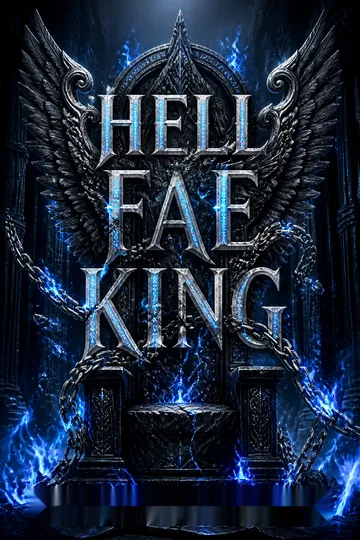
Hell Fae Series
About the Author
Download PDF
Download EPUB
.epub digital book format is ideal for reading ebooks on phones, tablets, and e-readers.








