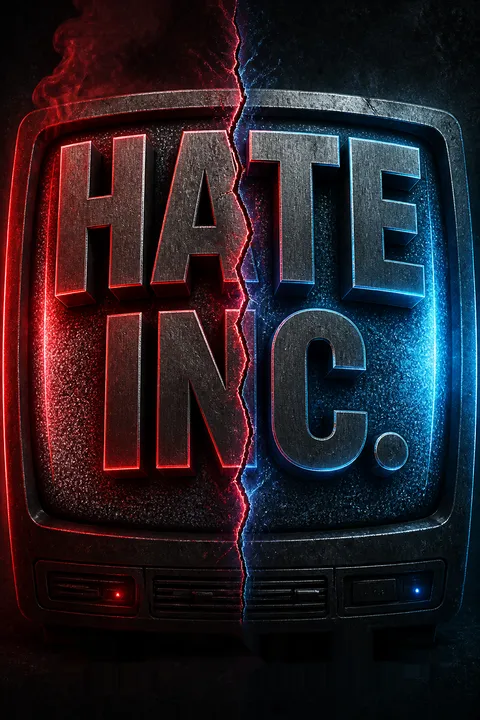


Key Takeaways
Treat personalized outrage as advertising bait, not neutral news.
Follow the business model. Taibbi argues that news is increasingly packaged for particular audiences, using political stories to attract attention and advertising. Online platforms can match people with content that fits their interests and habits, then sell access to those audiences. The emotional hook may be a real event, but the selection and presentation are shaped by what keeps people watching. The older idea of manufacturing consent, in which media narrowed acceptable debate, now sits alongside a market for keeping different audiences angry at one another.
Facts can still mislead. Taibbi does not claim that most reporting is invented. He argues that true details can be chosen, repeated, and framed to serve a commercial story. After the 2016 election, only 20 percent of Americans reported high confidence in newspapers, even as Trump coverage brought major outlets renewed attention and revenue. The consumer is not simply receiving information. The consumer is also the product being delivered to advertisers.
The useful shift is from asking only whether a report is true to asking why this report, for this audience, at this moment. That question resembles media-literacy approaches that examine framing and omission, not just factual accuracy. It also avoids assuming that every misleading outcome requires a coordinated plot. Commercial incentives can produce predictable distortions without a meeting in a back room. Still, a market explanation is not a full account of every newsroom choice: reporters and editors retain agency, and some outlets invest in work that is slow, costly, and unpopular.
Ask which institutions disappear when every story becomes partisan blame.
Look past the villain. Taibbi says news stories are easiest to sell when a bad event can be assigned to one party. Problems shared by both parties, or produced by institutions rather than one politician, struggle to become major stories. He points to central-bank support for finance, military spending, surveillance, and foreign policy as subjects that often resist a neat red-versus-blue frame.
A revealing headline. In 2018, Congress approved a $716 billion defense authorization with an $82 billion increase over the prior year and broad bipartisan support. The Senate vote was 85 to 10. Yet widespread coverage focused on President Trump failing to mention Senator John McCain during the signing. The interpersonal slight made a cleaner story than the scale of spending or the agreement behind it. The underlying lesson is not that both parties are always equally responsible, but that partisan framing can hide who shares power and who benefits.
This is a strong case for institutional analysis: many consequential outcomes emerge from durable rules, budgets, and coalitions, not a single dramatic decision. Political accountability becomes more useful when reporting identifies which actors had leverage and how they used it. The caution is that bipartisan framing can itself flatten important differences. Shared participation does not imply identical motives, influence, or responsibility. A careful reader should resist both the one-villain story and the lazy conclusion that everyone is equally guilty.
Refuse to let politics become a permanent home-team sport.
Learn the audience's role. Taibbi compares political coverage to professional wrestling and sports broadcasting. Both depend on recognizable heroes, villains, and recurring conflict. In wrestling, kayfabe is the performance that preserves the illusion of a real contest. Political coverage borrows the drama, then turns viewers into supporters who are encouraged to cheer their side and resent the other.
A small radio test. Boston sports host Fred Toettcher told a Chicago radio program he did not care whether the Patriots won a championship game. The hosts treated his indifference as a failure because they expected a hometown partisan. His show succeeded by joking about sports instead of demanding constant loyalty. Taibbi sees the same pressure in political news: panels and election graphics turn policy into a scoreboard, while the audience is trained to experience each development as a win or loss.
The sports analogy makes emotional investment visible. A scoreboard simplifies a complex contest into outcomes that are easy to track and feel, while a policy question may require patience and uncertainty. That does not make sports fandom inherently foolish; shared enthusiasm can build community. The problem begins when the game frame becomes the only way to interpret public life. Citizens then risk treating opponents as rival fans rather than people with whom they must share institutions and consequences.
Judge candidates by power and policy, not press-made likability tests.
The campaign beauty contest. Taibbi recalls political reporting that measured candidates by appearance, charm, supposed toughness, and whether voters might enjoy having a beer with them. The beer test gained attention after a beer company commissioned a 2000 poll asking whether voters preferred to drink with Al Gore or George W. Bush. Bush led 40 to 37 percent, and journalists turned the marketing stunt into a serious campaign measure.
The standards shape behavior. Candidates were judged for being too dull, too passive, too short, or insufficiently presidential, while policy and donors could receive less attention. Taibbi argues that Donald Trump benefited from openly ridiculing these rituals. His success exposed how much campaign coverage had become a performance contest, yet the press had helped make his spectacle more visible long before deciding it was a problem.
The chapter's sharpest point is that media standards are not merely commentary on campaigns. Candidates adapt to them, and voters can start mistaking performance for qualification. Charm and communication do matter in democratic leadership, but they are weak substitutes for examining promises, alliances, and governing records. The better question is not whether a candidate feels familiar over a drink, but what interests gain access when that candidate takes office.
Treat polls and predictions as influence, not neutral weather reports.
Watch the invisible primary. The invisible primary is the period before voters choose a nominee, when party leaders, donors, endorsements, and media attention can narrow the field. Taibbi describes a cycle in which early backing attracts money and favorable coverage, improving poll numbers and prompting still more backing. The process is called invisible because it can shape the options before the public campaign feels fully underway.
Predictions can manufacture confidence. In 2004, electability became a dominant argument for John Kerry. In Iowa, half of voters leaving the caucuses named the ability to beat President Bush as their main concern. Taibbi argues that journalists helped make electability central by repeatedly asking voters about it. Donald Trump's rise in 2016 challenged the assumption that donors, endorsements, and familiar campaign rules could reliably identify the winner. Polls still provide evidence, but the questions and stories around them can change what voters think matters.
This resembles an informational cascade: people use others' choices as evidence, even when those choices reflect incentives or incomplete knowledge. Endorsements and polling can convey genuine information, but they can also amplify an early consensus until it looks inevitable. The term invisible primary usefully exposes elite influence, although it should not imply that party actors always control outcomes. Trump's victory demonstrates that the feedback loop can break, not that polling or endorsements have become meaningless.
Demand evidence before fear turns a small threat into public policy.
Recognize moral panic. A moral panic is an exaggerated public alarm about a group cast as a threat to social order. Sociologist Stanley Cohen used the term after studying British tabloid coverage of Mods and Rockers, youth groups blamed for seaside disorder in 1964. The events included a few arrests and damaged beach huts, but headlines portrayed a widespread invasion. Reported damage in one town was about £400.
Fear can feed itself. Taibbi describes the Deviancy Amplification Spiral as a feedback loop: more behavior is labeled deviant, authorities respond more aggressively, targeted people become more alienated, and the public grows less tolerant. He connects this pattern to later scares, including the crack-cocaine panic and exceptionally harsher sentences for crack than powder cocaine. A real problem can deserve attention, but sensational scale and punitive solutions should be checked against evidence.
The framework is useful because it treats panic as a process, not merely a mistaken headline. Coverage can influence public reaction, which can generate more incidents and more calls for force. That feedback can be particularly dangerous when the targeted group has little ability to answer back. The counterpoint is that early warning is sometimes warranted. The safeguard is proportionality: establish a baseline, distinguish isolated events from trends, and scrutinize the proposed response as carefully as the threat.
Treat anonymous security claims as allegations until evidence is independently checkable.
Beware four-sourced clovers. Taibbi uses this label for national-security or law-enforcement stories built from several unnamed officials, especially when the claim itself cannot be verified by the public. Multiple sources may appear to confirm a report while all repeating information that began with one official. Anonymity can protect a source, but it can also shelter a person from consequences if a claim proves false.
Demand specifics and follow-ups. Taibbi compares coverage of Iraq's alleged weapons program with reports about Trump and Russia. He notes that former FBI director James Comey disputed a New York Times report about repeated contacts with Russian intelligence, while Special Counsel Robert Mueller publicly said a BuzzFeed account of specific instructions to Michael Cohen was inaccurate. These examples do not establish that every underlying allegation was false. They illustrate his concern that dramatic claims can outrun verification and that corrections often receive less attention than the original headlines.
Anonymous sourcing is a necessary tool when disclosure could endanger a source or expose wrongdoing. The key question is whether anonymity serves the public interest or mainly protects a powerful official from accountability. Information asymmetry is especially acute in intelligence reporting, where outsiders cannot inspect the underlying evidence. Readers should therefore separate what a source alleges, what reporters independently confirm, and what remains unknown. Skepticism should be consistent, not reserved for claims that happen to threaten a preferred political side.
Report across class lines before explaining voters from a distance.
The press has a social location. Taibbi argues that national journalism increasingly draws from educated, affluent, urban backgrounds. Unpaid internships, the expense of campaign travel, and concentration in major media firms make entry harder for people without money or connections. He connects this change to the disappearance of working-class columnists and to coverage that often treats voters as caricatures rather than people with histories and material concerns.
Talk before theorizing. Taibbi learned reporting from his father, who maintained relationships with sources even when he had no immediate story. That practice made room for surprise. In contrast, the 2016 campaign press often sought explanations for Trump voters from distant pundits while overlooking direct evidence of economic distress, disillusionment, and anger at political elites. Listening does not mean endorsing a voter's conclusions. It means learning what those conclusions are before reducing them to a stereotype.
Social position affects which questions seem obvious and which experiences remain invisible. A newsroom can be sincere and still mistake its own assumptions for common sense. Direct conversation helps correct that blind spot, particularly when it includes people outside a reporter's professional circle. Class background alone does not guarantee insight, however, and proximity can also romanticize a community. Strong reporting combines listening with verification and examines how institutions shape people's choices.
End each news session before it becomes your whole political world.
Give attention a boundary. Taibbi contrasts Walter Cronkite's nightly signoff with a modern news cycle designed to continue without a clear stopping point. In 1972, Cronkite ended a broadcast with a joke about a coming ice age, then closed the program. Taibbi reads that ritual as permission to return to ordinary life until tomorrow. Twenty-four-hour cable, alerts, and social feeds reverse the signal: another story is always waiting, and switching off can feel irresponsible.
Use news deliberately. The book argues that constant exposure cannot make people control every crisis they hear about. It can instead produce anxiety and helplessness while rewarding companies for time spent watching. Taibbi's practical advice is to consume less, stay alert to commercial incentives, and give preference to reporting that explains rather than merely provokes. He especially values local reporters with real beats and firsthand knowledge. Reducing exposure is not the same as ignoring public life; it is a way to choose when and how to engage.
Attention has limits, and a news routine with no endpoint can confuse awareness with agency. A deliberate stopping point makes room for reflection, relationships, and action on issues within reach. Still, disengagement has a civic cost if it means abandoning local decisions or leaving public narratives to the loudest voices. The most durable version of Taibbi's advice is selective participation: limit repetitive outrage, follow a few accountable sources, and reserve energy for concrete questions and choices.
Analysis
Hate Inc. is a polemical work of media criticism built from a reporter's memoir, campaign reporting, interviews, and a sustained argument about commercial incentives. Its central contribution is to update the propaganda-model question. The issue is no longer only whether a narrow range of acceptable opinion creates public consent. Taibbi argues that a fragmented media market can also profit by turning that range into rival identities, each supplied with tailored grievances. The result is a public trained to see opponents clearly and shared systems dimly.
The book is most persuasive when it traces mechanisms: candidate coverage that substitutes likability for policy, elite endorsements that shape a field before voters choose, and anonymous claims that become authoritative through repetition. These examples make media distortion feel less like a single act of censorship and more like a set of routines, incentives, and professional habits. Its distinction between factual accuracy and misleading selection is especially important. A report can contain correct details and still produce a distorted picture through emphasis, omission, and relentless repetition.
Its limitations follow from its strength. Taibbi's first-person anger gives the critique vividness, but his wide-ranging claims sometimes move faster than the evidence presented in the book. The comparison between Russiagate and the Iraq WMD case is a sharp warning about verification and institutional memory, but the analogy can obscure differences in the underlying investigations and consequences. Readers should treat the book's reporting examples as prompts for scrutiny, not as proof that every disputed story was deliberately manufactured.
The final recommendation to turn off the news is psychologically appealing, but it cannot replace public understanding or collective action. The deeper practical lesson is disciplined attention: notice who selected a story, distinguish allegation from confirmation, seek the institutional context, and check whether a source challenges its own audience as well as its opponents. This approach preserves the value of journalism while resisting its conversion into an endless loyalty test.
Review Summary
Hate Inc. receives mostly positive reviews for its scathing critique of modern media. Readers appreciate Taibbi's insider perspective and analysis of how news outlets polarize audiences for profit. Many find the book thought-provoking and relevant, praising its examination of media manipulation and political polarization. Some criticize Taibbi's writing style as overly aggressive or vulgar. The book's focus on American media sometimes limits its accessibility for international readers. Overall, reviewers consider it an important and timely work that exposes the media's role in fostering societal division.
People Also Read




Glossary
Manufacturing Consent
Media narrows public debateA media critique developed by Edward Herman and Noam Chomsky. It argues that structural pressures, including ownership, advertising, sourcing, and organized criticism, shape what news organizations cover and how they frame it. Public debate can appear vigorous while remaining bounded by assumptions that protect powerful interests.
Flak
Organized pressure on mediaIn Herman and Chomsky's media model, flak means negative responses directed at a news outlet or journalist after coverage displeases powerful actors. It can include complaints, legal threats, campaigns, and other forms of pressure. Taibbi describes social media as greatly accelerating this pressure and its effect on newsroom conformity.
Worthy and unworthy victims
Unequal attention to victimsA concept in Manufacturing Consent describing how media portray victims differently depending on whether their suffering serves accepted political narratives. Victims harmed by enemy governments may receive extensive, sympathetic coverage, while people harmed by one's own government or its allies may be minimized, ignored, or described in less sympathetic terms.
Ten Rules of Hate
A map of divisive media habitsTaibbi's name for recurring assumptions he believes commercial news encourages, including reducing politics to two opposing sides, treating conflict as permanent, blaming individuals instead of institutions, and inviting audiences to feel superior. The framework describes how divisive coverage can create audience loyalty while discouraging attention to complex or shared problems.
Invisible primary
Pre-voter elite selectionThe period before formal voting in which party officials, donors, endorsers, and other influential actors help narrow a field of candidates. Their money and support can attract favorable media attention and improve a candidate's apparent viability. The phrase describes an early phase of nomination politics that is less visible to ordinary voters.
Moral panic
Inflated alarm about a groupA wave of public fear in which a group or behavior is portrayed as a serious threat, often beyond what the evidence supports. Taibbi draws on sociologist Stanley Cohen's study of British coverage of Mods and Rockers to show how sensational reporting can turn limited incidents into demands for punishment or social control.
Deviancy Amplification Spiral
Fear and punishment reinforceA cycle in which intolerance leads more behavior to be labeled deviant, authorities respond more forcefully, and targeted people become more alienated. That alienation can then increase public fear and justify further punishment. Taibbi uses the concept to explain how coverage and enforcement can intensify the problem they claim to contain.
Four-sourced clovers
Unverified claims with multiple sourcesTaibbi's term for stories, often involving national security or law enforcement, that rely on several unnamed officials while the underlying claim cannot be independently checked. Multiple sources may give an appearance of confirmation even if their information traces back to one origin. The label urges readers to examine sourcing, incentives, and later corrections.
Kayfabe
Preserving wrestling's staged illusionA professional wrestling term for maintaining the audience's belief in the staged contest by keeping performers in character and concealing the mechanics of the show. Taibbi uses it as an analogy for political coverage that depends on audiences accepting a dramatic contest between heroes and villains rather than questioning how the spectacle is produced.
FAQ
1. What is Hate Inc.: Why Today's Media Makes Us Despise One Another by Matt Taibbi about?
- Media-driven division: The book examines how modern media, motivated by commercial and political interests, manufactures division and hatred among the public, replacing independent journalism with outrage-driven, partisan programming.
- Historical and personal analysis: Taibbi blends his decades of reporting experience with a historical perspective, referencing works like Manufacturing Consent and analyzing the evolution of media manipulation.
- Central argument: Taibbi contends that the media’s main product is division, keeping audiences in isolated silos and undermining democracy by distracting from systemic issues and encouraging mutual animosity.
2. Why should I read Hate Inc. by Matt Taibbi?
- Insider’s confessional: Taibbi offers a rare, candid look inside the media industry, exposing the commercial and political pressures that shape news coverage and fuel polarization.
- Media literacy boost: The book equips readers to recognize manipulative media tactics, making it essential for anyone seeking to critically engage with news in the digital age.
- Empowering advice: Taibbi provides practical insights and strategies for protecting oneself from media manipulation and resisting divisive narratives.
3. What are the key takeaways from Hate Inc. by Matt Taibbi?
- Moral panic and division: Media creates exaggerated threats and “folk devils,” fueling cycles of fear and authoritarian responses for profit and power.
- Addictive outrage: News is designed to be emotionally manipulative and addictive, keeping audiences anxious, angry, and dependent on constant updates.
- Systemic issues ignored: The media focuses on personalities and partisan conflict, often neglecting deeper, bipartisan, or institutional problems.
- Homogeneity in journalism: The profession’s class and cultural exclusivity narrows perspectives and disconnects media from large segments of the population.
4. What is the "moral panic" concept in Hate Inc. and how does Matt Taibbi explain it?
- Definition and origins: Moral panic is when media exaggerates or fabricates threats posed by certain groups, creating “folk devils” and widespread fear, a concept rooted in Stanley Cohen’s work.
- Media’s role: Sensationalist reporting uses symbolic language and selective facts to dehumanize groups, justifying harsh laws and policing.
- Self-reinforcing spiral: The process leads to less tolerance, more criminalization, and further alienation, escalating social conflict and benefiting both media profits and state power.
- Modern examples: Taibbi connects this pattern to issues like the War on Drugs, immigration scares, and Russiagate.
5. How does Matt Taibbi describe the transformation of news into entertainment and sports in Hate Inc.?
- News as spectacle: Political coverage is treated like sports, encouraging audiences to pick sides, cheer victories, and despise opponents, fostering tribalism.
- Emotional manipulation: Audiences are trained to be emotionally invested in their “team,” with media personalities acting as cheerleaders or antagonists.
- Scripted debates: Shows often pre-screen guests to ensure predictable conflict, limiting genuine debate and keeping viewers engaged.
- Taboo of indifference: Admitting ignorance or indifference is discouraged, reinforcing a zero-sum, emotionally charged view of politics.
6. What are the "Ten Rules of Hate" in Hate Inc. and why are they important?
- Framework for division: The “Ten Rules of Hate” outline how media simplifies news into binary oppositions and personal attacks to manufacture conflict.
- Key rules: These include only allowing two ideas (left vs. right), permanent conflict, hating people not institutions, blaming others, and avoiding shared responsibility.
- Impact on discourse: These rules create narrow, antagonistic conversations, preventing understanding of systemic issues and fostering tribalism.
- Reader empowerment: Recognizing these patterns helps readers see beyond manufactured outrage and resist manipulation.
7. How does Hate Inc. by Matt Taibbi explain the media’s role in the 2016 U.S. presidential election?
- Sensationalist coverage: The media turned the election into a spectacle, prioritizing ratings over substantive coverage and giving Donald Trump massive free publicity.
- Failure of introspection: After Trump’s victory, the media avoided self-criticism and doubled down on adversarial, polarizing coverage.
- Sports-like framing: The election was covered like pro wrestling, with media outlets adopting partisan roles and focusing on conflict rather than policy.
- Trump as a “heel”: Trump exploited the media’s appetite for spectacle, playing the villain role to drive engagement.
8. What is the "Invisible Primary" described in Hate Inc. and how does it influence elections?
- Pre-primary power: The “Invisible Primary” is the period before voting when party elites, donors, and media insiders effectively decide the likely nominee.
- Party control: Despite reforms, party bosses still wield significant influence by coordinating support, shaping narratives, and marginalizing outsiders.
- Democratic impact: This process undermines the ideal of open elections, making campaigns more about pleasing insiders than representing voters.
- Trump’s disruption: The 2016 election disrupted but did not eliminate this process, highlighting its ongoing influence.
9. How does Matt Taibbi critique journalistic practices and failures in Hate Inc.?
- Reliance on unnamed sources: National security stories often depend on multiple unnamed officials, leading to unverified information being recycled and amplified.
- Lack of fact-checking: Stories based on secret information are difficult to verify, resulting in misinformation and public deception.
- Cozy relationships: Journalists’ social and educational similarities with officials foster uncritical acceptance of official narratives.
- Major errors: Taibbi cites the Iraq War WMD claims and Russiagate as examples of media failures with lasting consequences.
10. What does Hate Inc. say about class and cultural homogeneity in journalism and its effects?
- Social exclusivity: Journalism is dominated by college-educated, upper-middle-class individuals, with few from working-class backgrounds.
- Narrow perspectives: This homogeneity leads to media that is less attentive to working-class issues and more aligned with elite interests.
- Political consequences: The disconnect helped create openings for populist figures like Trump, whose appeals resonated with ignored voters.
- Loss of blue-collar voices: The decline of working-class columnists has reduced empathetic, nuanced political analysis.
11. How does Hate Inc. by Matt Taibbi explain the addictive nature of news consumption?
- News as a product: News is designed to be addictive and emotionally manipulative, keeping audiences anxious, angry, and dependent on constant updates.
- Dopamine-driven loops: Media outlets use feedback loops that trigger strong emotional responses, especially fear and outrage, to maximize engagement and profits.
- Negative consequences: Regular news consumption can increase loneliness, anxiety, mistrust, and depression, while providing little real empowerment.
- Continuous crisis: Modern media discourages disengagement, keeping audiences in a constant state of fear and outrage.
12. What are the best quotes from Hate Inc. by Matt Taibbi and what do they mean?
- “Anger just for you”: This phrase encapsulates how media tailors content to provoke outrage in specific audiences, reinforcing silos and division.
- “News is like cigarettes”: Taibbi likens news consumption to smoking, emphasizing its addictive and harmful nature.
- “Only two ideas allowed”: This rule highlights the media’s tendency to reduce complex issues to binary oppositions, stifling nuanced debate.
- “Hate people, not institutions”: The media’s focus on personalizing problems distracts from systemic issues, maintaining the status quo.
- “The cult of continuous crisis”: This concept describes how media keeps audiences in a perpetual state of alarm, benefiting profits but harming public discourse.
About the Author

Download PDF
Download EPUB
.epub digital book format is ideal for reading ebooks on phones, tablets, and e-readers.








