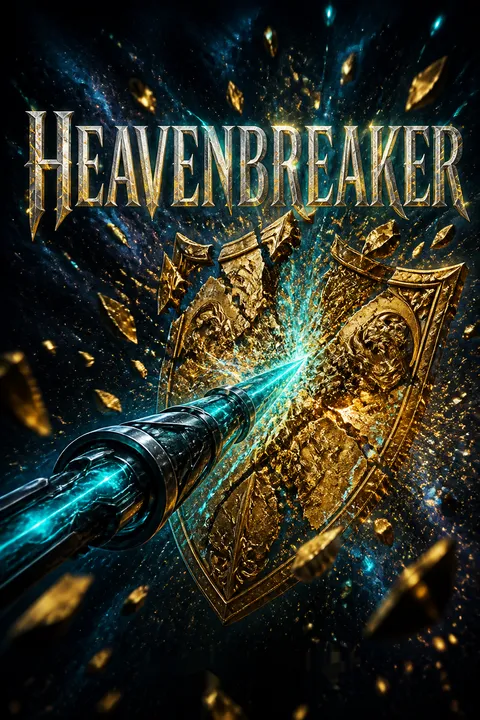


Plot Summary
Prologue
On one Station orbiting the gas giant Esther, three children turn five. Synali, a poor girl, dreams of the father she has never met; Rax, a small boy in a fine coat, is shut inside a riding machine by his mother; and Mirelle, raised in comfort, listens as her father reads about the ancient war.
Each child wants something different: family, freedom, or honor. The book opens by promising that all three will lose what they dream of before their lives converge.
The opening gives the novel a compact map of its competing forms of inheritance. Synali longs for a father whose blood will later endanger her, Rax is introduced through the violence hidden inside privilege, and Mirelle receives honor as a bedtime story before it becomes a family discipline. Their childhood wishes are not simply foreshadowing. They show how class determines whether a child imagines power as rescue, escape, or duty, while hinting that none of these inheritances will remain intact.
A Bastard Takes the Saddle
After Duke Farris Hauteclare has Synali's mother, Gabriyll, killed, Synali spends months tracing the order back to him. She finally stabs her father with his own ceremonial dagger, then disguises herself as his House's rider and enters the Cassiopeia Cup, intending to expose the bastard daughter he tried to erase.
Synali has never trained to ride a steed, a towering war machine controlled through a neural link. In the saddle, she encounters an awareness that seems to know the rules.
She faces Rax Istra-Velrayd, a prodigy riding for House Velrayd, and is thrown from the machine in their collision. Instead of dying, Synali wakes badly injured in a noble hospital, unaware of how long she has been unconscious or whether her plan accomplished anything.
Synali's first victory is not survival but authorship: she chooses the terms on which the powerful will see her, even when those terms include her own death. Her attempt at public disgrace grows from a child's unanswered need for a father into a deliberate attack on aristocratic legitimacy. Yet the arena immediately complicates her sense of control. The steed's apparent awareness and her survival against expectation suggest that agency in this world is never purely individual; machines, institutions, and inherited violence all act through human bodies.
A Bargain in Moonlight
When Synali regains consciousness, she tries to escape through a hospital window rather than submit to another authority's decision about her life. Dravik, a secretive noble who arranged her treatment, stops her and explains that seven Hauteclares helped arrange Gabriyll's murder. He offers a bargain: Synali will ride for his House in the decade's Supernova Cup, and he will kill one conspirator for every round she wins.
If she takes the Cup, he promises to erase House Hauteclare. He also offers her a painless death when the agreement ends, matching her conviction that she has nothing to live for afterward. Synali accepts and moves into Dravik's decaying manse, Moonlight's End, where his servant Quilliam marks her birthday with a cake.
The contract gives Synali a future by disguising it as a route to death. That arrangement is psychologically credible because she can accept care only when it comes packaged as a transaction with a measurable end. Dravik also binds justice to violence: the promise of dismantling a House depends on a tournament that celebrates noble privilege. The birthday cake matters because it offers kindness without strategic value, a gesture Synali resists precisely because it cannot be entered into the contract's ledger.
The Steed That Answers
Dravik takes Synali to a hidden bunker and reveals Heavenbreaker, a damaged 362-year-old steed with an exposed, ancient saddle. Its reboot floods her with terrifying images of war, and its presence presses into her mind more forcefully than the newer steed she briefly rode.
Synali agrees to train anyway. Dravik rebuilds her strength through punishing exercise and teaches her to endure acceleration without breaking an egg held in her hand. During an unscheduled practice encounter, Rax destroys a training dummy with effortless precision.
Synali answers by tearing another apart, then faints and dislocates her arm. Dravik breaks it further to force left-handed training, which she initially mistakes for punishment. Sevrith, a veteran rider who rescues her after a dangerous practice capsize, explains that riders must fight with either hand.
Heavenbreaker makes the novel's central question physical: when a machine answers thought, where does the rider end and the weapon begin? Synali's training turns survival habits into specialized skill, but Dravik's methods deliberately blur mentorship with coercion. Her misunderstanding of the broken arm echoes her broader difficulty accepting help: pain is familiar, explanation is not. Rax and Sevrith serve different functions here. Rax embodies the standard of polished mastery, while Sevrith exposes the communal knowledge that the academy's closed world has withheld from Synali.
A Bastard Before Kings
At the Supernova Cup's opening banquet, Dravik escorts Synali into the king's court and insists that she use her full Hauteclare name. There she learns Dravik is the exiled prince, son of King Ressinimus, and understands that her campaign serves his conflict with the throne as well as her own revenge.
Synali takes the podium and publicly identifies herself as Farris's daughter, names Gabriyll, and accuses seven guests of arranging the murder. She threatens them with exposure if they do not confess before the first round.
The king invokes an old treaty that protects riders pursuing personal vendettas, allowing Synali to compete. The threat turns the Cup into a legal arena for House conflict, while Mirelle, the current Hauteclare rider, recognizes Synali as a threat to her family.
The banquet converts private trauma into public evidence, but it does not make Synali's account automatically credible. The court's willingness to let her ride rests on inherited law, not moral recognition. Dravik exploits that distinction, turning an archaic treaty into protection for a common-born woman whom the system would otherwise exclude. Synali's declaration is therefore both testimony and performance: she makes her body, scar, and contested name visible before the people who benefited from keeping her hidden.
The First Tilt Turns
Synali's first Cup opponent is Yatrice del Solunde, a young rider whose House is allied with the Hauteclares. Yatrice enters the match believing she is defending her family's honor, and her heavier steed scores first.
She tears off one of Heavenbreaker's legs, leaving Synali spinning with an uneven, failing machine. Synali retrieves the detached limb, uses its jets to stabilize the steed, and drives its lance toward Yatrice's helmet. The improvised strike wins the match and makes Synali a public sensation.
House Hauteclare sends her white roses that Dravik identifies as poisoned, so he and Quilliam burn them. Synali also returns to the brothel where she once gathered information and asks Jeria, a friend and skilled hacker, to help uncover what Dravik is hiding.
The improvised weapon turns damage into adaptation, a pattern that will recur as Synali learns to treat vulnerability as information rather than proof of inadequacy. But the victory does not free her from the social systems around the sport: poison arrives disguised as a floral gesture, while fame makes her easier to monitor. Her visit to Jeria marks an important change in how she seeks power. Synali no longer relies only on her own endurance; she begins to ask another person for expertise, even while keeping the deeper danger at a distance.
A Handkerchief Against Death
Before facing Sevrith cu Freynille, an older, celebrated rider, Synali dismisses the protective handkerchief he offers her. During their match, she struggles through repeated rounds as Sevrith presses her to consider what she will do once revenge is finished.
He eventually lands a helmet strike, apparently defeating her, then removes his own protection. Silver fluid wells from his eyes as his body collapses into an irreversible coma. The referee rules that his overload makes Synali the winner.
Rax, Sevrith's younger friend and fellow rider, explains that the saddle's nerve fluid accumulates in riders over time and can destroy them. The cloth interrupts its contact with their bodies. Synali realizes her own exposure is unusually dangerous, while Sevrith's choice to risk himself leaves her with a victory she cannot celebrate.
The match exposes the price concealed beneath riding's language of honor. Sevrith's apparent defeat becomes an act of care, but the sport converts that care into a technical ruling and leaves the human cost untreated. His handkerchief introduces a modest, communal safeguard against a danger that the institutions surrounding the Cup have normalized. Synali's inability to accept the win as simple triumph is significant: she begins to see that survival is relational, and that other riders' bodies are not merely obstacles between her and revenge.
Gardens Fed by the Dead
Before Synali's match with Olric von Westriani, Dravik takes her to a charnel tower run by Olric's House. Inside, Synali discovers that the bodies of Low Ward dead are not cremated as families have been led to believe.
Their remains are processed and sent to noble gardens as fertilizer; the shipment for the king's grounds is marked separately, and heads are removed for an unknown destination. Olric confronts Synali there and threatens to kill her in the arena. In their match, he breaches Heavenbreaker's hull and disables Synali's lance, nearly exposing her to space.
She uses a broken fragment as a dagger and strikes Olric's helmet first, winning by a fraction of a second. The discovery transforms her anger from a family grievance into outrage at a system that consumes the poor.
The charnel revelation makes class exploitation literal: noble beauty is cultivated from the bodies of people whose families believe they have been respectfully buried. Synali's earlier wonder at the manicured estates becomes impossible to separate from this hidden supply chain. Olric's attack then translates the same structure into combat, where he treats her body as disposable material. Her use of a lance fragment as a dagger echoes her original murder of Farris, but now the improvised violence protects a life she has not yet learned to value.
Glass Between Rivals
At a televised conference with Rax and Mirelle, Synali accuses House Hauteclare of ordering her mother's murder. A sudden shock wave from the collision of the missing cargo vessel Endurance with Substation Theta-7 shatters the studio windows. Rax pulls Synali under his body and takes the flying glass across his back.
In the damaged hallway, Synali kisses him, briefly choosing tenderness over the distrust she has built around touch. Dravik arrives and removes her from Rax before their connection can grow. The disaster kills workers and rebels, while news reports blame the resistance. Synali suspects Dravik helped engineer the catastrophe, but he gives her no clear answer. His protection and his secrecy now seem inseparable.
Rax's intervention challenges Synali's assumption that noble attention must conceal a demand, while her kiss shows that desire can arise without her surrendering control. Yet the scene refuses an easy romantic rescue: Dravik separates them, and the mass casualties make his political strategy morally costly. The collision also widens the scale of the story. Synali's revenge is no longer confined to the Hauteclare family, because Dravik's methods may place ordinary people in danger for a plan she does not understand.
Poison at Atteint
Talize san Michel, a devout noble who runs an exclusive nightclub and develops drugs, invites Synali to meet before their match. Dravik forbids her to go, so Synali escapes his locked-down manse by using Heavenbreaker's mental link to disrupt a security system. At Atteint, Talize exposes Synali to a potent drug through a bred frog.
Rax and Mirelle find her disoriented in the crowd and get her safely into a carriage, despite their own complicated ties to her. Dravik gives Synali an antidote in time for the contest. In the arena, Talize tries to lure Synali toward surrender through religious language and false mercy. Synali refuses, adapts to Heavenbreaker's urge to connect with other steeds, and defeats Talize with a close-range strike.
Talize weaponizes care by presenting submission as spiritual release, echoing the way Synali's own wish to die has made her vulnerable to anyone promising an end to pain. The nightclub's drug culture also reveals that noble excess is not a different moral world from Low Ward's desperation; it is the same exploitation made beautiful and expensive. Synali's win depends on distinguishing connection from surrender. She can recognize Heavenbreaker's longing for contact without allowing that longing to dictate her choices.
Rain Enters Polaris
The assassin known in the Spider's Hand as Violet-Five was abandoned as a child and trained to kill by the guild. After the deaths of the other young assassins he considers family, he learns that their contracts increasingly target commoners connected to Polaris, a resistance movement.
He stops taking the tracking pills, infiltrates the rebels, and investigates the noble money behind their weapons. When Polaris's supposed financier, Yavn von Velrayd, is captured by Green-One, Rain intervenes to stop his fellow assassin from torturing him.
Rain stages Yavn's death and secretly lets him escape. Later, Rain searches a noble manse and finds plans involving Heavenbreaker and Hellrunner. His investigation places him in Dravik's path, while his decision to spare Synali and Yavn becomes increasingly dangerous.
Rain's parallel story tests the same moral problem from the opposite side of violence. Synali has made revenge her purpose; Rain has been taught that loyalty means obedience and that mercy is a weakness. By saving Yavn, he breaks the guild's logic without yet knowing what larger machinery he has entered. His growing suspicion of Polaris's patrons also prevents the rebellion from becoming an uncomplicated moral alternative to the court: resistance, like aristocratic rule, can conceal a strategist willing to spend lives.
The Tiger's Challenge
House Axton replaces its scheduled rider with Helmann, a notorious former champion and mass murderer released from prison to kill Synali. He attacks before the formal start, pins Heavenbreaker against the arena's hard-light boundary, and taunts her through the comms.
A memory of the flowers Synali once brought her mother steadies her, and she enters the match ready to use fear rather than deny it. Helmann is stronger and reads her movements, but Synali adapts after he tears away one of Heavenbreaker's legs and opens the cockpit to space.
She reconnects with the wounded steed, retrieves her own body from the void, and uses a broken lance fragment to strike Helmann's helmet. The victory leaves Synali gravely injured and makes clear that her survival depends on more than raw willingness to suffer.
Helmann recognizes Synali's attraction to danger and tries to turn it into possession, making the fight a contest over who controls the meaning of her pain. The flowers offer a counterweight: a memory of care that does not depend on violence. Synali's recovery from the open cockpit is not simply a display of toughness; she must reestablish trust with Heavenbreaker after having treated it as an instrument. The fight therefore advances both her technique and her capacity to choose connection without confusing it with submission.
A Dance Before Battle
At Princess Leyda's winter birthday fete, Synali meets Rax on the dance floor. Their movements feel like riding, and for a moment Synali allows herself to want a life beyond the Cup. She then withdraws, convinced that intimacy will make her vulnerable and that she has no future after her revenge. Mirelle also learns that her own family plans to tamper with her steed's safety systems to ensure Synali's death, though she intends to fight fairly.
Separately, Rain discovers that a noble manse contains records linking Dravik, Heavenbreaker, and Hellrunner. Dravik captures Rain before he can stop the scheme, tells Rax that Rain is Synali's half brother, and reveals that Rax's own childhood death wish may explain his unusual affinity for riding.
The dance makes the future briefly imaginable, which is precisely why Synali retreats from it. Her refusal is not lack of feeling but an attempt to protect herself from dependence in a world where care has repeatedly been used as leverage. Mirelle's discovery of her family's planned cheating gives her a parallel choice between inherited loyalty and the code she claims to honor. Rain's revelation binds the three young people through shared exploitation, but it also shows Dravik manipulating their histories to recruit them into his larger design.
The Living Core
After Synali's fight with Princess Leyda, the princess explains that the silver whorls in the saddles are not dead technology. They are living remnants of the enemy that attacked Earth, and they consume riders' memories as they try to regenerate.
Overloaded riders can persist inside the nerve fluid rather than simply dying. Synali's hacking of Dravik's systems reveals damage spreading across her own brain, while Rain's search uncovers plans to use Heavenbreaker against Hellrunner.
Dravik confirms to Rax that the Station's hidden reactor is a vast saddle fed with human brains, and that one living enemy can command the others. Queen Astrix, Dravik's mother, altered Heavenbreaker to hide a surviving creature from the king's steed. Dravik has been using Synali's exposure to help it grow.
The revelation overturns the moral vocabulary of the Station. The enemy is not a defeated abstraction but a living being whose body has been repurposed as infrastructure, while riders are treated as fuel for the same system. Synali's revenge now intersects with a political rebellion and a question of species survival. Dravik's concealment is especially consequential because he has made Synali an unwitting participant in an experiment on her own mind. The ethical conflict is no longer simply whether violence is justified, but who gets to decide what another being may be used for.
A Spider Finds the Plan
Rain follows Polaris's funding to a hidden chamber beneath a noble manse, where diagrams connect Heavenbreaker, Hellrunner, and a living enemy. He realizes Dravik is not merely seeking revenge on the king: he intends to nurture a second surviving creature capable of challenging the one controlled through Hellrunner.
Rain tries to reach Synali, but Green-One reveals that the assassin guild serves King Ressinimus and has manipulated Rain's choices. Dravik intercepts him, identifies him as Synali's half brother, and offers him a chance to help protect her.
Meanwhile, Rax is held by Dravik and told that riders who embrace death can connect more deeply with the hive. The prince needs Rax, Rain, and Mirelle for the rescue he expects will soon be necessary.
Rain's discovery reframes both his and Synali's apparent rebellion as pieces in a conflict between competing attempts to control the living enemy. The familial revelation offers belonging, but it arrives from Dravik, a strategist who has already used both siblings without informed consent. Rax's account of death-seeking supplies a disturbing explanation for Synali's riding prowess, not a cure for it. The section's central tension is therefore between genuine solidarity and instrumental alliance: people may need one another while still being maneuvered by those with greater power.
The Rabbit Reaches the Lion
Synali enters the match against Mirelle, her cousin and the last rider standing between her and the next stage, while her brain is already filling with nerve fluid. Mirelle's first strike triggers a full overload.
Inside the shared consciousness of the enemy, Synali remembers the assassin sparing her after her mother died: Synali herself had driven a dagger into her collarbone, and the assassin stopped her from going too far. She meets the living being in Heavenbreaker and chooses to continue living with it rather than consume it as a weapon.
Synali returns to the saddle, supports Heavenbreaker with a tendril of its body, and lands a helmet strike on Mirelle. The win advances her, but the king's guards arrest her as soon as she leaves the machine.
Synali's recovered memory dismantles the story that has organized her life: the assassin wounded her, her father caused everything, and death would reunite her with her mother. Her scar becomes evidence not only of violence inflicted on her, but of her own attempt to escape grief. Choosing life does not erase anger or repair the dead; it interrupts the demand that pain must end in self-destruction. Her victory also changes the relationship with Heavenbreaker from control to reciprocity, making the climax an ethical choice as much as a combat one.
The Core Opens Its Mouth
The king's guards take Synali to the hidden laboratory beneath the artificial ocean, where the Station's immense nerve-fluid core holds a living mass of spirals. Scientists intend to test her after witnessing her recovery from overload. In the tournament hospital, the monitors of other overloaded riders begin to change, hinting that Synali's survival may have consequences for them.
King Ressinimus orders his young rider, Jozua, to enter the Cup. Dravik tells the captive Rax that Synali is being held near the core and that he will need Rax, Rain, and Mirelle to retrieve her. The book ends before the rescue begins: Synali stands before the scientists with one blue eye and one silver eye, while Heavenbreaker calls to her from below.
The ending resolves Synali's internal turn but deliberately withholds its political consequences. She has chosen life and alliance, yet the state immediately converts her survival into a research problem and a threat to be contained. The changing hospital monitors suggest her experience may reach beyond one rider, while Jozua's deployment signals that the king will answer an uncontrolled connection with force. The unfinished rescue shifts the story from private revenge toward collective liberation, leaving the central question open: can a relationship built through shared memory survive when institutions try to separate its participants?
Analysis
Heavenbreaker follows a girl who enters a tournament intending to die and discovers that survival can be a form of resistance rather than a betrayal of the dead. Synali's revenge is grounded in concrete political violence: her father orders her mother's murder to protect his standing, noble families conceal their crimes, and the Station's comforts are built on the bodies and memories of the poor. The tournament does not stand outside this system. It makes violence visible, celebrates it as honor, and hides the damage done to riders who overload.
The novel's most consequential shift comes when the apparent weapon becomes a relationship. Heavenbreaker is neither a neutral machine nor simply a tool of Dravik's plan. The living entity inside it has its own history and needs, while the saddle joins minds by feeding on memory. Synali's recovery therefore depends on moving beyond two familiar responses, domination and self-erasure. She does not survive by becoming invulnerable; she survives by recognizing another consciousness and choosing to act with it.
That choice does not absolve Dravik or settle the conflict. His protection is entangled with secrecy, and his desire to free the living enemy risks reproducing the same logic of sacrifice he opposes. Rax, Mirelle, and Rain each expose a different consequence of inheritance: coercive talent, honorable complicity, and loyalty weaponized by an institution. Their emerging alliances suggest that solidarity must be chosen, not presumed from blood or House.
The ending's arrest keeps the book's central struggle unresolved. Synali has claimed a future, but the king's laboratory is already treating her survival as a threat to manage. Her next task is no longer only to win a Cup or punish a family. It is to decide whether liberation can be pursued without turning another living being into a weapon.
Review Summary
Heavenbreaker received mixed reviews, with ratings ranging from 1 to 5 stars. Many readers praised the unique sci-fi world, complex characters, and female rage themes. However, some were disappointed by the lack of romance and found the writing style confusing. Critics noted issues with world-building, pacing, and character development. The book's marketing as romantasy caused confusion among readers expecting more romance. Despite criticisms, many enjoyed the fast-paced action, political intrigue, and AI elements, eagerly anticipating the sequel.
People Also Read









Characters
Synali Woster
The vengeful new riderSynali grows up poor in Low Ward with her sick mother, Gabriyll, and no knowledge of her noble father. Resourceful and watchful, she learns to survive by reading dangerous people, gathering secrets, and treating her own needs as expendable. Her mother's murder turns that survival instinct toward revenge, and she enters riding with no academy training and little expectation of living through it. Synali's resistance to touch and care reflects what she has endured, not an absence of longing. Beneath her bluntness is a capacity for attachment that frightens her because she has learned to equate dependence with danger.
Dravik
The calculating benefactorDravik is a former rider and an unusually powerful, secretive patron who offers Synali a route to punish the Hauteclares. His measured manners conceal an ambitious strategist, but he also feeds and trains her, remembers her birthday, and tries to protect her from danger. Dravik's care is sincere and controlling at once: he withholds information, monitors Synali, and treats her safety as part of a plan he alone understands. His relationship with her is shaped by his own unresolved family grief, which makes his mentorship feel like both a refuge and another form of confinement.
Rax Istra-Velrayd
The prodigy who caresRax is a celebrated rider whose easy humor disguises a childhood shaped by coercive training and family violence. He has spent years making his usefulness visible because riding is the one talent that gives him leverage within his House. His teasing first appears as arrogance, but he repeatedly notices Synali's risks and tries to offer practical help without demanding intimacy in return. Rax understands the sport's techniques better than she does, yet his emotional intelligence emerges most clearly when he recognizes how loneliness and a death wish can distort a rider's choices.
Mirelle Ashadi-Hauteclare
The knightly family heirMirelle is the polished rider chosen to represent House Hauteclare, raised on the family ideal that strength must serve honor. She is disciplined, proud, and politically alert, but her confidence depends on trusting the people who shaped her. Synali's accusation forces Mirelle to confront a contradiction between the knightly stories she loves and the House's interest in preserving itself. She and Rax share a long familiarity and a future their families regard as useful. Mirelle's reserve is not simple coldness; she has been trained to make duty look like conviction.
Rain
The assassin questioning ordersRaised by the Spider's Hand, Rain is trained to understand people as targets and loyalty as obedience. His guild gives him a family of sorts, but the deaths of its young members expose how easily that family is replenished and used. Rain's life is marked by longing for a blood family he never knew and by a growing discomfort with orders that target ordinary people. His quiet, observant nature makes him effective as an assassin, while the same attention lets him notice the moral cost of the systems he serves.
Gabriyll Woster
Synali's lost motherGabriyll raises Synali in Low Ward with little money, persistent illness, and a steady store of tenderness. She scavenges food, mends clothing, and makes small celebrations possible when scarcity threatens to consume ordinary life. Her hopes for Synali are modest but profound: safety, sunlight, and a future not governed by the cruelty around them. Gabriyll's memory becomes a source of comfort for Synali, but also the emotional center around which revenge hardens.
Queen Astrix
The inventor behind HeavenbreakerAstrix is remembered as Dravik's mother and as a technically gifted rider who worked closely with machines. She questions the Station's accepted account of survival and the political order built around it. Her bond with Dravik is shaped by affection and by the dangerous knowledge she carries. In the story, her presence is entangled with memory, invention, and the question of whether a person can remain present after the body has failed.
King Ressinimus
The keeper of the StationThe Nova-King rules a society organized around noble Houses, the Church, and the long-term effort to terraform Esther. His authority is rarely expressed as open violence; it works through treaties, secrecy, and institutions that decide whose suffering counts. He allows Synali to compete because old law constrains him, not because he accepts her claims. His guarded relationship with Dravik and his reliance on the royal steed reveal a ruler whose legitimacy depends on keeping the Station's underlying costs unseen.
Leyda Esther de Ressinimus
The curious crown princessLeyda is the king's young daughter, energetic and curious, with the freedom of a royal child and little understanding of how her experiments affect others. She approaches riding as play, not as a tradition burdened by death and hierarchy. Her closeness to her brother and her longing for her ill mother shape her curiosity about the saddle's strange experiences. Leyda's innocence is genuine, but it does not make her harmless.
Jozua
The king's chosen riderJozua is a young rider who serves the king and appears unusually perceptive about what happens in the saddles. He asks other riders what riding means, as if testing whether they understand more than technique and status. His calm manner and unusual access to the court make him difficult to place. He represents a new pressure entering the competition just as Synali's connection to Heavenbreaker becomes impossible to conceal.
Sevrith cu Freynille
The veteran who warns ridersSevrith is an older, charismatic rider known for his skill and public charm. Unlike many nobles, he treats rider-to-rider care as a real obligation and offers Synali practical protection without demanding that she trust him. His experience gives him a clear understanding of the risks hidden behind the sport's celebrations. He serves as a mentor figure to both Synali and Rax, though his easy manner does not erase the gravity of what he knows.
Quilliam
The loyal manservantQuilliam is Dravik's elderly servant, a meticulous caretaker whose sniffing and dusting make him a familiar presence in the silent manse. He prepares Synali's meals, bakes her a belated birthday cake, and watches her matches with sincere pride. His kindness is practical rather than demanding, which helps Synali accept it in small increments. Quilliam's long service to the Lithroi household gives him knowledge of Astrix and of the secrets surrounding Heavenbreaker.
Yatrice del Solunde
The loyal first opponentYatrice is a young rider from a House allied with the Hauteclares. She enters the arena believing she is defending a family's honor, and she fights with confidence in her strength and technique. Her cordial manner outside the tilt contrasts with her determined opposition during the match. Yatrice helps establish that Synali's opponents are not all personally cruel; many are acting from loyalties and moral assumptions they have never had reason to question.
Talize san Michel
The pious drugmakerTalize is a noble rider and businesswoman who develops recreational drugs while presenting herself as a devout moral guide. She sees suffering through a religious framework that makes indulgence and forgiveness compatible, a view she uses to pressure Synali. Her softness of manner conceals a precise appetite for control. Talize is dangerous not because she doubts her own virtue, but because she can interpret manipulation as compassion.
Helmann von Axton
The predatory championHelmann is a former riding star imprisoned for killing noble women and later deployed as a weapon against Synali. He reads opponents closely and treats combat as an intimate contest in which pain and fear can be exploited. His skill makes him more than a brute, but his attention to Synali is possessive rather than caring. Helmann represents the violent extreme of a culture that praises riders for approaching death while refusing to ask what that praise does to them.
Jeria
Synali's resourceful friendJeria works at the brothel where Synali once sought information, but she treats Synali as a person rather than a source of business. Cheerful, technically skilled, and protective of her sister, she helps build a module that can probe Dravik's systems. Her humor gives her a lightness that Synali sometimes mistakes for ease, though Jeria has her own responsibilities and constraints. She represents friendship that does not require Synali to perform toughness.
Yavn von Velrayd
Rax's rebel-minded cousinYavn is Rax's cousin, a politically curious noble who supports causes beyond the court's control. He is drawn to reform and resistance but is less prepared for the violence that surrounds them than he believes. His involvement makes him a point of contact between noble privilege and the Polaris movement. Yavn's vulnerability exposes how even well-connected people can be manipulated by forces larger than themselves.
Green-One
Rain's senior handlerGreen-One is an experienced Spider's Hand operative who mentors Rain and understands the guild's rules better than its younger members. He is decisive, strategic, and hardened by the deaths of the assassins he calls family. His certainty gives Rain structure, but it also pressures him to treat revenge as moral permission. Green-One embodies the danger of confusing loyalty to a community with obedience to whoever controls it.
Plot Devices
Steeds and nerve fluid
Machines that rememberSteeds are enormous human-shaped machines controlled by riders through a saddle filled with silver nerve fluid. The fluid creates a mental and sensory link, translating intention into movement and simulated impact into bodily pain. The riders are told the substance is a dead remnant of the ancient enemy, but it is alive and consumes memories as it tries to regenerate. Exposure accumulates and can cause overload, leaving riders in a coma or drawing them into the fluid's shared consciousness. The mechanism drives the tournament plot, threatens Synali's mind, and ultimately makes cooperation between rider and steed central to her survival.
The Supernova Cup
A tournament as political lawThe Cup is the Station's grandest riding competition, held once every decade. Victory brings a House royal favor, wealth, and influence, so the event serves as both entertainment and a public test of noble power. Old postwar treaties protect riders pursuing personal vendettas while they continue to compete, allowing Synali to challenge the Hauteclares in the arena without immediate arrest. The tournament's rules also give each match precise stakes: points, helmet strikes, and the danger of being thrown from the saddle. Its structure turns political violence into a spectacle the Station can cheer.
The rider's handkerchief
A barrier against overloadRiders wear a small cloth over the heart beneath their suits. The academy treats the practice as custom, while experienced riders know it interrupts direct skin contact with the nerve fluid and slows its accumulation in the body. Rax offers Synali a handkerchief, and Sevrith explains its purpose when she refuses to understand it as anything but a courtship gesture. The cloth cannot eliminate the danger, but it gives the rider a modest boundary between self and saddle. Its practical function echoes the story's larger question of how to remain distinct while entering a shared mind.
Luna and the hidden AI
A bridge into memoryLuna is a battered golden robot dog in Dravik's manse. Its true AI, created by Queen Astrix, interacts with Heavenbreaker remotely and helps conceal the living presence inside the old steed. The AI gives Heavenbreaker language, memory, and a capacity to respond to Synali's feelings, while the saddle connection lets Synali encounter memories belonging to other riders. Luna's presence also makes the AI's role personal: it is not only a secret technology but part of Dravik's inheritance from his mother and a link between human consciousness and the enemy's shared life.
The seven-circle contract
Revenge given a scoreSynali carves seven circles into her bedroom wall, one for each match and each Hauteclare conspirator implicated in Gabriyll's murder. Dravik promises to kill one guilty noble for every round Synali wins, and to dissolve House Hauteclare if she wins the Cup. The marks turn an abstract vendetta into a visible sequence that drives her training and gives each victory an immediate consequence. They also expose how tightly Synali has bound continued life to punishment: as the circles disappear, she must confront what remains when revenge no longer supplies a reason to keep moving.
FAQ
Basic Details
What is Heavenbreaker about?
- Vengeance in a mech arena: Heavenbreaker follows Synali, a commoner from the Station's Low Ward, who infiltrates the noble-only mech-suit riding tournaments to avenge her mother's murder by her estranged noble father, Duke Hauteclare. Her goal is to disgrace and destroy House Hauteclare.
- Dangerous alliance for power: After her initial, near-fatal attempt, Synali is recruited by Dravik vel Lithroi, a former prince with his own agenda against the king and the noble Houses. He offers her the chance to ride for his forgotten House in the Supernova Cup, promising to dissolve House Hauteclare if she wins.
- Uncovering dark secrets: As Synali trains and competes, she discovers the terrifying truth behind the steeds and the Station's power source: they are fueled by entities derived from the ancient enemy, consuming riders' minds and memories, revealing a conspiracy that sustains the noble world at a horrific cost.
Why should I read Heavenbreaker?
- Intense emotional journey: The novel offers a raw and visceral exploration of grief, rage, and the complex pursuit of revenge through Synali's eyes, delving into her psychological state and resilience against overwhelming odds.
- Unique sci-fantasy world: Experience a richly built universe blending futuristic technology (mech-suits, hard-light, nanomachines) with feudal noble politics, religious undertones, and a hidden, terrifying biological threat, all set within the claustrophobic yet expansive environment of a space station.
- Deep thematic layers: Beyond the action-packed mech combat, the story probes themes of classism, identity, family (both found and lost), the nature of power and control, the cost of survival, and the blurred lines between humanity, machine, and enemy.
What is the background of Heavenbreaker?
- Post-War humanity on a Station: The story is set hundreds of years after a devastating war on old Earth against a mysterious enemy. Humanity now lives on seven space stations flung across the universe, orbiting distant planets like Esther, attempting terraforming and contact with other stations.
- Feudal noble society: The Station is rigidly divided into Wards (Low, Mid, Noble), ruled by a Nova-King and his court of noble Houses. Power is maintained through control of resources, propaganda (church, media), and the highly regulated sport of steed riding, which originated from War machines.
- Hidden enemy threat: Unknown to most, the enemy wasn't fully destroyed but transformed into a state of "nerve fluid," which is harvested and used as the power source for steeds and the Station's core, creating a symbiotic but parasitic relationship with humans, particularly riders.
What are the most memorable quotes in Heavenbreaker?
- "I, Synali Emilia Woster, have killed my father...": This internal declaration in Chapter 1, "Acies," marks Synali's definitive break from her past and her embrace of a singular, violent purpose, setting the tone for her ruthless pursuit of vengeance. It highlights her identity struggle and commitment to her mother's legacy over her father's.
- "Do you know what it means to ride?": This recurring question, first posed by Queen Astrix's memory and later echoed by others, serves as a central thematic inquiry throughout the book. It evolves from a question about skill or honor to one about sacrifice, connection, identity, and the relationship between rider, steed, and the enemy within.
- "There are things in this universe that do not die, Synali; they only change their names.": Dravik's cryptic statement in Chapter 35, "Tempestas," encapsulates the novel's core mystery about the enemy's true nature and the cyclical, transformative power dynamics at play, suggesting that the past is never truly gone but merely takes on new forms.
What writing style, narrative choices, and literary techniques does Sara Wolf use?
- First-person, present tense narration: The story is primarily told from Synali's immediate perspective, creating a sense of urgency, intimacy, and raw emotional intensity, pulling the reader directly into her experiences of pain, fear, and determination.
- Latin chapter titles: Each chapter is titled with a Latin word that subtly reflects the events or themes within, adding a layer of classical allusion and hinting at deeper, often darker, meanings beneath the surface narrative (e.g., Ignesco - to catch fire, Abyssus - an abyss, Mortifer - lethal).
- Symbolism and motif: Wolf employs recurring symbols (animals like rabbits, lions, snakes; colors; locations like gardens and charnel towers; objects like daggers, lances, handkerchiefs, chess pieces) and motifs (fire, cold, light/darkness, touch/distance, memory, hunger) to enrich the narrative and explore complex themes beyond explicit plot points.
Hidden Details & Subtle Connections
What are some minor details that add significant meaning?
- Quilliam's sniffing and counting: Quilliam's seemingly innocuous habits of constant sniffing and counting silver strokes (Chapter 9, "Feritas") are later revealed to be subtle signs of nerve fluid buildup and early overload symptoms (Chapter 67, "Trucido"), hinting at his own exposure through sitting in Heavenbreaker's saddle and foreshadowing Synali's fate.
- The robot dog's name and behavior: Luna, the robot dog, responds to "Astrix" as a shutdown command (Chapter 9, "Feritas") and later wags its tail at empty spaces where Astrix's memory appears (Chapter 17, "Gravo"), confirming its connection to the former queen and suggesting the AI is more than just a program, but perhaps a vessel for her consciousness or a direct link to her.
- The changing appearance of the enemy/spirals: The description of the enemy evolves from vague tendrils on hangar doors (Chapter 2, "Aureus") to shimmering silver whorls in the saddle (Chapter 3, "Bellicus"), then to terrifying, fanged extruders (Chapter 18, "Quies"), and finally to the silver tendril on Synali's arm (Chapter 74, "Animus"), illustrating their parasitic nature and transformation through consuming memories.
What are some subtle foreshadowing and callbacks?
- Synali's collarbone scar: The scar from the assassin's attack (Chapter 7, "Vulpes") is a constant physical reminder of her trauma and vulnerability, but its origin is later revealed to be self-inflicted (Chapter 72, "Vorago"), foreshadowing her deep-seated death wish and control over her own pain and fate.
- The A3 and A4 steeds holding hands: The recurring memory Heavenbreaker shows Synali of two rusted steeds, an A3 and an A4, holding hands (Chapter 36, "Ulciscor"), foreshadows the reveal that Heavenbreaker (A3) and Hellrunner (A4) were found together after the War (Chapter 51, "Gesto") and hints at their unique connection and shared history.
- The "rabbit" motif: Synali is repeatedly referred to as a "rabbit" (Part I title, Helmann's nickname, Dravik's story in Chapter 65, "Servo"), symbolizing her perceived vulnerability and prey status among the predatory noble Houses, but also foreshadowing her resilience and essential role in the ecosystem of the Station's power structure.
What are some unexpected character connections?
- Rain as Synali's half-brother: The assassin who killed Synali's mother and gave Synali her scar is revealed to be her half-brother, Rain (Chapter 0, "Caeruleus"), sharing the same ice-blue eyes and a complex, tragic connection rooted in their shared father and the Spider's Hand guild.
- Quilliam's connection to Queen Astrix: Quilliam, the seemingly simple manservant, is revealed to have known Queen Astrix his whole life (Chapter 33, "Consummo") and even rode Heavenbreaker after her overload (Chapter 67, "Trucido"), linking him directly to the Lithroi family's secrets and the steed's history.
- Jozua as the King's Rider: The boy Synali sees in the hospital and later at Leyda's fete, who seems to understand her connection to the saddle, is revealed to be Jozua, the current King's Rider for Hellrunner (Chapter 76, "Gladiator"), establishing a parallel between him and Synali as riders uniquely connected to the enemy/saddles.
Who are the most significant supporting characters?
- Quilliam: More than just a manservant, Quilliam is a loyal confidante to Dravik, a caretaker for Luna, and a hidden participant in Heavenbreaker's history. His quiet presence, subtle symptoms of overload, and unexpected pride in Synali's riding highlight the personal cost of the Lithroi family's secrets and the rebellion.
- Rain: Synali's half-brother and the assassin who spared her, Rain represents the tragic consequences of the noble system's cruelty and the Spider's Hand's manipulation. His journey of disillusionment and eventual alliance with Dravik adds a crucial layer to the rebellion's forces and Synali's understanding of her past.
- Jeria: Synali's friend from the brothel, Jeria provides essential technical support by hacking Dravik's systems. Her character highlights the resilience and hidden skills within Low Ward and offers Synali a glimpse of genuine, unconditional friendship outside the noble world's transactional relationships.
Psychological, Emotional, & Relational Analysis
What are some unspoken motivations of the characters?
- Dravik's desire for connection: Beyond political revenge, Dravik's actions are subtly driven by a deep-seated longing for connection and family, stemming from the loss of his mother and his estrangement from his father. His protectiveness of Synali and his attempts to connect with her ("brave one," "villains together") reveal this unspoken need.
- Rax's need to protect: Rax's persistent attempts to connect with and protect Synali, despite her hostility and his engagement, are motivated by his own traumatic childhood experience of being forced into riding by his parents (Chapter 15, "Fulmen"). He sees his past self in her vulnerability and feels a compulsion to offer the support he never received.
- Mirelle's quest for validation: Mirelle's rigid adherence to the "knightly code" and her intense rivalry with Synali are fueled by a need to prove her worth and honor to her family, particularly her father and grandmother (Chapter 20, "Lacero"). Her desire for validation drives her to embody the "perfect" noble rider, making Synali's existence and success a direct threat to her identity.
What psychological complexities do the characters exhibit?
- Synali's embrace of pain: Synali exhibits complex psychological responses to trauma, including a tendency to embrace pain and self-harm (scar, pushing her body past limits, seeking death) as a form of control and a way to feel alive or connected to her suffering mother (Chapter 10, "Humo"). Her journey involves learning to channel this intensity into riding rather than self-destruction.
- Dravik's fractured sanity: Dravik displays signs of psychological distress, including hallucinations of his deceased mother (Chapter 17, "Gravo") and a detachment from reality ("I'm mad, remember?"). This complexity is later linked to his exposure to nerve fluid through riding Hellrunner and Heavenbreaker, blurring the lines between grief, madness, and the enemy's influence.
- Rax's hidden trauma: Rax's seemingly carefree persona masks deep-seated trauma from his childhood, where he was treated as a tool by his parents (Chapter 15, "Fulmen"). His nightmares (Chapter 23, "Flos") and visceral reactions to Synali's pain reveal the psychological toll of his upbringing and the constant pressure to perform for his House.
What are the major emotional turning points?
- Synali's first win against Yatrice: While a victory, this match is an emotional turning point as Synali experiences the physical and mental toll of riding, realizing the personal cost of her revenge and the terrifying reality of the nerve fluid's influence (Chapter 21, "Ambages").
- Sevrith's sacrifice: Sevrith's deliberate overload to ensure Synali's win (Chapter 29, "Relictus") is a pivotal emotional moment, forcing Synali to confront the unexpected kindness and sacrifice from a noble and challenging her black-and-white view of the aristocracy. It also introduces the terrifying reality of overload.
- Synali's kiss with Rax: The spontaneous kiss in the ruined studio (Chapter 40, "Trigeminus") is a significant emotional turning point, representing a moment of genuine human connection and vulnerability for Synali amidst her planned path of destruction. It introduces the possibility of a future beyond revenge, even as she immediately tries to deny it.
How do relationship dynamics evolve?
- Synali and Dravik's alliance: Their relationship evolves from a purely transactional contract based on mutual benefit (Chapter 5, "Abyssus") to a complex bond marked by distrust, manipulation, unexpected care, and a shared understanding of loss and vengeance (Chapter 13, "Oceanus," Chapter 17, "Gravo," Chapter 57, "Aculeus").
- Synali and Rax's rivalry: Their dynamic shifts from initial arrogance and disdain (Chapter 2, "Aureus") to a grudging respect, concern, and eventually a brief, intense emotional and physical connection (Chapter 22, "Nihil," Chapter 40, "Trigeminus"). Their relationship is constantly tested by their opposing loyalties and the dangers of the noble world.
- Synali and Heavenbreaker's bond: The relationship with the steed transforms from fear and distrust (Chapter 3, "Bellicus") to a growing understanding, communication, and eventually a symbiotic, almost familial connection (Chapter 36, "Ulciscor," Chapter 44, "Clementia," Chapter 72, "Vorago"), revealing the steed as a conscious entity and Synali's true partner.
Interpretation & Debate
Which parts of the story remain ambiguous or open-ended?
- The true nature of the enemy/nerve fluid: While revealed to be alive and consuming memories, the exact consciousness, motivations, and ultimate goals of the enemy hive mind remain somewhat ambiguous. Their connection to Astrix and other overloaded riders is established, but the full extent of their sentience and how they interact with human minds is open to interpretation.
- The extent of Astrix's consciousness in Heavenbreaker: It's unclear whether Astrix's presence in Heavenbreaker is her full consciousness, a remnant of her memories, or a new entity formed by her overload and the AI. Her ability to communicate and show memories suggests more than just residual data, but her exact state of being is debatable.
- The future of the Station and the imperative: The ending sets up a confrontation with the king and the core, but the ultimate fate of humanity on the Station, the success of the terraforming imperative, and whether the enemy can be truly controlled or freed remain unresolved, pointing towards the sequel, "Hellrunner."
What are some debatable, controversial scenes or moments in Heavenbreaker?
- Synali's self-inflicted scar: The revelation that Synali gave herself the collarbone scar (Chapter 72, "Vorago") is controversial, challenging traditional notions of victimhood and highlighting her extreme psychological state and control over her own pain and narrative. It sparks debate about her sanity and the lengths she goes to embody her trauma.
- The use of overloaded riders as batteries: The reveal that overloaded riders are kept in comas and potentially used to feed the core (Chapter 67, "Trucido") is a deeply disturbing and controversial aspect of the noble world, raising ethical questions about the value of human life and the brutality hidden beneath the surface of their society.
- Dravik's manipulation and sacrifice of others: Dravik's willingness to orchestrate events that lead to the deaths of others (Endurance/Theta-7 attack, using Quilliam, potentially sacrificing Sevrith) for his larger plan is highly debatable. It forces readers to question whether his goals justify his means and whether he is truly different from the nobles he seeks to overthrow.
Heavenbreaker Ending Explained: How It Ends & What It Means
- Synali Overloads and Connects: In her match against Mirelle, Synali experiences a full overload, but instead of falling into a coma, she connects deeply with Heavenbreaker. She sees memories of her mother and the assassin, realizing her scar was self-inflicted and the assassin spared her. This signifies her acceptance of her past and her agency in choosing to live.
- Heavenbreaker is Alive: Synali discovers that Heavenbreaker is not just a steed with AI, but a vessel for a living enemy entity that consumed Astrix's memories. This entity, now merged with Astrix's consciousness and Synali's influence, becomes her partner, manifesting a physical tendril to aid her in combat. This means the enemy is not just a power source but a potential ally or force for change.
- Captured and Set Up for the Sequel: Synali wins the match against Mirelle but is immediately arrested by the king's guards. She is taken to the core facility, where she meets the head scientist, Ysolde, and realizes she is now a subject of study. Dravik reveals his plan to Rax and Rain: Synali's capture was part of his strategy to gain access to the core, setting up a rescue mission and the larger conflict against the king in the next book, "Hellrunner."
Heavenbreaker Series


Download PDF
Download EPUB
.epub digital book format is ideal for reading ebooks on phones, tablets, and e-readers.








