

Key Takeaways
Treat national self-pity as pride wearing a victim's mask.
Grievance can flatter. O'Toole opens with a memory from 1969: as an Irish child visiting England, he felt the two countries had to be opposites. His later experience of Irish relatives building lives in England showed him identities were more entangled than that. Brexit, he argues, grew from a similarly rigid story about England: a nation that had once ruled an empire and helped win a world war was now supposedly deprived of its rightful status.
Two feelings, one politics. Self-pity can combine a sense of being unfairly wronged with a belief in one's own superiority. Postwar Britain had real reasons for disappointment, including lost empire, economic stagnation, and the success of former enemies. Brexit made these emotions feel compatible: England could imagine itself both exceptional and oppressed.
The argument is strongest when it treats emotion as political material rather than a distraction from policy. A grievance can protect status: if a group sees itself as deserving more, disappointment becomes evidence of injustice rather than a prompt to revise expectations. That pattern helps explain why narratives of national decline can coexist with national grandiosity. The risk is overgeneralization. England contains many identities and interests, and a cultural diagnosis cannot explain every Leave vote. O'Toole's claim works best as an account of a potent political style, not as a complete portrait of English voters.
When victory disappoints, fantasy can recast the victor as occupied.
War became a lens. In Len Deighton's alternate-history novel SS-GB, Germany has defeated and occupied Britain. Later novels and political arguments reused the image of a conquered England, casting European integration as German domination by peaceful means. The analogy appeared even when the European Community was far less powerful than the imagined occupier. In O'Toole's account, the image answered a psychological need more than it described European institutions.
The past split in two. The 1975 referendum campaign already showed both readings of the Second World War. Supporters of Europe argued that shared institutions could prevent another catastrophe; opponents described membership as surrender to Germany. Remain won decisively, but the rival stories endured. The enemy in this drama was less the EU's actual conduct than a remembered war that England's political imagination could not put to rest.
Alternate history can make political analogies emotionally available before anyone argues for them directly. Once an audience has pictured a conquered homeland, ordinary negotiation can feel like collaboration. The analogy also compresses a complex institution into a familiar villain, which makes it powerful and misleading at once. The distinction matters: criticizing the EU's policies is not equivalent to claiming that it occupies Britain. A useful test for political rhetoric is whether its historical comparison clarifies differences as well as similarities. Here, the occupation story often erased the difference between coercion and voluntary, contested cooperation.
A nation can romanticize failure only while success cushions the cost.
Disaster made into character. Victorian Britain turned failed expeditions and military blunders into stories of stoicism. Sir John Franklin's 1845 search for the Northwest Passage lost all 129 men; 38 later expeditions went looking for him, and the Admiralty spent £600,000. The Charge of the Light Brigade was another costly mistake, yet its literary afterlife celebrated courage more than command failure.
Brexit changed the tradition. Historian Stephanie Barczewski calls this cultural pattern 'heroic failure': celebrating an attempt that did not achieve its goal. In its classic form, the emphasis was on endurance without complaint, a style made easier by Britain's continuing power. Brexit borrowed the drama of the doomed expedition and last stand but added loud grievance, improvisation, and panic. The old story made failure look noble; the new version risked making failure real.
This distinction between a story of failure and the consequences of failure is particularly useful. Communities often turn losses into identity, but retrospective meaning does not make the original decisions wise or their costs evenly shared. The heroic-failure tradition can preserve courage while hiding preventable errors and the people who paid for them. O'Toole's account invites a practical question: who gets to call a failure noble? If decision-makers can celebrate risk while others absorb the damage, the language of character can become an alibi for poor judgment.
Watch tiny consumer complaints become oversized proofs of national oppression.
A crisp becomes a cause. Boris Johnson's political stories made everyday consumption stand for freedom. In one, he ate the toast intended for his wife in hospital, then turned the shortage into an argument for private money in the NHS. In another, he described a supposed EU ban on prawn-cocktail-flavoured crisps. The ban did not exist, but the tale turned food regulation into a story about Brussels humiliating British democracy.
Jokes carried policy. O'Toole calls this a politics of taking trivialities seriously while treating serious consequences lightly. The mockery was part of the method: comic exaggeration made the grievance memorable, and the grievance could then support claims for deregulation or privatization. Food, beer, and crisps became symbols of who was allowed to decide what ordinary people could consume.
The crisp story shows why fact-checking alone may not dislodge a political symbol. A made-up restriction can still express a real dislike of distant authority, class condescension, or rules that seem arbitrary. Those feelings deserve examination without granting false claims a free pass. The deeper question is what a complaint is doing: does it identify a concrete burden, or convert irritation into proof of a grand conspiracy? Humor can lower resistance to that leap because listeners may enjoy the performance before noticing the policy attached to it.
Post-imperial politics borrows liberation's language while reviving empire.
The roles reverse. Brexit rhetoric could promise 'Empire 2.0', reconnecting Britain with former imperial territories, while also describing England as a colony seeking independence from Europe. Nigel Farage called the referendum result an independence moment, even as Britain remained a former imperial power. O'Toole sees this as a reversal: the old ruler borrows the language of colonized peoples to express its own loss of status.
The analogy needs an enemy. The EU was cast as colonizer, while immigrants were sometimes portrayed as invaders or evidence of lost control. This way of thinking also obscured Ireland. The book begins from the author's close Irish perspective and warns that Brexit could damage hard-won neighborliness and threaten peace around the Irish border. England's imagined victimhood did not make those consequences imaginary.
Political identities are often built through comparison, and liberation movements offer a compelling script: name an oppressor, recover agency, and celebrate a founding moment. The problem is not that a powerful country can never face genuine constraint. It is that the colonial analogy can conceal differences in power and history, while redirecting attention from present-day inequalities. The Irish dimension sharpens the point: metaphors of sovereignty can have material consequences at borders, where people who did not choose the drama may bear its costs. Historical language should be tested against those consequences.
Pain becomes political fuel when voters believe enemies hurt more.
Agency through self-harm. O'Toole uses 'sadopopulism', a term from Timothy Snyder, for politics in which people accept harm to themselves if they believe opponents will suffer more. He links this appeal to punk's fusion of rebellion and self-inflicted pain. In the book's account, self-injury can make distress tangible, create a feeling of control, and seem to express loyalty. A Leave vote could similarly turn diffuse frustration into a decisive act.
Real hurt, false remedy. The anger was not simply irrational. O'Toole recognizes the abandonment of working-class communities and criticizes the EU's harsh austerity policies toward struggling countries. But campaign leaders could redirect distress toward Brussels and immigrants while advocating fewer protections against market forces. The wound was real; the proposed cure could deepen it.
This is a valuable distinction between the rationality of distress and the wisdom of a chosen remedy. People who feel ignored may reasonably seek a dramatic act that demonstrates their power. Yet a vote's emotional force does not guarantee that its consequences will serve the voter. The sadopopulist pattern also depends on perceived enemies: if symbolic targets cannot be made to suffer, the promised emotional payoff may evaporate. The analysis should not reduce voters to psychological mechanisms, however. Their choices also reflect material conditions, local histories, and judgments about institutions.
For Brexit's wealthy architects, sovereignty can mean escaping the nation-state.
Two meanings of control. Brexit promised national sovereignty to voters, but O'Toole identifies a different ambition among some of its elite supporters: freedom for capital and wealthy individuals to escape public obligations. William Rees-Mogg's 1997 book The Sovereign Individual imagined a future in which mobile elites could evade taxation and live beyond the reach of nation-states, while poorer people remained dependent on weakened public services.
The mismatch matters. The language of national liberation could therefore serve an agenda of deregulation that would not distribute control equally. In this vision, sovereignty belongs less to citizens acting together than to individuals rich enough to leave. The book's recurring medieval vocabulary of vassals and homage also reveals how arguments about Europe could become arguments about elite status, rather than practical questions about ordinary people's power.
The tension between collective sovereignty and individual exit is central to debates about globalization. A state can be formally independent while its wealthiest residents and companies gain greater freedom to move money, operations, and tax liabilities elsewhere. That possibility complicates any claim that sovereignty automatically empowers citizens. Still, an elite critique should distinguish motive from effect: a policy can benefit wealthy actors without every supporter sharing their goals. The useful question is institutional: who gains new choices, who loses protections, and who has the resources to opt out?
The referendum offered a rupture, not a workable destination.
The protest became policy. O'Toole presents the referendum as a risky wager whose leaders had not prepared a credible route forward. Boris Johnson, a powerful campaign asset, reportedly expected Leave to lose and believed Britain could leave while retaining a seat in EU decision-making. His ignorance captures the gap between the campaign's confidence and its planning.
Risks were unequal. The Italian Job offers O'Toole a fitting image: after a heist, a bus carrying gold teeters over a cliff, and the gang has no workable escape plan. Brexit had the same unresolved cliffhanger. Its wealthier advocates could better insulate themselves from disruption, while workers and communities had more at stake. The issue was not merely that the plan might fail, but that the costs and the freedom to walk away were unevenly distributed.
A referendum is good at registering a choice between options, but less suited to resolving disagreement about what the chosen option means. When a coalition unites around rejection rather than a shared destination, the vote can intensify conflict after it is counted. The risk imbalance also matters for democratic accountability: those who promote a gamble should face some exposure to its downside. A more complete account would distinguish strategic opportunism from genuine protest, since the same ballot can carry both meanings for different voters.
Give English identity a democratic home instead of an imaginary enemy.
An identity went unnamed. Before the referendum, surveys already showed a growing English political community. In the 2011 census, 60 percent of people in England identified as English only. Around the same period, support for governing England through the existing UK Parliament fell to 24 percent. Yet mainstream politics offered little way to express this dissatisfaction as an English political project.
Europe became a proxy. O'Toole argues that some voters turned their anger toward Brussels because they had no clear route to change how England was governed within the UK. Brexit could therefore act as a displaced revolt: it named an external 'them' without settling who 'we' were or how power should be organized. The result revived English nationalism while leaving its democratic demands largely unresolved.
The case for taking national identity seriously is not the same as endorsing nationalism's most exclusionary forms. When institutions cannot name a community or give it a credible voice, identity can become a channel for resentment. Democratic representation can help make that identity more specific and accountable. But it must also recognize internal differences: England's cities, regions, and communities do not share a single political preference. A national settlement that treats one version of Englishness as universal could reproduce the very silencing it aims to correct.
Repair the welfare state, or pain will keep masquerading as patriotism.
Two problems remain. O'Toole describes Brexit as surgery on the wrong part of the body. The 'sore tooth' is England's unsettled political identity; attacking Europe distracts from it without resolving it. The 'broken umbrella' is the weakened welfare state, which once offered security against poverty and indignity. When that protection erodes, nostalgia and grievance can fill the space where confidence in the future should be.
Make belonging constructive. The book's closing argument is not that English identity should be suppressed. It should be given a democratic, inclusive form, drawing on England's radical, liberal, and socialist traditions. That requires more than patriotic symbols: it means rebuilding the conditions that make ordinary life feel secure. Otherwise, pain itself can be misread as proof that a national project is working.
The paired metaphors clarify why symbolic recognition and material security cannot substitute for one another. Identity without functioning institutions may intensify demands that no slogan can satisfy; services without political voice may feel imposed rather than shared. A durable response needs both representation and protection. The argument also warns against treating every form of national attachment as inherently reactionary. The harder task is to build a version of belonging that can include disagreement, migration, and multiple identities, rather than depending on a vulnerable outsider to make the nation feel whole.
Analysis
O'Toole reads Brexit as a political drama in which national identity, class interests, and historical memory repeatedly change costumes. The central mechanism is not simple nostalgia. It is a peculiar conversion: an imperial power imagines itself as conquered, a victor borrows the language of the defeated, and trivial irritations become evidence of existential oppression. That conversion makes self-pity politically productive because it preserves pride while assigning blame elsewhere.
The book's strongest contribution is to show how cultural forms prepare political instincts. Alternate-history novels make occupation imaginable; the heroic-failure tradition dignifies mistakes; consumer anecdotes turn regulation into bodily violation; punk supplies a popular vocabulary for rebellion through self-injury. These are not just decorations around policy. They shape what kinds of claims feel intuitive and what kinds of sacrifices can be presented as meaningful.
Yet the argument is deliberately a diagnosis of mentality, not a complete account of the referendum. O'Toole acknowledges economic insecurity but gives it less analytical space than memory, rhetoric, and elite performance. That focus illuminates the peculiar language of Brexit, though it risks making disparate voters appear to share one psychological script. People can support the same outcome for different reasons, including distrust of institutions, local decline, democratic principle, or national attachment. A serious explanation must preserve those differences.
The most consequential contradiction is between popular sovereignty and elite exit. A campaign promising control for a nation can serve actors who seek fewer collective constraints, while the people least able to protect themselves face the greatest exposure. This is why the book's final images matter: the sore tooth represents political identity left untreated, while the broken umbrella represents material insecurity. Treating either as the whole problem misses how they reinforce each other. Recognition without security can become symbolic grievance; security without representation can feel imposed. The book ultimately asks for a politics that joins a workable account of English belonging to institutions capable of making ordinary life less precarious.
Review Summary
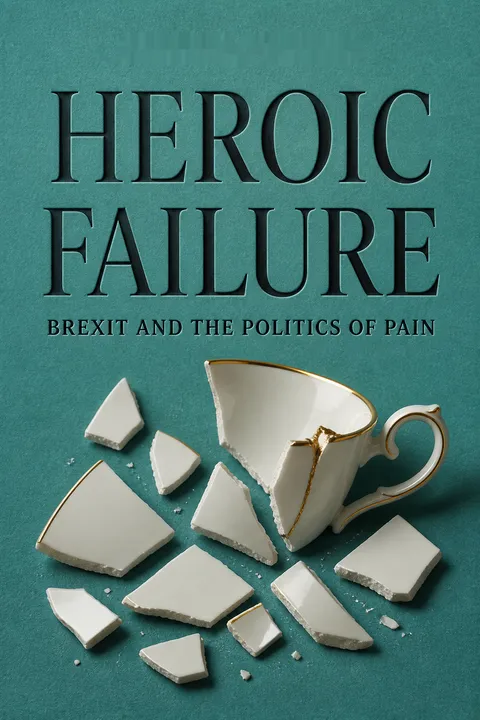
Heroic Failure is praised for its insightful analysis of Brexit's cultural roots in English nationalism and the British psyche. O'Toole argues that Brexit stems from a combination of post-imperial nostalgia, self-pity, and masochism. Readers appreciate the author's wit, cultural references, and ability to dissect complex issues. While some find certain analogies strained, most reviewers consider the book a compelling examination of Brexit's underlying causes. Critics note its timeliness and relevance, though some feel it occasionally veers into psychoanalysis and may not appeal to Brexit supporters.
People Also Read




Glossary
Sadopopulism
Self-harm to punish enemiesA political pattern in which voters accept costs to themselves because they believe their chosen leader will inflict greater pain on people they regard as opponents. In O'Toole's account, this helps explain why a damaging political choice can feel empowering: it turns diffuse suffering into an act of agency and imagined revenge.
Heroic failure
Celebrated unsuccessful strivingA cultural tradition of honoring attempts that fail to achieve their stated aims, especially through stories of courage, endurance, and stoicism. O'Toole draws on historian Stephanie Barczewski's account of British examples such as the Franklin expedition and the Charge of the Light Brigade. The tradition could make failure appear noble while obscuring its costs.
English Dreamtime
Mythic past for national identityO'Toole's term for the mythic historical world Brexit supporters enter when contemporary compromises and contradictions become difficult to bear. It includes imagined medieval glories, heroic kings, and feudal relationships. This idealized past supplies a grand story of English identity and status, but is detached from the complex history it claims to explain.
Structure of feeling
Shared, unsettled cultural moodA term associated with cultural critic Raymond Williams, used for a social atmosphere that shapes how people experience a period before it is fully expressed in formal ideas or institutions. O'Toole uses it to describe the imagined oppression and unresolved national anxieties that made Brexit emotionally persuasive, beyond arguments about policy alone.
Sore tooth
Unresolved English identityO'Toole's metaphor for England's unsettled sense of itself as a political community. Like a small but persistent toothache, the question of English identity can dominate attention even when it is only one part of national life. Brexit, in this image, distracts from the pain without answering how England should be represented or governed.
Broken umbrella
Welfare state without protectionO'Toole's metaphor for a welfare state weakened enough that it no longer reliably shields people from poverty and indignity. Brexit cannot repair this material insecurity by itself. The image argues that citizens need meaningful public protection as well as a political identity and a sense that their community has a voice.
FAQ
What's "Heroic Failure: Brexit and the Politics of Pain" about?
- Exploration of Brexit: The book delves into the phenomenon of Brexit, describing it as an act of national self-harm and exploring the reasons behind Britain's decision to leave the European Union.
- National Masochism: Fintan O'Toole examines the concept of national masochism, where a country indulges in self-pity and the dangerous pleasures of perceived victimhood.
- Cultural and Political Analysis: The book provides a cultural and political analysis of how trivial journalistic lies became national obsessions and how English nationalism silently rose.
- Historical Context: O'Toole draws parallels between historical events and the current political climate, such as the Charge of the Light Brigade and the idea of heroic failure.
Why should I read "Heroic Failure: Brexit and the Politics of Pain"?
- Insightful Analysis: The book offers a deep and insightful analysis of the cultural and political factors that led to Brexit, making it essential for understanding contemporary British politics.
- Humorous and Engaging: O'Toole's writing is mordantly funny and engaging, making complex political issues accessible and entertaining.
- Historical Parallels: The book draws fascinating parallels between historical events and modern politics, providing a broader context for understanding Brexit.
- Critical Perspective: It offers a critical perspective on the political elite and media's role in shaping public opinion and national identity.
What are the key takeaways of "Heroic Failure: Brexit and the Politics of Pain"?
- National Self-Pity: The book highlights how self-pity and a sense of grievance have become defining features of English nationalism.
- Heroic Failure: O'Toole discusses the cultural phenomenon of celebrating failure as a form of heroism, rooted in historical events like the Charge of the Light Brigade.
- Political Manipulation: The narrative explores how political elites and media have manipulated public sentiment and historical narratives to serve their agendas.
- Impact on Vulnerable Populations: The book emphasizes that the costs of Brexit will be borne by the most vulnerable supporters and those affected by potential border issues in Ireland.
How does Fintan O'Toole define "heroic failure" in the context of Brexit?
- Cultural Phenomenon: Heroic failure is described as a cultural phenomenon where failure is celebrated as a form of heroism, often masking the realities of power and dominance.
- Historical Examples: O'Toole uses historical examples like the Charge of the Light Brigade and the Franklin expedition to illustrate how failure has been romanticized in British culture.
- Modern Application: In the context of Brexit, heroic failure is seen as a way to cope with the loss of empire and global influence, turning national setbacks into narratives of resilience.
- Critique of Nationalism: The concept is critiqued as a dangerous form of nationalism that indulges in self-pity and avoids addressing real issues.
What role does English nationalism play in "Heroic Failure: Brexit and the Politics of Pain"?
- Silent Rise: The book discusses the silent rise of English nationalism, which has been a significant force behind the Brexit movement.
- Identity Crisis: O'Toole explores how English nationalism is rooted in an identity crisis, where England struggles to define itself post-empire and within the UK.
- Cultural Narratives: The narrative of English nationalism is tied to cultural myths and historical events, which have been manipulated to foster a sense of grievance and victimhood.
- Political Consequences: The rise of nationalism has significant political consequences, influencing public opinion and policy decisions related to Brexit.
How does Fintan O'Toole use historical events to explain Brexit?
- Parallels with History: O'Toole draws parallels between Brexit and historical events like the Charge of the Light Brigade and the Franklin expedition to illustrate the concept of heroic failure.
- Cultural Continuity: The book suggests that the cultural narratives of past failures continue to influence modern political decisions and national identity.
- Lessons from the Past: By examining historical events, O'Toole highlights the dangers of romanticizing failure and the need to learn from past mistakes.
- Contextual Understanding: The historical context provides a deeper understanding of the cultural and political forces that shaped the Brexit movement.
What are the best quotes from "Heroic Failure: Brexit and the Politics of Pain" and what do they mean?
- "A great democratic country tears itself apart": This quote encapsulates the central theme of the book, highlighting the self-destructive nature of Brexit.
- "The dangerous pleasures of national masochism": O'Toole uses this phrase to describe how a sense of victimhood and self-pity have become ingrained in national identity.
- "Heroic failure, once a self-deprecating cult": This quote reflects on how the celebration of failure has shifted from a self-deprecating humor to a dangerous political narrative.
- "The silent rise of English nationalism": This phrase underscores the book's exploration of how nationalism has quietly but powerfully influenced the Brexit movement.
How does "Heroic Failure: Brexit and the Politics of Pain" critique the political elite?
- Indifference to Truth: O'Toole criticizes the political elite for their indifference to truth and historical fact, which has come to define their style.
- Manipulation of Narratives: The book highlights how the elite have manipulated cultural and historical narratives to serve their political agendas.
- Failure to Address Real Issues: O'Toole argues that the political elite have failed to address the real issues facing the country, instead indulging in narratives of grievance and victimhood.
- Impact on Vulnerable Populations: The critique extends to the consequences of their actions, which disproportionately affect the most vulnerable supporters of Brexit.
What is the significance of the "prawn cocktail flavour crisps" in the book?
- Symbol of Trivial Grievances: The prawn cocktail flavour crisps serve as a symbol of how trivial grievances have been inflated into national obsessions.
- Cultural Identity: O'Toole uses this example to illustrate how food and consumption have become tied to cultural identity and national pride.
- Manipulation by Media: The narrative shows how the media has manipulated such trivial issues to stoke fears and influence public opinion.
- Broader Commentary: The crisps are part of a broader commentary on how minor issues are used to distract from more significant political and economic challenges.
How does "Heroic Failure: Brexit and the Politics of Pain" address the concept of "sadopopulism"?
- Definition of Sadopopulism: Sadopopulism is described as a political strategy where leaders inflict pain on their own supporters while promising to hurt their perceived enemies even more.
- Brexit as Sadopopulism: O'Toole argues that Brexit embodies this concept, as it involves self-harm with the promise of greater harm to the EU and immigrants.
- Psychological Appeal: The book explores the psychological appeal of sadopopulism, where voters find meaning in their suffering by believing it will lead to greater pain for others.
- Critique of Leadership: O'Toole critiques the leaders of the Brexit movement for exploiting this dynamic to gain and maintain power.
What impact does "Heroic Failure: Brexit and the Politics of Pain" suggest Brexit will have on Ireland?
- Hard Border Concerns: The book discusses the potential consequences of a hard border in Ireland, which could disrupt the fragile peace process.
- Economic Impact: O'Toole highlights the economic impact on Ireland, particularly in terms of trade and cross-border relations.
- Cultural and Political Tensions: The narrative explores how Brexit could exacerbate cultural and political tensions between Northern Ireland and the Republic of Ireland.
- Historical Context: The book places these concerns within the historical context of Anglo-Irish relations, emphasizing the importance of maintaining peace and cooperation.
What does "Heroic Failure: Brexit and the Politics of Pain" suggest about the future of English nationalism?
- Continued Influence: The book suggests that English nationalism will continue to be a significant force in shaping the country's political landscape.
- Identity Crisis: O'Toole argues that the identity crisis at the heart of English nationalism will persist, as the country struggles to define itself post-Brexit.
- Potential for Change: The narrative acknowledges the potential for positive change if English nationalism can be redirected towards more inclusive and constructive goals.
- Need for Addressing Issues: O'Toole emphasizes the need for addressing the underlying issues driving nationalism, such as economic inequality and cultural identity.
About the Author
Other books by Fintan O'Toole
Download PDF
Download EPUB
.epub digital book format is ideal for reading ebooks on phones, tablets, and e-readers.








