

Key Takeaways
Treat the Celtic Tiger as a historical episode, not an exportable formula
A miracle with a backstory. The boom of the 1990s was real: unemployment and poverty fell, exports surged, and Ireland shifted from emigration to immigration. But the conditions behind that rise were unusually specific: a worldwide investment boom, a young workforce, women entering paid work, European Union funding, expanded education, and social partnership between government, employers, and unions. Ireland did not become prosperous through tax cuts alone, despite the story politicians sold abroad.
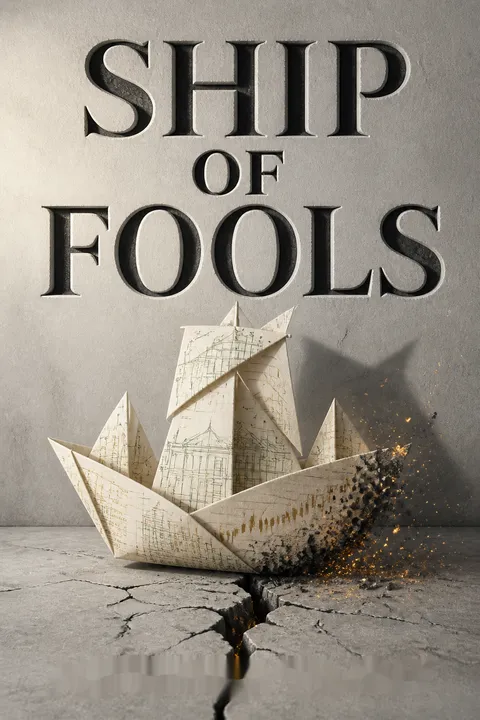
Two ships, two priorities. The opening image makes the contrast vivid. Investors in the yacht Christina O reportedly received about €40 million in tax refunds, while the government used the €3.8 million insurance payout for the sunken national sail-training ship Asgard II rather than replacing it. Prosperity had become a brand, but public priorities were fraying.
What's striking is how a success story can become a policy export before its causes are understood. Development economics often distinguishes between a policy that works in one institutional setting and a model that travels. Ireland's experience underscores the difference: foreign investment mattered, but so did European transfers, education, labor-force changes, and political cooperation. The yacht and the wrecked training ship make the distributive question concrete. Still, rejecting a universal formula should not obscure genuine transferable lessons, such as investing in skills and building reliable institutions.
Protect export-led productivity before asset prices impersonate prosperity
Growth changed engines. The book argues that Ireland's productive boom largely ran from 1995 to 2001, powered by rising productivity and exports. Those drivers weakened, but policymakers treated the slowdown as a reason to stimulate property, borrowing, and consumption instead. By 2006, construction accounted for nearly 24 percent of GDP and about one in five workers. Private credit reached €400 billion in 2008, roughly two and a half times national income.
Borrowed confidence. Property tax incentives and easy lending helped replace making and selling useful goods with building assets whose rising prices made owners feel richer. The author calls this a false economy: the gains depended on further borrowing and ever-higher valuations. When credit stopped expanding, the appearance of wealth could not support the debts beneath it.
This is a classic credit-cycle problem. Economist Hyman Minsky described how long periods of apparent stability can encourage increasingly risky borrowing, until finance depends on asset prices continuing to rise. Ireland's shift from export earnings to property collateral fits that pattern: rising prices seemed to validate more loans, which then pushed prices higher. The distinction between producing income and marking up assets is essential for any reader assessing a boom. Yet the book's narrative also warns against treating all construction as wasteful. The danger was the scale, financing, and dependence on speculative prices.
Make corruption costly, or scandal teaches voters that rules are optional
Exposure without consequences. The book's central political charge is not simply that corruption occurred, but that it was repeatedly revealed without changing the incentives. The Flood tribunal found that developer Mick Bailey had bribed officials and given false evidence; he and his brother were never prosecuted. Michael Lowry faced findings of tax evasion and deception, yet his vote increased and he topped the poll in 2007.
Local favors beat public standards. Many voters expected politicians to secure houses, roads, or other benefits for their constituencies. When public service became synonymous with personal access, an indicted or compromised politician could still seem useful. Meanwhile, inquiries that exposed wrongdoing but produced little accountability fed the belief that all politicians were corrupt, making punishment seem selective rather than principled.
The pattern resembles a problem in institutional economics: rules shape behavior only when enforcement is credible and sufficiently even-handed. If influential people face no penalty, public cynicism can become a rational response, not a character flaw. The local-service system also helps explain why voters may prioritize a representative's practical usefulness over national integrity. That explanation is not an excuse; it points to institutional design. Strong local government and transparent allocation of public services can reduce the pressure to treat national politicians as personal fixers.
Regulate banks for conduct, not merely for solvency
The warning was visible. Irish banks had helped customers evade taxes through bogus non-resident accounts and the Ansbacher scheme, which hid wealthy clients' money offshore and disguised it as loans. By 2009, the state had recovered €2.5 billion from about 34,000 people involved in major tax-dodging schemes. Regulators had evidence of serious misconduct, yet often treated it as outside their role or avoided pressing banks too hard.
Old habits, larger stakes. The book links that tradition of deference to the later collapse. Anglo Irish Bank concealed large loans to its chairman and used circular deposits to make its accounts look stronger. Regulators knew of some irregularities but did little. The government then guaranteed the obligations of all major banks, transferring enormous risks to taxpayers. Financial stability cannot be separated from honest management and credible oversight.
A narrowly prudential regulator asks whether a bank can meet its obligations today. A conduct-focused regulator also asks whether the bank's reported assets, clients, and controls are trustworthy enough to make tomorrow's solvency claim meaningful. The distinction matters because fraud and weak governance often hide risk until a crisis makes it impossible to ignore. Modern regulatory thinking increasingly treats governance, incentives, and disclosure as part of financial stability. At the same time, rules alone are insufficient: supervisors need independence, expertise, and the practical authority to act against powerful institutions.
Capture land windfalls for the public before housing becomes speculation
Land made the bubble. In Fingal, an area of north Dublin, just twenty-five owners controlled half the building land in 2003. Land rose from about 10 to 15 percent of a home's cost before the boom to 40 to 50 percent at its peak. The average new home cost €323,000 in 2007, far above estimates of €109,000 if prices had tracked consumer inflation.
A solution left on the shelf. The 1973 Kenny report proposed that local authorities could buy designated development land at its agricultural value plus a 25 percent premium, limiting windfalls created by public zoning and infrastructure. Later reviews reached similar conclusions, but governments did not act. Meanwhile, public projects paid inflated prices for land, and first-time buyers took out mortgages lasting more than thirty years to afford homes.
The land story illustrates the difference between creating value and capturing value. A field becomes more valuable when public decisions add roads, zoning, and services, but the resulting gain can accrue to a private owner who did not create those improvements. Land-value capture is one way governments can share that uplift and fund housing or infrastructure. The case also shows why supply alone does not guarantee affordability: when a small group controls developable land, more building can coexist with high prices. The challenge is to design rules that curb speculation without freezing useful development.
A tax system that exempts elites quietly rebuilds aristocracy
Privilege became ordinary. During the boom, Irish wealth became highly concentrated: the top 1 percent held about 20 percent of wealth when homes were included, and 34 percent when residential property was excluded. Tax avoidance was often easy, while tax reliefs cost an estimated €8.4 billion a year in 2004. A Revenue study found that some top earners paid no tax, and many paid effective rates far below those faced by ordinary workers.
The yacht was not an exception. Tax breaks helped developers and investors reduce liabilities, while special residency rules made it easier for wealthy people to claim they lived abroad. The Christina O illustrates how policy could subsidize luxury through refunds to investors. The author argues that this created a new aristocracy defined less by titles than by exemption from common obligations.
Tax policy is also a theory of citizenship. When similar income is taxed differently according to wealth, access, or legal engineering, the state signals whose obligations count. That can weaken voluntary compliance among ordinary taxpayers, because fairness is one of the foundations of legitimacy. The book's aristocracy metaphor is pointed, though wealth concentration alone does not prove that every tax preference is unjustified. The useful test is whether a relief has a clear public purpose, measurable benefits, and a fair distribution of costs. Ireland's problem was the opacity and persistence of advantages without adequate evaluation.
Build technological capability at home, not just a high-tech reputation
Factories did not make a tech culture. Ireland hosted major technology firms and became a leading software exporter, yet its school computer courses were barely updated after their introduction in the 1980s. Many pupils lacked basic computer skills, and few chose advanced mathematics, physics, or chemistry. The country relied on imported expertise rather than embedding technological knowledge across education and local industry.
Infrastructure followed the same pattern. The government promised widespread broadband, then privatized Eircom, the company controlling the fixed-line network. Debt and repeated ownership changes crowded out long-term investment. By 2008, Ireland ranked twenty-first of thirty OECD countries for broadband subscribers per person and thirty-first of thirty-five for advertised download speed. Public computer projects also wasted money, including €51 million spent on electronic voting machines later scrapped.
A cluster of global firms is not the same as an innovation system. Durable technological capacity depends on schools, research, infrastructure, skilled workers, and institutions that connect them. This is the logic behind the concept of absorptive capacity: a country needs local knowledge and organizations capable of learning from outside investment. The book's evidence shows a sharp mismatch between promotional language and everyday capability. Still, weak school provision cannot by itself explain every labor-market choice. Prestige, gender norms, and the relative rewards of professional careers also shaped what students pursued.
Name the facts a society knows but refuses to process
Knowledge can stay inert. The book calls these facts unknown knowns: realities people broadly understand but avoid treating as real. Many Irish people knew that political and financial circles were intertwined, or that house prices had become implausible, yet public life proceeded as if those facts did not demand action. The exposure of corruption sometimes deepened cynicism rather than reform, because investigations produced little consequence.
Celebrity softened scrutiny. Bertie Ahern's public persona made him feel familiar and ordinary, while his political flexibility left few fixed beliefs for opponents to challenge. The book argues that this soap-opera intimacy helped turn scandals into episodes in a familiar story rather than evidence about power. Its point is not that voters were simply fooled. The culture offered convenient ways to look away from realities that were uncomfortable or politically costly.
This resembles motivated reasoning, the tendency to assess evidence in ways that protect identity or group loyalty. It also resembles organizational silence, where people notice problems but learn that raising them brings little reward. The distinction between not knowing and refusing to act on what is known is politically important: the second condition requires accountability and collective courage, not merely more information. The book's cultural reading is persuasive, although it risks making a whole society sound psychologically uniform. Different voters, journalists, and officials had different degrees of knowledge, power, and responsibility.
Plan space and time for real lives, not property sales
A boom can disorder daily life. High urban housing costs pushed workers into distant commuter towns, while rapid building overwhelmed villages and weakened local ties. Dublin sprawled across a region approaching the area of Los Angeles despite having only a fraction of its population. Car dependence grew, public transport lagged, and one study found that a five-kilometre delivery trip in Dublin could take 57 minutes.
The future was treated as optional. The government ignored its own spatial planning strategy, while road construction overrode objections about the historic Tara landscape. Energy use rose sharply, especially in transport, even as environmental and sustainability concerns were dismissed. The result was a frantic economy that made people rush to buy property, then left them waiting in traffic, hospital queues, and overcrowded public services.
Urban planning is not a decorative layer added after economic growth. It shapes access to work, social connection, transport costs, and exposure to environmental risks. The Irish examples show how individually rational choices, such as buying a cheaper home farther away, can combine into a costly collective outcome when infrastructure and housing policy are uncoordinated. The book's account also suggests that planning protects time as well as space. Its limitation is that not every spatial change is avoidable or undesirable; the key question is whether development expands people's options or merely transfers costs onto commuters and future residents.
Make recovery mean a fair republic, not another boom
Rebuild what growth skipped. The proposed Second Republic is not a return to the past, but a deliberate effort to strengthen democratic institutions Ireland had failed to build fully. The author calls for public morality grounded in honesty and restraint, a more powerful parliament, functioning local government, and political alternatives that differ meaningfully in their social visions.
Define prosperity by priorities. Recovery should direct resources toward health, education, childcare, housing, and pensions rather than rescuing failed financial institutions or funding prestige projects. The book does not romanticize recession or poverty. It argues that decent public services and economic security can produce a better life than conspicuous consumption, even when growth is slower. The practical standard is whether the country can decide what is enough and distribute its resources accordingly.
The proposed renewal links ethics to institutional design rather than relying on personal virtue alone. That is a strength: transparent rules, meaningful oversight, and credible public services make decent conduct easier to sustain. The idea of enough also challenges the assumption that every increase in output improves well-being, a question explored in welfare economics through measures that distinguish income from health, security, and social participation. Yet restraint must not become an excuse for austerity imposed on those least able to bear it. A fair recovery requires naming who pays, who benefits, and which public goods remain protected.
Analysis
Ship of Fools is a polemical diagnosis of Ireland's boom and crash, but beneath the satire lies a compact theory of institutional failure. The central claim is that prosperity did not collapse simply because a global crisis struck. Ireland had already substituted property inflation and debt for the export-led productivity that had driven its earlier growth. That vulnerability became catastrophic because political and financial institutions rewarded insiders, tolerated evasion, and treated regulation as an obstacle rather than a public function.
The book's most valuable move is to connect economic mechanisms to moral habits. Tax evasion, patronage, land speculation, weak supervision, and celebrity politics appear as parts of one system: powerful actors expect exceptions, while citizens receive little reason to believe that rules apply evenly. This makes the argument richer than a story of greedy bankers or foolish borrowers. It also clarifies why information alone failed to correct behavior. Tribunals and warnings could not repair a structure that converted exposure into cynicism instead of sanction.
The analysis is strongest when it contrasts observable indicators: exports and productivity against construction, household debt, and land prices; promises of broadband against actual connectivity; public declarations of equality against tax privileges and persistent poverty. Its polemical form, however, can compress distinctions. The book was written in 2009, during the crisis, and some claims about motives or the cultural character of Ireland are interpretive rather than demonstrated in the manner of a fully referenced academic study. The figures illuminate a pattern, but do not isolate the contribution of every policy or actor.
Its enduring lesson is therefore institutional, not nationalistic. Rapid growth does not automatically create competent government, public ethics, or shared prosperity. A country must build those capacities while money is plentiful, because a boom can make weak institutions look effective until the bill arrives. Recovery requires more than restoring confidence in markets. It requires public rules strong enough to resist insiders, and a definition of success that includes the quality of ordinary life.
Review Summary
Ship of Fools is a scathing critique of Ireland's Celtic Tiger era, exposing corruption, cronyism, and governmental incompetence. O'Toole argues that Ireland's economic boom was built on unsustainable practices and squandered opportunities. He highlights the lack of regulation, tax evasion, and a culture of impunity that led to the country's economic collapse. While some readers find the book depressing, many praise O'Toole's insightful analysis and clear writing style. The book serves as a warning about the dangers of unchecked capitalism and the importance of strong democratic institutions.
People Also Read





Glossary
Celtic Tiger
Ireland's boom and its mythologyThe name given to Ireland's rapid economic growth from the 1990s into the 2000s. In the book, it refers both to genuine gains in jobs, exports, and income and to the later claim that Ireland had discovered a universal development formula. O'Toole distinguishes the export-led expansion from the debt-fueled property boom that followed.
DIRT
Tax withheld on deposit interestDeposit Interest Retention Tax, introduced in Ireland in 1986. Banks were required to withhold tax from interest paid to depositors and send it to the Revenue. Customers claiming non-resident status could avoid the deduction, and many Irish residents used false declarations. The book presents banks' widespread assistance with these accounts as a major example of financial misconduct and regulatory inaction.
Ansbacher scam
Offshore money disguised as loansA tax-evasion scheme operated through Guinness and Mahon and an offshore Cayman Islands vehicle. Wealthy clients deposited funds offshore through concealed accounts, then appeared to borrow corresponding amounts from the Dublin bank. This made their own money look like debt and helped hide assets from tax authorities. The scheme's operation and the regulators' failure to stop it are central to the book's account of Irish banking.
International Financial Services Centre
Dublin's financial-services hubThe IFSC is the Dublin district created to attract international financial companies through low taxation and favorable regulation. It brought jobs and tax revenues, but also housed firms with large financial assets and very few employees, and businesses whose activities received limited supervision. The book argues that the pursuit of financial-sector growth helped preserve a regulatory culture that was dangerously permissive.
Kenny report
Plan to limit land windfallsThe 1973 Report of the Committee on the Price of Building Land, chaired by High Court judge Mr Justice Kenny. It proposed allowing local authorities to purchase designated development land at its agricultural value plus a 25 percent premium. The proposal aimed to limit windfall gains created when public zoning and infrastructure made land more valuable. Successive governments discussed the recommendation but did not implement it.
unknown knowns
Known realities kept unrealO'Toole's term for facts that people understand, at least vaguely, but do not process as realities requiring a response. In the book, examples include the unsustainability of house prices and the closeness of political and business networks. The concept describes a collective capacity to acknowledge evidence in conversation while leaving public behavior largely unchanged.
Second Republic
A democratic refounding projectO'Toole's proposed renewal of the Irish state after the collapse of the Celtic Tiger. It means completing unfinished work in democratic governance through stronger parliament, functioning local government, credible public ethics, and a more explicit social vision. The term does not call for restoring an earlier political order; it names a deliberate refounding suited to a modern, globalized Ireland.
FAQ
What's Ship of Fools about?
- Critique of the Celtic Tiger: The book examines the rise and fall of the Irish economy during the Celtic Tiger years, focusing on how stupidity and corruption led to its collapse.
- Key Figures and Events: It discusses influential figures like Bertie Ahern and Seán Dunne, and the role of reckless banking practices and property speculation.
- Historical Context: O'Toole provides a historical backdrop, illustrating how Ireland's past shaped its present economic decisions and the eventual fallout.
Why should I read Ship of Fools?
- Insightful Analysis: The book offers a deep dive into the factors that led to the economic collapse, essential for understanding modern Irish history and economics.
- Engaging Writing Style: O'Toole combines personal anecdotes with rigorous analysis, making complex economic concepts accessible and engaging.
- Lessons for the Future: It provides valuable lessons about the dangers of unchecked capitalism and the importance of ethical governance, relevant beyond Ireland.
What are the key takeaways of Ship of Fools?
- Corruption and Stupidity: The collapse of the Celtic Tiger was not just a financial failure but a moral one, driven by corruption and a lack of accountability.
- Government's Role: O'Toole critiques the government's failure to regulate the banking sector and its complicity in fostering a culture of greed and speculation.
- Social Inequality: The book highlights the growing divide between the wealthy elite and the average citizen, questioning the sustainability of such inequality.
What are the best quotes from Ship of Fools and what do they mean?
- “We used up all the wealth we had to build a ship for fools and mad.”: This quote encapsulates the idea that the economic boom was built on unsustainable practices.
- “The magic of the market had turned Europe’s Cinderella into a glittering princess.”: O'Toole critiques the belief that free-market policies alone can lead to prosperity.
- “The government turned itself into a junkie, injecting itself every day with the narcotic of easy money from the property bubble.”: This metaphor describes the dependency of the Irish government on unsustainable profits from the property market.
Who is the author of Ship of Fools?
- Fintan O'Toole: A prominent Irish journalist and author known for incisive commentary on Irish politics and society.
- Background in Journalism: He has written extensively for various publications, including the Irish Times.
- Critical Acclaim: O'Toole's work has received numerous awards, establishing him as a key figure in contemporary Irish literature and political discourse.
How does Fintan O'Toole use historical context in Ship of Fools?
- Historical Contextualization: O'Toole places the Celtic Tiger within a broader historical narrative, linking past injustices and economic policies to present outcomes.
- Understanding Economic Behaviors: He suggests that understanding past economic behaviors is crucial for interpreting current events.
- Lessons from History: The historical analysis serves as a cautionary tale for future economic policies and governance.
How does Ship of Fools address the role of the government in the economic crisis?
- Failure to Regulate: O'Toole argues that the government failed to implement necessary regulations to control the property market.
- Tax Incentives for Developers: The book discusses how government-provided tax incentives encouraged reckless building and investment.
- Populist Politics: O'Toole critiques the populist nature of Fianna Fáil, suggesting that short-term gains were prioritized over long-term stability.
How does Fintan O'Toole characterize the banking sector in Ship of Fools?
- Culture of Recklessness: The banking sector is portrayed as having a culture where profit motives overshadowed ethical considerations.
- Complicity in Corruption: O'Toole highlights the complicity of banks in corrupt practices, including the manipulation of financial records.
- Failure of Oversight: The book discusses the failure of regulatory bodies to adequately oversee banking practices, leading to a systemic collapse.
What role does personal debt play in the narrative of Ship of Fools?
- Rising Personal Debt Levels: Personal debt levels skyrocketed during the Celtic Tiger years, with many individuals taking on unsustainable mortgages.
- Wealth Transfer: This debt represented a transfer of wealth from ordinary workers to property developers and banks.
- Consequences of Debt: O'Toole warns of the traumatic consequences for individuals who bought homes at inflated prices.
What are the societal implications discussed in Ship of Fools?
- Growing Inequality: O'Toole emphasizes the widening gap between the wealthy and the poor, questioning the sustainability of such disparities.
- Public Disillusionment: The actions of the elite and government led to widespread disillusionment among the populace.
- Moral Responsibility: O'Toole argues for a collective moral responsibility to address these inequalities.
How does Ship of Fools relate to current economic issues?
- Relevance to Global Trends: The themes of corruption, inequality, and the failures of capitalism resonate with current global economic challenges.
- Lessons for Policymakers: O'Toole's analysis serves as a cautionary tale, emphasizing the need for ethical governance and accountability.
- Reflection on Society: The book encourages readers to reflect on their own society's values and the importance of inclusive economic growth.
What does Fintan O'Toole suggest about the future of Ireland post-Celtic Tiger?
- Need for Reflection: O'Toole emphasizes the importance of reflecting on the past to build a more sustainable future.
- Potential for Renewal: He suggests that the crisis presents an opportunity for Ireland to redefine its values and priorities.
- Call for Civic Engagement: The book advocates for greater civic engagement and accountability, urging citizens to shape the future of their country.
Download PDF
Download EPUB
.epub digital book format is ideal for reading ebooks on phones, tablets, and e-readers.








