

Key Takeaways
A war against fascism can also be a fight over what replaces it
A city in revolution. Orwell arrives in Barcelona expecting a fight against Franco. Instead, he finds a city reshaped by workers: businesses are collectively run, red and black flags fill the streets, and people address one another as equals. The change feels real enough that he joins the militia, though he admits he does not yet understand the political struggle behind it.
Two conflicts at once. The Spanish Republic’s supporters were not united on what victory should mean. Some wanted to defeat Franco first and restore parliamentary government. Others feared that postponing social change would let old economic and political hierarchies return. Orwell’s central claim is that the war was both a military contest and a struggle over the society that would follow.
The distinction between defeating an enemy and deciding what comes next is politically important, not semantic. Coalitions often unite around a threat while concealing incompatible goals, a familiar problem in both revolutionary movements and modern electoral alliances. Orwell makes that tension tangible by showing equality in the streets alongside an unresolved contest over power. The danger is that this account can make a divided coalition look like a clean choice between two camps. His own narrative shows a messier reality: people could share the front while disagreeing profoundly about the future.
At the front, cold and broken rifles mattered more than slogans
War was mostly endurance. On the Aragon front, Orwell spends months in trenches where the chief struggles are cold, hunger, mud, sleep deprivation, and finding enough wood to keep a fire going. The enemy is often distant and barely visible. In one stretch of nearly three weeks, Orwell fires only three shots at the opposing side.
Scarcity shaped the danger. Recruits reached the line without useful weapons training. Many received old, corroded rifles, unreliable ammunition, and only a few rounds. Accidents with those weapons injured men, sometimes more often than enemy fire did. The contrast between revolutionary speeches and the practical shortage of blankets, maps, and working guns exposes how little a cause can accomplish without basic supplies and competent preparation.
This is a useful corrective to the cinematic picture of combat as continuous action. Military historians and organizational researchers often emphasize logistics because food, transport, equipment, and maintenance determine what a force can actually do. Orwell’s account makes that abstract point bodily: cold and fatigue become tactical problems, while a defective rifle can threaten its own user. Yet material explanations do not settle every political question. The same shortage can reflect general collapse, poor administration, or deliberate allocation, and those causes require evidence beyond a soldier’s immediate view.
Build discipline through shared purpose, not humiliation alone
A different kind of command. Orwell describes the militia’s system as revolutionary discipline: orders were meant to be obeyed because soldiers understood their shared purpose, not because rank entitled an officer to abuse them. Officers and ordinary militiamen received equal pay and food, wore similar clothes, and used informal forms of address. A difficult order might first be explained as a responsibility owed to comrades.
Trust took time. At first, Orwell struggled to keep inexperienced teenagers alert and organized. Months later, after serving under fire, he says he could lead about thirty men without difficulty, including when he asked for volunteers for dangerous work. He argues that shared commitment could produce reliable discipline, but acknowledges that it developed slowly and did not make the militia immediately effective.
The account distinguishes obedience from the conditions that produce it. Research on teams and organizations similarly finds that people are more willing to accept demanding instructions when they see leaders as legitimate and goals as shared. Orwell’s example suggests that equality can support authority rather than erase it. But trust is not a substitute for training, clear procedures, or sound equipment. His own early experience shows the cost of relying on comradeship before competence has been built. The strongest lesson is not that hierarchy is unnecessary, but that authority works better when it earns consent.
Measure equality by who gets power, pay, and protection
Equality was lived, briefly. In the militia, Orwell sees officers and privates eating the same food, receiving equal pay, and mixing without the usual social distance. He calls this a rough, temporary experience of a classless society. It matters to him because equality is not merely a political promise: daily interactions make it either credible or hollow.
The city changes back. When Orwell returns to Barcelona after months at the front, smart clothes, expensive restaurants, and visible class distinctions have returned. Working-class people face food queues, while wealthier residents can obtain scarce goods. The city’s earlier appearance of equality had mixed genuine revolutionary hope with fear-driven disguise among the well-off. For Orwell, the shift reveals that social arrangements can be reversed before anyone formally announces that the revolution is over.
Orwell tests an ideology against ordinary transactions: who eats well, who gives orders, and who must wait. That is a sharper measure than official slogans because social hierarchy is reproduced through routine access to resources and authority. The contrast also recalls how crises can suspend customs without dismantling the institutions that support them. Still, a few months of relative equality cannot establish whether a whole society could sustain it at scale. The episode is strongest as evidence of what people experienced and valued, not as a complete blueprint for governing.
Treat wartime unity as a political choice, not a neutral fact
The coalition had rival strategies. The P.O.U.M. opposed Franco while arguing that workers should keep control of armed forces and industry. The Anarchist-aligned C.N.T.-F.A.I. favored workers’ control and local power. The Communist-led P.S.U.C. emphasized centralized government, military organization, and defeating Franco before pressing further social change. Orwell initially finds the Communist case more practical, then concludes that its policies also weakened the revolution.
Aid changed the balance. In Orwell’s account, Soviet weapons raised Communist influence because the arms passed through channels its supporters controlled. He interprets the subsequent loss of union power and the reorganization of militias as political shifts presented in the language of military necessity. He argues that the slogan of unity concealed a choice about whose authority would survive the war, while conceding that his own conclusions could be mistaken.
The key analytical move is to ask who gains authority when coordination is described as a purely technical necessity. Political scientists study similar problems in civil-military relations: unified command can improve battlefield coordination while also concentrating power in institutions that outlast the emergency. Orwell is especially alert to that second effect. The tension is real, but the evidence in a wartime memoir cannot by itself prove that every organizational reform was a disguised power grab. Military efficiency and political control can be motives at the same time, and separating them requires careful evidence.
When evidence is scarce, propaganda can turn comrades into traitors
Labels replaced proof. Communist newspapers accused the P.O.U.M. of serving Franco and Hitler, while Orwell says published accounts contradicted one another about who began the Barcelona fighting and what weapons were used. Some reports described hidden tanks and artillery. Orwell found no trace of them in the places he knew. By the time he wrote, the accusations of espionage against P.O.U.M. leaders had not produced a public trial or convincing evidence, as far as he could establish.
Distance distorted the story. Orwell had seen the front and the Barcelona clashes, but he also warns that he witnessed only a small part of the war and could not be completely objective. His criticism is aimed not just at false claims, but at a political method that makes disagreement proof of treason and leaves ordinary fighters to bear the consequences.
This is an account of motivated reasoning turned into political machinery. Once a group is defined as secretly disloyal, contradictory evidence can be dismissed as part of its deception, making the accusation difficult to disprove. Orwell’s comparisons of conflicting reports are a practical defense: check claims against timelines, locations, and observable evidence. His own warning matters too. Firsthand testimony has unusual value, but proximity is not omniscience; witnesses can misread events, and access is uneven. The responsible response is neither automatic belief nor blanket skepticism, but transparent comparison of what each source could actually know.
A provocation can ignite a city without a master plan
A tense city erupts. On 3 May 1937, armed police moved to take control of Barcelona’s Telephone Exchange, which had been operated largely by C.N.T. workers. Many workers read the seizure as the start of a wider effort to disarm them. Fighting spread, barricades went up, and police and workers held different parts of the city. The official casualty figure was about 400 killed and 1,000 wounded, though Orwell notes that the numbers could not be independently checked.
No clear command emerged. Orwell describes the workers’ response as largely defensive and spontaneous, not a planned coup. Their leaders urged them to return to work, and food shortages helped end the fighting. He argues that the seizure was predictably provocative in an already divided city, while also criticizing the decision to take up arms during a war against Franco.
The episode separates a spark from the conditions that make it combustible. A single seizure could trigger a citywide clash because weapons, fears, and competing claims to authority were already in place. That distinction is useful in analyzing unrest: identifying who acted first does not explain why others joined or what they believed was at stake. Orwell’s account of spontaneity is plausible from his position, but he openly lacked a citywide view. His judgment should therefore be read as an eyewitness interpretation, not a definitive reconstruction of every faction’s intentions.
Emergency powers can punish affiliation before proving any crime
The crackdown followed. After the Barcelona fighting, the P.O.U.M. was outlawed, its offices were seized, and many members and associates were arrested. Orwell, returning wounded from the front, learned that friends were imprisoned without charges. His commander, Georges Kopp, was arrested despite carrying a letter recommending him for military work. Andrés Nin disappeared after arrest; Orwell believed he had probably been killed, but could not prove what happened.
A label became dangerous. Orwell escaped Spain with his wife after hiding from police. The accusation of being a Trotskyist, rather than proof of a specific crime, was enough to put people at risk. He also reports the death of his friend Bob Smillie in prison, while acknowledging that the stated cause, appendicitis, may have been true. The uncertainty itself underscores how little recourse prisoners and their families had.
These episodes show why due process matters most when political fear makes it seem expendable. Detention without charges weakens the distinction between investigation and punishment, while secrecy makes abuse harder to document or challenge. Orwell’s experience also shows that repression can ensnare people who served the same cause as the authorities. At the same time, the memoir’s strongest claims are not equally verifiable: an arrest is a witnessed event, while the fate of a missing prisoner is an inference. Preserving that distinction strengthens, rather than weakens, the account.
Keep faith in human decency without trusting any single account
Kindness survived the factions. Orwell remembers a stranger’s intense handshake, comrades giving away scarce tobacco, and a military officer risking disapproval to help retrieve Kopp’s official letter. These gestures do not undo political violence, poor leadership, or imprisonment. They explain why Orwell can leave Spain with mostly painful memories and still say the experience increased his belief in human decency.
Witnesses have boundaries. He closes by warning readers about his own partisanship and factual errors, as well as those of other accounts. He had seen one front, one city’s fighting, and a narrow slice of a vast war. The memoir’s ethical demand is to resist both easy cynicism and easy certainty: remember the people involved, but keep asking what a witness actually saw and what remains uncertain.
This ending holds together two habits that are often treated as opposites: moral judgment and epistemic humility. Orwell condemns political persecution without claiming a view from nowhere, and he preserves personal kindness without using it to excuse institutions. That balance is valuable in polarized settings, where people are often pressured to choose between total loyalty and total contempt. There is one caution: praise of a people’s generosity can slide into national romanticism. His most persuasive evidence is not a national character claim, but the specific acts of care he witnessed.
Analysis
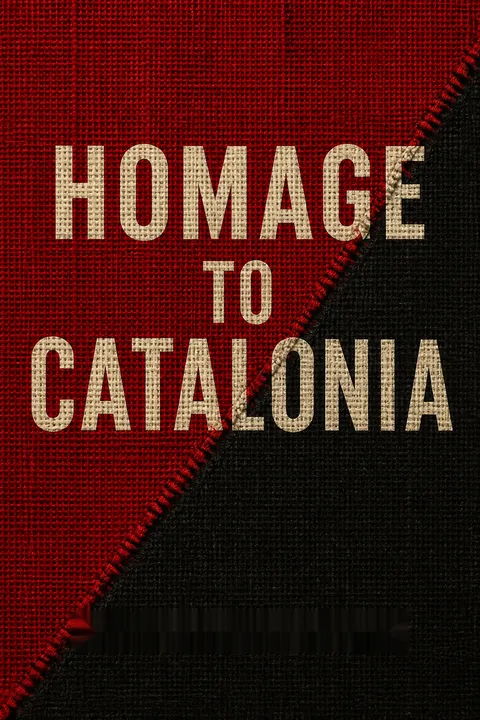
Homage to Catalonia works through a deliberate change in scale. It begins with a stranger’s handshake and the sensory strangeness of a revolutionary city, moves into the monotonous physical life of the trenches, and then widens into a dispute over political power and the credibility of public accounts. This movement matters: the political analysis is anchored in bodies, shortages, friendships, and danger rather than presented as detached doctrine. The reader sees why Orwell’s judgment changes, not simply what he concludes.
The memoir’s strongest contribution is its insistence that a war can contain more than two sides even when propaganda demands a simple moral map. Anti-Fascist forces could share trenches while contesting who would control the state, police, economy, and armed forces. The tension between centralized military coordination and workers’ power is not resolved by choosing a slogan. It is a conflict between urgent operational needs and the danger that emergency institutions become permanent instruments of political exclusion.
Its method also makes its limitation visible. Orwell is unusually candid about his lack of knowledge, his prior political ignorance, and his partisan position. That candor improves the book’s reliability, but does not turn personal observation into a complete history. His account of what he saw in Barcelona carries a different evidentiary weight from his explanation of distant decisions, secret motives, or the fate of prisoners he never saw again. The book is most persuasive when it distinguishes those levels, and readers should preserve that distinction themselves.
The ending refuses the easy conversions of war memoir: suffering does not make Orwell a cynic, and sympathy for ordinary people does not erase the damage done by political organizations. The lasting lesson is methodological as well as moral. Follow the material details, ask who gains power from each claimed necessity, compare rival accounts, and remain alert to what no witness can know. In Orwell’s hands, skepticism is not indifference. It is a way to protect both truth and human dignity from the machinery of faction.
Review Summary
Homage to Catalonia is widely praised for its vivid, personal account of Orwell's experiences in the Spanish Civil War. Readers appreciate his honest portrayal of the conflict's complexities, including the infighting among leftist factions. The book is noted for its clear prose and insightful observations on war, politics, and human nature. While some find the political analysis sections dry, many consider it essential for understanding Orwell's later works. Critics highlight its historical value and Orwell's unflinching commitment to truth, despite the book's initial poor reception.
People Also Read


Glossary
P.O.U.M.
Dissident Marxist partyThe Partido Obrero de Unificación Marxista, a small Marxist party influential in Catalonia during the Spanish Civil War. Orwell describes it as opposing the Communist-led strategy of postponing social revolution until after military victory. Its militia fought Franco’s forces, while Communist propaganda accused the party of serving Fascist interests, a charge Orwell says was unsupported by evidence available to him.
C.N.T.-F.A.I.
Anarchist union and federationThe C.N.T. was a large syndicalist trade-union organization, while the F.A.I. was an Anarchist federation that served as its political influence. Orwell uses the combined label for forces favoring workers’ control of industry, local committees, and resistance to centralized authority. The organizations were not perfectly uniform, and their members did not all hold identical views.
Popular Front
Anti-Fascist political coalitionAn alliance among left-wing parties and liberal groups formed to oppose Fascism. In Orwell’s account, its Spanish version joined forces with conflicting aims: some participants prioritized parliamentary government and military centralization, while others wanted workers to retain power gained during the revolution. The coalition’s unity therefore concealed disputes about property, the armed forces, and the postwar political order.
revolutionary discipline
Discipline through shared purposeOrwell’s term for the militia’s intended basis of obedience. Rather than relying primarily on rigid rank, humiliation, or fear of punishment, commanders appealed to soldiers’ political understanding and loyalty to one another. He argues that this approach could become effective after fighters gained experience and commitment, while recognizing that it was slow to develop and did not eliminate the militia’s early disorder.
Trotskyist
Contested political labelA label Orwell says was used in several distinct senses: for supporters of international revolution, for members of Trotsky’s own political organization, and, in Communist accusations, for alleged Fascist agents posing as revolutionaries. He stresses that these meanings were often blurred. The P.O.U.M. could be called Trotskyist in a loose ideological sense, but Orwell says it was not part of Trotsky’s organization.
FAQ
What is Homage to Catalonia by George Orwell about?
- Firsthand war account: The book is George Orwell’s personal narrative of his experiences as a volunteer soldier in the Spanish Civil War, focusing on his time with the POUM militia on the Aragon front and in Barcelona.
- Political and social analysis: Orwell explores the revolutionary atmosphere in Catalonia, the internal conflicts among anti-Fascist factions, and the broader political complexities of the war.
- Disillusionment and reality: The narrative traces Orwell’s journey from idealism to disillusionment as he witnesses propaganda, betrayal, and the suppression of revolutionary ideals within the Republican side.
Why should I read Homage to Catalonia by George Orwell?
- Unique eyewitness perspective: Orwell offers a rare, detailed account from the viewpoint of a foreign volunteer, providing insights unavailable in official histories or propaganda.
- Insight into political factions: The book illuminates the bitter conflicts between Anarchists, Communists, and other groups, which shaped the Spanish Civil War and influenced later political developments.
- Timeless lessons: Orwell’s reflections on war, political dogmatism, and the human cost of ideological conflict remain relevant for understanding civil wars and political struggles today.
What are the key takeaways from Homage to Catalonia by George Orwell?
- Complexity of civil war: Civil wars are not simple battles of good versus evil but involve complicated factionalism, betrayals, and shifting alliances.
- Dangers of propaganda: Orwell exposes how misinformation, censorship, and political witch-hunts can undermine unity and distort the truth.
- Value of personal integrity: The importance of honesty, skepticism toward official narratives, and bearing witness to uncomfortable truths is a central theme.
What was the atmosphere in Barcelona when George Orwell arrived, according to Homage to Catalonia?
- Revolutionary control: Barcelona was under the control of Anarchists, with workers seizing buildings, collectivizing shops, and displaying red flags.
- Social equality: Class distinctions were blurred; everyone addressed each other as “comrade,” tipping was forbidden, and private property was commandeered for public use.
- War’s shadow: Despite shortages and the hardships of war, there was a sense of hope and contentment among the people, though signs of deprivation were evident.
How does George Orwell describe the organization and training of militias in Homage to Catalonia?
- Militia structure: Militias were organized into sections, centurias, and columns, but lacked formal army discipline or training.
- Voluntary discipline: Discipline was based on comradeship and shared ideals rather than fear or hierarchy, reflecting revolutionary values.
- Limited training and resources: Most recruits were untrained, with little access to weapons or practical instruction, and officers and men shared equal pay and living conditions.
What were the main political factions in Homage to Catalonia and how did they differ?
- PSUC (Communists): Advocated postponing revolution to focus on winning the war, supporting a strong central government and a militarized army.
- POUM: A dissident Marxist party that insisted on the inseparability of war and revolution, opposing the suppression of workers’ control.
- CNT-FAI (Anarchists): Emphasized direct worker control, local committees, and the continuation of the revolution alongside the war effort.
What caused the May 1937 fighting in Barcelona, as described in Homage to Catalonia?
- Government arms order: The Republican Government’s decree to surrender all private weapons was resisted by Anarchists, fearing forced disarmament.
- Seizure of the Telephone Exchange: The government’s attempt to take over the exchange, controlled by CNT workers, sparked the conflict.
- Underlying tensions: Long-standing animosity between Communists and Anarchists, rumors of foreign intervention, and resentment over the revolution’s perceived sabotage contributed to the outbreak.
How does George Orwell portray the conditions and challenges at the front in Homage to Catalonia?
- Harsh environment: Soldiers endured extreme cold, mud, lice, and shortages of food, firewood, and proper clothing.
- Poor armament: Weapons were outdated and scarce, with unreliable ammunition and a lack of artillery.
- Boredom and danger: The front was marked by long periods of inactivity, punctuated by occasional shelling and sniper fire, with constant fatigue and risk.
What role did the Communist Party play in the Spanish Civil War, according to Homage to Catalonia?
- Anti-revolutionary stance: The Communists prioritized winning the war over revolutionary change, seeking to centralize power and suppress revolutionary factions like the POUM and Anarchists.
- Control of resources: Backed by the USSR, they controlled arms supplies and used this leverage to enforce a hierarchical, militarized army.
- Propaganda and repression: The Communist press accused rivals of being Fascist collaborators, spreading libel and suppressing dissent within the Republican side.
How does George Orwell describe his personal transformation during his time in Spain in Homage to Catalonia?
- From outsider to comrade: Orwell developed a deep affection for the Spanish militiamen and a greater understanding of their decency and political consciousness.
- Political awakening: Initially indifferent to politics, he became increasingly aware of the revolutionary struggle and the betrayal of its ideals.
- Lasting impact: The experience gave Orwell a vision of a classless society and profoundly influenced his later political beliefs and writings.
What happened to George Orwell and his comrades after the suppression of the POUM in Barcelona, as recounted in Homage to Catalonia?
- Political repression: The POUM was declared illegal, its leaders arrested, and thousands of supporters imprisoned without trial.
- Atmosphere of fear: Orwell describes a climate of suspicion, police surveillance, and arbitrary arrests, making life dangerous for former POUM members.
- Escape and exile: Orwell and his wife went into hiding and eventually fled Spain, narrowly avoiding arrest and ending his direct involvement in the war.
What are the best quotes from Homage to Catalonia by George Orwell and what do they mean?
- “The war and the revolution are inseparable.” — This slogan of the POUM and Anarchists emphasizes that social revolution must accompany the fight against Fascism, contrasting with Communist calls to postpone revolution.
- “This is not a war, it is a comic opera with an occasional death.” — A quote reflecting the stagnation, chaos, and absurdity of the war on the Aragon front.
- “Answer not a fool according to his folly, lest thou be like unto him.” — Orwell uses this biblical proverb to highlight the complexity of engaging with propaganda and foolishness, a recurring theme in the book.
About the Author
Other books by George Orwell


Download PDF
Download EPUB
.epub digital book format is ideal for reading ebooks on phones, tablets, and e-readers.








