

Plot Summary
The Dungeon's First Warning
The novel opens with Callie chained in a dungeon, saving scraps of food for a speaking brown rat. She has lost track of who she is, and even the tiny ritual of feeding her visitor risks waking the creature assigned to her cell. Then the Unseelie prince arrives.
Guards pull Callie away as he orders her taken to an execution chamber, leaving her fate unclear. The story then rewinds to show how an environmental scientist from Michigan came to be imprisoned in a fairy realm, mistaken for an assassin and hunted by its most powerful prince.
This opening makes captivity a question of identity as much as physical safety. Callie clings to feeding the rat because the gesture preserves a self organized around care, even when her surroundings reward silence and fear. By withholding how she reached the cell, the story makes the reader experience her disorientation before offering causes. The rewind also sets up a contrast between the ordinary routines of conservation work and the brutal logic of the Unseelie court.
The Moth Scientist
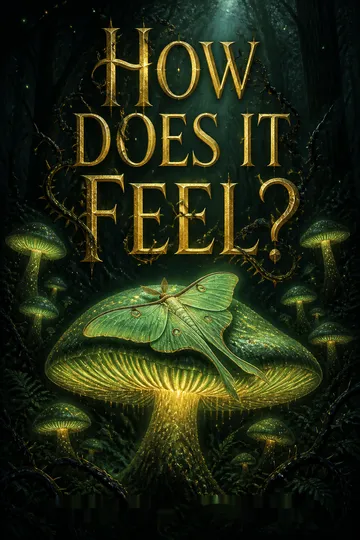
Before the dungeon, Callie Peterson is a 29-year-old environmental scientist at a small Michigan wildlife center. She hopes to join a long-term butterfly project in Mexico, but its organizers question whether a young, unmarried woman will stay committed.
Her work matters more to her than the life the committee assumes she wants, though the rebuff sharpens her loneliness. Cliff Richards, the park's game warden, offers friendship and attention that she does not return romantically.
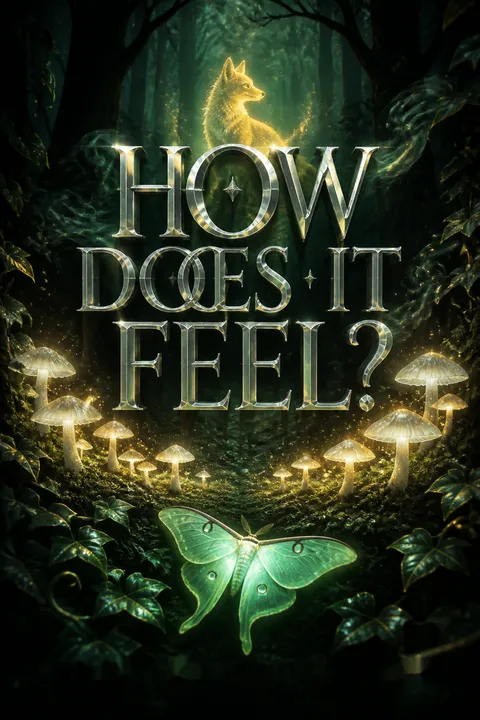
Callie instead pours herself into local conservation, caring for injured animals and preparing to protect the luna moths expected in the area. When a shimmering golden fox appears near her home, Cliff dismisses it as possibly rabid, but Callie refuses to see it as a threat.
Callie's professional conflict is not simply ambition versus romance. Other people keep translating her choices into a presumed desire for marriage and children, while she measures herself through useful work and freedom of movement. Her tenderness toward animals is genuine, but it also gives her a refuge from human attachment after earlier losses. The fox complicates that refuge: something wondrous has entered the familiar woods, and Callie's instinct to observe rather than flee will soon carry her beyond the limits of her scientific explanations.
Earl's Forbidden Mushrooms
After Callie's new microscope arrives, she meets Crazy Earl outside the library and discovers that the town's supposed eccentric is a former state microbiologist. Earl was fired after investigating a rare local fungus, the destroying angel, and he recognizes the value of Callie's research on luna moth parasites.
He helps her search the park, where they finally find a specimen beneath the trees. The discovery is accompanied by a sudden storm and an oppressive sense of danger. Earl warns Callie that fully grown rings of these mushrooms are said to open passages between worlds, and he begs her not to return. She leaves with samples and her microscope, but in the confusion the microscope remains behind.
Earl's history gives Callie a living example of what obsession can cost: a scientist isolated by findings that others refuse to take seriously. Their friendship offers her intellectual companionship, not merely a source of plot information. Yet her practical goal makes it easy to treat his warnings as another hypothesis to test. The lost microscope turns a small mistake into a physical reason for her return to the woods, showing how her commitment to evidence and equipment can carry her directly into the inexplicable.
The Ring Beneath the Moths
Dressed for dinner and driving a lawn mower through the dark, Callie returns to retrieve her microscope. Instead, she follows fireflies and finds a gathering of luna moths around a flawless circle of destroying angel mushrooms. The golden fox bites at her ankles and tries to block her, but Callie steps into the ring.
She falls through darkness and lands in the Unseelie realm, where armored soldiers assume she is an enemy assassin. Prince Mendax holds her while one of his men stabs her through the abdomen. As Callie begins to die, the fox returns with another fox and heals her through its tears and licks. Mendax finds her alive and takes her prisoner.
Callie's defining strengths become liabilities at the threshold. She trusts observation, follows the rare moths she has spent years seeking, and assumes that entering the circle will yield knowledge rather than danger. The fox's repeated intervention suggests a connection she cannot yet interpret, while Mendax's immediate violence shows how thoroughly the Unseelie court turns uncertainty into a threat to eliminate. Her survival is not triumph; it begins a captivity shaped by other people's assumptions about who she is.
Mercy From the Assassin
Callie spends weeks in the castle dungeon, repeating the facts of her life to keep hold of her identity. A brown rat visits through a gap in the wall and warns her that true Fae names can give others power over their owners. The prince assigns a shape-changing forest bog to her cell; it feeds on terror and threatens to kill her.
Mendax later brings Callie to a blood-painted chamber and summons Lord Alistair Cain, his feared, nine-tailed assassin, to finish the job. Callie reaches out to pet Alistair instead of fleeing. Confused by her lack of fear and compelled to protect her, he refuses to kill her. Mendax sends Callie back to the dungeon, where the bog is still waiting.
The rat's warning establishes that speech itself can be dangerous in Faerie, while Callie's choice to state her identity becomes an act of resistance to a world that keeps naming her enemy. Her instinctive kindness toward Alistair is neither simple innocence nor calculated strategy; it unsettles the roles the court expects everyone to perform. The prince's authority is powerful, but it cannot make every creature obey him, and Callie's unexpected effect on others begins to expose that limit.
A Bone Key Out
When the forest bog attacks her again, Callie stops waiting for rescue. She uses a brick to batter the creature until it no longer moves, then softens one of its bones in vinegar-rich sauerkraut and carves it into a key. Her escape attempt reveals that the helpful brown rat is Walter, a wolf shifter and one of Mendax's guards.
Walter admits that his wolf has felt an uncontrollable urge to protect her, but Callie has no reason to trust him completely. He nevertheless helps her through the castle toward a roof portal. On the way, he warns her that the golden foxes belong to the Seelie royal family, whose intervention has bound Callie's fate to them.
Callie's survival shifts from endurance to improvisation. She turns prison food, a creature's remains and her knowledge of materials into an escape tool, making scientific attention a form of physical agency. Walter's protection is sincere but not uncomplicated: his loyalty to the prince and his unexplained pull toward Callie coexist. The warning about the Seelie introduces a second political power, so freedom no longer means simply getting out of one cell or one court.
A Pet for the Court
Walter leads Callie through a ballroom crowded with Unseelie nobles, where the queen's attention exposes them. Callie escapes to the roof, but Mendax catches her. He appears to drop Walter over the precipice, then has Callie confined in a smoke cage inside his chambers.
At the court's gathering, he publicly presents her as an assassin who has survived several attempts on her life and proposes three further trials. If she lives through them, he promises to return her to the human realm. Callie, exhausted and surrounded by enemies, accepts that the trials are the only stated route home. Mendax orders his servants to clean and dress her for the court's entertainment.
The trials convert private captivity into public spectacle. Mendax makes survival conditional on performing before the people he rules, using Callie's body to display the power of the Unseelie court. His promise of release gives her a concrete objective, but his control of the rules makes that promise precarious. The smoke cage is an especially pointed image: unlike iron, it lets Callie see a possible opening while denying her any actual passage.
Silk Tails Against Nocturneye
For the first trial, Mendax sends Callie into the Blood Forest, where two enormous nocturneye pursue her by echolocation and bombard her with burning acid. Her injuries worsen as she runs, but she recognizes that the creatures are tracking sound rather than sight. Remembering how luna moths confuse bats with their long tails, she tears strips from her silk dress and twists them into decoys.
The trick disrupts the hunters' tracking long enough for her to attack the vulnerable area beneath each one's wing with a sharpened stick. Callie kills both creatures and returns to the ballroom alive. Mendax, forced to acknowledge her success, carries her away for treatment instead of letting the court claim her body.
The first trial turns Callie's expertise into a survival language. She does not overpower the nocturneye; she notices the mechanism that makes them dangerous and repurposes a moth's evolutionary defense. Her knowledge is embodied rather than ornamental, with the torn dress becoming both tool and proof of her resourcefulness. Mendax's response also shifts slightly: he remains the author of the danger, yet he cannot treat her survival as mere luck once she has made it legible as skill.
A Bond Made in Blood
After the first trial, Mendax takes Callie and the Unseelie queen to a neutral Faerie court. Seelie princes Aurelius and Langmure demand that Callie be returned to the human realm. When Aurelius takes hold of her, Mendax kills Langmure and blocks the Seelie claim. To prevent Aurelius from taking Callie away, Mendax orders his mother to bind them together by Fae magic.
The bond ties their lives and emotions, but Callie has not consented and immediately protests. Mendax says the next trial will begin at once, despite the political crisis he has created. His choice turns a contest meant to end with Callie's release into a personal and diplomatic trap.
Mendax's violence here is also a political decision: he would rather rupture neutral ground and risk war than surrender control of Callie. The bond makes that possessiveness materially consequential, not merely romantic language. For Callie, the court's competing claims offer no clean rescue, because both sides treat her as an object of jurisdiction. The scene exposes a central asymmetry: others can decide her status through magic, while she must fight to preserve even the smallest choice.
Seven Cups, One Viper
The second trial sends Callie to the oracle Lania, who leaves her seven unlabeled cups: four poisons and three antidotes. Venomous snakes begin dropping into the chamber, forcing her to reason quickly. Callie identifies several substances by color and smell, drawing on her knowledge of toxic plants, and arranges the cups into a sequence.
After taking what she believes are the antidotes, she drinks the remaining liquids and realizes the final cup is oleander poison, not a cure. She deliberately lets a viper bite her, using its sedating venom to slow the dangerous acceleration of her heart. The venom carries her back to the ballroom, where Mendax catches her and rushes her to safety.
The trial weaponizes uncertainty rather than brute force. Callie's scientific training helps her make informed guesses, but the incomplete clues leave survival dependent on accepting bodily risk. Her decision to use a snake she fears is a particularly stark reversal: an animal becomes both the source of terror and her last medical intervention. Mendax's rescue does not cancel the fact that he helped create the ordeal, but his reaction signals that the bond has made her pain impossible for him to treat as distant entertainment.
The Name He Surrenders
As Callie recovers, she demands that Mendax never use his power to take away her free will. He agrees, then reveals his true name, Malum Mendax, placing a dangerous piece of himself in her hands. He also admits that their bond has made him unable to accept her departure, although he continues to insist she is his prisoner.
His mother wants Callie dead and resents the attachment forming between them. Mendax explains the final trial, the Gridiron of Fates: two doors, one promised to lead home and the other hiding a lethal beast. He tells Callie to look to him for guidance, leaving her to decide whether a man who has repeatedly tried to kill her can now be trusted.
The exchange of a true name reverses the usual direction of vulnerability. Mendax has held Callie's life, body and legal status in his power; now he voluntarily gives her a means of reaching him that Fae normally guard. The promise against compulsion matters because consent has been repeatedly denied to her. Yet a name and a promise do not repair that history. The coming trial tests not just whether Callie trusts Mendax, but whether trust can be meaningful when one person still controls the conditions.
The Gridiron's False Door
At the Gridiron, the queen tells Callie one door opens onto a portal home and the other releases a beast. Mendax signals the right-hand door, but the queen has secretly switched their contents. Callie chooses that door and faces a huge, thorn-scaled predator. Mendax enters the arena and protects her, then uses his mind-controlling power to make the beast tear out its own heart.
Callie reads the mismatch between his signal and the monster as betrayal, though the queen's switch caused it. As the arena fills with soldiers and Callie clings to him, she drives a dagger into the vulnerable place beneath his wing, the precise weakness he had shown her.
The final trial makes information itself unstable. Callie has reason to distrust Mendax, and the queen exploits that history by changing the test after he has offered a signal. Her choice cannot be separated from the accumulated coercion that has taught her to expect betrayal. Mendax's intervention proves that his attachment is real, but it arrives too late to undo the injury his earlier actions have done to her trust. The dagger converts intimacy into tactical knowledge.
A Knife Beneath His Wing
Callie walks out of the arena believing she has delivered the killing blow. Mendax, however, knows the wound cannot kill a Smoke Slayer, and he survives as his guards carry him away. His attempt to command Callie through her name fails because Callie Peterson is not the name by which Fae magic can truly claim her.
From the ground, he understands that she has concealed herself better than he expected. Instead of accepting her departure, Mendax vows to heal, find her, and discover who sent her into his court. Callie has escaped his immediate reach, but the prince she believes dead remains alive and determined to pursue her.
The scene's apparent ending splits into two incompatible realities. Callie leaves with the conviction that escape has cost Mendax his life, while Mendax reads her departure as a problem to solve and a pursuit to begin. The failed command matters because power over a name is not power over the whole person; her hidden identity creates a limit even the prince cannot cross. His survival prevents the story from resolving its coercive romance through a clean severance.
The Human Mask Falls
Callie wakes in a Michigan hospital, where friends and coworkers say Earl found her near the destroying angel mushrooms. When she is alone with him, the frail former biologist sheds his glamour and reveals himself as Aurelius, her childhood friend Eli and a Seelie prince. He explains that he and his sister Tarani were in the Unseelie realm, and that he had healed Callie as the golden fox.
Callie then learns that her mission was not sent by humans: Queen Saracen had trained her to kill Mendax as proof of loyalty, promising to restore the half of Callie's heart she holds and let her join the Seelie court. Callie's body begins to show traces of Mendax's shadow magic, leaving her return far from settled.
The hospital restores the human setting without restoring Callie's former certainty. The people around her interpret the event as mushroom poisoning, while she remembers another world and the violence inside it. Earl's revelation reframes their friendship as both genuine companionship and concealed intervention. The deeper betrayal is institutional: Callie's desire for family and belonging has been used to recruit her as a weapon. The emerging shadow magic suggests that the bond's consequences persist even as Callie returns to the world she knows.
Analysis
The novel builds its conflict around repeated misreadings. Callie is treated as a potential wife by conservationists, a flirtation by Cliff, an assassin by Mendax's court and a political prize by both Fae factions. In each case, other people interpret her through the role they need her to fill. Her scientific habit of observing before concluding gives her a way to resist those imposed identities, but observation cannot protect her from powers that control bodies, names and access to home.
Callie's compassion is not presented as an uncomplicated virtue. It makes animals trust her and draws unexpected protection from Fae, yet it also keeps her reaching toward dangerous creatures when withdrawal might be safer. Her survival depends on joining that instinct to calculation: she studies echolocation, plant toxins and material chemistry rather than becoming a fighter by imitation. The result is a heroine whose agency comes from attention and adaptation, not from matching her captors' strength.
Mendax's transformation is deliberately compromised by the conditions under which it occurs. He begins with coercion, captivity and repeated attempts to kill Callie, then experiences attachment as a force that breaks through his emotional numbness. His tenderness does not erase his violence; it can coexist with possessiveness and the refusal to let her go. The bond intensifies this contradiction by making emotional access involuntary. The romance is therefore charged not just by attraction, but by the unresolved difference between feeling for someone and respecting their freedom.
The ending refuses a clean escape. Callie returns to a hospital, but the human explanation of poisoning cannot account for her memories, the emerging shadow power or the political bargain behind her mission. Her Seelie family offers belonging at a price, while Mendax survives and intends to pursue her. Home is no longer a single safe place. It is divided among biological memory, chosen relationships, Fae allegiance and the frightening possibility that Callie has been changed by the world she escaped.
People Also Read





Characters
Callie Peterson
Wildlife scientist and survivorCallie is a conservation scientist whose attention naturally settles on injured animals, rare moths and overlooked ecological details. She is warm and earnest, but other people often mistake those qualities, along with her appearance, for weakness or naivety. The loss of her mother and sister has made intimacy difficult; work gives her a purpose she can trust when relationships feel less dependable. Callie also has a stubborn, methodical mind. She records observations, studies cause and effect, and can turn ordinary materials into practical solutions under pressure. Her compassion is not passivity. When threatened, she can act with startling force, though she continues to measure herself against an ideal of gentleness.
Mendax
Unseelie shadow princeMendax is a powerful Smoke Slayer who rules the Unseelie court as prince while resisting the bond required to become king. He presents cruelty as competence and uses fear to keep a dangerous court under control. His emotional life appears nearly empty except when violence gives him a sense of power, so his unexpected reactions to Callie unsettle both his self-image and his political judgment. He is possessive, observant and accustomed to treating other lives as pieces on a board. His hatred of humans is tied to the Unseelie's exclusion from the human realm, though he does not examine that grievance with much distance. Vulnerability, for him, is something to suppress or dominate.
Walter
Wolf-shifter protectorWalter is a shifter and a member of Mendax's court, known to Callie first through his rat form. His wolf nature responds to her with an intense protective instinct that he struggles to control. He is loyal to Mendax and still chooses to help Callie, placing those commitments in direct conflict. Walter is practical, familiar with the castle, and more vulnerable than he lets on when his actions expose him to suspicion.
Lord Alistair Cain
Nine-tailed royal assassinAlistair is the Unseelie court's feared assassin, capable of appearing as a great panther with nine venomous tails. His reputation rests on killing without hesitation, and he understands survival as a reason to distrust affection. Callie's instinctive touch disrupts his practiced role as executioner and draws out a protective impulse he cannot explain. Beneath his lethal discipline, he carries grief and loneliness that have shaped how he thinks about his own name and history.
Queen Tenebris
Unseelie queen and strategistTenebris is Mendax's mother and the reigning Unseelie queen, though her son handles much of the court's rule. She is elegant, politically alert and openly hostile toward humans. Her pride in Unseelie power is sharpened by resentment that the Seelie were granted access to the human realm while her people were excluded. She treats danger as an opportunity for leverage and has little patience for choices that weaken her court or family line.
Earl
Disgraced local biologistEarl is an older former microbiologist who lives on the edge of Willow Springs society. Town gossip reduces him to a harmless eccentric, but Callie discovers an articulate scientist still driven by the strange fungi he once studied. His knowledge helps her locate the destroying angels, and his companionship gives her the rare pleasure of being understood professionally. Earl carries regret about what his research cost him and wants to protect Callie from repeating his mistakes.
Aurelius
Seelie royal and shifterAurelius is a Seelie prince with the royal ability to take animal form. He is gentler in manner than the Unseelie royals, yet his loyalties are bound to a demanding court and its rules. His concern for people close to him can push him toward secrecy and risky intervention. The contrast between his warmth and his political position makes him difficult to judge by appearance alone.
Queen Saracen
Seelie queen and patronSaracen rules the Seelie court and has a longstanding connection to Callie and Aurelius. She can be generous toward those she considers family, but she also expects loyalty and understands how to turn favors into obligations. Her history with Tenebris gives her personal reasons to oppose the Unseelie court. Saracen's benevolent image does not prevent her from making hard political demands.
Cliff Richards
Game warden and suitorCliff is Willow Springs' game warden and one of Callie's few local companions. He is friendly, confident and openly interested in her, but often mistakes persistence for intimacy. His work places him close to the wildlife Callie protects, though he can be dismissive of concerns he does not share. Their friendship gives Callie company without persuading her to abandon the independence she values.
Cecelia
Rehabilitation center allyCecelia works at the wildlife rehabilitation center and offers Callie a blunt, affectionate kind of friendship. She teases her, defends her ambitions and recognizes the good she does for local wildlife. Her humor can sound abrasive, but it masks genuine loyalty. Cecelia represents the ordinary community Callie has built for herself, imperfect and human, but rooted in daily acts of care.
Tarani
Seelie royal sisterTarani is Aurelius's younger sister and a member of the Seelie royal family. Her presence connects the court's political world to the dangerous events unfolding beyond its borders.
Langmure
Seelie prince and rivalLangmure is Aurelius's brother and a Seelie prince. He speaks for his court's claim to intervene when a human is held by the Unseelie, and his confidence helps turn a diplomatic meeting into a confrontation.
The forest bog
Fear-feeding cellmateThe forest bog is a shape-changing creature placed in Callie's dungeon cell. It can appear as a log, boulder or grotesque humanoid, and it grows more dangerous when Callie shows fear. Its appetite makes it a physical embodiment of the dungeon's threat.
Plot Devices
Destroying angel rings
Portal between realmsThe rare destroying angel mushrooms grow in a precise circle around the luna moth gathering. Their ring is a passage between the human world and Faerie. Callie enters one while trying to reach the moths and is thrown into the Unseelie realm. The mushrooms also tie her childhood memories, Earl's research and her conservation work to the supernatural plot. Their toxicity gives the human world a plausible explanation for her experience, even as the portal's consequences prove otherwise.
Animal affinity
Unexpected protectionAnimals repeatedly approach Callie with less fear than they show other people. In Willow Springs, rabbits and a fox respond to her presence; in Faerie, shifters and magical creatures feel drawn to protect her. The pattern gives her moments of help but also confuses the Fae, who mistake her influence for evidence of hidden power or training. Callie's care for animals is an established part of her character, while the full source and political implications of the affinity emerge only gradually.
Names and bonding
Power through intimacyAmong the Fae, a true name can expose its owner to coercion, so people often withhold it even from family. Mendax's ability to command through a name makes Callie's choice to identify herself consequential. Their magical bond further ties their emotions and lives together without her consent. Together, these rules turn intimacy into political leverage: a name can be a weapon, while a bond can make separation difficult and give each character access to feelings the other would rather conceal.
The three trials
Public test of survivalMendax promises Callie release if she survives three trials before the Unseelie court. The first tests her against nocturneye in the Blood Forest, the second forces her to identify poisons and antidotes while surrounded by snakes, and the final trial uses two doors, one leading home and one to a deadly beast. The trials give Callie a visible objective but leave the powerful Fae in control of the rules, the setting and the information she needs.
Scientific improvisation
Knowledge turned into survivalCallie's professional habits become practical tools in Faerie. She studies how nocturneye track prey and borrows the luna moth's acoustic defense, recognizes poisonous plants by their smell, and uses the chemistry of vinegar to shape a bone key. These solutions do not make her physically stronger than her captors. Instead, they let her identify the particular mechanism of a threat and change the conditions around it. The device keeps her identity as a scientist active even when others insist on calling her an assassin.

Download PDF
Download EPUB
.epub digital book format is ideal for reading ebooks on phones, tablets, and e-readers.








