

Key Takeaways
Treat enlightenment as a brain-changing shift, not a creed
A search turned inward. Neuroscientist Andrew Newberg began by trying to establish which religious, philosophical, or scientific account of reality was true. Years of doubt culminated in a powerful experience he described as becoming immersed in uncertainty. Instead of feeling trapped, he felt unified with the world and freed from the need for certainty. The experience reshaped his outlook and redirected his research toward spirituality and the brain.
Meaning is not proof. The authors use “little e” enlightenment for a temporary insight, and “big E” Enlightenment for a profound experience associated with lasting changes in worldview, values, or behavior. They argue that such experiences have biological correlates, while acknowledging that brain research cannot prove or disprove a transcendent reality.
The book’s strongest organizing move is to treat a spiritual experience as both personally consequential and scientifically investigable, without claiming that a brain scan settles metaphysical questions. That distinction matters: neural explanations can describe conditions associated with an experience without deciding whether its perceived source is divine, psychological, or both. Newberg’s story also gives doubt a more useful role than simple skepticism. Uncertainty can loosen the grip of inherited assumptions, though it can also become distressing. The value of the experience lies less in adopting doubt as a doctrine than in becoming less certain that any one mental map captures reality completely.
Look for unity, intensity, clarity, surrender, and lasting change
Five recurring features. From nearly 2,000 online accounts, the authors identify five common qualities of enlightenment experiences: a feeling of connection or unity, unusual intensity, a sense of new understanding, surrender of ordinary control, and a lasting shift in belief, purpose, or behavior. One person may interpret unity as communion with God; another may experience it as connection with nature or humanity. The experience can be difficult to describe, and people’s language and beliefs vary widely.
The aftereffect matters. A vivid, joyful, or absorbing episode is not automatically a life-changing transformation. A pleasurable moment may pass without changing how someone lives, while a quieter insight can alter relationships or priorities for years. The authors use permanence as a practical distinction between a brief insight and a larger transformation, while noting that the boundary is subjective.
These five features offer a useful descriptive checklist, especially because they separate the felt quality of an episode from the story someone tells about its origin. That resembles a distinction used in psychology between experience and interpretation: two people can report similar sensations while assigning them different meanings. The checklist is not a diagnostic test, however. Retrospective accounts can be shaped by memory, culture, and expectations, and “permanent” change is hard to establish from a single survey. Its best use is as a prompt for reflection: what shifted, and does the shift show up in conduct over time?
Use the six awareness levels to notice how habits narrow experience
From reflex to transformation. The authors’ Spectrum of Human Awareness maps six modes: instinctual reactions, habitual behavior, deliberate decisions, creative imagination, self-reflection, and transformational awareness. Most daily routines rely on the first three. A person may wake hungry, follow a familiar breakfast routine, and make a quick choice without examining the experience. Slowing down to taste each bite can reveal preferences that automatic eating obscures, sometimes prompting a concrete change in behavior.
A proposed neural pattern. The authors suggest that focused contemplation first raises activity in frontal and parietal regions, then that a sudden decrease may accompany surrender and a weakened sense of separation between self and world. They point to scans of spiritual practitioners as evidence for this model. These findings are suggestive, not a brain-based test that can identify enlightenment in an individual.
The spectrum is valuable as a map of attention, not as a proven ladder on which every person must climb. Its everyday examples make a subtle point: awareness can change the meaning of an ordinary act before any dramatic spiritual episode occurs. The brain claims need more caution. Frontal and parietal regions support many functions, so changes in their activity do not uniquely identify surrender, self-loss, or truth. Neuroimaging is strongest when it connects reported experience with patterns of activity; it is weaker when one pattern is treated as a direct explanation of a complex inner state.
Make room for secular experiences without forcing them into religion
The same intensity, different explanations. The survey included religious participants, atheists, and people who identified as agnostic or spiritual but unaffiliated. Nonreligious respondents described powerful experiences of unity, clarity, and meaning, sometimes concluding that God did not exist. One agnostic man reported that a walk in nature suddenly felt unusually vivid and complete, and that the experience strengthened his sense of wholeness without religion.
Interpretation varies. The authors found that participants’ accounts were not defined by one shared theology. Many reported increased interest in spiritual practices, while changes in religious commitment went in different directions. For some, an experience deepened faith; for others, it loosened attachment to doctrine or supported a secular worldview. The authors’ central point is that transformation need not depend on belief in God.
This is a productive challenge to the assumption that spiritual depth belongs exclusively to religious institutions. It also makes room for believers and nonbelievers to discuss similar experiences without pretending they agree about ultimate reality. Shared reports of awe or connection do not establish that the experiences have the same cause, however. A secular account may emphasize attention, emotion, and the brain; a religious one may include divine presence. Respectful comparison preserves that disagreement while allowing people to ask what the experience changes in their lives.
Build a practice that moves from intention to reflection
Five steps for preparation. The authors propose a sequence: desire change, prepare through relaxation, engage in a meaningful ritual, surrender to the experience, and reflect afterward. A ritual might combine repeated sound, breathing, or movement. Their examples include chanting and rhythmic rocking in Dhikr, a Sufi practice of invoking God, as well as writing freely to explore a personal question. The point is not that one ritual works for everyone, but that sustained attention can interrupt habitual thinking.
Reflection integrates the episode. Afterward, the practitioner observes thoughts and sensations without judgment, then considers what insight could matter in daily life. The authors suggest brief relaxation and mindfulness as preparation, rather than forcing intensity. They also caution that practices should feel manageable; boredom may signal that an activity has become automatic rather than absorbing.
The sequence sensibly pairs deliberate intention with non-forcing: a person chooses to explore, then allows the experience to unfold, and finally interprets it. This resembles learning cycles in which practice is followed by reflection and application. Ritual can also coordinate attention and emotion, while shared rhythm may strengthen social belonging. Still, the practices are not interchangeable in cultural meaning. A personalized exercise inspired by a tradition is not necessarily the same as participation in that tradition. Respect for context makes experimentation more thoughtful, not less accessible.
Challenge your beliefs by practicing compassion across differences
Openness can be trained. The authors’ Belief Acceptance Scale asked respondents about comfort with other traditions, participation in their ceremonies, and openness to relationships across religious or ethnic lines. The average score in their survey fell near the middle of the scale. People reporting more intense experiences also tended to report greater acceptance, though the survey cannot show that one caused the other.
Try a wider perspective. The authors recommend identifying cherished beliefs, imagining how they could be mistaken, and learning how another person’s worldview makes sense from the inside. They also describe Lovingkindness meditation: wishing well to oneself, loved ones, acquaintances, difficult people, and finally people beyond one’s immediate group. They argue that repeated compassion practice can soften resentment and strengthen empathy.
The connection between self-transcendence and tolerance is compelling because it gives an ethical test for claims of personal awakening: does the experience make room for other people’s humanity? Compassion practice can help people rehearse benevolent attention, especially when anger makes another person seem like a caricature. Yet openness is not the same as accepting every claim as true, and a questionnaire about tolerance is not proof of moral behavior. The useful target is intellectual humility combined with discernment: listen generously, assess evidence carefully, and resist turning disagreement into contempt.
Notice small insights before demanding a life-altering revelation
Brief moments can matter. The book distinguishes lasting transformation from smaller episodes of insight that may illuminate a problem or shift a mood without permanently changing a worldview. Mark Waldman recalls a spontaneous moment of connection with the ordinary world that later encouraged him to explore meditation and mindfulness. Such experiences can give a person a meaningful direction without supplying a complete plan for what to do next.
Make the experience usable. The authors encourage recalling past moments that brought meaning, writing them down, and noticing what they reveal about recurring values or hopes. They also describe mindful observation as a way to notice thoughts without treating each one as a command or a fact. The aim is not to manufacture a peak experience, but to become more receptive to insights already arising in ordinary life.
This emphasis protects the idea of transformation from an all-or-nothing standard. People may overlook modest changes because they do not resemble dramatic mystical stories, even when those changes redirect a relationship, vocation, or habit. Recording meaningful episodes can help distinguish a durable pattern from a passing mood. At the same time, memory is reconstructive, so recollection can make past events seem more coherent than they were. A helpful practice is to pair reflection with observable follow-through: what changed in decisions, relationships, or conduct after the insight?
Separate brain evidence from proof of spiritual claims
Scans describe activity, not ultimate causes. The book reports brain changes during meditation, speaking in tongues, Sufi chanting, and automatic writing. These observations support the idea that intense practices alter brain activity, but they cannot establish whether a participant contacted God, a spirit, or an inner source of imagination. In an experiment on the Oneness Blessing, receivers identified the session in which they were supposedly blessed no better than chance; the authors describe some brain differences but regard the results as inconclusive.
Intensity deserves care. The authors discuss research on psychedelics that found some participants reporting enduring meaning, alongside reports of anxiety and other troubling reactions. They warn that intense breathing and consciousness-altering exercises may be unsuitable for people with serious psychological or cardiovascular concerns without professional guidance. A powerful experience is not automatically safe, accurate, or beneficial.
This distinction is essential to responsible science communication. Brain activity can make an experience biologically real without verifying the external source a person attributes to it. Likewise, lack of proof for distant healing does not erase the comfort or meaning that prayer may provide to the person praying. The book’s most credible stance is its willingness to leave metaphysical questions unresolved. Its practical advice should be read with similar restraint: intense methods are not a shortcut guaranteed to produce insight, and unusual perceptions deserve care rather than automatic endorsement.
Carry insight back into ordinary obligations, where transformation proves itself
The laundry still waits. The book closes with a story of a student who becomes enlightened when a teacher drops a heavy bag, then picks it up and continues on his way. The image suggests that an intense episode may briefly lift the weight of worry, but daily responsibilities remain. The lasting change is a different perspective on those responsibilities, not permanent escape from work, grief, or difficulty.
Look for changed living. In the authors’ survey, 80 percent of respondents said their sense of purpose improved, and many reported less fear of death or greater spirituality. These are self-reports, not clinical proof, but they point toward the authors’ practical measure of transformation: whether values, relationships, and behavior change beyond the peak moment. Reflection and ordinary follow-through help turn an experience into a usable part of life.
The closing image is a useful corrective to spiritual exceptionalism. A person need not remain in bliss or abandon ordinary roles to benefit from an altered perspective. In many forms of psychological change, integration is the harder task: translating insight into repeated action under familiar pressures. The book’s survey data indicate that participants perceived meaningful benefits, but subjective reports cannot establish how consistent or long-lasting those changes were for everyone. A grounded standard is therefore both humane and testable: does the experience support greater purpose, steadier relationships, and more considered choices?
Analysis
The book’s distinctive contribution is its attempt to place first-person accounts of enlightenment beside brain imaging, rather than treating spirituality and neuroscience as mutually exclusive explanations. Its core claim is carefully useful when framed narrowly: powerful experiences are associated with changes in attention, emotion, self-perception, and sometimes lasting behavior. That is different from demonstrating that a person has accessed an ultimate reality. The authors acknowledge this distinction, but their language sometimes moves quickly from a scan pattern to an interpretation such as unity or surrender. Those interpretations are plausible hypotheses, not direct readings of neural activity.
The evidence also varies in strength. The online survey gathers a wide range of accounts and makes room for religious and secular interpretations, but participants selected themselves and described experiences retrospectively. The brain studies offer a more physiological lens, yet they involve small groups and cannot isolate every feature of complex rituals. These limits do not make the reported experiences unreal. They mean claims about prevalence, permanence, and mechanism should remain modest. The most durable practical insight is less dramatic than the book’s promise of accelerated enlightenment: change requires attention, openness, and integration. A ritual may disrupt familiar patterns, but reflection helps connect an unusual state to daily choices. Compassion and willingness to question one’s assumptions provide possible behavioral measures of growth, although they are not guaranteed outcomes of spiritual experience. The book is strongest when it treats enlightenment as a spectrum of human experience, available in religious and secular forms, and weakest when neuroscience appears to lend certainty to metaphysical interpretations. Read as an invitation to investigate consciousness rather than a manual guaranteeing transformation, it offers a generous bridge between scientific curiosity and spiritual life.
Review Summary
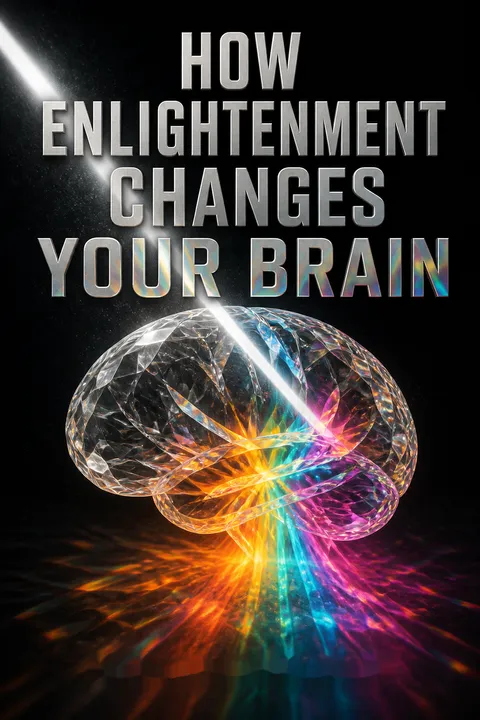
How Enlightenment Changes Your Brain offers a scientific exploration of enlightenment experiences across various cultures and practices. Readers appreciate the authors' open-minded approach and integration of neuroscience with spirituality. The book explains brain activity during enlightenment, distinguishing between "big E" and "little e" experiences. While some found it repetitive or lacking in scientific depth, many valued its insights into consciousness and practical techniques for pursuing enlightenment. Critics noted its potential oversimplification of complex concepts, but overall, readers found it thought-provoking and accessible.
People Also Read










Glossary
little “e” enlightenment
temporary insightThe book’s term for a brief moment of insight, clarity, or changed perspective. A little “e” experience may illuminate a problem or loosen an assumption, but it does not necessarily alter a person’s worldview or behavior permanently. The authors suggest that such moments can contribute to broader personal change.
big “E” Enlightenment
lasting transformative experienceThe book’s term for a powerful experience associated with a substantial, enduring shift in a person’s beliefs, values, purpose, or behavior. It may be interpreted religiously or secularly. The authors describe common features such as unity, intensity, clarity, and surrender, while noting that science cannot determine whether the experience reveals a transcendent reality.
Spectrum of Human Awareness
six modes of awarenessA model proposed by the authors that describes six modes: instinctual awareness, habitual responsiveness, intentional decision making, creative imagination, self-reflective awareness, and transformational awareness. The model is intended to show how ordinary attention may shift toward reflection and major changes in perspective. It is the authors’ organizing framework, not an established clinical scale.
Spiritual Experience Survey
online experience questionnaireAn online survey created by Andrew Newberg to collect descriptions of spiritual and transformational experiences. Nearly 2,000 respondents also answered questions about their backgrounds, beliefs, emotions, and perceived changes after their experiences. The authors used the accounts to identify recurring qualities, while the voluntary, retrospective format limits what the survey can establish.
Belief Acceptance Scale
openness questionnaireA questionnaire developed by Newberg and colleague Nancy Wintering to assess respondents’ openness to religious, cultural, and social differences. Items ask about beliefs concerning other religions, participation in unfamiliar ceremonies, and relationships across religious or ethnic lines. The authors use scores to explore associations with reported spiritual experiences, not to diagnose a person’s tolerance.
Dhikr
Sufi remembrance ritualA Sufi practice of remembrance or invocation, often involving repeated sacred phrases, chanting, and rhythmic movement. The book describes Dhikr as a way practitioners seek connection with God and an altered state of awareness. Different Sufi communities may practice it differently, and adapting its elements does not necessarily reproduce the religious tradition.
neural resonance
shared neural activityThe authors’ term for the proposed alignment of people’s brain activity when they engage together in a shared experience, such as chanting or listening to an account of transformation. They suggest that synchronized attention and emotion may help people feel connected. The term does not itself establish that thoughts or spiritual energy are transmitted between individuals.
Lovingkindness meditation
widening goodwill practiceA meditation practice described in the book that directs kind wishes first toward oneself, then loved ones, acquaintances, difficult people, and wider groups. The exercise is intended to cultivate compassion and reduce hostility. The authors present it as one approach that may support emotional regulation and greater acceptance of others.
FAQ
1. What is How Enlightenment Changes Your Brain by Andrew B. Newberg about?
- Exploration of Enlightenment: The book investigates both major, life-changing Enlightenment experiences and smaller moments of insight, examining how these states affect the brain and consciousness.
- Science Meets Spirituality: It combines ancient spiritual wisdom with modern neuroscience, using brain-scan studies and personal stories to map the human quest for transformation.
- Practical and Inclusive: The authors provide exercises and a new model of awareness, aiming to make Enlightenment accessible to everyone, regardless of religious or secular background.
2. Why should I read How Enlightenment Changes Your Brain by Andrew B. Newberg?
- Bridges Science and Spirituality: The book offers a unique perspective by providing scientific evidence that Enlightenment experiences are biologically real and transformative.
- Practical Guidance for Growth: It includes actionable exercises and brain-based techniques to help readers accelerate their own path toward Enlightenment and personal transformation.
- Inclusive for All Audiences: The book addresses Enlightenment across religious, spiritual, and secular contexts, making it relevant for anyone seeking meaning and purpose.
3. What are the key takeaways from How Enlightenment Changes Your Brain by Andrew B. Newberg?
- Enlightenment is Universal: Anyone can experience Enlightenment, regardless of religious belief, as it is rooted in the brain’s capacity for change and higher awareness.
- Transformation Requires Openness: Suspending old beliefs and embracing uncertainty are essential for deep personal transformation.
- Practice and Intention Matter: Conscious desire, preparation, intense ritual, surrender, and reflection increase the likelihood of Enlightenment.
- Compassion and Integration: Enlightenment fosters kindness, forgiveness, and tolerance, and integrating insights into daily life is crucial for lasting change.
4. How does Andrew B. Newberg define Enlightenment in How Enlightenment Changes Your Brain?
- Profound Shift in Consciousness: Enlightenment is described as a transformational experience that leads to new beliefs, values, and behaviors, often accompanied by feelings of unity, clarity, and peace.
- Shedding Light on Ignorance: It involves illuminating one’s ignorance and moving from partial insights to a radical transformation of worldview.
- Not Dependent on God: Enlightenment transcends cultural and religious boundaries and does not require belief in a deity; it is about surrendering old beliefs and opening to new insights.
- Neurological Event: It is both a psychological and neurological event, involving specific changes in brain activity.
5. What are the main concepts of Enlightenment explained in How Enlightenment Changes Your Brain?
- Big “E” vs. Little “e”: The book distinguishes between small moments of insight (little “e”) and profound, life-changing transformations (big “E”).
- Five Elements of Enlightenment: Unity or connectedness, intensity, clarity, surrender, and permanent change are identified as core elements common to Enlightenment experiences.
- Spectrum of Human Awareness: A neurological model describes six levels of awareness, showing how consciousness evolves toward Enlightenment.
6. What is the Spectrum of Human Awareness in How Enlightenment Changes Your Brain?
- Six Levels of Awareness: The spectrum ranges from Instinctual Awareness (Level 1) to Transformational Awareness (Level 6), mapping the evolution of consciousness.
- Pathway to Enlightenment: Enlightenment typically occurs at the highest levels, where self-reflection and transformation happen.
- Brain Activity Correlates: Different brain regions and neural activities correspond to these levels, with Enlightenment linked to decreased frontal and parietal lobe activity.
- Consciousness vs. Awareness: Awareness is a broad capacity to perceive, while consciousness involves self-reflection and intentional decision-making.
7. What neurological changes occur during Enlightenment according to How Enlightenment Changes Your Brain?
- Frontal and Parietal Lobe Activity: Enlightenment experiences are associated with decreased activity in the frontal lobe (conscious control) and parietal lobe (self-other distinction), leading to unity and surrender.
- Thalamus Involvement: Changes in the thalamus may explain why Enlightenment feels extraordinarily real and intense.
- Brain Plasticity: Both small and big Enlightenment experiences can cause long-term structural and functional changes in the brain, improving emotional regulation and empathy.
8. How does How Enlightenment Changes Your Brain address Enlightenment for nonbelievers or secular individuals?
- Enlightenment for Nonbelievers: The book highlights that atheists and agnostics can experience Enlightenment, often describing it as a deep sense of connectedness and clarity without invoking God.
- Secular Spirituality: Nonreligious individuals may use logic, reason, and compassion as their spiritual framework, leading to moral commitment and greater life satisfaction.
- Drug-Induced Experiences: Psychedelic substances can trigger mystical experiences resembling Enlightenment, though the book cautions about risks and emphasizes that such experiences are not always positive.
9. What spiritual practices and states does How Enlightenment Changes Your Brain explore as paths to Enlightenment?
- Channeling and Trance States: Practices like Pentecostal speaking in tongues, Sufi chanting, and mediumship involve decreased frontal lobe activity and altered consciousness, leading to unity and surrender.
- Meditation and Prayer: Contemplative practices gradually increase then suddenly decrease brain activity, triggering Enlightenment experiences.
- Flow and Creative Imagination: Flow states and creative exercises can interrupt habitual consciousness and open the brain to new insights and transformational awareness.
10. What practical exercises and rituals does How Enlightenment Changes Your Brain recommend to intensify Enlightenment experiences?
- Paper-Gazing Exercise: Staring at a white sheet of paper helps empty the mind and reduce frontal lobe activity, facilitating trance-like states.
- OM Meditation and Dhikr: Repeating the sound “OM” or adapting Sufi chanting rituals with repetitive sounds and movements can induce calmness and unity.
- Dance, Drumming, and Channeling: Rhythmic movement, music, and automatic writing are used to alter consciousness and access creative insights.
- Step-by-Step Rituals: The book outlines five steps—Desire, Prepare, Engage, Surrender, Reflect—to prime the brain for Enlightenment.
11. What are the effects of Enlightenment on a person’s life according to How Enlightenment Changes Your Brain?
- Permanent Transformation: Big “E” Enlightenment leads to lasting changes in beliefs, values, behavior, and emotional well-being, often reducing fear of death and increasing life purpose.
- Improved Relationships and Health: Many who experience Enlightenment report better family relationships, improved health, and greater spiritual engagement.
- Increased Compassion and Open-Mindedness: Enlightenment fosters empathy, tolerance, and a deeper sense of connection with others and the universe.
12. How does How Enlightenment Changes Your Brain advise readers to pursue their own Enlightenment?
- Brain-Priming Exercises: The book offers meditation, concentration, sound, movement, and imagination exercises to alter brain activity and facilitate Enlightenment.
- Self-Reflection and Mindfulness: Developing self-reflective awareness through mindfulness helps interrupt habitual thought patterns and opens the door to transformation.
- Surrender and Non-Striving: Readers are encouraged to let go of control and allow Enlightenment experiences to arise naturally, rather than forcing them.
- Integration and Reflection: Mindful reflection after altered states is crucial for integrating insights and making transformation lasting and meaningful.
About the Author
Other books by Andrew B. Newberg

Download PDF
Download EPUB
.epub digital book format is ideal for reading ebooks on phones, tablets, and e-readers.








