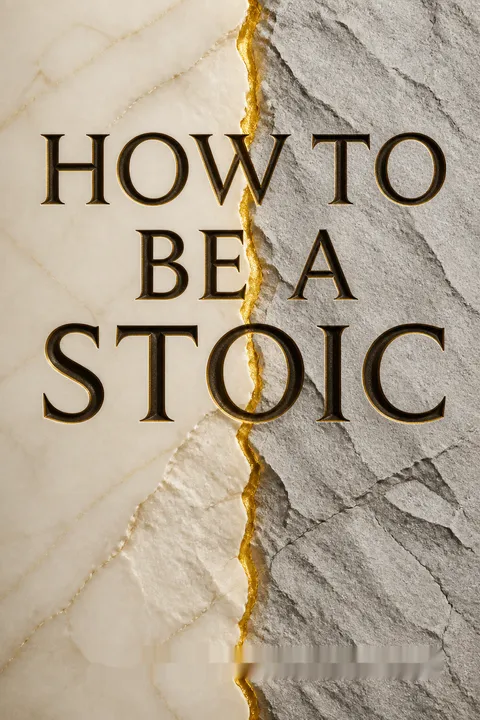


Key Takeaways
Practice Stoicism as ethical training, not emotional suppression
A life philosophy. Massimo Pigliucci approaches Stoicism as a practical guide to living well, not a command to hide feelings. In imagined conversations with Epictetus, he explores how to notice emotions, examine their causes, and choose a response. Stoicism aims at eudaimonia, a flourishing life shaped by good judgment and conduct. Its Logos, the rational order of nature, can be understood religiously or as the world's intelligibility, so ethical practice need not depend on one belief about God.
Three daily concerns. The book organizes Stoic practice around desire, what is worth wanting; action, how to behave toward others; and assent, whether to endorse an initial impression. A one-week Stoic Week reported increases in positive emotion and life satisfaction, and a decline in negative emotion. The author cautions that these were preliminary self-reports from people already interested in Stoicism.
What's distinctive is the refusal to reduce philosophy to a technique for feeling better. Cognitive behavioral therapy also trains people to examine thoughts and reactions, but a life philosophy asks a larger question: what kind of person should those skills help someone become? That ethical horizon makes Stoicism richer than a mood-management toolkit. The reported Stoic Week results are encouraging, but a self-selected sample cannot establish that the practice caused the changes or works equally well for everyone.
Spend effort on choices, not outcomes you can only influence
Separate effort from outcome. Epictetus distinguishes what depends on a person's judgment and actions from what does not. Pigliucci refines this into three degrees: choosing a goal, influencing whether it happens, and facing conditions beyond influence. An archer can train, select equipment, and aim carefully, but cannot command the wind or a moving target. The ethical task is to do the work well, not to demand a guaranteed result.
Acceptance is not surrender. Preparing for a promotion, for instance, is within one's power; a manager's decision depends on other people and circumstances. A Stoic can still advocate, prepare, and try again. The point is to stop treating success as proof of personal worth, or failure as proof that effort was wasted. Confidence comes from acting as well as possible under the circumstances.
This distinction resembles the difference between controllable and uncontrollable variables in decision theory: good decisions can produce bad outcomes, and bad decisions can get lucky. Separating process from result helps protect judgment from hindsight bias. The important limit is that influence is not evenly distributed. Social power, illness, and discrimination can sharply constrain available choices. Stoic practice is most humane when it clarifies where action remains possible, rather than blaming people for outcomes shaped by forces beyond them.
Put moral character above health, wealth, and status
One good above all. For the Stoics, virtue means excellent moral character, expressed through practical wisdom, courage, justice, and temperance. Health, money, education, and reputation can make life easier, but they do not determine a person's moral worth. The Stoics call such external goods preferred indifferents: reasonable to seek, but never worth buying at the cost of integrity. Their opposites are dispreferred indifferents, things it makes sense to avoid when possible.
No trade against integrity. Pigliucci compares this ordering to lexicographic preferences: some values take priority over others rather than being exchanged on a common scale. A person might trade money for a better job, but not trade a loved one for a luxury. The principle also makes a good life available to people who lack wealth, health, or social standing, without pretending those hardships are pleasant.
The framework usefully separates a person's worth from luck, status, and bodily condition. It also resists consumer logic, in which every good appears tradable for enough money. Yet calling health and safety indifferent can sound dismissive if taken literally. The Stoic meaning is narrower: external conditions do not constitute virtue. They still matter profoundly to comfort, opportunity, and justice, and pursuing them can be part of responsible care for oneself and others.
Train yourself to treat strangers as fellow citizens, not outsiders
Reason is social. To live according to nature, in Stoic terms, is to use human capacities for reasoning and cooperation in social life. It does not mean treating every instinct as a moral instruction. The philosopher Hierocles pictured people as surrounded by circles of concern: self, family, community, country, and ultimately humanity. Oikeiôsis is the process of bringing people in outer circles closer to one's sense of kinship and responsibility.
Widen the circle deliberately. Hierocles suggested using familial forms of address for strangers as a reminder to treat them with care. The point is not that every person must receive identical attention, but that unfamiliarity alone is no reason to deny another's dignity. Pigliucci connects this outlook to cosmopolitanism, the idea that moral belonging reaches beyond borders and local identity.
The circles model gives a concrete psychological route from affection for intimates to concern for distant people. It is a useful bridge between moral philosophy and the study of social cooperation: people often care most readily for those they know, while institutions help extend duties to people they will never meet. Still, evolutionary explanations of human social instincts do not by themselves prove what people ought to do. The ethical case depends on an additional commitment to fairness and shared human flourishing.
Test first impressions before letting them steer your actions
An impression is not a verdict. Stoics call the practice of judging whether to accept an initial reaction the discipline of assent. A stranger's remark may feel like an insult, or a delay may seem like a personal slight, but the first interpretation is not yet established fact. Pause, inspect the evidence, and ask what response is actually useful. Pigliucci describes being robbed on a Roman subway: the wallet was gone, but anger would not recover it or improve the evening.
Reframe, then respond. This approach can interrupt anger and anxiety by separating an event from the story attached to it. It does not mean pretending harm did not occur. A person can report a crime, set a boundary, or address a conflict without handing the event control of every subsequent thought. Stoicism also distinguishes solitude from feeling abandoned, while recognizing that loneliness can have real psychological and social causes.
The pause between stimulus and response is a central insight in modern emotion regulation as well as Stoic practice. Reappraisal can reduce needless escalation, especially when a first interpretation is uncertain. But feelings are not switches, and serious anxiety or depression may not yield to reasoning alone. The strongest version of the advice combines internal reflection with practical response: reconsider assumptions, seek support when needed, and address the external conditions that are causing harm.
Treat wrongdoing as failed wisdom, without excusing its damage
A specific kind of error. Epictetus argues that people who do wrong usually believe their actions serve some good. Pigliucci uses the Greek term amathia for a failure of wisdom: not simply lacking information or intelligence, but failing or refusing to learn what matters for living well with others. Euripides' Medea understands that revenge will hurt her children, yet passion persuades her that revenge is worth the cost. The Stoic response is pity for her damaged judgment, not hatred of her as a supernatural embodiment of evil.
Compassion can be active. This view encourages asking what belief, fear, or distorted priority is driving harmful behavior. It does not require tolerating abuse or abandoning consequences. Epictetus's point is that understanding the wrongdoer's mistake may help people respond more wisely than rage does, while keeping attention on the real harm and on how to prevent further harm.
The account has a humane strength: it resists dehumanizing offenders and asks how ordinary reasoning can become morally disastrous. That perspective can support rehabilitation and restorative responses, which focus on responsibility, repair, and future safety. Its risk is overgeneralization. Some people knowingly exploit others, and describing every offense as a mistaken pursuit of self-interest may blur differences in intent. Compassion is most convincing when paired with clear accountability and protection for those harmed.
Study imperfect exemplars, then rehearse courage in ordinary life
Character is practiced. Pigliucci presents virtue as developing through natural dispositions, early habits, and deliberate reflection. Role models make abstract principles visible, but they need not be flawless. James Stockdale, a US Navy pilot held captive in Vietnam for seven and a half years, credited Epictetus with helping him preserve self-respect and lead fellow prisoners. His lesson was not blind optimism: hope had to coexist with an unsparing view of present danger.
Bring courage down to scale. Malala Yousafzai's public defense of girls' education offers another example of moral resolve. Such stories can inspire without implying that everyday virtue requires heroic sacrifice. Speaking up when a colleague is mistreated, resisting a convenient lie, or acting fairly under pressure are smaller tests of the same character. The Stoic ideal is demanding, but its practice begins in ordinary decisions.
Moral exemplars work like vivid case studies: they let people imagine what a principle looks like under pressure and can make a virtue feel attainable. Stockdale's example also distinguishes grounded hope from wishful thinking. Still, extraordinary survival stories can make virtue seem dependent on rare strength or exceptional circumstances. A useful model should show both high-stakes courage and ordinary decency, and it should be admired without turning a complex person into a flawless symbol.
Protect agency by adapting plans to changing abilities
Agency is more than independence. Lawrence Becker, a philosopher living with the long-term effects of polio, describes needing to rethink how he taught as his physical abilities changed. When stairs became difficult, a psychiatrist helped him identify a practical solution: use a ramp at the back of the building. The problem was not a character flaw to conquer through willpower; the environment needed to change.
Revise the route, not the purpose. Becker advises people to know their abilities and limits, reconsider life plans as circumstances shift, and distinguish an actual barrier from one that can be worked around. The aim is to remain an agent in one's life, not to deny disability or demand constant heroics. Pigliucci also stresses that Stoicism may help people cope with disability or mental illness, but it is not a cure or a replacement for appropriate care.
Becker's story joins Stoic agency to a crucial insight from disability studies: limitation often emerges from the interaction between a body and its surroundings. The ramp changes access without changing the person's worth or asking him to overcome an architectural obstacle through attitude alone. This keeps the advice from collapsing into motivational blame. The emphasis on individual adaptation is valuable, but institutions still bear responsibility for accessible environments and reliable health support.
Let affection deepen duty, not overrule judgment
Care must guide action. Epictetus challenges a father who fled while his young daughter was seriously ill because witnessing her suffering was unbearable. The father's feelings were understandable, but his absence left the child without the care he could provide. Stoic practice does not abolish emotion; it asks whether a feeling is guiding a loving response or merely protecting the person feeling it.
Integrity belongs in relationships. The book distinguishes useful or pleasure-based friendships from friendship grounded in mutual character and care. The Stoics reserve their fullest sense of friendship for relationships that do not require abandoning justice or integrity. The same test applies to family and country: affection can be natural and powerful, but loyalty should not make harmful conduct immune from criticism.
This approach treats love as more than a private feeling. It connects attachment to responsibility, and asks whether affection helps another person or simply relieves one's own discomfort. That is a productive corrective to romantic ideas that celebrate loyalty without regard to consequences. The counterweight is that duty should not become emotional self-erasure. Dependence, grief, and vulnerability are part of close relationships, and good judgment includes knowing when caregivers also need help.
Remember mortality to use the present, not fear the future
Death is part of life. The Stoics treat mortality as a natural limit, not a cosmic insult. Remembering that relationships and opportunities are temporary can sharpen attention to what is available now. Pigliucci connects this practice to his experiences with his parents' illnesses: accepting that time was limited helped him be more present with his mother, while his father's death left him regretting chances he had not recognized. Stoic reflection does not remove grief; it can change how a person meets it.
Suicide requires judgment. Epictetus's open-door idea holds that leaving life may be considered under some extreme circumstances, but it is not a blanket permission or an impulsive solution. The book discusses political resistance, terminal illness, and personal dignity, while warning against trivial imitation and emphasizing reasoned judgment. It also distinguishes such philosophical debate from situations involving mental illness, where support and treatment are needed.
Mortality reflection can make time feel concrete and strengthen gratitude without relying on promises of an afterlife. It also exposes a genuine tension: acceptance can help people face unavoidable loss, but it must not become a demand that they feel calm or grieve on schedule. The discussion of suicide is careful by ancient-philosophical standards, yet no general principle can settle an individual case. Contemporary medical, legal, and personal contexts require specialized care and deliberation.
Turn Stoic principles into daily drills, not shelf wisdom
Practice makes philosophy usable. Pigliucci distills Epictetus's handbook into recurring exercises: examine impressions, remember impermanence, prepare for obstacles, pause before reacting, and consider how virtue applies to the present situation. Premeditatio malorum means mentally anticipating difficulties so they are less shocking and one's resources more available. A reserve clause means planning and acting while recognizing that circumstances may block the desired result.
Review the day. Epictetus and Seneca recommend reflecting each evening on mistakes, good actions, and what can be learned. Other practices include speaking less about oneself, avoiding quick judgments, choosing company carefully, and answering insults with humor when appropriate. These are repetitions, not magic formulas. The aim is to make ethical reflection more available in the moment, then adjust the practice to the realities of one's life.
The exercises turn an abstract philosophy into a form of deliberate practice. Repetition, reflection, and rehearsing responses resemble methods used in skills training: judgment becomes more accessible when it has been exercised before a stressful moment. The evening review can be especially useful when it produces learning rather than punishment. Its danger is perfectionism, since moral self-monitoring can become another source of anxiety. A humane practice should include honest correction and proportionate self-forgiveness.
Analysis
Pigliucci's central achievement is to make Stoicism practical without treating it as a recipe for emotional numbness. The imagined dialogue with Epictetus gives the book a narrative engine: an ancient teacher's blunt answers meet a modern scientist's objections, and the resulting tension makes adaptation visible rather than pretending that ancient doctrine transfers unchanged. The structure around desire, action, and assent then turns a broad philosophy into three recurring questions: What should be wanted? How should people treat one another? Which interpretation deserves belief?
The most useful idea is not that outcomes do not matter, but that outcomes are never the whole measure of action. This distinction supports persistence while limiting the moral damage of tying self-worth to success. It also creates a productive ethical hierarchy: external goods matter, yet cannot justify abandoning justice or integrity. That hierarchy gives Stoicism a social dimension often lost in popular accounts focused narrowly on personal calm.
The book's naturalistic account of human nature is more debatable. Human sociality and reasoning may help explain why cooperation is central to human life, but descriptive facts alone do not establish moral obligations. Pigliucci recognizes the is/ought problem, yet his ethical case ultimately rests on a normative commitment to flourishing through reasoned, fair relations. That premise is defensible, but readers should see it as a philosophical choice, not a result delivered by biology.
The practical examples also reveal a tension between personal discipline and structural conditions. Reframing a setback can preserve agency, but it cannot substitute for accessible buildings, sound medical care, fair institutions, or protection from violence. The strongest Stoic interpretation does both: it asks what remains possible for the individual while preserving responsibility to change conditions that need not remain as they are. Read this way, Stoicism is neither resignation nor a promise of invulnerability. It is a demanding practice of clear judgment, humane action, and acceptance of limits without surrendering effort.
Review Summary
How to Be a Stoic introduces Stoicism as a practical philosophy for modern life. Pigliucci uses personal anecdotes and conversations with Epictetus to explain Stoic principles. Readers appreciate the book's accessibility and practical advice, though some find it disjointed or superficial. Many praise its insights on controlling emotions and focusing on virtues. Critics note excessive quoting of ancient texts and a lack of integration with modern psychology. Overall, the book is seen as a good introduction to Stoicism, inspiring readers to explore the philosophy further.
People Also Read








Glossary
Eudaimonia
Human flourishingA Greek term for a flourishing or ethically good human life. In Stoicism, eudaimonia is achieved through the practice of virtue, especially sound judgment and just action, rather than guaranteed by wealth, health, reputation, or pleasure. It is not simply a passing feeling of happiness.
Dichotomy of control
Separate agency from outcomeThe Stoic distinction between what depends on a person's own judgments and actions and what does not. Pigliucci emphasizes that people can also influence some external outcomes without controlling them. The practice is to act fully where agency exists and meet what cannot be changed without treating it as a verdict on one's worth.
Preferred indifferents
Valuable, but not ultimateExternal conditions such as health, education, and wealth that are reasonably preferable to their opposites, but do not determine moral worth. Stoics may pursue these goods unless doing so would compromise virtue. Calling them indifferent does not mean they are useless or emotionally unimportant.
Three Stoic disciplines
Desire, action, and assentA practical organization of Stoic training drawn from Epictetus. The discipline of desire concerns what is proper to want or avoid. The discipline of action concerns how to behave toward others. The discipline of assent concerns whether to accept an initial impression as a sound judgment.
Oikeiôsis
Expanding concern to othersA Stoic account of how concern can grow from care for oneself and close family toward wider groups and humanity. Pigliucci explains it through Hierocles's circles of concern. The practice is to treat people beyond one's immediate circle with greater familiarity, fairness, and moral consideration.
Amathia
Failure of practical wisdomA Greek term Pigliucci uses for a lack or failure of wisdom, distinct from simply lacking facts or intelligence. A person affected by amathia may misunderstand what is genuinely good, or refuse to learn, and so act destructively while believing the action serves a worthwhile end.
Logos
Rational order of natureThe Stoic term for the rational principle or intelligible order of the cosmos. Religious Stoics may understand it as divine; nonreligious readers may understand it as the fact that nature can be investigated through reason. The term supports the Stoic effort to connect an understanding of the world with ethical life.
Reserve clause
Act, while allowing for uncertaintyA Stoic way of pursuing a goal while recognizing that events may prevent the desired outcome. A person can prepare carefully for a task and still acknowledge that success depends on factors beyond personal control. The qualification preserves effort without making peace of mind depend on results.
Premeditatio malorum
Rehearse possible adversityA Stoic exercise of imagining potential difficulties before they occur. The purpose is not to dwell gloomily on disaster, but to reduce surprise, consider how to respond, and recognize the resources available. Pigliucci also presents the practice as a way to appreciate times when feared troubles do not arrive.
The open door
A difficult choice about ending lifeEpictetus's image for the possibility of leaving life when circumstances are judged unbearable or incompatible with one's purposes. Pigliucci presents it as a grave, case-specific question requiring reason, not as general encouragement or an impulsive response. The book distinguishes philosophical debate from mental illness requiring care.
FAQ
What's How to Be a Stoic about?
- Exploration of Stoicism: The book delves into Stoic philosophy, focusing on how ancient principles can be applied to modern life. Massimo Pigliucci uses the teachings of Epictetus as a guide for readers to navigate life's challenges.
- Personal Journey: Author Massimo Pigliucci shares his personal journey of discovering Stoicism and how it has influenced his life. He uses dialogues with the ancient Stoic philosopher Epictetus to illustrate key concepts and practices.
- Practical Application: It emphasizes practical exercises and reflections that help individuals cultivate a Stoic mindset. The author aims to make Stoicism accessible and relevant to contemporary readers.
Why should I read How to Be a Stoic?
- Personal Growth: The book offers insights into developing a resilient character and improving emotional well-being through Stoic practices. Readers can learn to manage their desires and reactions effectively.
- Timeless Wisdom: Stoicism provides timeless wisdom that can help individuals cope with modern life's uncertainties and stresses. The principles discussed are applicable regardless of one's background or beliefs.
- Empowerment and Growth: By applying Stoic principles, readers can develop a greater sense of agency and control over their lives. The philosophy encourages personal growth and ethical living, which can lead to a more fulfilling life.
What are the key takeaways of How to Be a Stoic?
- Dichotomy of Control: A central theme is understanding what is within our control and what is not. This distinction helps reduce anxiety and focus efforts on what truly matters.
- Virtue as the Highest Good: The book emphasizes that virtue is the only true good, and external factors like wealth or health are "preferred indifferents." This perspective encourages readers to prioritize character development.
- Practical Exercises: Pigliucci includes practical exercises to help readers implement Stoic principles in their daily lives. These exercises promote mindfulness and reflection, fostering a deeper understanding of oneself.
What are the best quotes from How to Be a Stoic and what do they mean?
- "We must make the best of those things that are in our power, and take the rest as nature gives it.": This quote encapsulates the Stoic principle of focusing on what we can control while accepting what we cannot. It encourages a mindset of resilience and acceptance.
- "A man cannot live well if he knows not how to die well.": This highlights the importance of preparing for death as a part of living a meaningful life. Understanding mortality can lead to a more fulfilling existence.
- "Bear and forbear": This quote encapsulates the Stoic approach to enduring life's challenges with patience and resilience. It encourages individuals to accept what they cannot change while maintaining their integrity.
How does How to Be a Stoic define the dichotomy of control?
- Definition: The dichotomy of control is a fundamental Stoic concept that divides things into two categories: what is within our control and what is not. Understanding this distinction is crucial for managing our emotional responses.
- Practical Application: By focusing on what we can control—our thoughts, decisions, and actions—we can reduce anxiety and frustration about external circumstances. This practice fosters a sense of empowerment and agency.
- Emotional Resilience: Accepting that many aspects of life are beyond our control allows us to maintain equanimity in the face of adversity. This perspective helps cultivate emotional resilience and a more balanced outlook on life.
What is the discipline of desire in How to Be a Stoic?
- Understanding Wants: The discipline of desire focuses on recognizing what is proper to want or not want. It teaches readers to align their desires with what is within their control.
- Acceptance of Nature: Stoics advocate for living in accordance with nature, which involves accepting the natural order of things. This acceptance helps mitigate frustration and disappointment.
- Emotional Regulation: By practicing this discipline, individuals can learn to manage their emotions more effectively. It encourages reflection on the causes of emotions and how to redirect them positively.
How does How to Be a Stoic address the discipline of action?
- Character and Virtue: The discipline of action emphasizes the importance of character and virtue in decision-making. It teaches that our actions should reflect our moral values.
- Role Models: The book discusses the significance of role models in shaping our actions and character. By observing virtuous individuals, we can learn how to navigate challenges with integrity.
- Social Engagement: Stoicism encourages active participation in society, promoting love for humanity and nature. This discipline highlights the interconnectedness of individuals and the importance of contributing positively to the community.
What insights does How to Be a Stoic provide on the discipline of assent?
- Reacting to Situations: The discipline of assent focuses on how we react to external events and impressions. It teaches the importance of withholding judgment until we fully understand a situation.
- Mindfulness Practice: The book encourages mindfulness as a way to cultivate awareness of our thoughts and reactions. This practice helps prevent impulsive responses and promotes thoughtful decision-making.
- Emotional Resilience: By mastering the discipline of assent, individuals can develop greater emotional resilience. This resilience allows for a more balanced and composed approach to life's challenges.
How does How to Be a Stoic relate to modern psychological practices?
- Cognitive Behavioral Therapy (CBT): The book draws parallels between Stoicism and modern psychological therapies like CBT. Both emphasize the importance of reframing thoughts and managing emotions.
- Evidence-Based Practices: Pigliucci discusses how Stoic principles have influenced contemporary therapeutic practices, highlighting their relevance. This connection reinforces the practicality of Stoicism in addressing mental health issues.
- Personal Empowerment: The Stoic approach encourages individuals to take responsibility for their thoughts and actions, fostering a sense of empowerment. This aligns with modern psychological practices that promote self-efficacy and resilience.
How does How to Be a Stoic approach the topic of death?
- Acceptance of Mortality: The book emphasizes the importance of accepting death as a natural part of life. This acceptance can lead to a more meaningful appreciation of the present moment.
- Philosophical Reflection: Pigliucci encourages readers to reflect on their mortality and the impermanence of life. This reflection fosters a sense of urgency to live authentically and ethically.
- Empowerment through Perspective: By viewing death as an inevitable aspect of existence, individuals can cultivate a sense of peace and resilience. This perspective helps reduce fear and anxiety surrounding death.
How does How to Be a Stoic encourage social engagement?
- Cosmopolitanism: The book promotes the idea of cosmopolitanism, urging individuals to see themselves as part of a larger human community. This perspective fosters empathy and compassion for others.
- Moral Responsibility: Stoicism encourages individuals to act with moral responsibility toward others. It emphasizes the importance of contributing positively to society and caring for fellow human beings.
- Role of Virtue: Engaging with others through the lens of virtue helps cultivate a more just and equitable society. The book highlights the interconnectedness of individuals and the impact of virtuous actions on the community.
About the Author
Other books by Massimo Pigliucci



Download PDF
Download EPUB
.epub digital book format is ideal for reading ebooks on phones, tablets, and e-readers.








