

Key Takeaways
Make virtue your measure, not the luck of outcomes you cannot command
A philosopher in hard circumstances. Epictetus was born enslaved, became a teacher after gaining freedom, and was eventually exiled for speaking openly. One story captures his approach: when his master twisted his leg, Epictetus calmly warned that it would break, then remained composed when it did. The lesson is not that pain is imaginary. It is that a person can lose control over circumstances without surrendering the quality of their choices.
A life worth living. Pigliucci presents Stoicism as a practical philosophy, not a pose of emotional toughness. Happiness rests chiefly on sound judgment and ethical conduct, rather than wealth, status, or luck. The book’s central question is therefore not whether life gives someone an easy hand, but how that person chooses to play it.
What's striking is how the opening story turns an extreme example into a question about agency, not invulnerability. Contemporary psychology distinguishes what happens to a person from how they interpret and respond to it, though neither process is fully voluntary. The distinction can make room for resilience without pretending that pain, disability, or injustice are trivial. It also sets a demanding standard: composure is valuable only when joined to humane action, not when it becomes a reason to tolerate preventable harm.
Separate your effort from the outcome before you spend your peace
Draw the control boundary. The dichotomy of control is the distinction between what is fully up to a person and what is not. Deliberate judgments, endorsed values, and decisions are in the first category. Health, reputation, money, relationships, and other outcomes depend partly on circumstances and other people, so they cannot be guaranteed. The point is not that a person has no influence over these things, but that influence is not command.
Aim, then release. Pigliucci uses an archer to clarify the difference: practice, equipment, and the moment of release belong to the archer; wind and a moving target do not. A job seeker can aim to be a strong candidate without making self-respect depend on getting hired. Effort remains serious; the result is held more lightly.
This distinction resembles the separation between process goals and outcome goals in performance psychology. It can improve attention because effort is directed toward controllable steps rather than imagined guarantees. The boundary is also a safeguard against false certainty: influence is real, but it is not sovereignty. Taken carelessly, however, the idea could encourage people to accept unfair conditions instead of trying to change them. The book's own emphasis on action matters here: release attachment to guaranteed results, not responsibility for making a difference.
Prefer health, love, and success without making them your moral worth
Distinguish value from virtue. Preferred indifferents are things such as health, money, and reputation that can reasonably be pursued but do not, by themselves, make someone good or bad. A person may prefer health to illness and financial security to poverty without treating either outcome as a measure of character. Pigliucci argues that Stoics need not despise external goods or withdraw from ordinary ambitions.
Put goods in order. Virtue remains the highest priority, while external advantages matter in lower ranks. They can become materials for good action: money can support family or community, and influence can be used fairly. The danger is not wanting these things; it is trading integrity for them or assuming that possessing them proves moral excellence.
The distinction protects against two familiar errors: equating success with goodness, and treating material circumstances as morally irrelevant. It is a useful account of value ordering, because people can care deeply about several goods without pretending they are interchangeable. Still, poverty, illness, and exclusion can constrain real opportunities, not merely comfort. The argument is strongest when it separates moral worth from practical welfare. That separation preserves dignity while leaving ample reason to improve the conditions in which people live.
Prepare for loss without pretending a loved one is just another possession
Acceptance is not indifference. The book recommends remembering that possessions, opportunities, and relationships are vulnerable to change. This preparation can temper shock when a plan fails or an object breaks. But Pigliucci revises the harsher implication of ancient advice that a loved one’s death should be treated like a broken cup. Human loss is not interchangeable with losing property, and grief is not a moral failure.
Make room for sorrow. The practical aim is to recognize mortality, appreciate time together, and avoid adding the belief that suffering makes life impossible or uniquely unfair. A friend moving away may hurt; a partner or child dying can be devastating. Equanimity means facing what cannot be undone while still caring about the person and continuing to meet life as it comes.
This revision matters because emotional acceptance and emotional numbness are not the same skill. Grief is bound up with attachment and relationship, so treating it as a mere mistaken opinion can shame people for a normal response. The more humane reading is that preparation can reduce panic without eliminating sorrow. The book's distinction also has practical value for caregivers: calm can support another person only when it remains compassionate, rather than becoming a demand that they recover on schedule.
Pause before treating an impression as a fact or an insult
Inspect the first reaction. An impression is the mind’s initial take on something perceived or felt, before deliberate evaluation. A sharp comment may immediately seem like an attack; a tempting pleasure may seem urgently necessary. Stoic practice inserts a pause between that first response and the judgment that endorses it. The pause allows a person to ask what is actually known and what the reaction adds.
Choose your assent. If someone says something foolish about another person, the error belongs to the speaker and does not alter the truth about that person. Likewise, an insult does not have to become a verdict on the listener’s worth. Pigliucci links this deliberate review to the reasoning practices that inspired cognitive behavioral therapy, while acknowledging that initial reactions can still win sometimes.
The pause resembles cognitive reappraisal, the practice of examining an interpretation before acting on it. It can interrupt escalation and make room for a response that fits the facts. Yet the claim that an insult only harms when accepted needs careful handling: words can damage reputations, relationships, and safety even when the target rejects them internally. The useful distinction is narrower. Another person's judgment need not define one's character, even when their conduct has real consequences that deserve a response.
Use your roles to turn private virtue into public responsibility
Ethics happens among people. Role ethics means using the relationships and responsibilities in a person’s life as guides to appropriate conduct. These include being human among other humans, chosen roles such as friend or parent, and circumstances a person did not choose, such as being someone’s child. Pigliucci calls the shared human community the human cosmopolis, emphasizing that moral concern extends beyond family or nation.
Balance the virtues. If a manager harasses a coworker, practical wisdom assesses the situation, courage supports intervening despite risk, justice asks what fair treatment requires, and temperance helps choose a proportionate response. These virtues work together. The book also rejects inherited customs that excuse discrimination, arguing that equal human dignity is incompatible with exclusion based on gender or ethnicity.
Role ethics makes morality less abstract: obligations arise from actual relationships, not only from private ideals. It also counters a self-help version of Stoicism that treats serenity as the sole goal. The cosmopolitan frame broadens loyalty, while role-specific duties explain why attention to a friend or colleague is not a distraction from humanity at large. The approach still requires judgment when roles conflict, and a role must not be used to demand submission to abuse. The book's modern revisions help keep duty tied to dignity.
Train what you want, how you act, and how you judge together
Three disciplines, one practice. The three disciplines of Stoic practice are training desire and aversion, acting well toward others, and improving judgment. The first redirects longing away from guaranteed possession of external outcomes. The second develops responsible conduct in social roles. The third teaches a person to assess first impressions before endorsing them. They are presented separately for clarity, but operate together in daily life.
Build the skill deliberately. When facing a difficult situation, write down which parts depend on your choices and which do not, then direct effort toward the first group. At day’s end, review where conduct fell short, where it went well, and what could improve. These are not magic formulas; they are repeated exercises in noticing, choosing, and acting more carefully.
The framework joins attention, motivation, and behavior rather than treating good intentions as sufficient. Its strength is practical integration: a better judgment can reshape desire, and a socially responsible action can test whether that judgment is sound. This also echoes skills training in behavioral therapies, where insight becomes durable through repeated practice. A caution is that written reflection can turn into rumination if it becomes self-punishment. Review is most useful when it ends in a specific adjustment, not an endless audit of personal flaws.
Treat philosophy as rehearsal for conduct, not a performance of expertise
Understanding must become behavior. Pigliucci repeatedly warns against displaying principles before they have changed how a person lives. Reading Epictetus, explaining Stoicism, or calling oneself wise is not the same as acting with fairness, restraint, or courage. The book compares principles to food that needs to be digested: what matters is the improvement they produce, not the display of having consumed them.
Act before polishing the theory. Practical philosophy can ask what to do, why it is right, and whether the reasons withstand scrutiny. All three questions matter, but the first becomes empty if the person never acts. A daily review, quiet practice, and attention to ordinary choices make philosophy testable. The standard is not flawless conduct; it is whether reflection makes the next decision better.
The distinction between knowing a principle and embodying it is central to professional ethics as well as personal development. Expertise can become a shield: sophisticated explanations sometimes make inconsistency easier to rationalize. But quiet practice should not mean immunity from criticism or accountability. Other people may see harms that a private diary misses. A robust version of philosophical training combines self-examination with evidence from the effects of one's conduct, especially on people with less power.
Update ancient advice with evidence, human dignity, and moral progress
Keep the method, revise the map. Stoicism 2.0 is Pigliucci’s proposed modern adaptation of Epictetus’s handbook. He says 27 of its 53 lessons diverge to some degree from the ancient version. He replaces beliefs in divination and a providential, thinking universe with a naturalistic view informed by science, while retaining reason, human sociability, and the pursuit of virtue.
Tradition is guidance, not scripture. The revisions also reject assumptions that reflect ancient customs, including slavery and gender inequality, and loosen restrictive teachings about sexuality. Pigliucci allows that people with different religious or metaphysical beliefs may still practice Stoicism, provided those beliefs do not undermine its basic commitments. The test of an update is whether it remains coherent, humane, and useful in the world people actually inhabit.
The book models a valuable form of intellectual inheritance: preserve what remains defensible, and expose what depends on outdated evidence or custom. This is neither blind reverence nor easy dismissal. Its appeal lies in making ethical traditions answerable to knowledge and human consequences. The harder question is how to distinguish moral progress from the preferences of the present. Pigliucci grounds revision in reason, human nature, and dignity, but those standards themselves require ongoing argument rather than a simple declaration that modernity has settled the matter.
Analysis
This book is both a practical manual and an argument about how traditions survive. Its portable lessons begin from Epictetus’s distinction between deliberate judgments and outcomes dependent on Fortune, then extend that insight into desire, social conduct, and the testing of impressions. The organizing idea is not withdrawal from life. It is learning to participate without making moral worth hostage to success, health, reputation, or another person’s approval.
Pigliucci’s most important interpretive choice is to make Stoicism more humane and scientifically compatible than some ancient passages appear. Externals remain worth pursuing, but not as measures of character. Loss calls for preparation, not emotional deadening. Social roles create obligations, yet inherited customs cannot justify abuse or discrimination. These revisions prevent Stoic discipline from collapsing into either status-seeking or passive endurance.
The central tension is the claim that judgments are up to us. It gives readers a powerful locus of agency, but can overstate how readily people control attention, emotion, or choice under trauma, illness, coercion, and poverty. Pigliucci partly addresses this by distinguishing deliberate endorsement from automatic mental activity and by acknowledging external constraints. The distinction is most useful when treated as a direction for practice, not a verdict that distressed people have failed to think correctly.
The book’s form reinforces its message: short lessons are designed to be revisited in the circumstances where irritation, temptation, ambition, and grief arise. Its best advice is therefore procedural. Notice the reaction, separate the controllable action from the uncertain outcome, consider the duties owed to others, and review what happened. Stoicism becomes credible not through reciting a creed, but through repeated decisions that preserve integrity while remaining engaged with the world.
Review Summary
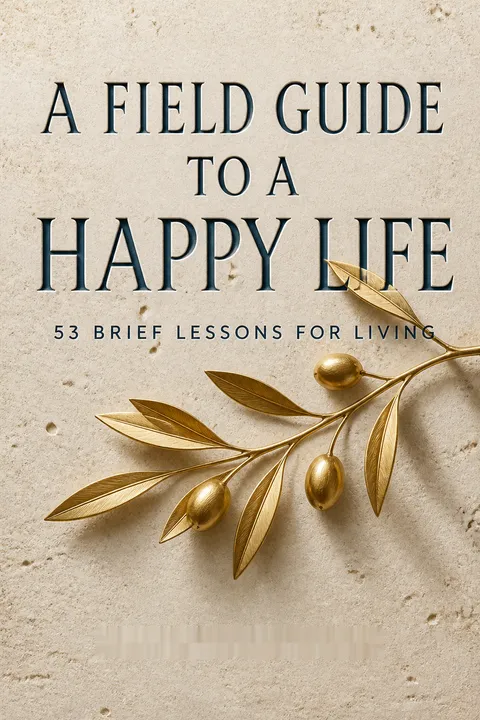
A Field Guide to a Happy Life is a modern interpretation of Stoic philosophy, particularly Epictetus' teachings. Readers appreciate Pigliucci's updated examples and language, making ancient wisdom more accessible. The book offers practical lessons on focusing on what one can control and cultivating inner peace. While some find it repetitive or oversimplified, others value its concise approach to Stoicism. Critics note the author's materialistic perspective and removal of metaphysical elements, but overall, it serves as a useful introduction to Stoic principles for contemporary readers.
People Also Read






Glossary
dichotomy of control
Separates choice from outcomeThe Stoic distinction between what is fully up to a person and what is not. Deliberate judgments, endorsed values, and decisions to act or not act belong to the first category. Health, wealth, reputation, and other outcomes depend partly on circumstances and other people. The distinction encourages serious effort without treating success as guaranteed.
preferred indifferents
Valuable but not moral goodsExternal things such as health, money, and reputation that may reasonably be preferred, but do not determine whether someone is virtuous. Their presence does not make a person good, and their absence does not make a person bad. Pigliucci emphasizes that they need not be despised: they can be pursued and used, provided integrity remains the higher priority.
three disciplines of Stoic practice
Desire, action, and judgmentEpictetus’s three connected areas of philosophical training. The discipline of desire and aversion concerns what a person wants or avoids. The discipline of action concerns conduct toward other people and the responsibilities attached to social roles. The discipline of assent concerns evaluating impressions before accepting them as sound judgments. Together they shape how a person wants, decides, and behaves.
discipline of desire and aversion
Train wants and fearsA Stoic practice for redirecting desire and avoidance away from outcomes that cannot be guaranteed, such as wealth, status, or health. It does not require rejecting those things as worthless. Instead, a person may prefer them while grounding well-being in deliberate choices and character, which are more directly within that person’s agency.
discipline of action
Act fairly toward othersThe Stoic practice of learning to behave well in the social world. It asks people to consider their roles as human beings, friends, parents, colleagues, and family members, then act with fairness and responsibility. In Epictetus’s approach, reviewing the day’s actions helps identify failures, recognize progress, and guide future conduct.
discipline of assent
Test impressions before acceptingThe Stoic practice of improving judgment by pausing before endorsing an initial impression. A perception, thought, or feeling may present itself as an accurate guide, but the person can examine it before acting. This discipline aims to distinguish what has actually happened from the interpretation or impulse that immediately accompanies it.
impression
An initial mental appearanceA technical Stoic term for a first take on a perception, thought, or feeling. An impression may make a pleasure seem necessary or another person’s remark seem like an insult. It is not yet the same as a considered judgment. Stoic practice asks a person to assess the impression before agreeing with it or acting on it.
role ethics
Duties shaped by relationshipsAn approach to ethics associated with Epictetus that uses a person’s roles as guides to conduct. These include the general role of a human being in society, roles chosen through relationships or commitments, and roles assigned by circumstances. The approach asks what fairness and responsibility require in each relationship, while recognizing that roles do not justify abuse.
human cosmopolis
The shared human communityThe Stoic idea that all human beings belong to a wider moral community, beyond the boundaries of family, city, or nation. It supports duties to strangers as well as to close relations and resists arbitrary exclusion. Pigliucci uses the idea to ground a modern Stoic commitment to equal human dignity across gender and ethnicity.
Stoicism 2.0
A modernized Stoic philosophyPigliucci’s name for his contemporary adaptation of Stoic thought, especially his rewriting of Epictetus’s handbook. It retains the emphasis on reason, virtue, and human sociability while revising ancient beliefs and customs that conflict with modern science or human dignity. The adaptation treats ancient philosophers as guides rather than unquestionable authorities.
About the Author
Other books by Massimo Pigliucci




Download PDF
Download EPUB
.epub digital book format is ideal for reading ebooks on phones, tablets, and e-readers.








