

Key Takeaways
Let early enjoyment pull you through the grammar that once stopped you.
A classroom setback became a lesson. As a teenager, Barry Farber loved Latin vocabulary, then missed a class where the teacher introduced grammar. The unfamiliar rules made him feel lost, and he nearly gave up on language learning. Chinese offered a different experience: he approached Chinese sailors in Miami with a few phrases, and they helped him practice every day. Later, he found Italian easier to approach because he could begin using it without first mastering Latin's grammatical machinery.
Make progress rewarding now. Farber's central argument is that communication and enjoyment need not wait until a learner has conquered grammar. Small, imperfect exchanges can make further study feel worthwhile. Grammar still matters, but it need not be the price of admission to every early pleasure.
What's striking is how strongly the story connects motivation to a learner's first experiences of competence. A successful exchange can make effort feel purposeful, while an unexplained grammar lesson can make a capable student interpret confusion as personal failure. Modern learning research likewise distinguishes useful difficulty from needless frustration: challenge can deepen learning when learners have support and feedback. Farber's own account is not proof that grammar-first teaching fails for everyone. His missed class and teaching context mattered. The durable lesson is narrower and more practical: pair formal study with early evidence that the language can help a person connect, understand, or express something.
Meet each new word in print, speech, and conversation, not one worksheet.
Build several routes in. Farber calls his combination of learning materials the Multiple Track Attack. Instead of choosing only a textbook or a cassette course, the learner uses complementary tools: a grammar book, a two-way dictionary, a phrase book, flash cards, recorded speech, and authentic reading. Each tool supplies a different kind of contact with the language.
Let encounters reinforce one another. A word first learned on a card may appear again in a magazine, a recording, or a conversation. Farber argues that these unexpected returns make the word easier to recognize and retain than seeing it repeatedly in one exercise. He also recommends making personal cards and recordings to capture vocabulary and phrases that standard courses overlook. The tools should cooperate, not compete for attention.
This approach anticipates a useful principle in learning design: varied encounters can strengthen knowledge by making it retrievable in more than one context. A learner who recognizes a word in print but cannot hear or produce it has learned only part of the job. The collection of tools also keeps one resource from defining the whole curriculum. There is a practical limit, though. Buying every available course can create clutter and expense, not synergy. The underlying principle is to combine a small number of resources that serve distinct purposes, then make them refer to the same language in active use.
Let grammar explain patterns you have met, instead of blocking your first steps.
Learn some structure, then keep moving. Farber's method does not discard grammar. He recommends working through the first five lessons of a basic grammar book before turning to the rest of the toolkit. If a passage is confusing, mark it, write down the question, and continue rather than becoming trapped until every rule makes sense.
Rules become clearer in context. Once the learner has met phrases in recordings, conversations, or reading, a grammar explanation can clarify something already encountered. Farber compares this with learning a familiar pattern's name after recognizing the pattern itself. His point is not that grammar will automatically appear without study. It is that grammar can serve as a map for language in use, rather than a long examination that must be passed before communication begins.
The distinction between explicit rules and practiced patterns is valuable. A learner can often use a construction correctly before being able to explain it, while a rule can make patterns easier to notice and refine. Neither mode has to defeat the other. Farber's suggested five-lesson opening is a practical starting point, not a universal prescription: a learner using a language with a new writing system may need different preparation, and some learners benefit from more structured explanation. His more transferable advice is to record unresolved questions, keep progressing, and return to them with fresh examples instead of treating confusion as a stop sign.
Make your memory work: retrieve words, then attach vivid sound-based cues.
Replace repetition with retrieval. Farber adapts memory teacher Harry Lorayne's mnemonic approach. A learner links an unfamiliar word's sound to a vivid, familiar image or scene. The association is a temporary bridge from the sound to the meaning, not part of the target language itself. Farber groups words as easy automatic matches, near matches he calls almosters, tougher cases, and words that resist the method.
Use the tool selectively. He estimates that more than nine in ten words can be connected to some kind of sound association, but he allows that the remaining words may need ordinary repetition. The point is not to invent an elaborate story for every item. It is to make a new word easier to retrieve, then encounter and use it enough that the mnemonic is no longer necessary.
The method's strength is elaboration: connecting new material to a memorable image gives attention something more distinctive to work with than bare repetition. That can help a learner recall a word under pressure. But the sound cue is not the same as knowing the word. A memorable association can also distort pronunciation or crowd out attention to spelling, grammar, and actual use. Pairing the image with reliable audio and later recall practice helps keep the cue in its proper role. The most useful test is not whether the story is funny, but whether the learner can retrieve and use the word after the story has faded.
Turn spare minutes into retrieval practice, not vague background exposure.
Make small intervals count. Farber calls otherwise wasted scraps of time Hidden Moments. Waiting in a queue, riding an elevator, or waiting for a call to connect can become short review sessions with flash cards. He distinguishes eye-ear moments, when reading is possible, from ear-only moments, when a recording may be more practical. His advice is to carry study material so a brief opening does not have to be spent searching for it.
Keep a steady rhythm. Farber says a regular half hour or hour is useful, but scattered study can also work if the learner maintains momentum. The important difference is between actively testing memory and merely letting a recording play. A few seconds can review a known word; longer, focused sessions remain useful for understanding grammar, reading, and practicing conversation.
Short reviews fit naturally with spaced retrieval, in which learners return to material after time has passed rather than massing all practice into one sitting. They also lower the practical barrier to studying on busy days. But not every spare moment is truly available: switching tasks has a cost, and distracted listening is not the same as learning. Audio should never compete with attention needed for driving or other safety-critical work. Farber's strongest point is not that five seconds can replace a lesson. It is that ready-to-use materials turn otherwise idle intervals into extra chances to recall what has already been studied.
Use the language before you feel ready, then mine each exchange for lessons.
Move beyond the textbook. Farber urges learners to enter the language's real world early. After an initial stretch of grammar, he has them tackle a newspaper or magazine article, mark unknown words, consult a dictionary, and make cards. The page may feel far above a beginner's level, but repeated words and visible progress can make the task more manageable.
Treat conversation as a lesson. Farber calls focused preparation for an imminent exchange point of sale instruction. A learner headed to a restaurant can study food and utensil vocabulary; someone expecting a conversation can rehearse introductions and questions. During the exchange, ask what an unknown word means, request spelling, and invite corrections. Writing a phrase down makes the next conversation more useful than the last.
The emphasis on use gives study a concrete destination. Retrieval in a live conversation is different from recognizing a phrase in a book, and an actual listener supplies feedback a solitary drill cannot. Preparing for a specific interaction can also make vocabulary immediately relevant. Still, authentic newspapers can overwhelm a beginner, and native speakers are not an unlimited teaching service. A graded reader or a short, familiar text may provide a better bridge; conversation partners should be asked whether they have time to help. The deeper principle is to make practice purposeful and real, while choosing a level and setting that sustain attention rather than provoke avoidable discouragement.
Choose a language whose people, purpose, or family of languages matter to you.
Start with a reason that lasts. Farber's own motives ranged from work and helping Hungarian refugees to attraction, curiosity, and chance encounters. He advises choosing according to what the learner wants: a language for family or business, useful phrases for local customers, or a language that simply makes the world more interesting.
Notice the family resemblance. Related languages can make later study easier. Farber describes Russian as a foothold for other Slavic languages and Spanish as a head start with Portuguese. He also points to Hindi and Urdu as closely related spoken varieties. A language can therefore offer more reach than its national borders suggest. But the best choice is not necessarily the one with the largest speaker count; personal access, opportunities to practice, and genuine curiosity matter too.
Motivation is more durable when it is attached to people, work, or a curiosity that can keep generating new questions. The family-language idea adds a useful strategic dimension: prior knowledge can reduce the cost of recognizing vocabulary and grammar in related languages. Yet resemblance is not equivalence. Related languages may differ in pronunciation, writing, usage, and social identity, so a learner should not assume that partial understanding is fluency. Farber's language rankings and career advice reflect the world described in a 1991 book. The method for choosing remains sound, but present-day goals and local communities should determine which language is useful now.
Join low-pressure conversation spaces where imperfect speech becomes useful contact.
Practice with other people. Farber founded the Language Club because he found places to study languages but few places to practice them. At its gatherings, people joined tables organized by language and talked in a friendly setting. He also describes weekend immersion programs led by instructors who keep learners participating in conversation rather than penalizing every mistake.
Let social contact sustain effort. His encounters with Chinese sailors and with immigrants helping him learn their languages show how a sincere attempt can open a conversation. He argues that even modest ability can bring welcome, curiosity, and friendship. These rewards do not require pretending to be fluent. Farber recommends describing oneself honestly as a student and letting practice grow through repeated exchanges.
A supportive group solves a problem that books cannot: language is a social skill, and learners need chances to interpret other people, respond, and recover from mistakes. Low-pressure settings can make that practice less intimidating. The benefit is reciprocal when the learner approaches speakers with respect and curiosity. It should not be assumed that every person wants to teach, or that a greeting in their language automatically creates intimacy. A club, class, or willing conversation partner offers a more reliable setting. Farber's example is especially useful because it treats community not as a decorative extra, but as part of the learning environment.
Keep studying past the point where you can get by.
There is no single arrival line. Farber rejects a sharp boundary between not speaking a language and speaking it. Learners move from fragments to usable phrases, then broader competence, while different skills develop at different speeds. Someone may read a newspaper more easily than they can follow rapid conversation, or manage a greeting but struggle to explain an idea.
Refine what already works. Farber urges learners to improve pronunciation and accuracy rather than settling for being understood, while accepting partial victories along the way. He recommends rehearsing everyday situations and testing whether familiar phrases can be retrieved without a book or recording. His practical standard is ongoing growth, not a public claim to fluency. Continuing to learn keeps the language available for more demanding situations.
This view usefully replaces the pass-or-fail idea of fluency with a changing set of abilities. Contemporary proficiency frameworks likewise separate skills such as reading, listening, speaking, and writing, which helps learners set clearer goals than a single label can provide. Farber's insistence on better pronunciation and precision is valuable, though perfectionism can make some learners reluctant to speak at all. A sensible balance is to pursue accuracy without making flawless speech a condition for participation. Progress can be measured by specific tasks: understanding a conversation, writing a message, or explaining a point more clearly than before.
Analysis
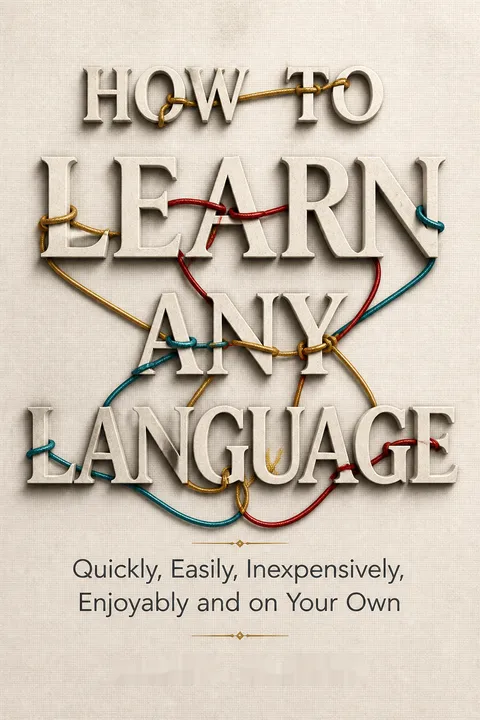
Farber's book is part memoir, part practical manual, and part argument against the classroom sequence he believes dulled American learners' enthusiasm. Its organizing idea is not simply to study more. It is to connect study with use: combine resources, make retrieval active, exploit spare time, and seek real conversations before confidence feels complete. The Chinese sailors who help a teenage Farber turn a few phrases into a daily practice are the story's clearest proof of concept. Language learning becomes social and rewarding, not just an accumulation of rules.
The method's strongest elements remain sharply applicable: frequent recall, varied encounters, manageable routines, and direct feedback. It also gives a useful account of how motivation can be built from visible progress rather than demanded in advance. Farber is unusually candid about his own wasted effort, which makes his system feel earned rather than theoretical.
The book also reflects its moment. Its recommendations rely on cassette players, printed dictionaries, and the language markets of 1991. Current learners can substitute digital recordings, searchable dictionaries, and online conversation, but the underlying actions remain: attend, pause, retrieve, and use. The advice to buy a wide array of materials is less universally practical, and the claim that language learning can be made easy risks understating differences in time, access, disability, and writing systems. Farber's own unusual enthusiasm and encounters with native speakers also shaped his results.
There is a productive tension between his short grammar-first opening and his larger insistence that grammar should not gatekeep communication. Read together, these are not contradictory: establish a little structure, then let use supply context for further rules. The best adaptation preserves that balance, and treats the book as a flexible practice system rather than a guaranteed timetable or universal recipe.
People Also Read










Glossary
The Multiple Track Attack
Several complementary study toolsFarber's name for learning a language through several kinds of material at once, including grammar books, dictionaries, phrase books, recordings, flash cards, and authentic reading. Each resource supplies a different kind of encounter. The approach aims to strengthen learning when words and patterns recur across formats, instead of relying on a single course.
Hidden Moments
Brief study opportunitiesFarber's term for small intervals that often go unused, such as waiting in a line or for a call to connect. Learners can use these moments for flash-card review or, when reading is not practical, listening. The idea supplements regular study; it does not mean that short bursts replace focused work.
Harry Lorayne's Magic Memory Aid
Sound-linked memory cuesFarber's label for using vivid associations to remember foreign vocabulary, drawing on memory teacher Harry Lorayne's mnemonic techniques. The learner connects a word's sound to a familiar image or scene that suggests its meaning. The association provides a temporary retrieval cue and is meant to become unnecessary once the word is well learned.
Graduated interval recall
Timed retrieval and reviewA recall method Farber associates with Pimsleur language recordings. The learner is prompted to produce a word or phrase, then encounters it again at intervals intended to bring it back just as memory is becoming uncertain. The pause encourages active answering rather than passive listening, and repeated retrieval helps make the response more readily available.
The Plunge
Early real-world language useFarber's term for moving beyond lessons into authentic language, such as newspapers, magazines, conversation, films, or radio, while still a beginner. The learner encounters material not simplified for students and uses dictionaries, questions, and repeated exposure to make progress through it. The purpose is to connect study with language as people actually use it.
Almosters
Near-match mnemonic wordsFarber's category for foreign words that do not match an English sound cue perfectly but come close enough for an association to help. A vivid image can bring the learner near the target pronunciation, while memory supplies the small remaining difference. The category sits between effortless sound matches and words that resist mnemonic treatment.
Point of sale instruction
Preparation for an imminent exchangeFarber's phrase for focusing study on a conversation or situation the learner expects soon. Someone planning to eat at a restaurant might review food vocabulary, while someone attending a gathering might rehearse introductions. The purpose is to make study immediately useful and test it in a genuine interaction, rather than preparing only in the abstract.
Middle language
Literal structural translationFarber's term for rendering a target-language sentence into deliberately literal English to reveal its underlying word order or construction. For example, a learner might translate a question as something like “you go or not?” before understanding the more natural form. This temporary aid helps make unfamiliar patterns visible; it is not a substitute for natural usage.
Download PDF
Download EPUB
.epub digital book format is ideal for reading ebooks on phones, tablets, and e-readers.








