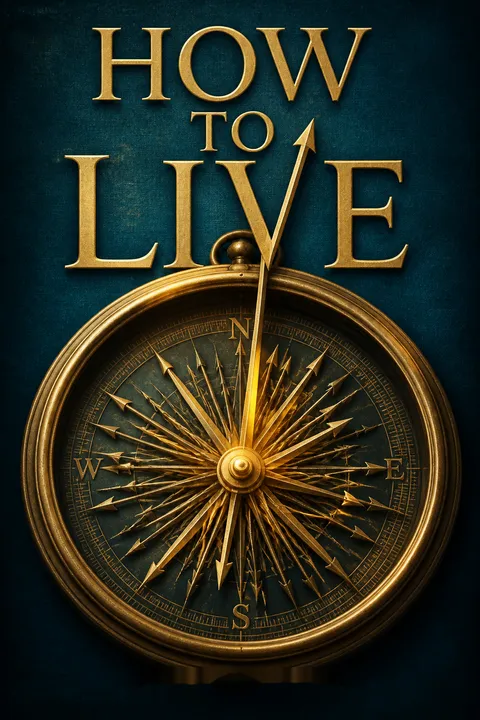


Key Takeaways
There is no single answer; choose the life you can conduct
The contradiction is deliberate. The book offers 27 forceful answers, including incompatible instructions: be independent, commit, do nothing, pursue pain, live for today, and plan for generations. Each answer makes a case for a different way of seeing life. Read as universal commands, they collide. Read as lenses, they reveal what each way of living can offer and what it can cost.
You are the chooser. The closing image is both a duck and a rabbit: one drawing, two valid perceptions. The book extends that idea to life. Its answers are an orchestra of competing instruments, and the reader must compose and conduct rather than blindly obey one voice. The point is not to discover the one correct slogan, but to decide which principles belong in a particular life.
What's striking is that the book makes contradiction part of its teaching method. It resembles philosophical pluralism: different values can each be valid, yet no single value can govern every situation without distortion. Independence protects agency, while commitment builds depth; novelty refreshes attention, while repetition creates skill. The reader's task becomes judgment, not mere compliance. That is liberating, but also demanding. A collection of persuasive maxims can make every impulse sound principled, so the reader needs standards for choosing among them, such as consequences, duties, and the well-being of others.
Build enough independence to choose your dependencies
Freedom needs options. The case for independence begins with practical vulnerabilities: relying on one employer, one client, one platform, or one source of income can leave a person exposed. The book recommends learning useful survival skills, keeping personal backups, owning a domain, and building several income sources. Its more radical proposals include moving off-grid or living without a permanent home. The underlying idea is to reduce the number of people and systems that can dictate your choices.
Distance can clarify attachment. The book also argues that stepping away from social expectations can help people see their own values more clearly. Yet it does not end in permanent withdrawal: once independent, a person can choose to rejoin family, community, and public life without feeling trapped by them.
This account usefully distinguishes chosen reliance from helpless dependence. In resilience planning, redundancy matters: a backup, a second customer, or a portable skill can keep one failure from becoming a crisis. The same logic applies psychologically, since having alternatives often makes cooperation more voluntary. But total self-sufficiency is an illusion. Food systems, infrastructure, healthcare, and knowledge all depend on other people. The most durable freedom is therefore not isolation, but the ability to leave an unhealthy arrangement and to participate in healthy ones by choice.
Commit long enough to become good, then stay revisable
Depth takes repetition. The book argues that constant searching for the best career, place, tool, or partner can leave a person scattered. Choosing a direction and practicing consistently builds expertise, habits, reputation, and trust. It compares starting a habit to a rocket escaping gravity: the beginning takes effort, but repetition makes continuation easier. The same commitment can anchor a career, a community, or a relationship through periods when enthusiasm fades.
Identity need not be permanent. Elsewhere, the book urges readers to reinvent themselves, try unfamiliar paths, and let randomness disrupt old routines. These ideas need not cancel commitment. A person can stay with a craft long enough to learn it deeply while remaining willing to revise a job, belief, or lifestyle that no longer fits. Commitment creates depth; revision keeps it from becoming a cage.
The tension here resembles the difference between exploration and exploitation in decision theory. Exploration tests unfamiliar options; exploitation develops the value of a choice already made. Too much exploration prevents mastery, while too much exploitation can preserve a bad fit. A useful interpretation is to set a meaningful trial period, commit fully during it, and review the choice using evidence rather than every passing mood. This respects the book's defense of persistence without turning past investment into proof that a path must continue forever.
Make ordinary time memorable by pursuing novelty and noticing it
Novelty gives time landmarks. The book warns that familiar days blur together, making years seem short in retrospect. New places, activities, foods, and people create distinct events that are easier to remember. It even proposes refusing repetition, a deliberately extreme way to challenge routine. The practical point is not that every meal or day must be unprecedented, but that a life needs experiences vivid enough to become markers in memory.
Attention preserves experience. The book recommends recording days in journals or video, then shaping experiences into stories that can be revisited and shared. It also notes that memory is reconstructed: present feelings and later retellings affect how the past is recalled. That flexibility can help someone find a less painful account of an event, though the book's suggestion to reshape memories should not be mistaken for proof that painful facts can simply be erased.
This section connects the felt speed of life to how the mind organizes experience. Novel events provide distinctive retrieval cues, while repeated routines often leave fewer details to recall. Recording can make those cues easier to find, and storytelling can help people interpret what happened. Yet memory is not a video archive, and revising a story can both soothe and distort. For painful experiences, a compassionate account can restore perspective, but forcing a positive version may invalidate genuine harm. Remembering well means giving experience meaning without confusing meaning with factual certainty.
Choose hard problems that train capacity instead of worshipping comfort
Discomfort can be a teacher. The book links effort with strength, skill, and courage: physical training strains the body, practice exposes a learner's weaknesses, and difficult conversations can protect relationships. It recommends deliberately facing manageable discomfort, such as asking for something likely to be refused or communicating in a new language before feeling fluent. Its named example, rejection therapy, uses audacious requests to make rejection less frightening and sometimes produces unexpected yeses.
Choose the problem, not just the relief. The book argues that avoiding every difficulty can make ordinary setbacks feel overwhelming. It treats worthwhile challenges as a source of fulfillment, while warning that this is not a call to seek pain for its own sake. The useful question is whether a chosen difficulty serves a valued goal, builds capability, or helps resolve a real problem.
The strongest version of this argument is about voluntary, bounded exposure: approaching a feared but manageable situation can teach a person that discomfort is survivable. That principle appears in skill training as well as psychological treatments for avoidance. The crucial distinction is between productive challenge and preventable injury. Pain is not automatically evidence of growth, and some adversity is imposed rather than chosen. A good test is whether the difficulty has a purpose, whether its risks are proportionate, and whether recovery is part of the plan.
Turn learning into practice, mistakes, and finished work
Knowledge needs contact with reality. The book advises questioning first impressions, seeking perspectives that unsettle familiar beliefs, and testing ideas through experience. It treats mistakes as useful only when a person records and reviews what went wrong; otherwise, repeated failure is just repetition. Mastery grows through focused practice, protected work time, small milestones, and occasional pauses to check whether effort is moving in the right direction.
Finish before you perfect. The chapter on creating argues that ideas matter less than work brought into the world. A rough first draft can be revised; an unwritten one cannot. The book encourages imitation as a learning tool, daily creation, and releasing work to an audience once it is ready. Its advice converges on a cycle: learn, try, notice, improve, and complete. The result matters, but so does the durable skill built in the process.
This cycle is a practical alternative to treating talent as a fixed possession. Attempts generate feedback, while notes and review turn feedback into a usable record. Finishing also changes the relationship between creator and idea: work becomes inspectable, criticizable, and available to others. Still, sheer volume is not enough. Repeating an error without useful feedback can entrench it, and constant output can crowd out reflection. The valuable loop is not simply more attempts, but attempts designed to reveal something and followed by deliberate adjustment.
Pause before reacting, but don't mistake stillness for a life plan
Inaction can prevent escalation. The book's case for doing nothing targets impulsive reactions: saying yes under pressure, venting anger, rushing a decision, or acting merely to feel progress. Waiting can reveal information and allow an emotion to settle. It also asks readers to examine whether a troubling situation is being intensified by an interpretation they could reconsider, rather than assuming every uncomfortable feeling requires an external fix.
Stillness has limits. The book also argues that silence and reduced media input can clear space for observation. But its strongest claims, such as that all action is optional or that problems disappear when beliefs change, cannot safely describe every circumstance. Some situations require decisions, intervention, or help. A practical translation is to pause when urgency is emotional, then act when evidence, responsibility, or safety calls for action.
The pause is valuable because people often confuse the urge to respond with a need to respond. Waiting can reduce emotional escalation and improve the quality of a decision. But restraint is not neutral in every context: declining to act can preserve an unjust situation or allow preventable harm. The deeper skill is response flexibility, the ability to choose action, delay, or disengagement according to the stakes. Stillness works best as a way to recover judgment, not as a universal substitute for judgment.
Let the present matter without abandoning your future self
Time magnifies small choices. The book uses Benjamin Franklin's 200-year charitable trust to make compounding vivid. A £2,000 gift set aside in 1790 was worth more than $7 million by 1990; the book also gives a hypothetical investment calculation to show how long periods can amplify returns. Its broader advice is to invest early, maintain health, cultivate relationships, and make preparations such as writing a will. Short-term decisions can also accumulate into debt, declining health, or environmental damage.
Mortality sharpens priorities. The book pairs long-range planning with attention to the present and preparation for loss. Imagining illness, hardship, or the death of loved ones is meant to make current comforts and relationships easier to appreciate, not to invite constant dread. Its survival-focused advice is to reduce avoidable risks and protect time, while recognizing that no plan can control every outcome.
This is a useful correction to the mind's tendency to overweight immediate rewards. Compounding applies not only to money, but also to health practices, neglected obligations, and environmental costs. Imagining a future self can make distant consequences emotionally legible. The counterweight is that projections are uncertain: a life organized entirely around future optimization may sacrifice the relationships and pleasures it is meant to protect. Good long-term thinking treats the future as a beneficiary, not as a reason to postpone living indefinitely.
Invest in relationships; security grows from reciprocal usefulness
Belonging is built through contribution. The book contrasts a solitary bunker with the protection of a community that knows and trusts you. It recommends showing up consistently, helping neighbors, making new friends deliberately, and learning how other cultures shape people's assumptions. Moving abroad can expose local habits that once seemed universal, while building relationships across difference can make communication more attentive and less provincial.
Love is an active practice. The book defines loving as attention, appreciation, and empathy, not merely a feeling that arrives on its own. It encourages honest conversation, curiosity, sincere compliments, and giving people room to speak without immediately fixing them. In intimate relationships, it warns against expecting a partner to complete or rescue you. Care can deepen connection, but love is not control: children and partners need room to remain distinct people.
The chapter's strongest insight is that social safety is partly produced by reciprocal behavior. Trust grows through repeated, observable acts, not simply declarations of loyalty. Curiosity across cultures also challenges the assumption that familiar customs are natural or universal. This perspective can widen empathy without requiring agreement. One important qualification is that a person's obligations are not limitless: service should not mean tolerating abuse or erasing personal needs. Durable care depends on boundaries, reciprocity, and attention to the actual people involved.
Treat money as a tool for value, not a score of worth
Wealth follows usefulness. The book presents money as a neutral exchange rather than a measure of human value. It argues that earning more often means serving more people, solving problems they care about, and charging for the value created. Its business advice includes studying the numbers, owning what is built, seeking overlooked problems, and avoiding the assumption that a clever idea will succeed without execution.
Keep the tool in its place. For investing, the book favors simple, low-effort exposure to broad markets over attempts to predict winners. It also warns that lifestyle inflation and status purchases can make wealth feel like a trap. The chapter's odd but useful endpoint is that money may remove some constraints without supplying friendship, love, or a compelling purpose. Getting rich is a means, not a final answer.
The reframing of income as value exchange can counter shame about charging for useful work. It also directs attention outward: a business becomes stronger when it understands what customers need, rather than treating sales as a contest in persuasion. Still, market reward is not a perfect measure of social benefit. Profitable work can impose costs on others, while essential contributions may be poorly paid. A sound account of wealth therefore asks two questions: what value is being created, and who receives the benefit or bears the cost?
Schedule opposing needs so one-sided success doesn't topple your life
A life needs counterweights. The book compares different areas of life to spokes in a wheel: when one is neglected, progress becomes unstable. Ambition can erode health, comfort can weaken resilience, and solitude can crowd out friendship. It recommends balancing work with rest, learning with doing, stability with surprise, and personal aims with care for others. The point is not to give every area identical attention, but to notice what has become dangerously lopsided.
Put values on the calendar. The book treats scheduling as protection against distraction and passing moods. It advises reserving time for focused work, health checks, learning, and important relationships, rather than hoping each will happen spontaneously. This is the practical counterpart to its many conflicting answers: a schedule can make room for more than one legitimate need, even when those needs compete for attention.
Balance is more useful as a diagnostic than as a demand for perfect symmetry. Different seasons require different allocations, and a temporary imbalance may be necessary for caregiving, recovery, or a major project. Scheduling helps because it turns vague intentions into visible trade-offs: time given to one priority cannot be spent elsewhere. The important question is not whether every spoke is equally strong today, but whether neglected areas are being noticed and whether the current imbalance is chosen, sustainable, and reversible.
Analysis
The book is best understood not as a doctrine but as a designed encounter with incompatible doctrines. Its repeated declarations mimic the confidence of self-help advice, then steadily make that confidence unstable. Be independent, then bind yourself to a community. Seek novelty, then prize what has endured. Avoid action, then change the world. These reversals are not incidental noise. They force readers to experience the central problem of practical wisdom: a principle can be valuable in one context and destructive when promoted into an absolute.
That structure also creates a risk. Contradiction can broaden judgment, but it can also make selective reading effortless: a reader may choose whichever maxim licenses an existing impulse. The closing image of a person conducting an orchestra offers a response, though not a full decision procedure. In practice, the claims can be tested against consequences, time horizon, reversibility, and obligations to other people. Does a choice preserve agency? Does it build capability or trust? What harms might it create, and who bears them? Such questions help distinguish deliberate flexibility from convenient inconsistency.
The book is especially persuasive when its absolutes are read as correctives. Commit counters endless option-seeking. Do nothing counters reflexive reaction. Pursue pain counters avoidance. Live for others counters self-absorption. Each prescription points toward a recognizable failure mode, but none should be applied without context. The book's value lies less in supplying a stable set of rules than in making readers notice the costs hidden inside their preferred rules. Its unusual conclusion is therefore not that every answer is equally right. It is that living well requires composing among competing goods, with enough commitment to act and enough humility to revise.
Review Summary
How to Live receives mostly positive reviews for its thought-provoking content and unique format. Readers appreciate the contradictory perspectives presented, seeing them as a way to challenge existing paradigms and encourage self-reflection. Many find value in its concise writing style and ability to stimulate deep thinking. Some criticize it for being too Americanized or lacking global perspectives. The book's structure of presenting conflicting ideas is both praised for its originality and criticized for potential confusion. Overall, it's viewed as a dense, philosophical exploration of life's approaches.
People Also Read








Glossary
rejection therapy
Practice tolerating rejectionA practice of making requests likely to be refused so that rejection becomes less intimidating. The book presents it as a way to reduce avoidance and discover that a feared refusal is survivable. It also notes that some requests may be accepted, making the exercise a test of assumptions as well as a form of exposure.
Chesterton's fence
Understand before removingA principle cautioning against changing or removing a custom, rule, or institution before understanding why it exists. A feature that appears pointless may serve a function that is not immediately visible. In the book, the idea supports studying history and tradition before assuming that a modern observer already knows what should replace them.
shallow happy
Immediate pleasureThe book's label for satisfaction that serves an immediate desire, such as enjoying a treat or pursuing a quick pleasure. It contrasts this with deeper fulfillment that may require effort and support longer-term aims. The distinction is not that immediate pleasure is always wrong, but that it can conflict with what a person values most.
deep happy
Long-term fulfillmentThe book's label for satisfaction grounded in fulfillment, self-mastery, or progress toward enduring aims rather than immediate gratification. It may require accepting short-term discomfort in service of health, meaningful work, or personal growth. The term frames happiness as more than a pleasant feeling in the moment.
FAQ
What's "How to Live: 27 Conflicting Answers and One Weird Conclusion" about?
- Exploration of Life's Meaning: The book presents 27 different perspectives on how to live a fulfilling life, each offering a unique approach or philosophy.
- Conflicting Advice: Each chapter provides a distinct, often contradictory, viewpoint, encouraging readers to explore diverse ways of thinking about life.
- Weird Conclusion: The book culminates in a conclusion that synthesizes these conflicting ideas, suggesting that the answer to how to live is multifaceted and personal.
- Author's Perspective: Derek Sivers uses his experiences and insights to challenge conventional wisdom and provoke thought about personal freedom and happiness.
Why should I read "How to Live: 27 Conflicting Answers and One Weird Conclusion"?
- Diverse Perspectives: The book offers a wide range of life philosophies, allowing readers to find what resonates with them personally.
- Thought-Provoking: It challenges readers to question their own beliefs and consider new ways of living.
- Practical Advice: Each chapter provides actionable insights that can be applied to everyday life.
- Engaging Writing Style: Derek Sivers writes in a clear, engaging manner that makes complex ideas accessible and interesting.
What are the key takeaways of "How to Live: 27 Conflicting Answers and One Weird Conclusion"?
- Independence and Freedom: True happiness comes from breaking dependencies on income, people, and technology.
- Commitment: Choosing and committing to one path or decision can lead to fulfillment and peace of mind.
- Balance and Moderation: A balanced life, avoiding extremes, leads to stability and happiness.
- Embrace Change: Regularly reinventing oneself can lead to personal growth and prevent stagnation.
How does Derek Sivers suggest we achieve independence in "How to Live"?
- Break Dependencies: Sivers suggests cutting ties with societal norms and dependencies to achieve true freedom.
- Self-Reliance: Learn skills that make you self-sufficient, such as driving, gardening, and basic survival skills.
- Minimalism: Adopt a minimalist lifestyle, reducing reliance on material possessions and societal expectations.
- Nomadic Lifestyle: Consider living as a perpetual traveler, spreading your life across different countries to avoid dependency on any one place.
What does Derek Sivers mean by "Commit" in "How to Live"?
- Irreversible Decisions: Making irreversible decisions can lead to satisfaction and focus, as it removes the option to change your mind.
- Focus on One Path: By committing to one career, relationship, or place, you can build depth and expertise.
- Trust and Community: Building strong social ties and trust within a community can enhance happiness and stability.
- Daily Rituals: Commit to daily habits and routines that align with your values and goals.
How does "How to Live" address the concept of balance?
- Avoid Extremes: Sivers emphasizes the importance of avoiding extremes in any aspect of life to maintain stability.
- Balanced Life Wheel: Visualize different aspects of life as spokes in a wheel, ensuring none are neglected to maintain a smooth journey.
- Scheduled Balance: Use a schedule to ensure time is allocated to all important areas of life, preventing overindulgence in any one area.
- Virtue in Balance: Find virtue in the balance between extremes, such as confidence between insecurity and egotism.
What role does randomness play in "How to Live"?
- Embrace Randomness: Sivers suggests using randomness to break habits and open up to new experiences.
- Random Decisions: Use random generators to make decisions, leading to unexpected and enriching experiences.
- Acceptance of Chaos: Accept that life is more random than it seems, and learn to react with grace and dignity.
- Detachment from Outcomes: By embracing randomness, you learn to detach from outcomes and live with healthy indifference.
How does Derek Sivers propose we "Make Memories" in "How to Live"?
- Pursue Novelty: Engage in new and memorable experiences to prevent life from becoming monotonous and forgettable.
- Document Experiences: Keep a journal or video diary to capture and remember significant moments.
- Reframe Memories: Use storytelling to reshape past experiences, focusing on positive aspects and lessons learned.
- Nostalgia's Power: Embrace nostalgia as a way to connect past and present, enhancing mood and creativity.
What does "Master Something" mean in the context of "How to Live"?
- Focus on Mastery: Choose one thing to master and dedicate your life to it, as mastery brings fulfillment and happiness.
- Long-Term Pursuit: Mastery requires long-term commitment and focus, resisting the temptation of immediate gratification.
- Ritual Over Inspiration: Develop daily rituals to practice and improve, rather than waiting for inspiration.
- Amplify Strengths: Focus on amplifying your strengths and ignore weaknesses, as mastery is about doing one thing exceptionally well.
How does Derek Sivers suggest we "Pursue Pain" in "How to Live"?
- Growth Through Pain: Embrace pain as a necessary part of growth and improvement.
- Choose Discomfort: Deliberately choose the harder path to build resilience and strength.
- Pain as a Compass: Use pain as a guide to steer towards challenges that lead to personal development.
- Embrace Failure: Accept failure as a learning opportunity and a step towards success.
What are the best quotes from "How to Live: 27 Conflicting Answers and One Weird Conclusion" and what do they mean?
- "Be independent. All misery comes from dependency." This quote emphasizes the importance of self-reliance and breaking free from societal dependencies to achieve true freedom.
- "Commit. Your dedication and actions make any choice great." It highlights the power of commitment in transforming any decision into the best choice through dedication.
- "Balance everything. All bad things in life come from extremes." This quote underscores the importance of moderation and balance in achieving a stable and fulfilling life.
- "Make a million mistakes. You learn best from your mistakes." It encourages embracing mistakes as valuable learning experiences that lead to growth and wisdom.
How does Derek Sivers conclude "How to Live: 27 Conflicting Answers and One Weird Conclusion"?
- Synthesis of Ideas: Sivers concludes by suggesting that the answer to how to live is not singular but a combination of the various perspectives presented.
- Personal Composition: He likens life to an orchestra, where each person is the composer and conductor, choosing which philosophies to incorporate.
- Embrace Complexity: The conclusion encourages embracing the complexity and contradictions of life, finding personal meaning in the diversity of ideas.
- Empowerment: Ultimately, the conclusion empowers readers to take control of their own lives, using the book's insights as a guide to create their unique path.
About the Author
Other books by Derek Sivers



Download PDF
Download EPUB
.epub digital book format is ideal for reading ebooks on phones, tablets, and e-readers.








