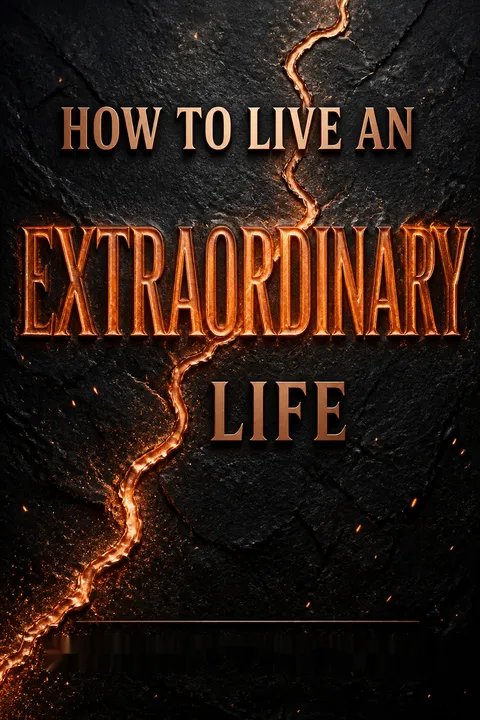


Key Takeaways
Build your extraordinary life through the details nobody is checking
Small acts reveal standards. During night patrols in Iraq, Pompliano’s exhausted unit still had to clean its vehicles and weapons before sleeping. Leaders rarely inspected the work. The point was readiness for the next mission and care for teammates. He came to see these unobserved tasks as practice for being dependable elsewhere: keeping promises, arriving early, and finishing carefully. The habits you repeat in minor moments are often the habits others can rely on when the stakes rise.
Choose the person first. Pompliano recommends identifying the kind of person you want to become, then acting accordingly in small ways. A reputation for punctuality, for instance, is built each time someone shows up prepared. The book’s larger claim is that extraordinary lives are not made only by dramatic accomplishments. They are assembled from consistent choices in work, relationships, and ordinary routines.
What's compelling is the link between private standards and public trust. In organizational psychology, reliability is often less a matter of grand gestures than of repeated, observable follow-through. Small actions also shape identity: each kept promise makes the next one easier to keep. Still, the principle should not be treated as a verdict on every lapse. Fatigue, disability, or a chaotic environment can disrupt performance without revealing a person's character. The useful question is not whether someone is flawless in every detail, but whether they take responsibility and build systems that make dependable behavior more likely.
Treat every job and project as practice for a more demanding one
Progress travels with you. Pompliano’s first startup lasted only about 18 months, but the experience helped prepare him to build a second company. That work, in turn, equipped him to lead teams at Facebook. He applies the same idea to relationships: earlier experiences can teach patience and care that a later partnership requires. A role can matter even if it is not permanent, because it builds skills you cannot yet see yourself needing.
Make progress small enough to repeat. He borrows a writing tactic from Tim Ferriss: produce two deliberately rough pages a day rather than waiting for perfect inspiration. Pompliano says small daily increments helped him write this book, make podcasts, and build companies. His wife’s solo 13.1-mile run after illness forced her to miss an official race offers a related lesson: a disrupted plan need not cancel the commitment. Start, learn, adjust, and finish.
This is a practical account of learning as accumulated capability rather than a straight career ladder. The idea resembles deliberate practice: skills grow through repeated attempts, feedback, and increasing difficulty. It also counters the sunk-cost trap, since a first project can be valuable without being the project one keeps forever. The caution is that not every detour is automatically useful. Experience becomes transferable when a person reflects on what worked, what failed, and which skills can travel to a new setting.
Keep your ethics fixed, but let evidence rewrite your opinions
Separate principles from judgments. Pompliano distinguishes ethics, the standards that govern how a person acts, from opinions, which are conclusions about particular questions. He argues that ethical commitments should remain firm while opinions should change when credible evidence changes. His example is a business he believed could make money by selling a product that exploited financially vulnerable customers. He declined to invest, allowing his ethical judgment to outweigh the commercial opportunity.
Practice skepticism, not reflexive doubt. The book describes skepticism as asking what supports a claim rather than accepting or rejecting it on instinct. A person confronted with a supposed cure, for example, should investigate evidence before deciding. Pompliano warns against intellectual rigidity: holding the same position forever may signal that a person has stopped examining it. He also argues that ethical standards should be explained, not merely kept private.
The distinction is valuable because it makes flexibility compatible with integrity. Research on motivated reasoning suggests that people often protect beliefs that serve their identity, so explicitly asking what evidence could change a view is a useful discipline. Ethical commitments can also be harder to apply than this tidy division implies: people may disagree about whether a case is genuinely harmful or which duty takes priority. A strong approach therefore combines stable values with transparent reasoning, and remains willing to revise the interpretation of a value without casually abandoning it.
Choose early work for learning, not the salary or impressive title
Build skills before optimizing pay. In his mid-twenties, Pompliano considered leaving Facebook for roles with different salaries and responsibilities. His father warned against spending a decade repeating the same limited learning. Pompliano concluded that he had gained much of what the job could teach him and moved to a role that offered new challenges. His advice for early career choices is to seek useful skills, capable colleagues, and a network of people whose judgment can improve future work.
Create reasons for opportunity to find you. When Pompliano struggled to meet entrepreneurs as an investor, he began publishing ideas and observations online instead of relying only on cold outreach. That public work made his thinking visible and gave founders a reason to approach him. The aim was not fame for its own sake, but to become useful to the people and companies he hoped to work with. Learning, visible contribution, and reputation can reinforce each other.
The strongest career advice here treats early roles as investments in human capital. Skills, relationships, and credibility can generate returns long after a first paycheck is spent. Public work can also reduce information gaps: people who might collaborate can evaluate a person's ideas before meeting them. Yet visibility is not a substitute for competence, and leaving a job after a fixed period is not universally wise. Learning should be assessed by actual growth and opportunity, not by a calendar rule or the glamour of novelty.
Make yourself useful, communicate trouble early, and earn real responsibility
Reduce your manager’s burden. Pompliano says the strongest employees he encountered took work off their boss’s desk, completed it well, and returned with results rather than excuses. One employee who repeatedly volunteered for additional tasks rose from a recent graduate to general manager. The lesson is not to perform busyness for attention. It is to build trust by showing that more responsibility will be handled competently.
Be candid, and lead by example. At Facebook, a product failure lasted for hours while Pompliano tried to solve it alone. His manager quickly identified the other team whose software update had caused the problem. The delay had made the outage worse. In another case, Pompliano edited podcast episodes himself so his exhausted editing team could take a week off. Together, these stories emphasize early communication, practical support, and a leader’s willingness to understand the work being assigned.
The section connects trust to two behaviors that organizations often struggle to reward consistently: surfacing bad news and taking ownership. Early reporting gives a team more time to diagnose problems, while leaders who understand frontline work are less likely to impose unrealistic demands. But usefulness should not become unlimited availability. Employees need boundaries, fair workloads, and recognition, not merely a growing pile of responsibilities. The durable lesson is to make contributions legible and communicate risks promptly, while organizations remain responsible for creating conditions in which honesty is safe.
Turn setbacks into solvable puzzles before deciding they are disasters
Delay the verdict. Pompliano uses the parable of a farmer whose horse runs away, returns with more horses, and then causes a son’s injury. Each apparent gain or loss changes meaning as events unfold. The story supports his view that people label outcomes lucky or unlucky before they know their longer-term consequences. He describes soldiers injured in Iraq who interpreted survival differently, with gratitude or regret shaping how they faced what came next.
Look for the next useful move. Pompliano suggests treating problems as puzzles that can be examined piece by piece. When a landlord was choosing between his company and a stronger-looking tenant, he identified the decision-maker and asked mutual contacts to vouch for his team. About 15 to 20 recommendations followed, helping his company compete. This mindset does not make hardship pleasant or guarantee a win. It redirects attention from blame toward options, evidence, and action.
The combination of uncertainty and agency is more persuasive than simple positivity. Cognitive reappraisal, the practice of changing how a situation is interpreted, can help people regulate emotion and identify responses. The farmer parable also warns against premature conclusions, especially when outcomes have delayed effects. But perspective should not erase genuine loss or imply that every hardship is secretly beneficial. Some events remain tragic. A useful version of optimism acknowledges the damage while asking what can still be influenced.
Build a small circle of peers who compound trust and ambition
Invest in relationships before you need them. Pompliano argues that trusted peers often become more useful than distant heroes. People who grow alongside one another can develop years of shared context and confidence. He calls friends who improve their knowledge, health, wealth, and relationships over time compounders. One business leader he describes exchanges lessons with him regularly, turning reading, conversations, and experience into shared learning.
Make connection an action. Pompliano recommends calling friends without waiting for a reason, asking people how to help, and creating dinners where thoughtful questions draw guests into conversation. He uses the Five Whys, a technique of asking repeated follow-up questions to uncover a deeper cause or motivation. He also urges readers to respect time and not worry excessively about strangers’ opinions. The strongest network is not just a list of contacts. It is a set of reciprocal relationships made stronger through attention and contribution.
The emphasis on peers captures a form of social capital built through repeated cooperation, not status access. Trust lowers the cost of asking for help, sharing incomplete ideas, and taking risks together. Curiosity also improves conversation by shifting attention from performance to understanding. Still, a network should not be treated merely as a career instrument. Friendship requires mutual care that may produce no measurable advantage. Likewise, choosing ambitious peers can inspire growth, but healthy relationships also make room for rest, difference, and support during failure.
Guard deep-work hours and curate what enters your mind
Match time to the work. Paul Graham’s distinction between a maker’s schedule and a manager’s schedule helps Pompliano organize his day. Makers, such as writers and programmers, need long stretches of uninterrupted focus. Managers often work in shorter blocks shaped by meetings. Pompliano protects mornings for writing, then schedules meetings later. The point is to make the calendar serve the task rather than letting other people’s requests consume every hour.
Treat information as an input. Pompliano’s wife encouraged him to examine his content diet, meaning the information he regularly reads, watches, and listens to. He replaced hours of short-lived online material with a habit of reading a physical book each week. To retain ideas, he highlights passages, rewrites notes, and records lessons after conversations. Writing these ideas down gives them another pass through attention and makes them easier to revisit and apply.
This section joins attention management with intellectual development. Long, protected blocks reduce the switching costs that fragment complex work, while a deliberate information diet counters the novelty bias of feeds and headlines. Taking notes can also improve retrieval because it requires a person to reconstruct an idea rather than merely recognize it. Still, reading more is not automatically learning more. The decisive step is testing an idea against experience, and schedules should remain adjustable for collaboration, caregiving, and unexpected demands.
Spend below your income, then let rare assets compound patiently
Keep wealth separate from its appearance. Pompliano contrasts his wife’s careful budgeting on a modest salary with an entrepreneur who leased expensive possessions and used debt to project success. The entrepreneur eventually lost his car, boat, and apartment. Pompliano’s central personal-finance rule is to spend less than one earns, tracking even small expenses when necessary. That gap creates room to save and reduces dependence on borrowing to maintain an image.
Distinguish holding from cashing in. Pompliano describes two different investment decisions. A rare asset with durable growth prospects may reward long holding; he points to bitcoin and investor Bill Miller’s decision to keep Amazon shares through the dot-com crash. But unrealized gains can disappear, so he also urges investors to sell some appreciated holdings rather than assume prices will rise forever. The aim is neither constant trading nor blind loyalty. It is to know what is being held, why, and when profits should be secured.
The financial argument usefully separates solvency from status: living below one's means creates options, while debt-funded display can make a person fragile. The distinction between holding and selling also addresses a real tension between compounding and risk management. However, the book’s confidence about particular assets reflects the author's experience, not a universal recipe. Concentrated investments can produce exceptional gains and severe losses. Readers should distinguish a memorable success story from a diversified plan suited to their own circumstances and tolerance for risk.
Treat sleep, movement, and daylight as performance tools, not luxuries
Support the body that does the thinking. Pompliano spent much of his early life sleeping only four to six hours, assuming extra rest was wasted time. During the pandemic, he experimented with earlier bedtimes and sleep routines. He reports that getting about eight hours improved his energy, mood, health, and productivity. His advice is to treat sleep as necessary recovery rather than a reward earned after work is finished.
Move to change your mental state. When business stress kept him awake, a late-night run helped him think more clearly. He also recommends walking outside when a problem feels stuck, sometimes bringing his wife along to brainstorm. Exercise, walking, and a morning ritual of smiling and setting a positive intention are presented as simple ways to influence mood and attention. The book’s point is practical: physical routines can alter how a day feels and how effectively a person handles it.
The mind-body connection gives these habits more weight than a productivity hack. Sleep supports attention and emotional regulation, while movement can interrupt rumination and create space for new associations. A walk also changes the sensory setting, which may help a person approach a problem from a different angle. The advice works best as a foundation, not a cure-all. Exercise and sleep cannot resolve every source of distress, and routines must accommodate illness, caregiving, and individual health needs.
Remember death, then choose experiences worth remembering
Finitude can clarify priorities. At 20, while deployed in Iraq, Pompliano’s unit was attacked and a fellow soldier was killed. The experience made his own mortality immediate. He says it pushed him to invest more in relationships, travel, and experiences rather than assume there would always be time. The book turns that realization into a practical question: what would be worth having done if life proves shorter than expected?
Create a life with texture. Pompliano and his wife ran the historic Athens Marathon after its story made the difficult race feel meaningful. He urges readers to travel beyond familiar settings, take photographs, and preserve memories. He also found that writing letters to his children forced him to clarify lessons he had learned. These practices turn experience into something shareable: a story, a record, or advice that another person can carry forward.
Mortality awareness can sharpen attention by making trade-offs visible: time spent on status or distraction is time unavailable for relationships and chosen experiences. The documentary idea also encourages people to notice what makes a day memorable without requiring every day to become a spectacle. There is a useful balance here. A life organized only around dramatic stories risks overlooking ordinary care, and death awareness can provoke anxiety as well as urgency. Its value depends on translating reflection into priorities that are sustainable and personally meaningful.
Analysis
How to Live an Extraordinary Life is a collection of practical letters from Anthony Pompliano to his children, shaped by episodes from military service, entrepreneurship, investing, marriage, and parenthood. Its structure is intentionally modular: each lesson can stand alone, and some advice pulls in opposite directions because context changes what is wise. That makes a conventional chapter-by-chapter summary less useful than a map of recurring principles.
Across the letters, the recurring pattern is disciplined agency. Pompliano urges readers to build reliability through small acts, make progress before confidence arrives, and treat difficulty as a prompt to investigate rather than complain. He pairs this drive with intellectual flexibility: maintain ethical standards, but revise factual judgments; pursue ambitious work, but change course when learning stalls. Relationships are presented as both a source of happiness and a practical infrastructure for opportunity. Money, health, attention, and time matter because they preserve the ability to choose.
The book's strongest feature is its use of concrete episodes to make advice memorable. Cleaning equipment after exhausting patrols gives consistency a human purpose. A failed product at Facebook shows why disclosure can matter more than solitary heroics. A missed race that becomes a solo run makes persistence visible without requiring applause. These stories also reveal the limits of universal slogans. Not every setback is a gift, every job should not be left, and every asset should not be held forever. The letters themselves acknowledge that context matters, though their punchy lessons can sometimes sound more absolute than their examples justify.
The most useful way to read the collection is as a set of prompts, not commandments. Ask which small behavior would make a desired identity credible, which relationships deserve sustained attention, and whether a current choice is serving learning, freedom, or merely appearance. The book's definition of an extraordinary life is personal rather than standardized: it emerges from intentional work, durable relationships, health, financial discipline, and experiences that remain meaningful in memory. Its message is less about maximizing achievement than about using time deliberately enough to build a life one recognizes as one's own.
Review Summary
How To Live An Extraordinary Life receives positive reviews for its practical advice and inspiring lessons. Readers appreciate Pompliano's concise writing style, relatable anecdotes, and focus on holistic success. Many find the book's format of letters to his children engaging and impactful. While some critics note that the ideas aren't entirely novel, most readers value the actionable tips and timeless principles presented. The book is praised for its accessibility and ability to motivate readers to pursue extraordinary lives, making it recommended for personal development enthusiasts.
People Also Read







Glossary
Maker’s schedule
Long, uninterrupted work blocksA way of organizing time around work that requires sustained concentration, such as writing or programming. It uses long stretches, often half a day or more, because meetings and interruptions can consume the time needed to get fully engaged. Pompliano protects his mornings for this kind of work.
Manager’s schedule
Time divided among appointmentsA calendar organized into shorter blocks, often for meetings, decisions, and coordination. It suits work that involves directing teams or responding to multiple people and issues. Pompliano contrasts it with the maker’s schedule and uses much of his day for meetings after reserving morning hours for writing.
content diet
Regular information consumedThe collection of material a person habitually reads, watches, and listens to, along with the people and conversations that shape what they think about. Pompliano uses the term to encourage an audit of those inputs and a shift away from mostly short-lived online material toward information with lasting value.
Five Whys
Repeated questions to find causesA questioning technique associated with Toyota that investigates a problem by asking why repeatedly, often five times, to uncover its underlying cause. Pompliano applies the approach to conversations, asking follow-up questions to move beyond a person's first answer and learn more about their motivations and experiences.
compounders
People who improve over decadesPompliano’s term for people who deliberately build knowledge, health, wealth, and close relationships over long periods. He recommends forming close ties with such people because they share lessons, encourage improvement, and make sustained progress feel normal rather than exceptional.
power laws
A few inputs drive most outcomesA pattern in which a relatively small number of causes account for a large share of results. Pompliano applies the idea to relationships, experiences, and investing. He argues that a handful of strong relationships, memorable experiences, or successful decisions can matter more than a much larger number of ordinary ones.
two crappy pages per day
A small daily writing targetA writing tactic Pompliano attributes to Tim Ferriss. Instead of demanding polished work, a writer commits to producing a small amount of rough material each day. The low bar reduces pressure and helps create momentum, leaving revision and refinement for after a substantial first draft exists.
FAQ
What's "How To Live An Extraordinary Life" about?
- Author's Intent: Anthony Pompliano writes 65 letters to his children, sharing life lessons on success, relationships, money, and health.
- Core Themes: The book explores what it takes to live an extraordinary life, focusing on personal growth, resilience, and happiness.
- Personal Experiences: Pompliano draws from his diverse experiences, including living in a war zone and building companies, to offer practical advice.
- Life Strategies: The book is a collection of strategies that can be applied to various aspects of life to achieve excellence and fulfillment.
Why should I read "How To Live An Extraordinary Life"?
- Practical Advice: The book offers actionable strategies for personal and professional growth.
- Inspiring Stories: Pompliano shares personal anecdotes that illustrate the application of his advice.
- Universal Lessons: The lessons are applicable to anyone seeking to improve their life, regardless of their current situation.
- Comprehensive Coverage: Topics range from ethics and relationships to financial independence and personal well-being.
What are the key takeaways of "How To Live An Extraordinary Life"?
- Consistency Matters: How you do anything is how you do everything; small actions lead to big results.
- Ethics and Opinions: Carve your ethics in stone, but write your opinions in sand; be flexible in your thinking.
- Action Over Inaction: Have a bias for action; taking initiative is crucial for success.
- Long-term Thinking: Excellence doesn’t have a watch; patience and persistence are key to achieving greatness.
What are the best quotes from "How To Live An Extraordinary Life" and what do they mean?
- "How you do anything is how you do everything." This emphasizes the importance of consistency and attention to detail in all aspects of life.
- "Carve your ethics in stone, write your opinions in sand." This suggests maintaining strong ethical principles while being open to changing opinions.
- "Excellence doesn’t have a watch." This highlights the need for patience and long-term commitment to achieve excellence.
- "Luck is not real." This challenges the notion of luck, emphasizing mindset and perspective in shaping outcomes.
How does Anthony Pompliano define an extraordinary life?
- Holistic Success: An extraordinary life involves success in business, relationships, and personal well-being.
- Continuous Improvement: It requires ongoing learning and adaptation to overcome obstacles.
- Personal Fulfillment: Happiness and fulfillment are central, achieved through meaningful work and relationships.
- Unique Path: Each person's extraordinary life is unique, shaped by their values and aspirations.
What is the significance of "How you do anything is how you do everything" in the book?
- Attention to Detail: This principle underscores the importance of being meticulous in all tasks, big or small.
- Consistency: It highlights the role of consistent behavior in building a strong reputation and achieving success.
- Self-Reflection: Encourages readers to evaluate their actions and align them with their desired identity.
- Foundation for Excellence: Serves as a foundational concept for living an extraordinary life.
How does "Carve your ethics in stone, write your opinions in sand" apply to daily life?
- Ethical Consistency: Maintain unwavering ethical standards in all situations.
- Openness to Change: Be willing to adapt opinions as new information becomes available.
- Intellectual Flexibility: Encourages critical thinking and skepticism to avoid intellectual laziness.
- Balanced Approach: Combines steadfast ethics with adaptable viewpoints for effective decision-making.
What does "Excellence doesn’t have a watch" mean in the context of the book?
- Long-term Commitment: Excellence requires time and cannot be rushed.
- Patience and Persistence: Success is achieved through sustained effort and dedication.
- Quality Over Speed: Focus on creating high-quality outcomes rather than quick results.
- Competitive Advantage: Patience in pursuing excellence can set you apart from others.
How does Anthony Pompliano address the concept of luck in "How To Live An Extraordinary Life"?
- Mindset Over Luck: Luck is a psychological concept, not a mathematical one.
- Perspective Matters: How you perceive situations can influence your sense of luck.
- Self-fulfilling Prophecy: Believing you are lucky can increase your perceived luck.
- Focus on Probability: Emphasizes understanding probabilities and taking calculated actions.
What role does "Two crappy pages per day" play in achieving goals?
- Overcoming Procrastination: Encourages breaking tasks into manageable parts to combat inertia.
- Building Momentum: Small, consistent efforts lead to significant progress over time.
- Lowering Pressure: Reduces the pressure to produce perfect work, fostering creativity.
- Sustained Progress: Highlights the importance of daily discipline in achieving long-term goals.
How does "Surround yourself with compounders" contribute to an extraordinary life?
- Influence of Peers: Being around people who focus on long-term growth can inspire and elevate you.
- Shared Learning: Compounders share knowledge and experiences, accelerating mutual growth.
- Quality Relationships: Emphasizes the importance of deep, meaningful relationships over quantity.
- Long-term Success: Compounders focus on accumulating knowledge, health, wealth, and relationships over decades.
What is the importance of "Live your life as a documentary" in the book?
- Intentional Living: Encourages living a life full of adventure and meaningful experiences.
- Creating Memories: Focuses on building a life worth documenting and sharing.
- Avoiding Mundanity: Challenges readers to break free from routine and pursue extraordinary experiences.
- Legacy Building: Living as if creating a documentary ensures a life rich with stories and achievements.
Download PDF
Download EPUB
.epub digital book format is ideal for reading ebooks on phones, tablets, and e-readers.








