

Key Takeaways
Treat philosophy as daily character training, not clever commentary
Practice over theory. Robertson presents Stoicism as a way to train judgment and conduct, not merely a collection of ancient ideas. Its central aim is to live wisely and justly, with courage and moderation. Virtue is the only true good: health, wealth, and reputation can be useful, but they cannot make someone good or guarantee a good life. The Stoics call such external advantages preferred indifferents. They matter, but they should not outrank character.
A philosophy for pressure. Marcus Aurelius used this outlook while ruling an empire beset by war, disease, political betrayal, and family loss. His example is not emotional numbness. Stoics accept natural feelings, then practice responding with reason and care. The book’s historical stories and practical exercises aim to make that training usable in ordinary life.
The strongest feature of this approach is its shift from asking whether life is comfortable to asking what kind of person a situation calls forth. That question links ethics to psychological resilience: a setback can remain materially serious while no longer defining the sufferer’s worth. The emphasis on justice also keeps Stoicism from collapsing into private calm or self-optimization. Its demanding edge is equally important: virtue is not a trick for getting whatever one wants. The framework asks whether the goal itself is just, not merely whether the person can stay composed while pursuing it.
Notice the first jolt, then choose whether to believe its story
Feelings arrive first. Stoics distinguish involuntary first impressions from the judgments that can turn them into lasting distress. In a story recorded by Aulus Gellius, a Stoic teacher turns pale during a frightening storm at sea. He does not pretend that his body feels no fear. He simply avoids building a chain of fearful conclusions on top of that first reaction.
Assent is the hinge. The Stoics called these automatic reactions proto-passions. Assent is the mind’s agreement with an impression, such as deciding that a setback is unbearable or proves disaster is certain. Their aim is not to suppress the initial feeling, but to pause before endorsing its interpretation. The body may sound an alarm; reason can still decide what the alarm means and what action is useful.
This distinction makes room for both compassion and agency. A person does not choose every surge of fear, anger, or bodily stress, so the presence of a feeling is not a moral failure. Yet the interpretation that follows can sometimes be examined and revised. This resembles contemporary approaches that teach people to observe thoughts rather than fuse with them. The qualification matters: severe distress, trauma, or illness can narrow a person’s capacity to reflect. The practice is a tool for gaining room to respond, not grounds for blaming someone who is overwhelmed.
Describe the event before declaring it a disaster
Separate fact from verdict. The Stoics called a reality-anchored perception an objective representation: describing what happened without adding a sweeping judgment about its worth. “The ship is lost” states an event; calling it proof that life is ruined adds an interpretation. The book connects this ancient practice to decatastrophizing in cognitive therapy, which means reconsidering an exaggerated estimate of how bad an outcome will be.
Try plain language. When Marcus encountered an insult, he aimed to register that someone had insulted him without concluding that the insult had damaged his character. A modern version might describe job loss as “I am out of work and need to find another position,” then consider what realistically happens next. The goal is not to deny consequences, but to see them accurately enough to respond.
Language does more than report experience; it can intensify it. Replacing totalizing descriptions with specific observations can interrupt the mental leap from difficulty to catastrophe and make problem-solving possible. This is especially useful when a person’s own predictions are being mistaken for facts. But the distinction has limits. A neutral description cannot make an unjust firing fair, or a serious loss insignificant. Clearer language is most valuable when it helps someone face the real problem without adding avoidable panic, not when it is used to talk them out of naming harm.
Prefer the difficult path that makes you more trustworthy
Hercules faces a choice. In an ancient moral tale, the young Hercules meets two paths: Vice offers comfort and pleasure, while Virtue warns that her road demands effort and hardship. He chooses the difficult road, which gives his life purpose rather than easy gratification. Stoics used the story to ask what sort of person repeated choices are forming.
Pleasure is not the enemy. Marcus’s co-emperor Lucius Verus became known for lavish parties, drinking, and diversions. One celebration reportedly cost the equivalent of a legion’s annual pay. Marcus, by contrast, valued work, moderation, family, and philosophical study. The issue is not enjoying food or leisure. It is letting immediate pleasure displace responsibilities and activities that express one’s deeper values. For Stoics, durable joy comes from acting well, not from chasing a feeling.
The contrast between Marcus and Lucius makes a useful distinction between pleasure and fulfillment. Pleasure is an experience to enjoy in proportion; fulfillment is connected to a life one can endorse. This helps explain why self-restraint can feel rewarding rather than merely deprived, particularly when it protects commitments to other people. Still, hardship is not automatically virtuous. Painful effort can serve vanity, obedience, or an unjust cause. The relevant test is not how difficult a choice feels, but whether it expresses sound judgment and contributes to a worthwhile life.
Practice your values morning, midday, and night
Build a daily loop. Robertson describes a Stoic learning cycle: prepare in the morning, pay attention to choices during the day, and review them in the evening. Morning reflection identifies likely challenges and asks how a respected role model might respond. Daytime mindfulness means noticing judgments, impulses, and habits as they arise. Evening review asks what went well, what went poorly, and what to change next time.
Borrow another person’s eyes. Marcus learned from mentors such as the Stoic Rusticus and admired the calm conduct of his adoptive father, Antoninus. A practical exercise is to list qualities admired in others, compare them with what one personally pursues, and rehearse a small action that would bring the two closer. The aim is honest learning, not a nightly trial that turns self-correction into self-punishment.
This routine combines values clarification with self-monitoring, two ingredients that make abstract intentions easier to translate into behavior. A morning plan creates a cue for action; an evening review supplies feedback. The use of role models adds a human picture of what a virtue looks like under pressure, rather than leaving words such as courage or fairness as labels. The risk is that constant self-observation can become rigid or punitive. A useful review should identify a next experiment, not demand perfection or treat every lapse as evidence of a defective character.
Accept pain's presence without surrendering practical care
Pain is not a verdict. Marcus suffered recurring chest and stomach problems and relied on physicians as well as philosophy. He learned to describe bodily sensations specifically, regard them as limited to the body, and remember that sensations change. Robertson also draws on Epicurus, who reportedly continued discussing philosophy while seriously ill rather than making his symptoms the whole conversation.
Acceptance is not neglect. Stoic acceptance means reducing the added struggle of resentment, fear, and catastrophic interpretation. It does not mean refusing treatment or pretending pain is imaginary. The book offers a useful distinction: the body can hurt, while the mind avoids turning that fact into the belief that one is wholly defeated. Practicing patience with mild discomfort may build confidence, but serious or persistent symptoms still warrant appropriate care.
Acceptance can reduce the secondary burden that comes from fighting the existence of an unpleasant sensation. This is a subtle but important distinction: acknowledging pain may free attention for treatment, adaptation, and meaningful activity. It also guards against the false idea that resilience requires a person to appear unaffected. Yet physical pain is not merely a judgment, and its causes may demand medical intervention. The approach is strongest when it supports practical care and reduces avoidable panic, not when a person is pressured to endure preventable suffering in silence.
Act fully, but reserve your peace from outcomes
Aim without demanding. The Stoic reserve clause means pursuing an outcome while recognizing that success depends partly on forces outside one’s control. The book illustrates this with an archer: the archer can prepare and release the shot skillfully, but cannot command the arrow’s flight or the target’s movement. The aim still matters; the outcome is not guaranteed.
Marcus applies the distinction. When a major military crisis arose, Marcus had little military experience, yet he took command and worked to protect Rome. His task was to act with judgment and justice, not to pretend that victory was assured. The same principle applies to ordinary efforts: prepare carefully, do what is within one’s power, and avoid treating an uncertain result as a measure of personal worth.
This is a way to combine ambition with emotional flexibility. Treating outcomes as uncertain does not require passivity; it can make action steadier because the person is less occupied with controlling what cannot be controlled. The distinction also clarifies responsibility: effort, preparation, and fairness remain answerable to the agent, while other people’s choices and chance events do not. A possible danger is using detachment to excuse poor results or weak effort. The reserve clause only works ethically when the person remains fully accountable for the quality of the attempt.
Rehearse feared outcomes until fear loses its authority
Prepare in imagination. The Stoic practice called premeditation of adversity involves picturing possible setbacks in advance and considering how to meet them. Marcus used this kind of preparation for difficult people and uncertain events. Repeatedly imagining a feared situation can make it more familiar and allow a person to rehearse coping responses instead of meeting the possibility only in panic.
Postpone the worry spiral. The book also describes a study in which college students who delayed worrying until a planned time reduced their time spent worrying by almost half over four weeks. When a worry appears, a person can note it, return attention to the present, and revisit it at the chosen time. Imagined exposure should be approached cautiously if it risks overwhelming someone, especially in the context of trauma or serious mental health problems.
Preparation can convert vague dread into a sequence of manageable questions: What might happen, what could be done, and what support would be needed? Rehearsal also helps separate planning from repetitive worry, which often feels productive while producing no decision. This distinction is clinically important: exposure exercises work through gradual, sustained contact with a fear, not through forcing oneself into distress. The book’s caution about overwhelming material is therefore essential. For severe or trauma-linked anxiety, guided professional support is safer than treating self-directed visualization as a universal remedy.
Counter anger with understanding, not retaliation
Treat anger as a warning, not a command. Marcus’s anger-management practice included considering the other person’s whole character, questioning assumptions about their motives, remembering his own flaws, and asking what response would serve justice. A key Socratic idea is that people often do wrong because they misunderstand what is good, not because they consciously choose evil.
The crisis tests the principle. When General Avidius Cassius rebelled, Marcus prepared to fight if necessary, but publicly expressed a wish for clemency. After Cassius was killed by his own men, Marcus refused to inspect his severed head and urged mercy for the rebel’s family and supporters. His compassion did not stop him from defending the empire. It shaped how he used power once the immediate threat had passed.
This approach challenges the satisfying but often destructive certainty that another person’s bad act reveals a wholly bad person. Considering ignorance, mixed motives, and shared fallibility can lower the emotional temperature enough for a proportionate response. Marcus’s case also shows that compassion and firmness are compatible: understanding a wrongdoer does not require allowing the wrongdoing to continue. The Socratic claim that people do wrong unknowingly is a moral lens, not a universal explanation. Some harm is deliberate, and accountability may still be necessary even when hatred is not.
Use mortality to shrink trivial worries, not human responsibility
Change is the setting, not the exception. Marcus repeatedly considered the shortness of life and the disappearance of rulers, armies, and cities. By the time he died, he had lost his wife and eight of his thirteen children. The book’s closing meditation imagines him surveying human affairs from above, where status and daily quarrels look small against the scale of time and the wider world.
Perspective is not indifference to people. This view from above is a mental exercise that widens attention beyond the immediate fear or grievance. Remembering that fame fades can weaken vanity; remembering that everyone is mortal can soften resentment. The Stoic aim is to return to the present with clearer priorities, not to dismiss grief or abandon duties. Marcus continued to care for others even while accepting that neither life nor legacy could be secured forever.
A wider perspective can interrupt the illusion that the current crisis occupies all of reality. It is a form of decentering: the event remains visible, but it no longer fills the entire field of attention. Mortality can also clarify what deserves effort, since prestige and possession are fragile while the quality of one’s conduct remains immediately actionable. The exercise should not be used to minimize grief. The book distinguishes natural sorrow from the extra suffering added by futile demands that loss never occur. That distinction respects love while acknowledging impermanence.
Analysis
This book is both a biography-shaped introduction to Stoicism and a practical manual for working with emotion. Its narrative engine is Marcus Aurelius: a frail, bereaved ruler who faces epidemics, military campaigns, family losses, and political betrayal. The account gives philosophical ideas a human test case. Stoicism is presented not as a command to feel nothing, but as training in how to interpret and answer what one feels.
The most useful conceptual move is separating what happens from the judgment that follows. This distinction explains why Stoic exercises resemble cognitive therapy: both examine appraisals, challenge catastrophic interpretations, and rehearse alternative responses. But the resemblance should not be mistaken for proof that every Stoic metaphysical claim is clinically established. The book’s strongest practical recommendations are more modest: observe thoughts, describe events accurately, prepare for difficulty, and act according to considered values.
The ethical center matters as much as the emotional techniques. Marcus is not asked merely to protect his calm. He is asked to exercise justice, kindness, and responsibility, even toward people who oppose him. His response to Cassius presents emotional discipline as a way to use power with restraint, not a reason to avoid action. That social dimension separates Stoicism from a narrow strategy of personal composure.
There are limits. The claim that judgments shape suffering can be misused to imply that people are responsible for pain caused by disease, trauma, or injustice. The text itself gives room for natural feelings and medical care, but readers should preserve that distinction. Its historical storytelling also includes imagined scenes, especially in the final meditation, built from ancient sources rather than documented transcripts. Read those scenes as interpretive illustration, not certainty about Marcus’s private thoughts. The result is a persuasive invitation to practice philosophy, with its best safeguard being the same question it repeatedly poses: what response is wise, just, and actually within one’s power?
Review Summary
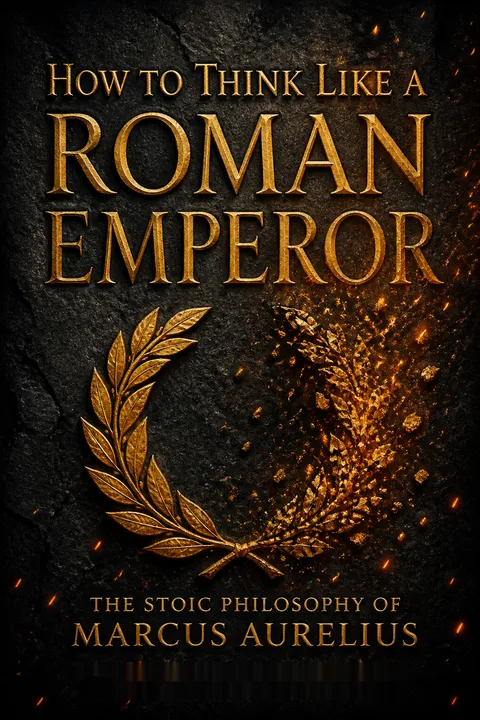
How to Think Like a Roman Emperor explores Stoic philosophy through the life of Marcus Aurelius, offering practical wisdom for modern living. Readers praised its accessible approach to Stoicism, blending history, philosophy, and psychology. Many found it inspirational and life-changing, appreciating the connections drawn between ancient wisdom and cognitive behavioral therapy. The book was lauded for its engaging writing style, though some felt it lacked focus. Overall, it was highly recommended for those interested in Stoicism or seeking personal growth.
People Also Read







Glossary
preferred indifferents
Valuable, but not ultimate goodsExternal things such as health, wealth, and reputation that Stoics consider reasonable to prefer, but not genuine goods in themselves. Their value depends on how they are used. They can provide opportunities for virtuous action, but they can also be misused, and losing them does not by itself make someone morally bad.
ruling faculty
Reason's judging capacityThe Stoic term for the mind's central capacity to assess impressions, desires, and feelings, then decide whether to accept or reject them. It is not a claim that people control every thought or bodily reaction. Rather, it identifies the faculty through which a person can evaluate an initial response and choose a considered action.
proto-passions
Automatic first emotional reactionsThe initial bodily and emotional responses that arise involuntarily when something happens, such as a startle, flush, or first surge of fear. Stoics regard these reactions as natural rather than as moral failures. A more developed passion can follow if a person assents to the accompanying judgment and continues to endorse it.
assent
Agreement with an impressionIn Stoic psychology, assent is the act of accepting an impression as a true account of what is happening. A person may initially feel alarm without choosing that reaction, then assent to the belief that disaster is certain or unbearable. Learning to pause before assent creates an opportunity to test the impression and respond more deliberately.
objective representation
A fact-focused impressionA clear, reality-based perception that distinguishes what happened from the value judgments added to it. The Stoics use the idea to resist being swept away by exaggerated or emotionally charged interpretations. It does not require denying consequences; it means describing them accurately before deciding what they signify or what action they call for.
cognitive distancing
Seeing thoughts as thoughtsA psychological skill for recognizing that a thought or belief is an interpretation of reality, not reality itself. It can involve writing a thought down, observing it from a third-person perspective, or considering alternative explanations. In the book, this modern therapeutic term helps explain a Stoic practice of separating judgments from external events.
decatastrophizing
Reassessing an exaggerated threatA cognitive therapy technique for reconsidering the likelihood and severity of a feared outcome. It replaces an inflated, all-or-nothing appraisal with a more factual description and a realistic account of what might happen next. The purpose is not to insist that nothing bad can happen, but to identify whether the feared event is truly unmanageable.
functional analysis
Assessing behavior's consequencesA structured examination of what a behavior or response produces in the short and long term. Applied to habits, anger, or fear, it compares the likely consequences of following an impulse with those of choosing another action. The analysis can reveal whether a behavior serves a person's values or provides brief relief at a lasting cost.
Stoic reserve clause
Action without demanding successA way of pursuing a chosen outcome while recognizing that success is not entirely under one's control. A Stoic concentrates on acting with skill, justice, and good judgment, while allowing for obstacles or failure. The clause is not an excuse for weak effort; it protects composure by separating the quality of an attempt from its eventual result.
premeditation of adversity
Rehearsing possible setbacksA Stoic exercise of imagining difficulties in advance, such as illness, loss, or encounters with frustrating people, then considering how to respond wisely. The practice aims to reduce surprise and rehearse coping, rather than to predict that disaster will occur. Robertson connects it with modern approaches that use repeated, careful exposure to feared situations.
inner citadel
A refuge in reasonA metaphor for the capacity to recover one's composure through reason, regardless of external surroundings. Marcus contrasts this inner refuge with the wish to escape to a peaceful landscape. The citadel is not physical isolation or withdrawal from responsibility; it represents a steadier relationship to events through examining judgments and acting according to one's values.
view from above
A widened cosmic perspectiveA Stoic visualization in which a person imagines looking down on human activity from a great height, sometimes extending the perspective across time and space. The exercise makes individual conflicts, status, and ambitions appear less absolute. Its purpose is to loosen excessive attachment and restore proportion, not to suggest that human suffering or social duties are meaningless.
apatheia
Freedom from harmful passionsThe Stoic ideal of being free from destructive desires and emotions that arise from mistaken judgments. It does not mean apathy, emotional numbness, or suppression of natural reactions. Stoics distinguish harmful passions from involuntary first responses and from healthy feelings such as goodwill, gratitude, and joy grounded in virtuous action.
eudaimonia
A flourishing, fulfilled lifeA Greek term for a fulfilled or flourishing life. In the Stoic account presented here, it does not mean constant pleasure or good fortune. It is grounded in living with wisdom and virtue, while ordinary pleasure and external advantages remain welcome but secondary. A person can therefore pursue a good life even when circumstances are difficult.
FAQ
What's How to Think Like a Roman Emperor about?
- Stoic Philosophy Focus: The book delves into the Stoic philosophy of Marcus Aurelius, illustrating how his teachings can be applied to modern life. It combines historical context with practical advice for personal development.
- Personal Journey: Author Donald J. Robertson shares his own philosophical journey, using his experiences of personal loss and turmoil as a backdrop for the teachings of Marcus Aurelius.
- Practical Application: It provides readers with tools and techniques derived from Stoicism to enhance emotional resilience and character strength, making it relevant for contemporary challenges.
Why should I read How to Think Like a Roman Emperor?
- Timeless Wisdom: The book offers insights from Marcus Aurelius, whose thoughts remain applicable today. Readers can learn to cultivate a Stoic mindset to navigate life's difficulties.
- Combines Theory and Practice: It discusses Stoic principles and provides practical exercises and meditations to implement these ideas in daily life, making the philosophy accessible and actionable.
- Personal Growth: By following the teachings of Marcus Aurelius, readers can work on self-improvement, emotional regulation, and finding purpose, essential for personal fulfillment.
What are the key takeaways of How to Think Like a Roman Emperor?
- Embrace Mortality: The book emphasizes contemplating death to foster a deeper appreciation for life, a practice Marcus Aurelius used to maintain perspective and calm.
- Focus on Virtue: It encourages prioritizing wisdom, justice, courage, and moderation, as virtue is the only true good according to Stoicism.
- Cognitive Distancing: A key technique involves separating thoughts and feelings from external events, helping manage emotions and reduce anxiety.
How does How to Think Like a Roman Emperor connect Stoicism with modern therapy?
- Cognitive-Behavioral Therapy (CBT): The book draws parallels between Stoic practices and CBT, both emphasizing reframing thoughts to manage emotions effectively.
- Therapeutic Exercises: It includes exercises resembling therapeutic practices, such as journaling and cognitive distancing, to apply Stoic principles for mental health improvement.
- Emotional Resilience: By integrating Stoicism with therapy, the book provides a framework for building emotional resilience, teaching readers to cope with anxiety and stress.
What is cognitive distancing as described in How to Think Like a Roman Emperor?
- Definition: Cognitive distancing involves separating one’s thoughts and feelings from external events, allowing individuals to view their emotions objectively.
- Application: The book suggests using cognitive distancing to manage anxiety and emotional distress by reframing negative thoughts.
- Stoic Technique: Rooted in Stoic philosophy, it teaches that our judgments about events, rather than the events themselves, disturb us, helping cultivate a rational and calm mindset.
What are some practical exercises from How to Think Like a Roman Emperor?
- Morning and Evening Meditations: Reflect on your values and actions in the morning and review your day in the evening to cultivate self-awareness and accountability.
- Cognitive Distancing Techniques: Practice reframing thoughts about stressful situations by viewing events objectively, recognizing that judgments often amplify distress.
- Modeling Virtue: Identify role models and imagine how they would handle situations, helping internalize Stoic virtues and apply them in real-life scenarios.
How can I apply the teachings of Marcus Aurelius in my daily life?
- Daily Reflections: Incorporate morning and evening meditations to reflect on actions and values, fostering self-awareness and aligning behavior with Stoic principles.
- Role Modeling: Identify figures you admire and consider how they would handle challenges, guiding decision-making and helping embody desired virtues.
- Embrace Challenges: View difficulties as opportunities for growth, much like Marcus did, leading to greater resilience and fulfillment.
What role does the concept of virtue play in How to Think Like a Roman Emperor?
- Central Tenet of Stoicism: Virtue is presented as the only true good, leading to genuine happiness and fulfillment.
- Four Cardinal Virtues: Wisdom, justice, courage, and moderation are highlighted as core virtues to strive for, guiding ethical living and personal development.
- Practical Application: Readers are encouraged to actively practice these virtues in daily life, cultivating strong character and effectively navigating challenges.
What are the best quotes from How to Think Like a Roman Emperor and what do they mean?
- "Waste no more time arguing about what a good man should be; just be one.": Emphasizes action over debate, encouraging readers to embody virtues rather than engage in theoretical discussions.
- "It’s not things that upset us but our judgments about things.": Highlights the Stoic belief that emotional responses are shaped by perceptions, reminding readers to practice cognitive distancing.
- "Know Thyself.": Urges self-reflection and understanding of values and motivations, central to Stoic philosophy and personal growth.
How does How to Think Like a Roman Emperor address the concept of desire?
- Understanding Desire: Desires are often based on judgments assigned to external things, leading to unhealthy cravings. Recognizing this helps detach from desires.
- Moderation Techniques: Strategies like cognitive distancing and functional analysis help evaluate the true value of cravings, promoting self-control.
- Role Models: Encourages considering how wise figures would handle desires, focusing on virtue over fleeting pleasures.
What role does the concept of death play in How to Think Like a Roman Emperor?
- Acceptance of Mortality: Contemplating death is emphasized as a means to live more fully, prioritizing what truly matters.
- Philosophical Perspective: Marcus Aurelius teaches that death is natural, alleviating fear and anxiety, and encouraging a focus on living virtuously.
- View from Above: Viewing life from a broader perspective helps appreciate its transient nature, fostering peace and acceptance of mortality.
What are some specific methods or advice from How to Think Like a Roman Emperor?
- Self-Monitoring: Spot early warning signs of negative emotions to address them before they escalate, fostering greater self-awareness.
- Functional Analysis: Evaluate consequences of actions driven by emotions versus reason, aiding in rational decision-making and reducing impulsive reactions.
- Modeling Virtue: Consider how role models would handle situations, promoting virtuous behaviors in personal life.
About the Author
Other books by Donald J. Robertson
Download PDF
Download EPUB
.epub digital book format is ideal for reading ebooks on phones, tablets, and e-readers.








