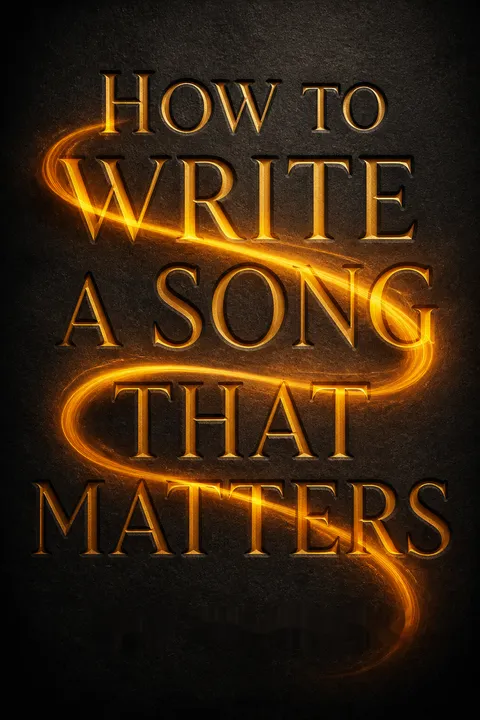


Key Takeaways
Write the song that feels true, not the song you think you should write
Follow the song’s truth. Williams began “When I Was a Boy” with a phrase that felt right, even though she worried that its language might conflict with the politics and expectations of her community. Rather than force the song toward a more approved message, she listened for what its narrator needed to say. The ending turned toward men’s experiences, a choice that initially surprised people around her but helped listeners recognize something of themselves in the song.
Let discovery lead. The song became a career turning point, but its deeper lesson was about method: a songwriter can start with curiosity and courage, then let the work reveal its own meaning. The goal is not to prove an argument. It is to make something that matters to the person writing it.
The song’s path illustrates a useful distinction between intention and discovery. A writer may begin with a position, but a work can become more truthful when its details complicate that position. This resembles inquiry in the humanities: an interpretation gains force when it remains answerable to what the material actually shows. That freedom has limits, though. Following an instinct does not automatically make a song insightful or fair. The songwriter still has to listen, revise, and consider what the work communicates to people beyond its own creator.
Train poetic attention to notice when ordinary details start resonating
Look again at the ordinary. Williams calls the shift from treating a word or object as practical information to exploring its associations “poetic thinking.” A road can simply connect two places, or suggest separation, escape, or temptation. This kind of attention is available in daily life, even when inspiration does not arrive as a dramatic flash.
Make space for surprise. A housemate told Williams about residents in Philadelphia switching off their electricity during an ice storm so hospitals could keep running. The image of lights disappearing across entire buildings made the story feel larger than neighborly kindness, and it opened the way to her song “Mortal City.” Museums, walks, unfamiliar music, and even a household spider can disrupt habitual thinking and help a detail acquire new meaning.
This is a practical account of associative attention: an ordinary object becomes creatively useful when it is connected to a different frame of meaning. Museums and walks matter here less as sources of ready-made inspiration than as interruptions to routine perception. The approach also takes pressure off the idea that creativity must be summoned on command. A caution is that association alone does not make a song coherent. The writer still needs to select among the meanings a detail suggests and build a path the listener can follow.
Let a song’s emerging voice choose its shape
Hear the song’s world. Williams uses “Voice of the song” for its overall atmosphere: the narrator, language, musical feel, and point of view that hold the work together. A rough, conversational breakup song may call for blunt phrasing and sardonic humor. A song built around a child’s fast-moving summer games may need short verses and many returning choruses.
Let form respond. In “Summer Child,” Williams and co-writer Rob Hyman kept the verses brief because longer ones slowed the song’s buoyant movement. They used a bridge to widen the view from a season’s play to the turning year. In another songwriter’s work, a bridge about a city corner became the main event, so the song stayed with it rather than returning to a standard verse-and-chorus pattern.
The Voice functions like a design constraint discovered through making, not a template imposed beforehand. This connects songwriting to dramaturgy: a scene’s point of view and energy determine what kind of structure feels natural. The listener senses the result even without knowing musical terminology. Still, a song’s apparent wishes are not infallible instructions. The songwriter remains responsible for deciding whether a surprising structural detour adds meaning or merely preserves material that has become difficult to cut.
Write from emotional truth, not borrowed certainty
Create some distance. Williams often writes after the most overwhelming part of an experience has passed. She describes drafting “February” well after a breakup, when the immediate anger had softened but the pain still carried emotional force. That distance let her consider both people’s roles and discover the recurring winter imagery that shaped the song.
Go beyond assumption. Writing about depression, Williams kept asking what happened and what it felt like, including the uncomfortable fact that recovery did not begin with happiness. She also warns against inventing an outsider’s experience from a distance. While discussing a song about an abusive marriage, she learned from an advocate that some survivors want counseling options for the men who harmed them. Research and empathy can complicate the story a writer thinks they already understand.
Emotional distance can support accuracy without requiring emotional detachment. The writer gains room to examine a memory, while retaining enough feeling to avoid turning it into a neat lesson. The advice about researching other people’s lives is equally important: sympathy is not the same as knowledge. A responsible song can acknowledge uncertainty and resist making a character stand in for an entire group. That does not demand exhaustive fact-checking for every lyric, but it does ask whether the writer has earned the confidence of the perspective being presented.
Keep details that deepen the theme, not every detail you remember
Choose what carries weight. A song has limited space, so vivid details earn their place by reinforcing its themes and atmosphere. At a retreat, a songwriter building a song around Mickey Mantle and his father’s relationship considered adding that Mantle’s father worked in the mines. The detail connected the family story to Oklahoma and made the father’s nightly baseball practice feel more costly. A siren associated with injuries or deaths in the mines could further illuminate the father’s fears.
Let words redirect you. Rhymes, verbs, colors, and culturally loaded terms can change a song’s meaning. Williams describes testing rhymes as possibilities, not obligations: a tempting word should stay only if it suits the narrator. Specific language can make a scene vivid, but a detail that fights the song’s theme can distract more than it illuminates.
Selection is the quiet work that turns research and memory into narrative. A specific detail does not become meaningful simply by being vivid; it becomes meaningful through its relationship to the song’s central tension. This is also why a rhyme can be generative rather than decorative: a new word may reveal a better direction, while a forced rhyme can distort the narrator. The same principle applies to historical storytelling. Omission is not necessarily evasion, provided the chosen details preserve the truth relevant to the work’s focus.
Let chords, rhythm, and silence carry part of the story
Treat sound as narration. Williams thinks of chords as part of a song’s emotional environment, not just support for lyrics. Her “chord houses” model groups familiar chords that tend to work together, while a nearby key can offer a useful borrowed chord when the song needs a different color. A songwriter can learn the theory, experiment by ear, or collaborate with someone who plays.
Use music to reveal feeling. Williams describes building “Mortal City” around a repeated progression whose sound suggested a hospital monitor during an ice storm. In “Empty Plane,” an unevenly long lyric line and the pauses around it help convey a narrator thinking aloud. A chord, melodic shift, or silence can add tension, tenderness, or ambiguity without another explanatory line.
The musical choices here operate as a second narrative channel. A listener may not identify a chord by name, yet can feel a change in weight, expectation, or emotional temperature. That makes theory useful as a vocabulary for collaboration, not a test of artistic legitimacy. The emotional meaning of a chord is not universal, however. Williams’s associations are personal and contextual, so the practical standard is whether the sound supports this song’s voice, rather than whether a major chord must always sound happy or a minor chord sad.
Give listeners room to recognize themselves, but leave a clear trail
Omit with purpose. Williams calls a deliberate gap an “Invisible B”: the song gives enough information for listeners who know an experience to connect the dots, without explaining every step. In “After All,” a brief reference to choosing life carries a private history of depression that the song does not fully spell out. That omission can create intimacy for listeners who recognize the experience.
Keep the song legible. A song can support several interpretations, but Williams argues that it cannot mean anything at all. In Bill Morrissey’s “The Driver’s Song,” a narrator’s peaceful nighttime drive takes on a darker meaning after he reveals that he is dumping toxic waste. Earlier images of solitude change without losing their original meaning. Mystery works best when the writer understands the underlying story and gives the listener enough clues to stay oriented.
A productive gap invites the audience to participate in meaning-making. The listener supplies an experience the song cannot narrate on their behalf, and that participation can make recognition feel personal rather than instructional. The distinction between meaningful ambiguity and mere confusion is crucial. A writer may know exactly what is being withheld, while a listener still needs some stable details to interpret the omission. The balance is not a formula: it depends on how much shared experience the song can reasonably assume and how much context its particular story requires.
Revise toward the song’s real insight, even when fear says stop
Find the reason beneath the draft. Williams describes an “Aha! Moment” as the recognition that reveals why a song matters. While writing “Buzzer,” about the Milgram obedience experiment, she initially focused on empathizing with a participant who administered simulated shocks under pressure. A final line clarified a darker point: the narrator knew her action was wrong even as she went along with it. That recognition changed the song’s moral center.
Stay through the doubt. Near completion, writers may imagine that a song is offensive, foolish, or impossible to finish. Williams calls this fear the “GO NO FURTHER!” sign. Her advice is not to ignore genuine problems, but to distinguish a real dead end from anxiety about putting new work into the world. Small revisions still matter: changing a single word can make a line more accurate.
The Aha! is more than a clever twist. It is a revision of the writer’s own understanding, which gives the final work a deeper organizing principle. The example also avoids an easy moral posture: empathy for someone’s circumstances does not erase responsibility for their choices. Fear can accompany meaningful work, but it is not reliable evidence that the work should stop. Conversely, persistence should not become an excuse to ignore ethical or factual problems. Revision requires both nerve and discernment.
Seek listeners who help steer, not critics who seize the wheel
Ask for useful feedback. A first listener can begin with what works, then respond to the songwriter’s actual question. Williams describes sharing lyrics with a trusted listener who marked positive reactions, identified what she understood, and explained where the meaning became unclear. Suggestions were offered as options, not orders, so the writer remained in control of the song.
Make the room safe. In Williams’s song circles, writers present unfinished work and receive about ten minutes of feedback. The group focuses on curiosity and clarity rather than judging whether a song is marketable or good enough to exist. Long critiques can overwhelm a songwriter and obscure the original spark. Open mics offer another kind of support: a low-cost place to try a song before an audience and learn by performing.
Good critique resembles skilled collaboration: it increases the creator’s ability to make choices instead of replacing those choices with the critic’s preferences. Beginning with a real strength is not empty praise; it helps identify what should survive revision. Time limits also protect attention, especially when a draft is still vulnerable to being reshaped by every reaction. Supportive groups can become self-congratulatory, though. The remedy is not harshness, but honest, specific questions that distinguish a listener’s confusion from a songwriter’s deliberate ambiguity.
Choose a songwriting rhythm that fits your life, not a borrowed rule
There is no single schedule. Williams rejects the idea that every songwriter must write every day. One retreat leader lets ideas accumulate across different parts of life, then sits down when the song feels ready to take shape. Williams herself wrote daily for a period when she needed to face her fear of working on songs. Both approaches can be useful, but neither is a universal requirement.
Creativity is not reserved for artists. Williams treats adapting leftovers into a meal or finding a new way through a negative thought as everyday creative acts. She also describes older retreat participants discovering songwriting in their fifties, sixties, seventies, and eighties. Experience can bring more layered material, even if it makes simple stories harder to tell.
This view replaces a moralized account of discipline with a question of fit. Regular practice helps some people begin, while a longer period of incubation helps others gather enough material to work with. The important distinction is between a routine that supports attention and a rule that becomes evidence of supposed inadequacy. Age broadens the available store of memory and interpretation, but it does not automatically produce strong songs. Craft still requires shaping, selection, and sustained attention whenever the writer chooses to engage.
Perform as an offering, then let audiences refine your instincts
Change the question onstage. Williams reframes performance from asking whether the audience approves of the songwriter to offering the audience a song. Live performance still brings nerves and uneven responses, but attention can shift toward the shared experience in the room. A quiet audience may be absorbed rather than embarrassed, as Williams learned after misreading a thoughtful crowd in England.
Listen over time. Individual reactions can mislead, but repeated audience responses can help a songwriter notice what communicates clearly. Williams calls this gradual learning a process of accretion: accumulated experience becomes instinct rather than a rulebook. She also distinguishes organic excitement around music from promotion that pressures an artist to change the work’s values or message. Audience connection can inform the craft without dictating it.
Performance makes the song a social event rather than a private object. The audience is not a perfect measuring instrument, since silence, applause, and attention all have multiple possible meanings. Still, repeated encounters can help a songwriter learn where listeners lean in, where language is hard to follow, and how a song feels in a room. The distinction between learning from an audience and obeying a market is valuable: responsiveness can sharpen communication, while commercial pressure can narrow the range of work an artist is willing to make.
Analysis
Williams presents songwriting as a practice of attention, interpretation, and revision rather than a recipe for producing hits. Its distinctive claim is that a song’s meaning is discovered through interaction among an initial spark, musical feeling, remembered experience, narrative point of view, and the reactions of listeners. The songwriter does not simply pour a message into a form. The form can disclose a message, and the emerging message can reshape the form.
The book’s strongest ethical contribution is its insistence that emotional sincerity does not excuse careless representation. A writer must distinguish personal knowledge from assumption, and use research or conversation when a story reaches beyond personal experience. Specific details then become more than decorative realism: selected well, they make a particular scene credible enough for listeners to connect it to their own lives. The idea of meaningful omission extends this logic. A song can leave out explanatory steps, but the writer must know what those steps are and why their absence serves the work.
Its craft advice is unusually hospitable to different abilities. Instrumental expertise is useful but unnecessary; theory can support collaboration without being a gatekeeping credential. Daily writing can help some people and burden others. Feedback should clarify the songwriter’s intention rather than substitute another person’s taste. This is a strong alternative to the myth that creativity depends on one ideal routine or temperament.
A productive tension remains: the book values the writer’s own sense of truth while also asking the writer to test that sense against listeners and research. Neither source is absolute. A songwriter may be sincere and still mistaken about another person’s experience; an audience may misunderstand a deliberate choice. The answer is not to privilege authorial intention or popular response, but to use each as evidence. The song matters when its particular voice, sound, and details create a coherent experience that can be shared without being reduced to a lecture or a formula.
Review Summary
How to Write a Song that Matters is highly praised for its accessible approach to songwriting. Readers appreciate Williams' personal anecdotes, relatable examples, and emphasis on creativity over rigid rules. The book is lauded for its insights into the songwriting process, from inspiration to performance. Many reviewers found it helpful regardless of their musical background. Some noted its focus on acoustic folk-style songwriting, while others highlighted its broader applicability to various creative pursuits. Overall, readers found the book inspiring, affirming, and full of practical advice.
People Also Read





Glossary
The Window Opens
A spark of artistic possibilityWilliams’s name for the moment when an image, phrase, story, or sound suddenly feels as if it could become art. The sensation may be subtle rather than dramatic. Recognizing it gives the songwriter a reason to pause, pay attention, and explore the material instead of dismissing it as an ordinary observation.
Voice of the song
The song’s overall worldThe accumulated atmosphere that shapes a song’s language, narrator, point of view, musical feel, and narrative choices. It can emerge before the writer knows exactly what the song means. Following this voice can help determine whether the song needs a chorus, a bridge, a particular kind of phrasing, or a change in perspective.
chord houses
Related chords in a keyWilliams’s accessible term for the chords commonly grouped within a musical key. She describes a main chord and its related chords as housemates, each with variations that produce different moods. A songwriter can use these familiar relationships to build progressions, then borrow a chord from a neighboring key when the song needs a distinct color.
time-lapse meanings
Meanings altered by repetitionA shift in how repeated words, images, or music are understood after the song reveals new information. The repeated material keeps its first meaning while acquiring another. This can make a character or scene more complex without requiring a full explanation, as an initially peaceful description may become unsettling once the listener learns what the narrator is doing.
A, B, C with an Invisible B
Meaning carried by deliberate omissionWilliams’s model for a song that gives listeners an initial fact, leaves out a connecting experience, and then presents a consequence or feeling. The omitted middle is available to listeners who recognize the experience, while the song avoids explaining every detail. The technique depends on the writer knowing what has been left out and why.
songwriting strike zone
A range listeners can connect withWilliams’s baseball analogy for the territory where a song is specific and emotionally honest enough to feel real, yet accessible enough for listeners to connect it with their own lives. A song may miss this zone by being too generic, too obscure, or too dependent on private references. The analogy is a guide to judgment, not a measurable rule.
Sentimentimeter
A check on excessive sweetnessWilliams’s term for a songwriter’s internal sense of whether a line feels more sentimental than the song requires. It does not mean that tenderness or emotion should be removed. Instead, it helps identify places where a plainer or more conversational word might make the feeling more credible and leave listeners room to experience it for themselves.
transmutation
Metaphor treated as lived realityA poetic effect in which a metaphor becomes interchangeable with the thing it represents because the narrator experiences both as real. A child’s imagined paper plane, for example, can merge with an adult’s actual flight. The metaphor does not merely describe an experience; it becomes part of the experience’s reality within the song.
FAQ
What's "How to Write a Song that Matters" about?
- Purpose of the book: "How to Write a Song that Matters" by Dar Williams is a guide for aspiring songwriters to create meaningful songs. It focuses on the process of songwriting from inspiration to completion.
- Author's experience: Dar Williams shares her personal experiences and insights from her career as a singer-songwriter, offering practical advice and creative exercises.
- Songwriting process: The book covers various aspects of songwriting, including finding inspiration, developing lyrics, and understanding musical structure.
- Community and collaboration: It emphasizes the importance of community, collaboration, and sharing songs with others to enhance the creative process.
Why should I read "How to Write a Song that Matters"?
- Inspiration for songwriters: The book provides inspiration and practical advice for both novice and experienced songwriters looking to deepen their craft.
- Comprehensive guide: It offers a comprehensive look at the songwriting process, from initial inspiration to bringing a song into the world.
- Personal growth: Readers can gain insights into personal growth and self-expression through songwriting.
- Community building: The book highlights the importance of community and collaboration in the creative process, encouraging readers to connect with other songwriters.
What are the key takeaways of "How to Write a Song that Matters"?
- Inspiration is key: Finding and nurturing inspiration is crucial to writing songs that matter. The book provides techniques for courting inspiration.
- Voice of the song: Understanding the "Voice" of a song helps guide its narrative and structure, making it more authentic and impactful.
- Balance of form and message: The relationship between a song's form and its message is essential for effective storytelling.
- Community and feedback: Engaging with a community of songwriters and seeking feedback can enhance the songwriting process and lead to more meaningful songs.
How does Dar Williams suggest finding inspiration for songwriting?
- Poetic thinking: Williams encourages thinking poetically about everyday words and experiences to find inspiration.
- Courting inspiration: She suggests deliberately setting aside time to explore poetic thinking and to look at the world from different angles.
- Artist dates: Inspired by Julia Cameron's "The Artist's Way," Williams recommends setting aside time for activities that inspire creativity, such as visiting museums or taking nature walks.
- Listening for clues: Paying attention to small phrases or melodies that come to mind can provide clues for developing a song.
What is the "Voice of the song" according to Dar Williams?
- Overall feel: The "Voice" of a song refers to its overall feel, tone, and narrative perspective.
- Guiding the narrative: It helps guide the song's narrative, including the choice of narrator and point of view.
- Consistency: Maintaining a consistent Voice throughout the song ensures that the lyrics and music align with the intended message.
- Flexibility: While the Voice can develop and change, it should remain true to the song's core themes and emotions.
How does Dar Williams approach the relationship between form and message in songwriting?
- Interplay of form and message: Williams emphasizes that the form of a song can inform its message and vice versa, creating a dynamic interplay.
- Listening process: Songwriting is a hearing and listening process, where both form and message guide each other.
- Exploration of form: Starting with form can lead to discovering the message, allowing the songwriter to feel the possibilities before defining the narrative.
- Message-driven approach: Alternatively, focusing on the message can shape the form, ensuring that the song's structure supports its thematic content.
What advice does Dar Williams give for writing lyrics?
- Word choice: Williams highlights the importance of choosing precise, beautiful, and interesting words to enhance the song's mood and narrative.
- Rhyme exploration: She suggests using the alphabet to explore potential rhymes, allowing for creative word associations.
- Avoiding clichés: While clichés can be used effectively, Williams advises against relying on them unless they serve the song's authenticity.
- Phrasing and emphasis: Proper phrasing and emphasis ensure that lyrics fit the song's rhythm and convey the intended meaning.
How does Dar Williams suggest using chords in songwriting?
- Chord houses: Williams introduces the concept of "chord houses," where chords live in harmonious groups or keys.
- Chord variations: Exploring different chord variations and voicings can add emotional depth and narrative weight to a song.
- Experimentation: She encourages experimenting with chords by altering finger placements or borrowing chords from neighboring keys.
- Musical narrative: Chords play a crucial role in constructing the musical narrative, supporting the song's lyrical content.
What role does community play in Dar Williams' songwriting process?
- Song circles: Williams emphasizes the value of song circles, where songwriters share their work and receive feedback in a supportive environment.
- Collaboration: Collaborating with other musicians can enhance creativity and lead to new musical ideas.
- Feedback: Constructive feedback from trusted listeners helps refine songs and ensures they communicate effectively.
- Shared experiences: Engaging with a community of songwriters provides inspiration, motivation, and a sense of belonging.
What are some of the best quotes from "How to Write a Song that Matters" and what do they mean?
- "I play to work, I work to play": This quote reflects Williams' approach to songwriting as a playful and exploratory process that requires both effort and enjoyment.
- "The ear leads the song, and the song leads the ear": It highlights the reciprocal relationship between listening and creating, where both guide the development of a song.
- "We are the gods of time and space": This emphasizes the songwriter's power to manipulate time and space within a song, allowing for creative freedom and expression.
- "Did you really go there?": This question challenges songwriters to ensure their songs authentically capture the experiences and emotions they aim to convey.
How does Dar Williams address the challenges of finishing a song?
- Crossroads of doubt: Williams acknowledges the moments of doubt that arise when nearing the completion of a song and encourages perseverance.
- Aha! Moment: She describes the "Aha! Moment" as the point where the song's purpose becomes clear, often accompanied by a sense of emotional recognition.
- Revisiting the beginning: Revisiting the song's opening lines can ensure they effectively engage the listener and align with the song's overall message.
- Final adjustments: Making small adjustments, such as changing a single word, can significantly impact the song's clarity and impact.
What is Dar Williams' perspective on the commercial aspects of songwriting?
- Buzz vs. hype: Williams distinguishes between natural excitement (buzz) and manufactured excitement (hype) in the music industry.
- Balancing art and commerce: She believes it's possible to write songs for both love and money, as long as the artistic vision remains intact.
- Avoiding compromise: Williams advises against compromising artistic integrity for commercial success, emphasizing the importance of staying true to one's creative vision.
- Audience connection: She values the connection with audiences and believes that honest, meaningful songs resonate more deeply with listeners.
Download PDF
Download EPUB
.epub digital book format is ideal for reading ebooks on phones, tablets, and e-readers.








