

Key Takeaways
Make the romance indispensable, and let fantasy endanger it.
The relationship drives the plot. Romantasy combines romance and fantasy, but it is not simply a fantasy adventure with a love subplot. The deciding test is whether the main plot still works if the romance is removed. If the lovers could remain friends and the same quest would proceed unchanged, the romance is probably secondary. In Moreci’s example, an arranged marriage between a prince and a knight makes their relationship essential to the political conflict and its resolution.
Fantasy must matter to love. Magic, social rules, danger, or rival kingdoms should help shape the relationship, not sit in the scenery. The balance can tilt toward romance or fantasy, but both strands must meaningfully affect the story.
This distinction is useful because it defines genre by what causes events, not by a checklist of decorative ingredients. It also clarifies a common reader disappointment: a book can contain dragons, kissing, and a castle without making either half consequential. Genre promises function like a contract between writer and audience. Still, the boundary is not mathematically fixed. A story may shift emphasis between romance and fantasy across its pages, so the more practical test is causal: do changes in the relationship alter the fantasy plot, and do fantasy events alter the relationship?
Interleave fantasy setbacks with romantic progress, then test both at climax.
Give both plots one spine. A basic story arc moves from an opening conflict through escalating complications to a crisis, a climax, and a resolution. Romantasy adds a second pressure line: attraction grows, the couple forms a bond, and an event threatens that bond. The strongest structure makes the two lines collide. A battle can divide the lovers; a secret can change their trust; a shared victory can unite them.
Put the lowest point near the showdown. The breaking point is the moment when the characters lose hope in their goal, their relationship, or both. It belongs close to the climax, so the eventual struggle feels costly rather than routine. At the climax, the characters face the external conflict while the romance also reaches a decisive moment.
The dual-plot model resembles a braided narrative: each strand retains its identity, but the reader feels the pattern when they cross. That interdependence can create unusually efficient scenes, where one decision advances both danger and desire. The useful caution is not to force every romantic beat into a battle or crisis. Quiet scenes can carry substantial narrative weight when they change what the characters know, risk, or expect from one another. Structure should increase pressure, not make every scene perform the same trick.
Give readers the promised happy ending, even after brutal losses.
Romance requires a destination. A happily-ever-after, or HEA, means the central couple ends the story happily together. A happy-for-now, or HFN, gives them a satisfying relationship while leaving room for future uncertainty. Moreci treats one of these outcomes as essential to romance, not an optional twist. A tragic love story may feel romantic, but it makes a different genre promise.
Series endings have different jobs. An early installment can end with a breakup, betrayal, or separation if the larger series is still unfolding. The final book, however, must deliver the couple’s lasting romantic resolution. A mid-series ending can leave danger unresolved, but readers should see that the love story remains active rather than abandoned.
A known happy destination does not eliminate suspense. It changes the central question from whether the couple will be together in the end to what they must endure, change, or sacrifice to get there. This resembles suspense built around process rather than outcome: the destination is promised, but the route remains uncertain. The convention is also a useful positioning signal. Writers can choose to break it, but then they are asking readers to accept a different contract, and clear genre labeling helps prevent surprise from becoming a sense of betrayal.
Choose tropes where personal excitement overlaps a real readership.
Start with the story you want. Moreci recommends combining creative passion with market awareness rather than treating them as enemies. First list the characters, themes, and situations that genuinely excite you. Then investigate which books, tropes, and audiences are attracting readers. Choose the overlap instead of copying whatever is currently visible on bestseller lists.
Use tropes as signals. A trope is a familiar story pattern, such as enemies becoming lovers or a romance forbidden by outside forces. Readers may use tropes to find books that promise a particular experience. A trope becomes stale when it is repeated without a distinctive take. The familiar two-rivals setup, for example, can be reshaped through different identities, power dynamics, or relationship arrangements. Aim for a specific audience, not universal approval.
This approach treats the market as information about reader desire, not an order to imitate. That is a productive distinction: audience research can reveal unmet expectations and help a writer describe a book accurately, while personal investment supplies the energy to sustain a long project. The tension is real, though. Sales signals tend to reflect what has already succeeded, which can make genuinely new work harder to recognize. A useful response is to borrow the audience promise of a trope while changing its perspective, consequences, or emotional logic.
Build the central conflict before inventing kingdoms, spells, and cast.
Begin with the threat to love. Moreci’s simple premise for a romantasy conflict is that some fantasy element endangers the main characters’ relationship. That element might be a deadly contest, a curse, a war, a law, or a secret tied to rival kingdoms. In her discussion of The Savior’s Champion, Tobias must survive a lethal tournament while loving someone he is forbidden to pursue. The tournament is not just spectacle; it directly imperils the romance.
Name the stakes early. Heartbreak is inherent to the love story, but the fantasy conflict can add death, political upheaval, or the loss of home and power. Start with the broad problem, then develop its distinctive details through character choices, setting, and subplots. Familiar conflicts are not automatically failures. The execution gives them their particular voice.
Starting with a conflict is a practical antidote to world-building without a story. It forces invented material to earn its place through consequence. The relationship also becomes a source of plot rather than a pause between action scenes. This method is especially powerful when the external threat changes what love requires: loyalty may compete with duty, or intimacy may expose a character to danger. Its limit is that not every effective story begins in the same order. A vivid character or image can spark the initial idea, but the conflict still needs to become clear before the novel can cohere.
Make every magical rule create story pressure, not convenient escape.
Build only the world the story needs. Setting can include geography, government, history, social expectations, daily life, culture, and technology. Moreci warns against spending years cataloguing details that never affect the novel. Develop the world alongside the outline and reveal information when characters encounter it. If a human and a fae fall in love, differences in customs or the social standing of their relationship can create both conflict and humor.
Set limits on magic. A hard magic system has rules and boundaries that readers can understand. A soft magic system leaves more of its operation unexplained. Either way, the writer should know what the magic can do and what it cannot. If teleportation lets a trapped character escape anywhere, it may erase the central problem. A restriction, such as travel only to places already visited, preserves the plot’s pressure.
The strongest world-building works like an operating system: it quietly determines which choices are possible, costly, or forbidden. Limits on magic serve a similar function to constraints in games and engineering. They do not merely block solutions; they make ingenuity visible. There is a balance to strike, however. Explaining every rule can burden a romantic story with a technical manual, while unexplained powers can feel arbitrary. The useful standard is consistency at the level readers need to judge a character’s risk and understand the consequence of a choice.
Design lovers who bring equal value and distinct strengths to love.
Plan the pairing, not just the individuals. A character profile can track appearance, background, relationships, orientation, experience, strengths, weaknesses, and goals. For the central couple, the important question is how those traits work together. Moreci calls for characters who complement one another, share meaningful common ground, and bring a comparable balance of strengths and flaws. Equality here does not mean identical wealth, power, or personality. It means each person has a believable reason to choose the other.
Make them an effective team. A reserved knight and an unusually candid healer, for example, might give each other room to trust and be understood. In a larger relationship group, each participant needs a clear contribution to the shared bond. The romance should also affect what the characters want and how they pursue the main conflict.
Compatibility is more convincing when shown as interaction rather than asserted through descriptions of beauty or destiny. Complementary capacities let affection become observable: each person notices, supports, or challenges something specific in the other. The advice to balance flaws is best treated as a diagnostic, not arithmetic. Characters do not need matching numbers of virtues and defects. What matters is whether the relationship feels reciprocal and whether both leads retain agency. A compelling imbalance can be part of the premise, but it should be examined rather than mistaken for chemistry.
Let friendship, respect, vulnerability, trust, and teamwork create chemistry.
Build emotional closeness on the page. Moreci distinguishes romantic chemistry from mere sexual attraction. She identifies five ways to show emotional intimacy: the characters enjoy each other’s company, admire one another, share something vulnerable, take risks for each other, and eventually act as a united team. These moments can overlap. Playful banter may reveal friendship; a compassionate response to a painful confession can build both respect and trust.
Make care consequential. A save-a-life moment is an act in which one character risks something important to protect the other. It may involve literal danger or a meaningful sacrifice of freedom, safety, or standing. Such an action gives the couple evidence of dependability. The characters should not merely claim to be devoted. Their choices should make the devotion credible and help them meet the larger threat together.
This sequence turns an abstract feeling into a chain of observable evidence. That is close to how trust works beyond fiction: confidence grows when another person responds reliably, especially when the stakes are personal. Vulnerability matters most when it is met with care rather than used as leverage. The model also helps writers distinguish charged banter from intimacy. Attraction can arrive instantly, but readers often need to see why the pair would choose one another after the moment passes. Friendship is not a mandatory route for every romance, but mutual regard needs some visible form.
Treat every first touch as a step toward a chosen romantic peak.
Decide what intimacy is building toward. An intimacy destination is the book’s major romantic milestone, often a first kiss, first sexual encounter, declaration of love, or proposal. It typically occurs near the climax, where it gains force from the story’s danger or victory. Every earlier intimate moment can prepare readers for it, whether the book is clean, sensual, steamy, or erotic.
Make escalation feel earned. A sequence might move from an accidental touch to chosen closeness, a kiss, and then greater intimacy. Suspense comes from inviting the moment and delaying it, but repeated interruptions can exhaust readers. Give meaningful attention to firsts, choose language suited to the scene’s tone, and match explicitness to the intended audience. Young adult fiction, in particular, calls for restraint around sexual description.
The destination-and-progression approach treats intimacy as narrative change rather than a quota of physical scenes. Each milestone can revise what the characters believe they are allowed to want from each other. This is also why a restrained scene can carry as much emotional force as an explicit one: anticipation depends on meaning, not graphic detail. The practical challenge is to vary the buildup. If every almost-kiss is interrupted in the same way, suspense turns into delay for its own sake. A missed moment should reveal a new obstacle or deepen the characters’ understanding.
Make villains visibly dangerous, but keep the love story central.
Show the threat, do not merely announce it. An antagonist opposes the protagonist; a villain does so with harmful intentions. In high-stakes romantasy, the villain should be powerful enough to make victory difficult, but not so unstoppable that success becomes implausible. Give the villain a motive, whether it is self-serving ambition or a distorted belief in a greater good, and show the damage their actions cause before the final confrontation.
Keep page time in proportion. The villain’s role is to pressure the lovers and their shared goal. Moreci argues that the romantic leads remain the story’s center, even when the antagonist is formidable. A villain can be a love interest, but that changes the relationship’s moral stakes and may shift the book toward dark romance. Readers need an accurate sense of the kind of relationship being offered.
A visible threat gives the reader grounds to care about danger. It also prevents the antagonist from becoming a distant label that the protagonists discuss but never confront. Motivation adds coherence, though it need not excuse the harm. The romance-centered emphasis is genre-specific and useful: a brilliant villain can dominate attention in an epic fantasy, but in romantasy the threat should intensify the central bond rather than replace it. When the villain is also a lover, the book must be especially clear about whether it is presenting transformation, moral compromise, or deliberately dangerous desire.
Finish the draft, then revise from plot-level problems down to typos.
Use a process that gets you to the end. The book’s suggested path moves from genre research and free brainstorming to a premise, an outline, and a draft. A thought-dump is an unfiltered collection of possible story ideas; its purpose is to generate material before judging it. During drafting, a repeatable writing routine or realistic weekly goal helps carry the work through difficult stretches.
Edit in descending order of scale. Begin with developmental revision: plot, character, and structure. Then refine paragraphs and sentences, correct grammar and style, and proofread for remaining errors. Critique partners can assess craft, beta readers can report how the intended audience experiences the book, and professional editors can catch problems the author has missed. The goal is a strong, finished novel, not endless polishing in pursuit of perfection.
This workflow recognizes that writing involves different kinds of thinking. Free generation benefits from reduced judgment; structural revision benefits from distance and diagnosis; proofreading demands precision. Mixing these modes too early can make a writer polish a scene that later disappears. Outside readers also provide different forms of evidence: craft peers can identify patterns, while target readers can expose confusion or unmet expectations. Feedback is not a vote that overrides the writer’s judgment. Its value lies in showing where the intended effect and the actual reading experience diverge.
Analysis
Moreci’s central contribution is a practical theory of genre as a set of interacting promises. Romantasy is not produced by adding a love interest to fantasy or magic to romance. Its defining craft problem is interdependence: the fantasy conflict must place pressure on the relationship, and the relationship must change how characters confront that conflict. This principle links the book’s advice on premise, world-building, character design, intimacy, antagonists, and endings into a coherent method.
The method is especially useful for writers who have abundant ideas but lack a way to prioritize them. Conflict comes before exhaustive world design; magic needs limits; subplots must serve the central story; and emotional milestones should change the relationship. These are not merely rules of efficiency. They are tests of causality. If removing an invented custom, power, villain, or romantic scene leaves the story unchanged, that element may be decorative rather than structural.
The book also treats reader expectation as a creative resource. A guaranteed happy ending does not require predictable scenes, and familiar tropes can support originality when the writer changes their arrangement, perspective, or consequences. Still, its categorical definitions reflect one strong account of the genre, not a universal law of publishing. Labels and reader expectations shift across communities, and stories can deliberately combine or challenge conventions. Writers should therefore use the book’s rules as a reliable default, then make deviations legible through execution and positioning.
Its most persuasive recurring idea is that romance becomes compelling through evidence. Respect, vulnerability, sacrifice, and shared action make love visible; a kiss or declaration then carries accumulated meaning. That approach gives the writer a concrete way to diagnose chemistry instead of relying on the characters’ stated attraction. The result is a craft guide whose deepest lesson is integration: every major element should press on the relationship, the conflict, or both.
Review Summary
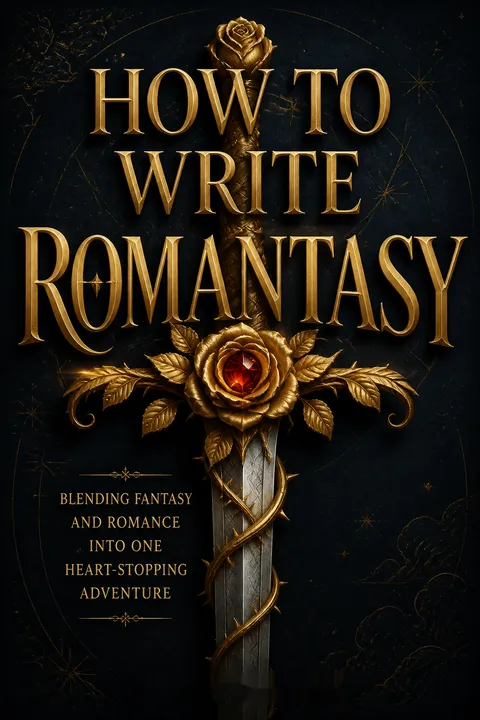
How to Write Romantasy by Jenna Moreci receives a 4.22/5 rating on Goodreads. Reviewers praise its accessible, humorous tone and practical advice for beginners writing romantasy. The book covers genre definitions, worldbuilding, character development, romantic chemistry, and plot structure with end-of-chapter summaries. Readers appreciate its inclusivity and emphasis on healthy relationships, though some note surface-level treatment of complex topics like polyamory and dark romance. More experienced writers find limited new insights, while newcomers value its foundational guidance. Most agree it's entertaining and useful for aspiring romantasy authors, with Moreci's signature wit throughout.
People Also Read



Glossary
Romantasy
Fantasy driven by romanceA story that combines a central love story with fantasy elements such as magic, supernatural beings, or an invented world. The fantasy should shape or threaten the relationship, rather than serve as background decoration. The central couple reaches a happily-ever-after or happy-for-now by the end of a standalone story or series.
Fantasy romance
Romance-forward romantasyA romantasy form that gives somewhat more emphasis to the relationship, characterization, and intimate scenes than to extensive world-building or fantasy action. Moreci describes it roughly as 60 percent romance and 40 percent fantasy, while stressing that the distinction from romantic fantasy is a loose matter of emphasis, not a strict formula.
Romantic fantasy
Fantasy-forward romantasyA romantasy form that gives somewhat more space to the fantasy plot, world, and stakes than to the romance. Moreci describes it roughly as 60 percent fantasy and 40 percent romance. The couple may develop more slowly, and the story often features high stakes. The label marks a difference in emphasis, not a rigid division.
Intimacy destination
Major romantic milestoneThe most significant new form of intimacy reached by a couple in a particular book. It may be a first kiss, a first sexual encounter, a declaration of love, or a proposal. The milestone usually occurs near the climax and gives earlier moments of attraction and closeness a clear direction.
Breaking point
Relationship-threatening low pointA major crisis in which the characters lose hope in their goal, their relationship, or both. It may involve a breakup, doubt, physical separation, betrayal, or despair. In Moreci’s structure, it occurs shortly before the climax, leaving the protagonists weakened and making the final confrontation feel more difficult.
Hard magic system
Magic with clear rulesA magic system whose rules and limitations are explained clearly enough for readers to understand what a character can do and what is impossible. Its boundaries help keep magical solutions consistent and prevent powers from dissolving the story’s conflict. The writer should understand the rules even when the narrative reveals only some of them.
Soft magic system
Magic with hidden rulesA magic system whose workings and boundaries are not fully explained to the reader. This can suit a viewpoint character who is unfamiliar with magic or preserve mystery in the story. The writer still benefits from knowing how the system works, so that magical events remain coherent rather than becoming arbitrary solutions.
Thought-dumping
Unfiltered idea collectionA brainstorming stage in which a writer records possible story elements without organizing or judging them. Notes may include characters, settings, conflicts, images, or tropes, and they do not need to form a coherent plot yet. The writer later reviews the material and selects promising ideas for a premise.
Save-a-life moment
Risk taken to protect a partnerA scene in which one romantic lead puts something important at risk to protect the other. The danger may be literal, such as facing physical harm, or figurative, such as accepting imprisonment or professional consequences. The action gives the protected character evidence that the partner is dependable.
The almost
Near defeat before victoryA moment during the climax when the protagonist appears close to failure, giving the reader reason to doubt that success is possible. An insight, renewed resolve, or help from an ally may allow the character to continue. The near-defeat makes a later victory feel more difficult and earned.
HEA/HFN
Happy ending typesHEA means happily-ever-after, a lasting, happy romantic resolution. HFN means happy-for-now, a satisfying relationship that leaves some uncertainty or future challenges. In Moreci’s account, one of these endings is part of the romance genre’s promise, although an early book in a continuing series may end with the couple separated.
Download PDF
Download EPUB
.epub digital book format is ideal for reading ebooks on phones, tablets, and e-readers.








