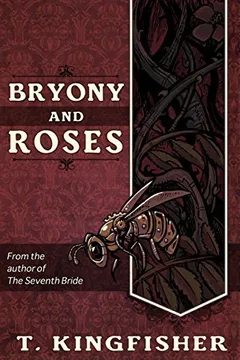


Plot Summary
The Road Through Snow
Bryony, a practical young gardener, rides home through a blizzard after visiting a friend for rutabaga seeds. The snow erases the familiar road, and she and her battered pony, Fumblefoot, are close to freezing. Then they find a stone wall and iron gates that should not exist in the royal forest. Beyond them stands a vast manor, its hedges trimmed despite the storm.
Bryony leads Fumblefoot inside, expecting danger but desperate for warmth. An unseen presence supplies a fire, hot mash for the pony, food, and a blanket. She sleeps beside the hearth and wakes alive, with her toes intact. The house has rescued her, but its impossible comforts leave her unsure what kind of place she has entered.
The rutabagas make Bryony’s arrival both ridiculous and consequential: her stubborn gardening ambition puts her in mortal danger, while her attention to practical tasks keeps panic from overwhelming her. The manor’s kindness arrives through material acts, warmth, food, shelter, rather than a reassuring human presence. That distinction matters. Bryony accepts help because she needs it, yet the doors that open by themselves and the invisible host make gratitude uneasy. Survival is not a gift without conditions; the story’s first refuge is also a mystery whose hospitality may conceal a claim.
The Rose Cannot Leave
After the storm passes, Bryony prepares to return to her sisters with a rose from the manor, hoping it will reassure them that she survived. A huge, animal-faced Beast blocks the doorway and demands the flower back. Bryony apologizes for taking it, and the Beast accepts the rose but insists she must remain in his house.
She protests that her sisters depend on her gardening, so he grants her a week at home and promises to keep them safe. He offers a chest of gold, then changes it to more usable coins when Bryony explains that sudden wealth could endanger her family. Before she leaves, the Beast asks her to come back, warning that the house will fetch her if she does not. She departs with a deadline, not freedom.
The rose changes the moral shape of the rescue. Bryony thought she had been offered shelter; the Beast reveals that her presence has become part of a bargain she did not understand. Her first response is practical, not romantic: she argues from her sisters’ dependence and evaluates whether the money would actually help them. The Beast’s adjustment from gold to smaller currency shows that he can listen, even as he refuses to release her. The resulting tension is specific: his concern for her family coexists with coercion, making kindness real but insufficient to cancel captivity.
A Garden in Exile
At home, Bryony tells Holly and Iris, her older sisters, about the Beast and the enchanted manor. Holly believes her but argues that she should stay; Iris weeps, fearing the monster will harm her. Bryony cannot explain the Beast’s coded hand squeeze or why she suspects he is in trouble.
As the week passes, she divides plants, saves seeds, and packs the garden she loves more carefully than her clothes. Holly accepts her decision and gives her a small knife; Iris embroiders seed pouches.
Bryony rides back with her plants loaded on Fumblefoot. At the gate, the Beast helps unload them and sends the pony home. Bryony watches her last living connection to her sisters disappear, then enters the grounds carrying the work and memories she can preserve.
Bryony’s return is not a simple surrender to the Beast. Her sisters’ fear is reasonable, and Holly’s willingness to support her despite disagreeing makes the choice emotionally costly rather than impulsive. Bryony’s attachment to the garden is also more than a hobby: dividing plants and saving seeds lets her carry a form of home into captivity. The farewell to Fumblefoot gives that departure a concrete cost. At the same time, the Beast’s practical help complicates Bryony’s judgment of him. She returns because she senses an unanswered need, but she does so with tools, allies’ gifts, and an intention to keep some part of her life her own.
The Manor's Pink Welcome
The Beast shows Bryony the grounds and tells her she may plant wherever she likes, though the manor has no gardeners or other residents. The house supplies a shovel, dresses, and a lavish pink bedroom, seeming eager to please her while quietly making its own choices.
Bryony begins a garden at the edge of the perfect lawn and asks the Beast about his life. At their first formal dinner, he admits he cannot discuss his past, describes reading and making clockwork, then asks her to marry him.
Bryony laughs from sheer disbelief and refuses. The next evening, he asks again. When he shows her the library, its thousands of books suggest he has lived there for at least a century. Bryony now understands that her captor is not merely strange, but trapped in a much older story.
The house’s extravagance and the Beast’s awkward courtship create a comic surface that does not erase the imbalance between them. Bryony can reject his proposal, but she cannot yet choose to leave, so the repeated question becomes a test of how much agency survives inside confinement. Her laughter is a defense against the old social script that once measured her worth by marriage prospects. The library then alters her sense of time: a century of books implies that the Beast’s condition is not temporary. The story lets humor expose the absurdity of the arrangement without making its coercion harmless.
Sod Beneath the Lawn
Bryony insists on digging and tending her garden herself, because a plot conjured and maintained by the house would not feel like hers. The Beast joins her, strips sod, and learns how to plant, though his oversized holes threaten the herbs.
Their work becomes a daily routine, and Bryony grows comfortable enough to tease him. When she asks for a shovel large enough for him, he reveals that he was born human, then stops as the manor’s listening silence presses in.
Soon Bryony notices that the garden has no bees, leaving flowering vegetables without pollinators. The Beast says he may be able to help, but gives no explanation. His interrupted confession and the missing bees turn their shared work into a way of noticing what the house will not let him say.
The garden becomes a small territory where Bryony can exercise competence rather than merely receive favors. Her refusal to let the house do the work is a claim to authorship: effort gives the plants a relationship to her that conjured abundance cannot. The Beast’s participation creates intimacy through labor, not through a sudden change in his appearance or status. His interrupted statement also links the manor’s silence to the limits of his speech. Bryony’s attention to absent bees shows how her practical knowledge becomes investigative power. She reads the garden as evidence, then waits to see what the Beast can safely make of it.
A Bee Made of Brass
The Beast returns with a tiny mechanical bee he has built to pollinate Bryony’s vegetables. Its wire legs brush pollen from flower to flower, and Bryony embraces him, moved that he spent his time making something for her garden.
Their closeness grows through evenings in the library, shared books, and card games, while Bryony continues refusing his nightly proposal. Her sleep, however, becomes troubled by dreams of a handsome green-eyed stranger who asks for help but will not explain what he needs.
Bryony wakes with the stranger’s touch lingering in her body and cannot tell whether the dreams are ordinary fantasies or part of the manor’s magic. The bee gives her a tangible gift; the dreams introduce a second presence whose attention feels intimate and increasingly difficult to trust.
The mechanical bee is a gift shaped by the Beast’s limitations and skill. Unlike the house’s effortless abundance, it depends on design, winding, and repeated care, so it echoes Bryony’s belief that making something matters. Her embrace marks a genuine shift in trust, but it does not settle the question of marriage. In parallel, the green-eyed stranger offers desire without context or accountability. The contrast is psychologically pointed: the Beast’s affection is constrained and awkward but grounded in shared activity, while the stranger’s dream intimacy bypasses ordinary judgment. Bryony’s uncertainty makes her own longing part of the mystery rather than proof that the visitor deserves her trust.
Footsteps Behind Curtains
Bryony hears someone cross her bedroom at night, disturb her papers, and open a window. The Beast doubts what the unseen visitor might be but does not dismiss her fear. On a later night, Bryony hears the footsteps again and rushes to confront the intruder, only to stab the Beast in the shoulder when he is guarding her door.
She cleans the wound, and he assures her that he believes she heard someone. As they discuss the damaged papers, he hints that others may once have lived in the manor and admits, under her questioning, that he used to be human.
Each time he nears a forbidden truth, the house’s magic interrupts him. Bryony begins to understand that the Beast’s evasions may be enforced, not chosen, and that the footsteps remain unexplained.
The intruder turns Bryony’s fear into a test of trust. Her knife injures the one person who has been protecting her, but the Beast responds without retaliation and lets her tend the wound. That exchange moves their relationship from guarded politeness toward mutual reliance. More importantly, his insistence that he believes her counters the possibility that the house can isolate her by making her doubt her own perceptions. His involuntary silences suggest that information is being controlled by an external force. The footsteps therefore matter twice: they threaten Bryony physically and expose the limits of the Beast’s apparent authority inside his own home.
The House's Broken Books
Exploring an unfamiliar wing, Bryony finds a book filled with repeated fragments of a shopping list, as if the house can imitate writing without understanding it. Nearby rooms hold dead birds and other unsettling collections.
In the Beast’s workshop, she sees his clockwork creations and discovers that he has marked references to birch trees and wild roses in a gardening book. The clues sharpen when a rose runner grows far across her lawn and the Beast reacts with sudden alarm.
Bryony cuts back the roses strangling the birch in the courtyard, then dreams of a silver-haired woman who warns her to be careful whom she trusts. The house, the Beast, and the dream visitor all seem to be hiding different parts of the same history, while Bryony’s gardening knowledge gives her a way to read its signs.
Bryony’s exploration turns domestic details into evidence. The broken book reveals that the house can reproduce words without grasping their meaning, a limitation that may explain both its confused hospitality and the failure of written messages. The birch and rose clues connect the Beast’s private warnings to physical damage in the courtyard. By cutting the rose away from the tree, Bryony acts before she understands the stakes, guided by ordinary plant care rather than prophecy. The silver-haired dream visitor adds another voice but not a solution. Knowledge accumulates in fragments, and Bryony must interpret each fragment without assuming that friendliness guarantees honesty.
Blood in the White Room
Bryony’s dreams of the green-eyed man grow more vivid, while a stranger repeatedly enters her room at night. After finding a white bedroom marked with blood, she breaks down and asks the Beast what happened there. He confesses that a merchant once took a rose from the manor and that he forced the man’s daughter to stay, hoping she could free him from his curse.
The young woman, Beauty, feared him and eventually died by suicide. The Beast admits he could have let Bryony go sooner, and the house erupts, hurling furniture at them. Afterward, he gives Bryony a silver ring that can return her to the manor before its tiny gear completes a turn. He sends her home, expecting her to forget him, but leaves the choice open.
The revelation makes the Beast’s past harm impossible to soften with his later tenderness. He once repeated the coercive mistake that now confines Bryony, and Beauty’s death gives that mistake a human cost. His admission does not absolve him, but it gives Bryony the truth she needs to judge him. The house’s violent response demonstrates why he has been unable to speak plainly and raises the danger beyond interpersonal distrust. The ring then converts an abstract promise of freedom into a timed choice. Bryony can leave, but returning will require an act of will rather than obedience to the house.
The Ring Turns Homeward
Bryony reaches home after what feels like months away. Holly is overjoyed to see her, while Iris has married the weaver’s son and still mourns her missing sister. As Bryony recounts the manor, Holly points out that the Beast repeatedly asked for one thing: marriage.
Bryony realizes she never answered because she feared what the magic might do. The ring’s gear is nearly complete, so she presses it and calls herself back to the Beast. The return is violent. She wakes in her pink bedroom as the green-eyed stranger visits, revealing that he is the wild rose spirit and has been entering her dreams to manipulate her.
When he tries to claim her, Bryony strikes him with the ring, burning his face and driving him out through the window. The Beast is still in danger, and Bryony has returned too late to hesitate.
Holly’s blunt reading of the proposal gives Bryony a new way to understand the Beast’s repeated question, but it does not make her choice automatic. Bryony returns before she has resolved every fear because the ring’s deadline forces her to act on what she now knows. The green-eyed stranger’s reveal reframes earlier desire as manipulation: his intimacy was designed to make Bryony serve his purpose while withholding the truth. The ring’s injury gives her first effective defense against him. Her return is therefore not simply a romantic gesture. It is a decision to face the danger with clearer judgment, even though she has no assurance that the Beast can still be saved.
The Bee Finds the Beast
The wild rose sends thorned stems from beneath Bryony’s bed, but she cuts herself free with her pruning shears. The manor rearranges its halls, and the rose fills the windows with dead, twisted figures to terrify her.
Bleeding and barefoot, Bryony follows the clockwork bee, which leads her through a hidden stairway. She hacks through the rose blocking the route and reaches the courtyard, where the Beast hangs bound in the same thicket that has strangled the birch. Bryony cuts him down.
The rose’s false monsters slow her, but an apparition of the poet Matthias Irving distracts them long enough for her to reach the Beast. Together they escape to Bryony’s garden, which has grown into a wall of herbs and giant vegetables. Its plants hold the rose back and shelter them.
Bryony survives this passage by combining skills that the manor’s spectacle cannot erase. The rose weaponizes her childhood fear of what waits under a bed, then uses gruesome images to make her look away from the route forward. Her shears, chosen for real gardening rather than heroic combat, are more useful than the knife she carried earlier. The clockwork bee and Irving’s imagined presence help her keep moving when fear threatens to paralyze her. Most crucially, her garden becomes a collective defense: plants she tended through ordinary labor now protect both her and the Beast. Care has become material resistance.
Birch and Rose at Last
Inside the garden’s shelter, the Beast explains that he was once human, wounded while hunting, and nursed by a birch spirit who loved him. When he rejected her, she sought help from an old wild rose spirit, surrendering her power so it could curse him and possess the manor.
The birch became part of the house, while the rose controlled it and fed on her strength. Bryony accepts the Beast’s proposal, and her answer breaks the enchantment binding him.
The silver-haired woman appears as the birch spirit and chooses to spend her remaining power destroying the rose, even though the manor will fall with it. The Beast remains a Beast but will live a mortal span. The birch embraces the rose, and the manor collapses as the spirits’ long conflict ends.
The explanation complicates the fairy-tale pattern of a monster waiting for love to redeem him. The Beast’s original arrogance helped create the wound, but the birch spirit’s response and the rose’s predation turned rejection into generations of imprisonment. Bryony’s acceptance matters because it is freely chosen after she has been allowed to leave; it is not the same as the earlier captivity that produced Beauty’s tragedy. The birch’s final act is also not a magical reward without cost. She chooses an ending that releases the Beast and destroys the house that has held them all, accepting her own disappearance as part of that release.
Seeds Beyond the Ruins
Bryony wakes beside the Beast in her overgrown garden, with Holly nearby and the manor reduced to rubble. The Beast retrieves the tools he made in his workshop, while Bryony gathers seeds and salvages the plants that defended them. She leaves some to reseed among the ruins, hoping the lawn will become a wild garden.
Holly remains suspicious of the Beast but accepts that Bryony has chosen him and promises to handle any villagers who object. The Beast worries that people will not welcome him, yet Bryony trusts her sisters and community to make room for him. She and the Beast leave the broken gates together, carrying clockwork tools, seeds, and a future built through shared work rather than the house’s manufactured comforts.
The ending answers the opening’s fear of losing home without restoring Bryony to her former life unchanged. She does not recover the manor, and she does not leave her garden behind as if it were disposable. Instead, she carries seeds and living plants into a future where care will again require labor. The Beast’s fear of village rejection keeps the resolution from becoming effortless, while Holly’s protective presence offers a practical counterweight to that uncertainty. The ruined house marks the end of a system that supplied everything except freedom. What Bryony and the Beast take with them is smaller, earned, and genuinely theirs.
Analysis
Bryony and Roses makes the familiar fairy-tale bargain morally unstable by giving its captive a practical life worth protecting. Bryony is not waiting to be transformed by luxury or rescued from work; she wants her garden, her sisters, and the right to decide what happens to her. That insistence gives the story’s romance its necessary pressure. The Beast’s kindness is meaningful, but his captivity of Bryony echoes an earlier harm, and affection cannot erase that history. Bryony must leave before she can choose to return.
The novel also contrasts two forms of abundance. House can conjure meals, gowns, tools, and perfectly tended grounds, yet Bryony distrusts comforts that require no effort and therefore offer no authorship. Her garden, by contrast, is slow, imperfect, and hers. The Beast’s clockwork work belongs to the same moral register: making is a way to claim a self inside a life where magic has made ordinary agency difficult. The eventual defense against the rose grows from this shared commitment to labor.
The story’s central danger is not simply monstrous appearance. Bryony learns to trust the Beast as his conduct becomes legible, while the beautiful dream visitor conceals a predatory purpose. This reversal makes desire an unreliable guide when it is detached from honesty and consent. The ending does not cure the Beast into conventional beauty or restore the manor’s comforts. Instead, the birch and rose conflict ends at real cost, and Bryony and the Beast carry seeds, tools, and uncertainty into a mortal future. Their survival depends not on escaping work or consequence, but on choosing one another after freedom has become possible.
Review Summary
Bryony and Roses is widely praised as a witty, charming Beauty and the Beast retelling featuring a practical, sarcastic heroine and a likeable, humorous Beast. Readers appreciate the slow-burn romance built on communication and mutual respect, the sharp banter between characters, and the gothic atmospheric elements. The gardening focus and Bryony's no-nonsense personality are recurring highlights. The ending — in which the Beast remains transformed — divides readers, with some applauding its subversion of convention and others finding it off-putting. Overall, most reviewers consider it a standout fairy tale retelling.
People Also Read

Characters
Bryony
Practical reluctant heroineBryony is the youngest of three sisters and a resourceful gardener whose first instinct is to notice what needs doing. She uses humor to steady herself in frightening situations, but beneath the jokes is a fierce attachment to her family and to the work that gives her independence. Having grown up wealthy and then lost everything, she is suspicious of sudden riches and unimpressed by social expectations about beauty or marriage. Her knowledge of plants shapes how she reads the manor and its dangers. Bryony is not fearless; she feels fear intensely, then acts with the tools and judgment she has. Her loyalty can draw her into risk, but it also makes her attentive to who is being harmed.
The Beast
Reclusive manor masterThe Beast is a huge, animal-featured man who lives alone in an enchanted manor and hides behind a sharp tongue, formal manners, and a deep reserve. He is intelligent and inventive, especially with clockwork, but his physical form makes ordinary social gestures awkward. His repeated marriage proposals reveal both his hope for companionship and his failure to understand what another person needs in order to choose freely. He is capable of tenderness, humor, and practical help, yet he also holds power over Bryony’s freedom. That contradiction defines their relationship: kindness matters, but it cannot by itself repair coercion or earn trust.
Holly
Clear-eyed elder sisterHolly is Bryony’s capable older sister, cheerful in manner and keenly perceptive beneath it. When the family lost its wealth, she responded by taking on work rather than surrendering to despair. Her loyalty is practical and sometimes fierce: she worries about Bryony, challenges her decisions, and prepares her to defend herself. Holly is also willing to laugh at the family’s misfortunes, a habit that helps her resist shame. She understands Bryony well enough to recognize when affection is clouding her judgment, but her protectiveness does not become control. Her directness gives Bryony a grounded voice from home even when they are apart.
Iris
Tender anxious sisterIris, the middle sister, is gentle, artistic, and prone to worry. She embroiders carefully and values the comforts of home, but her fear can make change feel unbearable. Bryony and Holly love her while sometimes underestimating her practical capacities. Iris’s gifts show that her softness is not passivity: she notices what Bryony will need and puts her skills to use. Her close bond with her sisters shapes Bryony’s sense of responsibility, while her anxieties make separation especially painful for all three.
House
Enchanted manorHouse is the manor’s responsive, watchful presence. It opens doors, produces food and clothing, cleans rooms, and seems eager to anticipate Bryony’s preferences, though its understanding is uneven. Its comforts can feel generous, even intimate, but the building also controls movement and reacts badly when certain subjects arise. Bryony gradually learns that a place can seem caring without being safe. House functions almost like a relationship in its own right: it offers attention and abundance, yet its affection is entangled with power.
Fumblefoot
Stubborn rescued ponyFumblefoot is Bryony’s slow, good-natured pony, scarred by a hard life as a cart animal. He is clumsy, difficult to hurry, and sometimes oblivious to danger, but Bryony treats him as a companion rather than a possession. His presence connects her to home and makes her care visible in action. Even when his limitations frustrate her, Bryony defends his dignity and remembers how he came to belong to the family.
The green-eyed stranger
Dream-borne tempterThe green-eyed stranger appears in Bryony’s dreams as an alluring and emotionally intense figure. He offers closeness while refusing to explain what he wants, leaving her desire tangled with unease. His changing manner, from persuasive to angry, makes him difficult to trust even before Bryony understands his purpose. As a presence in her private sleep, he tests the boundary between longing and manipulation.
The silver-haired woman
Cryptic dream guideThe silver-haired woman visits Bryony in a vivid dream and offers warnings without giving a clear account of who she is. Her aged voice and youthful face make her seem suspended between different kinds of time. She recognizes Bryony’s practical gifts and urges caution, but cannot provide the answers Bryony wants. Her brief appearances deepen the sense that the manor’s history has more than one witness.
Matthias Irving
Beloved bad poetMatthias Irving is a long-dead poet whose earnest, often clumsy verses Bryony discovers in the manor’s library. His work becomes an unlikely source of comfort and amusement during her isolation. Bryony imagines him as a companion and reads his poems aloud, turning an old book into a small defense against loneliness.
Elspeth
Village seed-sellerElspeth is Bryony’s friend in a neighboring village. Her offer of hardy rutabaga seeds gives Bryony a reason to travel through the woods, setting the story in motion. She belongs to the practical network of neighbors and gardeners on which Bryony’s life depends.
Gont
Village blacksmithGont is the blacksmith who makes a small knife for Bryony through Holly’s influence. He is a practical presence in the sisters’ village life and is associated with Holly’s romantic prospects. His craft gives the family a useful tool at a moment when Bryony is preparing to face the unknown.
Bryony's father
Proud fallen merchantBryony’s father was once a wealthy merchant who wanted his daughters to marry into noble families. His ambition and risky decisions shaped the family’s fall from privilege, though Bryony remembers him without turning him into a saint. His absence leaves his daughters to build a different life through work and mutual support.
Plot Devices
The enchanted manor
Comfort that confinesThe manor opens its doors, supplies meals and clothes, tends its grounds, and rearranges itself around its occupants. Its generosity makes Bryony’s captivity feel less immediately brutal, but the house also restricts movement and suppresses the Beast’s attempts to speak about its past. Its partial literacy explains why it can reproduce phrases without understanding a book. As the story develops, the house becomes more than a setting: its comforts, silences, and violence reveal a struggle inside the magic that governs it.
The silver ring
A timed returnThe Beast gives Bryony a silver ring with a tiny gear that turns toward a green stone. It allows her to travel back to the manor, but only before the mechanism completes a circuit. The ring makes her choice concrete and time-sensitive. Later, its silver also harms the green-eyed stranger, giving Bryony a defense she did not know she possessed when she accepted it.
The clockwork bee
Care made mechanicalThe Beast builds a small brass bee whose brush-like legs transfer pollen between Bryony’s flowers. It solves the practical problem of a garden without natural pollinators, but its emotional importance is greater: the Beast spends his own skill and effort to support work Bryony insists on doing herself. The bee later guides Bryony through the shifting manor, turning a thoughtful gift into a practical aid in her escape.
Bryony's garden
A living defenseBryony brings plants from home and cultivates them by hand on the manor grounds. The garden preserves her independence in a place where nearly every comfort is supplied by magic. Its herbs, vegetables, and root systems later grow into a barrier against the wild rose. The plants’ defense pays off the story’s repeated emphasis on tending, soil, seeds, and patience: Bryony’s ordinary work becomes the means by which she and the Beast survive.
Rose and birch
A divided enchantmentThe red roses and the white birch recur throughout the manor as physical clues to the magic’s history. The roses choke the tree, spread through the house, and appear in Bryony’s dreams, while the birch is tied to the manor’s gentler forms of care. Bryony’s gardening knowledge first makes her notice the damage, then helps her understand that the two plants are bound to different powers. Their relationship supplies both the story’s mystery and its final means of release.
About the Author
Other books by T. Kingfisher





Download PDF
Download EPUB
.epub digital book format is ideal for reading ebooks on phones, tablets, and e-readers.








