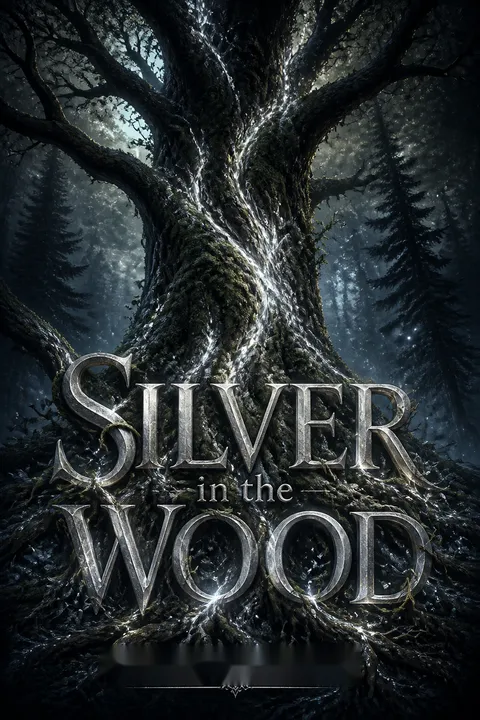


Plot Summary
Rain Shelters the Wild Man
Tobias Finch has guarded Greenhollow Wood for centuries, though the villagers know him only as a frightening wild man. When Henry Silver, the young new owner of Greenhollow Hall, stumbles through an autumn storm, Tobias brings him into his cottage, lends him dry clothes, and gives up his bed. Henry knows the local stories about a giant who eats maidens, but finds the real Tobias less alarming than the rumors.
Pearl, Tobias's unbothered cat, settles in Henry's lap as the men share a quiet night. Henry's teasing invitation to share the bed passes over Tobias's head as mere politeness. By morning, Henry is on his way to the Hall, while Tobias is left wondering how long it has been since anyone tried to charm him.
Their first encounter establishes intimacy through practical care rather than grand declarations. Tobias can shelter a stranger more easily than he can recognize that stranger's desire, a lapse shaped by centuries of solitude. Henry, meanwhile, approaches the woods as a subject to study but responds to Tobias as a person. The cottage becomes a threshold between their habits: Henry brings curiosity and social ease into a life organized around watchfulness, while Tobias offers warmth without yet allowing himself to imagine companionship. The small missed flirtation matters because it makes their later closeness feel earned, and because it reveals how thoroughly Tobias has mistaken endurance for a complete life.
Blood in the Coppice
Tobias tracks an angry, uprooted dryad before she can attack the woodsmen sleeping in a cabin. When she refuses his offer of a new tree and turns on him, he traps and kills her with his crossbow, mistletoe, and the woodsmen's circle of stones. The men emerge to the sight of the dying spirit and mistake Tobias for the threat; Charlie Bondee fires a pistol, lodging a bullet in Tobias's thigh.
Tobias escapes into the forest, warns the young dryad Bramble not to retaliate, and reaches his cottage. He treats the wound himself, then lies feverish for days. Henry hears that the wild man has been shot, follows the wood's misleading paths until it reveals the cottage, and carries Tobias to the Hall for a doctor.
Tobias's injury exposes the cost of being the wood's unseen caretaker. He protects the woodsmen from a supernatural danger, yet their fear turns his rescue into a threat, and he accepts the wound rather than punish the person who caused it. His choice to restrain Bramble extends that ethic: protecting the forest includes preventing its inhabitants from taking revenge on people. Henry's arrival reverses the first meeting's care. Tobias once sheltered Henry from weather; now Henry insists on bringing Tobias into human institutions, where a doctor can help him. Their bond grows through reciprocal action, even while Tobias's instinct is to suffer privately.
Maps of a Vanished Wood
At the Hall, Henry discovers Tobias has no rent record for the woodland cottage and invents a gamekeeper position to explain his presence to the staff and Henry's formidable mother. As Tobias heals, Henry visits nightly to read folklore aloud; later he shows him maps tracing Greenhollow back to a far larger ancient forest.
Tobias recognizes the landscape beneath Henry's scholarship, though he lets Henry believe he is only an interested listener. When his leg permits, Tobias returns to his cottage, where Bramble helps him plant the walking stick Henry gave him as a sapling.
He and Henry settle into visits about local customs and legends. Henry's research is affectionate as well as academic, but Tobias still cannot decide whether his attention is friendship or courtship.
Henry's maps offer Tobias an unexpected form of recognition: scholarship describes a woodland Tobias knows through bodily memory, but cannot make legible to anyone else. Their different kinds of knowledge do not cancel each other. Tobias understands the living terrain; Henry gives its history a human audience. At the same time, Henry's invented job shows that his curiosity does not prevent practical compassion. Tobias's return to the cottage restores his physical connection to the wood, yet planting Henry's walking stick lets him carry a trace of their relationship into that refuge. The sapling quietly complicates his belief that intimacy must mean abandoning the life he already has.
Fabian's Spring Returns
Henry's research uncovers the legend of Fabian Rafela, a robber captain called Red Fay, and a song linked to Tobias's old bandit name, Bloody-Handed Toby.
The tune pulls Tobias back four centuries, to the night soldiers hunted Fabian's gang: Fabian struck Tobias with a stone at the old shrine, and Tobias later woke beneath the oak, changed and bound to Greenhollow. Each spring, Fabian returns as the Lord of Summer, accompanied by the dead.
Tobias tells Henry that the village's Spring Fair once distracted this dangerous spirit, who preys on handsome unmarried youths, and urges him to stay away from the wood. Henry treats the account as folklore. Afraid to expose his own history, Tobias sends him away and asks Bramble to keep him out until summer passes.
The past enters the present not as a detached history lesson but as a song Tobias cannot hear innocently. Henry's scholarly interest accidentally touches the wound Tobias has kept buried: his survival is inseparable from Fabian's violence and from the years of watching him return. Tobias's warning is therefore both protection and concealment. He gives Henry enough information to stay safe, but not enough to understand why Tobias is frightened or what their intimacy risks. That withholding is psychologically credible, if costly. Tobias has learned to manage danger through solitary competence, and he mistakes silence for control even when the threat is attached to someone he wants near him.
Silver Taken at Equinox
On the Spring Equinox, Henry enters the wood despite Tobias's warning, seeking company after his mother arrives unexpectedly at the Hall. Tobias hides Henry in the cottage and uses the woodland's shifting paths and mist to conceal him. Fabian is already inside.
He recognizes Henry as an offering and dismisses Tobias's plea to choose someone else. When Tobias reaches for his flint knife, Fabian breaks it in his hand, then leads Henry away into the trees. Henry is dazed but manages to ask Tobias to send his notebook to his mother.
By morning, Fabian and Henry are gone. Tobias leaves Henry's coat and notebook beside the sapling, then retreats to his cottage, believing Fabian will be occupied with Henry and that there is nothing more he can do.
This section
The Oak Must Fall
Henry's mother, Adela Silver, finds Tobias with her son's notebook and identifies him as the legendary wild man. A practical folklorist who hunts supernatural threats, she concludes that Fabian and Tobias are both bound to Greenhollow's ancient oak.
Since Fabian has taken Henry, she proposes cutting the tree down to reach him. Tobias admits the risk but agrees, and Adela brings Charlie Bondee to help with the saw. They strip the oak's branches and fell its enormous trunk, which crashes through Tobias's cottage.
The destruction does not end the wood's power: Tobias feels life still beating in the roots and hauls the stump from the ground. Beneath it, the opened earth reveals a dark hollow, foul with old magic. Adela and Tobias descend to find what the tree concealed.
Adela changes the scale of the rescue by treating local legend as a practical problem rather than a reason for fear. Her decisiveness can look harsh, especially when the plan requires destroying the tree that has sheltered Tobias's home for centuries. Yet she is acting under the pressure of a missing son, and Tobias recognizes that protecting his own refuge cannot outweigh the chance to save Henry. Charlie's return also revises the meaning of their earlier encounter: the man who shot Tobias now works beside him. The felled oak destroys Tobias's familiar dwelling but reveals that the apparent heart of the wood hides a deeper, more corrupt history.
An Altar Beneath Greenhollow
In the hollow, Tobias and Adela find heaps of human and horse bones around an ancient altar. Fabian's dried corpse lies on the stone, holding Henry, who appears asleep. Adela pulls her son free, but Fabian's presence takes over Henry's body. Tobias attacks with his remaining flint knife, and Adela wounds Fabian with her silver pistol.
Bramble and four other dryads then drive roots through the altar, breaking the stone and forcing the buried dead back into the earth. The ghosts disperse as the wood reclaims the bones. Fabian turns on Bramble, withering her, until Adela shoots him in the head. Fabian's stolen shape collapses into dust. The dryads survive, but Tobias leaves the hollow with a wounded shoulder and Henry's fate still uncertain.
The climax resolves the supernatural conflict through several forms of power working together. Tobias's knowledge lets him recognize that the oak is alive and that the evil beneath it is not ordinary decay; Adela brings a weapon and a parent's refusal to yield; the dryads repair the land by breaking the altar and returning the dead to soil. No one can accomplish the rescue alone. The story also distinguishes natural death from the horror of preservation without release: the buried bodies have been made into fuel for a system that refuses to let them rest. Fabian's destruction interrupts that system, but the cost is immediate and personal, especially for Tobias, who has to face the loss of both home and beloved friend.
A Year Beyond the Wood
Tobias returns to the Hall and grieves alone in the room where Henry once read to him. Adela searches for a way to recover her son, but cannot find the place where the oak stood. When she receives reports of other supernatural threats, she brings Tobias along to handle them.
He helps her defeat a nixie, then takes a room and wages in her London home, where he hunts monsters across a world transformed by trains, gaslight, and unfamiliar streets. At first he moves through the city as if already dead, sharpening knives whenever Henry's memory intrudes.
Gradually, he buys small human keepsakes and begins trimming his hair. When the next March comes, Adela returns to Greenhollow Hall. Tobias follows, though he still cannot bring himself to enter the wood.
This section's repeated lines are
Pearl Finds the Way Back
After Adela visits the wood on the Equinox and asks Tobias to seek Henry's remains, he searches alone by moonlight. He finds no clearing, until Pearl appears and leads him to a familiar patch of trees. Henry steps from the shadows, alive and newly bound to Greenhollow. He explains that he woke at midwinter and has been learning how the wood's time distorts ordinary hours.
Tobias, shocked by Henry's sudden return, tells him about the year he spent away. They kiss, then walk toward the Hall so Henry can face his mother. Bramble tells Tobias that Henry chose the wood, while Tobias had once been trapped in it, and urges him to live among people as well as return to the forest. Tobias accepts both attachments instead of choosing only one.
The ending does not restore the old arrangement. Henry returns changed, and Tobias cannot simply resume the isolated life he had before the oak fell. Pearl's presence makes the reunion feel grounded in habit and affection, while Henry's new bond with the wood gives him a form of understanding that Tobias never had at first. Bramble's distinction between being trapped and choosing to belong reframes Tobias's identity: his connection to Greenhollow need not erase his human desires. The final movement toward Adela matters as much as the kiss, because love here requires family and apology, not merely escape into private romance. Belonging becomes plural rather than exclusive.
Analysis
Silver in the Wood asks what it means to belong to a place without being imprisoned by it. Tobias's centuries of service have made him indispensable to Greenhollow, but that usefulness has also narrowed his idea of life. He knows how to kill a monster, tend a wound, and refuse revenge; he does not know how to accept care or imagine that desire might still be available to him. Henry's arrival unsettles that arrangement, not because he brings a superior explanation of the forest, but because he makes Tobias's isolation visible as a choice that can be reconsidered.
The novel's folklore offers a second argument about knowledge. Henry's research gives names and histories to the wood, but his confidence in stories as objects to collect repeatedly leaves him unaware of their immediate stakes. Tobias has the opposite limitation: he knows what the legends mean through experience, yet withholds the knowledge that could protect Henry. Their failures are connected. One studies without fully believing; the other believes without fully explaining. The rescue requires scholarship, embodied knowledge, practical skill, and the dryads' power to work together.
The old oak concentrates the story's central ambiguity. It shelters Tobias and anchors his identity, yet it also conceals a history of violence that cannot be healed by leaving it undisturbed. Felling the tree destroys home before it makes renewal possible. The novel does not treat nature as automatically benevolent: the wood can shelter, mislead, and enable harm. Its restorative force depends on living beings choosing to break an old system and let the dead return to the earth.
By the end, Tobias does not have to choose between being a person and being part of the forest. Bramble's distinction between being trapped and choosing to belong lets him reinterpret his past without denying its pain. His future with Henry is not an escape from Greenhollow, but a wider life that includes both human attachment and the wood he has guarded.
Review Summary
Silver in the Wood is a atmospheric, lyrical novella blending folklore, queer romance, and magic. Many readers praised the lush forest setting, beautiful prose, and the compelling relationship between Tobias and Henry. Some found the short length limiting for character development, while others felt it was perfectly paced. The story's themes of rebirth, loneliness, and ancient magic resonated strongly with most readers. Overall, it was widely appreciated for its enchanting fairy tale quality and evocative writing, though a few wanted more plot development.
People Also Read


Characters
Tobias Finch
The wood's solitary keeperTobias is a huge, long-haired guardian of Greenhollow Wood, a man whose strange bond with the forest has kept him alive for centuries. He patrols its borders, protects its people from dangerous creatures, and treats its spirits with a mixture of patience and hard-earned caution. His intimidating appearance hides a gentle, disciplined nature: he restrains his anger, gives dangerous beings chances to turn aside, and rarely asks anyone to care for him. Solitude has become both shelter and habit, leaving him poor at recognizing affection and reluctant to imagine a life beyond his duties. His central tension is not whether he loves the wood, but whether that love can coexist with human closeness.
Henry Silver
The curious folkloristHenry Silver is a young folklorist and amateur archaeologist who buys Greenhallow Hall to investigate the local stories surrounding its wood. Curious, sociable, and easily absorbed in research, he approaches legends as puzzles to solve, even when the people around him recognize dangers he has not yet understood. His polished clothes and scholarly habits contrast with Tobias's rough life, but Henry is generous in practical ways: he helps Tobias recover, reads to him, and returns because he enjoys his company. His flirtation is playful rather than forceful, and his willingness to pursue his own questions gives him independence from his mother's plans. Henry is drawn both to the mysteries of Greenhollow and to the person guarding them.
Fabian Rafela
The beautiful bandit lordFabian Rafela, remembered in local stories as Red Fay, was a robber captain whose life became entangled with the legends of Greenhallow Wood. Tobias knew him long before the villagers turned their history into songs, and that personal past gives Fabian's reputation an intimate, unsettling dimension. He is remembered as charismatic and clever, a man able to make danger feel like an invitation. His relationship with Tobias carries the complications of loyalty, admiration, and harm, while the legends surrounding him blur the line between human ambition and supernatural power. Fabian represents the seductive promise of mastering the world without accepting its limits.
Adela Silver
The practical monster hunterAdela Silver is Henry's mother, a sharp, experienced folklorist who deals directly with supernatural threats rather than only recording them. She is brisk, commanding, and difficult to intimidate, with a habit of turning fear into a list of practical questions. Her concern for Henry can make her controlling, but it also drives her to take risks when ordinary explanations fail. She treats Tobias as a source of knowledge and a potential ally, not as a local curiosity, and expects him to act when someone is in danger. Adela's disciplined competence offers a human counterweight to Tobias's solitary guardianship.
Bramble
The thorn-hearted dryadBramble is the youngest and most hot-tempered of the dryads who live in Greenhollow. Her strength comes through thorns, roots, and the slow persistence of growing things. She cares deeply for Tobias, guards him when he is injured, and is quick to challenge his tendency to dismiss his own needs. Bramble does not think like a human, and her direct observations often expose assumptions Tobias has mistaken for truth. Her loyalty is fierce, but it is not possessive: she wants Tobias to choose how he belongs, even when that choice takes him beyond the trees.
Charlie Bondee
The wary woodsmanCharlie Bondee is a local woodsman whose fear of the Wild Man leads him to make a dangerous mistake. He is not cruel, but superstition and panic shape his first response to Tobias. Later, his practical knowledge of timber and skill with tools make him useful when the danger becomes clearer. Charlie's presence shows how a community can both depend on the forest and misunderstand the person who protects it.
Pearl
Tobias's watchful catPearl is Tobias's calm, self-possessed cat, equally willing to sleep beside a stranger or ignore a crisis. Her familiar presence anchors Tobias to the cottage's everyday routines. She also acts according to her own instincts, offering companionship without demanding that he explain himself.
Plot Devices
Greenhollow's living bond
A forest that keeps timeGreenhollow is not a fixed backdrop. Paths move, the cottage can be hidden from strangers, and Tobias experiences time as a slow, green current when he is deep in the wood. The forest also gives him strength and responds to the creatures that belong to it. This shifting bond explains why ordinary maps capture only part of the place and why Tobias cannot simply treat it as property. The wood's rules shape both the supernatural dangers and the characters' sense of belonging. When Henry becomes connected to it, the same device that once isolated Tobias opens a new possibility for shared life.
The Spring Equinox
A seasonal danger signalGreenhollow's local Spring Fair is more than a village custom. Its festivities are said to keep the Lord of Summer entertained as he returns to the wood, while marriages before the season offer young people protection from his attention. Tobias knows the tale as a recurring danger, not an abstract superstition, and tries to use it to keep Henry away. The equinox gives the story a clear seasonal rhythm: the threat gathers as spring arrives, and Tobias's preparations become increasingly urgent. It also connects private choices, such as Henry's decision to visit, to an old communal calendar.
The Ancient Oak
A root-bound supernatural anchorThe old oak stands at the heart of Tobias's life in Greenhollow. His cottage remains near it even as the forest shifts, and he draws strength from the same living system as the trees and dryads. Adela's investigation turns the oak into the focus of a rescue plan, while its roots conceal the evidence of a much older evil. The tree therefore works on two levels: it is Tobias's home and source of belonging, but also the physical anchor around which the hidden history of the wood has accumulated. Cutting it down forces the characters to confront what has been buried beneath their familiar landscape.
Songs and folklore
History disguised as legendHenry gathers maps, songs, and village stories in the belief that folklore preserves clues to the past. His research introduces the legends of the Wild Man, the bandit Fabian Rafela, and the Lord of Summer, while a ballad unexpectedly stirs Tobias's own memories. The songs are not reliable records in a simple sense: they blur fact, invention, and the changes made by generations of tellers. Yet they allow Henry to approach truths he does not know how to recognize, and they give Tobias a way to decide what he can bear to share. Scholarship and lived memory gradually become complementary forms of evidence.
The Greenhollow Duology Series
Download PDF
Download EPUB
.epub digital book format is ideal for reading ebooks on phones, tablets, and e-readers.








