

Key Takeaways
Treat your instincts as inherited starting points, not modern instructions.
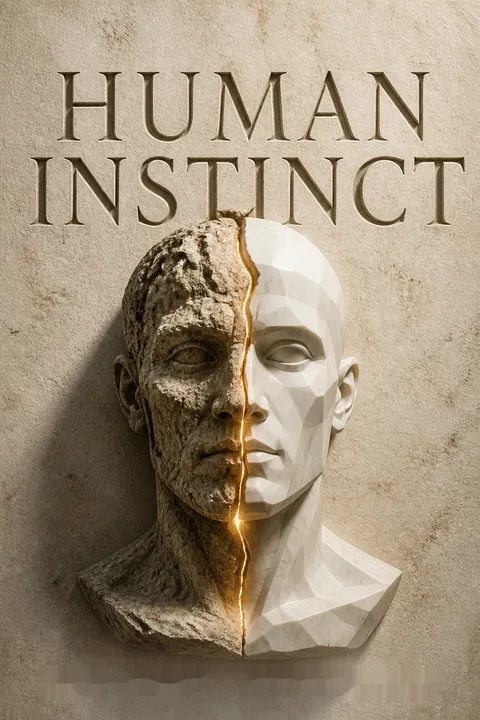
An ancient mental inheritance. Winston’s central claim is that humans carry psychological tendencies shaped over millions of years, especially by life on the African savannah. Instinct means inherited parts of behavior, desire, and thought, though learning and culture influence how they appear. A quick fear response, competition for status, and attachment to family may have helped ancestors survive, even when those impulses fit modern life poorly.
Genes meet experience. The book rejects a simple choice between nature and nurture. Genes contribute to the developing mind, but social experience helps build its capacities and channels its tendencies. Winston compares genes to a script that can be revised in performance: inherited patterns matter, but they do not dictate every action. The challenge is to explain behavior without reducing every human choice to a single evolutionary cause.
The distinction between predisposition and destiny is essential. It resembles the idea of a biological affordance: a body makes some actions easier to learn than others, while circumstances determine which possibilities become habits. This helps explain why the same threat response can protect someone in danger and overwhelm someone facing a harmless cue. The evolutionary lens is most useful when it generates testable questions. It becomes less reliable when a plausible story about ancestral life is treated as proof of why a modern behavior exists.
Let fear alert you, then let evidence decide whether danger is real.
The body moves first. In the book’s opening street scene, footsteps behind a lone walker trigger a surge of adrenalin and other stress hormones. Heart rate and breathing accelerate, blood shifts toward the muscles, and the body prepares to flee or fight. This response evolved to act faster than deliberate thought, when hesitation around a predator could be fatal.
Fast alarms can misfire. Winston describes the amygdala, a brain region involved in processing fear, as part of a rapid alert system. A curved object on a path may trigger a snake response before conscious inspection reveals a stick. A woman identified as SM, whose amygdala had been damaged, struggled to recognize fear in others. Yet fear is also learned: laboratory monkeys acquired a lasting fear of snakes by watching other monkeys, but did not learn a comparable fear of flowers.
This account offers a practical model for distinguishing alarm from evidence: an immediate bodily reaction is information about perceived threat, not a final verdict. Modern cognitive science also warns against treating the amygdala as a single fear switch. Threat processing involves interacting brain networks, learning, attention, and context. That nuance strengthens the book’s central point: rapid emotion and slower appraisal work together. The alarm may be biased toward caution, but a person can still pause, gather information, and choose a response.
Build minds through relationships, practice, and culture, not genes alone.
A costly, unfinished brain. Human brains consume substantial energy, and Winston argues that meat, cooking, tool use, and social demands all contributed to their growth. At Laetoli in Tanzania, preserved footprints showed early hominids walking upright millions of years ago. Standing freed their hands to carry food and make tools, which may in turn have encouraged dexterity and new forms of learning.
Development needs company. Human infants are unusually dependent: many abilities develop after birth, when caregivers and the surrounding world can shape the brain. The book describes a child whose vision failed to develop normally after one eye was bandaged during infancy, and the tragic, poorly documented case of Kamala, a girl reportedly raised among wolves who never acquired fluent language after rescue. These stories suggest that inherited capacity needs experience, while also illustrating how uncertain individual case histories can be.
The chapter’s strongest insight is that human evolution is not just genetic change followed by culture. Tools, communication, and group life can alter the pressures acting on later generations, while development itself depends on a responsive environment. This is compatible with modern developmental science, which studies genes and experience as interacting processes rather than rival explanations. But fossil evidence cannot reveal one neat cause for brain expansion. Diet, social demands, climate, and learning may have interacted, and any single-cause account risks turning a complex history into a just-so story.
Read attraction as biology filtered through culture, not a fixed script.
Mating reflects unequal costs. Eggs, pregnancy, childbirth, and childcare require far greater biological investment from women than sperm production requires from men. Winston uses this difference to explain why evolutionary accounts often predict different average mating priorities. He surveys studies reporting male attention to youth and physical cues, and female attention to status, resources, and reliability. These are proposed tendencies across populations, not rules that describe every person.
Choice has many channels. A study of Hutterian Brethren, a religious community with restricted marriage choices, found that partners tended to have dissimilar immune-system genes, called MHC genes. Separate T-shirt experiments suggested people could prefer the body odor of someone with a different MHC profile. The book also describes infatuation as a temporary chemical state that can give way to calmer attachment. Attraction, then, involves bodies, social expectations, and individual judgment.
The book is valuable in treating attraction as more than conscious preference, but its gender generalizations need careful handling. Group averages do not predict an individual, and observed differences can reflect social roles as well as inherited tendencies. Contemporary discussions of sexual selection also recognize flexible strategies, same-sex relationships, and cultural variation, rather than a single universal script. The MHC and scent studies make an intriguing case for unconscious influence, yet they do not establish that smell determines partner choice or that romantic attachment is merely a chemical trick.
Treat costly displays as signals, not proof of character.
A handicap can advertise quality. The Handicap Principle is the idea that a costly or risky display can be a credible signal because weaker individuals cannot afford to maintain it. A peacock’s oversized tail burdens movement and may attract predators, yet it can help attract a mate. Winston describes Arabian babblers calling attention to themselves near predators and gazelles leaping conspicuously while fleeing. Such actions may signal fitness precisely because they carry costs.
Humans display, too. The book connects this logic to expensive possessions, conspicuous consumption, and risk-taking. A lavish gift or dangerous stunt can signal resources, confidence, or ability, and may affect social or sexual status. But the signal is not necessarily truthful in every case: human beings can imitate status markers, and some risks reflect poor judgment rather than strength. The principle explains why people may spend or endanger themselves for rewards that are not practical.
Signaling theory helps explain why people spend money, effort, or safety to communicate qualities that are otherwise hard to verify. It connects evolutionary biology with economics, where luxury goods can function as public statements about wealth. Still, a costly signal is evidence of willingness or capacity to bear a cost, not proof of generosity, competence, or good character. A reckless stunt can be expensive and still be foolish. The useful question is what quality the display credibly demonstrates, and who benefits from believing it.
Explain violence without excusing it, and change the conditions that reward it.
Violence is not destiny. Winston recounts how Cesare Lombroso’s claim that criminality could be read from facial features was discredited. Later arguments that crime is entirely inherited also lack the evidence to predict an individual’s behavior. Brain development, hormones, upbringing, poverty, and opportunity may all matter. Evidence about violent behavior cannot by itself tell whether a biological difference is a cause or a consequence.
Context changes the payoff. The book uses the Hawk-Dove game, a model of conflict over resources. Hawks fight; Doves retreat or settle disputes without fighting. An all-Hawk population is costly because injuries accumulate, while an all-Dove population can be exploited. A mixture can persist, showing how aggression may pay in some settings without being a universal or inevitable response. Jane Goodall’s observations of chimpanzees conducting coordinated attacks on rival groups offer a vivid example of organized violence in another primate.
This section makes a crucial ethical distinction: an evolutionary explanation describes a possible origin or payoff, not a justification. The same behavior can be adaptive in one historical environment and destructive under modern conditions, where weapons and institutions magnify consequences. Research on violence also requires special caution because group-level correlations cannot identify an individual’s future conduct. Policies that treat people as biologically destined offenders risk reviving the errors Winston recounts through Lombroso and eugenics. Understanding risk factors matters most when it helps reduce exposure to violence, not label people as threats.
Make cooperation durable by rewarding reciprocity and confronting free riders.
Self-interest can support teamwork. In the Prisoner’s Dilemma, two people do best together if both cooperate, but each can gain individually by betraying the other. Robert Axelrod tested strategies across repeated games and found that Tit for Tat performed well: cooperate at first, respond to defection, then return to cooperation. The strategy depends on meeting the same partners again, so trust and memory matter.
Groups need enforcement. Vampire bats sometimes share a blood meal with a roost-mate that has helped them before. In an experiment described by Winston, people contributed more to a shared fund when they could punish free riders, even though punishment cost the punisher money. Human groups also use criticism, reputation, and exclusion to discourage people from taking benefits without contributing. Cooperation is not automatic kindness; it can be a stable arrangement when people can recognize and respond to cheating.
Repeated interaction changes the logic of cooperation. In game theory, a strategy that would be exploited in a one-off encounter can become effective when partners remember past behavior and expect to meet again. This insight applies to workplace norms, neighborhoods, and public institutions, where reputation and fair enforcement help sustain contribution. Yet punishment has its own risks: it can be mistaken, disproportionate, or captured by powerful members of a group. Durable cooperation needs not only sanctions, but also transparent rules and ways to repair trust.
Extend care beyond kin, while recognizing why family loyalty runs deep.
Shared genes can shape care. Kin selection describes how helping relatives can indirectly support copies of one’s genes. The idea helps explain why parents invest heavily in children and why people often favor close family. Winston discusses a Canadian study in which children living with a stepparent were far more likely to be murdered than children living with both biological parents. That grim statistic does not mean stepfamilies are generally unsafe; it points to a risk difference in a rare and extreme outcome.
Kinship is not the whole story. People also help strangers, cooperate with unrelated group members, and sometimes risk their lives for them. Winston gives the example of ordinary Europeans who hid Jewish neighbors during the Holocaust, endangering themselves and their families. Such actions exceed a simple calculation of shared genes or immediate repayment. Family loyalty may have deep evolutionary roots, but human care can be widened by relationships, social norms, and moral commitments.
Kin selection explains an important pattern without reducing affection to a conscious genetic calculation. It also clarifies why care for close relatives may be emotionally powerful and why institutions often struggle to treat strangers with equal concern. The danger lies in reading statistical differences as moral rankings or assuming that biological connection guarantees loving behavior. Human adoption, blended families, and chosen kin show that attachment is not confined to genetic relatives. The Holocaust rescuers illustrate how moral identity and social commitments can expand the circle of responsibility beyond inherited kinship.
Use empathy and moral rules to guide instincts, without claiming they settle God.
Moral life has animal roots. Winston describes animals that appear to help others, including dolphins supporting an injured group member and a gorilla that carried an unconscious child to zoo staff. He also discusses mirror neurons, brain cells that respond during an action and when another performs it, as one possible contribution to understanding others. These capacities may support empathy, but they do not by themselves produce a complete moral code.
Culture and conviction matter. In the Ultimatum Game, people often reject unfair offers even when refusal costs them money, suggesting that fairness can outweigh immediate gain. The book’s closing stories move from Jewish rescuers during the Holocaust to Viktor Frankl’s account of finding meaning amid the brutality of Auschwitz. Winston argues that science can illuminate instinct and moral behavior without resolving religious belief. Spirituality may help people make meaning, but its persistence does not prove that a divine source exists.
The book’s ending is strongest when it resists a false choice between biology and moral meaning. Empathy can have evolutionary foundations while moral rules remain shaped by history, institutions, and deliberate argument. Neither mirror-neuron activity nor a willingness to sacrifice establishes moral truth; mechanisms explain how responses arise, not whether they are just. Likewise, religion’s social or psychological functions do not settle metaphysical questions. Frankl’s testimony supports a more modest claim: meaning can sustain people under extreme conditions, even when the ultimate nature of that meaning remains open.
Analysis
Human Instinct is best read as an argument about constraint rather than a catalogue of hardwired behaviors. Winston’s recurring image is an evolved mind operating in a world radically unlike the one that shaped it. Fear can protect a person from a predator and overreact to a harmless shape. Appetite for concentrated calories once aided survival but can become costly amid abundant processed food. Competition, jealousy, and group loyalty can promote reproduction or mutual defense, while also producing cruelty, exclusion, and war. The same inherited equipment can yield opposite outcomes because behavior emerges from biology interacting with context.
The book’s most durable contribution is its insistence that evolutionary explanation need not erase learning, culture, or personal agency. Its most vulnerable move is the temptation to tell a confident ancestral story for a modern behavior. Fossils and comparative studies constrain possible explanations, but they rarely identify a unique cause. Claims about sex differences, attraction, violence, and brain evolution therefore need to be treated as hypotheses with varying evidence, not timeless instructions. This distinction is especially important where an evolutionary narrative can be mistaken for a moral defense or used to naturalize existing inequality.
The book also moves productively from competition to cooperation. Gene-centered evolution can account for family investment and reciprocal exchange, while human fairness, punishment of cheaters, and care for strangers complicate any picture of people as narrowly selfish. A useful modern synthesis is that humans inherit flexible learning systems, emotional responses, and social capacities, then build norms and institutions that amplify some tendencies and restrain others. Biological inheritance is neither a verdict nor a blank page. It is a set of starting conditions that societies and individuals continually interpret.
Winston closes by defending intellectual humility in both science and religion. That remains apt: scientific accounts can explain mechanisms and probabilities, but they do not automatically answer questions of value or ultimate meaning. Religious belief may support belonging and purpose, but those functions do not establish its supernatural claims. The book’s strongest invitation is therefore not to choose between ape and angel, but to understand the animal inheritance clearly enough to take responsibility for what humans make of it.
Review Summary
Human Instinct receives mostly positive reviews for its accessible exploration of evolutionary psychology and human behavior. Readers appreciate Winston's engaging writing style and insights into human nature. However, some criticize the final chapter for its religious content, feeling it contradicts the scientific approach. The book is praised for its broad coverage of topics and ability to explain complex concepts clearly. While some find it outdated or lacking in-depth scientific rigor, many recommend it as an informative introduction to evolutionary psychology and human behavior.
People Also Read





Glossary
Instinct
Inherited behavioral tendencyWinston uses instinct for inherited elements of action, desire, reasoning, and behavior, distinguishing them from qualities learned through experience and socialization. Instincts are not rigid, universal scripts: environmental conditions and culture affect how they are expressed. The term helps frame the book’s argument that human behavior reflects both evolutionary inheritance and later development.
Triune brain
Layered brain modelPaul MacLean’s model describes the brain as having three evolutionary components: a basic reptilian core associated with bodily regulation and some behavior, a limbic system associated with emotion, and a neocortex associated with complex thought. Winston presents it as a useful historical model while acknowledging objections to dividing the brain so neatly.
Baldwin effect
Learned behavior guides selectionThe Baldwin effect describes how a behavior learned during an organism’s lifetime can alter the conditions under which inherited variations are favored. Learning itself does not rewrite genes and pass the change directly to offspring. Instead, individuals already better equipped to perform a useful behavior may leave more descendants, allowing related inherited traits to spread over generations.
Encephalization quotient
Brain size relative to bodyThe encephalization quotient, or EQ, compares an animal’s brain size with the brain size expected for an animal of its body size. It provides a rough way to compare relative brain development across species. Winston uses it to show that humans have unusually large brains for their bodies, while cautioning that size alone does not equal intelligence.
Kin selection
Helping relatives supports shared genesKin selection is an evolutionary account of behavior in which helping a relative can favor the survival and reproduction of genes shared with that relative. The closer the genetic relationship, the greater the expected overlap. The theory does not require conscious calculation, and it does not claim that every act of family care is motivated by genetic self-interest.
Handicap Principle
Costly signals can be credibleThe Handicap Principle proposes that a costly or risky trait can honestly signal an individual’s quality because individuals in poor condition are less able to bear its cost. Winston applies the idea to displays such as the peacock’s tail and risky behavior near predators. A costly display can be informative, but it does not prove every quality observers associate with it.
Evolutionary stable strategy
Strategy resistant to invasionAn evolutionary stable strategy is a pattern of behavior that, once common in a population, cannot easily be displaced by a rare alternative strategy. In Winston’s Hawk-Dove example, neither universal aggression nor universal retreat is stable. A mixture can persist because the advantages of either approach depend on what other individuals do.
Tit for Tat
Reciprocate, retaliate, then forgiveTit for Tat is a strategy tested in repeated Prisoner’s Dilemma games. It begins cooperatively, then copies the other player’s previous move. It responds to defection but returns to cooperation after the other player does. Its success depends on repeated encounters, allowing players to recognize and respond to one another’s behavior.
Mirror neurons
Neurons active in doing and observingMirror neurons are neurons first described in monkeys that respond both when an individual performs a particular action and when it observes another performing a similar action. Winston discusses their possible role in imitation, communication, and understanding others. The proposed links to empathy and complex social understanding remain interpretations of the observed neural activity.
Theory of mind
Understanding other minds differTheory of mind is the ability to understand that other people have beliefs, knowledge, intentions, or desires different from one’s own. In the book’s puppet example, a child demonstrates this ability by predicting that a character will search where the character last saw an object, not where the child knows it is now.
Ultimatum Game
Test of fairness and bargainingIn the Ultimatum Game, one participant proposes how to divide a sum of money and another can accept or reject the offer. Acceptance gives each person the proposed share; rejection leaves both with nothing. Winston uses the finding that people sometimes reject unfair offers to illustrate how fairness and anger can override immediate financial self-interest.
FAQ
What's Human Instinct about?
- Exploration of Human Behavior: Human Instinct by Robert Winston examines how primal instincts, shaped by evolution, influence modern human behavior, focusing on survival, reproduction, aggression, and cooperation.
- Connection to Evolution: The book discusses the psychological implications of human evolution, emphasizing that our minds are still rooted in our Stone Age past, connecting instincts to ancestral challenges.
- Interplay of Science and Religion: Winston explores the relationship between science and religion, questioning how instincts shape beliefs and moral frameworks in contemporary society.
Why should I read Human Instinct?
- Understanding Instincts: The book provides insights into the instincts driving human behavior, offering a scientific perspective on why we think and act the way we do.
- Relevance to Modern Life: It explores how ancient instincts clash with modern societal norms, helping readers understand responses to stress, competition, and relationships.
- Engaging Narrative: Winston's accessible writing style makes complex scientific concepts understandable, using anecdotes and examples to illustrate key points effectively.
What are the key takeaways of Human Instinct?
- Instincts Shape Behavior: Many behaviors, from aggression to altruism, are driven by deep-seated instincts inherited from ancestors, leading to greater self-awareness.
- Survival and Reproduction: The importance of survival and reproductive instincts in shaping human relationships and social structures is highlighted, influencing mate selection and parenting styles.
- Cultural Influences: While instincts play a significant role, culture and environment also impact human behavior, shaping how instincts are expressed in different societies.
What are the best quotes from Human Instinct and what do they mean?
- "We are all trapped inside what is essentially a Stone Age mind.": This quote suggests that modern behaviors are influenced by ancient instincts that may not serve us well today.
- "Instinct is essentially that part of our behavior which is not learned.": It highlights the distinction between instinctual and learned behavior, emphasizing innate drives shaping actions.
- "The pressures to which we have been exposed over millennia have left a mental and emotional legacy.": This reflects on how evolutionary pressures have shaped our psychological makeup, influencing emotions and reactions.
How does Human Instinct explain the origins of survival?
- Fight or Flight Response: Winston discusses the biological mechanisms behind the fight or flight response, crucial for survival in threatening situations, rooted in our evolutionary past.
- Adaptation to Environment: Early humans adapted to savannah dangers, developing instincts that helped them survive against predators, reflected in current behaviors and stress reactions.
- Role of Instincts: Instincts related to survival, such as fear and aggression, are hardwired into our brains, influencing responses to perceived threats even today.
What insights does Human Instinct provide about sexual behavior?
- Sexual Drive and Reproduction: Sexual instincts are fundamental to human behavior, driving individuals to seek mates and reproduce, with evolutionary advantages discussed.
- Differences Between Genders: Differences in sexual behavior and preferences between men and women are highlighted, rooted in evolutionary pressures, with men seeking multiple partners and women being more selective.
- Impact of Culture: While instincts play a significant role, cultural norms and societal expectations also influence how these instincts are expressed.
How does Human Instinct address the concept of morality?
- Morality Beyond Instinct: Winston questions whether morality is purely instinctual or shaped by cultural and social factors, exploring the relationship between instincts and moral beliefs.
- Evolution of Morality: Moral behaviors may have evolved as adaptive strategies for social living, promoting cooperation and altruism within groups, linked to survival as a species.
- Complexity of Human Nature: Human morality is complex and cannot be fully explained by instincts alone, with biology, culture, and individual choice shaping moral frameworks.
What role does cooperation and altruism play in Human Instinct?
- Survival of the Group: Cooperation and altruism are essential for the survival of social groups, enhancing individual survival chances within the group.
- Evolutionary Advantage: Altruistic behaviors may have evolved for evolutionary advantages, such as increased support and protection from group members, linked to kin selection.
- Human Relationships: Instincts for altruism foster social bonds and community cohesion, highlighting the importance of cooperation in human relationships.
What is kin selection as discussed in Human Instinct?
- Definition of Kin Selection: Kin selection explains how behaviors helping relatives enhance the survival of shared genes, with individuals more likely to act altruistically towards genetic ties.
- Examples in Nature: Examples from the animal kingdom, like worker bees sacrificing for the hive, illustrate kin selection in various species.
- Implications for Human Behavior: Kin selection helps explain why humans prioritize family well-being over strangers, as evolutionary history favored such behaviors for gene survival.
How does Human Instinct explain the concept of altruism?
- Altruism Defined: Altruism refers to selfless behavior benefiting others, often at a personal cost, understood through evolution and natural selection.
- Types of Altruism: Different forms include kin altruism (helping relatives) and reciprocal altruism (helping others with future help expectations), evolved as survival strategies.
- Real-World Examples: Case studies, like individuals risking lives during the Holocaust, illustrate the profound capacity for altruism in humans.
What role does aggression play in human instincts according to Human Instinct?
- Aggression as an Evolutionary Trait: Aggression has been a crucial survival mechanism throughout evolution, helping individuals compete for resources, mates, and territory.
- Cultural and Social Influences: While rooted in biology, cultural norms and social structures modulate aggressive behaviors, leading to varying violence levels across societies.
- Case Studies of Aggression: Examples from human history and animal behavior illustrate aggression manifestations and circumstances under which it is expressed.
How does Human Instinct relate to modern societal issues?
- Conflict Between Instincts and Society: The tension between ancient instincts and modern life demands, like living in large cities, can lead to stress and dissatisfaction.
- Understanding Human Behavior: Insights into contemporary issues like competition, aggression, and relationship dynamics are provided by examining underlying instincts.
- Cultural Adaptation: While instincts are rooted in evolution, culture and societal norms shape how these instincts are expressed, informing social behavior and policy discussions.
Download PDF
Download EPUB
.epub digital book format is ideal for reading ebooks on phones, tablets, and e-readers.








