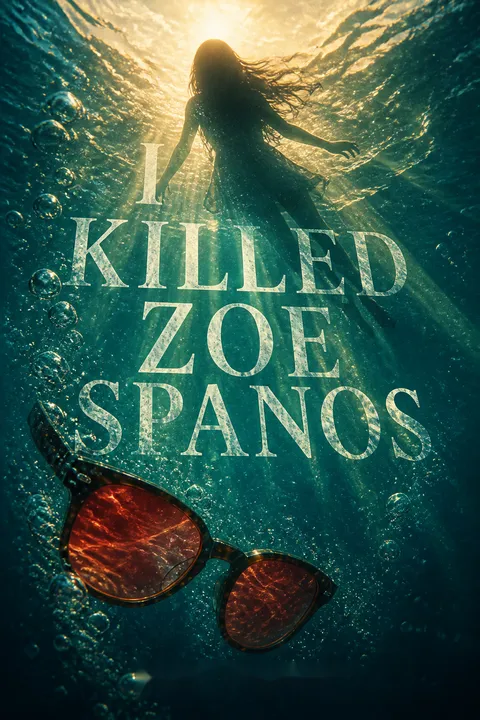


Plot Summary
A Summer Beside Windermere
After graduating high school, Anna Cicconi leaves Bay Ridge for a summer nanny job with the wealthy Bellamy family in Herron Mills. She wants distance from the drinking and reckless nights that have begun to define her, and hopes caring for eight-year-old Paisley will help her become dependable. At the beach, a local boy mistakes Anna for someone named Zoe.
Anna laughs it off, but the reaction unsettles her. On a restless evening she meets Caden Talbot, the young heir to Windermere, the neglected estate next door. Their easy nighttime conversation offers the first promise of friendship in Anna’s new life, while the overgrown house and its guarded family suggest that Herron Mills is not as peaceful as it looks.
Anna’s move is less a clean escape than an attempt to rehearse a different self. She believes responsibility can function as a brace: if a child depends on her, she will have to stop behaving as though consequences belong to someone else. The setting immediately complicates that hope. Herron Mills offers quiet and beauty, but its social world is organized around wealth, inheritance, and carefully maintained appearances. Anna’s mistaken resemblance to Zoe makes her body a kind of unwanted credential, allowing strangers to place her inside a local story before she knows its terms. The first encounter with Caden draws her toward Windermere’s private grief, linking her desired reinvention to a mystery she cannot yet name.
The Missing Girl's Echo
At Jenkins’ Creamery, shopkeeper Lou Jenkins recognizes Anna as Zoe Spanos, a nineteen-year-old local who vanished on New Year’s Eve. Anna meets Martina Green, Lou’s daughter, and Martina’s best friend Aster Spanos, Zoe’s younger sister. Martina has made a podcast arguing that police too quickly accepted the idea that Zoe left voluntarily, despite unanswered questions about a stolen boat and a bus ticket.
Anna listens to the episodes and learns that Zoe was a devoted student, Caden’s longtime girlfriend, and beloved by the community. The case makes Anna’s resemblance feel less like coincidence. Familiar places and details stir flashes of recognition, though she has no explanation for them and no clear memory of ever meeting Zoe.
The podcast does more than provide exposition: it models how evidence becomes a public narrative. Martina contests the official version by assembling interviews, timelines, and community testimony, but her format also gives suspicion an audience and momentum. Anna enters that debate through resemblance rather than choice. Other people’s recognition turns her into a screen on which they project the missing girl, while her own flashes of familiarity make that projection feel privately plausible. The novel thereby sets up a tension between collective certainty and personal memory. Neither the police’s convenient explanation nor Anna’s intuitive conviction is yet reliable; both are stories built from fragments that need testing.
Caden's Stable Door
Anna’s attempt at neighborly kindness goes badly when she brings Caden homemade cookies made from a recipe Zoe once favored. Caden responds coldly, and his mother, Meredith, later warns Anna away from Windermere.
Yet Caden seeks her out again and invites her to the stable, where they can talk beyond his mother’s notice. He explains that Zoe was not merely his girlfriend: they had secretly become engaged, and Meredith had been deeply close to her.
Caden is home from Yale partly because Meredith, who has schizophrenia, has struggled since Zoe disappeared. As Anna and Caden share their difficult family histories, their friendship grows more intimate. Anna wants closeness, but she knows Caden’s absent fiancée remains at the center of his life.
The stable functions as a refuge from Windermere’s decaying public rooms and from the social scrutiny that surrounds Zoe’s disappearance. Caden’s disclosure of the engagement makes Anna’s attraction ethically complicated: she is drawn to a grieving person whose commitment cannot be reduced to a convenient romantic obstacle. His care for Meredith also reveals the costs of being the dependable child in a family under strain. Anna recognizes that role because she has spent years wanting her own mother to notice her failures. Their bond grows through reciprocal disclosure, but the intimacy is built beside an absence neither can resolve, making trust both a comfort and a risk.
Fourth of July Drift
When Paisley leaves for the holiday weekend, Anna’s Brooklyn best friend Kaylee arrives unexpectedly. They buy alcohol with help from Max Adler, a Brown graduate who works with penguins at the aquarium and has invited Anna to a Montauk beach party. Anna hopes to stay sober, but joins Kaylee at the gathering and drinks.
Max mistakes her for Zoe, then kisses her without consent; Anna pushes him away, and Kaylee accuses her of stealing the boy’s attention. Their argument exposes how easily Anna slips back into the role she came to escape. Later, Kaylee’s familiarity with the area and Anna’s sense that she has seen it before deepen Anna’s confusion. She cannot tell whether the unease comes from memory, exhaustion, or drink.
Kaylee’s visit tests whether Anna’s new identity can survive contact with the friendship that helped shape her old one. Their closeness is real, but it has been organized around parties, impulsive choices, and a shared refusal to look too closely at danger. Max’s unwanted kiss and Kaylee’s jealousy turn the gathering into a small reenactment of that pattern: Anna is treated as responsible for a man’s behavior, then pulled into managing her friend’s feelings. Her dissociation and flashes of familiarity gain urgency because intoxication has previously erased time for her. The novel refuses to treat a fresh start as a simple matter of geography; old habits travel with the person trying to leave them.
The Flash Drive Burns
After the holiday, Anna slips into the stable and finds a card addressed to Zoe beside a flash drive hidden in Caden’s unused stall. The card apologizes for something unresolved.
On the drive, Anna discovers intimate photographs and anonymous emails between Caden and another woman, evidence that his relationship with Zoe had become more complicated than he admitted. She copies the files and takes them to Martina, who agrees to investigate privately rather than publish an accusation.
Soon afterward, Windermere’s stable burns while Anna sleeps. The horses survive, but the evidence is lost in the fire. Anna suspects someone wanted the hidden material destroyed, and she begins to fear that Caden, Meredith, or the unknown woman may be concealing more than heartbreak.
The hidden files convert Anna’s curiosity into an ethical problem. She has taken private material without permission, yet believes that withholding it could protect a person connected to Zoe’s disappearance. Martina’s agreement to keep the investigation off the podcast acknowledges the danger of turning an uncertain suspicion into public fact. The fire then destroys not only physical evidence but the possibility of easily verifying what Anna found. Its timing makes ambiguity combustible: it can signify guilt, fear, or coincidence, and every interpretation implicates someone. The stable’s destruction also foreshadows the novel’s central struggle over who controls the story once the original evidence has been erased.
Messages from Zoe
After the stable fire, Anna finds two old Messenger requests from Zoe. Months earlier, Zoe had tried to contact her and offered to meet in Herron Mills, but Anna has no memory of reading the messages or answering them.
Martina identifies the woman in the photographs as Tiana Percy, a Yale student, while Anna begins recalling precise details about Zoe: her favorite ice cream, her love of gold, her fear of thunderstorms, and their shared attachment to Tennyson’s Lady of Shalott.
Caden confirms these details, then becomes alarmed by Anna’s certainty and urges her to stay away from Windermere. Anna’s memories feel like proof that she knew Zoe, but the missing time around them leaves open the possibility that she is confusing imagination with fact.
Anna’s memory does not return as a stable archive. It arrives through sensory anchors, tastes, colors, fears, and a poem, each vivid enough to feel authoritative but detached from a reliable chronology. Caden’s recognition validates the details while intensifying the danger of her interpretation: accurate knowledge seems to prove intimacy, yet it does not establish when or how that knowledge was acquired. The messages provide a material clue, but not a complete explanation. This distinction matters because Anna is already inclined to transform fragments into a story that gives her a role in Zoe’s life. The novel makes memory emotionally persuasive before it makes it factually trustworthy.
A Confession Built Wrong
In August, Anna goes to the village police and says she was with Zoe on New Year’s Eve. She describes drinking at Windermere, dancing with Zoe on the third-floor balcony, and letting go before Zoe fell. She also claims she carried Zoe’s body to Parrish Lake and sank it in a stolen boat, though she cannot remember the journey or the method.
Detectives question her for hours before recording the interview, without her mother or lawyer present, and push her to fill gaps. Anna is charged with manslaughter and concealing a corpse. At Pathways, Kaylee insists they never left Brooklyn that night and denies knowing Zoe. Anna clings to her confession, while Martina hears enough uncertainty to wonder whether it is true.
Anna’s confession is compelling because it fuses emotional guilt with a causal account, but the two are not equivalent. She remembers dread, water, and a fall, then supplies missing actions when investigators press her for a coherent sequence. The procedural failure amplifies that vulnerability: a minor’s unrecorded hours with detectives leave room for suggestion to become memory. Kaylee’s denial destabilizes the account without immediately freeing Anna from it, because Anna’s self-image already contains a history of reckless behavior. The scene exposes a familiar psychological trap: when a person believes she is capable of harm, a plausible accusation can feel more convincing than the absence of evidence.
The Autopsy Says No
After workers draining toxic algae from Parrish Lake locate Catherine Hunt’s missing motorboat, investigators recover Zoe’s body from beneath a tarp. The discovery confirms that Zoe did not run away, but the autopsy cannot determine a cause of death.
It does establish that she had no broken bones, contradicting Anna’s claim that Zoe fell from Windermere’s third-floor balcony. Martina interviews Anna for her podcast, and Anna admits she cannot verify the police account or remember taking Zoe to the lake.
She tells Martina that her memories may have been completed under pressure and urges her to look again at Caden. Anna’s lawyers file a motion to dismiss, while Martina faces a choice between amplifying Anna’s doubt and risking harm to the Spanos family.
The autopsy does not solve the mystery; it removes a false certainty. The absence of broken bones is a narrow forensic fact with broad consequences, forcing characters to reconsider what they treated as settled. Martina’s interview gives Anna a public voice, but it also turns her uncertainty into content and potential evidence. Her journalistic work therefore carries double responsibility: challenge an unreliable confession without converting doubt into proof of innocence. For the Spanos family, the body’s recovery closes the hope that Zoe might return while leaving the manner of her death unknown. The section makes factual correction emotionally costly rather than neatly liberating.
Two Alibis, One Stable
Martina finally interviews Caden, who admits he found empty whiskey and beer bottles in the stable after returning from the city, then discarded them because he did not connect them to Zoe.
Tiana Percy later provides photographs proving Caden was with her in Rye during the critical hours, clearing him of being at Windermere. A second lead comes from Paisley, who tells detectives she saw Zoe and Max enter the stable through her bedroom telescope on New Year’s Eve.
Max confirms that he met Zoe there, drank with her, and left her alive after she became distraught. He had never told police because he wanted no part in the investigation. The timeline now places someone else at Windermere, while Anna’s supposed presence becomes increasingly doubtful.
The evidence arrives through imperfect witnesses rather than a single authoritative revelation. Caden’s discarded bottles look like concealment but stem, by his account, from a failure to recognize their relevance. Max’s silence is selfish and damaging, yet his late testimony supplies the clearest account of Zoe’s final known hours. Paisley’s telescope turns a child’s hobby into forensic observation, while Tiana’s photographs correct the police’s earlier failure to verify Caden’s whereabouts. Together, these details demonstrate how investigative tunnel vision can leave crucial facts uncollected. They also shift the question from whether Anna’s confession sounds plausible to who had access, motive, and knowledge at the stable.
Parrish Lake's False Memory
Seeing the submerged boat discovered during the lake cleanup triggers Anna’s strongest apparent memory yet: herself beside the water, believing Zoe is beneath its surface. She reconstructs a winter balcony scene in which Zoe falls, then walks into the station determined to tell the truth.
But the images remain contaminated by what detectives suggested and by Anna’s older, unexamined guilt. Martina and Aster search the burned stable for evidence that police overlooked.
Meredith catches them trespassing, and Martina finds one of Aster’s distinctive earrings in the ash. When Martina asks why it was there, Aster panics, threatens her with a charred beam, and reveals that the missing drive and card had made her afraid. The police arrive and take both girls for questioning.
The lake operates as a memory trigger and a misleading stage. Anna’s felt certainty is sincere, but the image of Zoe in the water is not yet a dependable record of the night. The novel pairs this private confusion with Martina’s physical search through ash, where a small object carries more evidentiary weight than a dramatic confession. Aster’s earring shifts the investigation from abstract suspicion to presence at Windermere, while her threat shows how fear has narrowed her choices. Martina’s loyalty to Anna and Aster is now in direct conflict: pursuing the truth may injure the very friendship she hopes to repair.
The Whiskey Was Poisoned
Aster eventually tells police that she found evidence Caden was falling for Tiana and planted Zoe’s flash drive in his stable as a warning. To punish Caden, she poured Demerol from their mother’s medicine into his whiskey, expecting him to drink it.
Zoe arrived with Max, found the drive, and drank the poisoned whiskey while also taking medication for anxiety; the combination killed her. Aster reached the stable later, found Zoe dead, and panicked.
She moved the body to Parrish Lake, used Zoe’s phone to buy a bus ticket as a false trail, and sank the boat with rocks and a hole in its hull. After Anna and Martina uncovered the hidden items, Aster set the stable fire. Her confession clears Anna, who is released; Aster faces a charge for concealing Zoe’s body.
Aster’s actions begin in protective anger, not a conscious plan to kill, but intention does not erase consequence. She wants to force Caden to acknowledge his betrayal and instead creates a lethal risk for the person she most wants to protect. Her concealment then converts grief into a series of escalating choices: move the body, manufacture a runaway trail, destroy the stable. Each act briefly promises control while making the eventual truth more damaging. The contrast between accidental death and deliberate cover-up is morally important. Aster did not intend Zoe’s death, yet her fear and secrecy deprive the family of truth and expose Anna to punishment.
The Father's Hidden Name
While Anna is still detained, George Spanos visits and reveals that he is her biological father. Years earlier, he had an affair with Gloria Cicconi during family summers in Herron Mills. Gloria never told Anna, and George did not recognize the truth with certainty until he saw her beside Zoe’s family.
Anna and Zoe were half-sisters, and their childhood summers together were real. Their memories had resurfaced in fragments when Anna returned to the place where they once played.
George had suspected Anna was innocent but kept silent, fearing the truth would tear his family apart. After Aster’s confession, the charges against Anna are dismissed. The revelation gives Anna a family history, but it cannot restore Zoe or undo the weeks Anna spent imprisoned.
Paternity reframes resemblance as kinship rather than coincidence, but it does not retroactively make every recovered memory accurate. The revelation explains why Anna possessed intimate details about Zoe while preserving the distinction between real childhood encounters and imagined events from New Year’s Eve. George’s silence is another form of protective secrecy: he believes withholding the truth will spare his family, but it leaves Anna vulnerable to a false accusation. His eventual disclosure offers recognition without full repair. The novel treats family knowledge as something with material consequences, not merely emotional significance; what adults conceal can shape a child’s identity and determine how others interpret her behavior.
Two Lost Nights
Back in Brooklyn, Anna asks Kaylee to explain what really happened on New Year’s Eve. Kaylee recalls that they stayed in Brooklyn, where their friend Starr vanished after going toward the water at Coney Island.
Anna was heavily intoxicated and drugged, and the group accepted Mike’s claim that Starr had left for a job in Orlando rather than report her missing. Anna’s buried guilt over abandoning Starr had fused with her real childhood memories of Zoe and her suggestible confession about the Hamptons.
As Anna sorts those histories, she understands why her mind made her responsible for a second girl lost to water. She returns to daily life, defers college until spring, and begins rebuilding her relationship with her mother and Kaylee, while the truth about Starr remains unresolved.
The ending refuses the comfort of a single mystery neatly solved. Anna is cleared in Zoe’s death, but the guilt that made her confession believable has another source: her group’s failure to act when Starr disappeared. Memory had braided two losses together, transforming shame into a false account of murder. Naming that mechanism gives Anna a chance to distinguish responsibility from imagined responsibility, though it cannot answer what happened to Starr. Her return to Brooklyn is therefore not a triumphant reset. It is a slower form of agency: accepting uncertainty, repairing relationships where possible, and preparing to move forward without using self-punishment as a substitute for truth.
Analysis
I Killed Zoe Spanos treats a confession not as the end of a mystery but as an event that must itself be investigated. Anna’s account feels convincing because it draws on real materials: childhood contact with Zoe, messages she cannot remember receiving, grief attached to water, and a self-image shaped by past recklessness. Yet emotional conviction is not factual accuracy. The novel’s most important distinction is between feeling responsible and having caused a particular death. Anna’s guilt over Starr’s disappearance makes her especially vulnerable to a story in which she is once again the person who failed to protect someone.
The book also examines how institutions and media turn uncertainty into certainty. Detectives press a minor to supply missing steps, then treat the resulting narrative as evidence. Martina’s podcast challenges their narrow theory, but its audience can just as easily make a new suspect of Caden or transform Anna into either victim or manipulator. The story does not present publicity as inherently virtuous: investigation requires exposure, but exposure can injure people before the facts are known. The police’s failure to follow up on witnesses and preserve evidence is not a single dramatic blunder. It is a chain of ordinary shortcuts that narrows the field until an inaccurate explanation appears complete.
Family secrecy gives those errors their intimate force. Gloria hides Anna’s paternity; George avoids confronting what he suspects; Aster tries to protect Zoe by punishing Caden; and then conceals the consequences of that plan. In each case, secrecy begins as a form of care or self-protection and becomes a source of harm. The stable fire literalizes this pattern by destroying a place that holds both evidence and private memory, while the objects recovered from its remains show that destruction cannot fully control what others remember.
Anna’s return to Brooklyn offers no easy restoration. She learns who she is and why her memories tangled, but Starr remains missing and the grief is unresolved. The ending’s measure of growth is modest and credible: Anna can separate what she knows from what she fears, accept responsibility for her own choices without accepting a false crime, and begin again without pretending that a new setting can erase the past.
Review Summary
I Killed Zoe Spanos is a twisty YA thriller that keeps readers guessing until the end. Many praise its compelling plot, unreliable narrator, and podcast elements. The story follows Anna, who confesses to killing Zoe, and Martina, who investigates the truth. While some found the pacing slow at times, most enjoyed the atmospheric setting and unexpected twists. The audiobook version received high praise. Overall, readers found it an engrossing and unique addition to the YA mystery genre, with comparisons to Rebecca and true crime podcasts.
People Also Read


Characters
Anna Cicconi
Haunted summer nannyAnna is a Brooklyn teenager who takes a summer nanny job in Herron Mills before beginning college. She wants to become more responsible after months of drinking, blackouts, and risky behavior, but she has learned to distrust her own judgment and expect adults to overlook her. Her artistic eye makes her attentive to color, place, and small visual details, while her unstable memories leave her unsure what she has actually witnessed. Anna is sensitive to the gap between the Hamptons’ privilege and her own strained home life. Her need for a fresh start is genuine, but so is her longing to be noticed and believed.
Zoe Spanos
Absent center of the mysteryZoe is a Brown University student from Herron Mills whose disappearance reshapes the lives of her family, boyfriend, and neighbors. Friends remember her as thoughtful, academically ambitious, attentive to animals, and unusually generous with her time. She is close to her younger sister Aster and has a long relationship with Caden Talbot. Her love of baking, marine biology, and poetry gives the people investigating her disappearance concrete details to hold onto. Zoe is not simply a case file or a resemblance that unsettles Anna; she is a person whose private struggles and choices remain difficult for those around her to fully understand.
Martina Green
Podcasting young investigatorMartina is a high school journalist and podcast creator, known professionally as Martina Green though her family name is Jenkins. She is Aster’s closest friend and Zoe’s longtime acquaintance. Martina believes the police have accepted an easy explanation for Zoe’s disappearance, so she uses interviews and public records to pursue overlooked leads. Her ambition to study journalism and sociology gives her work personal stakes, as does her loyalty to the Spanos family. Martina is diligent and perceptive, but the podcast’s audience can reward suspicion before facts are secure. She must balance a young reporter’s hunger for answers with the human consequences of broadcasting them.
Aster Spanos
Protective younger sisterAster is Zoe’s younger sister, a strong swimmer and a determined presence in Herron Mills. She has spent much of her life looking out for Zoe, even when Zoe did not ask for help, and she carries a fierce loyalty to her family. Aster is also Martina’s closest friend, which ties her private grief to Martina’s public investigation. Her confidence can appear formidable, but it is closely bound to a fear of being powerless when someone she loves is hurting. She is brave, quick to act, and protective of her family’s privacy, traits that can make it difficult for her to admit uncertainty.
Caden Talbot
Grieving heir to WindermereCaden is a Yale student and the son of Windermere’s owner, Meredith Talbot. He returns home to help care for his mother and maintain the estate, whose grand house and neglected grounds reflect the strain within the family. Caden is thoughtful, bookish, and drawn to film, but he is guarded about his private life and wary of the public’s judgments. As a biracial young man in a wealthy, mostly white town, he is acutely aware that suspicion does not fall equally on everyone. His long attachment to Zoe shapes his grief and makes his growing friendship with Anna emotionally complicated.
Kaylee Harrison
Brooklyn best friendKaylee is Anna’s closest friend in Brooklyn, bound to her through years of parties, shared secrets, and familiar routines. She is bolder and more socially confident than Anna, but her fear of losing their friendship can turn into jealousy or pressure. Kaylee resents Anna’s sudden move to Herron Mills, even as she misses her. Their relationship exposes how intimacy can preserve harmful habits as easily as it can offer comfort.
George Spanos
Zoe's searching fatherGeorge is Zoe and Aster’s father, a landscape architect who built a life and career in Herron Mills. He is loving and involved, especially in his daughters’ pursuits, but the demands of work and family leave some emotional truths unspoken. Zoe’s disappearance turns his hope into an exhausting search for answers. His grief is intense, and he struggles to reconcile the person he knows his daughter to be with the explanations offered by others.
Gloria Cicconi
Anna's guarded motherGloria is Anna’s mother, a hardworking medical lab technician who also cleans apartments to make ends meet. She has raised Anna largely on her own while managing chronic pain and dependence on prescription medication. Gloria is not skilled at expressing concern, so her warnings and affection can arrive late or awkwardly. She wants Anna safe, but her own history of withholding information has shaped the distance between them.
Meredith Talbot
Reclusive Windermere matriarchMeredith is Caden’s mother and the owner of Windermere, a historic estate whose decline mirrors her increasing isolation. She lives with schizophrenia and can be suspicious of outsiders, particularly when the family’s privacy feels threatened. Meredith is devoted to her son and deeply attached to the people she considers family. Her sharp manner can make her seem hostile, but it coexists with vulnerability and a fierce instinct to protect her household.
Max Adler
Aquarium guide and witnessMax is a recent Brown graduate who works at the Long Island Aquarium, guiding visitors through its penguin program. Charming and sociable, he is also accustomed to letting his own desires set the terms of an encounter. He knows Zoe from Brown and later crosses paths with Anna, whose resemblance to her unsettles him. Max’s confidence can mask a reluctance to take responsibility when another person is in distress.
Starr
Absent Brooklyn friendStarr is older than Anna and Kaylee, and once served as their adventurous guide through Brooklyn’s nightlife. Estranged from her family and accustomed to living independently, she represents a kind of freedom Anna admires but does not fully understand. Her friendship leaves a lasting imprint on both girls, even when she is no longer present in their daily lives.
Paisley Bellamy
Perceptive young chargePaisley is the Bellamys’ eight-year-old daughter and Anna’s charge for the summer. Precocious, curious, and devoted to astronomy, she is quick to notice how adults behave around her. Her memories of Zoe make her part of the mystery in ways she does not initially recognize. Paisley also gives Anna a real chance to practice patience and responsibility, though Anna’s attention sometimes falters under the weight of her own confusion.
Emilia Bellamy
Thoughtful employer and motherEmilia is Paisley’s mother, a graphic designer who works from the family’s spacious Herron Mills home. She is attentive to her daughter and offers Anna a measure of privacy and trust as a new nanny. Emilia is polished and considerate, but her marriage and work carry pressures she does not always share openly. Her past connections to the Spanos family add quiet complexity to her place in the village.
Tom Bellamy
Absent-minded corporate fatherTom is Emilia’s husband and Paisley’s father, a successful city-based professional who spends much of the week away from the family home. He introduces Anna to Herron Mills and tries to make her feel welcome. His career troubles and distance from home sit beneath the household’s polished surface.
Detective Mira Holloway
Determined village detectiveDetective Holloway leads the questioning in the Zoe Spanos case. She is direct, controlled, and intent on getting a usable account from Anna. Her confidence in the confession exposes the danger of treating a pressured statement as a complete reconstruction of events. Holloway is not a caricature of cruelty; she is a professional whose certainty outruns the evidence.
Philip Massey
Junior police investigatorAssistant Detective Massey works alongside Holloway on the investigation. Younger and less experienced, he takes notes and occasionally presses Anna with blunt questions. His presence reflects the procedural machinery surrounding the case, including the officers’ tendency to accept a coherent account before testing its gaps.
Tiana Percy
Yale student and researcherTiana is a Yale student involved in the Black Women’s Coalition and an academic research project. She appears indirectly through private correspondence and photographs connected to Caden. Tiana is careful about her privacy and does not initially seek public attention, but her knowledge of Caden’s whereabouts becomes relevant to Martina’s investigation.
Plot Devices
The Missing Zoe Podcast
Public case-building engineMartina’s multipart podcast supplies background on Zoe, challenges the police runaway theory, and brings neglected witnesses and details back into circulation. Its interviews give listeners a way to follow evidence as it changes, from the Greyhound ticket to Caden’s alibi and Max’s account. The format also creates pressure: suspicion can spread faster than verification, and Anna’s interview affects how the public views her case. The podcast is both an investigative tool and a source of ethical risk, forcing Martina to decide when publicity helps the search and when it may distort it.
Anna's Fractured Memory
Guilt misfiles the pastAnna’s blackouts and emerging recollections make the novel’s central testimony unstable. She remembers real childhood visits with Zoe, details from Zoe’s messages, and a traumatic night in Brooklyn, but initially combines them into a false account of being present at Zoe’s death. The reader must distinguish emotional certainty from chronological proof. Anna’s memory is not presented as simple deception: her belief is shaped by drinking, trauma, police pressure, and a history of self-blame. The device keeps the mystery psychological as well as forensic, while making each recovered detail require corroboration.
The Hidden Flash Drive
Private evidence redirects suspicionThe flash drive and apology card hidden in Caden’s stable preserve intimate photographs and emails that complicate his public relationship with Zoe. Anna’s theft gives Martina a lead, while the later fire destroys the physical hiding place and makes the timing itself suspicious. The drive links a secret romance to the motive behind a warning planted in the stable, but it does not prove who caused Zoe’s death. Its absence from the ashes eventually helps expose that someone else knew about the hiding spot and feared what the evidence could reveal.
The Lady of Shalott
Poem frames loss and memoryZoe and Anna share an attachment to Tennyson’s poem, whose isolated weaver sees life indirectly and risks everything when she turns toward it. The poem shapes Anna’s way of understanding Zoe and later becomes part of her false reconstruction of the night. Its imagery of a boat, a fatal journey, and a life observed through reflections echoes the novel’s competing versions of events. The allusion does not solve the case; it reveals how Anna uses art to give shape to memories she cannot yet place and how easily a meaningful metaphor can become mistaken evidence.
The Telescope and Earring
Small observations break certaintyTwo ordinary objects become crucial checks on competing stories. Paisley’s telescope lets her observe who entered the Windermere stable on New Year’s Eve, while an earring found in the stable’s burned remains places Aster at the site after the fire. Neither clue works alone: Paisley must speak to detectives, and the earring becomes meaningful only when Martina recognizes it and confronts Aster. Together, they show how details dismissed as childish or incidental can correct a case built around an adult’s persuasive but false confession.
FAQ
Synopsis & Basic Details
What is I Killed Zoe Spanos about?
- A Summer of Unraveling: The novel follows Anna Cicconi, a Brooklyn teen seeking a fresh start as a nanny in the Hamptons, only to find herself entangled in the cold case of Zoe Spanos, a local girl who vanished months earlier. Anna's uncanny resemblance to Zoe and fragmented memories lead her to confess to Zoe's accidental death, despite her own uncertainty.
- Podcast-Driven Investigation: The narrative is propelled by "Missing Zoe," a true-crime podcast hosted by aspiring journalist Martina Jenkins, which meticulously re-examines Zoe's disappearance and challenges the official police narrative. This meta-narrative device allows for multiple perspectives and a critique of how true crime stories are constructed.
- Hidden Paternity & Tragic Accident: The core mystery unravels to reveal that Anna and Zoe are half-sisters, sharing the same father, George Spanos. Zoe's death is ultimately revealed to be a tragic accident, caused by her younger sister Aster, who, in a misguided attempt to punish Zoe's cheating boyfriend, laced his whiskey with her mother's painkillers, which Zoe then consumed.
Why should I read I Killed Zoe Spanos?
- Psychological Depth & Unreliable Narration: Readers who enjoy complex character studies and narratives that challenge their perceptions will be drawn to Anna's journey through fragmented memories and identity confusion. The novel masterfully uses an unreliable narrator to keep readers guessing, making the eventual revelations deeply impactful.
- Critique of True Crime Culture: The book offers a smart, timely commentary on the ethics and impact of true-crime podcasts and media, exploring how public narratives can shape investigations and influence public opinion. It's a must-read for those interested in the genre's societal implications.
- Rich Thematic Exploration: Beyond the mystery, the novel delves into themes of class, privilege, family secrets, the pressures on young women, and the search for identity. The Hamptons setting, with its veneer of perfection, serves as a powerful backdrop for these deeper explorations, making it a compelling read for fans of literary thrillers.
What is the background of I Killed Zoe Spanos?
- Inspired by Classic Gothic & Modern True Crime: Author Kit Frick explicitly states in the acknowledgments that the novel was born from a desire to marry Daphne du Maurier's classic thriller Rebecca with the contemporary true-crime podcast boom. This blend creates a unique atmosphere of romantic seaside intrigue mixed with journalistic immediacy.
- Long Island's Dual Nature: The setting of Herron Mills in the Hamptons is crucial, portraying the East End of Long Island not just as a playground for the wealthy, but also as a place with a rich, textured history, including agrarian roots and diverse communities like the Shinnecock Reservation. This contrasts with the superficial "wealth, celebrity, privilege" often associated with the Hamptons, adding depth to the story's social commentary.
- Focus on Youth & Social Media: The novel is deeply embedded in the contemporary youth experience, utilizing social media (Instagram, Messenger) and podcasts as integral plot devices. This reflects how modern teens interact, investigate, and form identities, making the story resonate with current cultural trends and anxieties.
What are the most memorable quotes in I Killed Zoe Spanos?
- "It's very difficult to keep the line between the past and the present. Do you know what I mean?": This opening quote, attributed to Edith "Little Edie" Bouvier Beale from Grey Gardens, perfectly encapsulates the novel's central theme of fractured memory and the blurring of timelines. It immediately sets the stage for Anna's struggle with her past and her connection to Zoe.
- "You're a story, but that doesn't make you any less true.": This quote, from Melissa Albert's The Hazel Wood, serves as the epigraph for Part IV, "A Body." It speaks directly to the novel's meta-narrative, highlighting how narratives (like Martina's podcast or Anna's memories) shape understanding and can hold profound truth, even if not strictly factual. It underscores the power of storytelling in the search for justice and identity.
- "I killed Zoe Spanos.": Anna's chilling confession, repeated multiple times throughout the narrative, is the driving force of the initial mystery. It's memorable not just for its starkness, but for the layers of meaning it accumulates as the truth unravels, ultimately revealing the complex interplay of guilt, suggestion, and a desperate need for answers.
What writing style, narrative choices, and literary techniques does Kit Frick use?
- Alternating "Then" and "Now" Structure: Frick employs a dual timeline, shifting between Anna's present-day incarceration and her past summer in Herron Mills. This non-linear approach builds suspense, gradually revealing information and mirroring Anna's fragmented memory, keeping the reader constantly re-evaluating events.
- Integration of Multimedia Elements: The novel seamlessly weaves in podcast transcripts, text messages, and social media interactions. This innovative technique not only grounds the story in a contemporary context but also provides multiple perspectives and a meta-commentary on how information is consumed and narratives are shaped in the digital age.
- Sensory-Rich and Evocative Language: Frick uses vivid descriptions and sensory details to immerse the reader in Anna's psychological state and the Hamptons setting. From the "thin cry of seagulls" to the "stench of privilege," the language creates a strong atmosphere, enhancing the emotional impact and the sense of unease that permeates the story.
Hidden Details & Subtle Connections
What are some minor details that add significant meaning?
- Paisley's Dog's Name, Julia Child: When Anna first meets Aster's dog, she mistakenly calls her "Belle," a name that Aster corrects to "Julia Child." Later, Anna's childhood memories reveal that Zoe's bichon frise puppy was named "Belle." This subtle detail foreshadows Anna's deep, forgotten connection to the Spanos family and her shared past with Zoe, hinting at the true nature of their relationship.
- Emilia's Pixie Cut in Old Photo: While snooping in Emilia's office, Anna finds an old photo of Emilia with a pixie cut, embracing an older woman with dark, waist-length hair. This seemingly throwaway detail later connects to Emilia's confession of a past affair with Joan Spanos, Zoe's mother, explaining Emilia's discomfort when Joan is mentioned and adding a layer of hidden romantic history to the seemingly perfect Bellamy family.
- The "Chocolate Caramel Popcorn" Ice Cream: Anna's inexplicable craving for this specific flavor at Jenkins' Creamery, despite not usually liking caramel, is a seemingly minor quirk. It's later revealed to be Zoe's favorite flavor, a detail Anna "remembers" from their shared childhood summers, subtly hinting at the deep, subconscious connections Anna has to Zoe long before she understands their familial bond.
What are some subtle foreshadowing and callbacks?
- Anna's Vertigo at Windermere Balcony: Early in the novel, Anna experiences a sudden, intense wave of vertigo while looking up at the Windermere balcony, feeling like she's "falling." This subtly foreshadows her later "memory" of Zoe falling from that very balcony, and the eventual revelation that Anna herself was dangled over that railing as a child by George Spanos, linking her physical sensation to a traumatic, suppressed event.
- Kaylee's "Sink Your Own Ship" Comment: During a phone call with Anna in Pathways, Kaylee angrily tells Anna, "You want to sink your own ship, fine." This seemingly casual idiom becomes a chilling callback to Anna's confession of sinking Zoe's body in a boat, and later, Aster's actual act of sinking Zoe's body in the motorboat, highlighting the recurring motif of water and concealment.
- Meredith Talbot's Parasol as a Weapon: When Mrs. Talbot confronts Anna at the party, her parasol is described as being used "as a cane," but later, when she confronts Martina and Aster in the stable ruins, it's described as "the length of a hunting rifle" and "a makeshift cane." This subtle shift in description foreshadows Mrs. Talbot's protective, almost aggressive nature when her son is threatened, and the potential for seemingly innocuous objects to become menacing in moments of high tension.
What are some unexpected character connections?
- Emilia Bellamy and Joan Spanos's Past Relationship: It's revealed that Emilia, Anna's employer, had a romantic relationship with Joan Spanos, Zoe's mother, years before Emilia met Tom. This unexpected connection adds a layer of hidden history and emotional complexity to the seemingly perfect Hamptons community, explaining Emilia's guarded reactions whenever Joan is mentioned and highlighting the intricate web of relationships beneath the surface.
- Max Adler's Unrequited Love for Zoe: Max, initially presented as a charming but opportunistic love interest for Anna, is later revealed to have harbored a strong, unrequited affection for Zoe at Brown. This connection explains his presence at Windermere on New Year's Eve and his knowledge of Zoe's distress over Caden's affair, making him a crucial, albeit self-serving, witness to Zoe's final hours.
- Caden Talbot's Childhood Friend, Doreen Winn-Carey: Doreen, initially mentioned as the "family friend" Caden and his mother stay with in the city, is later revealed to be a childhood friend of Meredith Talbot. This detail reinforces the insular nature of the Hamptons elite and the long-standing connections that bind them, providing a consistent alibi for the Talbots on New Year's Eve and highlighting the deep roots of their social circle.
Who are the most significant supporting characters?
- Martina Jenkins: As the host of the "Missing Zoe" podcast, Martina is the novel's primary investigator and a crucial catalyst for uncovering the truth. Her journalistic drive, ethical struggles, and evolving friendship with Anna and Aster provide a meta-commentary on true crime and the pursuit of justice. Her relentless digging ultimately exposes the flaws in the police investigation and Aster's confession.
- Kaylee Harrison: Anna's best friend from Brooklyn serves as a grounding force and a mirror to Anna's own struggles. Kaylee's fierce loyalty, her own suppressed trauma regarding a missing friend (Starr), and her insistence on Anna's innocence are vital. She represents Anna's past and the difficult truths Anna must confront about her own unreliable memories and actions.
- Meredith Talbot: Caden's mother, a reclusive figure struggling with schizophrenia, is a significant supporting character whose presence looms large over Windermere. Her deep love for Zoe, her protective instincts towards Caden, and her own hidden knowledge contribute to the gothic atmosphere and the complex family dynamics that influence the investigation.
Psychological, Emotional, & Relational Analysis
What are some unspoken motivations of the characters?
- Anna's Desire for a "New Anna": Beyond escaping her past, Anna's unspoken motivation for taking the nanny job in Herron Mills is a desperate longing for a new, responsible identity. She yearns to shed the "old Anna" who partied recklessly and blacked out, believing that a change of scenery and responsibility will magically transform her. This deep-seated desire makes her vulnerable to suggestion and contributes to her false confession, as she subconsciously believes she could have been the reckless person capable of such an act.
- George Spanos's Guilt and Secrecy: George's initial reluctance to acknowledge Anna, despite recognizing her, stems from a profound, unspoken guilt over his affair with Anna's mother and the secret of Anna's paternity. His motivation to keep this secret is to protect his existing family (Joan and Aster) from further pain, even if it means allowing Anna to suffer in juvenile detention. This highlights the destructive power of long-held family secrets.
- Aster's Protective Rage and Jealousy: Aster's actions are driven by a complex mix of fierce loyalty to Zoe, intense jealousy over Caden's betrayal, and a desire for justice on Zoe's behalf. Her unspoken motivation is to punish Caden for hurting her beloved sister, and later, to protect her family from the scandal of Zoe's accidental death. This emotional cocktail leads her to make impulsive, tragic decisions, including lacing the whiskey and concealing Zoe's body.
What psychological complexities do the characters exhibit?
- Anna's Dissociative Memory & Identity Diffusion: Anna exhibits significant psychological complexity through her dissociative memory, where traumatic childhood events and recent experiences become jumbled and indistinguishable. Her identity is diffused, constantly shifting between the "old Anna" and the "new Anna," and further complicated by her doppelgänger resemblance to Zoe. This makes her highly susceptible to external suggestion, leading to her false confession and a profound crisis of self.
- Meredith Talbot's Schizophrenia and Protective Instincts: Meredith's character explores the complexities of mental illness within a family context. Her schizophrenia, exacerbated by Zoe's disappearance, manifests in "positive symptoms" like hallucinations and "negative symptoms" like social withdrawal. Her fierce, almost irrational, protectiveness of Caden, coupled with her reclusive nature, creates an unsettling atmosphere and highlights the challenges of living with mental illness and the lengths a mother will go to shield her child.
- Caden Talbot's Burden of Secrecy and Racial Scrutiny: Caden's psychological state is complex, marked by the burden of his secret engagement to Zoe, his affair with Tiana, and the grief of losing Zoe. Compounding this is the subtle racism he experiences in Herron Mills, where his identity as a biracial man makes him an easy target for public suspicion. His silence and guardedness are a coping mechanism against both personal guilt and societal prejudice, showcasing the intersection of personal and systemic pressures.
What are the major emotional turning points?
- Anna's Discovery of Zoe's Messages: The moment Anna finds Zoe's unanswered messages on Messenger from December is a major emotional turning point. It shatters her belief that she was a stranger to Zoe and ignites a desperate need to understand their connection, propelling her deeper into the mystery and her own fragmented past. This discovery fuels her initial, misguided confession.
- The Autopsy Report's Revelation: The news that Zoe had no broken bones, directly contradicting Anna's confession of a fall from the balcony, is a critical emotional turning point for both Anna and Martina. For Anna, it's the first concrete evidence that her confession might be false, sparking hope and a renewed search for the truth. For Martina, it validates her journalistic instincts and reignites her determination to uncover the real story, even if it means alienating her best friend.
- George Spanos's Acknowledgment of Anna: When George Spanos finally admits to Anna that he is her biological father, it's a powerful emotional turning point. This revelation provides Anna with a sense of belonging and a concrete explanation for her uncanny resemblance to Zoe and her deep, inexplicable connection to Herron Mills. It's a moment of profound personal truth that allows Anna to begin healing and disentangling her identity from Zoe's.
How do relationship dynamics evolve?
- Anna and Kaylee's Friendship Under Strain: Anna and Kaylee's friendship, initially a source of comfort and shared history, evolves under immense strain. Kaylee's initial anger at Anna's perceived abandonment and later her insistence that Anna was never in Herron Mills highlight the protective but also manipulative aspects of their bond. Their relationship is tested by Anna's confession and Kaylee's own suppressed guilt over Starr's disappearance, ultimately forcing them to confront difficult truths and rebuild trust.
- Martina and Aster's Fractured Loyalty: The friendship between Martina and Aster, initially strong and built on a shared desire for justice for Zoe, fractures dramatically. Martina's journalistic pursuit of the truth, particularly her interview with Anna, clashes with Aster's need for a clear-cut villain and her own hidden guilt. Their dynamic shifts from collaborative to adversarial, reflecting the painful choices made when loyalty and truth collide, before a tentative reconciliation begins.
- Anna and Caden's Complicated Connection: Anna and Caden's relationship evolves from an initial, almost fated attraction to a complex bond built on shared secrets and mutual suspicion. Their connection is complicated by Anna's resemblance to Zoe, Caden's grief and hidden affair, and the unspoken questions surrounding Zoe's death. Despite the tension, they develop a fragile trust, with Caden inadvertently providing Anna with crucial information that helps her piece together her own memories and Zoe's story.
Interpretation & Debate
Which parts of the story remain ambiguous or open-ended?
- Starr's True Fate: The ultimate fate of Starr, Kaylee and Anna's friend from Brooklyn, remains ambiguous. While Kaylee and Anna initially believe Mike's story that Starr moved to Orlando, their later conversation strongly implies she drowned on New Year's Eve. However, the narrative leaves it open-ended, with Anna acknowledging, "Maybe she faked her death; maybe she's living a new life somewhere amazing. I looked it up. People do it more than you'd think. I need to believe it's possible, although deep down, I know the truth." This ambiguity highlights the lingering impact of unresolved grief and the human need for hopeful narratives.
- The Extent of George Spanos's Knowledge: While George Spanos eventually confesses his paternity to Anna, the full extent of his knowledge about Zoe's distress over Caden's affair and Aster's actions remains somewhat ambiguous. He states he "knew she suspected" about Anna, but his active role in the events leading to Zoe's death or Aster's cover-up is not fully detailed. This leaves room for debate about his level of complicity or willful ignorance in the family's secrets.
- The Long-Term Impact on Aster: While Aster confesses and faces legal consequences, the novel leaves the long-term psychological and emotional impact of her actions open-ended. Her future, her relationship with her family, and her ability to cope with the guilt of causing her sister's death are not fully resolved. This invites readers to consider the lasting repercussions of impulsive decisions and the complexities of forgiveness.
What are some debatable, controversial scenes or moments in I Killed Zoe Spanos?
- Anna's False Confession to Police: The scene where Anna confesses to Zoe's death under police interrogation is highly debatable. It raises questions about police ethics, the vulnerability of minors, and the psychological impact of prolonged questioning without legal representation. Readers might debate the extent of police coercion versus Anna's own psychological state and desire for closure, making it a controversial moment in the narrative. This is a key element in the 'I Killed Zoe Spanos ending explained' discussion.
- Martina's Decision to Air Anna's Interview: Martina's choice to air Anna's interview,
Download PDF
Download EPUB
.epub digital book format is ideal for reading ebooks on phones, tablets, and e-readers.








