

Key Takeaways
A code can be unbreakable in theory and vulnerable in practice
The flaw was procedural. Soviet cables were protected twice: a codebook converted words into numbers, then a one-time pad added random numbers. The system was secure only if each pad page was used once. During the German advance on Moscow in 1941, Soviet clerks made extra copies to save time. The result was repeated number sequences, a breach that should not have happened under the rules.
At Arlington Hall, cryptanalyst Richard Hallock used an IBM sorter to find repeated sequences across thousands of messages. The odds of the same supposedly random numbers recurring seven times were about one in a billion. Cecil Phillips later noticed a telltale pattern in new messages, helping the team exploit the mistake. The cipher was not mathematically defeated. Its handling failed.
What's striking is how the story separates theoretical security from operational security. A brilliant design cannot protect itself from hurried production, duplicated materials, or a flawed routine. The same distinction applies to any system that depends on people consistently following safeguards. The discovery also shows why anomalies matter: a statistical impossibility can be more revealing than a direct clue. The caution is that finding a vulnerability does not automatically make its contents intelligible. Arlington Hall still had to solve a second puzzle after stripping away the cipher.
Pair codebreaking with field knowledge to turn fragments into evidence
Two kinds of intelligence. Meredith Gardner could reconstruct the KGB's coded vocabulary, but decoded words did not identify the people behind aliases or explain what a message meant on the ground. Bob Lamphere knew agents, files, and investigative tactics, but could not break the code. Their partnership joined these separate strengths.
Lamphere obtained unciphered Soviet cables secretly photographed during FBI break-ins, then brought the original text to Gardner. Comparing plaintext with coded versions helped Gardner recover more of the KGB codebook. Gardner's translations, in turn, gave Lamphere names and relationships to investigate. A cable about a possible recruit, for instance, named Max Elitcher and described his access to military information. Neither man could have made that clue useful alone.
The partnership is more than a tale of complementary personalities. It shows how knowledge moves from signal to action through translation between disciplines. A cryptanalyst can establish what a message says; an investigator can test whether its claims fit people, records, and behavior. This resembles the difference between a measurement and an explanation: each constrains the other. The arrangement also required trust across institutional boundaries, especially because the source of the messages had to remain secret. Collaboration strengthened the work, but secrecy limited who could check it.
Treat defections as warnings, then corroborate what defectors claim
The alliance was an illusion. During World War II, many American officials assumed the Soviet Union was a partner and had little reason to spy on the United States. That assumption weakened after Soviet cipher clerk Igor Gouzenko defected in Canada in 1945 with documents describing espionage, and Elizabeth Bentley approached the FBI with names of Soviet sources inside the U.S. government. An anonymous Russian-language letter had already described a Soviet network.
Each disclosure had different strengths and limits. Gouzenko brought documents; Bentley offered extensive testimony but less direct proof; the letter could have been disinformation. Together, they forced investigators to reconsider their assumptions. Moscow Center responded by ordering its American sources to stop work temporarily, partly to protect Operation Enormoz, its effort to obtain atomic secrets.
The important shift is from judging an adversary by declared alliances to testing its actual incentives and behavior. Wartime cooperation did not erase competing interests. At the same time, a defector's testimony is not self-validating: fear, memory, self-protection, and manipulation can shape what a source says. The strongest use of such testimony is as a map of questions, not a verdict. Here, independent clues from intercepted communications, documents, and subsequent investigations made the warnings more consequential than any single disclosure.
Stolen designs accelerated Soviet bomb work without replacing Soviet science
Secrets shortened the route. Soviet leaders began investigating atomic weapons after reports in Western newspapers and intelligence sources suggested that a bomb might be possible. They established a research program, then directed the KGB to obtain information from the United States and Britain. Under the code name Enormoz, agents collected scientific reports, technical details, and information about the Manhattan Project.
The KGB sent Moscow about 3,000 pages of material. Klaus Fuchs, a physicist working on the British and American bomb programs, supplied information on uranium processing and the plutonium bomb. Soviet scientists tested the intelligence and found it useful for filling gaps in their own work. The Soviet Union detonated a bomb in 1949, earlier than U.S. intelligence estimates had predicted. The book presents espionage as a major aid, not as a substitute for the scientists who built the weapon.
The episode clarifies what technical espionage can do: reduce uncertainty, redirect research, and save time in a race where time has strategic value. It does not make scientific labor disappear. The distinction matters because stories of stolen secrets can make technological achievement seem like a simple act of copying. The book's account instead shows a feedback loop between intelligence and research, with Soviet scientists checking whether incoming information worked. The evidence supports a substantial contribution, although the precise amount of time the theft saved cannot be measured from the narrative alone.
Trace relationships and access, not code names in isolation
A network leaves social traces. KGB cables hid identities behind names such as Liberal, Meter, and Hughes. Gardner gradually linked those aliases to real people by comparing coded messages with dates, locations, and unciphered text. Lamphere then checked the leads against employment files, Communist Party affiliations, friendships, and access to classified work.
The clues accumulated around Julius Rosenberg, a former City College student who recruited friends and contacts into a spy network. A message about Rosenberg approaching Max Elitcher connected to earlier investigations of Morton Sobell. Other cables pointed toward Joel Barr and Alfred Sarant, friends who had worked in defense laboratories. No single friendship or political affiliation proved espionage. The pattern mattered because it connected people, recruitment attempts, technical access, and the movement of stolen material.
This is a practical lesson in network analysis: relationships can reveal structure that isolated biographies conceal. Shared education, workplaces, and personal ties help explain how a recruiter reaches people with access to secrets. Yet social proximity is not proof of guilt. The Bureau repeatedly risked mistaking association for evidence, and Lamphere's early leads included people who were not the target he sought. The sounder method is to treat a relationship as a route for inquiry, then test it against independently verifiable conduct.
Revise confident suspicions when independent evidence points elsewhere
A name is a hypothesis. Lamphere misread clues more than once. He suspected engineer Joseph Arnold Robbins was the courier known as Raymond, but records showed Robbins could not have been at the meetings described. He also pursued Rudolf Peierls as the atomic spy called Rest. Gardner's decoded cables, combined with travel details and family connections, instead identified Klaus Fuchs.
The search for Raymond illustrates the same process. Fuchs gave only a vague description, and a photograph of Harry Gold did not initially produce certainty. The FBI gathered descriptions from Fuchs's contacts, checked Gold's travel and work, and eventually found physical evidence linking him to the operation. Gold confessed after agents discovered a Santa Fe map hidden in a book. The case advanced through convergence, not one perfect clue.
The investigation's errors are useful because they expose how easily a compelling story can harden into a mistaken identification. Good intelligence work needs both imaginative pattern recognition and disciplined correction. New evidence should be allowed to change the leading theory, even when a senior investigator has invested in it. This is a form of calibrated reasoning: confidence rises when independent traces agree, not merely when one clue seems vivid. The method remains imperfect, especially when years have passed and memories are partial.
Keep source protection from turning secrecy into irreversible punishment
Evidence stayed hidden. The FBI could not reveal that Arlington Hall had deciphered Soviet cables. The project, known as Venona, was so sensitive that even President Truman was not told about it. Lamphere and Gardner therefore could not use the strongest evidence openly in court or explain the full basis of their suspicions to many officials.
One cable identified Julius Rosenberg's wife, Ethel, as knowing about her husband's work and the roles of other agents, but said she did not engage in espionage work herself. Lamphere believed she should not receive a death sentence and sent Hoover a memo arguing against it. The Rosenbergs were nevertheless convicted on trial testimony and sentenced to death. The hidden decrypts could not publicly clarify what investigators knew about Ethel's limited role.
Source protection can be essential to intelligence, but it creates a dangerous asymmetry when secret evidence shapes investigations while defendants and courts cannot examine it. This is not a simple choice between security and fairness. It is a problem of institutional design: how can a state preserve a source while ensuring that claims with life-and-death consequences receive meaningful scrutiny? The account makes the cost vivid. It also requires caution: the cable supports a distinction between knowledge and operational participation, but it cannot by itself settle every historical or legal question about Ethel.
A successful spy hunt can leave its most important cases unresolved
The network outlasted arrests. Gold's confession led investigators to David Greenglass and then Rosenberg, and the Bureau identified other members of the network. But Joel Barr and Alfred Sarant escaped to the Soviet bloc. Theodore Hall and Saville Sax were strongly implicated by Venona, yet the government did not prosecute them because revealing the decrypts risked exposing the source. Rosenberg and Ethel refused to confess, and both were executed in 1953.
Lamphere and Gardner had helped uncover the network, but their achievement brought no clean ending. Lamphere later left the FBI, while Gardner carried deep regret about the consequences of codebreaking. KGB handler Alexander Feklisov also mourned the Rosenbergs and blamed his own organization for failing to save them. Each side had pursued its mission; none could undo the human cost.
The ending resists the familiar fantasy that solving a case restores order. Intelligence success is not the same as justice, and arrests do not guarantee a complete account of a network. The investigators faced real constraints, but those constraints also helped determine who could be punished and what could be proven. Their regret does not make the spies' choices harmless, nor does it excuse the state's failures. It shows that professional duty can produce outcomes its practitioners consider both necessary and morally damaged.
Analysis
Blum's central achievement is to turn codebreaking into a human and institutional story. Meredith Gardner's puzzle solving and Bob Lamphere's investigations are not separate tracks: each makes the other's knowledge usable. The narrative shows the full chain from intercepted cable, to recovered code, to identity, to surveillance, and finally to prosecution. It also makes clear that every link can fail. Wartime shortcuts compromised a supposedly unbreakable cipher; bureaucratic complacency delayed action; surveillance sometimes lost its targets; and legal authorities could not openly use the strongest evidence.
That chain creates the book's deepest tension. Venona made Soviet espionage legible to a small circle, but its secrecy constrained the very justice the intelligence was meant to serve. Officials withheld the decrypts to protect a strategic source, even when the evidence might have clarified differences between a network's organizer, active agents, and a spouse who knew about the work. The Rosenbergs' execution therefore becomes more than a climax to a spy hunt. It tests whether a state can defend itself without letting secrecy distort accountability.
The narrative is powerful partly because it gives the protagonists distinct temperaments and private doubts. Yet hindsight also imposes a risk: once the cables are deciphered, the clues can appear to point inevitably toward the eventual suspects. The book's false leads and missed opportunities help counter that effect, reminding readers that investigators worked with fragmentary translations, outdated messages, and uncertain memories. The account also supports a strong claim that Soviet intelligence aided the atomic project, while offering no simple measure of exactly how much time the thefts saved.
Ultimately, the story's achievement is not a lesson that intelligence agencies should simply act more aggressively. It is a study in the tradeoff between speed, secrecy, evidence, and restraint. The codebreakers opened the enemy's communications, but their work did not give the government complete knowledge, lawful proof, or moral certainty. That gap is the book's lasting subject.
Review Summary
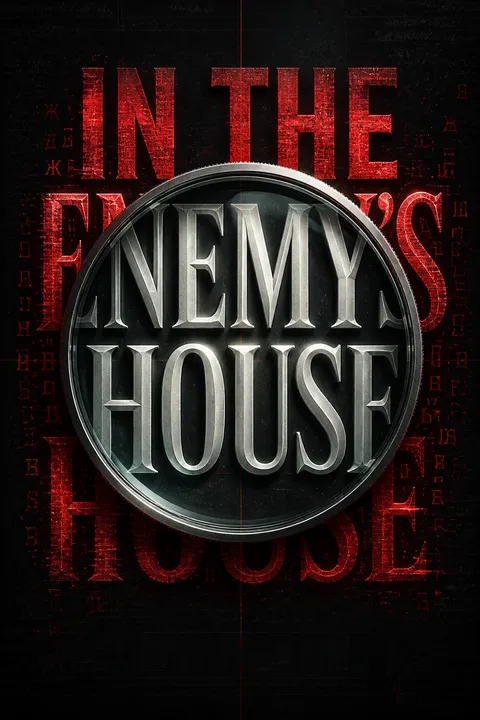
In the Enemy's House is praised for its compelling narrative of Cold War espionage, focusing on FBI agent Bob Lamphere and codebreaker Meredith Gardner's efforts to uncover Soviet spies. Readers appreciate Blum's storytelling, making complex codebreaking accessible and engaging. The book offers insights into the Rosenberg case and other Soviet agents. Some reviewers note minor inaccuracies and question the portrayal of certain characters' emotions. Overall, it's recommended for those interested in Cold War history and espionage, with most reviewers rating it positively.
People Also Read





Glossary
Venona
Soviet cable decipherment projectThe secret American effort to decrypt Soviet diplomatic and intelligence communications intercepted during and after World War II. Arlington Hall codebreakers exploited Soviet reuse of supposedly single-use additive pages, then reconstructed parts of the underlying codebook. The resulting translations exposed Soviet operations and agent networks, but the program's secrecy prevented its messages from being used openly as courtroom evidence.
Blue Problem
Russian codebreaking projectThe Army Signals Intelligence effort at Arlington Hall to read intercepted Soviet diplomatic and commercial cables. Initially staffed by only a few people, it was halted and restarted before experienced cryptanalysts joined the work. The team first stripped away the messages' encipherment, then worked to reconstruct the Soviet codebook and interpret the recovered traffic.
Enormoz
Soviet atomic intelligence operationThe KGB's cover name for its effort to obtain information about Western atomic research and weapons development. Soviet handlers recruited sources with access to the Manhattan Project and related scientific work. The collected reports included technical material on uranium processing and bomb design, which Soviet scientists assessed and used in their own atomic program.
one-time pad
Single-use random cipher keyA cipher system in which sender and recipient combine a message with matching random number sequences. When the sequences are truly random, kept secret, and used only once, the system can resist cryptanalysis. Soviet wartime production created duplicate pages, however, allowing the same sequences to be reused and giving Arlington Hall an opening to compare messages.
bookbreaking
Reconstructing a codebookThe cryptanalytic work of inferring the numerical substitutions in an enemy's codebook after a separate cipher layer has been removed. Gardner compared repeated number groups, their positions, and known plaintext to infer words and phrases. Unlike merely stripping away encipherment, bookbreaking turned the remaining numerical code into readable language.
rezidentura
Overseas KGB stationA KGB foreign intelligence station operating in a country, often from within a Soviet diplomatic or trade mission. Its officers handled agents, collected intelligence, and communicated with Moscow Center. The New York rezidentura coordinated multiple spy networks, including agents seeking atomic and technical secrets.
brush pass
Moving hand-to-hand exchangeA covert transfer in which two people pass a small object while moving through a crowd, without stopping or openly acknowledging one another. KGB handlers used the technique to collect microfilm and other compact materials. Its success depended on timing, cover, and avoiding visible interaction, but it could not eliminate the danger of surveillance.
black-bag job
Secret warrantless entryAn unauthorized entry into a target's office or facility to install listening devices, photograph documents, or gather other intelligence. The FBI used such operations against Soviet sites, including a Soviet purchasing office. The results could help investigators and codebreakers, but the entries were illegal and their products could not be presented as ordinary courtroom evidence.
FAQ
What's In the Enemy's House about?
- Historical Espionage Narrative: The book tells the true story of FBI agent Bob Lamphere and codebreaker Meredith Gardner as they work to uncover Soviet espionage in the U.S. during the Cold War.
- Focus on KGB Operations: It highlights the KGB's efforts to infiltrate American scientific and military secrets, especially atomic bomb research.
- Personal and Professional Struggles: The narrative intertwines the professional challenges and personal lives of Lamphere and Gardner, showing the emotional toll of their work.
Why should I read In the Enemy's House?
- Engaging True Story: The book offers a thrilling account of espionage, filled with tension and intrigue.
- Insight into Cold War Tactics: Readers gain a deeper understanding of the methods used by both the FBI and the KGB.
- Character Development: The personal stories of Lamphere and Gardner add a human element to the historical events, making it relatable and compelling.
Who are the main characters in In the Enemy's House?
- Bob Lamphere: An FBI counterintelligence supervisor determined to uncover Soviet spies in the U.S., characterized by his strong sense of duty.
- Meredith Gardner: A brilliant codebreaker at Arlington Hall, whose intellectual prowess is crucial in deciphering KGB communications.
- Julius Rosenberg: A key figure in the Soviet espionage network, illustrating the complexities of loyalty and betrayal during the Cold War.
What are the key takeaways of In the Enemy's House?
- Espionage is Complex: The book shows that espionage involves intelligence gathering, personal relationships, and moral dilemmas.
- Importance of Collaboration: The partnership between Lamphere and Gardner highlights how teamwork can lead to significant breakthroughs.
- Historical Context Matters: Understanding the Cold War's political climate is essential to grasp the motivations and actions of the characters.
What are the best quotes from In the Enemy's House and what do they mean?
- “I stood in the vestibule of the enemy’s house, having entered by stealth.”: Reflects the covert nature of espionage and the moral complexities faced by agents.
- “The Russians were operating all around us.”: Emphasizes the pervasive threat of Soviet espionage during the Cold War.
- “We hit the jackpot.”: Signifies a breakthrough in their investigation, representing the excitement and relief of uncovering critical information.
How does In the Enemy's House portray the KGB's operations?
- Central Role in Espionage: The KGB is depicted as a highly organized and effective intelligence agency infiltrating American institutions.
- Methods and Tactics: The book details KGB tactics, including code names and operational security.
- Impact on U.S. Security: The KGB's actions had profound implications for U.S. national security, leading to increased vigilance by the FBI.
What role does codebreaking play in In the Enemy's House?
- Critical to Investigations: Codebreaking is vital in uncovering the identities of spies, particularly through Meredith Gardner's work.
- Challenges Faced: The book illustrates the difficulties and complexities involved in breaking codes.
- Impact on National Security: Successful codebreaking efforts significantly influenced the course of the Cold War.
How does In the Enemy's House address the theme of loyalty?
- Personal vs. National Loyalty: Characters like Rosenberg struggle with loyalty to their country versus ideological beliefs.
- Trust in Relationships: The bond between Lamphere and Gardner is built on mutual trust, essential for counterintelligence success.
- Consequences of Betrayal: The book illustrates the severe repercussions of betrayal for individuals and national security.
What is the historical context of In the Enemy's House?
- Cold War Era: Set during the Cold War, a time of heightened tensions between the U.S. and the Soviet Union.
- Post-World War II Landscape: The Soviet Union's emergence as a superpower led to fears of communist infiltration in the U.S.
- Impact on U.S. Policy: The events contributed to the development of U.S. intelligence policies aimed at countering Soviet espionage.
How does In the Enemy's House portray the relationship between Lamphere and Gardner?
- Professional Partnership: Their relationship evolves from initial wariness to strong collaboration, showcasing trust's importance.
- Complementary Skills: Lamphere's field experience and Gardner's analytical skills create a dynamic team.
- Personal Connection: They develop mutual respect and friendship, enhancing their investigation effectiveness.
What challenges do Lamphere and Gardner face in In the Enemy's House?
- Bureaucratic Obstacles: They encounter resistance within their organizations, highlighting government red tape difficulties.
- Moral Dilemmas: Both grapple with the ethical implications of their work as they uncover Soviet infiltration.
- Time Pressure: The urgency of their mission adds tension, as they race against time to prevent espionage activities.
What is the significance of the title In the Enemy's House?
- Metaphorical Meaning: Suggests being within the enemy's territory, both literally and figuratively, as spies operate in the U.S.
- Personal Stakes: Reflects personal conflicts and moral dilemmas faced by characters in espionage roles.
- Historical Context: Alludes to Cold War geopolitical tensions, where trust was scarce and betrayal possible among allies.
Download PDF
Download EPUB
.epub digital book format is ideal for reading ebooks on phones, tablets, and e-readers.








