

Key Takeaways
Influence is power best used to make a freely chosen yes worthwhile.
Influence without coercion. Chance argues that influence is not a bag of tricks for treating people as sales targets. It is the human ability to express a desire, connect with others, and help move something forward. People may want more influence while distrusting tactics that feel manipulative, especially in relationships that must last beyond one transaction.
Start with a real desire. The Mongolian term temul describes a fierce, directed creative drive. Yet wanting something does not prove it is the right goal: Chance found that people can reach an ambition and discover it disappoints them. Treat your goal as a hypothesis. Experiment, notice how the experience feels, and adjust. Ethical influence begins with a desire worth pursuing and leaves other people genuinely free to choose.
The book's distinctive move is to make influence relational rather than merely persuasive. That shifts success from winning a single yes to building conditions where both parties can endorse the outcome. The distinction matters in workplaces and families, where compliance extracted through pressure can quietly damage trust. A useful ethical test is whether the other person can understand the request, refuse it without punishment, and still benefit from the interaction. Mutuality does not mean every deal is equal, but it makes the influencer accountable for more than the immediate result.
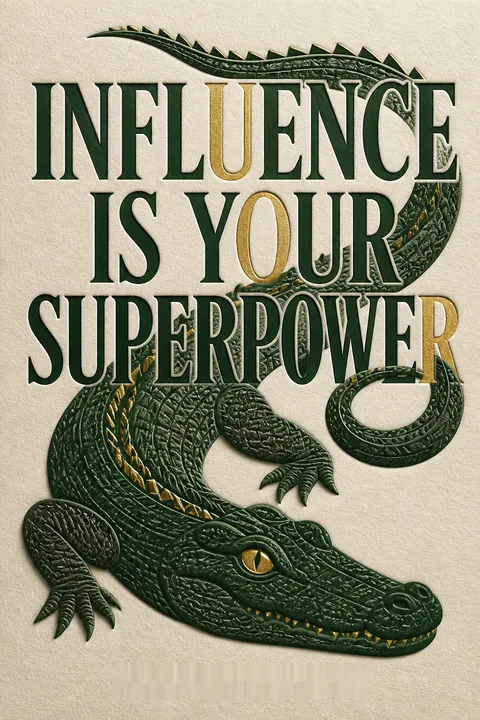
Design for the Gator, not the rational person you imagine.
Automatic comes first. Chance renames the familiar dual-process model: the Gator is fast, habitual, and emotion-driven; the Judge is slower, deliberate, and effortful. The Judge can review a gut reaction, but it receives information through the Gator's filters and tires when overloaded. In the Stroop test, practiced readers automatically read color words, making it harder to name the ink color instead. That delay shows how a quick response can interfere with deliberate control.
Attention is selective. Snap judgments can predict some social outcomes, but they can also reflect bias. The book describes research in which brief, silent clips of teachers predicted later evaluations. The practical lesson is to account for first impressions and limited attention, not assume facts will automatically govern behavior.
The Gator and Judge are useful as a teaching model, not separate little operators inside the skull. Their value lies in reminding decision-makers that attention, habit, emotion, and deliberation interact asymmetrically. That is especially relevant to public policy and product design, where a well-intended message can fail because it asks people to remember or calculate at precisely the wrong moment. Quick impressions can carry information, but predictive accuracy is not the same as fairness. A snap judgment may forecast how someone will be rated while still reproducing a biased standard.
Make action easy, then meet people when they can act.
Awareness is not action. The 5 A Day campaign made many more people aware of fruit and vegetable recommendations, yet US consumption fell 14 percent over the following decade. Knowing what to do did not remove the work of shopping, preparing food, and choosing it while hungry or distracted. Chance argues that perceived effort often predicts behavior better than good intentions do.
Remove friction at the right moment. Text reminders have increased attendance and follow-through in several settings. In one New York court study, reminders raised attendance from 30 to 38 percent and helped prevent thousands of arrest warrants. An implementation intention turns a vague intention into a specific plan for when and how to act. A first step can also be made less daunting by breaking a large request into small actions.
This principle links behavioral design with good service: people often experience an obstacle as indifference, even when they care about the goal. Removing friction can therefore improve both outcomes and relationships. Timing matters because attention is contextual; the same appeal can feel irrelevant during a busy moment and useful when a need is present. Ease should not be confused with making every choice effortless. When a decision has serious consequences, friction can protect people from impulsive action, so designers should simplify beneficial steps without concealing trade-offs.
Practice saying no until rejection stops controlling your choices.
A no creates room. In 1983, Soviet duty officer Stanislav Petrov received a warning that American missiles were incoming. The signal showed only five, a pattern he considered implausible for a first strike. He declined to escalate the warning, and no missiles arrived. His decision illustrates the value of pausing before compliance when the consequences are enormous.
Boundaries protect generosity. Chance's No Challenge asks people to make no the default for requests for a limited period, then observe what they truly want to accept. The point is not to refuse everything forever. It is to interrupt automatic people-pleasing. Repeated low-stakes rejection can also make asking less frightening. Research described in the book finds that exclusion activates brain systems associated with physical pain, but the discomfort of a refusal is survivable.
The challenge treats refusal as a skill that can be practiced, not a sign of selfishness. That is valuable for generous people whose unbounded availability can undermine the very care they want to offer. It also clarifies a social contract: if someone is allowed to decline a request, asking becomes less coercive. Petrov's example is a dramatic case of resisting a default, though it should not be read as a general recipe for ignoring warnings. Good refusal depends on judgment about both the request and the stakes.
Ask directly, and let people surprise you with their generosity.
Hints are not requests. In Chance's classroom exercise, a volunteer explained why she should receive a twenty-dollar bill, but the instructor kept holding it until she clearly asked for it. People often mistake making a case for making a request. A direct question gives the other person something definite to answer.
Expect more help than you predict. In experiments by Frank Flynn and Vanessa Bohns, people underestimated how willing strangers would be to grant favors by a factor of two to three. Asking can also give someone the chance to help. A study of requests to chaperone young people at a zoo found that people were three times more likely to accept the modest trip after first declining a much larger commitment. The useful lesson is to ask clearly, sometimes ambitiously, without treating a no as an insult.
A request is not only a bid for resources; it is also an invitation to participate. That helps explain why people can misjudge the social cost of asking: the requester imagines the burden of saying yes, while the recipient may experience the satisfaction of being useful. Directness reduces mind-reading and hidden expectations. Still, ambitious requests work best when the relationship can bear them and the other person has a real exit. A concession strategy becomes manipulative if the first ask is knowingly absurd or repeated after a firm refusal.
Give someone your attention to become the person they remember.
Charisma is practiced connection. Chance describes Prince's early performances as awkward, then recounts how he studied stagecraft and learned to engage audiences. Charisma, in this account, is something people do, not a fixed gift. Self-focused language and excessive apologies can draw attention back to the speaker; questions and attentive follow-ups shift it outward. Research discussed in the book finds that people who ask more questions are often better liked by the person answering.
Connect one person at a time. Chance calls focused audience connection shining. Speakers practice making eye contact with one listener, pausing, and giving that person undivided attention before moving on. A full-body pause can also slow a nervous speaker and let an audience catch up. The same principle applies in conversation: presence is more compelling than performing importance.
This account makes charisma accessible without reducing it to a checklist of gestures. It ties attention to reciprocity: people often feel drawn to someone who makes them feel noticed. That idea applies to leadership as much as performance, since listening can redistribute the spotlight rather than monopolize it. The advice about pronouns and voice should remain a prompt for awareness, not a rulebook. Language varies by culture, disability, and context, and quiet or self-referential speech can express thoughtfulness rather than insecurity.
Frame the choice, then meet people when the choice matters.
A frame directs attention. Derren Brown's stage trick led the audience to watch an easel while a gorilla took a banana elsewhere onstage. The framing made one detail salient and others easy to miss. Chance groups useful frames into three kinds: monumental frames make an issue feel important, manageable frames make action feel possible, and mysterious frames create curiosity. A strong message can combine them, provided its promise is honest.
Context changes receptivity. Cebu Pacific used water-repellent sidewalk messages that appeared during Hong Kong's rainy season, offering a sunny destination when people were already thinking about the weather. An implementation intention asks people to specify when and how they will act. In a voter study described in the book, planning details raised turnout by four percentage points. Timing and a clear cue can turn intention into action.
Framing is powerful because it organizes attention before people evaluate evidence. That power makes it useful for teaching, public communication, and invitations, but also ethically sensitive: a frame can clarify a real benefit or hide relevant costs. The strongest frames are not simply dramatic; they make the choice legible and help a person see what matters in context. Timing adds a practical dimension. A message that arrives at a moment of relevance can feel like assistance rather than interruption, especially when the next step is clear.
Treat resistance as information, and return control to the other person.
Pressure invites pushback. Psychological reactance is resistance that arises when people feel their freedom is being restricted. At Google, a Meatless Monday pilot was framed around removing meat, provoking angry opposition. Ethan Brown's Beyond Meat took another approach: it sold plant-based food around taste and familiar meals rather than moral pressure. The contrast shows how an invitation can reduce perceived loss and judgment.
Listen beneath the objection. Chance recommends asking what concerns someone has, reflecting their feelings, and listening for the values behind their position. In the Empathy Challenge, participants speak with people who disagree with them while assuming they are thoughtful and well-intentioned. This counters false polarization, the tendency to imagine opponents hold more extreme views than they do. Understanding someone is not the same as agreeing with them.
The strongest version of this approach treats resistance as data about costs, identity, and autonomy, not as an obstacle to be defeated. That is consistent with motivational interviewing, where questions help people articulate their own reasons for change. Listening also has civic value: caricature makes disagreement seem larger and more hostile than it is. But empathy should not become a technique for getting past someone's defenses while ignoring their answer. A person may understand the proposal perfectly and still reject it for sound reasons.
Negotiate by expanding the deal, not by fighting over crumbs.
Ask what would make agreement possible. Gloria Steinem asked women in a Zambian village what might prevent sex trafficking. They identified crop loss to elephants as part of the problem and proposed an electric fence. This became a shared project, not an outsider's imposed solution. Chance calls this the Magic Question: ask what it would take to make a desired outcome workable.
Create value before dividing it. Prepare by asking how the deal could improve matters for each side and who else might benefit. Explore options, priorities, and alternatives before arguing over a single number. Multiple equivalent simultaneous offers present different packages with similar value to the person making them, inviting the other side to reveal what matters. With a difficult counterpart, understand your leverage and keep a face-saving alternative rather than issuing a bluffing ultimatum.
The chapter's central insight is that a negotiation can be a joint design problem. Asking about constraints often reveals resources or interests neither side had considered, while shared authorship makes an agreement more durable. This approach is especially useful when the parties expect to work together again. Collaboration is not always possible, however. When power is unequal or the counterpart is acting in bad faith, creativity alone cannot guarantee fairness. Preparation, a clear boundary, and a credible alternative remain essential safeguards.
Make your negotiation count for people who were never in the room.
The asking gap has consequences. Chance reports that women negotiate job offers less often than men and may face social penalties for appearing demanding. In one word-game experiment, 23 percent of men asked for more pay, compared with 3 percent of women. Jennifer Lawrence later negotiated a film salary that exceeded her male co-star's, after publicly reflecting on having previously stopped negotiating too soon.
Make the system fairer. The book argues that women can use warmth without surrendering ambition, prepare a clear target, and treat negotiation as a chance to model what is possible for others. The responsibility is not theirs alone. Leaders can make compensation and opportunities more transparent, and proactively extend offers to people who may not feel safe asking. Negotiation practice helps, but access to information and fair institutional rules matter too.
The section makes negotiation both personal and structural. Individual requests can change outcomes, but a workplace that rewards only the loudest askers will reproduce unequal access. The Boggle result is striking as evidence of different behavior in a particular setting, not proof that every pay gap has one cause. The book's own discussion points toward a broader remedy: pair confidence-building with transparent ranges, consistent promotion criteria, and managers who do not wait for self-advocacy before recognizing contribution.
Pause when a pitch depends on urgency, exclusivity, or emotional fog.
Strong emotion can cloud judgment. Chance calls an agitated state in which the Gator overwhelms deliberate thought the Ether. Scammers can trigger it through fear, greed, anger, or excitement, then use urgency to prevent reflection. Bernie Madoff's scheme drew in thousands of investors partly by making access feel special and explanations hard to question. The book stresses that intelligence does not make a person immune to manipulation.
Look for patterns, not a liar's face. People detect deception only slightly better than chance in the research Chance cites. More useful warnings include pressure to decide now, exclusivity, implausibly good returns, half-truths, ignoring a firm no, and alternating charm with hostility. One warning sign is not proof of fraud, but several should prompt verification, outside advice, and time to think.
The red-flag approach is more defensible than claiming to read deception from body language. It shifts the question from whether someone looks dishonest to whether the situation is structured to disable scrutiny. That is a strong form of risk management because urgency, secrecy, and emotional overload can be assessed before a person commits. Intuition deserves attention but not blind obedience: unease can reflect prejudice as well as genuine danger. Independent verification and a cooling-off period help distinguish the two.
Turn ambitious ideas into coalitions, one useful invitation at a time.
A movement needs more than a hero. Belabbes Benkredda saw Tunisia's democratic opening as a chance to establish televised election debates. He founded the Munathara Initiative, found funders and broadcast partners, and persuaded most presidential candidates to participate. The debates reached 6.5 million Tunisians, more than half the country's population. Their success depended on a memorable purpose, many practical agreements, persistence, and timing.
Build the next step. Benkredda's story gathers the book's methods into one effort: ask boldly, make participation possible, listen to resistance, and recruit people who can help. Yet Chance does not present influence as a guarantee. The project faced setbacks and financial risk, and its outcome depended partly on luck. The lesson is to make a meaningful contribution with allies, rather than wait for certainty or assume one person must change everything.
The Tunisia story gives the book's small interpersonal tools a political scale. A coalition forms when a large purpose is translated into specific invitations that different people can accept for their own reasons. This resembles networked organizing: participants carry the idea into institutions and relationships the original advocate cannot reach alone. The caution is important. A persuasive frame and determined organizer do not erase structural constraints or ensure democratic outcomes. Influence can open a door; collective institutions determine what happens after people walk through it.
Analysis
Chance's book turns influence from a collection of persuasion tricks into a practical account of how people coordinate. Its central design choice is to begin with the decision-maker's lived experience: limited attention, automatic reactions, fear of loss, and a desire for autonomy. From there, the advice moves outward, from making a request easier to hear, to negotiating an agreement, to recruiting allies for civic action. The recurring stories keep these levels connected. A skydiving instructor makes a terrifying choice feel like a series of manageable actions; a Zambian community helps define its own solution; a Tunisian debate organizer turns an ambitious vision into a coalition.
The book's most useful tension is that influence can be both benevolent and self-interested. Chance argues that making refusal comfortable often increases the chance of agreement, while also insisting that people retain freedom. That is persuasive when the influencer genuinely accepts a no. It becomes less ethical when autonomy language is only a soft cover for pressure. The same tools that direct attention, reduce friction, and shape a frame can help people act on their values or steer them toward someone else's agenda. The book's emphasis on consent, listening, and mutual benefit is therefore not decorative. It is the boundary that separates influence from manipulation.
The Gator and Judge model is memorable because it makes automatic behavior visible, but it can oversimplify cognition if treated as a literal map of the brain. Chance presents it as a theoretical distinction, and the book's endnotes acknowledge uncertainty in some cited findings, including debate over the magnitude of the hungry-judge effect. That caveat strengthens rather than weakens the practical case: the model is most useful as a prompt to test whether an intervention works, not as a universal explanation. Overall, the book excels at translating behavioral science into humane, repeatable moves while reminding readers that no tactic substitutes for sound goals, sound evidence, or respect for the people affected.
Review Summary
Influence is Your Superpower receives overwhelmingly positive reviews, praised for its engaging writing style, practical advice, and scientific approach to influence. Readers appreciate the author's humor, personal anecdotes, and ability to make complex concepts accessible. Many highlight the book's potential to transform relationships and careers. Reviewers frequently mention the book's usefulness for both personal and professional development, with several noting it as one of the best self-help books they've read. A few critics suggest the advice may be too basic for experienced professionals.
People Also Read






Glossary
Gator
Fast, automatic thinkingChance's label for the quick, habitual, largely unconscious processes involved in emotion, snap judgments, pattern recognition, and practiced actions. The Gator responds before deliberate thought and filters what receives attention. It is a teaching metaphor for a family of cognitive processes, not a literal brain part.
Judge
Effortful, conscious thinkingChance's label for deliberate mental work such as planning, comparing evidence, calculating, and checking errors. The Judge requires concentration and has limited capacity. It can reconsider an automatic response, but its reasoning is influenced by what the Gator has already noticed, preferred, or excluded.
temul
Directed creative passionA Mongolian word Chance uses for intense, purposeful desire: the drive to move toward what one wants despite competing pressures. The book treats temul as fuel for influence, while warning that a goal should be tested through experience because people may misjudge what will satisfy them.
Implementation intention
A specific action planA plan that identifies when and how a person intends to carry out a goal. Instead of leaving an intention abstract, it connects the desired behavior to a situation or cue, such as voting on the way home from work. This makes the action easier to remember when the relevant moment arrives.
Moments of truth
High-receptivity situationsSituations in which a person is especially likely to notice or welcome a message because of the timing, location, or immediate context. An effective influence attempt fits what the person is already attending to or needs at that moment, rather than interrupting without relevance.
monumental, manageable, and mysterious frames
Three attention-shaping framesThree ways of presenting an idea: monumental framing emphasizes its importance, manageable framing makes the action seem feasible, and mysterious framing creates curiosity by introducing uncertainty or novelty. The frames can be combined, but their promises should be credible and should not hide costs or trade-offs.
Psychological reactance
Resistance to lost freedomA motivational response that occurs when people feel their freedom to choose is being restricted. They may refuse a proposal or even favor the opposite choice to restore a sense of control. Chance recommends reducing perceived pressure by listening, offering options, and making the right to decline explicit.
Kindly Brontosaurus
Polite, persistent follow-upChance's image for patient, nonaggressive persistence after an initial refusal. The person follows up visibly and respectfully, ideally asking permission about when to check again. The method stops when the other person gives a firm no or signals that further contact is unwelcome.
Magic Question
Question that invites solutionsChance's name for asking what would make a desired outcome possible or workable for the other person. The question can reveal hidden constraints, encourage creative options, and shift a conversation from confrontation toward collaboration. Its value depends on taking the answer seriously rather than using it as a pretext for pressure.
soft ask
Low-pressure interest checkA hypothetical or exploratory question that tests someone's interest before asking for a firm commitment. It gives the other person room to disclose concerns and makes refusal easier. Chance recommends it when a direct no could strain a relationship or when the quality of a yes matters, such as requesting a strong reference.
Value Creation Questions
Questions for improving a dealA negotiation tool built around considering how an agreement could be better for oneself, better for the other party, and beneficial to others. The questions prompt creative preparation and information gathering before or during a negotiation. They help uncover interests beyond the obvious division of money or resources.
MESOs
Several equivalent offer packagesMultiple equivalent simultaneous offers are different packages presented together that the person making them values similarly. They give the other party choices while revealing which terms matter most. Even when none is accepted as offered, the comparison can create a more informative, collaborative negotiation.
Face-Saving Plan B
Alternative without an ultimatumA negotiation approach that makes an alternative clear while expressing a genuine preference to reach agreement. Unlike a walkaway bluff, it avoids forcing the other person into a humiliating choice and leaves the speaker free to decide what to do if no agreement is possible.
The Zeigarnik effect
Unfinished tasks hold attentionThe tendency for incomplete tasks or unresolved questions to remain more accessible in memory than completed ones. Chance connects this effect to curiosity and open loops: uncertainty can hold attention until resolution. It can help people stay engaged, but it can also encourage distraction or susceptibility to clickbait.
The Ether
Emotionally overloaded stateA state of heightened emotion or confusion in which a person has difficulty thinking clearly and may not recognize the impairment. Chance describes fear, greed, anger, excitement, and other intense feelings as possible triggers. Manipulators may deliberately create this state to push someone toward a rapid decision.
Shining
Focused audience connectionA public-speaking practice in which a speaker gives focused attention to one listener at a time, seeking a genuine moment of connection before moving to another. Chance presents it as a reciprocal experience, not simply eye contact or performance technique: the listener must feel the connection for it to occur.
FAQ
What's Influence is Your Superpower about?
- Focus on Influence: The book explores influence as a natural human ability that can be developed to build relationships and achieve goals.
- Rediscovering Childhood Skills: It encourages readers to rekindle persuasive skills from childhood that are often lost due to societal norms.
- Practical Strategies: Zoe Chance offers tools and techniques to enhance influence without compromising integrity.
Why should I read Influence is Your Superpower?
- Empowerment through Influence: The book empowers readers to positively influence others, leading to success in personal and professional areas.
- Research-Based Insights: It combines behavioral science with real-life examples, making the content relatable and scientifically grounded.
- Transformative Potential: Readers can transform their approach to influence, improving relationships and negotiation effectiveness.
What are the key takeaways of Influence is Your Superpower?
- Influence is Natural: Everyone can develop and refine their influence skills.
- Shift from Transactional to Personal: The book advocates for a personal, mutual approach to influence over manipulative tactics.
- The Power of Asking: Simply asking for what you want is a powerful strategy many overlook.
What is the "Magic Question" in Influence is Your Superpower?
- Catalyst for Collaboration: The "Magic Question" is “What would it take for us to…?” which invites collaboration and creativity.
- Encourages Open Dialogue: It shifts focus from confrontation to cooperation, allowing both parties to express needs.
- Real-World Application: Zoe Chance illustrates its effectiveness through examples in workplace and personal scenarios.
How does Zoe Chance define charisma in Influence is Your Superpower?
- Attention and Presence: Charisma is the ability to attract attention and inspire devotion, not through self-promotion.
- Self-Focus vs. Other-Focus: True charisma comes from focusing on others rather than trying too hard to be charismatic.
- Engagement Techniques: Techniques include asking questions and actively listening to enhance charisma.
What are "Inner Two-Year-Olds" in Influence is Your Superpower?
- Resistance to Control: This term refers to our instinctual resistance to threats to our freedom, similar to a toddler's defiance.
- Psychological Reactance: It explains why people resist influence attempts, especially when feeling coerced.
- Managing Resistance: Strategies are suggested for recognizing and addressing this resistance to improve communication.
What is the significance of framing in Influence is Your Superpower?
- Directing Attention: Framing guides how people perceive and interpret information, influencing their responses.
- Types of Frames: The book discusses monumental, manageable, and mysterious frames for different communication purposes.
- Real-World Examples: Examples include how Steve Jobs used framing to influence John Sculley’s career decision.
How can I improve my negotiation skills using Influence is Your Superpower?
- Collaborative Approach: View negotiations as conversations for mutual agreement rather than confrontations.
- Use of the Magic Question: This question helps uncover needs for a satisfactory agreement.
- Handling Objections: Techniques include affirming freedom of choice and exploring resistance.
What are the Value Creation Questions and how do they work?
- Three Key Questions: "How could this be even better for me? How could it be even better for them? Who else could benefit?"
- Encouraging Creativity: These questions help explore creative solutions for mutual gain in negotiations.
- Real-World Examples: Zoe Chance shares examples of successful negotiations using these questions.
How does Influence is Your Superpower address gender differences in negotiation?
- Gender Negotiation Gap: Women are less likely to negotiate due to societal pressures and fear of backlash.
- Training and Experience: Negotiation training can help close the gender gap, as practice builds confidence.
- Negotiating for Others: Women often negotiate better for others, a strength they can leverage for themselves.
What are the red flags of manipulation discussed in Influence is Your Superpower?
- Ether: Emotional agitation that clouds judgment, making one susceptible to manipulation.
- Urgency: Creating a sense of urgency to pressure quick decisions.
- Exclusivity: Playing on the desire for status and belonging to manipulate decisions.
What are the best quotes from Influence is Your Superpower and what do they mean?
- “You don’t deserve to have power, or money, or love—or whatever you secretly wish for.”: Influence is about understanding and practicing, not deserving.
- “No is a complete sentence.”: Emphasizes setting boundaries and the power of saying no without justification.
- “When you become someone people want to say yes to, you are heavily rewarded.”: Highlights the benefits of being influential, leading to greater opportunities.
Download PDF
Download EPUB
.epub digital book format is ideal for reading ebooks on phones, tablets, and e-readers.








