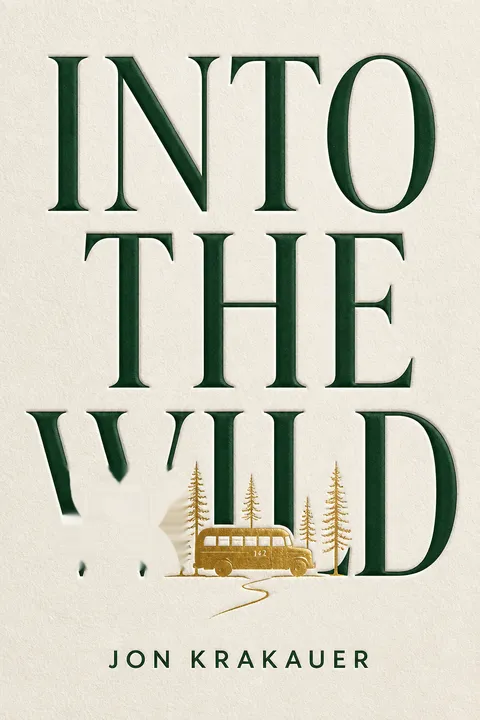


Key Takeaways
His wilderness quest sought self-rule, not necessarily death
A deliberate departure. In 1990, after graduating with honors from Emory, Chris McCandless gave roughly $24,000 to OXFAM, left his family without an address, and began traveling under the name Alexander Supertramp. He rejected wealth and conventional expectations, seeking a life shaped by direct experience. Two years later, he entered the Alaska bush with little food and inadequate equipment. His body was found in an abandoned bus, weighing 67 pounds.
The question remains. Jon Krakauer investigates what drove McCandless and how he died, while acknowledging that he is not a neutral biographer. Some readers see courage and conviction; others see vanity and recklessness. The book's central tension is that a genuine search for freedom can coexist with grave misjudgment, and that a fatal outcome does not by itself prove a wish to die.
The distinction between seeking danger and seeking death matters because observers often infer intention from outcome. McCandless's choices were extreme, but the evidence described here also shows plans, preparation, and a return route. The more useful question is not whether his ideals were admirable or foolish in the abstract, but what those ideals allowed him to notice and what they made him dismiss. A chosen identity can give a person direction, yet it can also make changing course feel like betraying the self.
Literary wilderness fantasies cannot substitute for ecological knowledge
Books shaped the ideal. McCandless read Thoreau, Tolstoy, and Jack London, whose stories gave hardship and solitude a moral glow. London was especially important to him, though his northern tales were fiction and his own experience in the North was limited. The imagined wilderness offered a place to escape materialism and test character. The actual Alaskan bush demanded specific knowledge of weather, rivers, edible plants, hunting, and food preservation.
The gap was practical. Jim Gallien, an experienced outdoorsman, noticed that McCandless carried only ten pounds of rice, wore cheap boots, lacked a compass and proper cold-weather equipment, and had a small rifle. He tried to warn him that game was not easy to find. McCandless answered each concern with confidence. His ideals were serious, but conviction could not replace skills he had not yet learned.
Stories can prepare people emotionally for hardship while leaving them poorly prepared for its mechanics. McCandless's reading helped him name what he opposed, but it did not teach him how quickly a river changes or how difficult it is to preserve meat. This is not an argument against idealism. It is a reminder that symbolic understanding and operational competence are different forms of knowledge. The danger grows when the first is mistaken for the second.
Past survival successes made Alaska seem safer than it was
Earlier risks paid off. Before Alaska, McCandless drove his Datsun into a desert wash near Lake Mead. A flash flood left the engine disabled, so he abandoned the car, hid his possessions, and burned $123. Later, he bought a canoe and traveled down the lower Colorado River toward Mexico. He survived heat, hunger, and a dangerous struggle with wind and tides, eventually returning north on foot.
Success can mislead. For 36 days beside the Gulf of California, he lived on a small supply of rice and what he caught from the sea. That experience encouraged him to believe he could live similarly in Alaska. But the environments differed sharply. His previous adventures showed resourcefulness and endurance, not reliable competence in the interior bush, where cold, seasonal rivers, and scarce game changed the stakes.
A string of successful escapes can create confidence without producing expertise in the next setting. Each prior ordeal may strengthen a personal story of being able to improvise, while concealing how much depended on luck, other people's help, or conditions that happened to remain survivable. McCandless's earlier journeys were not meaningless; they were evidence of adaptability. The mistake was treating adaptability as a universal tool rather than a capacity that still needs local knowledge.
A map can matter more than courage when a river floods
The route changed. McCandless crossed the Teklanika River in April, when it was relatively low. In July, after rain and snowmelt, it had become a deep, fast torrent. On his attempt to leave the bush, he judged the crossing too dangerous and turned back toward the bus. That was a sensible immediate decision: the river could have swept him into rapids.
A hidden option. A year later, Krakauer and companions found a decommissioned cable crossing downstream. Its suspended basket was on the far bank, where local hunters had moved it. A detailed map would have shown the gauging station and might have led McCandless to it. This does not prove he could have crossed safely or found the basket, but it shows how little his view of the terrain revealed about his actual options.
The river scene separates courage from information. McCandless did not fail because he lacked bravery; he faced a hazard he could not accurately map. The episode also warns against judging a decision with knowledge acquired afterward. The cable crossing was real, but it was hidden, and its availability depended on details he did not know. In uncertain environments, good judgment is not merely daring or caution. It depends on having enough information to distinguish the risks that can be managed from those that cannot.
Pride made practical help feel like a threat to freedom
Warnings went unanswered. Gallien offered to drive McCandless to Anchorage, buy him suitable equipment, and take him back to the trail. McCandless declined. He accepted the old rubber boots and sandwiches Gallien offered, but kept his plan and most of his minimal kit. Earlier, another driver, Gaylord Stuckey, had urged him to contact his parents and even offered a credit card for the call. McCandless left without doing so.
Help was complicated. He also accepted rides, meals, jobs, clothing, and shelter from people he met. He was not incapable of receiving kindness. But assistance that threatened his independence, especially advice or family contact, often met resistance. The pattern suggests that self-reliance was not only a practical aim; it had become part of the identity he was trying to protect.
Independence is not the same as refusing every form of support. In many difficult undertakings, the capacity to accept useful information is itself a form of agency. McCandless's selective acceptance makes the story more complex than a simple portrait of a stubborn loner: he could receive generosity while resisting counsel that felt controlling. The distinction is crucial. Support preserves freedom when it expands a person's choices, but it can feel like domination when trust has already broken down.
His brief friendships gave others hope, then left them grieving
He was no hermit. In Carthage, McCandless worked hard for Wayne Westerberg and became close to the people around him. In the desert, he befriended Ronald Franz, an older man who had lost his wife and son. Franz taught him leatherwork, offered him equipment, and asked to adopt him as a grandson. McCandless avoided answering that request, then left for South Dakota and eventually Alaska.
The departure mattered. Franz took McCandless's advice to travel, bought a van, and waited for his young friend to return. When he learned that McCandless had died, he was devastated. McCandless also had a close relationship with his sister, Carine, yet cut off contact with his family. His solitude was chosen, but its consequences reached people who cared for him.
The book complicates the familiar image of the solitary adventurer by showing how quickly he could form meaningful bonds. The relationships were real even when they were brief, and leaving them abruptly did not erase their importance to the people left behind. Autonomy can protect a person from unwanted obligations, but it cannot make relationships consequence-free. This is especially evident when a departure is experienced by one person as liberation and by another as abandonment.
His death likely followed starvation, perhaps worsened by moldy seeds
A sudden decline. McCandless survived in the bush for about 16 weeks, hunting small game and gathering plants. In July, after eating the seeds of a plant he identified as wild potato, he recorded extreme weakness and starvation. His condition worsened until he was too weak to hike out or hunt effectively. He died in August, and the autopsy found severe emaciation. Starvation was considered the most probable cause.
The cause remains uncertain. Krakauer proposes that the seeds may have been contaminated by a mold producing swainsonine, a toxin known to cause illness in animals. In his theory, the toxin interfered with the body's use of food, accelerating starvation in someone already undernourished. Testing the seeds collected near the bus did not confirm the toxin. The explanation is plausible within the book's account, but it is a hypothesis, not a proven diagnosis.
This account shows why a convincing causal story should not be confused with certainty. A sequence of events, a biological mechanism, and a suggestive journal entry can support a hypothesis without establishing it. Krakauer's willingness to revise his explanation is valuable because it keeps the mystery open to evidence. The larger lesson is not that one obscure plant alone explains the death, but that a body already depleted by hardship can be vulnerable to small additional setbacks.
Danger can make life vivid without making death the goal
Krakauer recognizes the pull. As a young man, he left a job and attempted a solo climb of the Devils Thumb in Alaska. He felt that the danger made the world sharper and more immediate. Bad weather, crevasses, and unstable ice repeatedly forced him to retreat, yet he eventually reached the summit by a different route. Looking back, he sees that his survival owed much to chance, not superior judgment.
A parallel, not a verdict. Krakauer believes McCandless also sought intensity rather than death. McCandless had talked about returning from Alaska, and after being trapped by the river he continued hunting and gathering. Such evidence cannot reveal every private intention, but it challenges the claim that his final outcome proves he meant to die. Risk can be a test of life, even when the person taking it badly underestimates the danger.
Krakauer's personal history gives the book an unusual kind of evidence: not proof of McCandless's motives, but an informed account of how risk can feel from the inside. The comparison helps readers resist easy moral distance. It also carries a limitation: shared impulses do not make two people identical, and a survivor's interpretation cannot settle another person's intention. The parallel is most useful as a reason to remain curious, not as a final defense.
Judge his choices without reducing him to his mistakes
The public split. After McCandless's death, some readers praised his courage and ideals; others called him arrogant and incompetent. The debate often treated one mistake as a complete portrait. Krakauer himself initially reported that McCandless had mistaken a caribou for a moose, an error critics used to dismiss him. When Krakauer revisited the site and photographs, he concluded the animal was in fact a moose.
Keep the person in view. McCandless could be disciplined, generous, and intellectually gifted, while also being rigid, inexperienced, and careless. His parents' grief gives the cost of his choices a human scale. The book neither makes the death noble nor reduces the young man to a cautionary tale. It asks readers to hold ambition, error, affection, and loss together.
The correction about the animal matters beyond natural history. It demonstrates how a single false detail can harden into a moral judgment, especially when it confirms what an audience already suspects. At the same time, correcting one criticism does not erase McCandless's poor preparation. A fair reading must allow both facts to stand. Complexity is not a way to excuse harm; it is a way to describe a person accurately enough to learn from the harm.
Analysis
Into the Wild is not simply an investigation of a wilderness death. It is also a study in how people turn a life into a story, and how that story can obscure facts that do not fit. McCandless narrates himself through a chosen name, a deliberate rejection of possessions, and a set of literary ideals. Critics narrate him as either hero or fool. Krakauer complicates both accounts by tracing the practical decisions, family history, friendships, and luck that neither label can contain.
The book's structure matters. It begins with the dead body, then moves backward through the people and places that made the final journey possible. This gives the reader information in the order of a mystery, but it also creates a risk: once the ending is known, every earlier decision can appear to point toward it. The narrative resists that hindsight trap by emphasizing that McCandless survived for months, adapted repeatedly, and at some point tried to leave. His death was not an inevitable conclusion visible from the start.
Krakauer's own climbing story is a form of interpretive argument. It makes the emotional appeal of dangerous solitude intelligible, while admitting that his survival depended partly on chance. That candor strengthens the comparison but cannot prove that McCandless felt exactly the same. The book is strongest when it uses personal resemblance to open a question rather than close one.
Its hardest lesson concerns the difference between meaningful risk and responsible risk. A person may value exposure, hardship, or self-testing without wanting to die. Yet intentions do not cancel consequences. McCandless's choices affected his family and friends, and his lack of preparation narrowed his options when conditions changed. The story therefore rejects two easy conclusions: that his ideals make the death noble, or that the death makes the ideals meaningless. It leaves readers with a more demanding task, to respect the hunger for an unborrowed life while recognizing that freedom also depends on knowledge, flexibility, and the people one chooses to leave behind.
Review Summary
Into the Wild is a polarizing book about Christopher McCandless, who died alone in Alaska after abandoning society. Many readers find his story fascinating, praising Krakauer's empathetic portrayal and compelling writing. Others criticize McCandless as foolish and selfish. The book explores themes of adventure, idealism, and the allure of nature. Some reviewers appreciate Krakauer's objectivity, while others feel he glorifies McCandless. Despite differing opinions, most agree the book is thought-provoking and well-written, sparking discussions about society, freedom, and the pursuit of meaning in life.
People Also Read




Glossary
rubber tramp
vehicle-traveling vagabondA vagabond who travels with a vehicle, distinguishing this kind of itinerant from a leather tramp, who has no personal transportation and must hitchhike or walk. The term appears in the account of McCandless's encounters with other travelers in the American West.
leather tramp
walking or hitchhiking vagabondA traveler without a vehicle, reliant on walking or hitchhiking, in contrast to a rubber tramp who has transportation. The distinction is used to describe the informal vocabulary of people living itinerantly on the road.
wild potato
edible Alaskan plantThe Dena'ina name used in the book for Hedysarum alpinum, a plant with an edible root traditionally gathered as food. McCandless also ate its seedpods. Krakauer explores whether seeds stored in damp conditions may have contributed to McCandless's illness, while noting that the proposed cause was not proven.
wild sweet pea
similar, potentially poisonous plantHedysarum mackenzii, a plant that resembles wild potato closely enough to be difficult to distinguish. The book describes Indigenous warnings that it is poisonous and considers whether McCandless might have confused it with wild potato. Krakauer later favors a different, unconfirmed explanation for the illness.
swainsonine
toxic plant-associated alkaloidAn alkaloid toxin associated with a mold that can grow on legumes. In Krakauer's proposed explanation, mold-contaminated wild-potato seeds may have exposed McCandless to swainsonine, interfering with his body's ability to use nutrients and worsening starvation. The book presents this as a hypothesis rather than an established cause of death.
FAQ
What's Into the Wild about?
- Chris McCandless's Journey: The book follows Christopher McCandless, a young man who leaves his possessions and family to explore the Alaskan wilderness.
- Themes of Freedom and Nature: It explores themes of freedom, the allure of nature, and self-discovery, as McCandless seeks to escape societal norms.
- Tragic Outcome: McCandless's journey ends tragically with his death from starvation, prompting reflections on idealism and isolation.
Why should I read Into the Wild by Jon Krakauer?
- Inspiring True Story: The narrative inspires readers to reflect on their own lives and the pursuit of meaning beyond societal constraints.
- Thought-Provoking Themes: It delves into themes like the relationship between man and nature, identity, and family dynamics.
- Engaging Writing: Krakauer's detailed and emotionally impactful writing vividly portrays McCandless's experiences and the landscapes he traversed.
What are the key takeaways of Into the Wild?
- Self-Discovery: The book emphasizes the importance of pursuing one's passions and personal truth, even through unconventional paths.
- Isolation's Consequences: It serves as a cautionary tale about the dangers of extreme isolation and romanticizing wilderness survival.
- Family Dynamics: The narrative highlights the complexities of family relationships and the impact of personal choices on familial bonds.
What are the best quotes from Into the Wild and what do they mean?
- “I now walk into the wild.”: Reflects McCandless's decision to embrace adventure and freedom from societal expectations.
- “The joy of life comes from our encounters with new experiences.”: Emphasizes the importance of seeking new experiences for joy and fulfillment.
- “Happiness is only real when shared.”: Suggests true happiness is found in connection with others, reflecting on McCandless's isolation.
What motivated Chris McCandless in Into the Wild?
- Desire for Authenticity: McCandless sought to live authentically, rejecting materialism and societal norms.
- Search for Meaning: He believed immersing himself in nature would provide clarity and understanding of himself and the world.
- Rebellion Against Society: Disconnected from his affluent upbringing, he pursued a more profound existence by abandoning possessions and family ties.
How did McCandless prepare for his journey in Into the Wild?
- Minimal Gear: He traveled with minimal supplies, including a rifle and a small amount of rice, which proved insufficient.
- Self-Taught Skills: Relied on self-taught survival skills from books, but lacked understanding of the Alaskan wilderness's harsh realities.
- Idealistic Mindset: His overconfidence in thriving in the wild contributed to his tragic fate.
What were the circumstances of McCandless's death in Into the Wild?
- Abandoned Bus: McCandless's body was found in an abandoned bus on the Stampede Trail in Alaska.
- Cause of Death: He died from starvation, with insufficient food and supplies to sustain himself.
- Final Days: His journal entries revealed a decline in health and increasing desperation, highlighting the risks of wilderness exploration.
How did McCandless's family react to his journey in Into the Wild?
- Concern and Confusion: Initially, his family was concerned and confused by his disappearance and lack of communication.
- Painful Discovery: After his death, they grappled with the pain of losing him and the complexities of their relationship.
- Reflection on Relationships: The family's reflections highlight the impact of McCandless's choices on their lives and familial bonds.
What parallels can be drawn between McCandless and other historical figures in Into the Wild?
- Everett Ruess: Like McCandless, Ruess was a young wanderer who sought beauty and adventure, sharing a romantic idealism and tragic end.
- John Waterman: Waterman exhibited similar ambition and recklessness, serving as a cautionary tale about isolation and extreme challenges.
- Cultural Archetypes: McCandless embodies the American wanderer archetype, drawing comparisons to figures like Thoreau and Muir.
How does Into the Wild address the theme of nature?
- Nature as a Teacher: Portrays nature as a powerful teacher offering beauty and danger, from which McCandless sought insights.
- Romantic Idealism: Explores the allure of nature for those seeking escape, reflecting McCandless's yearning for connection with the natural world.
- Harsh Realities: Confronts nature's unforgiving realities, emphasizing the risks of romanticizing wilderness survival.
What challenges did McCandless face in the wild?
- Survival Skills: Struggled with essential skills like hunting and foraging, contributing to his starvation.
- Isolation and Loneliness: His choice to isolate himself led to profound loneliness, a recurring theme in the book.
- Physical Hardships: Faced harsh weather, difficult terrain, and the physical toll of living off the land without adequate preparation.
What lessons can be learned from Into the Wild?
- Importance of Preparation: Highlights the necessity of preparation and knowledge when venturing into the wilderness.
- Understanding Human Nature: Encourages reflection on personal motivations and the complexities of human desires and relationships.
- Value of Connection: Emphasizes the importance of human connection and the dangers of extreme isolation, suggesting happiness often comes from shared experiences.
About the Author
Download PDF
Download EPUB
.epub digital book format is ideal for reading ebooks on phones, tablets, and e-readers.








