

Key Takeaways
At Everest’s summit, ambition can outlast judgment and oxygen
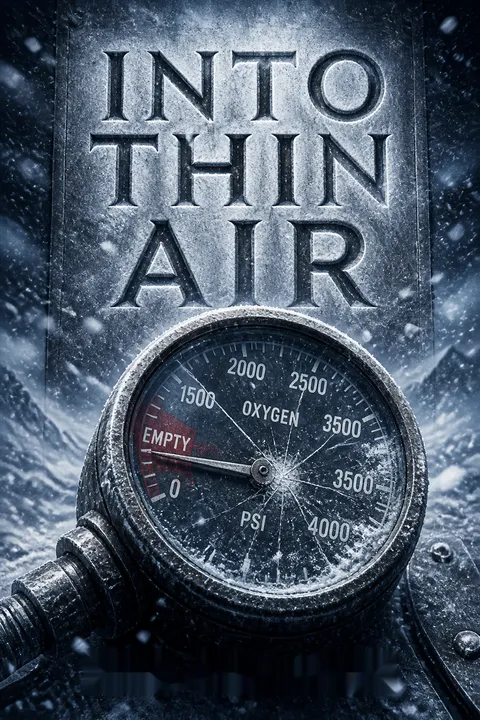
The summit felt strangely empty. At 1:17 p.m. on May 10, 1996, Jon Krakauer reached Everest’s summit after 57 hours without sleep, almost no food, weeks of coughing, and an oxygen supply running low. He had imagined the moment for years. Instead, exhaustion and oxygen deprivation left him too dulled to feel much triumph. He stayed only a few minutes, then began descending.
The danger was easy to miss. Clouds that had seemed harmless soon thickened into a storm. Krakauer was already focused on his oxygen, not the sky. By the time the weather turned lethal, climbers from several expeditions were scattered high on the mountain. Twelve people died during that spring season. The opening scene sets the book’s central tension: desire can carry people toward a goal even as their ability to assess its cost collapses.
What's striking is the gap between the summit as a cherished symbol and the summit as an actual human experience. Extreme effort does not guarantee a feeling of fulfillment; fatigue can flatten the very reward that motivated the effort. This resembles the distinction in psychology between anticipated pleasure and experienced pleasure: people often imagine an achievement from a healthy, rested state, then meet it under conditions that change what they can feel. The account also warns against treating persistence as evidence that a decision remains sound. At high altitude, determination may continue after clear judgment has begun to fail.
Paying for a guide reduces obstacles, not the mountain’s danger
A guided climb is a complex service. Krakauer joined Rob Hall’s Adventure Consultants expedition as both a paying client and a journalist. Hall charged $65,000 per client and brought an impressive record: he had guided 39 climbers to Everest’s summit before 1996. His operation supplied camps, oxygen, route preparation, Sherpa staff, and a carefully planned acclimatization schedule. Clients with very different climbing backgrounds could attempt a mountain that would be beyond their independent reach.
Support can create dependence. Clients carried little beyond personal gear while Sherpas hauled supplies, prepared camps, and established routes. This logistical help improved access, but it could also leave clients less practiced at making decisions or managing emergencies. A guide can organize the climb and reduce some hazards; no fee can guarantee safe weather, sound judgment, or rescue from the Death Zone, the mountaineering term for Everest’s highest, dangerously oxygen-poor region.
The commercial climb is not simply a story of rich amateurs buying a shortcut. It is a service system that genuinely provides expertise and infrastructure, while also creating an expectation that someone else will manage danger. In safety-critical fields, specialists can make risky activities more accessible, but their presence may encourage others to underestimate residual risk. That does not make clients foolish or guides culpable by definition. It does mean that a service should make its limits as visible as its benefits, especially when customers may mistake a high success rate for a guarantee.
Treat a turn-around time as a safety rule, not a suggestion
Turning back can be the skilled choice. Before the summit attempt, Hall discussed a deadline of either 1:00 or 2:00 p.m., but never clearly settled which time would govern. On May 3, Swedish climber Göran Kropp turned around at about 28,700 feet, roughly an hour below the summit, deciding he lacked the strength to descend safely if he continued. Hall praised his judgment.
The deadline dissolved under pressure. On May 10, delays at the fixed ropes and a slow-moving queue pushed the climb behind schedule. Several Hall clients turned around, but others continued. Doug Hansen reached the summit after 4:00 p.m., with Hall beside him, long after the proposed cutoff. The storm arrived during the descent. On a mountain where oxygen supplies and daylight are finite, a turnaround rule only protects people if it is explicit, shared, and followed even when the summit looks close.
A cutoff is most useful when it is set before the people enforcing it are tired, invested, and close to success. This is the logic of precommitment: a rule made under calmer conditions can protect decision-making when emotion and sunk costs distort it. The book also shows why a deadline cannot be treated as a magic safeguard. It must account for queues, uneven pace, and the time needed to descend. A rigid rule may sometimes sacrifice a summit unnecessarily, but an unclear rule leaves the group to negotiate under the worst possible conditions.
At extreme altitude, capable people misread both facts and themselves
Oxygen deprivation changes perception. Above 25,000 feet, in the region climbers call the Death Zone, exhaustion and low oxygen impair movement, memory, and judgment. On the descent, Krakauer mistook Martin Adams, a much smaller climber, for his friend and guide Andy Harris. He later reported seeing Harris reach camp, a claim that caused anguish before subsequent interviews established the mistake.
The errors were not merely retrospective. Near the South Summit, Harris insisted that the oxygen bottles were empty, although full bottles were there. His confused judgment helped leave Hall and Hansen without a reliable supply. Radio messages were also difficult to hear or transmit, and people’s accounts of events disagreed. Krakauer interviewed survivors repeatedly and checked radio logs where possible, yet acknowledged that parts of his early reporting were wrong. At altitude, even the witnesses cannot be assumed to be dependable recorders.
Cognitive psychology treats memory as reconstruction, not a literal replay. Stress, sleep loss, and impaired attention can alter what gets noticed and how an event is later assembled. The mountain adds a physical mechanism: low oxygen can degrade the very reasoning needed to recognize impairment. This makes independent checks and simple communication protocols especially valuable in emergencies. It also complicates moral judgment after the fact. Explaining how cognition fails does not erase responsibility, but it cautions against assuming that a person in crisis had the same information or capacity available to a rested observer.
Small coordination failures can align into one fatal system
The route depended on shared work. A fixed line is a rope anchored to the mountain so climbers can clip in while moving. Guides had agreed that Sherpas would install lines above the South Col before clients arrived, reducing delays on exposed terrain. For unclear reasons, that work was not completed in advance. As the teams converged, climbers queued at difficult sections while guides tried to put ropes in place.
The bottlenecks spread. Slow progress separated clients from guides, depleted oxygen, and pushed the descent later. Radios failed or carried conflicting information. The teams had also planned to divide responsibilities, but not everyone understood the same plan. None of these problems alone explains the disaster. Together, they narrowed the margin for error until a sudden storm trapped climbers who were tired, scattered, and low on oxygen. The event reads less like one spectacular mistake than several ordinary weaknesses reinforcing one another.
This pattern resembles the systems-safety idea that accidents emerge when multiple safeguards fail together. A rope plan, a radio, a turnaround rule, and an experienced guide each offer protection, but none is sufficient alone. The useful question is not only who made the last bad choice, but which conditions made that choice more likely and harder to correct. Still, systems language should not become a way to dissolve agency. Coordination failures matter precisely because identifiable people can clarify roles, build redundancy, and stop a plan when its assumptions no longer hold.
Rescuers can save lives, but no team has unlimited capacity
Help crossed expedition boundaries. When climbers became lost in the storm, guide Neal Beidleman gathered a group and led several clients toward camp, then Anatoli Boukreev went back out in dangerous conditions and found people who could no longer walk. He helped bring Charlotte Fox and Sandy Pittman to safety. Beck Weathers, whom rescuers had judged too weak to move, later regained consciousness and walked into camp on his own.
Rescue had painful limits. Other climbers, including Yasuko Namba, remained exposed on the Col. The next morning, the group faced a triage decision: attempt to move people who seemed near death, or preserve strength for those more likely to survive. Rob Hall and Scott Fischer were stranded much higher, beyond what rescuers could reach in the storm. The book honors courageous efforts without pretending that every person could be saved, or that good intentions could overcome distance, cold, and exhaustion.
Triage is not a clean moral calculation. It forces people to act with incomplete information while resources, time, and physical capacity are scarce. That makes hindsight especially severe: survivors can see what happened, but those making decisions could not know who might revive or how long a rescue would take. The account distinguishes willingness to help from the power to help. In emergency planning, that distinction matters: a rescue plan must preserve the rescuers’ capacity and clarify who can do what, rather than assume that courage can substitute for oxygen, communication, or strength.
Clients outsource the climb, while Sherpas absorb much of its risk
The labor behind the summit is unequal. Sherpas carried loads, fixed ropes, built camps, and helped clients move through dangerous terrain. Skilled climbing Sherpas could earn about $1,400 to $2,500 for two months of hazardous work, while a Western client paid Hall $65,000 for the expedition. Before 1996, 53 Sherpas had died on Everest, more than a third of the mountain’s recorded climbing fatalities.
The work brought both opportunity and exposure. When Sherpa Tenzing fell into a crevasse, 35 Sherpas from different teams worked to get him down. Another Sherpa, Ngawang Topche, developed HAPE, a dangerous condition in which fluid accumulates in the lungs, and died after evacuation and treatment efforts. Tourism also supported schools, clinics, bridges, and electricity in the Khumbu. The book resists both romanticizing Sherpas and treating their changing economy as a Western loss.
The contrast between client fees and Sherpa wages makes risk distribution visible: the people who make an expedition possible do not receive the same economic reward or control over its decisions. At the same time, the account recognizes that tourism can fund services and livelihoods valued by local communities. A fair analysis needs both points. It should ask who receives income, who decides which hazards are acceptable, and whether workers can refuse dangerous assignments without losing future employment. Admiration for individual courage is not a substitute for examining those conditions.
Commercial rivalry can make a summit schedule feel like a contest
The guides had business at stake. Hall and Fischer were not merely climbing partners; each ran a commercial expedition and competed for future clients. Hall’s success record helped justify his high fee, while Fischer was making his first attempt as an Everest guide and wanted to establish Mountain Madness in the market. Both teams planned to summit on May 10, and the outcome could affect their reputations.
Publicity added another pressure. Krakauer was reporting for Outside, while Sandy Pittman intended to send dispatches from the mountain. Some clients worried that being written about could affect their performance, and Beck thought media attention might pressure guides to deliver successful outcomes. Krakauer suggests competition and publicity may have clouded judgment, but does not establish them as the sole cause. Their importance lies in how they could reinforce the powerful urge to keep climbing when turning back was safer.
Organizations often reward measurable outcomes more clearly than cautious restraint. A summit is visible, marketable, and easy to count; a client safely turned around can look like a failed product. This creates a familiar incentive problem in business and medicine, where performance targets may quietly displace the deeper purpose they are meant to serve. The book is careful not to reduce the disaster to commercial greed. The stronger lesson is that professionals need explicit permission, and sometimes explicit rewards, for stopping a high-risk operation before success becomes the dominant metric.
Tell disaster stories with humility, because certainty is often counterfeit
The record was hard to reconstruct. Krakauer’s magazine account appeared soon after the climb, under deadline, and included errors. One major mistake was his belief that he had seen Harris arrive at camp. Further interviews showed he had mistaken Adams for Harris. Survivors also disagreed about times, conversations, and who was present. The book revises some earlier details and its postscript describes a sharp dispute with Boukreev over contested interpretations of the day.
Numbers resist simple verdicts. Twelve climbers died in the 1996 season, a record toll, yet the book notes that about 3 percent of the 398 people who climbed above Base Camp died, slightly below the historical rate it cites. That statistic does not make the losses small or prove the decisions were sound. It shows why a complex disaster cannot be reduced to one villain, one error, or one reassuring lesson.
The book’s self-correction is part of its argument about evidence: testimony matters, but memory under extreme conditions is not a transparent window. Good reporting therefore requires corroboration, revision, and a clear distinction between observed fact and inference. Statistical context offers a similar discipline. A rate can challenge the claim that one season was uniquely reckless, but it cannot tell a family what a death meant or settle whether a specific decision was defensible. Humility should sharpen accountability, not replace it.
Analysis
Into Thin Air is both a disaster chronicle and an examination of how people make meaning from risk. Its structure begins at the summit, where success feels almost blank, then circles back through Everest’s history, Krakauer’s childhood ambition, and the business of guided climbing. That return to May 10 makes the disaster suspenseful without reducing it to a single surprise: readers have already seen the clouds gathering, while the climbers have not understood what they mean.
The narrative’s deepest contribution is its refusal to separate personal choice from operating conditions. Hall’s clients were ambitious, but their climb depended on commercial logistics, Sherpa labor, fixed ropes, oxygen caches, and shared decisions among rival teams. A missed rope plan or confused radio message matters because it interacts with a late schedule and bodies impaired by altitude. This is a systems account, although Krakauer also acknowledges that leaders had choices and that some decisions deserve scrutiny. Neither individual blame nor systemic explanation is enough on its own.
The book is also a study of knowledge under pressure. Climbers did not simply make bad decisions with full information. Their senses, memory, and judgment were deteriorating, and the surviving witnesses could not agree on basic details. Krakauer’s revised reporting makes the historian’s problem part of the story: even a meticulous account remains provisional when its evidence comes from exhausted people and an author implicated in the events.
That limitation complicates the book’s moral force. The narrative makes failures vivid, but vividness can tempt readers to believe that a different rule would certainly have prevented the deaths. The book itself resists that comfort. Everest had killed experienced climbers before, and the 1996 fatality rate was not above the historical average cited. This does not excuse avoidable errors. It does insist that analysis cannot turn a lethal activity into a predictable machine. The lasting question is not whether ambition should be condemned, but how institutions can protect judgment when ambition, money, reputation, and physical impairment converge.
Review Summary
Into Thin Air recounts the 1996 Mount Everest disaster, where eight climbers died. Krakauer's vivid, personal account details the grueling climb, commercial expeditions, and fateful decisions. Readers are captivated by the harrowing narrative, finding it both fascinating and horrifying. The book explores mountaineering motivations, the ethics of guided climbs, and the psychological impact on survivors. While some criticize Krakauer's perspective, most praise his honesty and storytelling. The book's intensity leaves a lasting impression, sparking debates about the risks and commercialization of Everest expeditions.
People Also Read





Glossary
Death Zone
Extreme high-altitude regionThe mountaineering name for the elevations above roughly 25,000 feet, where the thin air severely limits the body’s ability to function. Everest climbers face rapidly increasing risks of impaired judgment, exhaustion, frostbite, and altitude-related illness. Supplemental oxygen can slow some effects, but it does not make this region safe or restore sea-level capacity.
High Altitude Pulmonary Edema (HAPE)
Fluid buildup in lungsA potentially fatal altitude illness in which fluid leaks into the lungs, often after a climber ascends too high too quickly. Symptoms can include weakness, breathlessness, confusion, and coughing up pink, blood-tinged fluid. Rapid descent is the primary treatment described in the book. Ngawang Topche developed a severe case during the 1996 expedition.
High Altitude Cerebral Edema (HACE)
Swelling of the brainA dangerous altitude illness caused by fluid leaking from oxygen-starved blood vessels in the brain. It can impair coordination, speech, and thinking, sometimes without the affected climber recognizing the change. Without rapid descent, it can progress to coma and death. Krakauer describes a client who became unable to dress or speak coherently while at Camp Three.
Khumbu Icefall
Unstable glacier passageA steep, broken section of the Khumbu Glacier on Everest’s southern route. As the moving glacier fractures into crevasses and unstable towers of ice called seracs, the route shifts and must be maintained with ropes and ladders. Climbers cross it repeatedly between Base Camp and higher camps, facing a risk of collapse or falling ice.
fixed line
Anchored climbing ropeA rope secured to the mountain so climbers can attach a safety tether and move along an exposed route. Fixed lines help groups travel over steep or hazardous ground without tying each climber to a partner. They still require careful installation and maintenance, and delays can form when many climbers depend on the same rope.
short-roping
Towing a climber by ropeA technique in which a guide or stronger climber uses a short length of rope to assist a weaker climber over difficult ground. On the 1996 summit attempt, Sherpa Lopsang Jangbu attached Sandy Pittman to himself and hauled her upward. The episode became controversial because it consumed his energy and may have affected his other duties.
summit fever
Fixation on reaching the topA mountaineering term for the powerful urge to continue toward a summit despite worsening conditions, fatigue, or signs that turning back is safer. The book uses the idea to describe how climbers may discount danger after investing money, time, and effort in an ascent. It is not a medical condition, but a pattern of decision-making under pressure.
FAQ
What's Into Thin Air about?
- Personal account of tragedy: Into Thin Air by Jon Krakauer is a firsthand narrative of the 1996 Mount Everest disaster, where several climbers lost their lives during a sudden storm. Krakauer, a client on a guided expedition, details the harrowing events on the mountain.
- Exploration of human behavior: The book delves into the motivations and decisions of climbers, guides, and Sherpas, raising questions about ambition, risk, and the commercialization of mountaineering.
- Impact of altitude sickness: It highlights the effects of high altitude on the human body, including conditions like High Altitude Pulmonary Edema (HAPE) and High Altitude Cerebral Edema (HACE), which played a crucial role in the tragedy.
Why should I read Into Thin Air?
- Gripping storytelling: Jon Krakauer's narrative is compelling and emotionally charged, providing a vivid sense of the dangers and beauty of climbing Everest.
- Insight into mountaineering culture: The book offers a critical look at the commercialization of Everest and the ethical dilemmas faced by climbers and guides.
- Lessons on human resilience: It explores themes of determination, courage, and the human spirit in the face of overwhelming odds, offering inspiration even amidst tragedy.
What are the key takeaways of Into Thin Air?
- Understanding risk in adventure: The book emphasizes the inherent risks involved in high-altitude climbing and the importance of preparation and experience.
- The impact of altitude: Krakauer illustrates how altitude affects physical and mental performance, leading to poor decision-making.
- Moral and ethical dilemmas: The narrative raises questions about the responsibilities of guides and the commercialization of Everest, challenging readers to consider the consequences of their ambitions.
What are the best quotes from Into Thin Air and what do they mean?
- “The truth of course lies...”: This quote underscores the extreme challenges faced by climbers at high altitudes, emphasizing physical limitations.
- “I thought that writing the book...”: Reflects Krakauer's struggle to process the trauma of the expedition and the emotional weight of the events.
- “The trick is to get back down alive.”: Encapsulates the primary goal of mountaineering, serving as a reminder of the dangers during descent.
What happened during the 1996 Everest disaster?
- Severe storm hits climbers: On May 10, 1996, a sudden and violent storm struck Everest, trapping climbers high on the mountain.
- Multiple fatalities: The disaster resulted in the deaths of eight climbers, including Rob Hall and Scott Fischer.
- Confusion and miscommunication: Miscommunication and poor decision-making contributed to the tragedy, with climbers often unaware of each other's conditions.
How does Into Thin Air address the ethics of commercial climbing?
- Critique of guiding practices: Krakauer raises concerns about the commercialization of Everest, questioning the ethics of guiding inexperienced climbers.
- Responsibility of guides: Emphasizes the responsibility that guides have for their clients' safety, highlighting the pressure to get clients to the summit.
- Impact on climbing culture: Argues that commercial expeditions have changed the culture of mountaineering, often prioritizing profit over safety.
What challenges did climbers face on Everest in 1996?
- Sudden weather changes: Climbers encountered a rogue storm that led to dangerous conditions, catching many unprepared.
- Altitude sickness: Many suffered from HAPE and HACE, impairing their physical and mental abilities, contributing to poor decision-making.
- Traffic jams on the summit: High numbers of climbers created dangerous bottlenecks, delaying climbers and increasing exposure to the elements.
How did Jon Krakauer's perspective as a journalist influence Into Thin Air?
- Objective reporting: Krakauer blends personal narrative with factual reporting, aiming to provide an accurate account of the events.
- Critical self-reflection: Engages in self-reflection about his role in the tragedy, acknowledging his own mistakes and the impact of his presence.
- Ethical considerations: Grapples with the ethical implications of writing about the tragedy, expressing concern about the portrayal of climbers.
What role did Sherpas play in the expeditions?
- Essential support: Sherpas provided crucial logistical support, carrying loads, setting up camps, and fixing ropes on the mountain.
- Cultural significance: Their deep connection to the mountains and spiritual beliefs influenced the dynamics of the expeditions.
- Tragic losses: The book highlights the risks faced by Sherpas, who often bear the brunt of the dangers, with several losing their lives in 1996.
What psychological effects did climbers experience on Everest?
- Summit fever: Discusses the phenomenon where climbers become fixated on reaching the top, often at the expense of their safety.
- Isolation and disconnection: Extreme conditions can create feelings of isolation among climbers, despite being surrounded by others.
- Coping with loss: Reflects on the psychological toll of losing teammates, with climbers struggling to process their experiences.
What lessons can be learned from Into Thin Air?
- Importance of preparation: Emphasizes the need for thorough training and experience before attempting high-altitude climbs.
- Decision-making under pressure: Illustrates how stress and altitude can impair judgment, leading to poor decisions.
- Respect for nature: Highlights the unpredictable nature of mountains, urging climbers to approach expeditions with humility and respect.
How did the commercialization of Everest impact the 1996 disaster?
- Increased traffic: Commercial expeditions led to a significant increase in climbers, creating dangerous congestion on routes.
- Pressure on guides: Commercialization placed immense pressure on guides to ensure clients reached the summit, sometimes at the expense of safety.
- Diverse skill levels: The influx of inexperienced climbers raised safety concerns, contributing to chaos and confusion during the storm.
About the Author
Other books by Jon Krakauer


Download PDF
Download EPUB
.epub digital book format is ideal for reading ebooks on phones, tablets, and e-readers.








