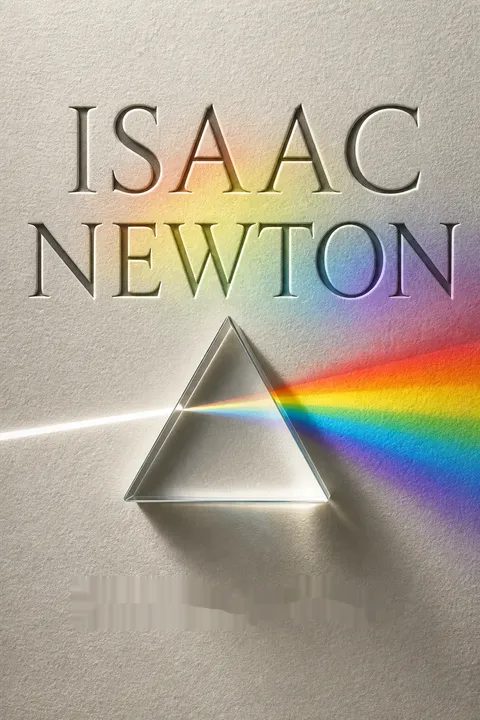


Key Takeaways
Make the invisible measurable, and nature becomes a problem humans can solve.
A new way to see. Isaac Newton was born in 1642, fatherless and isolated in rural England. His life barely extended beyond Lincolnshire, Cambridge, and London, yet his ideas changed how people understood the universe. He made motion, light, time, and space subjects for measurement, calculation, and argument rather than inherited explanation alone.
A complicated founder. Newton was not the serene rationalist of later legend. He guarded discoveries, avoided company, fought bitterly with critics, and pursued alchemy and biblical interpretation alongside mathematics. His achievement was not a tidy escape from the past. It was a new method for asking nature questions, produced by a restless mind still entangled in the beliefs of its age.
The book's most useful correction is to treat Newtonian science as a practice, not a personality cult. Measurement makes claims comparable across observers, while mathematical form lets a result travel beyond the original experiment. Yet quantification does not make the observer disappear: someone must choose what to measure, which assumptions to accept, and what counts as a useful explanation. Newton's life makes both sides visible. His intellectual isolation sharpened concentration, but his secrecy also made his discoveries harder for others to inspect and build upon.
Replace inherited explanations with sharper questions, instruments, and measures.
From qualities to quantities. At Cambridge, Newton encountered an education still organized around Aristotle, whose account of motion included changes as different as a peach ripening and a stone falling. Such broad categories left little room to distinguish speed from acceleration. Meanwhile, clocks, lenses, artillery, and improved arithmetic made precise questions increasingly possible.
Time becomes measurable. As a boy, Newton built sundials and tracked shadows across the day and seasons. A shadow turned time into something that could be mapped and compared. He later challenged the idea that heavy bodies fell because they belonged naturally below, asking instead what measurable cause changed their motion. His notebooks began with questions about matter, space, motion, and light, not with a finished theory.
A new instrument can change more than the quality of an observation. It can change which questions seem sensible. Sundials made duration legible, while telescopes and microscopes exposed worlds that ordinary sight could not access. This resembles a broader principle in measurement science: operational definitions turn vague ideas into procedures that others can repeat. The risk is that a measurement can look more objective than its assumptions warrant. Newton's early work shows why better tools matter, but also why interpretation remains part of the evidence.
Treat continuous change as something mathematics can describe precisely.
The plague years. When plague closed Cambridge in 1665, Newton returned to Woolsthorpe and worked largely alone. In this period he developed methods using infinite series and infinitesimal quantities to solve problems involving curves, areas, and changing motion. An infinite series can have endlessly many terms yet approach a finite answer, as smaller additions close in on a limit.
A mathematics of motion. Newton's method of fluxions described changing quantities as flows and measured their rates of change. The related operation of finding areas could reverse the process of finding slopes and instantaneous rates. These ideas became central to calculus. Newton's achievement joined geometry to motion: a curve could describe a body's path, while its tangent represented the body's direction at a particular instant.
Calculus is powerful because it connects local change with accumulated effects. A rate measured at an instant can help determine a total distance, just as accumulated area can reveal a changing rate. That bridge supports much of modern engineering and physics. Newton's route also highlights a feature of mathematics: a useful formalism can make a previously unmanageable problem tractable without making its underlying objects intuitive. His infinitesimals were conceptually uneasy, but the procedures generated results that could be tested and developed.
Use controlled experiments to reveal what light already contains.
Separating the colors. Newton sent a narrow beam of sunlight through a prism and saw an elongated band of colors. He varied the setup and then directed an isolated color through a second prism. The color bent again by its own characteristic amount, rather than being transformed into another color. From this, Newton argued that a prism separates components already present in white light instead of creating color from colorless light.
A test, then a fight. He recombined the separated colors and recovered white light. His experiment helped establish that white light is a mixture and that colors differ in refrangibility, or how much they bend. Robert Hooke and other philosophers disputed Newton's account. Newton took criticism personally, withdrew from scientific correspondence, and avoided public debate for years.
The strength of the prism experiment lies in its structure: it isolates one part of a phenomenon and asks whether that part keeps its properties under a second test. That logic is still central to experimental design. The episode also warns that evidence does not interpret itself. Newton's observations supported a strong account of color, but his particle explanation of light was not established by the same experiment. Separating a well-supported result from a broader theory is one of science's most durable habits.
Search for one rule that links falling apples with orbiting moons.
From orchard to orbit. Newton later recalled wondering whether the force that draws an apple downward might reach as far as the moon. The familiar apple story compresses a much longer process: early calculations did not fit available measurements, and Newton did not instantly possess a complete theory. He had to connect the moon's curved path with the tendency of moving bodies to continue in straight lines.
A mathematical breakthrough. Robert Hooke argued that a planet's orbit could result from straight-line motion continually deflected toward the sun, and proposed that the attraction weakened with the square of distance. Edmond Halley later asked Newton what orbit such a force would produce. Newton answered that it would be an ellipse, then set about proving it. The same rule could explain falling bodies and celestial motion.
The leap across scale is the enduring intellectual move: do not assume the heavens require a different kind of physics from everyday experience. In modern science, unification is valuable because one mechanism can explain many apparently separate observations, and each new case becomes a test of the shared account. The apple anecdote makes this shift memorable, but it can falsely suggest sudden discovery. Newton's own calculations, Hooke's conceptual contribution, and Halley's challenge show how insight is sharpened through incomplete evidence and other people's questions.
A model can predict nature without explaining its deepest cause.
The Principia's foundation. Published in 1687, Newton's Principia set out three laws of motion. In brief, bodies continue in rest or uniform straight motion unless acted on; force changes motion; and interacting bodies exert equal and opposite effects on each other. Newton combined these principles with gravity to explain planetary orbits, comets, tides, and the moon's motion.
Power without a final answer. Newton treated time and space as independent frameworks for describing motion. His calculations showed that gravity acted according to a consistent mathematical rule, but he did not identify its ultimate cause. He resisted filling that gap with an unsupported mechanism. The result was a system that could make precise predictions while leaving fundamental questions open for further investigation.
This distinction between a model's predictive reach and its causal story remains essential. A theory can organize observations and make accurate forecasts even when its deepest mechanism is unknown. That is not a weakness to conceal; it is a boundary to state clearly. Newton's caution is especially striking because the prestige of mathematical proof could invite claims of total understanding. His framework gained strength by making its limits visible, though its success also encouraged later thinkers to expect exact prediction in domains where evidence is less orderly.
Modern science grew from a mind still steeped in alchemy and theology.
Not a clean break. Newton spent years conducting alchemical experiments, carefully weighing substances and studying processes such as fermentation, decay, and transformation. He also produced extensive theological writings, including arguments against the doctrine of the Trinity. These pursuits were not side notes to an otherwise modern mind. They shaped how he thought about matter, hidden forces, and the possibility that nature had active principles.
The concealed Newton. His alchemical and religious manuscripts remained largely unknown for generations. Public memory instead elevated a rational hero who had supposedly swept away magic and mystery. Gleick restores the tension: Newton pursued mathematical laws while also believing in divine agency and investigating secret traditions. The scientific revolution did not arrive fully formed, with its boundaries already settled.
Newton's mixed intellectual life complicates the story of progress as a simple replacement of superstition by reason. New disciplines often emerge from practices they later classify as outdated, just as chemistry developed out of alchemical traditions. A field's later standards should not be projected backward as if its founders already shared them. At the same time, this history does not make every alchemical claim scientifically equivalent to a measured result. The key is to trace how questions, techniques, and concepts cross boundaries while evidence changes what can responsibly be claimed.
Private discovery becomes public knowledge through evidence, communication, and trust.
A new public science. The Royal Society and its journal, Philosophical Transactions, tried to make experiments and discoveries circulate among researchers. Newton's reluctance to publish clashed with this emerging ideal. After his optics paper provoked criticism, he withdrew from correspondence. Years later, Halley's persistence helped bring the Principia to print, even though the Royal Society lacked the money to publish it and Halley took responsibility for the expense.
Priority became personal. Newton and Gottfried Leibniz developed calculus independently, but Newton had kept much of his work private while Leibniz published his methods and notation. Their later priority dispute became bitter. Newton secretly shaped a Royal Society report that judged the case in his own favor. Their conflict shows how secrecy can turn a shared intellectual achievement into a fight over credit.
The story makes scientific communication part of scientific method, not mere publicity. Publication allows others to test a claim, reuse its tools, and identify errors. It also creates incentives around credit, status, and control. Those incentives can support discovery, but they can distort judgments when the same person is investigator, advocate, and judge. The calculus dispute is not a reason to dismiss either mathematician's work. It is a reminder that reliable knowledge depends on institutions designed to scrutinize claims, especially when reputations are at stake.
Newtonian physics endured by being extended, not simply overturned.
The public Newton. After leaving Cambridge, Newton ran the Royal Mint, pursued counterfeiters, and became president of the Royal Society. He gained wealth and authority, but also used his position forcefully against rivals. After his death, admirers made him an emblem of reason, while Romantic poets blamed his mathematics for draining nature of mystery.
A lasting framework. Einstein's theories changed ideas about space, time, and gravity, but Newton's laws remained useful for many ordinary physical problems. Newton's legacy is not that every claim was final or every assumption correct. It is that he gave later scientists a powerful mathematical structure, along with problems they could refine, test, and extend. The same work could inspire confidence in law and provoke unease about what measurement leaves out.
A theory's survival is often more subtle than victory or defeat. Newtonian mechanics remains effective within a defined range, while relativity supplies a broader account where Newton's assumptions no longer suffice. This layered picture is more accurate than treating science as a sequence of total replacements. The cultural argument around Newton matters too: abstraction can reveal patterns while making particular experiences seem less important. The useful question is not whether mathematics removes wonder, but how its gains in precision should be balanced against the realities it leaves unmeasured.
Analysis
Gleick's biography is a story of intellectual transformation, but its most consequential subject is the transformation of knowledge itself. Newton inherited a world where motion was explained through broad qualities, celestial order through inherited cosmologies, and the authority of a claim often rested on the status of its source. He helped replace that arrangement with a system in which quantities could be measured, relations expressed mathematically, and predictions checked against phenomena. His achievement was therefore both conceptual and institutional. Calculus and the Principia supplied new tools, while the Royal Society and scientific journals helped make findings portable beyond their discoverers.
The narrative resists a comforting myth of pure reason. Newton's private world included alchemy, prophecy, heterodox theology, fierce ambition, and fear of criticism. These were not merely eccentric distractions from his science. They show how new intellectual methods are built inside older cultures, using materials that later generations sort into respectable and disreputable categories. Yet contextual complexity should not flatten distinctions between methods. Newton's alchemical beliefs did not gain the same standing as his mathematical results, whose persuasive force came from structured argument and observable consequences.
The biography also makes a sharp point about explanation. Newton could calculate what gravity did without claiming to know its ultimate cause. This restraint is a model of scientific honesty, but the success of his mechanics encouraged a broader confidence that every domain could be rendered equally predictable. Human behavior, society, and living systems do not always yield to the same clean formalisms. Newton's legacy is strongest when understood not as a promise that reality is fully solvable, but as a demonstration that careful abstraction can disclose relationships otherwise hidden.
His life complicates the image of the lone genius, too. Solitude helped Newton concentrate, but discovery depended on inherited mathematics, Hooke's arguments, Halley's persistence, Flamsteed's observations, and the emerging machinery of publication. Newton's distrust of that machinery delayed his influence and intensified disputes. The lasting lesson is that private brilliance can originate a method, but public scrutiny, shared evidence, and later correction turn it into durable knowledge.
Review Summary
Isaac Newton is praised for its accessible portrayal of the scientist's life and work, though some find it lacking depth. Readers appreciate Gleick's engaging writing style and the book's concise length. Many are fascinated by Newton's complex personality and groundbreaking discoveries. Some criticize the lack of equations and technical details, while others enjoy the focus on Newton's humanity. The book challenges common myths and offers insights into Newton's rivalries, religious beliefs, and alchemical pursuits.
People Also Read

Glossary
Fluxions
Rates of changing quantitiesNewton's name for a method of describing quantities that vary continuously. A changing quantity was a fluent, while its rate of change was its fluxion. The method addressed problems such as finding a curve's slope at an instant or calculating areas. It became one historical form of calculus, developed independently of Leibniz's differential method.
Experimentum Crucis
A decisive separating testA crucial experiment designed to distinguish between competing explanations. In Newton's optics work, he passed an isolated color from one prism through another. The color remained distinct and bent by its characteristic amount, supporting his claim that a prism separates colors already present in white light rather than producing them.
absolute time and space
Independent reference frameworksNewton's concepts of time and space as existing independently of particular objects or observers. Ordinary clocks and locations provide relative measures, but his physics required a uniform temporal framework and an immovable spatial framework against which motion could be defined. These ideas became influential foundations of classical mechanics, though later physics revised them.
universal gravitation
Matter attracts matterNewton's account that every particle of matter attracts every other particle. The attraction depends on the masses involved and weakens according to the square of the distance between them. This principle unified terrestrial falling, lunar motion, planetary orbits, comets, and tides within a common mathematical system.
Rules of Philosophizing
Guides for explaining phenomenaPrinciples Newton used to guide natural philosophy in the Principia. They favor explanations that are sufficient without multiplying causes, seek common causes for similar effects, and treat conclusions drawn from phenomena as reliable until further evidence requires revision. The rules helped frame a method based on observation, inference, and restraint about unsupported explanations.
FAQ
What is Isaac Newton by James Gleick about?
- Comprehensive biography: The book provides a detailed and elegant portrait of Isaac Newton, tracing his life from rural Lincolnshire to his death in London, and situating him within the scientific and cultural upheavals of 17th-century England.
- Scientific and personal duality: Gleick explores Newton’s groundbreaking scientific achievements alongside his secretive personality, religious heresies, and alchemical pursuits, revealing a complex and often solitary genius.
- Historical impact: The biography explains how Newton’s discoveries in motion, gravity, and light transformed natural philosophy into modern science and established him as a foundational figure in scientific history.
Why should I read Isaac Newton by James Gleick?
- Accessible and accurate: Gleick’s writing makes complex scientific ideas understandable for general readers, offering a concise and readable introduction to Newton’s life and work.
- Humanizes Newton: The book goes beyond the myth, revealing Newton’s vulnerabilities, eccentricities, and contradictions, and providing a nuanced portrait of the man behind the legend.
- Contextualizes scientific revolution: Readers gain insight into the intellectual, religious, and political context of Newton’s era, understanding how his work both shaped and was shaped by his times.
What are the key takeaways from Isaac Newton by James Gleick?
- Newton’s multifaceted genius: Newton was not only a scientist but also a theologian, alchemist, and public servant, whose obsessions and struggles were integral to his achievements.
- Transformation of science: Newton’s laws of motion, universal gravitation, and mathematical rigor laid the groundwork for classical physics and the scientific method.
- Enduring legacy: The book shows how Newton’s ideas influenced centuries of science, philosophy, and culture, while also highlighting the controversies and debates that surrounded his work.
What are the most important scientific contributions of Isaac Newton discussed in Isaac Newton by James Gleick?
- Laws of motion and gravitation: Newton’s three laws of motion and the law of universal gravitation unified terrestrial and celestial mechanics, explaining everything from falling apples to planetary orbits.
- Development of calculus: Newton invented the method of fluxions (calculus), providing a mathematical framework for analyzing change and motion, which underpins much of modern science.
- Optics and light theory: His experiments with prisms revealed the composition of white light and led to the invention of the reflecting telescope, challenging prevailing theories of light.
How does James Gleick describe Newton’s early life and education in Isaac Newton?
- Rural and solitary beginnings: Newton was born posthumously in Woolsthorpe, Lincolnshire, experiencing a lonely and fatherless childhood, which fostered his early curiosity and independence.
- Schooling and intellectual awakening: He attended the King’s School in Grantham and later Trinity College, Cambridge, where he encountered both traditional scholasticism and revolutionary new ideas.
- Formative questions: Newton’s early notebooks reveal his fascination with philosophical questions about matter, motion, space, and time, setting the stage for his later breakthroughs.
What role did alchemy and theology play in Newton’s life according to Isaac Newton by James Gleick?
- Secret alchemical pursuits: Newton spent years conducting alchemical experiments, seeking the transmutation of metals and hidden truths about nature, which he saw as alive and dynamic.
- Theological heresy: He held unorthodox religious beliefs, especially anti-Trinitarian views, and studied biblical prophecy and church history in secret, fearing persecution.
- Integration of science and faith: Newton’s vision of God and nature was deeply intertwined, with his scientific work reflecting a spiritual quest for order and meaning in the universe.
How does Isaac Newton by James Gleick portray Newton’s approach to scientific philosophy and methodology?
- Experimental philosophy: Newton insisted on deriving causes from observed phenomena and experiments, famously declaring, “I do not feign hypotheses.”
- Mathematical rigor: He demanded precise mathematical demonstration, often using geometry in his Principia to ensure clarity and certainty.
- Rules of philosophizing: Newton established foundational rules for scientific reasoning, such as not multiplying causes unnecessarily and assuming the uniformity of nature.
What is the significance of Newton’s Principia Mathematica as explained in Isaac Newton by James Gleick?
- Foundation of classical mechanics: The Principia established the laws of motion and universal gravitation, providing a unified mathematical framework for understanding the physical universe.
- Mathematical innovation: Newton used classical geometry to present his new calculus-based methods, introducing concepts like absolute time and space.
- Impact and legacy: The Principia revolutionized science, displaced older theories, and set a new standard for scientific proof, influencing generations of thinkers.
How does James Gleick explain Newton’s concept of absolute time and space in Isaac Newton?
- Redefinition of fundamentals: Newton proposed absolute, true, and mathematical time and space, which exist independently of any observer or object.
- Philosophical and theological roots: He linked absolute space to God’s omnipresence, seeing it as the “sensorium of God” and a fixed reference for motion.
- Scientific implications: This framework allowed Newton to define motion and rest objectively, forming the basis for his mechanics and gravitation.
What personal and psychological challenges did Newton face according to Isaac Newton by James Gleick?
- Mental health struggles: Newton experienced periods of severe distress, insomnia, and possible mercury poisoning, leading to withdrawal and erratic behavior.
- Social isolation: He was often reclusive, had difficulty forming lasting friendships, and preferred solitary study to social engagement.
- Intense relationships: Newton’s few close relationships, such as with Nicolas Fatio de Duillier, were marked by intensity and sometimes conflict.
What was the nature and significance of the calculus priority dispute between Newton and Leibniz as described in Isaac Newton by James Gleick?
- Independent discovery: Both Newton and Leibniz developed calculus independently, but Leibniz published first, sparking accusations of plagiarism and a bitter rivalry.
- Different approaches: Newton’s fluxions focused on rates of change, while Leibniz’s notation emphasized differences, influencing the development of mathematics in England and Europe.
- Impact on science: The dispute divided the mathematical community and slowed the acceptance of calculus in England, reflecting broader philosophical and nationalistic tensions.
What are the best quotes from Isaac Newton by James Gleick and what do they mean?
- “I do not feign hypotheses.” This phrase encapsulates Newton’s commitment to empirical evidence and avoidance of speculation in scientific inquiry.
- “If I have seen further it is by standing on the shoulders of Giants.” Newton acknowledges the cumulative nature of scientific progress, recognizing his debt to predecessors.
- “I seem to have been only like a boy playing on the sea-shore…” This quote reflects Newton’s humility and sense of wonder at the vastness of undiscovered knowledge.
- “Nature and Nature’s laws lay hid in night; God said, Let Newton be! And All was Light.” Alexander Pope’s epitaph celebrates Newton as a bringer of enlightenment and reason.
About the Author
Other books by James Gleick
Download PDF
Download EPUB
.epub digital book format is ideal for reading ebooks on phones, tablets, and e-readers.








