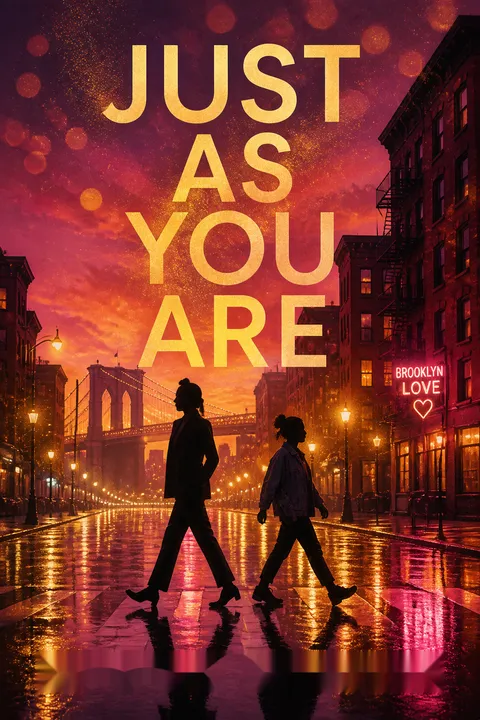


Plot Summary
The Magazine Survives
At a farewell party for the Nether Fields, a small queer magazine where Liz Baker writes dating advice and sex columns, her roommates toast a workplace they fear they will lose. Liz privately sees the expected shutdown as a chance to stop writing articles she has outgrown and finally try a novel.
Then founder Charlotte Liu arrives with news that investor Bailey Cox has bought the magazine. The celebration turns from goodbye to relief for Liz's friends, especially Jane, the magazine's political writer, and Lydia and Katie, their other roommates and coworkers.
Liz cannot share their joy: keeping her job means losing the financial breathing room she had counted on. She hides her disappointment in the bathroom, then returns to the party without telling anyone about her plan.
The rescue is good news for the group and a private loss for Liz, establishing the novel's central conflict between communal belonging and personal ambition. Her shame is not simply ingratitude. The magazine gave her a career and a chosen family, yet its routine has crowded out the work she wants to make. Because she keeps that desire secret, her friends can only read her silence as grief. The party makes that gap visible: the same institution means sanctuary to Jane and a stalled future to Liz. Her first obstacle is therefore not an external villain but the difficulty of naming what she wants without feeling she has betrayed the people who helped her.
Two Owners, Two Visions
The new owners arrive at the office together. Bailey is warm and eager to learn, while her business partner, Daria Fitzgerald, watches from the side and warns that changes will be necessary. Liz, nervous in a regrettable outfit, jokes about a butt-plug article and earns an unimpressed look from Daria.
Later, she overhears Daria urging Bailey to abandon the investment and describing Liz's work as disposable. Stung, Liz tells her coworkers what she heard and decides to become too useful to fire, even though she still resents the job.
Daria soon reinforces the staff's suspicion of her by demanding budget reports, circulating gloomy financial charts, and cutting small office expenses. Bailey's enthusiasm and Daria's austerity leave the staff unsure whether their new owners are rescuers or threats.
The first impression becomes a lens through which Liz interprets every later encounter. Daria's financial scrutiny seems to confirm that she despises both the magazine and Liz, while Liz's joke turns nervousness into an image of exactly the unserious employee Daria already assumes she is. Their conflict is not only personal: it reflects competing ideas about what makes a publication valuable. Daria sees costs and declining metrics; Liz knows that light, practical queer writing can reach readers who need advice and pleasure as much as political reporting. Since neither woman has yet bothered to understand the other's motives, their initial certainty about each other becomes a source of escalating error.
Margaritas and Old Damage
At the staff's cheap-drinks outing, Liz tries to steer Daria away from Jane, who is flirting with Bailey, and discovers that Daria feels uncomfortable in bars. Their uneasy conversation turns into an argument about whether the Nether Fields matters beyond its finances.
When a man insults Daria, Liz dumps her margarita down his shirt and stands her ground; Daria thanks her and briefly drops her guarded manner. The moment breaks when Weston, the woman Liz recently met at a lesbian bar, arrives and reacts sharply to Daria.
Weston tells Liz that they were college roommates, that Daria resented her poverty, and that Daria got her expelled from Smith after they both became involved with Bailey. Liz, attracted to Weston and already suspicious of Daria, believes the account and lets the new connection deepen.
Liz's defense of Daria is an unplanned act of solidarity that briefly reveals a version of Daria more vulnerable than the office caricature. But Weston supplies a counterstory before Liz has any reason to question it. Attraction makes that story easy to accept: believing Weston lets Liz pursue a promising romance while preserving her existing judgment of Daria. The scene also shows how queer community can create both intimacy and rumor. The same bar that offers Liz a place to meet people becomes a junction where old injuries, current loyalties, and incomplete accounts collide. Her willingness to take sides before asking what she does not know foreshadows the damage her impulsiveness will cause.
A Gift, Then a Retreat
Weston gives Liz a tailored floral blazer from her clothing job, a rare gift that makes Liz feel stylish without forcing her to choose between masculine and feminine presentation. At Bailey's Pride barbecue in the Rockaways, however, Weston does not appear, and Liz's attention shifts to Daria.
After helping Daria carry food, Liz walks with her along the beach. Daria admits that her former girlfriend Caroline is still around, then reveals she has read Liz's dormant blog, Confessions of a New York Dyke.
She points to the everyday moments in it that made her feel recognized, unsettling Liz's belief that her playful writing lacks meaning. Their conversation turns tender until Caroline interrupts and Daria sharply rejects the suggestion that she and Liz could be involved. Liz takes the rebuff as proof that she misread their connection.
The blazer makes visible what Liz has struggled to claim: her style can be mixed, changing, and still genuinely hers. Daria's praise of the blog offers a parallel recognition, treating ordinary queer life as worthy of attention rather than as lesser work. These moments unsettle Liz's assumptions about both herself and Daria, but Caroline's interruption pushes her back toward certainty. Daria's denial is painful partly because Liz has begun to imagine being seen by her. The scene's reversals show how quickly a tentative connection can be erased by public embarrassment, especially for people who already expect rejection. Liz protects herself by converting a confusing moment into another verdict against Daria.
Moira's Living Archive
When the Nether Fields refuses to pay for Liz to travel to Boston for an interview, Daria offers her a ride at no cost to the magazine. On the drive, Daria explains that she chose finance partly because, after coming out and changing how she presented, she tried to follow the masculine rules she understood.
Liz admits that her own shifting presentation leaves her uncertain. Daria tells her that the in-between quality suits her. In Boston, Liz interviews Moira Campbell, an older queer photographer whose images preserve friends, lovers, and activists from the 1960s and 1970s.
Moira explains that she made the photographs for her community, not for galleries or acclaim. Seeing Moira with her wife, and hearing her speak about making art for love rather than recognition, gives Liz a new reason to write.
Moira's archive alters the scale by which Liz measures creative success. Liz arrives hoping to secure recognition for the photographer, but Moira describes a purpose rooted in the people pictured and the pleasure of making the work. The interview also gives Daria and Liz a rare space to discuss gender without trying to win an argument. Each sees that uncertainty need not invalidate identity: Daria's masculine style does not dictate her behavior, and Liz's shifts do not make her presentation false. The older couple's presence offers a concrete image of queer life extending into old age. Rather than promise a career or a perfect answer, the encounter makes artistic practice and future possibility feel worth choosing.
The Countertop Morning
Daria's aunt, Katherine, insists that Liz join her birthday dinner, where Caroline's presence makes the evening feel like an attempt to reunite the former couple. Liz learns that Daria's parents cut off support after she came out, and that Katherine paid for her college education.
Later, alone with Daria in the kitchen, Liz responds to their growing attraction and they have sex against the counter. For a few moments, Daria holds her afterward, leaving Liz feeling safe.
Then Daria abruptly pulls away, worries that her aunt or a neighbor might have seen them, and begins disinfecting the counter while still naked. Hurt and unable to ask what their encounter meant, Liz goes upstairs. Before dawn, she leaves for New York by bus, inventing a reason to avoid the drive home with Daria.
The intimacy briefly gives Liz what she has wanted: unguarded attention and the sense that her body is not being judged against a narrow ideal. Daria's retreat turns that warmth into uncertainty. Her panic is shaped by secrecy, family rejection, and fear of exposure, but Liz experiences only the sudden withdrawal and interprets it through years of romantic disappointment. Neither woman asks the other what happened; each retreats to avoid being hurt first. Their silence transforms a mutually desired encounter into a wound. The episode also echoes Liz's larger problem: she acts decisively in the moment, then avoids the difficult conversation that could clarify its consequences.
Numbers Turn Red Again
After returning to New York, Liz starts a novel about a queer teenager but doubts every page. She writes her profile of Moira carefully, yet the story attracts fewer readers than her quizzes, leaving Liz unsure whether serious work can reach anyone.
Meanwhile, Bailey organizes a major application for an independent media grant that could fund new systems and protect jobs. Jane takes on much of the proposal while keeping her regular workload, and the rest of the staff push harder to improve the magazine's numbers.
Daria contributes little because she believes the grant is unlikely to succeed. Liz watches the workplace grow strained even as the team's statistics improve. Jane notices Bailey becoming distant, but assumes they can reconnect once the exhausting application is finished.
The article's modest audience tests Liz's belief that meaningful work will naturally find its readers. Its failure does not prove that Moira's story lacks value, but Liz treats reach as a verdict on her ability. The grant puts the same pressure on the whole staff: they work harder to demonstrate worth inside a system where survival depends on numbers. Jane's relationship with Bailey becomes entangled with that labor, while Daria's pessimism can look like sabotage even when it reflects her assessment of the odds. The section connects professional precarity to personal insecurity. Each character is trying to secure something important, but exhaustion makes it harder to distinguish prudent caution from abandonment.
The Kiss During Collapse
Bailey abruptly ends her relationship with Jane, saying their employer-employee connection is wrong and that the relationship was not working. Jane is devastated, and Liz suspects Daria engineered the breakup.
At the annual review, the staff learns that the magazine did not reach the grant's finalist stage. Bailey and Daria announce they will seek a buyer for ninety days, then dissolve the publication if none appears. When Liz finds Daria packing records, she confronts her over the grant, the sale, and Jane's breakup.
Daria responds by kissing Liz and admitting how long she has wanted her. Liz is tempted, but recalls the harm she believes Daria caused Weston and her friends. She rejects Daria, accusing her of ruining lives and treating people as disposable.
The magazine's collapse turns private resentment into an urgent moral judgment. Liz sees Daria as the personification of financial power, and the timing of Jane's breakup seems to confirm a pattern of control. Daria's kiss exposes feelings that complicate that portrait, but Liz cannot separate desire from the consequences she attributes to Daria. Her refusal is not a simple rejection of romance; it is an attempt to protect people she loves and to hold an owner accountable. Yet she acts on an incomplete account. The scene makes the cost of moral certainty visible: Liz's anger has legitimate sources, but it also forecloses curiosity at the precise moment when listening could change what she believes.
Weston's Version Breaks
After Liz rejects her, Daria sends a long message explaining that Weston was caught dealing drugs and tried to persuade Bailey to take the blame. Daria says she told the college dean because Bailey was in danger, not out of jealousy; Bailey later returned to school and graduated.
Daria also admits she believed Lydia's workplace joke about Jane seducing Bailey to save the magazine, then pushed Bailey to end the relationship. Liz checks the college timelines and asks Weston about the account. Weston denies Daria's explanation but never convincingly denies dealing or Daria's report to the dean.
Liz recognizes the resemblance between Weston's earlier hot-and-cold attention to Bailey and her own uncertain relationship with Weston. She ends things with Weston, then tells Jane the full story, including her Boston hookup with Daria.
The message does not make Daria blameless. It does, however, expose how easily Liz treated a first-person account as a complete history because it suited her attraction and her existing dislike of Daria. The college details make Daria's account plausible, while Weston's evasions weaken the simple story Liz had accepted. Liz's decision to tell Jane everything marks a change in her conduct: she chooses disclosure over managing appearances. The episode also distinguishes protecting a friend from controlling her. Daria's attempt to shield Bailey came from loyalty shaped by an old crisis, but acting on hearsay repeated the very kind of harm she feared. Motive explains the error without erasing it.
The Apartment Erupts
While Liz is trying to recover from the revelation about Weston, she catches Lydia bringing Weston home and discovers they have slept together. Liz confronts Lydia, who says Liz and Weston were never in a committed relationship and accuses Liz of neglecting the staff's effort to save the magazine.
The argument widens when Liz attacks Lydia for keeping Katie emotionally close while pursuing other people. Lydia storms off, Katie retreats in tears, and Liz realizes she has hurt both roommates while trying to punish one.
Jane encourages Liz to run with her, and the two begin jogging in Prospect Park. When they later join the Pride Runners, Liz meets J, who describes Daria as shy, generous, and dependable. The image clashes with Liz's old caricature and makes her curious again.
The fight turns the household's familiar teasing into genuine harm. Liz's anger at Lydia is understandable, but she weaponizes what she knows about Katie's feelings and repeats the same impulsiveness she has begun to criticize in Daria. The resulting isolation gives her a chance to notice the collateral damage instead of treating conflict as a contest she must win. Running is an embodied counterpoint to her habit of spiraling alone: she accepts Jane's pace and, later, J's companionship. J's description of Daria does not erase Liz's experience, but it introduces evidence from a different community. The people Liz has written off begin to acquire lives beyond her interpretation of them.
Running Toward Daria
At a Central Park run, Liz unexpectedly meets Daria, who volunteers to be her running partner. Daria explains that fear of rejection has made her retreat into coldness, and Liz tells her how much her supportive parents helped her face uncertainty.
Each apologizes for judging the other too quickly. They finish the run without kissing, but agree to meet again. Soon they begin exchanging Instagram stories and messages about baking, work, and Daria's breakup with Caroline, whose expectations had made Daria feel she had to perform masculinity.
Jane also receives a message from Bailey, who wants to explain the breakup. Liz urges Jane to hear her out, then tells Jane about her own wish to write a novel and her fear that she may only be good at light, entertaining work. Jane suggests that this work can matter, too.
The run gives both women a form of intimacy that is slower and more accountable than their earlier encounters. Their apologies do not settle every dispute, but they let each name the fear underneath defensive behavior. Liz learns that Daria's silence is not proof of superiority; Daria hears that Liz's uncertainty is not carelessness or performance. Their online messages then create a low-pressure space for reciprocal disclosure, while the public run keeps their connection grounded in shared activity. Jane's advice about Liz's writing broadens the same lesson: value need not depend on prestige. These exchanges help Liz practice curiosity, a quality she has often replaced with fast conclusions.
The Draft Goes Public
As the magazine's closure approaches, Lydia calls a house meeting and demands that Liz finish an article intended to rally readers and attract a buyer. Liz refuses, still unsure how to write about the crisis without repeating the accusations she has come to question.
The next day, a furious draft from Liz's personal computer appears on the Nether Fields site under her name. It attacks Bailey and Daria, speculates about their motives, and accuses Daria of controlling the staff. Lydia admits posting it without permission, using a password Katie had shared.
Charlotte removes the piece from the magazine's homepage and fires Lydia. Liz explains that she wrote the draft in anger but never intended to publish it. The damage is already spreading online, and Liz knows her own words have helped make it possible.
The publication violates Liz's privacy, but the draft's existence prevents her from treating herself as an innocent bystander. Her anger was real, and she had promised to help the staff, yet she left the work unfinished and left a harmful version of it accessible. Lydia's decision to publish it is a separate breach, not a justification. The episode sharply distinguishes consent from accountability: Liz did not authorize the posting, but the words still carry her name and judgment. Charlotte's firing of Lydia protects the publication's integrity while making clear that desperation cannot excuse sabotage. The crisis forces Liz to face both what was done to her and what she herself put into the world.
An Apology Cannot Undo
After Charlotte summons her, Liz goes to Daria and explains that the article was published without her consent. She admits writing it and apologizes, but Daria is devastated that Liz's public accusations appeared after their growing connection.
Daria says the article has damaged her reputation and that she cannot pursue anything with Liz now. Jane is also hurt: the insinuations about Bailey threaten her privacy and professional standing, and she tells Liz that being a supportive friend requires more than apologizing after reckless choices.
Liz writes a public correction that explains the unauthorized posting while acknowledging the cruelty and inaccuracy of her own draft. She praises Bailey and Daria's efforts to keep the magazine alive, and apologizes to the staff and readers. Charlotte forgives her, but Jane asks for time and sustained change.
Liz's apology matters because it refuses the easy defense that someone else pressed publish. She corrects the public record while acknowledging that her anger had already shaped a damaging account. Daria's boundary is not a punishment designed to teach Liz a lesson; it is a reasonable response to a fresh injury from someone she had trusted. Jane's criticism makes the harm more specific: Liz's impulsiveness has consequences that fall differently on a Black trans journalist whose credibility is routinely scrutinized. Charlotte's forgiveness cannot restore the relationships at once. The distinction between remorse and repair becomes central: Liz has said she is sorry, but now she must demonstrate that she can consider others before acting.
Repair Takes Practice
Liz apologizes to Katie for dragging her into the fight, and Katie admits she gave Lydia access to Liz's password because she wanted to help Lydia. Katie ends her unreciprocated attachment to Lydia, who is leaving the apartment. Jane remains cautious with Liz but agrees to keep rebuilding their friendship.
After Daria admits she was wrong to interfere, Bailey makes a careful effort to win Jane back, sending flowers, a Paris-themed gift basket, and the beret from their planned trip before arriving in person. Jane accepts another chance on slower terms.
Later, Daria recommends Jane for a job at Autostraddle, which Jane gets. The Nether Fields still has no buyer and is preparing its final issue. Charlotte tells Liz she is ready to leave the magazine behind and travel by motorcycle, rather than keep carrying its future alone.
Repair here is distributed across relationships rather than granted by a single grand gesture. Katie recognizes that longing has made her tolerate treatment she would not accept from a friend, while Jane sets conditions rather than returning immediately to the intensity of her first relationship with Bailey. Daria's apology and recommendation show her taking responsibility without demanding gratitude or romantic access. Charlotte's decision to move on adds another model of change: devotion to a community does not require endless self-sacrifice. The magazine's approaching end remains real, but the people around it begin to imagine lives beyond its payroll. Liz's task is likewise larger than getting Daria back; she must become someone others can trust.
The Meadow Kiss
Jane tells Liz she is moving into her own studio, then challenges Liz to imagine what she might gain by pursuing writing instead of dwelling on failure. At the café, Liz discovers she is a finalist for an Emerging Writers Fellowship, which considered her blog, Confessions of a New York Dyke.
She realizes Daria must have submitted it and hurries to Daria's apartment, where Caroline falsely implies they are together. Liz leaves, then spots Daria's story from Prospect Park and runs across Brooklyn to find her. Daria confirms she submitted the blog because she believed Liz's playful writing could matter.
Liz admits she loves her. Daria reveals she is not with Caroline, but hesitates because the article hurt her. When Liz starts to run away, Daria chases her, catches her in the meadow, and kisses her. They forgive each other and choose to begin again.
The ending brings Liz's two central risks together: making art without guarantees and loving someone after she has caused real harm. The fellowship does not certify a finished career, but it gives her evidence that her blog has reached a reader and may reach more. Daria's nomination is an act of faith in Liz's voice, not a rescue that removes the need for Liz to do the work. The park reunion turns running, once a reluctant exercise and later a place for apology, into an expression of deliberate pursuit. Daria's chase answers Liz's fear of being unwanted, while the mutual forgiveness remains conditional on honesty and growth. Their happy ending begins with uncertainty rather than erasing it.
Analysis
Just as You Are treats misjudgment as a practical danger, not merely a romantic obstacle. Liz and Daria each have reasons to protect themselves: Liz expects rejection and hides uncertainty behind jokes, while Daria expects hostility and hides fear behind competence. Their first impressions are therefore both emotionally plausible and factually incomplete. The novel does not ask readers to excuse harm because someone had a difficult past. Daria's loyalty to Bailey leads her to interfere in Jane's relationship; Liz's anger produces a draft that damages Daria and threatens Jane's professional standing. Repair requires each person to name the harm and change their conduct, not just reveal a sympathetic motive.
The magazine's threatened closure gives this interpersonal story a material frame. Queer representation is not treated as a slogan detached from labor: the publication needs readers, revenue, systems, and people who can afford to keep working. At the same time, metrics cannot account for the private relief a reader finds in a sex-advice column or a playful quiz. Liz's growth depends on recognizing that entertainment can be meaningful without becoming solemn or prestigious. Moira's photographs and Liz's blog both preserve everyday queer life, though neither guarantees public success.
Gender presentation follows the same refusal of tidy categories. Liz and Daria discover that clothing, behavior, and identity do not need to align with a fixed script. Their attraction develops not because either resolves every uncertainty, but because they begin to let uncertainty be seen. By the end, Liz has not secured a career, saved the magazine, or erased the damage she caused. She has found a more honest way to pursue writing, friendship, and love: take the risk, listen to the people affected, and remain responsible for what follows.
Review Summary
Just as You Are is a queer Pride and Prejudice retelling set in New York City. Reviews are mixed, with many praising its representation, humor, and exploration of gender expression. The romance between Liz and Daria receives both praise and criticism, with some finding it underdeveloped. Readers appreciate the focus on queer friendships and workplace dynamics. While some love the characters and writing style, others find them flat or poorly developed. Overall, it's seen as an enjoyable, if imperfect, sapphic romance that resonates with many queer readers.
People Also Read



Characters
Liz Baker
Unruly queer columnistLiz writes sex, relationship, and advice pieces for the Nether Fields, but privately longs to write fiction that can help queer readers feel less alone. She is funny, observant, and generous with friends, yet her impulsiveness often turns uncertainty into a quick joke or a confident judgment. Her shifting relationship to masculine and feminine presentation leaves her wary of labels and of other people's expectations. Liz's strongest desire is to be seen without having to perform a more polished or easily categorized self. Her central challenge is learning that sincerity requires more than feeling deeply: she must slow down, listen, and accept responsibility when her choices hurt people.
Daria Fitzgerald
Guarded finance investorDaria is a masculine-presenting investment banker and minority owner of the Nether Fields. Precise, private, and often blunt, she uses competence and reserve to navigate workplaces and social settings where she expects to be misread or rejected. Her financial training makes her attentive to risk, but her protectiveness toward Bailey can lead her to decide what is best for others without asking them. Daria's style is confident; her emotional life is less so. She is learning that self-protection can harden into isolation, and that caring for someone does not excuse taking control of their choices. Her attraction to Liz is complicated by their workplace roles and her own fear of exposure.
Jane Wilson
Principled staff writerJane is the Nether Fields' head writer, known for serious reporting on political issues and for the care she gives her friends. A Black trans woman, she understands that professional mistakes and public criticism can carry consequences that her coworkers may not face in the same way. She is warm and loyal, but not endlessly accommodating; she expects people close to her to consider how their actions affect others. Her relationship with Liz is rooted in years of mutual support, which makes conflict between them painful without making it simple. Jane wants meaningful work and reciprocal love, and she has to balance those desires with the need to protect her own time, reputation, and trust.
Bailey Cox
Hopeful magazine ownerBailey is a wealthy real-estate professional and longtime reader of the Nether Fields who buys the magazine when it is on the verge of closing. Enthusiastic and community-minded, she wants to support queer journalism despite having little experience running a publication. Her optimism helps the staff imagine a future, but she can underestimate how much practical expertise and financial support that future requires. In relationships, Bailey is a romantic who commits quickly and cares deeply. Her friendship with Daria is shaped by a history of support that complicates her independence, while her attraction to Jane draws her into the very workplace she is trying to save.
Lydia
Impulsive roommateLydia works in advertising and promotion at the Nether Fields and shares an apartment with Liz, Jane, and Katie. Confident, mischievous, and quick to turn personal events into jokes, Lydia brings energy to the household but can treat other people's feelings as less urgent than their own. Their casual intimacy with Katie obscures an uneven attachment, and their desire to save the magazine sometimes outruns their judgment. Lydia is also the person who turns workplace tension into a running group joke, for better and worse.
Katie
Loyal meme-makerKatie is a media writer whose queer meme account and podcast have built a following beyond the magazine. Warm, funny, and practical, she often notices what her friends need before they ask, though she can remain attached to people who do not return her care. Her unrequited feelings for Lydia complicate her place in the household. Katie is also deeply loyal to Liz and Jane, but loyalty sometimes leads her to assist choices she has not fully examined.
Charlotte Liu
Founding editorCharlotte founded the Nether Fields and has spent nearly two decades building a queer publication that centers communities often overlooked by mainstream media. She is an activist, a demanding manager, and a mentor who helped Liz learn how to live and work in New York. Her humor and confidence can conceal the strain of carrying the magazine's future. Charlotte believes in the publication's cultural value, but she also knows when financial reality has narrowed its options.
Weston
Liz's uncertain dateWeston works in social-media marketing for a gender-neutral clothing company and meets Liz at a lesbian bar. Stylish, funny, and attractive to Liz, she offers the possibility of a new romance and understands the frustrations of finding clothes that suit a queer person's presentation. Her history with Daria and Bailey gives her strong feelings about their college years. Weston is not easily read through charm alone, and Liz's attraction makes it harder for her to distinguish intimacy from reliability.
Moira Campbell
Queer history photographerMoira is an older photographer whose images document queer and trans friends, lovers, and activists from the 1960s and 1970s. She made photographs to give her community a record of its own beauty and existence, not to win recognition from institutions. Her work and long partnership offer Liz a rare view of queer life across generations. Moira's calm confidence comes from valuing the act of making art and the people it serves, even when fame or money never arrive.
Caroline Hillier
Daria's longtime friendCaroline grew up alongside Daria and has a history of defending her when other children mistreated her. A successful human-rights lawyer, she is polished and socially assured. Her long familiarity with Daria makes it difficult for her to accept that the relationship they once shared has changed. Caroline's confidence can become presumption, especially when she assumes she knows what Daria needs better than Daria does.
Aunt Katherine
Daria's exacting auntKatherine is Daria's wealthy, formal aunt, who helped support Daria when her parents withdrew financial support. Opinionated and exacting, she expresses affection through practical provision as readily as through criticism. She favors familiar social expectations and encourages Daria to return to a relationship that seems suitable to her. Her home offers safety and history, but her standards can make Daria feel watched rather than understood.
J
Pride Runners guideJ is an experienced runner who welcomes Liz into the Pride Runners and adjusts their pace so a beginner can keep up. Cheerful and open, they speak about their wife, children, and running community with unforced affection. Their view of Daria gives Liz evidence that Daria's private generosity extends beyond the office.
Finn
Website caretakerFinn manages the Nether Fields' website and is a Black queer person who brings warmth and humor to the office. They are a trusted colleague for Liz and help remove the unauthorized article from the magazine's homepage. Their role places them at the practical center of the staff's efforts to protect the publication.
Plot Devices
The Nether Fields
Shared stakes and sanctuaryThe queer magazine gives the four roommates their jobs and much of their chosen family, while also embodying the cultural work they fear losing. Its financial crisis creates the novel's external pressure: ownership changes, cost-cutting, a competitive grant, a search for a buyer, and the planned closure all force characters to decide what they owe the institution and one another. The publication also tests Liz's assumptions about her own writing. She dismisses her advice columns as lesser work, then sees how such pieces can offer queer readers practical guidance and a sense of recognition.
Confessions of a New York Dyke
A neglected creative voiceLiz's blog follows the fictional Colby through dating, friendship, and the ordinary uncertainties of queer life. Liz once treated it as unserious wish fulfillment, then stopped updating when Colby's romantic adventures began to make Liz feel inadequate. Daria's careful attention to the blog and a fellowship reader's response help Liz reconsider its value. The blog connects Liz's playful voice to her desire to write work that matters, without requiring her to abandon humor or everyday stories.
Moira's Photographs
A queer inheritanceMoira's photographs preserve people and communities that mainstream history might have ignored or treated as spectacle. The images first draw Liz toward an interview, then lead her to question whether art needs institutional recognition to matter. Moira's account of photographing her community gives Liz and Daria a way to discuss the risks of living openly and the possibilities that make those risks bearable. The archive is both a journalistic subject and a model for Liz's own creative work.
The Pride Runners
Community through movementThe running group gives Liz a new routine after romance and work leave her feeling stuck. It also connects her to J and to a part of Daria's life that Liz does not see at the magazine. Running together provides an alternative to their earlier impulsive encounters: they have room to talk, apologize, and test their trust over time. The shared route through Central Park becomes a recurring setting for vulnerability and connection.
The Grant Application
Hope under financial pressureThe Independent Media Grant could fund new systems, support growth, and spare the magazine from layoffs. Its application makes the staff work intensely and raises the stakes of Daria's skepticism and Bailey's optimism. When the Nether Fields fails to reach the finalist stage, the owners decide to seek a buyer before dissolving the publication. The grant is not a simple rescue mechanism: it reveals how good intentions can become entangled with uncertain forecasts and decisions that affect employees' lives.
Download PDF
Download EPUB
.epub digital book format is ideal for reading ebooks on phones, tablets, and e-readers.








