


Plot Summary
Three Women at the Peak
On a stormy night, art gallery manager Malory Price drives to Warrior’s Peak, hoping to impress wealthy patrons after clashing with her employer’s new wife. There she meets Dana Steele, a librarian whose hours have been cut, and Zoe McCourt, a hairdresser fired after being falsely accused of theft. Their shared misfortune seems too exact to be coincidence.
Hosts Rowena and Pitte tell them that three demigoddess sisters were cursed, their souls sealed inside a glass box, and only three mortal women can find the keys. Each woman will receive money for accepting, but failure carries a year of lost life. Though Dana doubts the tale, all three sign. Malory draws the first key and receives a cryptic clue.
The story begins by making economic insecurity the practical door into the supernatural. Each woman has lost control of work, but their distinct professions also establish the capacities the quest will demand: Malory’s eye for beauty, Dana’s appetite for knowledge, and Zoe’s protective courage. The offer is both rescue and coercion, since the advance money arrives with a threat that affects all three. Their decision is not grounded in certainty. It is a provisional act of trust, made before they can know whether the hosts are benefactors, eccentrics, or something more dangerous.
The Gallery Door Closes
The next morning, Malory is dismissed from the Gallery after James Horace chooses to placate Pamela rather than protect the manager who built the business’s reputation. The severance and mysterious advance give Malory breathing room, but not a plan.
On the street, an enormous dog named Moe knocks her down, introducing her to his owner, Flynn Hennessy, Dana’s journalist brother. Malory joins Dana and Zoe to research the clue, and their skills begin to complement one another.
Flynn investigates the hosts, finding no ordinary records for them, while his grandmother supplies an older version of the Daughters of Glass legend. Over dinner, Flynn and Malory’s attraction sharpens, and he agrees to help her investigate the paintings connected to the tale.
Malory’s firing strips away the structure she has mistaken for security. She has organized her life around a job, a town, and an imagined schedule, so James’s decision exposes how little authority she actually possessed. The quest offers money, but it also gives her a task when she has no professional direction. Flynn’s entrance through Moe is deliberately undignified: Malory is literally knocked off balance before she begins to question the orderly life she planned. Their flirtation grows alongside investigation, binding emotional risk to the same unsettled period as her career crisis.
A Dream Remembers Them
After studying the portrait at Warrior’s Peak, Malory dreams she is present when the sisters play in a garden before a sorcerer steals their souls and seals them in a glass box. She wakes with their names, the appearance of the keys, and Gaelic phrases she has no reason to know.
Dana searches the names and finds a rare reference to the sisters, while Malory’s account convinces her that the dream felt more like memory than invention. Soon Flynn and his friend Brad Vane reveal a second painting, After the Spell, in Brad’s house. It depicts the sealed sisters and the banished figures who failed to protect them. Malory recognizes the same artist’s hand, despite the paintings’ radically different verified dates.
The dream shifts the quest from an eccentric bargain into an experience Malory cannot explain away. Its power comes not merely from supernatural spectacle but from knowledge that appears without a source: names, language, and physical detail. The painting at Brad’s house gives that private experience an external counterpart, forcing the characters to treat intuition as evidence. Yet the paintings do not simply solve a mystery. They make art itself part of the mechanism, since Malory reads both emotional meaning and visual detail more fluently than anyone else.
Paintings Across Centuries
Malory learns that Brad’s painting dates to the seventeenth century, while the portrait at Warrior’s Peak may be twelfth century. A third work, showing young Arthur poised before a sword in stone, belongs to Jordan Hawke, Flynn’s author friend and Dana’s former lover; it has been dated to the fifteenth century.
All three paintings share the same mysterious style and show Rowena, Pitte, and a lurking shadow. Their owners are now back in Pleasant Valley, while the women’s lives have converged around the quest.
Brad is unsettled by Zoe, whose face in the painting first drew him to buy it. Jordan’s return revives Dana’s anger at their failed relationship. The accumulating connections make coincidence harder to accept, though none of the men can yet explain what the images require.
The paintings turn coincidence into a network. Their owners are not interchangeable helpers: Brad’s purchase began with an inexplicable pull toward Zoe’s likeness, while Jordan’s artwork reconnects him with Dana’s unresolved past. The different dates destabilize ordinary chronology without immediately proving a single explanation. The men’s involvement also complicates the women’s agency. Their affection and practical support can help, but the quest belongs to the women, and their protective instincts sometimes become attempts to take control.
A Riskier Kind of Home
As her search stalls, Malory is offered her old Gallery job back with a raise. She declines, realizing that returning would restore comfort but not her sense of ownership. Instead, she joins Dana and Zoe in planning Indulgence, a shared business combining Malory’s gallery, Dana’s bookstore, and Zoe’s salon in a house they intend to buy.
Zoe’s work as a single mother shapes her determination to create a secure business without sacrificing home life. Meanwhile, Malory and Flynn’s attraction becomes intimate, though his fear of repeating his failed engagement makes him recoil when she admits she loves him. Brad pursues Zoe despite her suspicion of wealthy men, and Jordan’s presence keeps Dana’s old hurt close to the surface.
The business decision is a structural counterpart to the key quest: Malory must act before certainty arrives. Her old job offers proof of competence and financial safety, but accepting would mean returning to a world that no longer fits. Indulgence is not merely a hopeful enterprise; its collaborative design answers the women’s different needs without asking any one of them to disappear into another’s plan. Their romance plots echo the same tension. Love requires them to risk being changed by another person, rather than waiting for perfect conditions.
Kane Offers Perfection
Malory’s exhaustion leaves her vulnerable to a dream in which she is a celebrated painter, Flynn is her devoted husband, and they have a young son. Kane, the sorcerer who stole the sisters’ souls, reveals himself inside this seemingly perfect life and offers to make it permanent if she abandons the keys.
Malory longs for the artistic gift and family she has never had, but recognizes that a life without real choice would be another kind of imprisonment. She rejects Kane and wakes screaming.
Flynn reaches her, stays despite her confused attempts to push him away, and listens as she describes the vision. He also admits how he stayed in Pleasant Valley to keep his family’s newspaper alive, letting Malory see that his own settled life came through difficult choices.
Kane’s temptation is tailored rather than generic. He does not offer Malory wealth alone; he gives her the exact life that compensates for her deepest disappointments, including artistic mastery, domestic love, and motherhood. The danger lies in how plausible the fantasy feels. Malory’s refusal is therefore not a rejection of happiness but of happiness severed from reality and agency. Flynn’s account of choosing the local paper deepens their connection: both have had to distinguish a life they genuinely choose from one imposed by circumstance.
The Warning Behind the Curtain
Flynn dreams that a dark presence stalks him through Warrior’s Peak, tears away his soul, and leaves him drenched when he wakes. He joins Brad and Jordan in confronting Rowena and Pitte, but the hosts refuse to hand over the keys or explain everything. During the argument, Malory arrives with Dana and Zoe and insists on hearing the truth herself.
Rowena identifies Kane as the sorcerer and admits that the three paintings belong to her, painted across centuries. She and Pitte have been trapped in the mortal world by their failure to protect the sisters. Malory understands that only mortal women can turn the keys, and that Rowena and Pitte cannot simply end the spell for them. Kane has begun acting against the quest.
Flynn’s nightmare removes the last comfortable assumption that the quest is a harmless treasure hunt. The threat reaches into the body, and his soaked awakening makes supernatural danger material. The confrontation also distinguishes knowledge from power: Rowena and Pitte know more, but their binding prevents them from solving the problem on the women’s behalf. Malory’s insistence on being present matters because she refuses both the hosts’ secrecy and the men’s protective takeover. Information becomes useful only when the people who bear the risk can decide what to do with it.
A Door Opens Wrong
Hoping to help Malory locate the key, Zoe proposes that the three women may share a form of witchcraft and assembles candles, crystals, salt, and a Ouija board. Their attempt to ask for guidance instead produces a chilling threat, and the board shatters as Rowena arrives through the opening they have made.
She explains that they invited forces they cannot control, and that Kane used the invitation to reach them. Rowena stays, helps the shaken women recover, and speaks frankly about their different fears: Zoe’s sacrifices as a mother, Dana’s guardedness after Jordan, and Malory’s difficulty trusting a love that arrived too quickly.
She gives Malory a blue stone to help her sleep. Alone later, Malory recognizes how often she has postponed the business and emotional risks she claims to want.
The Ouija episode turns curiosity into responsibility. The women are not punished for foolishness so much as shown that intention does not confer mastery: a sincere request can still open a dangerous channel. Rowena’s response combines warning with intimacy, making her more than a distant supernatural authority. Her conversations expose the women’s defenses without resolving them for them. Malory’s later self-recognition is especially important. The quest has not magically made her brave; she sees that she still uses planning and delay to avoid commitment.
The House Becomes the Clue
After the blue stone helps her sleep, Malory reads Flynn’s column on the value of art and feels newly able to value what she can create in life, even without becoming a painter. She searches Flynn’s house for the key, but finds only a home he has barely furnished.
The attempt leaves her more attentive to what her surroundings mean. Flynn later tells Malory he loves her, explaining that he can imagine a future with her in a way he never could with his former fiancée.
Malory visits the house she shares with Dana and Zoe and finally climbs upstairs. The layout matches the home in Kane’s dream, and the neglected attic recalls the imagined studio. Malory realizes the key is there, tied to the moment she chose a real life over a perfect illusion.
The solution begins when Malory stops treating the clue as a puzzle outside herself. The empty search of Flynn’s house is not wasted effort; it helps her distinguish his home from the space that belongs to her emerging future. Flynn’s declaration answers her fear that love might be a supernatural manipulation, while the attic links the quest to her own decisive refusal of Kane. The key’s location is therefore psychologically exact: it waits in the place where Malory must choose whether to inhabit an unfinished life or retreat into an ideal one.
The First Lock Turns
A violent storm envelops the house as Kane separates Malory from Dana, Zoe, Flynn, and Moe with shifting illusions. In the attic, he recreates the dream studio and restores the painting talent he had offered before. Malory pretends to accept the illusion, then paints a new image of the sisters, calling it The Singing Goddess.
She includes the key in her own painting and reaches through the canvas to pull it free. Kane tries to strike, but Flynn and Moe break through the magical barrier, and the sorcerer vanishes. Malory brings the key to Warrior’s Peak and turns it in the Box of Souls. The key dissolves and the first lock disappears. Rowena offers Malory her artistic gift, but Malory refuses to take what is not hers. Two keys remain.
The climax joins the clue’s three demands in one act. Malory must recognize beauty in the image, understand the truth of Kane’s illusion, and risk herself by choosing the unfinished real world. Her art becomes an instrument of agency rather than a substitute life: she creates the key, but does not keep the talent Kane used to lure her. Flynn and Moe’s rescue confirms that connection matters, yet they cannot make the decisive choice for her. The first lock opening is a genuine victory, not a complete cure, preserving both the emotional release and the larger quest.
Analysis
Key of Light uses a supernatural quest to test three forms of practical intelligence. Malory reads images, Dana gathers and evaluates information, and Zoe recognizes the demands of care. Their talents are not decorative personality traits; the quest depends on their distinct ways of seeing. Yet the book resists turning competence into certainty. The clue is deliberately suggestive, and the women must act without being able to calculate every consequence.
The novel’s strongest tension is between perfection and chosen reality. Malory’s life plan offers order but cannot protect her from being dismissed, losing her career, or loving someone whose feelings she cannot control. Kane weaponizes the wish beneath that plan by giving her an idealized life as a painter, wife, and mother. Rejecting the vision does not mean rejecting those desires. It means refusing a version of fulfillment that removes risk, agency, and the possibility of loss.
Art functions as more than a metaphor for the quest. The paintings preserve events, carry clues across centuries, and teach Malory how meaning can reside in composition as well as subject. At the climax, she moves from interpreting another artist’s work to making an image herself. Her creation is effective because it combines acquired knowledge with emotional commitment, not because the story suddenly grants her a conventional career as an artist. The women’s friendships also offer a counterweight to romantic rescue. Flynn, Brad, and Jordan matter, but their help becomes constructive only when it respects the women’s authority over their own decisions. The first lock opens through a network of trust, not through one hero’s power. Because two keys remain, the ending delivers a real victory while refusing false completion: Malory has found a way forward, but the group still faces uncertainty, danger, and the separate tests awaiting Dana and Zoe.
Review Summary
Key of Light by Nora Roberts receives mostly positive reviews (4.18/5 stars). Readers praise the engaging mythology, quest storyline, and strong female friendships between protagonists Malory, Dana, and Zoe as they search for mystical keys to free imprisoned demigoddesses. Many appreciate Roberts' comfortable, formulaic writing style and vivid descriptions of art and settings. Common criticisms include the rushed romance between Malory and Flynn, frequent POV shifts, predictable plot elements, and outdated gender commentary. Fans enjoy the gothic atmosphere and Celtic magic elements, making it a popular comfort read.
Characters
Malory Price
The artful plannerMalory manages an art gallery and believes a well-made plan can keep life from spilling beyond its borders. She is observant, stylish, and unusually skilled at reading how visual details carry feeling, but she has built her identity around a career that only partly satisfies her artistic longing. Losing her job exposes how much security she has confused with routine. She cares about competence and beauty, yet often hesitates when a choice cannot be made safe in advance. Her relationships with Dana and Zoe gradually turn independence into collaboration, while Flynn challenges her to accept emotional uncertainty. Malory’s defining conflict is not whether she wants a meaningful life, but whether she can choose one before every detail is settled.
Dana Steele
The searching librarianDana is a reference librarian whose directness and skepticism make her the group’s natural researcher. She values evidence, privacy, and self-reliance, and she is more comfortable among books than at a mysterious gathering full of unexplained promises. Her practical intelligence does not make her emotionally detached; she is loyal to her stepbrother Flynn and quickly becomes protective of Malory and Zoe. A past relationship with writer Jordan Hawke has left her wary of charm and reluctant to revisit old vulnerability. Dana’s humor often masks discomfort, but she does not use skepticism to dismiss her friends. She tests claims, gathers information, and stays involved even when the facts exceed her preferred explanation.
Zoe McCourt
The courageous motherZoe is a hair and skin specialist, a single mother to Simon, and the most openly hopeful member of the trio. She is expressive and warm, but her optimism is not naivety: raising a child after an unstable upbringing has made her attentive to money, safety, and the limits of one person’s strength. She wants to build a salon that can support her family without turning home into a workplace. Zoe notices domestic possibilities in neglected spaces and often imagines how people might make a life together. Her willingness to entertain magic gives the group emotional momentum, while her maternal instincts keep the costs of risk concrete.
Flynn Hennessy
The watchful newspapermanFlynn is a journalist and editor of the Valley Dispatch, a quick investigator who hides persistent concern beneath humor and easy flirtation. He is devoted to Dana and to the Pleasant Valley paper he once imagined leaving behind. That choice complicates his view of himself: he can be content with his work and still wonder about the life he gave up. He tries to protect the women by questioning the hosts and gathering facts, but protection can become overreach when he assumes he knows what they should risk. Malory’s decisiveness unsettles his defenses, especially the belief that love makes him vulnerable to another person’s choices.
Rowena
The enigmatic hostessRowena welcomes the three women to Warrior’s Peak with polished warmth, theatrical flair, and an evident reverence for beauty. She is cultivated and capable, yet beneath her poise lies grief she rarely displays plainly. Her knowledge is constrained by rules that prevent her from simply giving the women every answer they seek. Rowena understands that help can become interference, so she often guides through questions, limited gifts, and carefully chosen truths. Her partnership with Pitte is marked by affection and long familiarity, but she carries a private sorrow that the mortal women’s ordinary lives bring sharply into view.
Pitte
The proud guardianPitte is Rowena’s imposing companion and the formal host of the strange bargain. He speaks with courtly control, values honor, and becomes sharply defensive when Flynn questions his motives. His composure reveals the habits of a warrior accustomed to command, while his tenderness toward Rowena shows the vulnerability beneath that authority. Pitte knows more about the legend than he can freely disclose, and his frustration rises when the mortal women must bear consequences he cannot prevent. His presence gives the tale an old-world gravity, but he is not emotionally untouched by the people placed in his care.
Kane
The shadow sorcererKane is a powerful sorcerer whose methods rely on fear, confusion, and intimate knowledge of what a person longs to possess. Rather than offering a crude threat alone, he makes temptation feel like rescue, shaping visions around each target’s private desires. His confidence depends on the belief that mortals can be persuaded to surrender choice in exchange for perfection. Kane’s presence is often felt before it is clearly seen, giving his influence the quality of an invasion into ordinary thought. He is patient enough to exploit weakness, but his control is not absolute.
Brad Vane
The returning heirBrad is Flynn’s longtime friend and a member of the powerful Vane family, returning to Pleasant Valley to run a local branch of the family business. He is comfortable with responsibility and wealth, though he is happier with practical work than with the polished image his status suggests. His serious interest in art leads him to own one of the paintings central to the mystery. Brad is drawn to Zoe but initially mistakes her defensiveness for needless hostility. His instinct to help is genuine, though he must learn that assistance does not automatically earn trust.
Jordan Hawke
The returning novelistJordan is a successful novelist and one of Flynn’s oldest friends. He is observant, teasing, and comfortable using charm to unsettle people, especially Dana, with whom he shares a painful romantic history. His return to the Valley reconnects the group and brings a third painting into the investigation. Jordan tends to meet tense situations with wit, but his humor does not mean he is indifferent to the people involved. He is loyal to Flynn and willing to reconsider what he thinks is possible when the evidence becomes personal.
Simon McCourt
Zoe’s spirited sonSimon is Zoe’s nine-year-old son, bright, self-assured, and eager for the ordinary freedoms of childhood. He loves baseball, games, and the enormous dog Moe, and he understands that his mother’s work and worries are part of their shared life. Zoe’s choices are shaped by her determination to give Simon stability without making him responsible for her sacrifices. His presence keeps the story’s stakes connected to everyday care rather than abstract heroism.
Moe
The oversized companionMoe is Flynn’s huge, unruly dog, more affectionate than obedient and frequently responsible for knocking people over or disrupting serious moments. His warmth makes him an immediate bridge between strangers, especially those who respond to his unembarrassed friendliness. Moe also offers Flynn uncomplicated companionship and brings a physical, comic presence into the supernatural story. His loyalty becomes more consequential when danger moves beyond ordinary explanation.
Tod Grist
Malory’s loyal confidantTod works at the Gallery and has been Malory’s friend and confidant for years. Stylish, funny, and quick to defend her, he understands both her professional standards and her attachment to the place she helped shape. Tod supplies useful information about the Gallery after Malory leaves, and his affection gives her a link to the career she is trying to outgrow. His loyalty is practical as well as emotional: he helps her when she needs access and offers concern without demanding the full story.
James Horace
The yielding gallery ownerJames owns the Gallery and has long treated Malory with paternal affection. Kind and mild in manner, he avoids conflict even when his choices hurt the employee who made his business thrive. His dependence on his new wife’s enthusiasm exposes the weakness beneath his courtesy. James represents the comfort Malory knows well, but also the limits of loyalty when it is not backed by action.
Pamela Horace
The disruptive new wifePamela is James’s new wife, eager to reshape the Gallery despite limited experience with art and its clients. Her taste clashes with Malory’s, and her authority turns a previously satisfying workplace into a daily contest. Pamela is not simply an obstacle to Malory’s career; she exposes how dependent Malory has become on a position she cannot control. Her insecurity and ambition shape the conflict at the Gallery.
Lily
Flynn’s former fiancéeLily is Flynn’s former fiancée, a rising television journalist who chose a career opportunity in New York over their planned future together. Her departure left Flynn wary of building his life around a relationship that may not hold. She remains important less for her presence than for the assumptions Flynn formed after losing her.
Plot Devices
The Three Keys
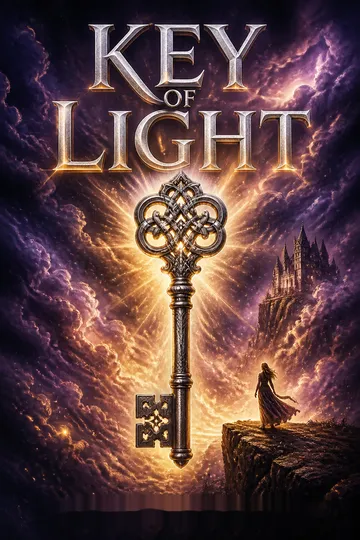
A timed test of choiceThe keys are mortal-made objects hidden in the world, each required to release one of the sisters’ imprisoned souls. The three women receive turns governed by phases of the moon, so one failure ends the entire attempt and places a year of their lives at risk. The clue given to Malory directs attention toward beauty, truth, courage, and love without naming a location. This device converts a mythic curse into a practical investigation while making every private decision part of a shared wager.
The Daughters’ Paintings
A visual trail across timeThree paintings depict the Daughters of Glass at different moments, from the sisters’ innocence to the theft of their souls and an Arthurian scene. The works share figures, symbols, and an apparently identical artistic hand despite dates centuries apart. Malory’s expertise lets her read visual details as clues rather than decoration. The paintings connect the women to the legend, draw Flynn’s friends into the investigation, and prepare the idea that artistic creation can become more than interpretation.
The Box of Souls
The curse made visibleThe glass box holds the sisters’ stolen souls behind three locks. Its blue lights make their imprisonment visible, while the locks cannot be opened by divine power. The box gives the quest a concrete objective and measures progress: each key turns one lock and disappears. Its design also links the hidden keys to the paintings, where the repeated image of a key becomes both symbol and evidence.
Kane’s Dream Illusions
Desire turned into a trapKane enters through visions shaped around his targets’ fears and wishes. He gives Malory the artistic mastery and loving family she has long wanted, presenting surrender as a route to a perfect life. His attacks also distort familiar spaces and separate the women from one another. The illusions test whether each woman can recognize the difference between an emotionally persuasive fantasy and a life that permits real choice.
The Moonbound Agreement
A bargain with shared stakesThe signed agreement gives each woman money before the quest begins and establishes a strict sequence of turns. The reward answers their immediate financial troubles, while the penalty threatens all three if any seeker fails. Because the women accept before they understand the full danger, the contract creates both commitment and unease. It binds their separate searches into one collective undertaking and makes trust among them essential.
Key Trilogy Series
About the Author



Download PDF
Download EPUB
.epub digital book format is ideal for reading ebooks on phones, tablets, and e-readers.








