

Plot Summary
The Georgetown Stairwell
At seven, Adrian Rizzo watches a stranger force his way into her Georgetown home and beat Mimi, the woman who cares for her. He is Jonathan Bennett, the married professor who fathered Adrian and once struck her mother, Lina.
When he drags Adrian upstairs and throws her against the steps, Lina fights him off and pushes him over the railing. He dies, while Adrian suffers a broken wrist and Mimi is hospitalized. Police accept Lina acted to protect them, but the violence leaves Adrian fearing she may inherit her father’s cruelty.
Lina explains that Bennett lied about his marriage, rejected the pregnancy, and attacked her before Adrian was born. A week later, Lina leaves Adrian with her grandparents for the summer, both to protect her and to manage the publicity.
The attack makes paternity a physical danger before it can become a family story. Adrian understands the scene through the body: pain, blood, the sound of a blow, and the fear that violence might be inherited like eye color. Lina’s choice to tell her daughter some of the truth, while withholding its ugliest details, reveals her protective instinct and her practical limits as a parent. The publicity that follows also establishes a tension that will recur throughout Lina and Adrian’s lives: private trauma can become public material, and control over that material is itself a form of power.
The Summer Adrian Kept
At her grandparents’ home in Traveler’s Creek, Adrian finds the summer she has been missing: dogs, gardens, cooking lessons, and adults who make room for her. She befriends Maya Wells, whose brother Raylan draws superheroes across his bedroom walls.
Adrian admires his art, and he is surprised she knows the characters, but their first connection remains brief. The deeper bond is with Maya and the local family life around her. Adrian learns to cook with Dom and Sophia, helps in the garden, and begins to understand why the town feels like a community rather than a stop on her mother’s itinerary.
When Lina returns to take her back to New York, Adrian weeps over leaving Maya and her grandparents. Sophia promises letters and weekly calls, giving the child a way to keep home in reach.
The summer gives Adrian an experience of belonging that is not earned through achievement or publicity. Dom and Sophia build it through ordinary acts: feeding her, teaching her, listening, and keeping promises. Maya’s friendship matters because it lets Adrian enter a peer world without being defined by the attack or her mother’s fame. The departure then clarifies a central wound: Adrian is loved, but often moved according to adult schedules. Sophia’s letters do more than soothe a child. They create a durable practice of attention that Adrian will later use to sustain relationships across distance.
A Camera of Her Own
At sixteen, Adrian refuses to join Lina’s latest travel tour because she wants a stable start at her new New York school. Lina reluctantly trusts her to stay home. Rather than chase popularity, Adrian approaches the school’s nerd table and recruits Hector Sung, Teesha Kirk, and Loren Moorhead to film a series of short workouts on her rooftop.
The friends lend their skills and equipment, and Adrian directs, choreographs, and performs. Harry, Lina’s publicist, sees the finished work and persuades Lina to produce and market it, while Adrian negotiates credit and profit shares for her collaborators.
About Time launches through Yoga Baby, but remains Adrian’s own project. Its success brings publicity and her first anonymous death threat. Lina files the threat as a cost of fame; Adrian cannot dismiss it so easily.
Adrian’s refusal is a small act of separation that becomes a practical test of trust. She does not reject Lina’s work ethic; she rejects the assumption that her life must move at her mother’s pace. By choosing Hector, Teesha, and Loren for competence rather than status, she creates a collaborative model different from Lina’s top-down enterprise. Negotiating their compensation shows that independence, for Adrian, includes responsibility to others. The threat that follows complicates her success: visibility offers opportunity, but also makes her accessible to strangers who mistake public presence for personal access.
Ambition Across Two Cities
Adrian’s fitness videos, apparel, blog, and streaming work grow alongside her studies at Columbia, where she shares an apartment with Teesha. Each February, anonymous poems arrive, accusing her of fraud and promising death.
She copies them for the authorities but keeps working, visiting her grandparents and maintaining her friendship with Maya. Meanwhile, Raylan turns his childhood talent for drawing into a career at Marvel, then starts a comics company with partners Jonah and Bick. In college he meets Lorilee, an art student; they marry, buy a Brooklyn house, and raise Bradley and Mariah.
Adrian encounters the couple at an engagement celebration and later exchanges letters with Lorilee, whose warmth reaches her through the page. Their lives follow separate paths, but both are building work and family around creative ambition.
The parallel stories resist a simple contrast between career and family. Adrian and Raylan both make lives through creative labor, but their forms of commitment differ: she builds a business around self-direction, while he builds a home with Lorilee and children. The poems try to make Adrian’s public success feel like a personal offense, yet her friendships and work give her more than one source of identity. Lorilee’s letters quietly connect these worlds before the characters themselves do. The novel’s long timeline makes intimacy cumulative: people become important through repeated acts of attention, not merely through dramatic first meetings.
True Angel Takes Flight
On a spring day, two students open fire at Lorilee’s high school. Raylan races to the scene, where a student tells him Lorilee was shot after pulling an injured boy behind the classroom door. She dies protecting her pupils; the boy survives.
Grief leaves Raylan struggling to care for Bradley and Mariah while keeping his comics company alive. On the anniversary of Lorilee’s death, he dreams of her urging him to keep going, then draws her as True Angel, a hero who returns to protect the vulnerable.
His partners help sharpen the character, and readers embrace the comic. The work gives Raylan a way to honor Lorilee without pretending she can return. Yet raising two young children alone remains exhausting, and he gradually recognizes that his children need the support of nearby family.
Raylan does not transform grief into art by making Lorilee’s death beautiful. He gives her an imagined future in which protection can continue, an answer to the intolerable finality of the school shooting. The comic also lets him act when helplessness threatens to immobilize him: he can draw, revise, and share a story even when he cannot change what happened. His children make survival concrete rather than abstract. Their needs require breakfast, school, and bedtime, so grief must coexist with care. The act of creating True Angel marks a shift from preserving the past to carrying its values forward.
Back to Traveler's Creek
After Sophia dies in a car accident, Adrian returns to Traveler’s Creek to stay with Dom, who is grieving his wife and withdrawing from the restaurant and garden. Adrian moves her work into the family home, brings her business manager Teesha and Teesha’s family closer, and helps Dom imagine turning the abandoned schoolhouse into a youth center.
In Brooklyn, Raylan realizes his children need the family support he cannot provide alone. He moves back with Bradley, Mariah, and their dog, Jasper, then buys a renovated house on Mountain Laurel Lane, next door to Teesha.
His return places him within reach of his mother, Jan, his sister Maya, and the Rizzo family. Adrian’s hometown becomes a working community again, not just the place where she once spent a summer.
The return to Traveler’s Creek is not a retreat from ambition. Adrian relocates work and redesigns its setting, while Raylan changes the conditions under which he can parent and create. Both decisions challenge the idea that independence means doing everything alone. Dom’s youth-center plan extends the family’s private care into public space; the children need somewhere safe to spend time, and the old schoolhouse can serve that need. The move also makes geography emotionally consequential. A town becomes home through daily reciprocity, not nostalgia alone.
The House Next Door
Raylan first sees Adrian again as an adult outside the house he has just bought. His dog, Jasper, immediately adores Adrian’s enormous Newfoundland, Sadie, giving the neighbors an excuse to meet again. Raylan visits Adrian’s home studio, where her demanding workouts expose how little he has exercised since Lorilee’s death.
Adrian builds him a program and supplies weights; he follows it, regaining strength and sleep. During another visit, he asks whether he may model a comic-book character on her.
He shows her sketches of Cobalt Flame, a tormented demi-demon who will begin as True Angel’s enemy and become an ally. Adrian loves the fierce, recognizable heroine. Raylan’s creative spark and Adrian’s approval bring them closer, while Dom and Adrian continue turning the schoolhouse into a community project.
The dogs make an unguarded first move on behalf of the humans. Jasper’s attachment gives Raylan and Adrian a low-pressure reason to share space, while his workouts create a second language of care: Adrian notices his weakened body, and Raylan accepts help without surrendering his independence. Cobalt Flame makes that exchange artistic as well as personal. Raylan sees a complicated character in Adrian rather than reducing her to an image, and she responds by engaging with his craft. Their connection begins not in a grand declaration, but in mutual recognition and practical attention.
A House Falls Quiet
At ninety-four, Dom gives up driving and shows Adrian the ruined schoolhouse he hopes to rebuild as a youth center. She agrees to become his partner in the project. Soon after, she finds him dead in his library, peacefully seated beside the fire with Sophia’s photograph marking his book.
Raylan arrives and steadies her through the shock. Adrian organizes a public memorial where townspeople share how Dom fed, employed, and welcomed them. Lina comes to Traveler’s Creek and admits that grief has made her confront the time she failed to give her parents and daughter.
Adrian recognizes both the mother who protected her in Georgetown and the mother who left much of her daily care to others. When a new poem exploits Dom’s death, Lina helps Adrian hire investigator Rachael McNee.
Dom’s death turns inheritance from an abstract future into immediate work. Adrian must decide what the house, restaurant, and youth-center plan mean without the person who gave them their emotional center. The memorial shows that his legacy was not simply property or a recipe; it was a network of people who experienced his care directly. Lina’s confession shifts their relationship from polite cooperation toward honest recognition. Neither woman can recover lost time, but they can speak plainly about what was missing. The new threat then tests whether grief will isolate Adrian or draw her into a wider circle of protection.
The Dinner Test
After Dom’s memorial, Adrian invites Raylan to dinner, wanting to keep the family home alive with people. Her first attempt at cooking Dom’s sauce succeeds, and a conversation about Raylan’s graphic novel gives way to their first kiss.
They begin seeing each other, with desire complicated by Raylan’s grief for Lorilee and Adrian’s inexperience with serious relationships. Raylan eventually removes his wedding ring and tells Adrian he loves her; she admits she feels the same. Their children accept Adrian, and she takes Mariah shopping for beach clothes, discovering the pleasure and chaos of joining their family routines.
At the same time, Adrian and Lina collaborate on Fitness 101, a workout production filmed at their old high school with students and teachers. The project gives their changing relationship a shared purpose.
The romance grows through ordinary tasks rather than a rescue fantasy. Adrian cooks, Raylan brings his children into her life, and both negotiate what commitment might ask of them. His wedding ring matters because removing it does not erase Lorilee; it acknowledges that memory and new attachment can coexist. Adrian’s hesitation is not lack of feeling but fear of losing control over a life she has carefully directed. Fitness 101 mirrors the personal shift: mother and daughter work side by side, making room for different styles without requiring either to disappear.
The Poet's Family Tree
Rachael studies the poems, postmarks, and a greeting card the sender mailed after Dom’s death. The card’s small publisher narrows its sales locations, giving her a rare lead. She discovers that Jonathan Bennett’s wife, Catherine, had compiled a list of thirty-four women she believed had affairs with him, then gave the information to the reporter whose story exposed Adrian’s paternity.
Rachael connects several women on the list to unsolved murders and learns Bennett’s adult children, Nikki and JJ, may have inherited their mother’s grievance against Adrian.
Adrian posts a pointed workout video aimed at the anonymous poet, breaking years of silence. Rachael warns her that the challenge may provoke escalation, but Adrian says she needed to reclaim some control. For the first time, the threat has a plausible history and identifiable people behind it.
The investigation converts a seemingly private ritual of intimidation into a pattern with material evidence. The distinctive card matters because its source is traceable, while Catherine’s list supplies a motive that reaches beyond Adrian’s own life. Rachael’s work does not yet prove who is responsible, but it makes uncertainty more specific and therefore more dangerous. Adrian’s video is a psychologically intelligible risk: years of passive endurance have made silence feel like surrender. Her decision does not make her reckless by nature; it shows how prolonged threat can push a competent person to seek agency in the one place she controls, her own public voice.
The List Turns Lethal
Rachael confronts Nikki Bennett at her Georgetown home. Nikki denies knowing the murdered women, but her quick reactions suggest she recognizes the case. After Rachael leaves, JJ appears, strikes his sister, and chains her inside a small room.
Rachael then learns from former student Tracie Potter that Jonathan Bennett had mistreated women and may once have assaulted a pregnant student. Before Rachael can pursue the lead, JJ kills Tracie in Richmond and shoots Rachael outside her office, leaving her gravely wounded.
Rachael survives long enough to identify her attacker as a Bennett and warn police that Adrian is in danger. Investigators find Nikki confined and injured; she is taken to hospital, while police begin searching for JJ. The threat has moved from anonymous paper into direct violence against anyone who uncovers its source.
This turn exposes the cost of investigating a family system built around denial. Nikki has been shaped by the same household that produced the grievance, but her imprisonment shows she is not simply an ally of her brother. Rachael’s persistence gives the case momentum, yet it also brings her within reach of the violence she is documenting. The shift from poems to murder is not a sudden change of genre; it is the fulfillment of a pattern the poems have rehearsed. Once the threat becomes bodily, professional procedure and personal loyalty must operate together.
The Stairs Again
JJ reaches Traveler’s Creek and shoots Sadie with a tranquilizer dart while Adrian is exercising outside. He forces Adrian into the house at gunpoint, then smashes her phone and tells her he has killed Rachael.
He blames Adrian for her father’s death and for the family’s disgrace, repeating the same logic that once drove Jonathan Bennett to attack Lina and a child. Adrian keeps him talking and searches the familiar rooms for a chance to escape. When Sadie recovers and charges the bedroom doors, Adrian kicks JJ’s gun away and runs.
She hides, uses a letter opener to wound him, and struggles for control of the weapon. Raylan and Monroe arrive after Sadie alerts Jasper and Raylan recognizes something is wrong. Raylan tackles JJ as the dogs attack, and the struggle sends JJ over the porch railing.
The climax deliberately echoes the Georgetown assault, but Adrian is no longer a child trapped on the stairs. She uses her knowledge of the house, physical training, and improvisation to resist rather than waiting for someone else to decide what happens. The echo is meaningful without being identical: JJ repeats his father’s accusations, but Adrian’s own actions interrupt the inherited script. Sadie’s return, Raylan’s response, and Monroe’s arrival show that survival is collective. Adrian’s courage matters, yet the novel refuses the fantasy that courage must mean facing danger alone.
A Family of Choice
JJ survives the fall and is hospitalized with severe injuries; police later establish that he killed women on Catherine’s list and imprisoned Nikki. Nikki gives a detailed statement, including that JJ killed their mother, and authorities do not charge her.
Rachael recovers from her wounds, while Adrian turns down media attention and accepts the support of her friends, family, and town. Lina stays, acknowledging how much Adrian means to her and thanking her for surviving.
As repairs begin on the house, Raylan gives Adrian matching collars for Sadie and Jasper, then asks her to marry him and join their family. Adrian says yes and asks when he and the children can move in. The future she accepts includes Raylan’s children, the family home, her work, and the youth center Dom hoped to build.
The resolution distinguishes justice from restoration. JJ’s arrest cannot return the women he killed, erase Adrian’s childhood trauma, or undo the years of fear; it can stop his access to new victims. Nikki’s testimony complicates inherited blame by making her responsible for her own choices without treating her as identical to her brother. Adrian’s answer to Raylan’s proposal is a choice of shared life, not a surrender of autonomy. The house becomes a practical family home and a public legacy through the youth center. What survives is not an untouched past, but a community capable of carrying its care forward.
Analysis
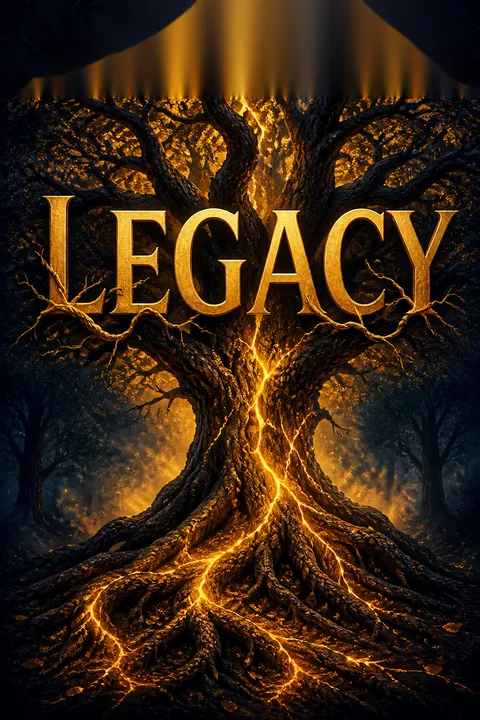
Legacy follows several generations as they struggle over what gets passed down: not only businesses, houses, and family names, but habits of care, patterns of blame, and ways of responding to harm. Adrian’s biological connection to Jonathan Bennett is repeatedly used by others to define her, yet her character is formed more decisively by the people who raise, teach, and befriend her. She inherits Lina’s drive, Dom’s commitment to community, and Sophia’s practice of sustained attention. Raylan’s story offers a parallel inheritance. He carries Lorilee forward not by refusing new love, but by making art and raising their children with room for memory.
The novel’s treatment of ambition is unusually relational. Lina and Adrian share a profession, but their differences are not framed as a contest over who is the better woman. Lina builds an institution and later recognizes the emotional costs of her choices; Adrian uses that institution while insisting on authorship of her own work. Their reconciliation depends on candor rather than a sudden erasure of old disappointments. In the same way, Raylan’s love for Adrian does not displace Lorilee. The story imagines affection as additive, though never effortless.
The suspense plot tests the limits of private resilience. Adrian is competent, disciplined, and physically strong, but the book does not treat those traits as a substitute for community. Her safety depends on friends, investigators, neighbors, family, and the dogs she has welcomed into her home. The killer’s grievance is built from a distorted family narrative in which women are made responsible for men’s choices. The story counters that logic not with a single moral speech, but with relationships in which people take responsibility for one another without claiming ownership.
The youth center gathers the novel’s argument into a concrete project. Dom’s memory survives through a place children can use, not simply through sentiment. The ending’s marriage proposal similarly joins love to practical life: a shared house, children, work, and a town. A legacy, the novel suggests, is not what remains untouched after loss. It is what people choose to keep building together.
Review Summary
Reviews for Legacy are mixed, averaging 4.16 out of 5. Many readers praise Roberts' character development, warm friendships, and engaging community feel. Fans appreciate the slow-burn romance and cozy small-town setting. However, critics note the story feels too long and overly focused on fitness-related minutiae. Several readers found the romance underdeveloped and the suspense predictable or insufficient. The stalker subplot, while present throughout, only intensifies near the end. Overall, dedicated Roberts fans tend to enjoy it, while those seeking traditional romantic suspense may feel disappointed.
People Also Read



Characters
Adrian Rizzo
Fitness founder and daughterAdrian is Lina Rizzo’s daughter, a disciplined athlete and entrepreneur whose fitness work grows from the routines she once made with her mother. She is observant, ambitious, and unusually self-reliant, partly because adults have often arranged her life around work and travel. Her empathy is practical: she notices who needs help and tends to turn concern into a plan. Yet control is also a defense; when danger or uncertainty grows, she tries to manage it herself. Family ties to Traveler’s Creek give her a model of belonging based on shared labor rather than public success. Her central psychological tension is learning that independence and interdependence can strengthen each other.
Raylan Wells
Comic artist and fatherRaylan is an artist, small-business owner, and father of Bradley and Mariah. As a boy, he fills his room with superhero drawings and prefers imaginative work to school assignments. As an adult, he remains methodical and loyal, but grief can make him retreat into work and routine. His love for his children gives him a reason to rebuild after loss, while art lets him give shape to feelings he cannot easily express. Raylan values home not as a fixed building but as a place where people are cared for. His steady temperament balances Adrian’s drive, though he must also learn to accept help and make room for a future after bereavement.
Lina Rizzo
Fitness empire builderLina is Adrian’s mother, the driven founder of Yoga Baby and a nationally successful fitness entrepreneur. She is disciplined, strategic, and comfortable with public attention, but far less at ease with the small, repetitive demands of parenting. Her ambition is not a pose: she believes in her work and uses its success to support causes she values. Lina often shows care through provision and protection rather than emotional availability, a pattern that leaves Adrian both secure and lonely. Their relationship is shaped by mutual admiration and friction. Lina’s capacity to reassess herself becomes possible when grief forces her to recognize that material support cannot substitute for time.
JJ
Resentful Bennett sonJJ is the adult son of Jonathan and Catherine Bennett, raised in a household marked by infidelity, instability, and competing stories about who deserves blame. He is intelligent enough to plan carefully and adaptable enough to move through different settings without drawing notice. His self-image depends on an idealized account of his father, while his anger turns women into symbols of the family’s humiliation. The gap between his careful planning and distorted moral reasoning is central to his characterization. He treats grievance as inheritance and sees punishment as proof of loyalty, revealing how a family myth can become a substitute for conscience.
Rachael McNee
Persistent private investigatorRachael is a former police officer who now runs her own investigative agency. Practical, patient, and attentive to details that others might overlook, she knows that meaningful breakthroughs often come from records, interviews, and persistence rather than dramatic intuition. She takes Adrian’s fears seriously without letting fear replace evidence. Her professional independence reflects a desire to control her own work, while her family life keeps that independence grounded in obligation and affection. Rachael’s blend of empathy and procedural discipline makes her a trustworthy guide through the mystery, and her willingness to keep pursuing difficult leads puts her own safety at risk.
Dom Rizzo
Restaurant patriarchDom, Adrian’s grandfather, owns Rizzo’s Italian restaurant with his wife, Sophia. A patient cook and generous mentor, he welcomes children into the kitchen and teaches through shared work. His attachment to the restaurant and Traveler’s Creek comes from decades of making both places serve as community anchors. Beneath his warmth is a clear sense of responsibility: he wants the family’s success to benefit people beyond the family itself.
Sophia Rizzo
Grandmother and homekeeperSophia is Lina’s mother and Adrian’s grandmother. She gives Adrian a steady, affectionate home during a turbulent childhood, teaching her through letters, cooking, and ordinary routines. Sophia understands Lina’s ambition without confusing it with maternal ease. Her calm honesty helps Adrian trust her own feelings, and her care becomes one of the strongest models of family life in the novel.
Lorilee Wells
Teacher and Raylan's wifeLorilee is Raylan’s wife, an art teacher, and the mother of Bradley and Mariah. Warm, perceptive, and devoted to children, she has built a home after an unsettled childhood in foster care. Her letters to Adrian reveal a generous mind and a gift for intimacy through writing. Lorilee’s influence continues through Raylan’s art and the family habits they created together.
Maya Wells
Adrian's lifelong friendMaya is Raylan’s younger sister and Adrian’s first close friend in Traveler’s Creek. Her mother teaches her to make room for a child who may need friendship, and Maya turns that advice into a lasting bond. As an adult, she builds a family and a business in the town, linking Adrian to the community across different stages of life.
Jan Wells
Raylan's capable motherJan is Raylan and Maya’s mother and the manager of Rizzo’s. After her husband leaves, she works hard to keep her children secure, accepting the Rizzos’ help without losing her pride. She combines practical discipline with humor and affection. Her experience as a single parent makes her an important source of support when Raylan raises his own children.
Teesha Kirk
Friend and business managerTeesha is one of Adrian’s closest friends and later manages her business. A quick-minded student with a love of science fiction and clear financial instincts, she is direct enough to challenge Adrian when needed. She builds a family with Monroe while continuing to help Adrian’s work grow. Teesha’s loyalty is active rather than sentimental: she brings advice, structure, and practical help.
Hector Sung
Videographer and collaboratorHector is a talented student videographer who helps Adrian make her first independent workout videos. Thoughtful and technically skilled, he is less comfortable at the center of attention than behind the camera. His father works in film production, but Hector develops his own creative direction through the work he does with Adrian and their friends.
Loren Moorhead
Sound producer and lawyerLoren begins as one of Adrian’s school friends, contributing sound work and broad knowledge to her videos. He is argumentative, funny, and initially insecure about his body and physical ability. Adrian’s encouragement helps him engage with exercise without treating inexperience as failure. He later pursues law, remaining part of the group’s professional network.
Harry Reese
Publicist and trusted allyHarry is Lina’s longtime publicity director and one of the adults Adrian trusts most. He can recognize a marketable idea without dismissing the young people who created it. His loyalty to both mother and daughter lets him advocate for Adrian while still understanding Lina’s concerns. With his husband, Marshall, he builds a family of his own.
Mimi Krentz
Childhood caregiver and confidanteMimi cares for Adrian through childhood and remains close to Lina as an administrative assistant and friend. She is warm, blunt, and attentive to the practical needs that Lina may overlook. During the Georgetown attack, she tries to protect Adrian and becomes part of the child’s memory of survival. Her presence gives Adrian a dependable adult relationship beyond her immediate family.
Monroe Grant
Musician and family friendMonroe is Teesha’s partner, a songwriter and musician who prefers private creative work to performance. His quiet manner conceals a strong instinct to help, and he becomes a dependable presence in the neighborhood. He and Teesha raise Phineas and Thaddeus, offering Adrian an example of a busy family held together by teamwork.
Nikki Bennett
Consultant and Bennett daughterNikki is Jonathan and Catherine Bennett’s daughter and a traveling business consultant. She has built a professional life around analysis, efficiency, and solving other people’s problems. Her childhood was shaped by her parents’ unstable marriage and her responsibility toward her younger brother. Nikki’s composure can make her difficult to read, especially when questions touch the family history she would rather keep contained.
Jonathan Bennett
Professor and absent fatherJonathan Bennett is a literature professor who had an affair with Lina while she was a student. Charming and intellectually gifted, he uses those qualities to disguise selfishness and a volatile temper. His actions leave consequences for several families, though he refuses to accept responsibility for them. The contrast between his public standing and private conduct shapes the conflict that follows.
Bradley Wells
Raylan's thoughtful sonBradley is Raylan and Lorilee’s older child. He loves comics, especially Batman, and asks direct questions as he tries to understand grief, family, and change. His memories of his mother remain important to him.
Mariah Wells
Raylan's imaginative daughterMariah is Raylan and Lorilee’s younger child. Fashion-minded, energetic, and affectionate, she brings humor to family upheaval and welcomes Adrian into her life with candid enthusiasm.
Phineas Grant
Teesha and Monroe's sonPhineas is Teesha and Monroe’s curious, intensely verbal son. He loves science, space, and explaining his ideas, and becomes a close playmate to Raylan’s children.
Collin Wells
Maya's young sonCollin is Maya and Joe’s son. He is cautious with new people, devoted to dinosaurs, and still adjusting to the idea of becoming an older brother.
Joe Wells
Maya's supportive husbandJoe is Maya’s husband and Collin’s father. He is a practical, affectionate presence who enjoys family outings and helps Raylan’s children feel included in their new community.
Kayla
Emerging interior designerKayla is Barry’s younger sister and an interior-design student. Adrian gives her an early professional opportunity, and Kayla brings fresh ideas to the fitness studio and youth-center projects.
Plot Devices
The Anonymous Poems
Threats that mark timeThe poems arrive without a return address, often around the same point in the year, and turn Adrian’s success into a private calendar of dread. Their postmarks offer little help until a greeting card from a small publisher breaks the sender’s usual pattern. That inconsistency gives Rachael a geographic lead and opens the path toward the Bennett family history. The poems also shape Adrian’s psychology: she learns to file and report them, but the repeated threat never becomes ordinary. Their movement from yearly messages to more frequent, personal attacks signals that the danger is changing.
The Fitness Business
A platform for independenceAdrian’s workout videos begin as a project she can control when she feels uprooted at school. The videos grow into a business through her choreography, her friends’ production skills, and the reach of Lina’s company. Later, the blog and streaming work let Adrian choose where and how she works, including from Traveler’s Creek. Fitness is not merely a career motif: it gives Adrian a language for discipline, bodily confidence, and helping others. It also becomes a public channel through which she responds to the anonymous poet, turning her professional voice into a deliberate act of defiance.
True Angel and Cobalt Flame
Grief turned into heroic artRaylan creates True Angel after losing Lorilee, transforming his grief into a story about a protector who continues to save others. Later, Adrian’s appearance inspires Cobalt Flame, a conflicted character who begins as an adversary and may become an ally. The comics echo the characters’ real struggles without simply retelling them: they explore responsibility, anger, and the possibility of choosing a different course. The fictional heroes also give Raylan and Adrian a shared creative vocabulary, bringing their separate ambitions into conversation.
The Rizzo Family Home
A home that becomes communityThe house on the hill holds Adrian’s childhood memories and later becomes the base for her work and her life with Dom. The abandoned schoolhouse extends the same idea outward: Dom and Adrian envision a youth center where local children can study, play, and find support. The restaurant, home, and proposed center form a connected legacy built through daily hospitality. These places give grief a practical destination, allowing the characters to preserve what mattered by continuing to serve others.
Sadie and Jasper
The dogs sound an alarmAdrian’s Newfoundland, Sadie, and Raylan’s dog, Jasper, become immediate companions, giving their owners repeated reasons to meet and spend time together. Their attachment helps create a relaxed bond between the adults and draws the children into shared routines. At the climax, Sadie’s return to the house and Jasper’s reaction alert Raylan that Adrian may be in danger. The dogs’ loyalty functions both as a tender domestic thread and as a practical form of protection.
About the Author









Download PDF
Download EPUB
.epub digital book format is ideal for reading ebooks on phones, tablets, and e-readers.








