


Plot Summary
Prologue
Sixteen-year-old Jenna Harbough has finally persuaded her parents to let her see Avenue A, the band whose guitarist Jake Kincade inspires her own songwriting. At Club Rock It, she dances with her friends, thrilled when Jake smiles at her.
A stranger jabs her arm with a syringe; Jenna mistakes the wound for an elbow or sting and keeps dancing until sickness drives her toward the alley. Jake finds her collapsing, calls for help, and tries to revive her, but she dies in his arms. Her dream demo for Jake remains in her purse, beside the evidence of a killing no one yet understands.
The attack turns a night of ordinary adolescent hope into a trap without warning. Jenna’s ambitions, friendships, and excitement are not presented as clues to guilt, but as the life the killer casually interrupts. Her misreading of the needle as a minor sting makes the crime especially cruel: the danger is already inside her while the music still offers a few more minutes of joy. Jake’s failed attempt to save her gives the opening an intimate witness, while the demo in her purse makes her unrealized future materially present.
Jenna's Last Set
Nadine Furst calls Lieutenant Eve Dallas away from a rare quiet evening with her husband, Roarke, after Jake Kincade discovers Jenna in the alley. Eve confirms the teenager’s identity, preserves the scene, and finds Jenna’s demo in her purse. Jake describes seeing her dance before the set break, then catching and trying to revive her; the timeline and club security footage support his account.
Eve tells Jenna’s parents, Julia and Shane Harbough, that their daughter is dead. Their shock turns to a demand for answers, and Julia explains that Jenna was devoted to music, not drugs. Eve cannot yet call the death a homicide, but the fresh needle wound and Jenna’s insistence that someone jabbed her make an accidental overdose unlikely.
Eve’s case begins with the collision between procedure and intimate loss. She must treat Jenna as evidence before she can understand her as a daughter, friend, and aspiring musician. The demo complicates that duty: it links Jenna to Jake, but more powerfully stands for a future that the crime has cut short. Jake’s grief is not proof, and Eve refuses to let friendship substitute for verification. Her restraint protects the investigation while her encounter with the Harboughs reveals the human cost that gives the work its urgency.
Evidence Behind the Club
Eve and Detective Delia Peabody interview Jenna’s friends, Chelsea and Leelee, who remember Jenna feeling a sharp jab on the dance floor and noticing someone behind her. The girls had assumed it was an elbow, then separated to get drinks while Jenna tried to reach the alley.
Security footage and staff interviews confirm the club’s alcohol-free rules and Jake’s movements. A sweeper finds fresh scuffs beneath a small window in the men’s restroom and fabric caught in its frame.
Eve reconstructs the route: the attacker injected Jenna during the crowded final song, slipped into the restroom, and climbed out before the break. He planned the timing and avoided the door cameras, but left traces that establish a deliberate killing and a slight, agile suspect.
The club’s crowdedness first seems to erase the killer, then becomes part of the evidence. Eve reads the room as a sequence of choices: when the music drew bodies together, where the attacker moved, and which exit he had prepared. This is not a crime of sudden rage in the conventional sense; its escape route requires rehearsal. Yet the fabric and scuffs expose the gap between a plan and perfect control. The investigation advances because physical details can outlast the confusion that made witnesses overlook them.
A Song Left Unfinished
Chief Medical Examiner Morris finds no evidence that Jenna was a habitual drug user and concludes that the injection delivered a fast, lethal mixture. Her vomit later yields heroin, ketamine, Rohypnol, and potassium chloride, while the wound suggests a deliberately contaminated needle.
Eve searches Jenna’s bedroom with Peabody and finds recording equipment, carefully organized music files, lyric notebooks, and a final entry about bringing her demo to Jake. Nothing points to a boyfriend, a drug habit, or a known enemy.
The room instead confirms how seriously Jenna worked at songwriting and performing. Eve leaves without a suspect, but with a clearer measure of what was taken: not only a daughter, but a talented teenager who had spent years preparing for a future she expected to reach.
The forensic findings separate the fact of an overdose from the question of consent: Jenna died from drugs, but every contextual detail contradicts voluntary use. Her room functions as a counter-record to the killer’s eventual calculations. Equipment, drafts, and practice files show a life organized around making something, not around the substance used to end it. The contrast is ethically important. Jenna is not reduced to a victim profile; her work gives the investigation a concrete sense of the future the crime erased.
Another Girl Falls
The following night, seventeen-year-old Arlie Dillon attends Memorial Park’s Battle of the Bands with her boyfriend, Moses Rowe, and friends Nikki and Dawn. During a performance, someone jabs her arm.
Arlie thinks a wasp has stung her, and Moses goes for ice; moments later she becomes confused, vomits, and collapses. Nikki attempts CPR while Dawn summons help, but Arlie dies before medical staff can revive her. Eve reaches the park and finds the same kind of fresh needle wound seen on Jenna.
Arlie’s age and the matching attack connect the deaths, although the girls lived in different neighborhoods and moved in different circles. The killer has struck twice at crowded music events, and another family must be told that an ordinary night out has ended in murder.
The second killing changes the case from a single unexplained death into a pattern, but it does not yet provide a personal motive. Arlie’s friends respond with the kind of confusion Jenna’s friends experienced: the wound looks small, the symptoms arrive quickly, and the event remains a concert until suddenly it is an emergency. Their failed rescue attempts also prevent the narrative from treating speed as a solution. The repeated method points toward planning, while the victims’ distinct lives warn Eve not to invent a connection simply because one would make the case easier.
Bruise That Saves Kiki
On Monday night, the attacker targets sixteen-year-old Kiki Rosenburg at a packed opening-night screening. He pushes a needle through her jacket and into a pre-existing bruise, and the pain makes her scream before he can deliver the full dose.
Kiki vomits and loses consciousness, but emergency treatment catches her in time. Eve and Peabody interview Kiki’s brother, Presley, and her friends, while Roarke reviews the theater footage. Witnesses remember a short, pale young man in a new trench coat, cheap shoes, and a disguise that obscures his face.
The attacker flees through an alarmed emergency exit, drawing attention and leaving a trail of witnesses. Kiki’s survival gives Eve something the first two cases lacked: a living victim who saw the assailant close enough to describe his eyes.
Kiki survives not because the attacker becomes less dangerous, but because his method meets an unplanned obstacle: the bruise makes the injection hurt enough to disrupt his timing. The attempted murder reveals the vulnerability hidden beneath his careful preparation. He can plan an entrance and select a setting, but he cannot control a victim’s immediate response. The survivors’ accounts turn that failure into investigative leverage. Kiki also alters the emotional stakes: Eve is no longer only pursuing a killer after the fact; she is trying to prevent the next girl from becoming a body on a slab.
The Killer's Chemical Signature
Lab chief Dick Berenski confirms that both dead girls received the same precisely measured cocktail, including unusually pure heroin, a date-rape drug, potassium chloride, and bacteria coating the needle. The mixture required scientific knowledge and access to serious equipment.
Dr. Mira, the department profiler, interprets the sexual and punitive elements as evidence of a young man who feels entitled to women’s attention and resents being ignored or rejected. Eve agrees that the girls may have been chosen as representatives of a type rather than because either knew the attacker.
Meanwhile, a witness remembers a small figure in cheap black trousers leaving Jenna’s dance floor, and fabric and shoe marks suggest the same incongruous outfit. The investigation now has a likely age, build, and motive, but still no name or face.
The poison is both weapon and self-portrait. Its complexity demonstrates technical competence, while the added drugs and contaminated needle exceed what is needed simply to kill. Mira and Eve read that excess as a message shaped by sexual resentment and fantasies of superiority. Their interpretation remains a working profile, not a substitute for proof; the physical evidence must still carry the case. The contrast between the killer’s scientific precision and social ineptitude becomes a practical lead, directing attention toward a young person whose skills and isolation may coexist in plain sight.
Cheap Shoes, Small Exit
Eve’s team identifies the clothing from the club escape as cheap synthetic trousers and a low-end shoe whose partial mark suggests a small adult size. At a nearby deli, witnesses recall a short white boy in ill-fitting clothes entering behind a group headed to the show, barely noticed because his appearance seemed unremarkable.
Searches of Jenna’s school and Arlie’s room reveal no shared friends or enemies; Arlie’s sketches and sewing equipment show a separate, serious ambition in fashion design.
The victims’ differences strengthen the theory that the killer selects girls in public rather than pursuing one known target. Police begin checking private-school rosters, chemistry programs, shoe shops, and barbers. Each clue trims the possibilities, while Eve’s fatigue grows under the pressure of a third attack she believes is coming.
The clothing evidence works because it is socially legible as well as forensic. The attacker wants to disappear, but his cheap purchases and mismatched presentation make him memorable to people who know what teenagers consider normal. His disguise therefore fails not through a dramatic fingerprint, but through taste and status. Meanwhile, the absence of a link between Jenna and Arlie is informative: their individual identities matter to their families, while the killer appears to flatten them into a category. Eve has to hold both truths without confusing the suspect’s reduction with the victims’ actual lives.
Jenna's Song at Her Memorial
At Jenna’s memorial, Eve watches her parents, Shane and Julia, receive support from neighbors Charles and Louise, from Nadine, and from the members of Avenue A. Jake has listened to Jenna’s demo with the band and offers to produce and release her song; the group also proposes a scholarship in her name. Julia accepts, recognizing the gift as a way to honor the future Jenna had imagined.
The gesture gives Jake a task beyond the guilt of having held Jenna as she died. Outside the service, he and Nadine finally admit the depth of their love for each other. Their quiet declaration comes amid grief, not apart from it, as both have been helping the Harbough family and carrying the case’s emotional strain.
The memorial does not repair the loss, but it gives Jenna’s work a life beyond the crime scene. Jake and Avenue A treat the demo as music worth making, not merely a keepsake for grieving parents. That choice preserves Jenna’s agency: she created the song, and the adults around her help it reach listeners. Jake and Nadine’s commitment develops in the same space, where care becomes visible through action. Their intimacy does not compete with the dead girl’s story; it grows from the way they have stood beside one another and the Harboughs.
An Outsider Takes Shape
After leaving the memorial, Eve and Peabody revisit Kiki and her friends, who recall the attacker’s clean, strange-looking eyes, new trench coat, and cheap shoes. Police artist Yancy combines details from Kiki, a theater employee, and other witnesses into a usable sketch.
A search for the suspect’s better-quality clothes leads to Allisandra Charro, a personal shopper who bought several pairs of conservative designer shoes for a teenage client. Quilla Magnum, Nadine’s young intern, contributes a list of upscale stores used by fashionable teenagers and helps Eve trace the purchase.
Charro checks her records and identifies her client as Francis Bryce, a gifted student whose father is a pharmaceutical researcher. The sketch matches Francis’s school-yearbook photograph, giving Eve a name and a home address.
The identification depends on collaboration across forms of knowledge that the investigation could not produce alone. Kiki remembers the eyes, witnesses recall the disguise, a police artist assembles incomplete perceptions, and Quilla understands the retail world that adults might overlook. Charro’s records then turn a pattern of purchases into a person. The chain matters because no single clue is conclusive; confidence comes from convergence. The case also exposes the killer’s double presentation: expensive, conservative clothes for adult approval, cheap disguises for public attacks.
Francis Bryce's Hidden Laboratory
Eve, Peabody, and Roarke reach the Bryce home with a search warrant, but Francis has left. His father, Dr. Nolan Bryce, is away at a medical conference, and a household droid directs police to the boy’s secured basement rooms.
There they find a private laboratory, opium-processing equipment, controlled substances, syringes, and computers containing the murder formula. Francis has grown poppies in a locked rooftop greenhouse and documented each attack in a journal.
His entries confirm that Jenna and Arlie were planned experiments and reveal that Kiki’s survival has driven him to escalate. The latest note points to Coney Island, where he intends to drug, rape, and kill another girl. Eve summons her team and races to intercept him before nightfall.
The hidden rooms make visible the structure of Francis’s life: a polished domestic surface above a private world arranged around control, experimentation, and secrecy. His father’s trust and the house’s technology have not caused his violence, but they have made it easier for him to conceal his work. The journal is the crucial shift from retrospective investigation to immediate prevention. Francis’s own records transform the next attack from a fear into a location and a timetable, while his language of projects shows how he uses scientific procedure to disguise moral choice as impersonal research.
Coney Island Turns Hostile
Eve divides her detectives across Coney Island and searches the dark rides with Roarke. An attendant spots Francis near the Tunnel of Terror, where he has drugged Delaney Brooke, a girl from his school, and is forcing her behind a concealed platform. Eve orders the ride stopped and reaches Del before Francis can use the second syringe.
Roarke carries the shaken girl to safety while Eve pursues Francis toward the Ferris wheel. She tackles him in the crowd and forces him to drop the loaded needle. Francis is arrested for Jenna’s and Arlie’s murders, Kiki’s attempted murder, and Del’s assault. Del survives, and Eve’s team secures the remaining evidence before Francis can vanish into the park.
The climax reverses the killer’s preferred conditions. Francis has chosen darkness, noise, and a crowd to conceal violence, but those same features let Eve’s team close in from multiple directions. His attempt to turn Del into a compliant object fails when police interrupt the scene and she is removed from his control. The capture is physical and concrete, not a victory of insight alone: Eve tackles him, Roarke protects Del, and the team secures the weapon. The contrast between Francis’s planned domination and the coordinated response exposes how dependent his power was on secrecy.
The Confession Comes Too Late
During questioning, Francis boasts about killing Jenna and Arlie, explains the attempted attacks, and insists that women owed him sex and attention. His attorney cannot keep him from confessing on record.
Francis’s father, confronted with the laboratory, journal, and evidence, recognizes how completely he had mistaken quiet compliance for understanding his son. Prosecutor Cher Reo prepares to pursue consecutive life terms, while Dr. Mira assesses Francis and Eve completes the case report.
Eve brings the families the news in person, and Jake receives confirmation that Jenna has been given justice. The investigation closes without undoing the deaths, but Jenna’s song and the scholarship offer preserve part of her ambition. Eve and Roarke then leave for a brief, hard-earned retreat together.
Francis’s confession supplies evidence, not moral explanation. His entitlement is explicit, but the story refuses to make childhood pain or parental absence an excuse that transfers responsibility elsewhere. Nolan’s grief is real, yet it arrives with the recognition that he failed to see what his son was becoming. For Eve, justice means establishing the truth, protecting survivors, and returning it to the families rather than pretending punishment can restore what they lost. The final retreat with Roarke offers recovery, not escape: their shared home and work make rest possible after the duty has been carried through.
Analysis
The novel’s central contrast is between two kinds of attention. Jenna and Arlie direct attention toward work they hope to make: music and fashion. Francis demands attention as proof of his superiority, then treats the girls’ independence or indifference as an injury that entitles him to punish them. His technical intelligence gives that grievance lethal form, but does not make it profound or inevitable. The book distinguishes explanation from excuse: neglect, isolation, and childhood trauma may matter to a psychological account, yet they do not transfer responsibility from the person who chooses to kill.
The investigation counters Francis’s fantasy of invisibility through collective perception. Eve notices the exit route, Peabody draws out frightened witnesses, lab workers interpret minute traces, Quilla supplies cultural knowledge, and Roarke brings technical skill. No single observer sees enough. Evidence becomes trustworthy through accumulation and correction, a procedural answer to the killer’s belief that he alone understands the world.
The victims’ creativity also resists the reduction that makes them targets. Jenna’s recorded voice and Arlie’s design work remain evidence of specific lives, not merely examples in a pattern. Jake’s decision to produce Jenna’s song cannot restore her, but it lets her work enter the world she hoped to reach. Kiki and Del survive, and their testimony converts vulnerability into practical knowledge without making their suffering a source of inspiration for others.
Eve’s emotional discipline is not emotional distance. Her care for the families, her insistence on personal notification, and her willingness to accept Roarke’s support show a form of strength built through relationship. The ending offers no neat compensation for murder. It offers accountability, surviving voices, and a brief return to intimacy after the work of protecting them is done.
Review Summary
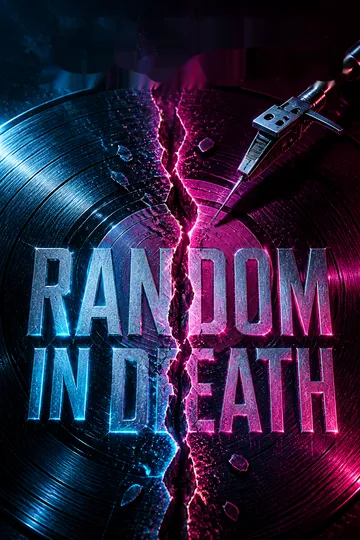
Random in Death is the 58th installment in J.D. Robb's In Death series. Readers praise the book's fast-paced plot, character development, and police procedural elements. The story follows Lieutenant Eve Dallas as she investigates a series of random killings targeting young women. Many reviewers note the author's ability to keep the long-running series fresh and engaging. While some criticize repetitive elements, most fans find the book thrilling and satisfying, appreciating the familiar characters and futuristic setting.
People Also Read





Characters
Eve Dallas
Relentless homicide lieutenantEve leads the NYPSD homicide investigation with a practical mind trained to distrust even her strongest instincts until evidence supports them. She is direct with witnesses and families, but her discipline does not make her emotionally untouched: telling parents their child has died weighs on her, and she lets Roarke and her colleagues help carry that burden. Her attention to physical details, social behavior, and the consequences of a crime lets her build a picture from fragments. At home, she is still learning to accept comfort and shared resources without treating dependence as weakness. Her commitment to victims is both professional method and personal ethic.
Roarke
Eve's steadfast partnerRoarke is Eve’s husband, a wealthy businessman and trusted civilian consultant whose technical skill and broad experience help her investigation. He drives, reviews security footage, penetrates electronic systems, and supports families without taking over Eve’s authority. His calm attention contrasts with her relentless pace, but he understands the work’s emotional cost and stays beside her through difficult notifications and long nights. Their marriage is affectionate and occasionally tested by Eve’s discomfort with relying on his money. Roarke responds with patience rather than control, making their partnership a place where she can accept care while remaining wholly herself.
Delia Peabody
Eve's perceptive partnerPeabody is Eve’s detective partner, an observant investigator whose warmth helps frightened teenagers speak. She gathers witness accounts, notices details others dismiss, and understands youth culture more readily than Eve does. Her compassion is active rather than sentimental: she calms Jenna’s friends, reassures victims, and keeps the human stakes visible while the team processes evidence. Peabody also brings a lively private life and a hopeful, talkative presence to the squad. Her trust in Eve allows her to challenge and support her in equal measure, while her own emotional openness balances Eve’s instinct to contain feeling until the work is done.
Jenna Harbough
Aspiring young songwriterJenna is a sixteen-year-old musician whose dream is to write songs and perform. She practices seriously, records her own work, and hopes to give a demo to Jake Kincade of Avenue A. Her closeness with Chelsea and Leelee, affection for her family, and ordinary teenage frustrations make her more than the case’s first victim. Jenna’s music reveals discipline and a developing artistic identity; the demo she carries gives her ambition a tangible form. She is excited, hopeful, and still young enough to imagine one concert might open a door. Her character is remembered through the projects and relationships she was building.
Arlie Dillon
Young fashion designerArlie is a seventeen-year-old student interested in fashion design, with the talent and practical ambition to pursue it in college. She works part-time, saves for her education, and learns sewing and design from her mother, Tisha. Her relationship with Moses is affectionate and serious enough that they are planning private time together, while her friends form a loyal circle around her. Arlie’s room holds both creative disorder and carefully arranged clothes, reflecting distinct sides of her work. Her plans differ from Jenna’s, but both girls have supportive families and purposeful dreams that are still taking shape.
Kiki Rosenburg
Defiant teenage survivorKiki is a sixteen-year-old film fan with a quick sense of humor, a close bond with her brother Presley, and a lively group of friends. She is outspoken, resilient, and unwilling to let fear define her after a frightening night. Her memories of the attacker are incomplete at first, but she works with investigators and a police artist when she is strong enough. Kiki’s concern for the families of the earlier victims shows a capacity for empathy beyond her immediate experience. Her recovery restores more than her physical safety: it returns a young person to the ordinary plans and enthusiasms the attacker tried to interrupt.
Delaney Brooke
Target who survivesDelaney, called Del, is a student and swimmer who knows Francis from school. She has her own friends and plans for the evening at Coney Island. When drugged, she is forced into a terrifying situation, but she survives because Eve and Roarke reach her in time. Afterward, she gives investigators a detailed account and makes clear that the assault was not her fault. Her recovery and willingness to identify Francis help complete the case while preserving her as a person beyond what was done to her.
Francis Bryce
Isolated gifted studentFrancis is a high-achieving private-school student with unusual ability in chemistry and a life shaped by strict routines, expensive clothing, and considerable privacy. He is socially awkward and often overlooked by peers, yet highly controlled in the areas that interest him. His relationship with his father appears orderly from the outside, and his academic success makes him seem dependable to adults. Francis’s inner life is difficult for those around him to read, in part because he carefully presents the version of himself they expect. His character raises the distinction between isolation as an experience and the choices a person makes in response to it.
Jake Kincade
Avenue A's grieving guitaristJake is the guitarist and frontman of Avenue A, a successful musician who remains attached to the club where the band first played. He finds Jenna after she collapses and tries to save her, then struggles with the helplessness of having been there too late. His connection with Nadine is affectionate and increasingly serious, though both are careful with their feelings. Jake responds to Jenna’s demo with respect for her craft, not merely pity for her death. His willingness to help bring her music to listeners shows how his public success remains connected to the young musician he once was.
Nadine Furst
Reporter and loyal partnerNadine is a crime reporter, bestselling writer, and Jake’s partner. She discovers Jenna’s body with him and calls Eve, then protects Jake from the media while respecting the investigation’s limits. Her professional instincts are sharp, but her personal concern sometimes makes her impatient with Eve’s formal boundaries. Nadine’s relationship with Jake is built on mutual respect and long familiarity; she understands both his public life and his private grief. She also knows how to help him speak honestly without letting public relations flatten his response into a polished performance.
Captain Feeney
Eve's veteran technical allyFeeney is the Electronic Detection Division captain and Eve’s former partner. He lends technical expertise to the security footage search and interviews Avenue A’s members, using his experience to jog memories without treating the band as suspects. His personal affection for the band and anger at crimes against young girls give the case special force for him, but he remains a careful professional. Feeney’s long history with Eve lets them work with little explanation, and his willingness to take on additional work gives the investigation crucial support.
Dr. Mira
Police profilerMira is the NYPSD’s senior profiler and psychiatrist, valued by Eve for her ability to turn behavioral details into testable investigative questions. She does not offer a simple diagnosis in place of evidence. Instead, she interprets the sexualized elements of the attacks, the killer’s apparent need for attention, and his mixture of meticulous planning with youthful impatience. Her observations sharpen Eve’s sense of what to search for while preserving uncertainty where the facts do not yet support certainty. Mira is composed and perceptive, and her professional regard for Eve allows them to challenge one another productively.
Morris
Compassionate chief examinerMorris is the chief medical examiner, a gifted forensic physician who treats the dead with care as well as scientific precision. His examination of Jenna and Arlie distinguishes healthy teenagers from habitual drug users and helps establish how quickly the injected mixture acted. He communicates medical findings without stripping away the victims’ humanity, and families can trust him to prepare their children respectfully. His work gives Eve reliable evidence to challenge the assumption that the girls chose to take drugs.
Nolan Bryce
Pharmaceutical research directorNolan is a pharmaceutical researcher and Francis’s father. He provides his son with privacy and resources, believing that a quiet, academically successful boy is not a source of danger. His history with Francis’s addicted mother informs his desire to protect his son from instability, but it also leaves him slow to recognize what the boy hides. Nolan is not portrayed as deliberately cruel; he is a busy parent whose confidence in appearances proves tragically inadequate. His response to the evidence is shaped by grief, disbelief, and a dawning awareness of how little he understood.
Julia Harbough
Jenna's devoted motherJulia is a physician, Jenna and Reed’s mother, and a close friend of Eve’s neighbors Charles and Louise. She knows her daughter’s habits and talents, and firmly rejects the idea that Jenna willingly used drugs. Even in grief, Julia asks for facts and tries to support her husband and son. Her belief in Jenna’s music makes her receptive to Jake’s offer to help preserve the demo. Julia’s steadiness does not remove her pain; it gives her a way to act within it.
Shane Harbough
Jenna's grieving fatherShane is Jenna and Reed’s father, a successful financial executive and a loving parent. When Eve tells him his daughter has died, he initially rejects the news, then relies on Julia to help him face it. He wants to understand what happened and is protective of his son, Reed, as the family confronts the loss. Shane’s grief is immediate and physical, showing how abruptly ordinary parental expectations can collapse.
Quilla Magnum
Reporter in trainingQuilla is a teenage student and Nadine’s intern, with an interest in investigative reporting and a growing understanding of police work. She is bold enough to question Eve and eager to contribute, but she also learns to respect confidentiality and the limits of her access. Her knowledge of youth culture and low-end fashion shops gives Eve a useful route toward the suspect’s clothing purchases. Quilla’s hope for college and a professional future parallels the young people at the center of the case.
Allisandra Charro
Personal shopping specialistCharro is a professional shopper who selects clothing and shoes for clients, including teenagers whose parents prefer not to take them shopping. Her detailed purchase records let Eve trace a distinctive set of shoes to a young client. She is efficient, confident in her trade, and initially unaware that an ordinary sale has become relevant to a murder investigation.
Tisha Dillon
Arlie's devoted motherTisha is Arlie’s mother, a skilled tailor who built her own business after years of work in the garment industry. She shares her craft with her daughter and supports Arlie’s ambition to study design. When Eve tells her of the murder, Tisha asks to see her daughter and holds onto the knowledge that Arlie’s friends tried to help. Her practical pride in Arlie’s talent coexists with devastating grief.
Plot Devices
The injected drug cocktail
A forensic signatureThe attacker injects each target with a carefully measured combination of drugs, then uses a needle contaminated with bacteria. The mixture acts rapidly, making the first two deaths appear at a glance to be overdoses while the puncture wound and toxicology reveal a deliberate pattern. Its unusual ingredients require scientific knowledge and specialized access, giving Eve a path toward laboratories and a technically gifted suspect. The Rohypnol and contamination add a sexualized, punitive dimension beyond what is needed to kill. The method’s exact repetition links victims who have no apparent social connection.
The changing disguises
A flawed attempt to blendThe attacker alters his appearance with cheap trousers, small shoes, a wig, shades, and a new trench coat. He believes these choices hide his identity, but they create an awkward mismatch that witnesses remember. Trace fibers and shoe marks at the club, followed by observations at the theater, let the investigators assemble the disguise piece by piece. The clothing also exposes a gap between his polished home wardrobe and his clumsy effort to look like an ordinary teenager.
Crowd footage and witnesses
Fragments build a faceSecurity cameras rarely capture the attacker clearly because he keeps his head down and moves within groups. Their value lies in timing and route: they verify Jake’s account, show how the suspect enters and exits, and help investigators identify the people around him. Witnesses supply what cameras miss, including clothing, height, eyes, and movement. A police artist combines those partial memories into a sketch that can be compared with school records. The device makes identification cumulative rather than dependent on one unusually perceptive observer.
The personal shopper's records
Clothing purchases reveal identityAllisandra Charro’s business records preserve the identity of a client whose purchases would otherwise be difficult to trace. Eve first follows the suspect’s mismatched shoes and clothing through stores, then uses Quilla’s knowledge of local shops to identify Charro as a likely intermediary. Charro can connect the shoes to a teenage client and provide a name that fits the witness sketch. A mundane service becomes investigative evidence because its records outlast the brief encounters in crowded public places.
Francis's journal and laboratory
The next attack's locationFrancis’s secured laboratory proves his access to the substances and equipment used in the attacks. His electronic records preserve formulas, observations, and plans, while the journal identifies Coney Island as the site of his next attempt. The records also reveal how he interprets violence as a series of experiments and failures as reasons to escalate. This device turns the investigation from identification into an urgent rescue operation: Eve knows where Francis is going before he can complete the attack.
In Death Series Series



About the Author

Download PDF
Download EPUB
.epub digital book format is ideal for reading ebooks on phones, tablets, and e-readers.








