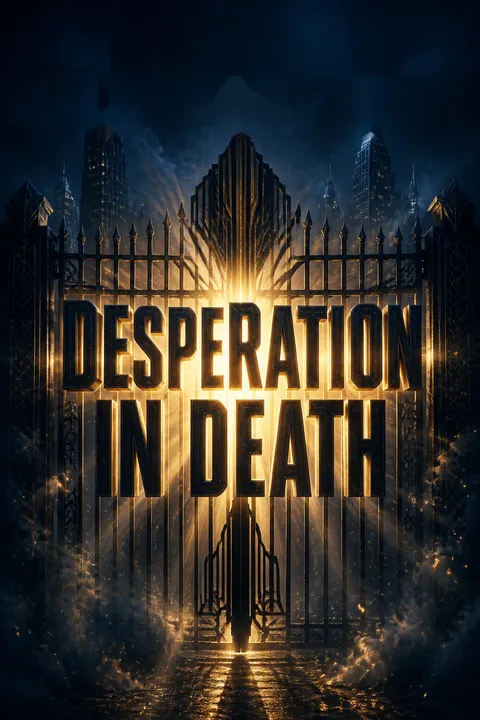


Plot Summary
Pretty Ones, Hidden Prison
At the Pleasure Academy, thirteen-year-old Dorian Gregg and Mina Cabot endure locked rooms, surveillance, forced grooming, sexual instruction, and punishments from the staff.
Mina, abducted from her Pennsylvania home months earlier, has learned to appear cooperative; Dorian, a streetwise runaway from New Jersey, slowly learns the same survival skill. Their friendship gives each girl something the Academy cannot regulate: a trusted ally. Mina pieces together staff routines and learns that bodies leave through underground tunnels.
She asks Dorian to steal a night matron's access card, while Mina plans to fake an illness and escape from the infirmary. They know the attempt could bring brutal punishment, but an approaching auction means remaining inside may soon mean being sold.
The Academy's most effective weapon is not constant violence but its effort to make coercion look like advancement. Lessons in grooming, manners, and self-presentation disguise preparation for sale as education, while numbered identities reduce girls to inventory. Mina and Dorian resist this conversion by creating a private language of trust and sharing practical knowledge. Their alliance is not sentimental escape from danger; it is a strategy formed under surveillance. Mina's apparent adaptability and Dorian's street-earned suspicion complement one another, showing how distinct histories can produce a workable form of solidarity.
The Tunnel Exit
Near lights-out, Dorian steals the matron's swipe card by staging a careless hallway encounter. Mina makes herself vomit, persuades the infirmary nurse to leave her in a sickroom, and wedges chewing gum into the door latch so she can slip out. The girls reunite in the elevator and use the card to reach the tunnels, then run toward a ladder and a storm-soaked industrial lot.
Dorian slips, injuring her knee and ankle. When guards emerge behind them, Mina draws their attention away so Dorian can hide. A guard catches Mina and kills her with a jagged plank. Dorian collapses with a head injury. Auntie orders her staff to plant Dorian's blood on Mina's clothes and leave the body where police will find it.
The escape succeeds only partially, and that incompleteness shapes the entire investigation. Dorian's injury turns a shared plan into a sacrifice: Mina chooses to redirect danger rather than abandon her friend, while Dorian survives without knowing what that choice cost. The Academy immediately exploits the separation by converting evidence into a weapon against the missing girl. Its attempt to frame Dorian reveals an institution that treats escape not merely as lost property but as a threat to its credibility. The girls' bravery and the captors' calculated response become parallel forms of action, one protective, the other designed to erase responsibility.
A Body in Battery Park
The next morning, Lieutenant Eve Dallas examines Mina's body beneath a tree in Battery Park. A wooden spike has pierced her chest, but the lack of blood on the ground and the orderly placement of the body suggest she was killed elsewhere and moved after the storm.
Her missing shoes and earrings resemble a mugging, yet her clean hands, carefully maintained nails, and preserved silver necklace complicate that story.
Detective Peabody identifies Mina through her fingerprints and finds an Amber Alert dating back to November, when Mina disappeared on the walk home from school in Devon, Pennsylvania. Her parents had never received a ransom demand. Eve concludes that someone brought Mina to New York and deliberately left her where she would be discovered.
Eve's investigation begins by refusing the first explanation the scene offers. The apparent mugging is a narrative planted for public consumption, but small physical contradictions expose its construction: a body moved after death, clothing inconsistent with the weather, and possessions removed selectively. The scene turns Mina from a presumed runaway into a child whose disappearance was engineered. Eve's attention to ordinary details is also an ethical stance. She does not allow the tidy appearance of a crime scene to make the victim's life seem simple or expendable.
The Blood on the Uniform
The medical examiner finds that Mina was healthy, had never been sexually penetrated, and fought back against the person who killed her. Traces of vomit suggest she deliberately made herself sick to create an escape opportunity.
Blood on her clothes does not belong to Mina; laboratory tests identify it as Dorian Gregg's. The clue points to an accomplice, not a killer, because Dorian could not have moved Mina's body alone.
Eve contacts Mina's grieving parents, who confirm the girl's uniform and reject the expensive lingerie found beneath it as anything Mina would have worn. Their account of her close family life further weakens the runaway theory. Eve begins to suspect a trafficking operation that groomed Mina while keeping her body untouched.
Forensics reverse the meaning of the evidence: Dorian's blood, initially a possible accusation, becomes proof that she was present and likely escaped. Mina's intact body also complicates easy assumptions about exploitation. Her captors appear to have withheld conventional sexual assault while preparing her for a market that assigns value to innocence, appearance, and trained compliance. The Cabots' grief gives the case a human counterweight to that market logic. Their memories of Mina's habits restore individuality to a child whose captors recorded her as a potential product.
The System That Failed
Eve traces Dorian to Freehold, where her mother, Jewell Gregg, admits she has not seen her daughter in months and never reported her missing. Neighbors describe Jewell striking Dorian and pushing her out of the apartment, while still collecting government money intended for her care.
Eve arrests Jewell for assault and fraud, then confronts Dorian's caseworker, Pru Truman, who ignored reports of abuse and accepted the mother's account without seeing the child. Eve has Truman suspended and reported.
Meanwhile, psychologist Mira and Roarke help Eve interpret the girls' polished appearance, costly clothing, and disciplined routines as evidence of organized grooming, not a single captor's private obsession. Their assessment helps Eve see how a business could hide behind respectable operations.
Dorian's vulnerability begins before her abduction. Jewell uses public support as income without providing care, and Truman's procedural detachment turns warning signs into paperwork rather than intervention. The failure is not simply that one adult behaves cruelly; it is that several layers of protection accept the easiest account and leave a child unobserved. Eve's anger is sharpened by personal recognition, but Mira and Roarke help her translate that anger into a testable model. Their work distinguishes empathy from projection: Eve can recognize Dorian's distrust without assuming that her own past explains every choice the girl makes.
Mouser Finds Dorian
After waking alone in a derelict lot, feverish and unable to remember the escape, Dorian limps toward the city using a broken board as a crutch. She hides in an abandoned storefront, where eleven-year-old Mouser finds her, shares food, and brings her to Sebastian, who shelters a loose community of runaways.
Sebastian arranges treatment for Dorian's concussion, sprained ankle, and injured knee without forcing her into a hospital she fears. She remembers her name but not Mina or the Academy.
In parallel, Eve consults SVU detective Zela Willowby, whose experience confirms that traffickers may use rewards and polished surroundings to secure compliance. Willowby also hears that a major child auction is approaching, putting a deadline on the search.
Dorian's amnesia is not a convenient puzzle so much as a survival response compounded by physical trauma. She reaches safety before she can explain what she needs protection from. Mouser's small acts of care and Sebastian's respect for her refusal of a hospital contrast with the adults who previously controlled her body. At the same time, Eve must build a case without the witness who could name the place. The parallel plots expose two kinds of rescue: immediate shelter that restores a child's capacity to choose, and investigative work that may prevent other children from being sold.
The Street Remembers
Eve searches for likely victims and locations while Peabody, Feeney, and Willowby widen the inquiry. A street vendor named Tiko recognizes Dorian from his Manhattan stall: he remembers selling her a discounted scarf after Thanksgiving, then seeing her again a few days later.
The sightings place her in New York before Christmas and support Eve's belief that she ran there before being abducted. Searches reveal a widening pattern of attractive girls disappearing on familiar walks home from school activities, with no ransom demands.
Several match the Academy's likely target profile. Willowby finds preview images of girls being offered through an upcoming auction, including Jaci Collinsworth, whom Eve already has on her missing-person list. The investigation now has a deadline and evidence of a wider market.
Tiko's memory matters because it is specific, local, and unconnected to official systems that failed to notice Dorian's disappearance. A scarf sale becomes a timestamp, while his attention to a young street thief supplies a witness where family records do not. The growing list of missing girls changes the case's scale: Mina's murder is not an isolated catastrophe but a visible crack in a much larger enterprise. The auction gives that pattern urgency. Data collection is no longer only retrospective; each name may belong to someone who can still be reached before a transfer.
Mina Comes Back
Sebastian shows Dorian a photograph of Mina, and the image returns the escape, the Academy, and Mina's final decision to draw the guards away. Dorian grieves and wants revenge, but Sebastian persuades her to help expose the people still holding children. Through Mavis, he arranges a meeting with Eve at Mavis's home, with promises that Dorian will not be arrested, sent back to her mother, or forced immediately into the child welfare system.
Eve hears how the girls were numbered, confined, shocked, photographed, and taught to perform for future buyers. She offers Dorian a secure place at An Didean, Roarke's school for vulnerable children, and agrees that Mouser may join her. Dorian accepts protection and begins identifying other captives.
The photograph gives Dorian memory, but memory does not simply heal her; it returns grief, fear, and the knowledge that Mina died protecting her. Sebastian's persuasion directs that pain toward testimony without pretending revenge would repair the loss. Eve's promises are equally important: Dorian will speak only if she retains some control over what happens next. Her eventual choice of An Didean counters the Academy's forced schooling with education she can leave or inhabit voluntarily. Trust here is not demanded as a prerequisite for help; it is built through specific limits on authority.
The Broken Swipe
Dorian identifies several Academy captives from police photographs and describes the woman called Auntie, the guards, and the underground tunnels. Sebastian supplies the location where Mouser found her and preserves the torn clothing she wore after the escape.
In a pocket, Eve finds a broken fragment of the stolen swipe card. Roarke extracts partial access data from it, including a clearance level and fragments of an employee name and address. The clues point to Marlene Williamson, a night matron whose photograph Dorian recognizes immediately.
Eve obtains warrants and searches Williamson's upscale apartment. Williamson is absent, but her carefully locked files and financial holdings suggest that a low-level employee had access to both the Academy's security system and its profits.
The broken card links a child's physical escape to the architecture of the institution. Its fragment is small, but it carries the logic of access: a matron could move through secure areas, and the tunnels were part of the Academy's operating system. Dorian's recognition turns forensic inference into a human identification, while the preserved clothing gives the police a route back to the moment of escape. Williamson's apartment complicates the stereotype of a hidden criminal. The Academy can employ someone with a polished, ordinary life precisely because its violence is partitioned from the spaces outsiders see.
Red Swan's Paper Trail
Williamson's encrypted records contain numbered files on girls, including treatment notes, punishments, training assessments, and projected sale prices. Searches of her employment history expose former prison guards and dismissed officers working for Red Swan, a supposed mobile consulting firm.
One file identifies the Academy's warehouse at Reliable Delivery Services, owned by wealthy businessman Jonah K. Devereaux. Its concealed upper floors contain cells, classrooms, studios, medical rooms, and Auntie's private residence.
Old service tunnels connect the building to a crematorium, explaining how the organization moved dead captives. Eve and Feeney identify Iris Beaty, a former high-end madam known as Auntie, as the operation's manager and Devereaux's partner. An upcoming auction offers a chance to seize the network before more children are transferred.
The investigation's decisive breakthrough comes from treating exploitation as an organization with records, staffing, property, and logistics. Williamson's meticulous files reveal that bureaucratic measurement is not neutral: the same charts that track health and behavior calculate market value. Red Swan's respectable cover and the delivery warehouse make trafficking legible as ordinary commerce, while tunnels and a crematorium conceal its waste. The discovery of Devereaux and Beaty joins capital to expertise. One funds and expands the system; the other supplies a method for selecting, conditioning, and pricing its victims.
The Academy Falls
Eve coordinates a multi-agency assault on the warehouse, its tunnels, suspects' homes, the crematorium, and Devereaux's estate. Feeney and Roarke disable cameras and communications while teams enter the Academy and find girls held on several floors.
Officers arrest guards, instructors, medical staff, and recruiters, then move the captives into care with Mira and SVU. Eve reaches Auntie's secured penthouse and subdues Iris Beaty after Beaty fires at her.
At Devereaux's estate, Amara Gharbi, a Tunisian woman enslaved for years, stabs him while resisting his threat to subject her to a sexualized party. Eve prevents Amara from turning the knife on herself and secures her release. The raids rescue more than a hundred minors and expose the operation's international reach.
The raid makes visible what the Academy was designed to hide: children distributed through rooms that looked, from the street, like a functioning delivery business. The operational sequence depends on coordination rather than a lone hero, and the rescue requires medical and psychological care as much as arrests. At Devereaux's estate, Amara's violence is both an act of resistance and a sign of the choices captivity has left her. Eve does not treat her as a simple suspect. By lowering her weapon and inviting Amara to relinquish the knife herself, Eve distinguishes public safety from the captor's coercive control.
Every Number Gets Named
At Central, Mira and the victim specialists assess the rescued girls while investigators match them with families and records. Dorian identifies Beaty and other Academy staff in a lineup, and several additional survivors corroborate her.
Iris Beaty first denies responsibility, then accepts a state deal when Eve shows how much evidence the police hold. She names wealthy financiers, buyers, sellers, and Jonah K. Devereaux as the operation's principal backer. Beaty also identifies night guard Devin Kunes as the person who wrested the weapon from Mina and drove it into her during the escape.
Evidence from Devereaux's files supports arrests across state and national borders, while the FBI takes over the larger trafficking prosecutions. Eve turns next to Kunes, determined to build the murder case.
Identification restores more than names to the victims: it allows them to contradict the institution's records with their own memory. Beaty's deal is useful but morally compromised, since a perpetrator offers truth to reduce her punishment. Eve does not mistake confession for justice; she tests it against files, witnesses, and evidence. Naming Kunes also clarifies Mina's death without making it meaningful in a consoling way. The case can establish responsibility and prevent further sales, but it cannot return the friend Dorian lost. The survivors' testimony instead changes the balance of power over what happens next.
Epilogue
After the arrests, the rescued girls and women are connected with families, therapists, and authorities across several jurisdictions. Lottie, a runaway Dorian's age, refuses to leave fellow captive Carrie; Carrie's parents take both girls in and seek permanent custody of Lottie. At home, Eve hears Summerset reveal that his own daughter was abducted, assaulted, and murdered, and accepts his gratitude for the children she helped rescue.
Roarke's support has helped Eve remain steady through a case that reopened her memories of childhood abuse. She tells him the investigation is finished and discovers she has invited much of their circle to a cookout, a small, ordinary plan after days spent dismantling an extraordinary cruelty.
The ending does not claim that rescue erases trauma. Dorian's loss remains, Amara must begin the difficult work of reclaiming a life, and the wider investigation continues beyond Eve's immediate jurisdiction. Yet the survivors' next steps are concrete: Lottie gains a possible family, the rescued are placed with care, and Summerset's grief is met with recognition rather than silence. Eve's invitation to gather friends matters because it returns her from emergency command to shared domestic life. The case closes not with innocence restored, but with people choosing, protecting, and staying connected where the traffickers had imposed isolation.
Analysis
Desperation in Death treats trafficking as a system of organized labor, not merely the appetite of an individual predator. The Academy has recruiters, guards, medical personnel, instructors, records, property, transportation, financial backers, and a marketplace. Its business language is central to the horror: girls are assessed for health, presentation, compliance, and projected price. By making the machinery legible, the novel shows how extreme violence can be routinized until participants describe it as management.
The contrasting girls expose unequal forms of vulnerability. Mina has a loving family and a stable home, yet that security cannot prevent a carefully planned abduction. Dorian has already been abandoned by her mother and failed by a caseworker, making her easier to overlook and less likely to trust authorities. Neither background protects a child completely. Their alliance, built from Mina's planning and Dorian's street knowledge, becomes a form of resistance that neither could produce alone.
Eve's investigation depends on empathy, but the story does not present empathy as effortless virtue. Her history helps her understand Dorian's suspicion and the psychological cost of captivity, while also making the case threaten her emotional stability. Roarke, Peabody, and Mira do not ask her to become detached; they help her remain accountable to both evidence and the people affected by it. Eve's decision to offer Dorian a meaningful choice demonstrates that lawful authority can protect without repeating the coercion it opposes.
The resolution is substantial but not absolute. Rescued victims receive care, families are reunited where possible, and the network faces prosecution, yet no operation can return Mina's life or instantly repair the survivors. The novel's ethical claim is therefore concrete: protection requires more than removing a child from immediate danger. It requires listening, restoring agency, exposing institutional failures, and pursuing the financiers and customers who make exploitation profitable.
Review Summary
Desperation in Death receives mostly positive reviews, with readers praising its intense storyline, character development, and handling of sensitive topics. The book deals with child trafficking, which some found disturbing but well-executed. Reviewers appreciated the inclusion of familiar characters and the exploration of Eve's past. Many noted the emotional impact and police procedural aspects. Some criticized repetition and pacing issues. Overall, fans found it a strong addition to the series, while acknowledging its darker tone compared to previous installments.
People Also Read





Characters
Eve Dallas
The relentless homicide lieutenantEve leads the New York murder investigation into Mina Cabot's death and follows evidence from a staged park killing to a sophisticated trafficking network. She is disciplined, observant, and impatient with explanations that do not fit the physical facts. Her own history of childhood abuse makes her especially alert to how institutions can fail vulnerable children, but that recognition also threatens to draw her too deeply into the case. Eve relies on evidence, colleagues, and her husband Roarke to keep personal pain from displacing professional judgment. Beneath her hard-edged manner is a fierce commitment to giving victims choices that their abusers denied them.
Dorian Gregg
The streetwise survivorDorian is a thirteen-year-old runaway from an abusive home who has learned to survive through quick observation, pickpocketing, and distrust of authority. Her street skills help her contribute to an escape plan, but they do not protect her from an organized group that abducts and confines her. She is guarded, sharp-tongued, and fiercely independent, in part because adults who should have protected her have instead harmed or ignored her. Mina's friendship offers a rare experience of mutual care. Dorian's choices are shaped by the tension between needing help and fearing that every offer of help may become another form of control.
Mina Cabot
The brave schoolgirlMina is a bright, attractive thirteen-year-old from a loving family in Devon, Pennsylvania. Before her disappearance, she attends school and plays soccer; inside captivity, she studies routines and learns to conceal her resistance. Her friendship with Dorian grows from shared danger rather than shared background. Mina's planning and concern for the other girl show a practical courage: she does not mistake fear for a reason to stop acting. Her family remembers her as observant and close to them, details that help Eve reject the suggestion that she ran away. Mina's absence becomes the emotional center of the investigation.
Roarke
The resourceful partnerRoarke is Eve's husband, a powerful businessman with technical expertise and a past that gives him an unusual understanding of both security systems and life on the streets. He supports Eve's investigation by analyzing the damaged access card, screening properties, and helping prepare a covert approach to the auction. His concern for Eve sometimes makes him challenge how much of herself she is spending on a case, creating friction between care and her need for professional autonomy. He also helped establish An Didean, a school that offers vulnerable children safety and education. His loyalty is active: he provides tools, steadiness, and room for Eve to make her own decisions.
Delia Peabody
Eve's perceptive partnerPeabody is Eve's partner, a capable detective whose warmth and humor help balance Eve's severity. She follows the forensic and investigative threads, builds searches for missing children, and helps organize the response when the scope of the trafficking operation becomes clear. Peabody understands when Eve's past is pressing close, yet she does not reduce her partner to that history. Her empathy is practical: she makes space for victims, keeps the investigation moving, and challenges Eve when she is about to let anger dictate her next move. She is also part of the emotional support system that allows the case to remain humane under intense pressure.
Iris Beaty
The polished operatorIris Beaty is a former high-end madam whose experience managing sex work gives her a practiced understanding of presentation, training, and profit. She is polished, exacting, and skilled at making exploitation look like refinement. Her authority depends on maintaining order among staff and captives, and she interprets compliance as proof that her system works. Beaty's social poise masks a utilitarian view of children as investments. She is a central antagonist because she can translate predatory demand into routines, records, and an apparently professional enterprise.
Jonah K. Devereaux
The wealthy financierDevereaux is a wealthy owner of a major delivery company, accustomed to inherited power and accustomed to having his desires served. He is sophisticated in business and uses legitimate wealth, properties, and corporate structures to conceal criminal activity. His interest in control reaches beyond ordinary ownership: he regards other people as possessions whose value can be managed. This combination of social respectability and private entitlement makes him difficult to recognize as a threat from the outside. His partnership with Beaty joins money and logistics to her expertise in grooming and managing captives.
Sebastian
The keeper of refugeSebastian shelters runaways and abandoned children in a community organized around mutual aid rather than formal authority. He treats Dorian's fear as credible, gives her medical care, and lets her decide when she is ready to remember or speak. His methods exist in tension with police procedure, but his commitment to protecting children is genuine. Because Dorian trusts him, he can persuade her to meet Eve without pretending that the police have earned her confidence.
Zela Willowby
The trafficking specialistWillowby is an SVU detective who specializes in crimes against minors and brings Eve practical knowledge of trafficking networks, online auctions, and victim conditioning. Energetic and candid, she understands that glossy treatment can be another instrument of control. She volunteers her own expertise and works to penetrate the auction's online circles, helping turn Eve's emerging theory into actionable intelligence.
Dr. Charlotte Mira
The measured psychologistMira is a psychologist who consults with Eve on the motives and likely behavior of the girls involved. She recognizes that Dorian's distrust is an understandable response to repeated betrayals, not evidence of guilt. Mira also sees the emotional cost of Eve's empathy and helps her acknowledge the difference between being personally affected and losing objectivity. Her clinical insight supports both the investigation and the victims' recovery.
Thomas Grantly, called Mouser
The quick-footed helperMouser is an eleven-year-old runaway living with Sebastian's group. He finds Dorian feverish and injured in an abandoned building, shares food, and brings her to a safer place. Quick, resourceful, and proud of his street skills, he recognizes when a child needs help and acts without demanding trust in return. His loyalty to Dorian makes him an important source of comfort as she enters a new school.
Mavis Freestone
The loyal friendMavis is a singer and Eve's close friend, with a personal history of vulnerability that makes her understand why Dorian might fear police contact. She acts as the bridge between Sebastian and Eve, insisting that the adults negotiate conditions rather than force the girl into custody. Mavis is emotional and direct, but her loyalty includes a willingness to challenge Eve when the lieutenant's anger threatens to overwhelm the immediate need to reach Dorian.
Jewell Gregg
Dorian's abusive motherJewell is Dorian's mother, a neglectful and physically abusive woman who treats her daughter as an unwanted burden while continuing to collect support intended for the child's care. She is defensive when confronted and more concerned with her own freedom than with Dorian's safety. Her conduct leaves Dorian with strong reasons to distrust both family and official systems.
Pru Truman
The negligent caseworkerTruman is Dorian's caseworker, rigidly attached to professional distance and quick to blame a difficult child rather than verify the parent's claims. She accepts Jewell's account of Dorian's circumstances despite warning signs from neighbors. Her procedural language conceals a failure to perform the central duty of her role: seeing whether the child is safe.
Tiffy Rhimes
The observant neighborTiffy is Dorian's neighbor in Freehold. She witnesses Jewell's mistreatment of the girl, offers her a place to sleep, and later gives Eve details that challenge the mother's account. Her testimony shows that Dorian was noticed, even when the people formally responsible for her chose not to act.
Ian Feeney
The veteran tech chiefFeeney leads the electronic investigations team and brings deep technical skill, experience, and institutional credibility to Eve's case. He helps crack encrypted records, identify the trafficking site, and coordinate the digital support for the raids. His bluntness is balanced by a steady commitment to protecting victims.
Amara Gharbi
The imprisoned survivorAmara is a Tunisian woman who was taken from her family as a teenager and held as a domestic slave. Years of coercion have left her fearful and stripped of control over her identity. Her presence broadens the case beyond the Academy's minor victims and shows how the same organization exploits women over time. She needs safety and support, not a simplistic judgment of her responses to captivity.
Lottie Crug
The defiant captiveLottie is a runaway with a history of truancy and petty theft, and she responds to police with suspicion and aggression. Her fierce attachment to another captive reveals how protective bonds can form even among children who have learned to expect betrayal. She is both a survivor in need of care and a witness capable of helping identify the people who held her.
Rochelle Pickering
The school directorRochelle runs An Didean, the school Roarke established for vulnerable children. She welcomes Dorian without pressure, explains the school and its routines, and understands that safety must feel different from confinement. Her quiet competence gives Eve a credible alternative to placing Dorian immediately into a system the girl fears.
Tiko
The sharp-eyed vendorTiko is a young street vendor whose keen memory and experience with street theft help Eve establish when Dorian was living in Manhattan. He remembers a small sale and later sighting that official missing-person records never captured. His own resourcefulness makes him attentive to children surviving on the street.
Dr. Morris
The compassionate examinerMorris is the medical examiner who studies Mina's injuries and condition with care. His findings establish the cause of death, show that Mina fought back, and identify signs that she had deliberately induced vomiting before her escape attempt. He combines precise forensic work with respect for the victim's humanity.
Commander Jack Whitney
Eve's commanding officerWhitney supervises Eve and must weigh her unconventional arrangements for Dorian against department rules. He questions her decision to place the girl at An Didean, but also evaluates the evidence and the practical need to preserve her cooperation. His authority makes him both a constraint and a necessary ally.
Detective Yancy
The police artistYancy is the police artist who works with Dorian to create a likeness of Auntie and other Academy personnel. He adapts his method to the girl's preferences and helps transform her memories into images investigators can circulate and use in identification procedures.
Plot Devices
The Pleasure Academy
A school masking captivityThe Academy presents grooming, etiquette, health routines, and sexual instruction as a curriculum, while using locked doors, surveillance, shock sticks, isolation, and staged rewards to train captives. Its numbered trainees and uniform routines hide a commercial purpose beneath the language of self-improvement. The contrast between polished appearance and coercive control becomes a key investigative clue: the captives are being prepared for sale, not educated for independent lives.
The Broken Swipe Card
A fragment leading to the prisonDorian steals a matron's security card so she and Mina can reach the Academy's underground tunnels. A fragment later found in Dorian's torn clothes contains partial access data. Roarke's technical analysis and Dorian's identification connect the card to Marlene Williamson, giving Eve a route from the girls' escape to the staff, the building, and the tunnels used to move captives and bodies.
The Planted Blood
A false trail that reveals escapeAuntie orders Dorian's blood placed on Mina's clothing so police will suspect the missing girl of murder. Laboratory testing instead establishes that Dorian was at the escape scene, and the physical evidence makes it unlikely she could have moved Mina's body. Because the Academy has reason to discredit Dorian only if she got away, the attempted frame becomes evidence that the traffickers are searching for a loose witness.
The Auction Records
A business model made visibleEncrypted files, preview images, staff assessments, and online auction data expose the trafficking network's structure. The records show how captives were selected, disciplined, evaluated, and priced, while preview material connects individual missing children to an impending sale. These devices turn Eve's theory into evidence and create a deadline: the police must locate the Academy before buyers receive access to the children.
An Didean
A choice beyond custodyRoarke's school offers Dorian a protected place that is neither her abusive home nor a conventional police safe house. Eve presents it as a real option, with rules and safeguards but also education, personal space, and the possibility of staying after the case. Its contrast with the Academy is practical rather than symbolic: one institution uses structure to diminish a child, while the other aims to restore her ability to choose.
In Death Series Series





About the Author

Download PDF
Download EPUB
.epub digital book format is ideal for reading ebooks on phones, tablets, and e-readers.








