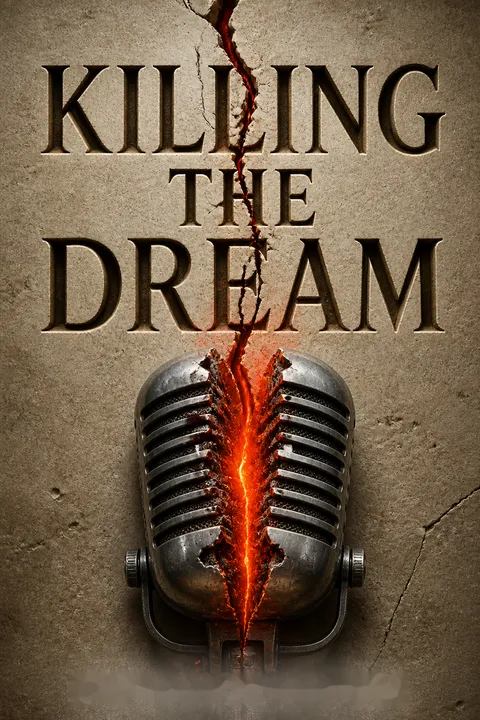


Key Takeaways
The evidence points to Ray as King’s killer, despite unanswered conspiracy questions.
The strike set the stakes. Memphis sanitation workers, nearly all Black, struck for union recognition and fair treatment after two workers died in a garbage truck and the city treated Black and white workers unequally. Martin Luther King Jr. joined the struggle, seeing it as part of a wider fight for dignity. After a March 28 march erupted in violence, King returned to Memphis on April 3 despite pressure and threats.
The killing has a strong suspect. The next evening, King was shot while standing on the balcony of the Lorraine Motel. Gerald Posner’s central conclusion is that James Earl Ray fired the fatal shot from a rooming house across the street. He argues that the evidence supports Ray’s responsibility, while leaving open whether anyone else helped arrange the murder.
The distinction between the strike and the assassination matters. King was not simply a famous person who happened to be in Memphis; he was supporting workers whose demands exposed the city’s racial hierarchy. That context explains why his death became a national political wound. At the same time, explaining the atmosphere is not the same as proving a conspiracy. Keeping context, responsibility, and sponsorship as separate questions prevents a compelling political setting from doing the work of evidence.
Build the case from converging traces, not one perfect forensic match.
Several trails converge. Ray bought a Remington .30-06 rifle in Birmingham using the name Harvey Lowmeyer, then checked into a Memphis motel as Eric Galt and rented a room near the Lorraine as John Willard. Police found the rifle, binoculars, clothing, and other items in a bundle abandoned near the rooming house. Ray’s fingerprints appeared on the rifle, scope, and binoculars. His laundry trail and the Mustang he left in Atlanta connected the aliases and locations.
The ballistics were inconclusive. FBI examiners could not establish that the bullet removed from King had been fired from Ray’s rifle. Posner therefore relies on a cumulative case rather than a definitive bullet-to-gun match. The physical evidence, witnesses, and travel records reinforce one another, although no single strand answers every question.
This is a useful model for historical reasoning: confidence can grow through different kinds of evidence even when one laboratory test is inconclusive. But convergence is strongest when clues are genuinely independent. Several items found together in one bundle are not equivalent to several unrelated witnesses or records. The careful reader should ask not merely how many clues exist, but how many separate routes they provide to the same conclusion.
Do not mistake a clumsy criminal for an incapable assassin.
Ray was not a harmless drifter. He grew up in severe poverty in a family shaped by crime, instability, and racist attitudes. As an adult, he repeatedly robbed businesses, lied to investigators, and served time in several prisons. In Missouri State Penitentiary, accounts from fellow inmates describe him as a dealer in contraband and amphetamines. His Army training qualified him as a marksman, the lowest of the military’s three rifle ratings.
He could plan when it mattered. Ray’s successful 1967 escape involved hiding inside a bread box loaded onto a prison truck. He had prepared a false bottom, ventilation, and a change of clothes. That does not make him a professional sniper, but it undercuts the image of a man incapable of planning or handling a weapon. His earlier arrests show repeated failures, not a lack of criminal competence.
A person’s record is a poor shortcut for judging what they can do next. Ray’s repeated capture can make him look incompetent, while his escape and criminal adaptability reveal another side. Neither portrait should be treated as the whole person. The broader lesson is to distinguish skill from polish: someone can be impulsive and inept in many situations, yet patient enough to execute a specific plan. That possibility does not prove guilt, but it defeats an easy argument for innocence.
Ray’s changing Raoul account is evidence against his own defense.
A handler appears in Ray’s story. Ray claimed that a man he called Raoul recruited him in Montreal, paid him for smuggling, supplied instructions, and helped direct his movements before the assassination. In this account, Ray was drawn into a plot without knowing King would be killed. The story offered a way to explain his cash, aliases, travel, and presence near the murder scene without accepting that he was the shooter.
The details kept shifting. Ray changed descriptions of Raoul, payments, meeting places, and the supposed transfer of the rifle. His account also conflicts with records showing that he chose the Galt name before he claimed to meet Raoul, and that he was in Atlanta after he said he had already left for Memphis. No independent evidence confirms a Raoul gave the crucial instructions.
An elaborate alibi can explain many suspicious facts, but each added episode creates another point that can be checked. Here, chronology is more revealing than the story’s dramatic shape. A claim about a handler becomes persuasive only if it survives ordinary questions: Where was each person, when, and what independent record confirms the meeting? The absence of confirmation is not proof that no contact occurred, but repeated revisions make the account increasingly difficult to rely on.
A guilty plea ended the trial before the public could test the case.
The courtroom closed early. Ray pleaded guilty in March 1969, admitting legal responsibility while objecting to official claims that he had acted alone. He received a 99-year sentence, and no jury heard the full evidence or questioned him about Raoul. Within days, Ray withdrew the plea and said he had been pressured into it.
The defense was compromised. Ray’s first lawyer, Arthur Hanes, had arranged to share profits from selling Ray’s story to writer William Bradford Huie. His next lawyer, Percy Foreman, also pursued literary income, reached a conclusion about Ray’s guilt early, and did little independent investigation. The plea avoided the death penalty, but the book argues that it also denied the public the trial that might have clarified disputed evidence.
A plea can resolve a criminal charge without resolving the public’s questions. That gap is especially damaging when the crime is political and the evidence is contested. The financial arrangements surrounding Ray’s lawyers deepened distrust, even though the book does not establish that they caused the plea. A fair assessment must hold two ideas together: the plea was legally accepted, and the process left important factual claims untested in open court.
The FBI’s war on King is real, but not proof it killed him.
Government abuse was documented. The FBI, under J. Edgar Hoover, surveilled King and ran a campaign intended to damage his reputation and influence. Military intelligence also monitored civil rights activity and the Memphis strike. These practices make suspicion of official misconduct understandable, especially because the surveillance was often improper or illegal.
The murder claim is different. The Justice Department review found the FBI’s assassination investigation generally thorough and reported no credible evidence that the FBI or Memphis police participated in the killing. The House Select Committee on Assassinations likewise found no government agency involved, while concluding that Ray fired the fatal shot. Posner argues that government hostility created a dangerous climate, but that is not the same as evidence of government orchestration.
Institutional misconduct can make later official explanations less credible, but distrust alone cannot identify a perpetrator. This case demands a distinction between motive, opportunity, and proof. The FBI’s campaign against King establishes hostility and abuse; it does not establish an operational link to the shooter. Conversely, rejecting a murder conspiracy does not excuse the surveillance campaign. Separating those judgments avoids the false choice between defending the government and accepting every accusation against it.
Judge witnesses by their earliest accounts, especially when money enters.
Jowers’s story changed. Loyd Jowers, who owned Jim’s Grill beneath the rooming house, later claimed that he helped arrange King’s murder. But immediately after the shooting, he told investigators that he heard a noise, checked the kitchen, and spoke with a customer. Another customer, Harold Parker, independently described Jowers asking whether he had heard the noise. That account does not fit the later image of Jowers rushing in with a rifle.
Other testimony weakened too. Betty Spates told investigators in 1969 that her earlier accusation against Jowers was a hoax. Decades later, she gave new versions, then again told state investigators she had not seen a gun. The book shows how financial hopes, memory gaps, and pressure from investigators can transform testimony into a marketable story.
Memory is not a recording device, and public attention can reshape recollection. That makes timing crucial: an account made close to an event is not automatically true, but it is less exposed to decades of rumor and repeated retelling. Incentives matter as well. When a witness stands to gain from a book, film, or reward, the testimony deserves closer scrutiny, not automatic dismissal. The aim is calibrated trust, not reflexive cynicism.
A dramatic conspiracy collapses when its people and documents fail checks.
The supposed Raoul was misidentified. Ray’s investigators eventually selected a retired New York factory worker as the man behind the alias. But employment records showed he had worked at the same automaker for decades and was on the job when King was killed. His fingerprints did not match unidentified prints from the case. The witness who first described him also made extravagant, inconsistent claims about other assassinations.
The military story failed basic verification. William Pepper alleged that a covert Green Beret team shadowed King in Memphis. The named officer, Billy Eidson, was alive, was not in Memphis, and was on duty in Birmingham. Rosters showed the unit was not federalized or deployed as alleged. The supposed secret order contained serious errors, including a date after King’s death.
The most useful test of a conspiracy claim is not whether it sounds possible, but whether its key links can be independently verified. Here, routine records and living witnesses undercut claims built around secrecy. Yet official records should not be treated as infallible simply because they are official. Their value comes from checking them against other evidence, as the book does with work histories, fingerprints, military rosters, and the purported order.
Treat money as Ray’s likeliest motive, not a proven contract.
Several motives can coexist. Posner sees Ray’s racism, appetite for notoriety, and hunger for quick money as mutually reinforcing. Ray had expressed interest in killing King for money while in prison, and the House Select Committee found a credible allegation that segregationist John Sutherland had offered $50,000 for King’s murder. But the book cannot establish that Ray heard of that offer, received payment, or was hired by Sutherland.
A limited plot remains possible. The committee concluded that a conspiracy was likely, even as it said Ray fired the fatal shot. Posner considers a small circle of family or like-minded associates more plausible than a sprawling government or mob operation, but he cannot prove that either existed. Ray died in prison in 1998 without confessing, leaving motive and sponsorship less certain than the shooter’s identity.
This conclusion separates three questions that public debate often fuses: who fired, why he acted, and who may have encouraged or paid him. Evidence can answer the first more firmly than the others. A possible bounty supplies a plausible incentive, not a demonstrated transaction. That asymmetry is intellectually honest, though the motive account remains inferential. The final discipline is to resist turning a likely explanation into a proven fact simply because the story feels complete.
Analysis
Posner’s most persuasive move is to separate identification from sponsorship. The evidence he assembles makes Ray’s role as the shooter substantially more secure than any claim about who, if anyone, recruited or paid him. Fingerprints, purchases, travel records, the abandoned rifle, and Ray’s repeated changes of story create a convergent account. The lack of a conclusive ballistic match and the absence of a full trial still matter, but they do not erase the cumulative force of the other evidence.
The book also argues against a common inference: because the FBI persecuted King, it must have arranged his murder. Posner documents government hostility while insisting that hostility and operational responsibility are distinct propositions. That distinction protects both historical accuracy and moral clarity. The state can bear responsibility for an atmosphere of surveillance and intimidation without being the assassin’s employer.
The work’s main vulnerability is the uneven confidence of its conclusions. Archival records and contemporary statements can expose later inventions, yet the precise motives attributed to Ray, especially money, recognition, and the possible influence of a bounty, remain interpretations. The possibility of a small conspiracy within Ray’s family is plausible within the narrative, but never established. The author’s detailed reconstruction of the shooting also risks making inference feel like direct observation. That vividness is effective storytelling, not additional evidence.
The larger lesson is procedural. When a politically charged crime never receives a full public trial, the vacuum becomes an invitation to competing stories. A guilty plea can be legally sufficient and historically inadequate. Later claims should be tested against contemporaneous records, independent corroboration, incentives, and the possibility of ordinary error. Posner’s account does not eliminate every uncertainty. Its strongest contribution is showing that uncertainty has boundaries: doubt about sponsorship need not become doubt about the shooter, and legitimate distrust of government need not validate every conspiracy theory.
Review Summary
Killing the Dream receives high praise for its thorough investigation of Martin Luther King Jr.'s assassination. Readers commend Posner's meticulous research, debunking of conspiracy theories, and compelling narrative. The book provides a comprehensive biography of James Earl Ray, detailing his criminal past and racist views. While some readers appreciate the detailed examination of various conspiracy theories, others find them excessive. Overall, the book is considered an essential, well-written account that convincingly argues Ray acted alone in King's murder.
People Also Read







Glossary
MURKIN
FBI King case filesMURKIN was the FBI’s internal designation for its investigation of Martin Luther King Jr.’s murder. Posner uses the term to identify the Bureau’s extensive case files, including witness interviews, forensic reports, and records of Ray’s movements. These files form a major evidentiary source in the book.
20,000 Words
Ray’s written fugitive accountThe 20,000 Words is the name given to written material James Earl Ray provided to writer William Bradford Huie after Ray’s arrest. It recounted Ray’s life as a fugitive before and after the assassination. The account was produced within a financial arrangement connected to Huie’s planned publications, a fact relevant to its reliability and purpose.
COINTELPRO
FBI counterintelligence programCOINTELPRO was the FBI’s counterintelligence program, which included a campaign against Martin Luther King Jr. The book describes surveillance and efforts to damage King’s reputation and influence. The documented campaign explains why many people distrusted the Bureau, but Posner distinguishes those abuses from evidence that it organized the assassination.
Raoul
Ray’s alleged handlerRaoul is the name James Earl Ray gave to a supposed criminal associate who, Ray claimed, recruited him for smuggling and directed his movements before King’s murder. Ray used the story to argue that he was drawn into a conspiracy without knowing its purpose. His descriptions and timeline changed, and no independently verified person was established as Raoul.
House Select Committee on Assassinations
Congressional assassination inquiryThe House Select Committee on Assassinations, often called the HSCA, was a U.S. congressional body that reinvestigated the assassinations of Martin Luther King Jr. and John F. Kennedy. It concluded that Ray fired the fatal shot and found no government agency involved, while also judging that a conspiracy was likely based on circumstantial evidence.
About the Author


Download PDF
Download EPUB
.epub digital book format is ideal for reading ebooks on phones, tablets, and e-readers.








