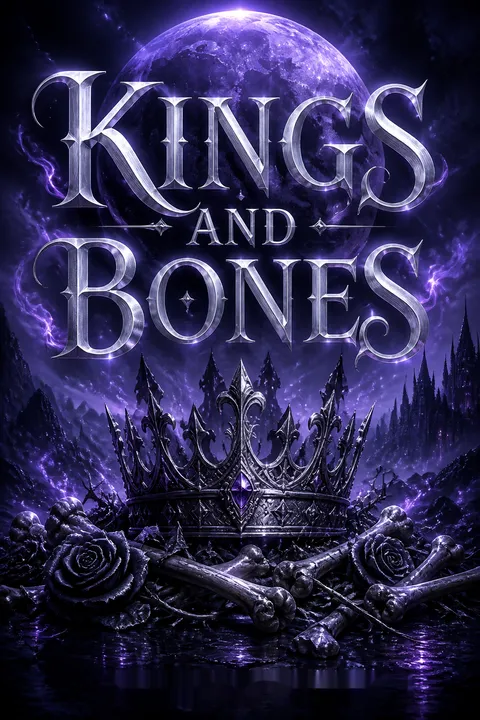


Plot Summary
Prologue
When Murgha is five, her father drives her mother from the family inn, accusing her of infidelity and leaving her two daughters behind. Murgha’s older sister, Tessa, holds her while they watch their mother walk away.
Tessa promises their mother will return, but she never does. The sisters grow up with that first abandonment between them, while Murgha learns to look to Tessa for the tenderness their father withholds.
The opening gives Murgha’s adult longing a specific origin: she has already learned that love can disappear while those left behind are told to wait. Tessa becomes more than a sister here. She is the person who tries to make a promise large enough to shelter them both. The mother’s departure also establishes a family story distorted by accusation, a pattern that later matters when Murgha must decide whose account of her origins to trust. The scene is brief, but its emotional logic governs Murgha’s need for belonging and her fear of being left.
A Daughter on the Table
Sixteen years later, Murgha serves drinks at her father Phestys’s inn, still grieving Tessa, who vanished after going out for medicine. A letter supposedly written by Tessa claimed she had chosen a beast fae mate, but Murgha believes it was forced. When the Mevian ambassador Rukard wins their game of Kings and Bones, Phestys stakes Murgha to keep playing, adding the moonstone necklace she inherited from her mother.
Murgha tries to slip away, but a guard holds her beside the table. Just before Rukard can claim his winnings, a towering shadow fae priest enters and joins the final roll. His throw appears to win the game, and he orders Murgha to gather her things and leave with him.
The game turns a private injury into an immediate physical danger. Phestys does not merely fail to protect Murgha. He makes her vulnerability part of his wager, repeating the household’s old message that her needs count less than his appetites. Murgha’s necklace matters because it is the one inheritance she has kept for herself, and its appearance on the table makes the betrayal tangible. Her first response is not helplessness but calculation: she looks for an escape and keeps a hand near her hidden dagger. The priest’s arrival interrupts the sale, but rescue and coercion initially look almost identical to her.
The Forest Ambush
Murgha follows the shadow fae, Vallon, through the woods, expecting a chance to escape. Rukard’s two guards attack him on the path. Vallon kills one and wounds the other, then discovers Murgha has run while he fought. He catches her in the trees and carries her into the sky, despite her protests.
At his hidden shelter in a black oak, he gives her warmer clothes, tends his own sword wound, and lets her stitch his wing. Murgha recognizes the wood sprite who has watched her for months: Gwendazelle, Vallon’s friend, sent to keep watch over her. Vallon returns Murgha’s dagger and her mother’s necklace, but she still does not know why he chose her.
Vallon’s violence is both frightening and protective, so Murgha has to judge him by what he does rather than by the categories she inherited about dark fae. His willingness to let her treat his wound briefly changes their positions: she is not simply cargo under his protection, but someone whose skill and attention matter. Gwendazelle’s surveillance complicates that comfort. The sprite’s kindness was real, yet it was arranged without Murgha’s knowledge. The scene therefore gives safety an uneasy texture. Murgha can begin to trust Vallon, but she has reason to demand the truth before mistaking protection for ownership.
A Vow Across Generations
That night, Vallon explains why he came. His dying father had once rescued an Issosian moon fae guard, Murgha’s real father, who asked a shadow fae to protect the unborn child he could not claim. Vallon inherited the vow and searched for Murgha after her family fled the war.
He has also learned that Murgha’s mother went to Issos seeking her mate, then died while nursing an apothecary through the Paviana Plague. The news confirms what Murgha had sensed, but not the grief of hearing it plainly. Vallon tells her that her true father loved her and that her mother did not betray Phestys. Murgha mourns, then refuses to return to the inn or become anyone’s servant.
The revelation repairs one part of Murgha’s history while making another loss irreversible. Her mother was not the faithless woman Phestys described, and Murgha was not unwanted by her true father. Yet the truth arrives too late for reunion, so knowledge brings dignity rather than comfort. Vallon’s inherited vow offers a countermodel to Phestys’s disposability: a promise made to a dying stranger has survived years and distance. Murgha’s refusal to return marks a turning point in agency. She can accept help without accepting a lesser status, and her search for Tessa becomes a choice she makes for herself.
Tea Before the Mountains
At dawn, Vallon serves Murgha and Gwendazelle tea from a delicate silver set, a small kindness that unsettles Murgha more than his armor does. She tells him she intends to find Tessa, and he accepts that this must be part of their journey.
At the Borderlands inn, they meet Jessamine, a skald fae waitress whose distant home and perceptible magick make Murgha curious. Vallon knows the innkeeper and exchanges news with the wraith fae Keffa and Hava, revealing that his life reaches well beyond the isolated mountain people Murgha imagined.
Their meal gives her a chance to question his guarded nature, but Vallon postpones explaining why his people defend Solgavia. They set off toward the mountains, where Murgha hopes to find clues to her sister’s fate.
The quiet hospitality of tea and breakfast does important relational work: it lets Murgha encounter Vallon as a person with tastes, friendships, and ordinary rituals, not only as a dangerous priest. The Borderlands also widen the story’s social map. Different fae live and trade alongside one another, exposing the limits of Murgha’s inherited assumptions about enemies and outsiders. Still, Vallon’s silence about the mountains keeps intimacy from becoming full trust. Murgha’s questions are not decorative curiosity; they are her method of testing whether a new life will require her to surrender judgment in exchange for safety.
The Den of Bones
Near a stream in the Solgavia foothills, Murgha recognizes dellabore, the mountain plant Vallon once described, and kneels to gather it. A fissure gives way beneath her, dropping her into a cavern littered with fae bones. A nightwyrm, an unnatural creature that should not hunt during daylight, closes in while Vallon shields Murgha with shadow magic.
He dives into the den, blinds and kills the beast, then carries her back to the surface. Shaken by his near-injury and his fear for her, Murgha kisses him. As she tries to explain the evil she sensed in the cavern, her magick takes hold and her eyes glaze over, drawing her into a prophecy.
The cavern converts the mountain’s concealed danger into a bodily experience. Murgha does not learn about evil through rumor or Vallon’s authority; she falls among its remains and feels its pressure herself. Vallon’s rescue reveals the cost of his protectiveness, while the kiss makes their attraction a mutual action rather than a reward he claims. The prophecy that follows changes the meaning of the encounter. Murgha’s sensitivity is not merely a private intuition about people and plants. It connects her to a danger with consequences far beyond their relationship, giving her a role in the story that cannot be reduced to being protected.
A Seer in Hiding
Murgha’s vision warns that a force of darkness is near and will bring ruin if released. Vallon recognizes her as a world seer, a prophet whose visions can affect all fae, and explains that King Halvar has outlawed seers in Gadlizel. He abandons his original plan to bring her home and instead asks the wraith king, Gollaya, for shelter.
Gwendazelle carries the request ahead, and Murgha and Vallon reach Windolek Castle after a long flight. Gollaya questions Vallon’s secrecy but grants them a guest chamber. Murgha is washed, fed, and allowed to rest. The refuge protects her from the shadow king’s law, but it leaves Vallon separated from his people while the danger beneath their mountains grows.
The prophecy enlarges Murgha’s importance while narrowing her immediate freedom. Her gift makes her valuable to the world and dangerous to the ruler whose laws govern Vallon’s home. Vallon’s choice to seek Gollaya shows that the vow he inherited has become a present allegiance, one that competes with his formal duty. The castle offers a provisional form of safety: Murgha can recover, but only because the wraith king accepts a political risk on their behalf. The plot’s threat remains unresolved, which prevents prophecy from functioning as a neat explanation. It is a warning that demands action, not a map of what will happen.
Vows Beneath Lumera
At Windolek, Vallon tells Murgha that he believes the gods have made them mates. She does not accept destiny as a command; instead, she names her own condition. She has promised herself she will share her body only with a husband. Vallon asks her to marry him, and she chooses a ceremony joining her light-faith in Lumera with the shadow fae custom of a bite and physical binding.
They exchange vows under the moon, promising loyalty and a shared future. Murgha’s decision is sudden, but it is not passive: she sets the terms and speaks her own promises. Their union gives her a home and partner, while deepening Vallon’s personal reason to keep her safe.
The marriage scene answers the novel’s central tension between fate and consent by making Murgha’s choice explicit. Vallon may interpret their bond as divine, but Murgha decides what commitment means for her and connects two traditions rather than simply submitting to his. Her insistence on marriage also grows from a history in which men treated her as expendable or suitable only for secret affection. The vows answer that history with mutual public meaning, even in a private rite. At the same time, the speed of their union preserves the novella’s romantic idealism: emotional certainty arrives faster than ordinary trust, so the story asks readers to weigh chosen vulnerability against rational caution.
The Prince’s Oath
The morning after the wedding, Vallon finds Torvyn, the prince of Gadlizel, waiting on the castle balcony. Their reunion exposes how distant Torvyn has become and how much Vallon fears he may resemble his increasingly unstable father, King Halvar. Vallon tells him Murgha is a world seer and explains why he cannot bring her into Gadlizel.
Torvyn agrees to conceal her gift and promises to protect her, even against the king. Their old friendship briefly returns as they renew their oath to one another. With Torvyn’s support secured, Vallon and Murgha can pursue her sister without immediately surrendering Murgha to the law that threatens her.
Torvyn’s visit turns the political danger from an abstract law into a personal fracture between friends. Vallon risks revealing the truth because he no longer trusts his own court, yet he still needs the prince’s help. Torvyn’s promise matters because it is freely given where the royal order would demand obedience. Their reconciliation does not solve the crisis in Gadlizel; it creates a fragile alliance inside it. The scene also shifts Vallon’s identity. He is not only an heir to an old protective vow or a lover defending his mate. He must decide what loyalty means when the ruler he serves has become someone he fears.
Tessa Comes Home
At the beast fae encampment of Vanglosa, Murgha learns that a woman named Tessa lives there, but the beast lord Redvyr initially refuses to admit Vallon. Murgha insists that Vallon is her husband and that she has come to see her sister. Redvyr relents and sends Tessa out to meet her. The sisters reunite, and Murgha discovers that Tessa has a baby daughter, Saralyn, with the beast fae chief warrior Bezaliel.
Tessa confirms that her earlier letter was true, not a captor’s trick, and explains that she has built a life within the clan. Their reunion restores the family bond Murgha feared lost. She returns to Vallon knowing her place beside him, though the darkness in Solgavia remains a threat.
The reunion resolves the personal mystery that began with Tessa’s disappearance, but it does so without making either sister’s choice a mistake. Murgha had interpreted the letter through fear and the evidence of a dangerous world; Tessa had genuinely chosen a life beyond their father’s inn. Meeting her sister and niece allows Murgha to revise that story without erasing the pain of being left uninformed. Redvyr’s prejudice briefly echoes the hierarchy Murgha has faced as a half-breed, yet her declaration of marriage gives her the confidence to challenge him. The ending restores kinship while deliberately leaving the larger supernatural danger open.
Epilogue
Back at Vallon’s villa above Gadlizel, Murgha and Vallon enjoy the intimacy of their new marriage and the welcome of Vallon’s mother, Meera. Their private happiness is interrupted by news that Prince Torvyn will visit.
Vallon admits that Murgha’s seer gift may be needed, because a dark force stirs beneath the mountains. Murgha senses the truth in his words and accepts that their life together will soon involve more than the refuge they have made for themselves.
The epilogue lets the romance settle into domestic ease, but it refuses to treat marriage as an escape from public consequence. Murgha has gained a home, a loving partner, and a renewed connection to family, yet her prophetic gift draws her toward a danger that neither affection nor seclusion can contain. Vallon’s hesitation to tell her everything is tender and self-protective at once: he wants to preserve their brief happiness, while Murgha’s growing ability to recognize truth makes concealment temporary. The ending therefore completes the emotional arc of belonging while opening the larger conflict rather than pretending it has been defeated.
Analysis
Kings and Bones binds a romantic rescue plot to a story about inherited stories: who is called a traitor, who is considered family, and who gets to decide what another person is worth. Murgha grows up inside a false account of her mother’s departure and a household that treats her difference as a reason to withhold affection. Vallon’s account of her parentage corrects that history, but it cannot restore the people she has lost. What it gives her is a more truthful basis for choosing what comes next.
The novel repeatedly puts care beside control. Phestys treats Murgha as a stake; Vallon first removes her by force, then offers food, clothes, protection, and the truth. Those acts do not make his initial coercion disappear. Instead, the story lets Murgha’s judgment and consent determine whether protection can become partnership. Her decision to marry on terms that combine both their religious traditions makes the romance more than surrender to a fated bond. It is a deliberate attempt to build security without repeating the abandonment she witnessed as a child.
Mixed heritage works as both stigma and access. Murgha has been made to feel she belongs nowhere, yet her connection to more than one lineage becomes central to her seer ability and her capacity to move among different fae communities. Her gift also prevents the conclusion from closing into private happiness. The warning from the nightwyrm’s den and the threat beneath Solgavia remain active after she finds Vallon and reunites with Tessa. The novella resolves the immediate wound of separation, but leaves its broader world unstable. Belonging is achieved not as a retreat from danger, but as the ground from which Murgha may eventually face it.
Review Summary
Kings and Bones received mostly positive reviews, with readers praising its compelling characters, world-building, and steamy romance. Many appreciated the novella's pacing and enjoyed the introduction to the Northgall universe. Some readers wished for a longer story or more character development. The book's spicy scenes and fated mates trope were well-received. A few reviewers noted inconsistencies in the timeline and wished for more tension between the main characters. Overall, fans of paranormal romance found it an enjoyable, quick read.
People Also Read
Characters
Murgha
The in-between seerMurgha is a half-breed fae raised among wood fae, marked by the white hair and violet eyes associated with noble moon fae. She is observant, devoted to plants, and inclined to read the world through small signs, though her upbringing has taught her to distrust her own worth. Her longing for family is bound up with a stubborn sense of honor: she wants love, but not at the cost of being treated as property. Her curiosity and emerging magick push her beyond the narrow life her father assigned her. Murgha’s emotional challenge is to accept care without surrendering judgment, and to find a place where her mixed inheritance is not treated as a defect.
Vallon
The oath-bound priestVallon is a noble-born shadow fae, high priest of Gadlizel and a formidable warrior skilled in illusion. His life is shaped by discipline, inherited duty, and a deep respect for promises made to the dead. He can be intimidating and possessive, but he also notices practical needs, from Murgha’s inadequate clothing to her hunger and safety. His reserve comes partly from a habit of carrying danger alone, especially when his loyalties to his prince and his people conflict. Murgha unsettles the control he relies on, drawing out gentleness and questions about what his vows require. He is most compelling when strength becomes responsibility rather than authority.
Tessa
Murgha’s steadfast sisterTessa is Murgha’s older sister and earliest source of warmth after their mother leaves. Practical, bold, and quicker than Murgha to risk the unfamiliar, she has often taken the role of protector within their difficult household. Her confidence can look like recklessness to her more cautious sister, but it is rooted in a strong instinct to act when someone is in need. Tessa’s choices place her on a path distinct from Murgha’s, while the sisters’ affection remains a central measure of what family means to them.
Phestys
The gambling innkeeperPhestys is the innkeeper who raises Murgha and Tessa, and whose worsening drinking and gambling make their home increasingly precarious. He is resentful, self-pitying, and more tender toward Tessa than Murgha, leaving Murgha to earn her place through chores and obedience. His appetite for risk is not charming bravado; it has consequences for the daughters who depend on him. Phestys embodies the intimate harm of a guardian who sees care as optional and family as something he can wager.
Gwendazelle
The watchful wood spriteGwendazelle is a tiny blue wood sprite with birdlike wings and a lively, affectionate nature. She becomes Vallon’s friend after he saves her from a strange attack, and she watches over Murgha in the woods. Her loyalty is genuine, though her role in observing Murgha means she sometimes knows more than Murgha wants her to know. Gwenda brings humor and gentleness into dangerous scenes, and her keen eye for kindness reveals qualities in Murgha that Murgha herself has trouble valuing.
Torvyn
The estranged princeTorvyn is the prince of Gadlizel and Vallon’s oldest friend. He has become increasingly withdrawn as his father’s rule grows more troubling, and beneath his royal composure lies fear about what the future may demand of him. His history with Vallon gives their relationship the intimacy of chosen family, but that closeness has been strained by silence and distance. Torvyn’s character turns on whether friendship can survive political pressure and whether a prince can remain loyal to a moral code his father no longer seems to share.
King Gollaya
The wraith kingGollaya rules the wraith fae and is known for formidable magick, military power, and a penetrating presence. Murgha has heard stories that reduce him to a conqueror, but his conduct at Windolek is more measured than those tales suggest. He is alert to the political cost of sheltering strangers and asks direct questions before offering help. His authority is shaped by both suspicion and the capacity to recognize when a guest needs protection.
Rukard
The predatory ambassadorRukard is a Mevian ambassador who uses his status and skill at Kings and Bones to pressure Phestys into a dangerous wager. His attention to Murgha makes clear that he regards power as permission. He is not simply a gambler seeking a prize; he understands Phestys’s pride and knows how to exploit it. Rukard’s brief presence exposes how easily Murgha can be treated as property when those around her value coin and rank above her safety.
Murgha’s mother
The absent herbalistMurgha’s mother teaches her daughters to gather healing plants and makes their early home feel more tender than their father does. Accused of infidelity and driven away, she becomes a painful absence around which the sisters build their childhood. Her knowledge of herbs links care to practical labor, while her departure leaves Murgha with an incomplete account of her own origins. She is remembered through both the skills she passed on and the unanswered questions she left behind.
Jessamine
The perceptive waitressJessamine is a skald fae waitress at the Black Boar in the Borderlands. Sociable and perceptive, she notices the unusual bond between Murgha and Vallon and offers help without forcing herself into their affairs. Her distance from her sea-centered homeland gives Murgha another example of a fae living outside familiar boundaries.
Redvyr
The wary beast lordRedvyr is the powerful lord of the beast fae, quick to distrust Vallon and openly scornful of relations between different fae peoples. His blunt manner reflects a leader accustomed to guarding his clan and deciding who may enter its territory. Murgha’s direct challenge reveals that his suspicion can be confronted, even when his authority and physical presence make the encounter intimidating.
Bezaliel
The beast clan’s chiefBezaliel is the beast fae chief warrior and one of Redvyr’s closest men. He is large, watchful, and more restrained than the lord he serves. His place in the clan shows the importance of martial loyalty and the close bonds formed within beast fae society.
Keffa
The scarred wraith allyKeffa is a wraith fae warrior with a broken horn and a missing eye. He knows Vallon through earlier dealings with the royal court and greets him with familiarity rather than fear. His calm manner and visible scars suggest a history of service, while his brief appearance hints at the alliances Vallon has formed beyond his isolated home.
Hava
Keffa’s quiet companionHava travels with Keffa and is a wraith fae with shadow fae ancestry. She is warm and animated when discussing the royal household, offering a glimpse of the blended relationships possible among the dark fae. Her presence quietly counters Murgha’s assumption that different fae peoples must remain apart.
Plot Devices
Kings and Bones
A wager with human stakesThe board game uses stones, bones, and a small skull to determine a player’s score, but its real function is to make gambling feel like a test of nerve and rank. Phestys risks his money and Murgha’s necklace, then offers Murgha herself when Rukard raises the stakes. Vallon appears to win through an illusion, creating a rescue that is morally complicated because Murgha is still being transferred by a man who has not explained himself. The game establishes the danger of treating people as property and gives Vallon a dramatic way to interrupt that danger.
The inherited vow
A promise that outlives its makerShadow fae treat a promise made to the dying as binding. Vallon’s father made such a promise to Murgha’s true father, then passed the responsibility to Vallon before his own death. The vow gives Vallon a concrete reason to search for Murgha and protects her before either of them understands their connection. It also puts private duty in tension with Vallon’s service to Gadlizel. The device links generations through obligation, but the story distinguishes that obligation from ownership: Murgha still decides where she will go and what she will accept.
Murgha’s seer gift
A warning larger than loveMurgha’s magick first appears as an inner certainty, especially around plants and danger. In the Solgavia foothills, the unnatural nightwyrm and its den of fae bones intensify that sensitivity until she receives a world-seer vision of a looming darkness. The gift connects her private instincts to events that could affect all fae, while making her vulnerable to King Halvar’s laws against seers. It changes the journey from a rescue and romance into a larger political and supernatural problem, though the vision offers warning rather than a complete explanation or solution.
The mating bond
Desire tested by choiceThe fae world recognizes bonds that can draw mates toward one another, while individual peoples mark marriage through different customs. Vallon believes the gods have joined him and Murgha, but Murgha asks what that bond means for her body, faith, and future. She chooses a wedding that combines her devotion to Lumera and Elska with shadow fae practice. The bond gives their romance urgency and helps explain Vallon’s fierce protectiveness, yet Murgha’s insistence on her own vows keeps divine destiny from erasing consent. Their marriage does not resolve the danger threatening Gadlizel.
The Rise of Northgall Series
About the Author
Other books by Juliette Cross

Download PDF
Download EPUB
.epub digital book format is ideal for reading ebooks on phones, tablets, and e-readers.








