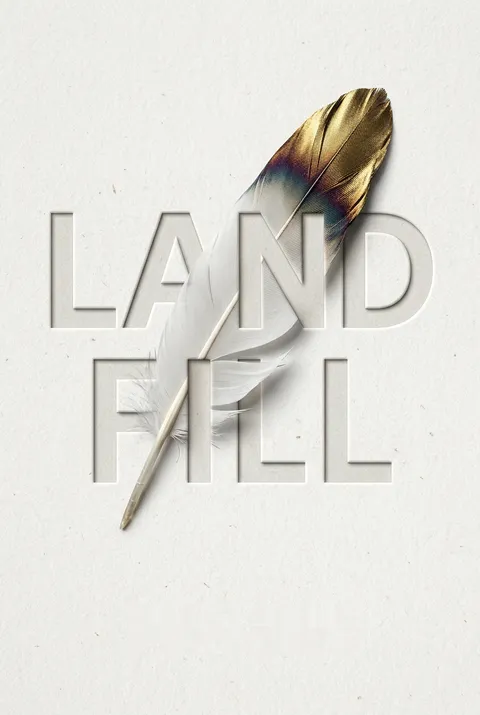


Key Takeaways
Follow the gulls into the dump, and modern life comes into view.
A failed search changes direction. As a young birder, Tim Dee once fixated on finding a rare gull at a reservoir and missed the spectacle of thousands settling for the night. Years later, newly split gull species send him back to birdwatching, this time into city streets, landfills, and the company of people who study gulls closely. The birds lead him from field identification to questions about waste, evolution, literature, and how humans decide what matters.
The dump is the book’s vantage point. Gulls thrive where people discard food and materials, making them unusually visible witnesses to modern habits. Dee’s subject is not only how gulls live among us, but how paying attention to them changes the way their lives, and ours, can be understood.
The opening reversal is more than a birdwatching lesson. It shows how a narrow goal can make a person miss the larger event unfolding around it. Attention is selective: the search for a rare, countable prize can conceal the ordinary abundance that gives a place its character. The landfill then becomes an unusually revealing field site, where ecology and consumer culture meet in plain view. That lens has limits, since one adaptable bird family cannot stand for every species or every waste system. But it makes a compelling case for beginning environmental inquiry where human routines leave visible traces.
Our waste did not merely feed gulls; it reshaped where they live.
Food changed the map. Gulls followed fishing boats, ploughs, rubbish trucks, and landfills, finding reliable meals inland and in towns. In Bristol, urban nesting grew from about 100 pairs each of herring and lesser black-backed gulls in the 1980s to roughly 2,500 pairs. Flat roofs offered sheltered nesting sites, while cities supplied warmth and food. The birds were not simply visitors drawn in for a snack: many hatched in town and returned there to breed.
Waste can build as well as burden. On the young volcanic island of Surtsey, gulls carried nutrients from sea to land and helped plants establish. In their colony, they added an estimated 45 to 50 kilograms of nitrogen per hectare each year, compared with 1 to 2 kilograms in surrounding barren areas. The same birds can turn human leftovers or ocean food into living habitat.
This is a clear example of an ecological subsidy: a resource supplied by human activity that alters the fortunes and behavior of other species. The key point is not that gulls are uniquely opportunistic, but that dependable food can reorganize where animals settle, reproduce, and travel. Surtsey also complicates the idea that a scavenger only takes from an ecosystem. Gulls can move nutrients and help create habitat. Such benefits do not make waste benign, however. A system can support wildlife locally while still producing pollution, emissions, and unhealthy dependence on a resource that people may remove.
Treat species names as working maps, not nature's final borders.
Classification keeps changing. DNA research and closer observation have divided the once broadly defined herring gull group into several species, including yellow-legged and Caspian gulls. Birders then had to ask whether these new categories could be identified in the field, where age, sex, seasonal plumage, and individual variation complicate comparisons. Some gulls also hybridise, producing fertile offspring that blur the boundaries people have drawn.
The old ring model wobbles. A ring species is a proposed chain of related populations that interbreed with neighbors around a geographic range, while the populations at the far ends meet as distinct species. Herring and lesser black-backed gulls were once presented as an example. Museum specimens showing hybrids between them challenged that neat account. The birds keep evolving and mixing; taxonomic names offer useful, revisable ways to describe that motion.
Taxonomy is both a scientific tool and a decision about which differences deserve a name. That does not make species imaginary: genetic, behavioral, and reproductive differences can be real even when borders are messy. It does mean that a label should not be mistaken for a natural fence that every organism respects. The gulls make this especially vivid because hybridisation and shifting ranges expose the limits of tidy categories. A productive response is neither to dismiss classification nor worship it, but to ask what evidence supports a boundary and what practical question the boundary helps answer.
Use patient observation to turn anonymous flocks into trackable lives.
Rings make movement legible. Bristol researcher Peter Rock has spent decades marking gull chicks with rings that can be read from a distance. Colour-coded, engraved rings made it easier for observers to identify individual birds than small metal rings alone. At landfills, the North Thames Gull Group has marked tens of thousands of gulls, recording where they were caught, their age, and where they are later seen.
Technology adds another view. GPS tags fitted to a small number of roof-nesting gulls showed that Bristol birds travelled to farmland to feed, including fields after grass had been cut for silage. During the breeding season, tagged birds did not go to sea, although the coast was nearby. Ringing and tracking turn a vague claim about what gulls do into evidence about particular animals, while leaving many individual journeys still unknown.
This is natural history at its strongest: patient fieldwork converts an apparently interchangeable flock into a population of identifiable individuals. The combination of long-term ringing and newer tracking also illustrates a useful division of labor. A device can reveal where an animal goes, while repeated human observation helps explain what it is doing there. The caution is that small tracking samples cannot represent every bird or season. Still, even partial movement data can expose weak assumptions, such as treating every urban gull as a seaside feeder turned chip thief.
What counts as rubbish depends on who needs, handles, or remembers it.
Dirt is a relationship. Dee draws on the idea that dirt is matter judged to be out of place. A discarded object was once useful or wanted; a landfill marks the point where people refuse responsibility for it. Yet the same site can provide food for gulls, salvage for workers, and material for researchers. Waste does not stop having effects when it leaves a household bin.
People have long worked the leftovers. In his study of nineteenth-century London, Henry Mayhew recorded bone collectors, rag gatherers, sewer hunters, and other people who recovered value from what the city cast aside. His detailed classifications made their labor visible, even as the people he described lived in extreme poverty. The comparison unsettles the easy distinction between respectable disposal and desperate scavenging: both depend on sorting what others have abandoned.
The account connects environmental waste to social judgments about usefulness and status. Discarding is not simply a material process; it can also make people, places, and forms of labor seem disposable. Mayhew’s collectors demonstrate that value often depends on a second set of eyes and hands. That insight is useful in debates about recycling and circular economies, but it should not romanticize salvage. Finding value in refuse can be resourceful and dignifying, while the conditions that force people to depend on dangerous waste remain unjust.
Separate a gull's actual behavior from the story people tell about it.
The same bird gets cast differently. In older writing, gulls often appear as remote sea creatures, blown inland by storms. In modern towns, they are accused of being dirty, aggressive, and out of place. Hitchcock’s film of Daphne du Maurier’s story turns birds into a terrifying attacking force, while public stories about gulls stealing food or harming pets can transform isolated incidents into a national panic. Dee notes that gulls often take food opportunistically and defend their young, but these behaviors are not evidence of a plan to attack people.
Cultural meanings travel with the birds. Richard Bach’s Jonathan Livingston Seagull turns a gull into a fable about freedom and self-improvement. Chekhov’s The Seagull makes the bird a shifting symbol in a drama about desire and loss. Neither image is the animal itself. Gulls become screens onto which people project hopes, fears, and judgments about change.
Stories can make wildlife emotionally legible, but they can also distort the scale and meaning of animal behavior. A food-snatching gull can be funny one day and a public menace the next, depending on which incident becomes news and who feels vulnerable. This resembles risk perception in other settings: vivid events often loom larger than routine, less dramatic evidence. The remedy is not to dismiss people’s experiences, but to distinguish a real nuisance or injury from claims that exaggerate its frequency or imply human-like malice.
Change the food supply, and wildlife policy changes the whole neighborhood.
A boom can become a trap. Landfills once gave some gulls predictable meals, sometimes enough to meet daily needs in less than an hour. As food waste is composted, recycled, or burned, these sources shrink. Gulls that prospered around tips may face lower survival or breeding success, while some may forage farther afield or move toward other human food sources. Dee describes landfill closure not as a simple cleanup, but as a major change to the birds’ habitat.
Control often targets the wrong problem. Roof netting, spikes, plastic owls, and falconry have been used to discourage urban gulls. Peter Rock argues that removing birds from one site cannot keep them out of town when many are born and breed there. Research on tracked gulls also found that individual birds used different feeding grounds. A policy aimed at a supposed universal chip thief may miss how the local population actually survives.
This is an ecological trap in practical terms: human-made conditions attract animals, but those conditions can become unreliable or harmful when the system changes. It also makes policy design a question of timing and scale. A city may reduce accessible food and still need to consider what birds depend on that food, where they will go, and whether deterrents address the cause or merely displace the conflict. The book’s evidence is mostly about gulls in Britain, so solutions cannot be copied everywhere without local study. Its strongest recommendation is to learn the ecology before spending heavily on control.
Let uncertainty sharpen observation instead of forcing a tidy answer.
Some birds resist certainty. Experienced gull watchers may disagree over whether an individual belongs to one species, another, or a hybrid population. James Hanlon describes a rare gull he identified as a Kumlien’s gull; a review committee later judged the evidence insufficient to rule out another possibility. Such disputes are not simply failures. They reveal which features observers can trust and which are ambiguous.
A flock can move without a flock mind. Naturalist Edmund Selous saw large groups of gulls rise together and proposed thought-transference between birds. His explanation was mistaken, but the observation remains valuable. A flock can coordinate through nearby birds responding to one another, allowing local reactions to ripple through a larger group. Watching carefully can preserve the phenomenon while leaving room to revise its explanation.
Uncertainty is often treated as a defect in science, though it can be a sign that observers are accurately reporting the limits of their evidence. The gull example distinguishes two useful habits: describe what is seen, and separate that description from the explanation proposed for it. Selous’s error did not erase the value of his close notes; it shows why observation and interpretation need to remain distinct. This discipline matters far beyond birding, especially when complex systems produce patterns that look intentional but may emerge from simple local interactions.
Naming a life can help protect it, but names never contain it.
Names can bring the overlooked into view. On Madagascar, Dee and two companions used recorded calls to identify the source of a nightjar sound that had not been described. They found that the collared nightjar, an already known species, made the call. The discovery added a piece of knowledge without producing a new species. That distinction matters: something can be unknown to science without being new to nature.
Recognition can have consequences. At a museum, ornithologist Nigel Collar describes a rare hummingbird form rediscovered after researchers treated it as a distinct species and searched for it. Naming can direct attention and conservation resources toward a population that might otherwise be ignored. Yet every species label is a temporary account of a living, changing population. The bird continues to exist beyond the name, just as the nightjar called through years when people had not identified its song.
The nightjar episode captures a tension at the heart of natural history: scientific recognition can make life count in institutions that allocate attention, money, and protection, yet it can also suggest that an organism becomes real only when humans describe it. The book resists that implication. A species is not created by a checklist, though a checklist can affect its prospects. This is especially important in conservation, where limited resources force comparisons among populations. Naming is therefore consequential, but it remains a human instrument for attending to a world that exceeds it.
Analysis
Landfill is a natural history book built as a chain of encounters: the author’s failed search for a rare gull, the specialists who teach him to look again, and the landfills and city roofs where gulls make a living. Its deeper subject is how humans classify and value what is difficult to place. Gulls are seabirds that forage inland, wildlife that benefits from waste, and familiar neighbors treated as intruders. Their lives make these contradictions visible rather than abstract.
The book’s strongest intellectual move is to connect biological categories with material categories. Taxonomists split and lump populations; households sort, discard, and recycle objects. In both cases, classification clarifies some differences while obscuring others. A name can guide research or conservation, but no label captures every hybrid, individual, or changing population. The comparison is illuminating so long as it does not imply that biological species and waste categories work identically. They answer different questions and rest on different kinds of evidence.
The landfill itself is more than a symbol. It is a functioning habitat created by human consumption, and its changing food supply can alter bird behavior and population prospects. That ecological dependence makes clean-up morally complicated: less edible waste may be better for climate and public health, yet abrupt changes can disrupt animals that adapted to the old system. The account invites policy based on observation rather than reflexive extermination or sentimental protection.
The book also shows that attention is an ethical practice. Careful watching discovers individual lives where a casual observer sees only pests, but fascination is not the same as ecological innocence. Gulls can damage property, compete with people, and consume contaminated material. Understanding them requires neither idealization nor contempt. Dee’s literary detours broaden the question of how people imagine animals, while his field encounters keep those ideas grounded in bodies, food, feathers, and place. The result is a portrait of the Anthropocene not as a human world with nature at its edges, but as a shared, improvised world shaped by what people leave behind.
Review Summary
Landfill explores gulls and their relationship with human waste. Reviewers praise Dee's poetic writing and passion for gulls, though some find the structure meandering. Many appreciate the book's insights into gull behavior, adaptation, and the impact of human activity on their populations. Readers highlight the literary references and philosophical musings. Some criticize the lack of focus on landfills or the Anthropocene. Overall, the book is seen as thought-provoking and well-researched, appealing particularly to bird enthusiasts and naturalists.
People Also Read

Glossary
larophile
gull enthusiastA person especially interested in gulls. The term comes from Laridae, the family name for gulls, and Larus, the genus that includes many large gulls. Dee uses it for birdwatchers who seek out gulls, study their identification, and often watch them at urban sites or landfills.
Predictable anthropogenic food subsidies
reliable human-provided foodFood resources created or made available by human activity that animals can predictably exploit. In the book, landfills are a major example: gulls can obtain substantial food from discarded edible waste. The term matters because changing waste practices can alter where gulls feed, how they survive, and where they breed.
ring species
connected populations with distinct endpointsA proposed pattern in which populations spread around a geographic barrier, interbreeding with nearby populations along the way, while the populations at the far ends meet as distinct species. The herring gull complex was once presented as a classic example. Hybrid specimens between forms thought to be separate endpoints complicated that interpretation.
colour-ringing
marking birds for identificationA bird-monitoring technique in which researchers fit birds with conspicuous, often lettered or numbered colour rings. Observers can read the rings from a distance and report where a bird is seen. Compared with relying only on small metal rings and recovery of dead birds, colour-ringing can provide more frequent information about individual movements.
Lazarus taxa
taxa rediscovered after disappearanceA term for species or other taxonomic groups that disappear from the known record and are later found again. Dee uses the idea while considering how discovery and extinction shape human knowledge. A rediscovered organism may have persisted all along; what changes is human recognition, not necessarily the organism’s presence in nature.
adaptive radiation
diversification into ecological rolesThe diversification of related organisms into different forms and ways of life, often as they occupy different ecological roles. Dee describes Madagascar’s vangas as relatives that have come to resemble unrelated birds such as shrikes, flycatchers, and nuthatches. The term helps explain how one lineage can diversify while appearing to fill many familiar niches.
Download PDF
Download EPUB
.epub digital book format is ideal for reading ebooks on phones, tablets, and e-readers.








