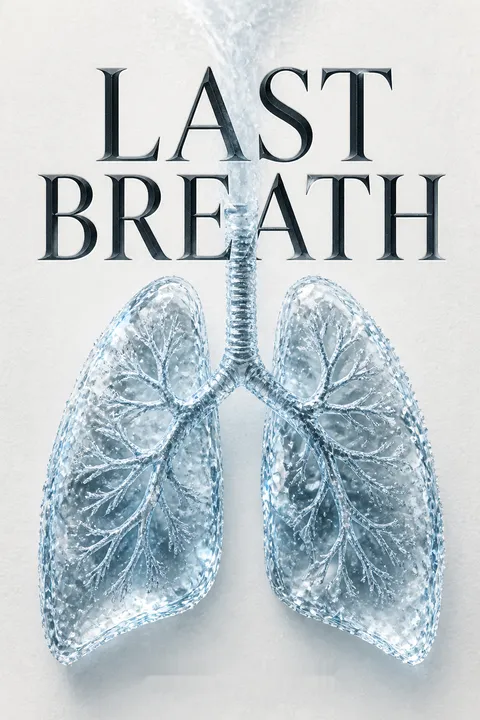


Key Takeaways
Treat proximity to death as a reason for clarity, not bravado.
Risk sharpens attention. Stark begins with a near miss on Mount Washington: he avoids a dangerous ski chute because his friend recognizes that its shaded snow has turned icy. Another skier takes the route and dies. The episode makes mortality feel close, but the lesson is not to chase danger. Wilderness can demand self-reliance, teamwork, and total focus, making people feel vividly alive. That attraction is real, but it can be confused with pressure to prove toughness or live up to an adventurous identity.
Turning back counts. Stark describes how his own approach to risk shifted from youthful ignorance to calculation and then greater caution. The dividing line between boldness and foolishness changes with conditions, skill, and responsibility. A decision to stop is not a failure of adventure; it can be the judgment that keeps adventure possible another day.
What's compelling is the refusal to reduce risk-taking to either courage or stupidity. The account captures how identity and social pressure can distort judgment: a person may continue because retreat feels like public defeat. That is a useful lens for decisions far beyond outdoor sport. Yet the book's attraction to danger should not be mistaken for evidence that risk itself produces insight. Focus can arise in demanding, meaningful work without placing life in immediate peril.
The body adapts impressively, but only inside a narrow environmental margin.
Adaptation has limits. Stark presents the body as both ingenious and fragile. It constricts blood vessels to preserve core warmth, changes breathing and blood chemistry at altitude, and sweats to shed heat. These adjustments help people survive changing conditions, but they do not make humans suited to every environment. Without clothing, fire, or shelter, cold can overwhelm the body; without fresh water, survival may last only days, depending on heat and exertion.
No single threshold guarantees safety. The book describes survivors with extraordinarily low body temperatures and deaths in relatively mild weather. Individual differences, exposure time, wet clothing, exertion, and injury all matter. The same environment can be survivable for one person and fatal for another, and a body that appears resilient can lose its ability to compensate quickly.
The contrast between adaptation and vulnerability is the book's most durable scientific idea. It corrects a common intuition: that because humans occupy nearly every habitat, the body itself must be broadly robust. Much of that range is actually borrowed from technology, cooperation, and learned practices. The counterpoint is that vivid individual cases do not establish reliable thresholds. The book's examples are cautionary, not a substitute for current medical guidance or a forecast of what will happen to any particular person.
In freezing weather, protect judgment before it disappears.
Cold impairs decisions. In Stark's hypothermia scenario, a skier becomes stranded in severe cold after leaving a vehicle to reach a cabin. Wet clothing and continued exertion first warm him, then accelerate heat loss when he stops. As his core temperature falls, shivering intensifies, coordination worsens, and confusion makes it harder to choose a safe route. He forgets he could retrace his own tracks.
Late symptoms mislead. Paradoxical undressing is the disturbing behavior in which a severely hypothermic person removes clothing, possibly after blood vessels near the skin reopen and create a false sensation of heat. After-drop is continued cooling of the core after removal from the cold, as colder tissues keep drawing heat inward. Stark stresses careful handling and rewarming: a profoundly cold person may still be alive, and sudden movement or rewarming complications can be dangerous.
Hypothermia is especially treacherous because the condition undermines the very faculty needed to respond to it. That makes early decisions, such as staying dry, stopping before exhaustion, and seeking help while still coherent, more valuable than heroic effort near the end. It also explains why rescuers should not read bizarre behavior as ordinary choice. The chapter's dramatic temperature sequence is memorable, but real deterioration varies; symptoms and exposure matter more than treating any single number as a universal boundary.
Underwater panic burns oxygen faster than the river does.
Humans have little reserve. Stark contrasts people with diving mammals, which can store oxygen and slow their metabolism, with humans, who have limited capacity to remain underwater. In the fictional river descent, kayaker Matt is caught in a powerful recirculating hole, a current that repeatedly pulls him down and returns him toward the surface. His body uses its diving response to slow the heart and direct blood toward vital organs, but the available oxygen is finite.
Instinct can worsen the trap. Matt's account illustrates how frantic movement and panic consume oxygen while the urge to rise may keep him in the hydraulic cycle. Stark describes the counterintuitive technique used in such a hole: move deeper until the downward force weakens, then escape downstream. Drowning can also involve little water entering the lungs. Cold water sometimes allows unusually prolonged survival, but those cases are exceptions, not a reason to assume rescue can wait.
The scene turns drowning from a single dramatic event into a time-dependent physiological crisis. Its broader insight is that instinctive action is not always effective action: panic feels purposeful while increasing the body's demand for oxygen. In any emergency, practiced responses can reduce the gap between what feels natural and what is useful. The river example is highly specific, though. Its technical escape maneuver belongs to trained whitewater contexts, not to a general rule for every drowning situation.
At altitude, fitness cannot substitute for acclimatization or descent.
Thin air changes the rules. As altitude rises, air pressure falls and each breath delivers less oxygen. The body needs days or weeks to adjust. Stark describes Adrian, a climber who becomes confused, uncoordinated, and unable to care for herself near Annapurna's summit. These are warning signs of high-altitude cerebral edema, a dangerous swelling of the brain. Her worsening cough and breathing also suggest high-altitude pulmonary edema, in which fluid accumulates in the lungs.
Summit fever can be fatal. Adrian's team must choose between the summit and helping her descend. They turn back with her, but a storm traps them in a snow cave, where her condition worsens and she dies. The account emphasizes gradual ascent, sleeping lower than the highest point reached during the day, and recognizing that good athletic conditioning does not prevent altitude illness. For serious symptoms, descent is the essential response, though remote terrain can make it difficult.
This story makes a critical distinction between physical capacity and physiological acclimatization. A fit climber can still be vulnerable because oxygen scarcity is not simply a test of strength or stamina. The team also faces a familiar group decision problem: the nearer a goal seems, the harder it is to abandon it. Their choice shows how care for a teammate can outweigh achievement. The narrative is powerful, but its medical detail is necessarily selective; high-altitude illness requires current expert guidance, not diagnosis by analogy alone.
Read the snow beneath the powder, not the pretty surface.
A slope holds its history. In Stark's avalanche scenario, snowboarder Dougie rides a steep bowl after finding a weak, sugary layer beneath newer snow. That weak layer, called depth hoar, does not bond well to the snow above it. His landing provides enough disturbance to fracture the overlying slab, which breaks loose and carries him downhill.
Rescue time collapses quickly. Stark reports that a buried person's survival chance is about 92 percent after fifteen minutes, but about 30 percent after thirty-five minutes. Dougie survives partly because he calms himself, limits movement, and conserves air while friends use avalanche transceivers to locate him. These are not guarantees. The stronger lesson is to treat unstable layers, warnings, and terrain as serious evidence. A beacon helps locate a victim; it does not make a dangerous slope safe.
The snowpack functions like a hidden record: its surface can look inviting while older layers determine whether it will hold. That is a useful model for risks whose crucial evidence is concealed, including structural weaknesses and delayed warning signs. The chapter also shows how preparation converts panic into coordinated action, but tools can create false confidence if mistaken for protection. Avalanche beacons matter after burial; avoidance and sound terrain decisions matter before it.
Eat for the connective tissue your body cannot build without vitamin C.
A full pantry can still fail. The historical case of Vitus Bering's 1741 expedition shows how sailors with plentiful preserved food developed scurvy. Their diet lacked fresh plants or another dependable source of vitamin C. Georg Steller, the expedition's naturalist, urged the crew to gather local plants and treated some sailors with them, but officers dismissed his advice. Bering died after the stranded crew endured illness, cold, hunger, and hardship.
Vitamin C helps hold tissue together. The body needs it to make sound collagen, a structural protein in blood vessels, skin, bones, and connective tissue. Without enough, blood vessels become fragile, gums swell and bleed, teeth loosen, wounds fail to heal, and weakness grows. The history is striking because practical cures were observed centuries before the nutrient itself was identified. Knowing that food is abundant is not the same as knowing that it supplies what the body requires.
Scurvy is a case study in how an observed remedy can be ignored when it conflicts with hierarchy or prevailing theory. Steller's botanical knowledge mattered, but so did the social conditions that kept useful advice from reaching the crew. The lesson applies to nutrition and medicine more broadly: reliable observation deserves attention, even when its explanation is incomplete. The historical narrative should not be read as a complete account of nutritional science, but it makes deficiency visible as a structural failure, not mere hunger.
Treat heat and water as one budget, not separate discomforts.
Sweat cools only when it evaporates. In Stark's bicycle-race scenario, a rider climbs in intense heat and humidity. Her sweat pours out, but moisture-laden air prevents much of it from evaporating. Her body therefore keeps gaining heat despite the visible sweating. Heavy exertion, rising core temperature, and poor cooling lead from heat exhaustion toward heatstroke, a medical emergency that can damage the brain, kidneys, liver, and other organs.
Stillness can preserve water. In the desert scenario, a stranded traveler loses far less water resting in shade than walking under the sun. The book cites desert studies in which walking in 100-degree heat could cost about a liter of sweat per hour, while sitting quietly in shade cost roughly a quarter of that. Rationing water does not erase the body's need for it. Avoiding needless exertion and heat exposure preserves both fluid and the ability to think and move.
These paired cases show that heat risk is an energy-and-fluid problem, not simply a matter of feeling uncomfortable. Sweat is a cooling mechanism only when the environment lets it work, and exertion can turn a manageable exposure into a crisis. The desert story adds a useful behavioral correction: doing less can be an active survival strategy. Still, heatstroke can occur through different pathways, so water alone is not a cure; rapid cooling and emergency medical care are crucial.
Do not let confidence turn a manageable fall into a fatal one.
Skill cannot replace protection. Stark's free-solo climber attempts a move on a cliff without a rope, judging his odds by the same 60-40 rule he uses in business. When he slips, he survives the fall but suffers a broken femur and internal injuries. He assumes the leg is the main danger and expects rescue, while blood leaks from his spleen and damage to his aorta remains hidden.
Feeling better proves little. The climber temporarily stabilizes, then dies when his aortic injury ruptures. The chapter explains that a serious fall can cause deceleration injuries, damage produced when the body stops abruptly, and that internal bleeding may not be obvious from pain alone. A safety rope and partner cannot eliminate climbing risk, but they change the consequences of a mistake. Confidence is not a medical assessment, and surviving impact is not the same as being safe.
The scene exposes a subtle flaw in borrowed probabilities: a risk estimate that works for a financial bet may be morally and physically meaningless when the downside is death. The climber's self-image as a winner also makes retreat and help-seeking harder. In decision theory, consequences matter as much as likelihood. The book's grim ending underscores that injury can be hidden and delayed, though the fictional case should not be treated as a prediction of how any real fall will unfold.
Respect wildlife without imagining it is hunting you.
Most animal encounters are defensive. Stark challenges the popular image of wildlife as eager to attack people. Many attacks occur when animals are surprised, feel threatened, or protect territory or young. The danger varies greatly by species and setting. In North America, he notes, encounters with large animals such as moose may be more consequential than the public's fixation on sharks suggests.
Small can be lethal. The chapter's Australian honeymoon scenario centers on the box jellyfish, a nearly transparent animal whose tentacles can deliver a rapid, potentially fatal sting. Its venom can disrupt the heart, and the victim's partner must overcome fear and act quickly. The contrast is the point: size and visibility do not measure danger. Local warnings, protective enclosures, and preparation for known hazards matter more than either romanticizing wilderness or treating every creature as a predator.
This framing replaces the moral drama of good humans versus bad animals with ecology: people and wildlife often collide because they share space and misunderstand one another. It encourages respect without paranoia. The jellyfish example also illustrates why risk perception is poor at ranking threats: vivid, familiar animals attract attention, while transparent or rare hazards remain easy to overlook. The chapter's historical attack figures are source-specific, so they are best treated as perspective, not as current universal rates.
A dive plan is a ceiling, not an invitation to improvise.
Pressure changes the body. As a diver descends, surrounding pressure compresses air and drives nitrogen from breathing gas into blood and tissues. A controlled ascent lets nitrogen leave gradually. If a diver rises too quickly, bubbles can form and cause decompression illness, commonly called the bends. At depth, nitrogen can also impair judgment through nitrogen narcosis, making a diver feel unusually calm, euphoric, or confused.
A held breath can be catastrophic. Robert, the fictional treasure hunter, dives deeper and longer than planned, runs out of air, then bolts upward while holding his breath. Expanding air ruptures lung tissue and can enter the bloodstream, causing a dangerous arterial gas embolism. The chapter's practical warnings are clear: do not dive alone, follow depth and time limits, ascend slowly, and keep breathing on ascent. Treasure, curiosity, and sunk costs do not change the physics.
The dive story makes escalation vivid: each small exception feels defensible because the goal appears closer, until several safeguards have been abandoned at once. This resembles the sunk-cost effect, where past investment tempts people to take further risks rather than stop. A plan is useful precisely because it is made before excitement and impairment take hold. The chapter's physiology is educational, but diving procedures change with training and conditions; specialized instruction and current standards must govern real dives.
Treat a tropical fever as a possible emergency, not a passing bug.
Malaria can look ordinary at first. In Stark's scenario, a mosquito carrying Plasmodium falciparum infects Zach, a traveler who has not taken preventive medication. The parasites multiply in his liver, then invade red blood cells. Fever, chills, and sweating come in waves, so the first episode can seem like a temporary illness. Meanwhile, infected red blood cells begin sticking to tiny blood vessels in his brain.
Delay changes the stakes. Zach grows weak, confused, and eventually unconscious as cerebral malaria develops. He is taken to a hospital only after a long journey, when his condition is critical. The story emphasizes prevention in malaria regions and prompt medical evaluation for compatible symptoms. Tropical travel can make a familiar-looking fever harder to interpret, not less serious. A brief improvement does not establish that the underlying infection has ended.
The malaria chapter is a reminder that visible symptoms can lag behind a dangerous process already underway. Its central tension is between narrative interpretation and biological reality: travelers may explain away fever as food, fatigue, or climate because those causes feel familiar. This is a powerful argument for taking exposure history seriously. The scenario is not a diagnostic checklist, however. Malaria risk and treatment depend on region, timing, and medical assessment, so suspected infection calls for professional care.
Analysis
Last Breath is a science-and-adventure book organized as a sequence of bodily crises. Stark pairs invented composite scenarios with historical cases and physiological explanations, turning medical processes into unfolding stories. That structure is especially effective when the central danger is not simply injury, but the loss of judgment that prevents a person from recognizing injury: the hypothermic skier forgets his tracks, the altitude-stricken climber distrusts her rescuers, and the dehydrated traveler discards the things needed to survive. The reader learns not only what can fail, but how danger narrows perception.
The book's strongest unifying claim is that human endurance is conditional. The body has remarkable emergency responses, from constricting blood flow in cold to changing ventilation at altitude, but these mechanisms have limits and can sometimes worsen the situation. A wet climber, a sweating cyclist, and a diver ascending too fast each discover that adaptation is not immunity. Across chapters, early restraint, accurate assessment, and help from others matter more than toughness.
The deeper tension is between adventure as a route to intense presence and adventure as exposure to irreversible harm. Stark does not resolve that tension with a universal rule. He argues instead that risk judgments depend on context, competence, companions, and obligations. This is more credible than a simple injunction to be cautious, though the book's lyrical treatment of danger can make risk appear spiritually elevating. Its own cautionary stories complicate that romance.
The scenarios are explicitly composites, not case reports, and the book dates to 2001. Its medical descriptions and statistics should therefore be read as an educational narrative rather than current clinical or wilderness guidance. The lasting value lies in its model of attention: learn how a hazard develops, notice early changes, and recognize when persistence has stopped being courage and become denial.
Review Summary
Last Breath receives mixed reviews, with an average rating of 4.02/5. Readers praise its compelling blend of science and storytelling, detailing various ways the human body can fail in extreme situations. Many find it fascinating and educational, appreciating the author's research and vivid descriptions. However, some criticize the use of fictional scenarios instead of real-life accounts. The book's unique approach of combining medical information with narrative storytelling is both lauded and criticized, with some finding it engaging and others disconnecting from the stories.
People Also Read





Glossary
Paradoxical undressing
Clothing removal during hypothermiaA behavior sometimes seen in severe hypothermia, when a confused person removes clothing despite dangerous cold. Stark describes a proposed explanation: blood vessels near the skin may suddenly widen, creating a false sensation of intense warmth. The behavior can make a victim appear to have been assaulted or to have made a deliberate choice, when cold has impaired judgment.
After-drop
Continued core coolingAfter-drop is a further fall in core body temperature after a hypothermic person has been removed from the cold. Colder tissues near the body's surface continue to draw heat from the warmer core. Stark uses the phenomenon to emphasize that rescue does not end the danger and that severely cold victims require careful handling and rewarming.
High-altitude cerebral edema
Brain swelling at altitudeHigh-altitude cerebral edema, often abbreviated HACE, is a potentially fatal illness associated with inadequate acclimatization at high elevation. Fluid-related swelling in the brain can cause poor coordination, confusion, unusual behavior, drowsiness, and coma. Stark's account emphasizes that symptoms can undermine a climber's ability to recognize the danger and that descent is the central response.
Hypoxic ventilatory response
Breathing response to low oxygenThe hypoxic ventilatory response, or HVR, is the body's tendency to increase breathing when oxygen levels fall. At altitude, a stronger response can help a person adjust to thin air, while individual differences may affect susceptibility to illness. Stark notes that fitness alone does not reliably predict the response or protect climbers from mountain sickness.
Depth hoar
Weak, sugary snow layerDepth hoar is a layer of coarse, loosely bonded snow crystals that can form near the bottom of a snowpack when temperature differences drive water vapor through the snow. Newer snow may bond into a denser slab above it, leaving a weak interface. A disturbance can fracture the slab and trigger an avalanche.
Dysbarism
Pressure-related diving illnessDysbarism is a broad term for harmful effects caused by changes in pressure, especially during diving. The book discusses decompression sickness, in which gas bubbles form as pressure falls too quickly, and lung overexpansion injuries caused by expanding air during ascent. The term includes conditions with different mechanisms, symptoms, and treatments.
Cerebral malaria
Malaria affecting the brainCerebral malaria is a severe complication of infection by Plasmodium falciparum. In Stark's account, infected red blood cells adhere to small vessels in the brain, disrupting circulation and contributing to confusion, seizures, coma, and death. It is a medical emergency, and early fever may not reveal how serious the infection is becoming.
Desert thirst
Progressive dehydration stagesDesert thirst is Stark's term for the advancing physical and mental effects of severe water loss in hot, dry conditions. He presents a traditional sequence of stages, from clamorous thirst and cotton-mouth through tongue changes, bleeding symptoms, and a final state he calls living death. The progression includes impaired movement, perception, and judgment.
Tonglen
Compassion meditation practiceTonglen is a Tibetan Buddhist practice of giving and receiving that Stark describes in the mountain chapter. The practitioner imagines taking in another person's suffering and breathing out relief, compassion, and well-being. Mara uses the practice while staying with her dying teammate, treating compassion as a way to accompany someone when practical intervention has run out.
Download PDF
Download EPUB
.epub digital book format is ideal for reading ebooks on phones, tablets, and e-readers.








