

Key Takeaways
Turn ambition outward, or power becomes only a private trophy.
Ambition needs a direction. Lincoln, raised in poverty, wanted his neighbors’ respect and tied it to serving them. Theodore Roosevelt had wealth and connections, yet chose to enter rough-and-tumble local politics. Franklin Roosevelt was slow to emerge as a leader, while Lyndon Johnson absorbed politics from his father and discovered public purpose while teaching Mexican American children in Cotulla, Texas.
No single starting point. Goodwin’s four lives suggest leadership is made through effort and experience, not bestowed by birth. Their ambition mattered, but it became consequential when it developed into practical skills and a commitment, however imperfect, to improving other people’s lives.
The distinction between ambition and its direction is useful well beyond politics. Ambition supplies energy, but a public purpose gives that energy a test: does it create value beyond the ambitious person? The cases also resist a tidy meritocratic story. Lincoln faced barriers that Roosevelt did not, and family wealth, political connections, and historical timing opened doors for several of these men. Effort matters, but opportunity is not distributed evenly. Treating leadership as self-creation should not make structural advantages disappear from view.
Treat adversity as a test of response, not a guarantee of growth.
Reversals reveal different capacities. Lincoln’s failure to deliver Illinois’s costly public works, combined with a broken engagement, led to a severe depression. Theodore Roosevelt lost his mother and wife on the same day, then withdrew to the Badlands. Franklin Roosevelt’s polio left him unable to walk unaided and seemed to end his political prospects. Each eventually rebuilt a life, but by a different route.
Hardship can also constrict. Johnson’s 1941 defeat in a Senate race became a judgment on his worth. He grew bitter, disengaged from public service, and pursued wealth as well as power. A later heart attack forced him to reconsider what power was for. Adversity was not automatically ennobling; response, support, and circumstance shaped its effects.
The book’s strongest contribution here is its refusal to make suffering a magic ingredient. A crisis can deepen perspective, but it can also narrow a person’s world, especially when identity depends on a single role or source of approval. Modern trauma-informed thinking makes a similar distinction between exposure to hardship and the conditions that support recovery. The comparison also needs care: disability, bereavement, political defeat, and financial failure are not equivalent experiences. Their value as cases lies in contrasting responses, not ranking pain.
Learn the people before trying to move them.
Understanding begins with contact. Lincoln learned from the customers and political arguments in New Salem’s general store, then developed a habit of explaining difficult ideas through familiar stories. Roosevelt entered New York tenements and listened to workers describe their conditions, changing his position on a bill about cigar making in crowded homes. He learned that empathy could grow through exposure, rather than relying only on inherited instinct.
Listen for usable knowledge. Franklin Roosevelt preferred to gather information by talking with people, while Lyndon Johnson cultivated relationships with constituents and remembered personal details. These habits supplied more than warmth. They revealed local needs, political motives, and practical obstacles that formal reports or distant assumptions could miss.
Listening is not merely a courtesy. In organizational life, frontline workers often know where a policy fails before senior leaders see the numbers. Stories can expose the mechanism behind a statistic, as Roosevelt’s investigations of working and living conditions did. But personal contact has limits: a leader’s sample can be selective, and one vivid account may not represent a whole population. Good listening therefore combines human testimony with broader evidence, then checks whether the proposed response actually helps.
Hold a moral destination steady while timing the move.
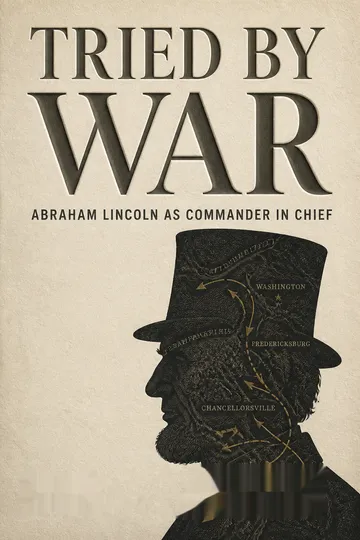
Lincoln balanced principle and constraint. At the start of the Civil War, he said the Union was the immediate purpose of the conflict and recognized that the Constitution protected slavery where it already existed. As military defeats mounted, he learned that enslaved people were sustaining Confederate forces through labor and supplies. He also tried, without success, to persuade loyal border states to accept compensated emancipation.
Timing changed the prospects. Lincoln shared a preliminary emancipation plan with his cabinet in July 1862, but Seward warned that issuing it after repeated defeats could look like desperation. Lincoln waited for the Union’s stand at Antietam, then announced the policy in September, effective January 1, 1863. The proclamation applied to areas in rebellion, using wartime authority, not to loyal slave states.
This is a case in which patience serves action rather than replacing it. Lincoln gathers information, tests alternatives, considers constitutional limits, and adjusts the timing without abandoning his objective. That sequence resembles sound crisis decision-making: distinguish the end from the available means, and identify what evidence would make action more effective. Yet timing is easy to invoke as cover for avoidance. The safeguard is a real decision rule, such as Lincoln’s stated reliance on military developments, rather than an indefinite claim that conditions are not yet right.
When a private conflict threatens the public, build a legitimate way in.
The coal shortage changed the stakes. In 1902, about 147,000 miners struck in Pennsylvania. As winter approached, the Northeast faced a threat to fuel supplies for homes, factories, hospitals, and schools. Theodore Roosevelt had no clear legal mandate to settle a labor dispute, but he judged that the public would suffer regardless of who held formal responsibility.
He built influence step by step. Roosevelt commissioned a fact-finding report, convened the mine owners and union leader John Mitchell, and arranged for the meeting to be recorded. The owners refused arbitration, while Mitchell appeared willing to accept it. Public reaction turned against the owners. With military intervention prepared as a last resort, J. P. Morgan helped secure an arbitration commission. The strike ended after 163 days, with awards that included a wage increase and a shorter workday.
Roosevelt’s intervention illustrates how public legitimacy can be built before formal authority is clear. Fact-finding, a visible invitation to negotiate, and a public record made it harder to dismiss the dispute as a private matter when the public bore its consequences. The episode also exposes a democratic tension: a president can stretch executive influence because a crisis seems urgent, then describe the case as exceptional. Documentation and public justification help constrain that power, but they do not settle where the proper limit lies.
In a panic, explain the mechanism before asking people to trust.
FDR gave fear a practical answer. When he took office in March 1933, bank failures and withdrawal runs had brought the financial system close to collapse. He declared a temporary nationwide bank closure, giving officials time to assess which banks could reopen and what support they needed. In a radio address, he explained in plain language how banks used deposits and why sound banks could not meet a sudden rush for cash.
Explanation accompanied action. An estimated 60 million people heard the address. When banks reopened, customers largely arrived to redeposit money, and the stock market rose 15 percent on the first day of renewed trading. The emergency measure created room for broader reforms. FDR’s first New Deal programs also relied on trial, revision, and newly created agencies rather than assuming one established department could handle every new problem.
The episode joins crisis communication to operational competence. People were not asked to accept a slogan in place of policy; they were given an intelligible account of what had happened, what the government had changed, and what reopening meant. That is a powerful model for public communication, especially when technical systems become frightening. Still, reassurance alone cannot repair a broken institution. Clear explanation works when backed by credible safeguards and competent implementation, not as a substitute for them.
Make the route through institutions part of the strategy.
Johnson treated procedure as terrain. After Kennedy’s assassination, he made civil rights and a tax cut his first domestic priorities. To free the civil rights bill from a House committee controlled by opponents, he supported a discharge petition, a rarely used procedure requiring 218 signatures. Organizing supporters around that precise target helped force the committee chair to schedule hearings.
Coalition carried the bill through the Senate. Johnson knew that southern senators could sustain a filibuster, so he worked with civil rights leaders, liberals, and Republican leader Everett Dirksen. Negotiations produced amendments without removing the bill’s central force. After 75 days of debate, 67 senators voted to end the filibuster. The Civil Rights Act of 1964 then passed. Johnson’s legislative skill lay not only in persuasion, but in sequencing, vote-counting, and finding allies who could deliver support.
This is a reminder that institutions are not neutral hallways between a leader and a goal. Rules distribute leverage, create veto points, and give opponents ways to run out the clock. Johnson’s approach resembles coalition-building in complex organizations: identify the bottleneck, make the objective concrete, and give pivotal partners a reason to join. The compromise around Dirksen also shows the danger of confusing tactical flexibility with moral surrender. The critical question is whether concessions make progress possible while preserving the purpose of the measure.
Pair a moral vision with machinery capable of delivering it.
Johnson prepared before momentum faded. After winning decisively in 1964, he used task forces to develop proposals outside the usual departmental routines. He consulted members of Congress while bills were being designed, then tracked them through committees and floor votes. The strategy helped move a broad agenda through a Congress that had often been gridlocked.
The results were concrete. In 1965, Congress passed major measures on Medicare, education, voting rights, and other domestic priorities. Their effects connected: federal health funding helped dismantle segregation in hospitals, while voting protections expanded Black political participation. Johnson’s earlier work in Cotulla and his New Deal experience had shaped his belief that government could widen opportunity. His achievement depended on both that purpose and detailed preparation with legislators, agencies, and supporters.
Vision becomes politically meaningful when translated into institutions, budgets, and enforceable rules. Johnson’s task forces and legislative tracking show how preparation can turn a short-lived opening into durable policy. The social effects of the laws also demonstrate that programs rarely operate in isolation: a change in one domain can alter access and power in another. At the same time, legislative volume is not the same as successful implementation. A complete assessment must ask who benefits, whether promised services reach them, and whether the new rules endure.
Do not hide a war’s costs to protect your domestic legacy.
Vietnam reversed Johnson’s domestic strengths. At home, he had a clear agenda and consulted widely. In Vietnam, he lacked confidence in a positive strategy and increasingly relied on a narrow circle of advisers who shared conventional assumptions. Escalation proceeded in stages, from air strikes to ground combat, eventually involving more than 500,000 American troops.
The public was not told the full price. Johnson avoided a clear announcement of a major war, did not mobilize reserves, and withheld information about the likelihood of a prolonged conflict. He feared that open debate would weaken support for the Great Society. When the 1968 Tet offensive contradicted official assurances that the war was progressing, public trust collapsed. The concealment intended to preserve domestic programs instead damaged his credibility and helped fracture the country.
The contrast shows that a leader’s strongest habits can fail when the problem changes. Johnson’s talent for controlling the legislative calendar became a liability when applied to public understanding of war. Democratic consent requires more than a leader’s private confidence; citizens need a truthful account of risks, aims, and sacrifice. There is a genuine security dilemma in what governments can disclose during conflict, but withholding the basic scale and direction of a war is different from protecting operational details. Secrecy may buy time while spending the trust required to govern.
Analysis
Goodwin’s central argument is that leadership is neither a stable personality type nor a prize attached to office. It develops where ambition, experience, personal capacities, and historical opportunity meet. The four presidents make that claim vivid because they begin from sharply different conditions: Lincoln’s poverty and self-education, Theodore Roosevelt’s privilege and physical vulnerability, Franklin Roosevelt’s sheltered upbringing and later paralysis, and Lyndon Johnson’s unstable family life and relentless appetite for advancement. Their shared traits matter less than how they adapt them to different moments.
The book’s strongest analytical move is to connect private formation with public action. Lincoln’s habit of turning ideas over becomes patient judgment; Roosevelt’s exercise of courage becomes a willingness to act before precedent catches up; Franklin Roosevelt’s adaptability becomes experimentation and public explanation; Johnson’s reading of people becomes legislative power. In each case, leadership is relational. Teams, voters, soldiers, workers, and political movements supply information, legitimacy, and pressure. The image of a solitary hero is therefore incomplete even when a leader dominates the narrative.
The cases also warn against treating success as proof of virtue. Johnson’s civil rights leadership is substantial, but his Vietnam secrecy shows how the same ambition and control can become destructive when purpose is unclear and information is narrowed. Roosevelt’s crisis intervention raises questions about executive power. Lincoln’s emancipation policy was morally consequential, yet shaped by war powers and constrained in scope. These tensions make the book more useful than a simple catalogue of admirable traits.
Its limits follow from its design. Four exceptional presidents, selected through a historian’s lens, cannot establish a universal recipe or show how leadership works in less visible institutions. The narrative can also make outcomes appear more coherent in retrospect than they were to participants. Still, its most durable lesson is persuasive: leadership becomes consequential when a person reads the moment accurately, earns trust across difference, and accepts responsibility for turning a shared problem into a public purpose.
Review Summary
Leadership: In Turbulent Times examines the leadership qualities of four U.S. presidents: Lincoln, Theodore Roosevelt, FDR, and LBJ. Readers praise Goodwin's storytelling and analysis, finding the book informative and inspiring. Many appreciate the focus on how these leaders navigated crises and overcame adversity. The book's structure, exploring each president's early life, rise to power, and key leadership moments, is generally well-received. Some readers note the relevance to current political climate, while others found certain sections more engaging than others.
People Also Read


Glossary
crucible experience
a formative personal ordealA severe reversal or crisis that tests a leader’s identity and abilities. In Goodwin’s account, such experiences can force reflection, change priorities, or deepen capacity, but they do not guarantee growth. Lincoln’s depression, Theodore Roosevelt’s bereavement, Franklin Roosevelt’s polio, and Lyndon Johnson’s political defeat each produced different consequences.
Transactional leadership
exchange-based political influenceA practical mode of leadership that secures cooperation through bargains, rewards, and exchanges tied to people’s interests. Goodwin treats it as one useful means of governing, not necessarily the opposite of moral purpose. Lincoln, for example, used political favors and negotiation to advance the constitutional amendment abolishing slavery.
Transformational leadership
leadership that changes shared purposeA form of leadership that asks people to identify with aims larger than immediate self-interest, such as a community’s ideals or a country’s future. In the book’s account of Lincoln, emancipation and preservation of the Union become linked purposes that soldiers and citizens can support as part of a common struggle.
Square Deal
Roosevelt’s fairness agendaTheodore Roosevelt’s broad political commitment to fairer relations among business, labor, and the public. It supported action against corrupt practices and excessive corporate power, while presenting government as responsible for protecting the public interest. The 1902 coal strike became a defining example of Roosevelt applying this approach to a conflict between mine owners and workers.
brain trust
Roosevelt’s policy advisersThe group of experts Franklin Roosevelt assembled around his New York governorship and presidency to help develop and assess policy. The term is associated with professors and specialists who advised him, including Raymond Moley, Rexford Tugwell, and Adolf Berle. Their expertise complemented Roosevelt’s own preference for questioning, debate, and practical experimentation.
fireside chats
radio talks to the publicFranklin Roosevelt’s radio addresses that explained government actions directly to listeners in accessible language. During the 1933 banking crisis, he described why banks had closed, how officials were assessing them, and what reopening meant for depositors. The format helped create a personal channel between the president and the public during national uncertainty.
Great Society
Johnson’s domestic reform programLyndon Johnson’s ambitious domestic agenda, which aimed to expand opportunity and reduce poverty while extending civil rights protections. It included major legislation on health care for older Americans, education, voting rights, housing, and other areas. Johnson built the program through task forces, congressional consultation, and close management of the legislative process.
FAQ
What's Leadership: In Turbulent Times about?
- Focus on Four Presidents: The book examines the leadership styles of Abraham Lincoln, Theodore Roosevelt, Franklin D. Roosevelt, and Lyndon B. Johnson during critical periods in American history.
- Themes of Leadership: Doris Kearns Goodwin explores themes such as ambition, adversity, and the relationship between leaders and their times.
- Historical Context: Each president's story is set against significant national challenges, illustrating how their leadership was tested and evolved in response to adversity.
Why should I read Leadership: In Turbulent Times?
- Invaluable Lessons: The book offers timeless lessons on leadership applicable in various contexts, making it relevant for aspiring leaders and history enthusiasts.
- Rich Historical Narrative: Goodwin's storytelling weaves together personal anecdotes and historical events, making the book engaging and informative.
- Understanding Leadership Dynamics: Readers gain insights into how personal ambition and public duty intersect, and how leaders can inspire and mobilize people during crises.
What are the key takeaways of Leadership: In Turbulent Times?
- Resilience in Adversity: The book emphasizes the importance of resilience, showing how each leader faced personal and public challenges that shaped their character and leadership style.
- Ambition with Purpose: Goodwin illustrates that true leadership is driven by a purpose larger than personal ambition, as seen in Lincoln's commitment to the Union and civil rights.
- Influence of Context: The narrative highlights how the times in which leaders operate can shape their actions and decisions, suggesting that leaders must be adaptable to their circumstances.
What are the best quotes from Leadership: In Turbulent Times and what do they mean?
- “Every man is said to have his peculiar ambition”: This quote from Lincoln reflects the idea that ambition is a fundamental aspect of leadership, driving individuals to seek recognition and purpose.
- “Above all, try something”: Franklin Roosevelt's advice underscores the importance of action and experimentation in leadership, encouraging leaders to take risks and learn from their experiences.
- “A steam engine in pants”: This description of Lyndon Johnson captures his energetic and forceful personality, illustrating how his dynamic approach to leadership was both a strength and a source of conflict.
How does Leadership: In Turbulent Times define leadership?
- Combination of Traits: Goodwin suggests that effective leadership is a blend of ambition, empathy, resilience, and the ability to connect with people.
- Response to Challenges: Leadership is portrayed as a dynamic process, where leaders must respond to the unique challenges of their time while remaining true to their values.
- Influence of Relationships: The book emphasizes that leadership is not just about individual traits but also about the relationships leaders build with their followers and the broader community.
How does Doris Kearns Goodwin compare the leadership styles of the four presidents?
- Unique Approaches: Each president had a distinct style—Lincoln's empathy, Theodore's vigor, Franklin's optimism, and Lyndon's assertiveness—shaped by their backgrounds and experiences.
- Adaptability: Goodwin highlights how these leaders adapted their styles to meet the demands of their times, demonstrating flexibility in their approaches to governance.
- Shared Values: Despite their differences, all four leaders shared a commitment to public service and a desire to improve the lives of their constituents.
What role does adversity play in the development of leaders in Leadership: In Turbulent Times?
- Catalyst for Growth: Adversity is shown as a critical factor that can either break or strengthen leaders, pushing them to develop resilience and deeper understanding.
- Personal Struggles: Each president faced significant personal challenges that shaped their character, such as Lincoln's depression and Roosevelt's loss of loved ones.
- Public Crises: The book illustrates how national crises, like the Civil War and the Great Depression, tested these leaders and forced them to rise to the occasion.
How did Lincoln’s leadership style evolve during his presidency in Leadership: In Turbulent Times?
- Initial Caution: At the beginning of his presidency, Lincoln was cautious and focused on preserving the Union without directly addressing slavery.
- Emancipation Proclamation: Over time, he recognized the necessity of linking the war effort to emancipation, culminating in the Emancipation Proclamation as a strategic military decision.
- Transformational Leadership: Lincoln’s ability to adapt his leadership style to the needs of the moment, while maintaining a moral compass, is a key theme in Goodwin’s analysis.
How did Franklin Roosevelt’s personal experiences shape his leadership in Leadership: In Turbulent Times?
- Overcoming Adversity: His battle with polio instilled in him a deep empathy for those suffering, which informed his policies and approach to governance.
- Connection with the Public: Roosevelt’s ability to communicate directly with the American people through fireside chats helped build trust and confidence during the Great Depression.
- Vision for Change: His experiences led him to advocate for systemic reforms, recognizing the need for government intervention to address economic and social issues.
How does Leadership: In Turbulent Times illustrate the importance of empathy in leadership?
- Empathy as a Core Trait: Goodwin posits that empathy is essential for effective leadership, allowing leaders to connect with their followers and understand their needs.
- Real-Life Examples: The book provides numerous anecdotes demonstrating how each president used empathy to guide their decisions and actions, particularly in times of crisis.
- Building Trust: Empathy is shown to be a key factor in building trust and loyalty among constituents, as leaders who genuinely care for their people are more likely to inspire support and commitment.
What lessons can modern leaders learn from Leadership: In Turbulent Times?
- Adaptability is Key: Leaders must be willing to adjust their strategies in response to changing circumstances and public sentiment.
- Empathy Builds Trust: Understanding the emotional needs of constituents can strengthen the bond between leaders and the public, fostering loyalty and support.
- Collaboration is Essential: Building coalitions and engaging diverse perspectives can lead to more effective problem-solving and decision-making in times of crisis.
How does Leadership: In Turbulent Times address the relationship between leaders and their times?
- Mutual Influence: Goodwin argues that leaders are shaped by their historical context, while also having the power to influence the course of events.
- Crisis as Opportunity: The book illustrates how moments of crisis can create opportunities for leaders to emerge and make significant changes.
- Historical Legacy: Each president's legacy is tied to the specific challenges they faced, showing how their responses to those challenges defined their impact on history.
About the Author
Download PDF
Download EPUB
.epub digital book format is ideal for reading ebooks on phones, tablets, and e-readers.








