Key Takeaways
1. Embrace a Psychologically Rich Life: The Third Dimension of Well-being
A psychologically rich life is a life filled with diverse, unusual, interesting experiences that change your perspective; a life with twists and turns; a dramatic, eventful life instead of a simple and straightforward one; a life with multiplicity and complexity; a life with lots of stops, detours, and turning points; a life that feels like a long, winding hike rather than many laps of the same racing circuit.
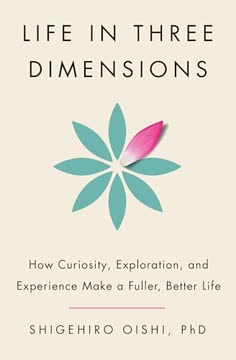
Beyond happiness and meaning. While happiness (hedonic well-being) and meaning (eudaimonic well-being) have long been considered the primary paths to a good life, a third, equally vital dimension exists: psychological richness. This concept describes a life characterized by a multitude of diverse, unusual, and perspective-changing experiences. It's not just about feeling good or having purpose, but about experiencing life's full spectrum of flavors, much like a fine, dark chocolate offers a complex blend of sweet, bitter, and even salty notes.
A life of twists and turns. Unlike the smooth sailing of a happy life or the clear direction of a meaningful one, a psychologically rich life embraces drama, complexity, and unpredictability. It's a journey with detours and turning points, where unexpected events lead to new insights and growth. The author contrasts his own adventurous, mobile life with his father's stable, comfortable existence, highlighting the trade-offs and unique rewards of each path.
Accumulating experiences. Just as material wealth is accumulated through money, psychological richness is built through the accumulation of varied life experiences. These experiences, whether firsthand or vicarious, add up over time, creating a rich tapestry of memories and perspectives. This dimension offers a unique form of resilience and a path to a life with fewer regrets, especially for those who prioritize curiosity and exploration.
2. Beware the Traps of Happiness and Meaning
The paradox of happiness and meaning is that the complacency they foster can make for an incomplete life with major regrets, doubts, and unanswered questions.
The happiness trap. Society often equates happiness with success, creating immense pressure to constantly feel positive emotions. This cultural narrative can lead to "Penn Face," where individuals fake happiness despite inner struggles, as seen in the tragic case of Madison Holleran. Research shows that major accomplishments rarely bring lasting happiness; instead, frequent small positive events and close relationships are key. The pressure to be happy can make negative emotions feel like failure, hindering our natural psychological immune system and leading to unhealthy coping mechanisms.
The meaning trap. While a meaningful life—defined by significance, purpose, and coherence—is admirable, the societal call to "be great" can set individuals up for failure. Most people report having meaningful lives, often through dedication to specific causes or roles like parenthood. However, this pursuit can lead to a narrow viewpoint, fostering ingroup favoritism and even justifying antisocial behaviors, as seen in the hypothetical military prison guard, Mason, or the motivations behind terrorism.
Nietzsche's critique. Both happiness and meaning, when pursued exclusively, can lead to complacency or a narrow perspective. Philosopher Friedrich Nietzsche warned against the seductive nature of "small happiness" and "modest virtue," arguing that they can lead to a conventional, conflict-free life that is ultimately not worth living. He advocated for the life of a wanderer, embracing danger and challenge over contentment.
3. Cultivate Exploration, Playfulness, and Spontaneity
All work and no play makes Jack a dull boy.
Embrace the wanderer's spirit. A psychologically rich life thrives on exploration, a path exemplified by characters like Goldmund in Hermann Hesse's Narcissus and Goldmund and Stephen Dedalus in James Joyce's A Portrait of the Artist as a Young Man. These figures choose uncertainty, freedom, and self-expression over security and duty. Real-life examples like Alison Gopnik's intellectual quest or Steve Jobs's transformative trip to India demonstrate how embracing the unknown can lead to profound personal growth and wisdom.
The power of playfulness. Playfulness, a blend of openness to experience and extraversion, is crucial for psychological richness. It allows us to take a "vacation from social and economic reality," fostering creativity and resilience. Elite athletes like Michael Phelps and Simone Biles, despite their success, suffered burnout from single-minded dedication. In contrast, multisport athletes like Michael Jordan and Alex Morgan, or Nobel laureates who specialized later, demonstrate that playful engagement and diverse experiences can lead to long-term success and prevent burnout.
Spontaneity enriches life. Our highly scheduled modern lives often leave little room for spontaneous interactions, which are vital for forming deep connections and experiencing novelty. The difficulty of making friends in adulthood, for instance, is partly due to the lack of unplanned encounters. Embracing spontaneity, whether through a whimsical detour or an unplanned outing, can inject excitement and memorable moments into our routines, helping us break free from monotony and discover unexpected joys.
4. Break Free from the Productivity Trap: Embrace DIY and Generalism
The greatest improvement in the productive powers of labour, and the greater part of the skill, dexterity, and judgment with which it is anywhere directed, or applied, seem to have been the effects of the division of labour.
The cost of efficiency. Modern society's obsession with productivity and the division of labor, as championed by Adam Smith and Henry Ford, has led to unprecedented efficiency. However, this specialization can come at a psychological cost. Karl Marx warned that it could make humans one-dimensional and lead to alienation, a sentiment echoed by Jerome Kagan's lament over "diluted emotion" in big team science. Our research shows that while the division of labor boosts productivity, it significantly reduces the psychological richness of a task, making it more boring and monotonous.
Generalism fosters curiosity. When individuals are assigned specialized tasks, they tend to lose interest in seemingly irrelevant matters, narrowing their perspective. Conversely, a generalist approach, where one engages in diverse tasks, cultivates greater curiosity and a broader worldview. This suggests that constantly specializing can inadvertently make us less interested in the world around us, like focusing solely on the Mona Lisa and missing other masterpieces in the Louvre.
The beauty of DIY. Outsourcing tasks, while saving time and potentially increasing happiness, can inadvertently rob us of psychologically rich experiences. Undertaking a challenging DIY project, like building a patio, might be stressful and inefficient in the short term, but it generates unique stories, fosters self-discovery, and creates lasting memories of agony and pride. Escaping the productivity trap means occasionally choosing a slower, more hands-on approach, adding spice and depth to life that efficiency alone cannot provide.
5. Aesthetic Experiences and Stories Can Deeply Enrich Your Life
Through art alone are we able to emerge from ourselves, to know what another person sees of a universe which is not the same as our own and of which, without art, the landscapes would remain as unknown to us as those that may exist on the moon.
Living vicariously. Psychological richness isn't limited to firsthand adventures; it can be profoundly cultivated through aesthetic experiences like reading novels, watching films, or engaging with art. Mohammed Aziz, a bookseller who "lived more than 4,000 lives" through reading, and Marcel Proust, who found more drama in books than in a lifetime, exemplify this. These experiences transport us into narrative worlds, allowing us to feel a wide range of emotions and gain new perspectives without leaving our homes.
The power of narrative. For an aesthetic experience to be truly rich, it must be immersive, memorable, complex, and ultimately lead to a change in perspective. Films like Akira Kurosawa's Rashomon or Bong Joon-ho's Parasite challenge our assumptions and offer new ways of understanding the world. Art, as Sonny Rollins and David Brooks suggest, provides an escape from "endless chatter" and widens our emotional repertoire, offering unique, visceral experiences that transcend mere enjoyment.
Crafting your life story. Psychological richness is deeply intertwined with the stories we tell about our lives. "Story editing," as psychologist Tim Wilson calls it, allows us to reframe our struggles and challenges as springboards for growth, transforming a "chump to champ" narrative. Learning about the struggles of great scientists or the resilience of college students can normalize our own difficulties and inspire personal transformation. Memory is crucial for accumulating psychological wealth, and actively reflecting on experiences, through journaling or sharing with others, helps consolidate these rich narratives.
6. Adversity Can Be a Catalyst for Psychological Richness
For a typically healthy person, conversely, being sick can even become an energetic stimulus for life, for living more…. He exploits bad accidents to his advantage; what does not kill him makes him stronger.
Nietzsche's wisdom. Unintentional, adverse experiences, though painful, can be powerful sources of psychological richness. Friedrich Nietzsche, who credited his own prolonged illness with fostering deep thought and a reversal of perspectives, famously stated that "what does not kill him makes him stronger." These challenging events can act as a catharsis, bringing to light inner strengths and secrets, and forcing us to re-evaluate our lives.
Perspective from hardship. Daniel Kahneman, a Nobel laureate, described his life as "interesting" rather than "meaningful" or "happy," profoundly shaped by escaping Nazi-occupied Paris as a child. This terrifying experience taught him that "people were endlessly complicated and interesting," inspiring his career in psychology. Similarly, survivors of natural disasters like Hurricane Sandy or the Kobe earthquake, despite long-lasting trauma, often report a changed perspective, a reaffirmed belief in community, and increased prosocial behaviors, discovering "a treasure amidst ruins."
Resilience and growth. While no one wishes for tragedy, research on resilience, like Ann Masten's work, shows that most people are remarkably adaptable and move on from adversity. Even the COVID-19 pandemic, a global disruption, was associated with increased altruism and psychological richness for those who experienced it, leading to less death anxiety. As William James noted, "the world is all the richer for having a devil in it, so long as we keep our foot upon his neck," suggesting that psychological richness can coexist with misfortune when managed.
7. Overcome Familiarity Bias to Optimize Your Choices
Cupid may have wings, but apparently they are not adapted for long flights.
The explore-exploit dilemma. Humans, like great tits foraging for food, often employ an "explore-then-exploit" strategy, but we tend to explore insufficiently. In decision-making, such as mate selection, people often settle too early. The "secretary problem" suggests interviewing 37% of candidates before making a choice, or at least a "take a dozen" heuristic for optimal outcomes. However, the costs of extensive exploration—financial, psychological, and the risk of rejection—often lead us to suboptimal choices.
The power of proximity. Sociological studies on marriage in Philadelphia (1931) and cohabitation in the Netherlands (2004) reveal that most partners live surprisingly close to each other. This "propinquity effect" is driven by physical and functional distance, increasing the probability of chance meetings. Psychologist Bob Zajonc's "mere exposure effect" further explains this: repeated exposure to something or someone, even without conscious awareness, increases familiarity, perceived similarity, and favorability.
Familiarity's deceptive comfort. The mere exposure effect extends to consumer choices and even our comfort in unfamiliar settings. American cities, for instance, often feature the same national chain stores, which offer psychological comfort to mobile populations. Our research shows that stress and anxiety amplify this familiarity-liking effect, paradoxically making us seek the familiar precisely when we are exploring new environments. This "familiarity bias" and "loss aversion" often steer us away from novel, potentially richer experiences, making us underestimate the enjoyment of the unknown, like talking to a stranger.
8. Find Novelty and Depth Even in the Familiar
In music an even tempo may have much beauty and great effect.
Rejuvenating the familiar. While exploration often means seeking the new, psychological richness can also be found by digging deeper into familiar people, objects, or places. Discovering a hidden talent in a long-term partner, like the author finding his wife's painting skills after two decades, can be profoundly enriching. Søren Kierkegaard's "B" in Either/Or argues that marital love can achieve "continual rejuvenation" through grateful reflection and shared history, transforming monotony into a beautiful, deep experience.
Lifelong devotion and evolution. Art Aron's research supports this, showing that engaging in "novel-arousing" activities can rekindle passion in long-term relationships by providing opportunities for "self-expansion." Similarly, the documentary Jiro Dreams of Sushi showcases Jiro Ono's six-decade devotion to perfecting his craft. His private quest for perfection, adaptability to environmental changes, and playful spirit allow him to find continuous novelty and richness in the familiar, avoiding burnout despite doing the "same thing" every day.
Discovering new in the old. Just as artists like the Beatles or Picasso constantly evolved their styles, we can find new insights by revisiting familiar works. Listening to a favorite band with fresh ears or rereading a novel at different life stages, as Jenny Offill did with Virginia Woolf's Mrs. Dalloway, can reveal previously unnoticed complexities and perspectives. The Japanese proverb "温故知新" (warm the old, learn new) encapsulates this idea: by engaging deeply with the familiar, we can uncover new knowledge and richness, transforming routine into profound experience.
9. Your Personality Shapes Your Richness, But It's Not Your Destiny
Your personality is not your destiny, though; the later chapters of this book are dedicated to strategies that everyone, no matter what your personality is, can implement to make your life more psychologically rich.
The Big Five and well-being. Personality traits significantly influence the type of good life we tend to lead. Psychologists categorize personality into the "Big Five": Extraversion, Neuroticism, Conscientiousness, Agreeableness, and Openness to Experience. Research shows distinct patterns for each dimension of well-being:
- Happy Life: Strongly correlated with emotional stability (low neuroticism), extraversion, conscientiousness, and agreeableness. Happy people tend to have good relationships and achieve goals.
- Meaningful Life: Strongly correlated with conscientiousness, emotional stability, extraversion, and agreeableness. Meaningful lives often involve dedication to causes and making a difference.
- Psychologically Rich Life: Most strongly correlated with openness to experience and extraversion.
Openness: the key differentiator. Openness to experience—characterized by imagination, curiosity, and interest in intellectual and artistic pursuits—is the most striking predictor of a psychologically rich life. Open individuals are more likely to seek out novel experiences like studying abroad, which in turn further enhances their openness. Extraversion also plays a role, as extraverts are more inclined to explore the social world, leading to diverse interactions and learning.
Personality is not fixed. While these correlations are strong, they are not deterministic. Even if you are naturally less open or introverted, you can cultivate psychological richness. The book offers strategies to foster openness, extraversion, and other traits associated with richness. For example, Joy Ryan, an introvert, embraced exploration later in life with her grandson, demonstrating that opportunities and resources, combined with a willingness to engage, can open doors to rich experiences regardless of initial personality predispositions.
10. Live a Life Without Regrets: Just Do It!
In ten years, would I regret if I stayed?
The ultimate regret. When reflecting on life, people tend to regret inactions more than actions—the opportunities not taken, the words not spoken, the paths not explored. This "life without regrets" is a core promise of embracing psychological richness. By consciously asking ourselves, "In ten years, would I regret if I stayed?" when faced with a choice, we can nudge ourselves towards decisions that will ultimately lead to a richer, more fulfilling life story.
Freedom over security. A key lesson for psychological richness is to prioritize freedom, possibility, and challenge over security, responsibility, and ease. This means being willing to step out of your comfort zone, embrace the unknown, and take calculated risks. Whether it's choosing a job with more autonomy or embarking on an unplanned adventure, these choices, though potentially uncomfortable in the short term, contribute significantly to a dramatic and eventful life.
Curate your experiences. The three-dimension framework—happiness, meaning, and psychological richness—provides a powerful lens through which to evaluate and curate your life experiences, from jobs and vacations to friendships and hobbies.
- Happiness: Seek comfort, stability, and frequent small joys (e.g., a luxury cruise, easy classes).
- Meaning: Pursue purpose, impact, and coherence (e.g., volunteer tourism, dedicated service).
- Richness: Embrace novelty, play, and perspective change (e.g., a backpacking trip, challenging art, spontaneous detours).
By understanding what you value most, you can actively shape your life to align with your desired dimensions of well-being, ensuring a life filled with diverse stories and fewer "what ifs."
Last updated:
Similar Books