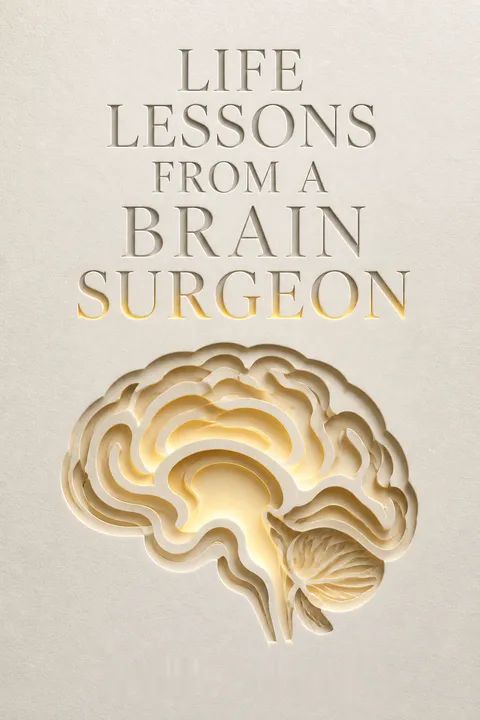


Key Takeaways
Make brain health a lifelong practice, not a fixed inheritance
The central claim. The book begins with a brain surgeon removing a tumor from a young woman. Her hand weakness disappears, showing both how delicately brain function depends on tissue and how much can improve when the cause is treated. Jandial calls the broader aim neurofitness: keeping the brain engaged and capable through learning, health habits, and recovery practice, rather than treating mental ability as permanently set at birth.
Hope with limits. The brain contains an extraordinary network of neurons, but its complexity does not license miracle claims. Some disorders need surgery or medication, and science still cannot explain every successful treatment. The practical message is to build habits that support the brain while seeking qualified care for serious symptoms.
The book's most useful promise is agency without magical thinking. That distinction matters because health advice often swings between fatalism and the claim that discipline can prevent every illness. Brain function is shaped by biology, experience, and circumstance, but those influences are not equally controllable. Neurofitness is strongest as a direction for daily choices, not a guarantee of immunity. The surgical opening grounds that idea in vulnerability: a small lesion can disrupt a life, and skilled treatment can restore function.
Pair testable knowledge with judgment, persistence, and deliberate practice
Scores are not judgment. Jandial recalls a brilliant medical trainee who excelled on exams but struggled to manage emergencies and recognize when to ask for help. Neurosurgery demands prioritization and composure, not just recall. Intelligence helps, but success also draws on social awareness, persistence, and the ability to apply knowledge under pressure.
Practice has boundaries. The book describes a student who learned to remember long strings of numbers through months of focused practice, but did not gain a general-purpose super-memory. Practice improves the skill being practiced; it does not make every person equally gifted at every task. Jandial rejects both the idea that talent is everything and the simplistic promise that a fixed number of practice hours guarantees excellence.
This is a strong corrective to single-number definitions of ability. Tests can measure some forms of knowledge reliably while missing judgment, coordination, or emotional regulation. The distinction resembles the difference between knowing rules and performing well in a changing environment. Still, broad labels such as grit can obscure unequal access to time, coaching, and opportunity. Persistence matters, but it is not a substitute for resources or a reason to blame people when effort does not produce the same result.
Recall by categories, then test yourself instead of rereading
Search in clusters. Memory is not a single drawer where each fact waits untouched. When asked to name animals, people often search one category, such as pets, before moving to farm or wild animals. The book compares this to area-restricted search: organisms, including bacteria and pigeons, concentrate on a nearby patch of food before searching elsewhere. Deliberately generating categories can make recall more productive.
Test, do not just review. Psychologists Roediger and Karpicke found that repeatedly testing yourself after an initial review improves later retention more than repeatedly rereading the same material. The useful move is to try retrieving facts before checking the source. A blank spot is not proof of failure; it identifies what needs another round of learning.
Retrieval practice turns studying from exposure into a small performance, revealing whether knowledge is accessible without cues. This is useful in classrooms and daily life because confidence from rereading can be mistaken for mastery. Category-based recall adds a second tool: it gives the mind a search plan instead of demanding an unstructured list. The method is not universal, however. Some material is best learned through practice, demonstration, or feedback, so recall should complement rather than replace those forms of learning.
Creativity needs coordinated brain networks and room for wandering
No creative hemisphere. A tumor pressing on both frontal lobes gradually stripped a television producer named William of motivation and emotional expression. After surgery, his personality and independence began to return. The case illustrates how creativity depends on brain function, especially frontal systems, but not on one isolated “creative” spot. Research described in the book also links creative problem-solving with communication among distant brain regions, including the cerebellum.
Alternate focus and release. Jandial recommends building knowledge, then allowing space for ideas to combine: mind-wandering, playful activity, time outdoors, and thinking about a problem near sleep. These practices are not guaranteed creativity switches. They create conditions for new connections while preserving the focused work needed to understand a problem.
Creativity often requires two modes that are treated as opposites: sustained attention and loose association. The first supplies raw material; the second recombines it. William's tumor story makes the biological point vivid without reducing creativity to anatomy alone. A useful caution is that daydreaming is not automatically productive. Wandering becomes valuable when it has something to wander from, such as a question, a skill, or a body of knowledge already built through effort.
Protect sleep: your brain learns, edits, and clears while you rest
Sleep is active work. The book describes sleep as a period when the brain strengthens some memories, discards others, and clears cellular waste. In one puzzle experiment, people who slept after working on a problem were three times as likely to solve it as people who simply returned to it later without sleeping. Sleep also improves performance on learned physical skills.
Regularity beats hacks. Adults are generally advised to get seven to nine hours, though needs vary. Jandial recommends limiting bright light at night, getting daylight, and keeping a steadier sleep schedule. He warns that alcohol, over-the-counter antihistamines, and popular sleep supplements are not reliable cures for chronic insomnia. Cognitive behavioral therapy for insomnia is presented as a better-supported option.
Sleep is not merely time removed from productivity. It is part of how learning becomes usable, which makes an extra hour of studying a poor bargain when it erodes sleep. The memory-and-cleanup account is compelling, but some mechanisms remain under investigation and should not be treated as fully settled. The practical case is still clear: protect sufficient, regular sleep, and seek evidence-based help when insomnia persists instead of escalating self-medication.
Slow your breathing to influence arousal, but do not self-treat disease
Breathing changes brain state. Fourteen-year-old JT had repeated episodes of weakness during panic attacks. Doctors found moyamoya, a disease that had left him dependent on fragile blood vessels. Hyperventilation lowers carbon dioxide in the blood, which can narrow small brain vessels; in JT, that threatened already limited blood flow. Learning to slow his breathing helped prevent episodes for a time, though he later needed surgery to improve circulation.
Practice gently. Jandial describes mindful breathing as deliberately attending to a slower breath, sometimes using equal counts for inhaling, holding, exhaling, and pausing. Research in the book links this practice with changes in brain activity involved in attention and emotion. JT's rare condition is not a general model for treating weakness or panic. Sudden neurological symptoms require medical assessment.
Breathing is unusually accessible because it is both automatic and partly voluntary. That makes it a practical way to alter attention and bodily arousal without equipment. The case also shows why biological context matters: a breathing pattern that helped one patient avoid a particular trigger was not a cure for his vascular disease. Mindful breathing can support self-regulation, but it should not be used to explain away new weakness, fainting, or other potentially urgent symptoms.
After concussion, prevent a second hit and resume activity gradually
Symptoms define concussion. A concussion does not require a cut, an abnormal scan, or loss of consciousness. The key sign is a change in mental functioning after a blow, such as confusion, nausea, dizziness, headache, or impaired coordination. The book notes that most people recover from one concussion, while another injury before recovery raises concern about longer-term harm.
Rest, but do not cocoon. Jandial challenges strict isolation in a dark room, citing a study in which young people assigned to complete rest reported more symptoms than those told to take it easy. The recommended middle ground is medical assessment, avoiding activities that risk another blow, and gradually returning to ordinary mental and physical activity. Evidence of CTE in donated brains should not be read as proof that every contact-sport player develops it.
The advice resists two common errors: dismissing symptoms because scans look normal, and treating every concussion as permanent brain damage. Both can interfere with sensible recovery. The focus on avoiding repeat injury is especially important because return-to-play decisions involve more than toughness or a calendar. Risks differ by person, sport, and injury history, so general guidance cannot replace clinical evaluation. Clear rules are helpful, but so is resisting headlines that turn a real risk into certainty.
Train the brain's adaptability, while respecting what recovery cannot promise
The brain can reorganize. Jennifer had severe epilepsy across one hemisphere, and medication could not control it. Surgeons removed the affected half of her brain. At first she could not move the opposite side of her body; over the following years, she regained the ability to walk and play soccer. Her recovery illustrates neuroplasticity, the brain's capacity to reorganize function, especially during development.
Adaptation takes work. Rehabilitation helps surviving brain networks take on new roles, but plasticity is not limitless and outcomes vary. Jandial suggests activities that challenge familiar routines, including using the nondominant hand, learning a language, or navigating without immediately relying on a phone. These are modest exercises, not a promise to prevent disease or reproduce the recovery of a child who underwent major surgery.
Plasticity changes the meaning of injury: a damaged region does not always dictate a fixed future, because function can be redistributed. Yet the story should not become a demand that every patient recover through sufficient effort. Age, lesion location, severity, and access to rehabilitation shape what is possible. Everyday novelty may be worthwhile as cognitive engagement, but it is not equivalent to clinical rehabilitation. Hope is most useful when paired with respect for individual limits.
Treat smart drugs as trade-offs, not shortcuts to intelligence
Alertness is not intelligence. Caffeine can reduce fatigue and improve attention, but studies described in the book find its effects on memory less consistent. Prescription stimulants may keep people awake and focused longer, yet research cited by Jandial did not show that they make healthy users smarter. Their side effects and addiction risks matter. Modafinil may help some cognitive tasks, but it is a prescription medicine, not a casual productivity tool.
Be skeptical of supplements. The book finds no convincing evidence that many marketed “brain” supplements improve cognition, and warns that labels may not reliably describe ingredients or doses. Alcohol can impair judgment and cause severe harm despite limited findings about creative problem-solving. The practical principle is to distinguish a feeling of energy from a demonstrated improvement in learning or performance.
The chapter's best question is not whether a substance produces a noticeable effect, but whether it improves the ability that matters without unacceptable risk. Expectation can alter perceived performance, making a stimulant feel cognitively powerful even when test results do not improve. This distinction is useful well beyond drugs: subjective confidence is not a reliable measure of skill. Because individual responses and medical histories differ, population-level findings cannot safely justify self-prescribing.
Demand evidence and medical supervision from brain treatments
Powerful tools need precision. Deep brain stimulation uses implanted electrodes to alter electrical activity and can help severe conditions, but targeting is delicate and side effects can occur. Raymond's obsessive use of eye drops eased after electrode placement, while uncontrollable crying required the surgeons to adjust the device. Electroconvulsive therapy, despite its cruel historical image, can be effective for severe depression that has not responded to other treatments, though memory effects require discussion.
Promise is not proof. A small stem-cell cancer trial showed that modified cells reached tumors and delivered a drug, but all participants died. That was progress in safety and delivery, not a cure. Jandial warns against unproven clinics selling stem cells as universal remedies and encourages patients to ask university medical centers about properly run clinical trials.
These examples show that “advanced” and “effective” are separate claims. A treatment can be promising because it is biologically plausible, safe in an early study, or helpful for a narrow group, without being ready for general use. The book also restores context to stigmatized care such as ECT, where historical abuses can overshadow current evidence. The reader's best protection is not cynicism, but asking what has been tested, in whom, and with what outcomes.
Treat the twenties as brain development, not finished adulthood
Maturity is uneven. The brain does not finish developing all at once. The prefrontal cortex, involved in planning and judgment, continues to mature into the twenties, with some people showing later development. Jandial connects this finding to his own meandering path through college: he left school, worked as a security guard, volunteered in a trauma center, and eventually found a direction in medicine.
Support without overcontrol. For young people, he argues for safety, enough sleep, emotional warmth, varied experiences, and room for manageable risk and unstructured play. Phones are not inherently harmful, but their presence can pull attention away. Continued parental connection matters, too. A developing brain may need guidance, but late maturation is not an excuse to treat every young adult as incapable.
The developmental account gives parents a useful alternative to moralizing: some poor decisions reflect an unfinished capacity for planning, not simply a defective character. At the same time, brain maturity is not a universal age-based switch. Young adults differ, and social conditions can either support or constrain their choices. The best implication is calibrated responsibility: provide meaningful autonomy, maintain relationships, and structure environments so that foreseeable risks do not become irreversible harm.
Protect blood pressure, movement, and social ties to support later cognition
Aging is not one decline. Episodic memory and working memory often weaken with age, while general knowledge can remain stable and emotional well-being may improve. Jandial describes a ninety-one-year-old former physician who recovered after surgery for a brain bleed and remained mentally sharp. His case shows why visible brain shrinkage does not automatically mean loss of the person or their abilities.
Protect the conditions around the brain. The book links healthy aging with education and cognitive reserve, social connection, physical activity, and cardiovascular health. It highlights resistance exercise and tai chi, along with a MIND-style eating pattern emphasizing vegetables, fruit, nuts, fish, and less red meat and saturated fat. Blood pressure and diabetes matter because vascular and metabolic problems can damage brain health. None of these habits guarantees protection from dementia.
This is a systems view of aging: cognition depends not only on neurons, but also on circulation, sensory input, movement, and social opportunity. That broad lens is valuable because it points toward several modifiable supports rather than a single “brain booster.” It also demands caution with diet and exercise claims. Associations do not establish that one specific routine prevents dementia, and health advice must fit a person's medical needs, resources, and preferences. Sustainable patterns are more credible than miracle regimens.
Analysis
This book is a guided tour of neuroscience organized around clinical stories, practical advice, and myth correction. Its organizing contrast is between the brain as a fragile organ and the brain as an adaptive one. Tumors, hemorrhages, seizures, and injuries reveal how sharply function can depend on physical tissue; recovery, rehabilitation, and treatment reveal that a damaged brain is not always a permanently diminished mind. The stories make unfamiliar mechanisms memorable because each has consequences for a recognizable person.
The strongest intellectual contribution is its insistence on distinguishing evidence from a plausible-sounding story. Dopamine is not merely pleasure, the gut is not literally a second brain, and a marketed cognitive enhancer does not become effective because users feel more alert. This skepticism is paired with genuine openness to new tools, including stimulation, cell therapy, and brain-machine interfaces. Early results are treated as steps in research, not as established cures.
The practical material is most persuasive when evidence and action align closely: self-testing rather than passive rereading, adequate sleep, mindful breathing as a way to regulate attention, and medical evaluation for neurological symptoms. Other recommendations, especially around fasting, supplements, and cognitive training, require more caution than a brisk popular account can provide. Evidence strength varies, and findings from small or selected studies do not automatically generalize.
The book was published in 2019, so its discussion of emerging studies should be read as a snapshot, not a current clinical guide. Its deeper lesson holds up better than any single recommendation: neuroscience is powerful precisely because it admits uncertainty, tests claims, and revises its maps. Readers gain most by borrowing that method, not by treating every promising result as a personal prescription. Neurofitness is therefore best understood as informed participation in brain health, with habits, professional care, and realistic expectations working together.
Review Summary
Life Lessons from a Brain Surgeon receives mixed reviews. Many readers find it informative and accessible, praising Jandial's writing style and the balance of scientific content with personal anecdotes. The book covers various brain-related topics, from basic anatomy to practical advice for brain health. Some readers appreciate the debunking of myths and the "Neuro Gym" sections. However, others criticize it for being too superficial or containing questionable recommendations. Overall, it's seen as a good introduction to neuroscience for non-experts, though some find it lacks depth or novelty.
People Also Read



Glossary
Neurofitness
habits that support brain healthJandial's term for the ongoing effort to keep the brain engaged and resilient through learning, healthy routines, social participation, and recovery practice. It applies to people who are healthy as well as those recovering from illness or injury. It is a guiding goal, not a guarantee against neurological disease or decline.
Area-restricted search
searching one category thoroughlyA memory and foraging strategy in which a person or animal explores a promising local category before moving elsewhere. The book compares human recall to bacteria and pigeons that keep searching around a food source, then move on when it is exhausted. For memory, generating categories first can help retrieve more items.
MIND diet
eating pattern for brain healthAn eating plan whose name abbreviates Mediterranean-DASH Intervention for Neurodegenerative Delay. It emphasizes vegetables, fruit, nuts, fish, and chicken while limiting red meat, saturated fats, and sweets. The book presents research associating stronger adherence with reduced cognitive decline and Alzheimer disease risk, while describing the diet as a practical guideline rather than a rigid prescription.
Neuroplasticity
the brain's capacity to reorganizeThe brain's ability to alter connections and redistribute some functions in response to development, experience, or injury. Jandial illustrates it with patients who regain abilities through rehabilitation and with children who adapt after a hemispherectomy. Plasticity has limits: recovery differs across people, and not every lost function can be restored.
Cognitive reserve
capacity to withstand brain changesA proposed buffer that helps explain why people with similar brain changes can show different levels of cognitive ability. Education and sustained mental engagement are presented as contributors to reserve: a person with more capacity may tolerate more loss before everyday difficulties become obvious. It lowers neither every risk nor guarantees protection from dementia.
HAROLD
more balanced hemispheric activationAn acronym for hemispheric asymmetry reduction in older adults. It describes the tendency for older adults to show more similar activation in the left and right prefrontal cortex during certain memory or perception tasks, compared with the stronger side-to-side differences often seen in younger adults. The book interprets this as possible recruitment of additional brain resources.
Deep brain stimulation
implanted electrical brain treatmentA treatment in which electrodes are placed in specific deep brain regions and connected to a battery-powered generator. The electrical signals can reduce symptoms in conditions such as Parkinson's disease and, in selected severe cases, obsessive-compulsive disorder. The exact mechanism is not fully understood, placement requires precision, and stimulation can produce unwanted effects.
Speed-of-processing training
practice detecting brief visual targetsA computerized cognitive exercise described in the ACTIVE study. Participants keep their eyes on a central target while identifying brief symbols appearing in peripheral vision; the task becomes faster as performance improves. The book reports that older adults receiving this training had fewer car accidents and that the highest-training participants showed lower dementia risk in follow-up.
FAQ
What's Life Lessons from a Brain Surgeon about?
- Exploration of the Brain: The book delves into the complexities of the human brain, discussing its anatomy, functions, and the latest scientific discoveries.
- Practical Advice: It offers strategies for enhancing cognitive performance and overall brain health, emphasizing lifestyle choices like diet and sleep.
- Debunking Myths: Dr. Jandial separates fact from fiction regarding popular beliefs about the brain, providing evidence-based explanations.
Why should I read Life Lessons from a Brain Surgeon?
- Unique Perspective: Dr. Jandial combines medical expertise with storytelling, making neuroscience accessible to a general audience.
- Empowerment Through Knowledge: The book empowers readers to take charge of their brain health with actionable advice based on scientific research.
- Inspiring Patient Stories: It shares stories of patients overcoming challenges, showcasing the brain's capacity for recovery and adaptation.
What are the key takeaways of Life Lessons from a Brain Surgeon?
- Brain Health is Multifaceted: Maintaining brain health involves diet, sleep, exercise, and mental stimulation.
- Myths vs. Reality: Dr. Jandial debunks myths like the "10% brain usage" myth, stressing the brain's true capabilities.
- Neurofitness Concept: Introduces strategies for enhancing cognitive function and emotional resilience, viewing brain health as an ongoing journey.
What are the best quotes from Life Lessons from a Brain Surgeon and what do they mean?
- "The wonders of the brain require no exaggeration.": Highlights the brain's incredible complexity and capabilities.
- "Knowledge is a moving target.": Emphasizes the evolving understanding of the brain and the importance of staying informed.
- "Every brain can make a comeback.": Reflects the resilience of the human brain and its potential for recovery.
How does Life Lessons from a Brain Surgeon address brain injuries?
- Understanding Traumatic Brain Injuries: Provides an overview of different types of brain injuries and their potential consequences.
- Patient Stories: Illustrates the impact of brain injuries through real-life narratives, highlighting the importance of medical intervention.
- Recovery Strategies: Discusses strategies for recovery, emphasizing the brain's ability to adapt and recover over time.
What role does diet play in brain health according to Life Lessons from a Brain Surgeon?
- Nutritional Impact: Diet significantly influences brain function and health, with a focus on balanced nutrition.
- MIND Diet: Combines elements of the Mediterranean and DASH diets to promote brain health and reduce cognitive decline.
- Practical Dietary Tips: Encourages incorporating brain-beneficial foods like leafy greens, berries, and healthy fats.
How does intermittent fasting improve brain health according to Life Lessons from a Brain Surgeon?
- Metabolic Switching: Encourages the body to switch from burning glucose to fat, benefiting brain function.
- Increased Growth Factors: Boosts production of brain-derived neurotrophic factor (BDNF), supporting neuron survival and growth.
- Enhanced Cognition: Personal experience suggests it helps maintain focus and alertness.
What is the significance of sleep according to Life Lessons from a Brain Surgeon?
- Essential for Recovery: Sleep is crucial for memory consolidation and waste removal, affecting cognitive function.
- Sleep and Brain Function: Affects emotional regulation and decision-making, with deprivation leading to health consequences.
- Recommendations for Better Sleep: Offers tips for improving sleep quality, emphasizing its importance for brain health.
What is the MIND diet mentioned in Life Lessons from a Brain Surgeon?
- Combination of Diets: Merges Mediterranean and DASH diets, focusing on foods that promote brain health.
- Research-Backed Benefits: Adherence can reduce the risk of Alzheimer's and cognitive decline.
- Practical Application: Provides tips for incorporating the MIND diet into daily life, prioritizing fresh foods.
How does Life Lessons from a Brain Surgeon suggest enhancing creativity?
- Mindfulness and Breathing: Emphasizes these practices as tools for enhancing creativity and calming the mind.
- Play and Exploration: Advocates for unstructured exploration to nurture creativity.
- Diverse Experiences: Suggests exposure to diverse experiences to stimulate creative thinking.
What practical strategies does Life Lessons from a Brain Surgeon offer for maintaining brain health?
- Regular Exercise: Promotes blood flow and supports cognitive function.
- Cognitive Engagement: Engaging in mentally stimulating activities helps build cognitive reserve.
- Social Connections: Emphasizes the role of social interactions in maintaining brain health.
What insights does Life Lessons from a Brain Surgeon provide about the aging brain?
- Cognitive Changes: Discusses how memory types are affected by aging.
- Emotional Stability: Highlights greater emotional well-being in older adults.
- Neuroprotection Strategies: Offers strategies for maintaining cognitive health, like social engagement and physical activity.
Download PDF
Download EPUB
.epub digital book format is ideal for reading ebooks on phones, tablets, and e-readers.








