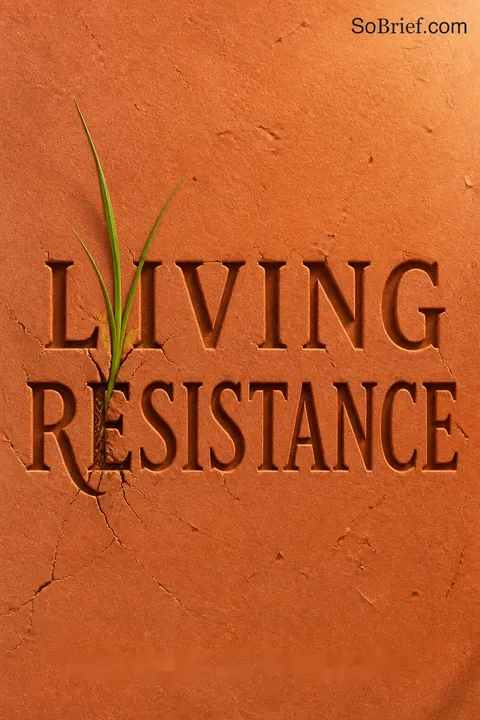


Key Takeaways
Resist what harms life by practicing the loving alternative every day.
Resistance builds toward something. Curtice defines resistance as using everyday life to push against harmful norms while choosing a more loving, just way to live. It is not only protest or opposition. Caring for a child, questioning a belief, making art, or protecting land can all carry resistance into ordinary routines, as long as they challenge harm and open space for another possibility.
Four connected realms. The book organizes this work into personal, communal, ancestral, and integral realms. The personal involves inner life; the communal, relationships and shared systems; the ancestral, history and future generations; and the integral, bringing those dimensions together. The realms overlap and recur rather than forming a ladder. Curtice links them to seasons, suggesting that rest, planting, growth, and harvest all belong in a life of change.
The framework’s strength is that it refuses to split private healing from public responsibility. A person’s habits of attention can shape relationships, while communities and institutions determine whose lives receive care. The seasonal image also counters the expectation that meaningful change must look like constant activity. One useful caution follows from the same idea: everyday practices matter, but they cannot substitute for collective action against institutional harm. The framework is most persuasive when small acts are treated as part of resistance, not as proof that the larger work is finished.
Question inherited beliefs before mistaking certainty for safety.
Curiosity begins the work. Curtice argues that resistance starts with questions, especially when a family, faith community, or institution has taught people not to ask them. Deconstruction is the process of examining inherited beliefs and stories, including what they conceal and whom they exclude. Curtice describes how literature and social work classes unsettled the evangelical worldview she grew up with. The questions were painful, but they made room for a fuller understanding of herself and the Sacred.
Stories can change. Examining a personal story means noticing how it has evolved, not forcing it into a tidy conclusion. For people whose identities or bodies have been shamed, questioning may help reveal that the problem lies in exclusionary systems, not in their existence. The journey can lead away from an institution, toward a changed relationship with it, or into uncertainty.
Questioning is more than an intellectual exercise here. It can restore a person’s authority to interpret their own experience, particularly when institutions have claimed exclusive authority over truth. The account also avoids treating deconstruction as a simple escape from belief: uncertainty can be a difficult, meaningful space rather than evidence of failure. Still, questioning alone does not tell someone what to build next. Its value depends on whether it leads to fuller accountability, safer relationships, and a more honest story about who has been harmed.
Create and pay attention to keep human complexity visible.
Art gives experience a voice. During the early months of COVID-19, Curtice found comfort in musicians, poets, and artists sharing work online. Art helped people express grief and connection when daily life felt frightening and isolated. Television shows created by Indigenous writers and performers also offered representation that challenged the narrow stories often told about Indigenous lives. Art can connect audiences to experiences they might otherwise overlook, though its symbols can lose meaning when detached from their histories.
Attention makes relationship tangible. Curtice describes tending to a thirsty begonia and noticing a simple lunch without scrolling. These small pauses helped her notice dependence on plants, water, sunlight, food, and other beings. Ritual can give that attention a shape. In one grief ritual, she wrote down what she had lost and what had entered her life, allowing sorrow and gratitude to coexist.
Art and attention work together as practices of perception. Art can make ignored experience legible; deliberate attention helps prevent that experience from becoming a distant image consumed and forgotten. This is a distinctive account of creativity: art matters not only as expression, but as a way to revise whose stories count. There is also a practical limit. Representation alone cannot ensure justice, and symbols can be commercialized or emptied of context. The deeper test is whether art changes how audiences listen, relate, and make room for people beyond the frame.
Honor your body with boundaries, rest, and room to feel.
The body carries information. Curtice distinguishes presence, noticing what is happening, from embodiment, learning to live with what that noticing reveals. Anxiety, grief, and trauma can show up physically. On a river outing, fear kept her on a rock while her family played; after her partner helped her into a kayak, she followed the current around a small island. The experience did not erase anxiety, but it let her recognize both fear and capacity in her body.
Self-love has limits. Curtice separates radical self-love from consumer versions of self-care. It includes rest, honest boundaries, and attention to what a person can actually manage. She changed how she used social media after noticing its effects on her stress. These practices are not measures of worth, nor should strength be defined by able-bodied standards. The point is to respect the body’s needs without turning care into another demand for performance.
This account treats the body as a source of knowledge rather than an obstacle to overcome. That framing can help people notice stress before it becomes harder to manage, and it gives boundaries a relational purpose: they protect a person’s capacity to participate without pretending to be limitless. The kayak story is careful not to present fear as something conquered once and for all. That matters. Embodiment must remain flexible and accessible, since a challenge that feels empowering to one person may be unsafe or unwanted for another.
Care for children by listening to them and defending their belonging.
Care extends beyond parenting. Curtice sees childcare as a shared responsibility because children need safety, dignity, and support throughout their communities. She connects care for her own children with re-parenting her younger self, and argues that adults should listen to children rather than treating them as problems to control. Telling children the truth about injustice matters, but so does allowing them room to play, imagine, and be children.
Systems shape childhood. Curtice points to the forced removal of Indigenous children to residential schools and to the continuing importance of the Indian Child Welfare Act. The law supports family reunification, tribal participation in cases, and placement preferences that help Native children remain connected to their families and communities. She also criticizes policies that erase queer and trans students. Protecting children means changing systems that endanger or exclude them, not merely offering private kindness.
The argument makes care political without reducing children to symbols of a better future. Their present dignity matters in itself, and institutions shape whether families can protect it. The discussion of Indigenous child welfare makes clear that good intentions are not enough when systems separate children from culture and kin. A further distinction is useful: listening to children does not require placing adult burdens on them. Respect means taking their perspectives seriously while adults retain responsibility for safety, resources, and structural change.
Build solidarity through reciprocal responsibility, not performative sameness.
Solidarity means showing up. Curtice recounts joining a community gathering after a white supremacist burned a mosque in Joplin, Missouri. People shared food, music, words, and practical support while the Muslim community faced the attack. The gathering mattered not because participants had identical beliefs, but because they recognized the harm and refused to leave their neighbors alone. Solidarity requires listening to different stories and accepting responsibilities within a relationship.
Practice matters as much as intention. Curtice asks readers to examine cultural appropriation, such as wellness spaces using yoga without honoring its roots or centering South Asian teachers. She also describes ableist religious spaces that exclude disabled and immunocompromised people, including pressure to return to in-person gatherings during the pandemic. Ethical resistance means asking whose voices lead, whose bodies are accommodated, and who bears the cost when a space claims to welcome everyone.
This account distinguishes solidarity from affinity: people need not share an identity to act responsibly toward one another. It also shifts attention from declarations of support to the design of spaces, the distribution of authority, and the practical consequences of exclusion. That shift is valuable because institutions can praise inclusion while leaving access unchanged. Reciprocal responsibility does not mean every person has the same role or expertise. It means those with more power must listen, accept correction, and contribute to changing the conditions that produce harm.
Protect land by treating it as kin, not as a commodity.
Relationship changes the task. Curtice argues that land protection is not solely Indigenous people’s responsibility. Everyone depends on Earth, even when dominant habits describe land as property or raw material. She invites readers to begin by learning whose land they live on and by reconsidering the histories that shaped their relationship to it. The Doctrine of Discovery, a religious and legal framework used to justify Christian claims over Indigenous lands, is one example of how conquest was made to seem legitimate.
Care has material consequences. Curtice connects climate damage to colonial extraction and the devaluation of Indigenous knowledge, including knowledge of farming and biodiversity. She points to Indigenous-led resistance to pipelines and to farmers defending seeds and land from corporate control. A simple practice such as writing a letter to Mother Earth can help make the relationship felt, but it must accompany learning, community support, and action to protect land and water.
The kinship frame asks a different question from conventional resource management. Instead of asking only how land can serve people, it asks what obligations arise from living in relationship with it. That shift can make ecological care less abstract and more locally grounded. It also challenges environmental efforts that use the language of protection while sidelining Indigenous leadership. Personal rituals may deepen commitment, but they have limited force without changes to policy, ownership, and extraction. The book’s strongest ecological claim is that relationship and structural action belong together.
Decolonize by telling the truth and centering Indigenous leadership.
Unlearning must change practice. Curtice describes decolonization as examining and dismantling colonial assumptions, while valuing and revitalizing Indigenous knowledge and ways of being. She warns against treating the term as a fashionable label or claiming to teach it without learning from Indigenous people. She distinguishes it from indigenization, which places Indigenous leadership and knowledge at the center of decisions about a shared future.
History requires active repair. Curtice encourages readers to examine whose stories dominate public memory. For Thanksgiving, she recommends correcting myths, supporting Indigenous foodways and creators, and making commitments to learn throughout the year rather than concentrating attention in November. She also emphasizes that facing history means looking honestly at ancestors and institutions, including the church, without reducing people to heroes or villains. Truth-telling can make accountability and repair possible.
The distinction between decolonization and indigenization keeps attention from stopping at critique. Identifying colonial assumptions is necessary, but the question of who gains authority afterward is equally important. The emphasis on sustained learning also resists the seasonal performance of awareness that leaves everyday institutions unchanged. This work is not a checklist that certifies innocence. Its credibility rests on durable shifts in whose knowledge is trusted, how decisions are made, and whether affected communities gain real influence over the conditions shaping their lives.
Give generously without surrendering yourself to fear or obligation.
Generosity is not self-erasure. Curtice describes it as offering time, energy, or resources in a way that expresses a person’s gifts, without collapsing into codependence or the pressure to say yes to everything. At a Tibetan Buddhist monks’ event, children received sand from a mandala and were invited to use it in blessings. Curtice’s young son later sprinkled some over her head. The act showed how a gift can travel beyond the ceremony and shape everyday care.
Scarcity can be unlearned. Curtice contrasts fear-based religious teaching, which made her feel responsible for saving others, with a more generous sense of belonging. She also points to the Kwakwaka’wakw potlatch tradition, in which giving is a mark of responsibility and standing. Generosity can shift how power is understood: having more may mean having more to share, rather than a reason to hoard or dominate.
The distinction between generosity and self-sacrifice is crucial, especially in cultures that praise giving while ignoring who is expected to do it. Here, generosity is a chosen practice rather than an unpaid obligation imposed on people with fewer resources or less power. The example of the sand makes the idea memorable because the gift becomes a repeatable act, not a one-time display. A careful application also asks whether giving changes the conditions of scarcity or merely offers comfort within them.
Carry healing between ancestors, present life, and future generations.
The past is active. Curtice describes intergenerational trauma as harm whose emotional and behavioral effects can reach descendants, citing Indigenous boarding schools and the Holocaust as examples. She pairs this with intergenerational resilience, the strength built through renewed connection, shared stories, work on the land, and cultural practices. The Potawatomi teaching of the Seven Generations holds that choices affect generations before and after the present. Healing, in this view, is not only private repair; it can change what is passed along.
In-between lives count. Curtice uses liminality to describe the experience of crossing boundaries and living among identities or beliefs that do not fit simple categories. Rather than treating such complexity as a defect, she sees it as a place to listen and learn. Reclaiming Potawatomi language with her children offers one concrete connection between ancestors, present life, and descendants.
This perspective expands the timescale of care. A person’s work can honor ancestors without idealizing them, while choices made now can affect the conditions future generations inherit. The emphasis on language and land makes healing concrete rather than purely symbolic. Liminality adds another important dimension: people may belong across categories without needing to resolve every tension. Such openness can foster curiosity, but it should not obscure unequal power. Not everyone enters an in-between space by choice, and the burdens of navigating it are not evenly distributed.
Keep resistance lifelong, integrating prayer, dreams, and changing capacity.
There is no final arrival. Curtice describes resistance as a lifelong practice that must adapt to a person’s energy and circumstances. During pandemic exhaustion, resistance could mean resting, caring for children, taking a walk, or writing again when ready. Her integral realm brings personal, communal, and ancestral work together, without requiring a person to be equally active in every area at once.
Spiritual practice can change shape. Curtice moves beyond fixed rules for prayer, finding it in language, daily chores, quiet attention, and conversation with the Sacred. Dreaming helps people imagine a world different from the one they inherited. The practical questions are: What better world is worth seeking? What steps might help create it? Where can a person contribute now? Resistance includes action, rest, and the courage to begin again.
The ending resists two familiar traps: treating activism as endless exertion and treating spirituality as retreat from public responsibility. Instead, it presents capacity as variable and commitment as durable. That is a humane account of sustained change, especially when grief or exhaustion narrows what a person can do. Adaptability should not become an excuse for abandoning collective obligations, however. The useful distinction is between changing the pace and changing the purpose. A long movement needs room for rest, but it also needs shared structures that keep responsibility from falling on the same people.
Analysis
Living Resistance is an Indigenous spiritual and social ethic organized around relationship. Its central question is not simply what a person opposes, but what forms of life their choices help make possible. The four realms offer a memorable map for moving between inner healing, communal responsibility, ancestral memory, and integrated practice. Their seasonal quality matters: it makes space for unevenness, repetition, and rest instead of demanding a straight line from awareness to action.
The book’s most productive tension is between intimate practice and structural change. A song, a boundary, a prayer, or attention to a houseplant can restore connection and keep a person from becoming numb. None of these acts, alone, redistributes power or repairs an institution. Curtice generally keeps both scales in view, linking daily life to Indigenous sovereignty, accessibility, child welfare, ecological protection, and historical truth. The framework works best when personal practices sustain collective work rather than stand in for it.
The book also broadens the usual definition of political agency. Children, artists, disabled people, spiritual communities, and nonhuman relatives are not decorative additions to a human-centered movement. Their presence tests whether a vision of liberation is genuinely expansive. This relational approach has particular force because it asks readers to notice obligations, not merely feelings of connection. Kinship requires action, reciprocity, and boundaries; belonging does not excuse harm.
A further strength is its refusal to make transformation a finished identity. Readers may question a faith, recover an ancestral language, change their relationship to land, and still be uncertain. That uncertainty is not a programmatic weakness. It reflects the book’s claim that wholeness is practiced through continual revision. The adaptation’s key challenge is to retain this openness without making every small gesture appear equally consequential. The realms are a guide to sustained participation, not a scale on which symbolic acts can be mistaken for liberation achieved.
Review Summary
Living Resistance by Kaitlin B. Curtice receives overwhelmingly positive reviews, praised for its Indigenous vision of seeking wholeness and resisting oppression. Readers appreciate Curtice's gentle yet powerful approach to addressing internalized biases and promoting healing. The book is commended for its practical guidance, inclusive tone, and emphasis on connecting with oneself, others, and nature. While some find it less groundbreaking, many consider it a transformative read that encourages readers to embrace resistance as a basic human calling and provides a framework for creating a more equitable world.
People Also Read


Glossary
realms of resistance
Four overlapping areasCurtice’s organizing map for living resistance across personal, communal, ancestral, and integral dimensions. The personal concerns inner life, the communal concerns relationships and shared systems, the ancestral concerns history and generations, and the integral brings the other dimensions together. The realms overlap and recur rather than describing a fixed sequence of stages.
decolonization
Dismantling colonial assumptionsThe ongoing work of identifying and dismantling colonial beliefs, institutions, and practices, while valuing and revitalizing Indigenous knowledge and ways of being. For non-Indigenous people, it includes examining their assumptions about Indigenous peoples and understanding their relationship to the communities and lands where they live. It is a sustained practice, not a personal label or checklist.
indigenization
Centering Indigenous leadershipA practice of treating Indigenous leadership, knowledge, and approaches as necessary and valuable in shaping shared institutions and futures. Curtice distinguishes it from decolonization, which emphasizes recognizing and dismantling colonial structures. The two are related: meaningful change requires confronting colonial harm while giving Indigenous communities genuine influence over decisions affecting them.
kinship
Reciprocal relational responsibilityMore than affection or biological relation, kinship describes belonging that carries responsibilities toward people, other beings, and the Earth. Curtice draws on Indigenous perspectives in which relationships require recognition, respect, reciprocity, and renewal. Kinship does not require remaining connected to abusive people; boundaries can protect the possibility of safer relationships.
Seven Generations Prophecy
Responsibility across generationsAn Anishinaabe teaching that emphasizes choices affecting generations before and after the present. Curtice presents it as a way to consider what people inherit from ancestors and what they pass on to descendants. The teaching asks people to assess their actions in relation to cultural continuity, the Earth, and the lives of those who will come after them.
liminality
Life across boundariesThe experience of living through transitions or between categories, identities, beliefs, and communities. Curtice treats liminal space as a common part of human life, sometimes painful but also capable of revealing complexity that rigid categories conceal. It invites curiosity and listening, while acknowledging that people do not all enter such spaces by choice.
interspirituality
Relationship across spiritual traditionsA way of relating in which people from different spiritual backgrounds honor one another’s journeys and learn together. Curtice connects it to storytelling, humility, and shared efforts to address injustice. It is not the erasure of differences or the appropriation of another tradition, but an invitation to engage across traditions with respect and accountability.
intergenerational resilience
Strength renewed across generationsThe capacity to sustain and restore well-being across generations through practices such as caring for land, sharing stories, celebrating, and reconnecting with ancestral knowledge. Curtice presents it alongside intergenerational trauma, emphasizing that histories of harm can be met with cultural continuity and collective healing rather than being the only inheritance.
FAQ
1. What is "Living Resistance: An Indigenous Vision for Seeking Wholeness Every Day" by Kaitlin B. Curtice about?
- Indigenous Vision of Resistance: The book explores resistance as a living, daily practice rooted in Indigenous wisdom, focusing on seeking wholeness for individuals, communities, and the earth.
- Four Realms Framework: Curtice introduces a framework of four interconnected realms—Personal, Communal, Ancestral, and Integral—each representing different aspects and seasons of resistance.
- Integration of Story and Practice: Through storytelling, personal reflection, and practical commitments, the book guides readers to embody resistance in everyday life.
- Decolonization and Healing: It emphasizes decolonization, intergenerational healing, and the importance of reconnecting with land, ancestors, and community as acts of resistance.
2. Why should I read "Living Resistance" by Kaitlin B. Curtice?
- Holistic Approach to Activism: The book offers a unique, holistic approach to resistance that goes beyond protest, focusing on healing, self-love, and community care.
- Grounded in Indigenous Wisdom: Readers gain insight into Indigenous perspectives on wholeness, kinship, and the sacredness of all beings, which are often missing from mainstream activism.
- Practical and Reflective: Each chapter includes "Resistance Commitments"—practical exercises and questions to help readers apply the concepts to their own lives.
- Timely and Relevant: In an era of social upheaval and environmental crisis, Curtice’s vision provides a roadmap for sustainable, lifelong resistance and transformation.
3. What are the key takeaways from "Living Resistance" by Kaitlin B. Curtice?
- Resistance is Ongoing and Cyclical: True resistance is not a one-time act but a lifelong, cyclical process that involves continual learning, unlearning, and integration.
- Personal and Collective Healing: Healing oneself is inseparable from healing communities and the earth; self-care, boundaries, and radical self-love are foundational to effective resistance.
- Decolonization is Essential: Decolonizing our minds, practices, and institutions is central to seeking wholeness and justice, and must be led by Indigenous and marginalized voices.
- Storytelling as Power: Sharing and listening to stories—personal, ancestral, and communal—is a powerful tool for transformation and solidarity.
4. How does Kaitlin B. Curtice define "resistance" in "Living Resistance"?
- Everyday Acts Against the Status Quo: Resistance is using our daily lives to exert energy against oppressive systems and the dangerous status quo.
- Not Just Opposition: It’s not only about what we are against, but also about what we are choosing—love, justice, inclusion, and wholeness.
- Rooted in Curiosity and Questions: Resistance begins with curiosity, asking hard questions, and being willing to deconstruct and evolve.
- Embodied and Relational: True resistance is embodied in our actions, relationships, and the way we care for ourselves, others, and the earth.
5. What is the "Four Realms of Resistance" framework in "Living Resistance" and how does it work?
- Personal Realm (Red/Winter): Focuses on self-examination, rest, presence, embodiment, and radical self-love as foundational acts of resistance.
- Communal Realm (Brown/Spring): Emphasizes community care, ethical practices, solidarity, protecting the land, and kinship as resistance.
- Ancestral Realm (Blue/Summer): Involves decolonization, generosity, intergenerational healing, embracing liminality, and facing history.
- Integral Realm (Yellow/Autumn): The center where all realms overlap, focusing on integration, interspiritual relationships, prayer, dreaming, and lifelong resistance.
- Nonlinear and Overlapping: The realms are cyclical and interconnected; individuals move between them throughout their lives.
6. How does "Living Resistance" by Kaitlin B. Curtice connect Indigenous wisdom to everyday activism?
- Kinship and Belonging: The book draws on Indigenous teachings about kinship, belonging, and the sacredness of all beings, emphasizing interconnectedness.
- Land and Ancestors: It centers the relationship to land (Segmekwe/Mother Earth) and ancestors as essential to resistance and healing.
- Decolonizing Practices: Curtice encourages readers to decolonize their minds, rituals, and communities, honoring Indigenous knowledge and leadership.
- Cyclical Worldview: The framework and practices reflect Indigenous understandings of time, cycles, and seasons, rather than linear progress.
7. What practical advice and methods does Kaitlin B. Curtice offer for practicing resistance in daily life?
- Resistance Commitments: Each chapter ends with a practical exercise or reflection, such as creating rituals, writing letters to your body, or journaling to Mother Earth.
- Art and Storytelling: Engaging in art, poetry, and storytelling as forms of resistance and healing.
- Setting Boundaries: Practicing radical self-love and setting boundaries, especially around technology and social media.
- Community Engagement: Supporting marginalized voices, ethical practices (e.g., in yoga and wellness), and participating in solidarity work.
8. How does "Living Resistance" address decolonization and indigenization?
- Decolonization as Embodiment: Decolonization is presented as an ongoing, embodied process, not a checklist or trend.
- Truth-Telling and Unlearning: The book urges readers to tell the truth about history, unlearn colonial narratives, and support Indigenous-led movements.
- Indigenization: Beyond decolonization, indigenization centers Indigenous voices and leadership in creating new, just systems.
- Everyday Actions: Curtice provides concrete ways to decolonize holidays (like Thanksgiving), support Indigenous businesses, and learn about the land you inhabit.
9. What role do art, presence, and embodiment play in resistance according to "Living Resistance"?
- Art as Healing and Protest: Art is a nonviolent form of protest, a way to process grief, express complexity, and connect with others.
- Presence as Mindful Resistance: Practicing presence—being mindful and attentive to oneself, others, and the land—is a form of resistance against distraction and disconnection.
- Embodiment as Reclamation: Embodiment involves reclaiming the body from trauma, colonization, and shame, and honoring all bodies as sacred.
- Ritual and Rest: Rituals, rest, and honoring cycles are emphasized as necessary for sustainable resistance.
10. How does "Living Resistance" by Kaitlin B. Curtice approach intergenerational healing and facing history?
- Acknowledging Intergenerational Trauma: The book discusses how trauma is passed down and the importance of naming and healing it.
- Intergenerational Resilience: Focuses on building resilience by reconnecting with land, language, and ancestral practices.
- Facing History Honestly: Encourages truth-telling about personal, communal, and national histories, and unlearning harmful narratives.
- Becoming Good Ancestors: Readers are invited to consider the legacy they will leave and to act with future generations in mind.
11. What are some of the best quotes from "Living Resistance" and what do they mean?
- "You are a human being. You are always arriving." – Reminds readers that growth and transformation are ongoing, and it’s okay to be in process.
- "Resistance is not a fad; it is a lifelong embodiment." – Emphasizes that resistance is a sustained, daily practice, not a trend or temporary action.
- "Our inner work is connected to our outer work, so resistance requires great care for ourselves to feel connected and whole." – Highlights the inseparability of self-care and activism.
- "Decolonization doesn’t mean we go back to the beginning, but it means we fix what is broken now, for future generations." – Stresses the importance of present action for future healing.
12. What is the ultimate vision and message of "Living Resistance: An Indigenous Vision for Seeking Wholeness Every Day"?
- Wholeness Through Resistance: The book’s vision is for individuals and communities to seek wholeness by embodying resistance in all aspects of life.
- Liberation as Birthright and Duty: Liberation is both a sacred birthright and a responsibility, requiring ongoing effort and solidarity.
- Integration and Lifelong Journey: True resistance is about integrating personal, communal, and ancestral healing, and committing to a lifelong journey of transformation.
- Hope and Collective Action: Curtice calls readers to hope, dream, and act together for a more just, compassionate, and liberated world.
Download PDF
Download EPUB
.epub digital book format is ideal for reading ebooks on phones, tablets, and e-readers.








