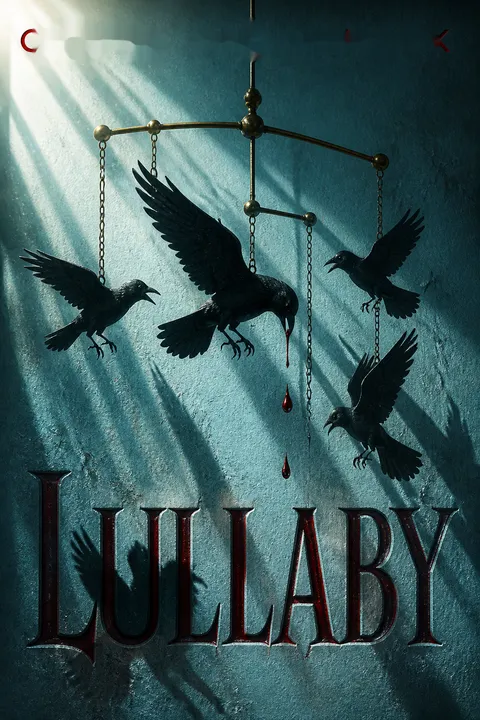


Plot Summary
Prologue
Helen Hoover Boyle spends her days selling haunted houses to owners who can no longer bear them, then quietly reselling the same properties to the next hopeful family. Her assistant, Mona, checks the houses while Helen works the police scanner and keeps a planner crowded with appointments.
On the day that should be ordinary, a newspaper reporter named Carl Streator arrives asking about Helen’s dead son and a book of nursery rhymes. The prologue presents Helen through Carl’s later recollection: a forceful, glittering woman whose past will haunt every new bargain she makes.
The prologue makes commerce the story’s first supernatural mechanism. Helen turns fear into a repeatable transaction, selling a haunted house to someone, then selling it again when terror drives them out. Her polished competence keeps the horror at arm’s length, much as Carl’s reporting and note-taking will let him observe grief without admitting his own. The narrator’s retrospective framing also makes Helen feel present and absent at once. Before the culling song appears, the book establishes its central anxiety: what survives a person may be less their love or work than the damage they leave behind.
The Page That Kills
Carl Streator, a newspaper reporter assigned to profile families bereaved by sudden infant death, notices the same library book in several nurseries. Poems and Rhymes from Around the World lies open to page 27, where an African lullaby appears. Carl finds the same volume among the scenes and learns that the page was read before the babies died.
He removes the poem from a library copy, then reads it aloud to his editor, Duncan, as a test of his theory. The next morning Duncan is dead without an apparent cause. Carl recognizes that the rhyme is not merely a clue to the deaths: repeating it may have caused them, and his reporting has become a way of spreading the danger.
Carl’s discovery turns the reporter’s ordinary tools into sources of moral risk. He treats the poem as evidence to be tested, but the test itself may be an act of transmission. His professional faith in collecting facts collapses into a more troubling question: can knowledge remain neutral when possessing it gives someone lethal power? The shared book links intimate domestic grief to mass circulation, and Carl’s choice to read the verse aloud exposes the gap between observing harm and becoming its cause.
Helen's Haunted Marketplace
After paramedic John Nash identifies Helen Hoover Boyle as the last person to contact a newlywed couple who died without visible cause, Carl tracks her to an empty mansion she is trying to sell. Helen dismisses his questions about her son, Patrick, and orders him out. Carl also learns that the couple had planned to demolish a historic house Helen wanted preserved.
In a maze-like antique warehouse, he confronts her again and accuses her of using the poem. Helen neither gives him a clean denial nor accepts his account. Instead, she warns that a person who knows the song may eventually use it. Her challenge unsettles Carl because his own conviction that he will never repeat it is already weakening.
Helen’s first encounters with Carl are contests over who gets to define power. She protects herself with salesmanship, while he approaches her as a reporter who believes facts can pin down responsibility. Her warning shifts the problem from guilt alone to habituation: a person may begin with restraint and still learn to treat lethal power as a practical tool. The antique warehouse sharpens this threat. Objects persist beyond their owners, just as a spell can outlive the intentions of the person who first speaks it.
A Thought Becomes Murder
Carl tests the lullaby in his bathroom, believing no one can hear him, then realizes the apartment vents carry sound through the building. Soon his fear becomes evidence: a man from his building is found dead. At a bar, irritation at a stranger triggers the song inside Carl’s mind, and the man collapses.
On his walk back to the newspaper, Carl’s anger kills several more people, including a police officer and a film-set worker. He counts his steps to keep the words from forming, but counting cannot reliably stop them. The deaths reveal that the poem does not need to be spoken aloud. Carl’s thoughts have become a weapon, and his ordinary flashes of resentment can now decide who lives.
The shift from spoken verse to involuntary thought removes the safety Carl hoped to find in secrecy. He can no longer separate private feeling from public consequence, because a moment of irritation may become fatal without warning. Counting steps is a crude attempt to reclaim self-command, but it also resembles the reporter’s old habit of cataloguing details instead of confronting grief. The spell makes that avoidance untenable: Carl’s inner life is no longer sealed off from the world he observes.
Mona Names the Spell
At Helen’s office, Carl meets Mona Sabbat, her assistant, who recognizes the verse as a culling spell. Mona explains that a spell focuses intention, and that buried rage or sorrow can make it powerful even when the target never hears it. She invites Carl to a Wiccan gathering, hoping experienced practitioners can help him control himself.
At the ritual, Helen arrives, and her presence exposes the tension between her commercial life and Mona’s search for spiritual knowledge. Carl loses control again when Oyster, Mona’s boyfriend, needles him; Carl believes he has killed the young man, but a coven member’s parrot instead falls dead. The gathering leaves Carl with allies, but no dependable mastery of his power.
Mona offers a psychological account rather than a mechanical one: the spell amplifies intention, especially emotion that has been denied or bottled up. That explanation fits Carl’s pattern of treating grief as something to manage through work and meticulous tasks. Yet the ritual does not create a stable community of care. Helen commodifies power, Oyster provokes, and Mona’s teachings remain mixed with performance and uncertainty. Carl gains a vocabulary for his danger, not a reliable way to contain it.
Helen's First Family
During the drive between libraries, Helen tells Carl how she found the same poetry book after her infant son Patrick died. Another bereaved mother, Cynthia Moore, owned a copy open to the same page; after Cynthia’s suicide, Helen bought the book at a yard sale. Helen later read the lullaby to her husband, John, while testing whether it caused death.
John died soon afterward. Helen says Patrick is not dead in the way Carl assumes: he remains at the New Continuum Medical Center, and she clings to the hope that he may recover. She has since turned the song into paid work, killing targets for valuable jewels. Her method, she argues, keeps her from using it against people close to her.
Helen’s account reveals grief reshaped into a system of control. She does not simply deny responsibility; she converts the danger into a profession, believing that payment and deliberate targets can contain what began in accident and curiosity. Her fixation on Patrick makes this strategy emotionally legible without making it harmless. Carl, meanwhile, hears in her history a possible mirror of his own. Both have tried to make an unbearable past manageable, but Helen has built a livelihood around the very power she claims to fear.
The Road's Burning Books
Carl, Helen, Mona, and Oyster travel from library to library, removing page 27 from every copy they find. Helen’s planner records paid assassinations, while Oyster places suspicious illness advertisements to pressure wealthy businesses into buying his silence.
He argues that human expansion is destroying other species, and his ecological warnings alter how Carl sees the landscapes outside the car. When the group cannot locate three copies in a used-book store, Helen and Oyster burn the entire Book Barn; two security guards are already dead before the fire spreads.
Later, fragments of Carl’s model houses emerge from infected blisters in his foot, revealing that he has been walking over miniature buildings while his attention was elsewhere. Their mission to stop mass death is already causing new damage.
The road trip binds three competing forms of power: Helen’s money, Oyster’s information warfare, and Carl’s uncontrolled capacity to kill. Each character calls their own intervention necessary, but the methods reproduce the harms they claim to resist. The Book Barn fire is the clearest rupture: protecting readers from a dangerous text requires destroying a whole store and its human occupants. Oyster’s ecological argument similarly challenges Carl’s comforting belief that everyday consumption is innocent, while Carl’s miniature-house fragments make his private coping ritual physically visible.
The Man Behind the Mud
During a stop at a trailer home, Carl and Helen approach Rhonda, a mother surrounded by funeral flowers and an empty nursery. Helen disguises their visit as a makeover, comforting Rhonda while Carl searches for the poetry book. He finds it beside the crib and removes page 27. The book confirms what Carl fears: the same lullaby is still reaching families.
But when the group later visits a widower accused of killing his own child, Carl refuses to explain the poem, even though the man begs for help understanding his loss. Carl chooses secrecy because public knowledge could spread the spell. Hidden outside the house, he gathers torn scraps of the page in the rain and breaks down, recognizing his own grief in the man’s helplessness.
Carl’s silence is both an act of containment and a repetition of his deepest failure. He protects the wider public from the poem, yet leaves one desperate person alone with an accusation he might have been able to clarify. His tears outside the house mark a break in the reporter’s detachment: the grieving father is not merely a source or case, but a reflection of Carl’s own unresolved past. The scene forces a painful distinction between preventing harm and repairing it.
The Planner's Hidden Book
At a carnival, Mona studies Helen’s daily planner and notices that its worn leather binding and colored marks conceal a much older book of spells. The pages contain hidden writing, and the cover is human skin marked with a pentagram. Helen recognizes it as the Book of Shadows she has unknowingly carried for years, bought with the estate of the anthology’s compiler.
Mona insists she can translate it, hoping to learn healing and other spells. Carl and Helen fear what that knowledge could do. When Mona clutches the grimoire and promises to bring back the dead, Carl restrains her and takes the book for Helen. The struggle fractures their makeshift family, and Mona leaves them knowing that each of them wants the book for a different reason.
The grimoire changes the group’s goal from containment to possession. Until now, they have been destroying copies of one lethal spell; the hidden book offers a whole repertoire of powers, including the possibility of healing. Mona’s desire is not simply greed. She wants spiritual authority and the chance to repair suffering, but that hope makes her vulnerable to the same logic of exceptional power that governs Helen and Carl. Carl’s forceful intervention may prevent an immediate danger, yet it also turns protection into domination.
Love Under Spell
Back at his apartment, Carl sees the remains of the miniature buildings he has smashed and finally telephones his estranged father. He admits that his wife and daughter died and that he has spent years running from his family and himself; his father listens as Carl asks to be forgiven. Soon afterward, Helen demonstrates a flying spell in the empty Gartoller mansion, and Carl accepts her intimacy.
At her office, Mona warns him that Helen may have used a love spell. Carl notices his name among Helen’s planned targets and can no longer tell whether his devotion is freely chosen. In the antique warehouse, he rejects Helen’s offer to use more magic to improve their future and calls emergency services to send Nash to a dangerous encounter.
Carl’s phone call to his father briefly restores a relationship that predates the spell, but Helen’s magic immediately complicates his renewed capacity for attachment. The question is not simply whether he loves her; it is whether desire can be trusted when another person may have engineered it. His response is deliberately uncomfortable: rather than chase comfort or pursue Helen’s promise of a better world, he chooses an action he fears, calling for the police and moving toward accountability. The moment gives his moral struggle a concrete direction.
Nash's Library Copy
Nash reveals that he obtained the culling song from the Library of Congress, where it cannot be erased by removing pages from local collections. He has used it to kill people at the bar, including his own paramedic partner, and begins reading from a stained index card as Carl arrives.
Nash’s crimes expose his belief that other people exist for his appetites, and he recognizes Carl’s own postmortem abuse of his wife’s body. Nash then turns the poem against Carl. The words make Carl’s body collapse, but his anger reflexively triggers the same spell in return. Nash dies beside his bowl of chili. Carl burns the card, waits for the police, and accepts that the deaths cannot be undone.
Nash is not a stranger to Carl’s moral failure but its grotesque double. Both men have crossed boundaries around the dead, though Nash turns violation into appetite while Carl’s account is entangled with grief and denial. Their encounter prevents Carl from preserving a comforting distinction between himself and a monster. His reflexive killing saves him, but it does not cleanse him. By waiting for arrest, he finally accepts consequence rather than using the spell to flee every judgment.
Helen's Borrowed Body
Helen uses an occupation spell to take control of a police officer and release Carl from custody. At her real-estate office, Mona gives Carl the grimoire and warns him that Helen has left in distress.
He finds her at the medical center beside Patrick’s cryogenic chamber, poisoned and surrounded by ruined jewels. Helen says she wants to die with her son and keep the culling spell from defining their lives. Then Oyster reveals that he has been occupying Helen’s body and staged the apparent confession to manipulate Carl.
He throws Patrick’s frozen body against the cabinet, shattering it. Carl holds the dying Helen and recites the lullaby as a final comfort. She dies with Patrick, while Oyster escapes with the grimoire and Mona remains tied to his plans.
The possession spell makes the body itself a contested territory, so even Helen’s apparent confession cannot be trusted at face value. Oyster exploits Carl’s longing for a family and Helen’s attachment to Patrick, turning both into instruments of control. The destruction of Patrick’s frozen body strips away the hope that has organized Helen’s life, but it does not make her last choice meaningless. Carl’s use of the lullaby changes its function: the same words that began as an instrument of accidental death become a ritual of companionship at the end.
The Hunt After Helen
After Helen dies, an Irish police sergeant tells Carl that Helen has taken up residence in his body through the occupation spell. The grimoire is with Mona and Oyster, but they do not have the culling song; Mona has left Carl a page containing it and a warning that she does not support Oyster’s plan.
The pair are pursuing world-changing magic, while Carl and Helen follow reports of miracles, from a roadkill healer to a talking cow and an invasive ivy outbreak. Carl is no longer simply a fugitive trying to outrun his past. He has reconciled with his father, accepted that his violence demands consequences, and joined Helen in pursuing the people who may reshape the world with the grimoire.
The ending refuses to restore a stable world. Carl remains implicated in mass death, Helen survives only through another person’s body, and Mona and Oyster carry the broader book of spells beyond their reach. Yet the final pursuit differs from Carl’s earlier flight: he has confessed to his father and stopped treating observation as a substitute for participation. The miracle reports keep the frame open, suggesting that ideas and spells spread like biological invasions. Responsibility now means chasing consequences, not imagining that one clean act can erase them.
Analysis
Lullaby treats information as a form of contagion, but its deeper concern is the desire to control what cannot be repaired. The culling song travels through an ordinary children’s book, while Carl’s reporting, Helen’s real-estate work, and Oyster’s advertising schemes all turn communication into leverage. None of the characters can keep knowledge morally neutral. Carl tries to document before he understands; Helen converts power into paid work; Oyster uses ecological facts to justify a sweeping political conclusion; Mona imagines magic might heal what has been damaged. Each strategy begins with a recognizable wish, then risks becoming a license to impose one person’s will on everyone else.
The book’s repeated focus on attention sharpens that problem. Carl’s meticulous reporting and miniature buildings help him avoid the whole shape of his grief, while Helen’s planner reduces assassinations and real-estate appointments to entries on the same page. The grimoire literalizes the danger of treating power as a tool that can be catalogued, translated, and controlled. Its spells offer solutions, but each solution creates a new question about consent and consequence.
The novel also refuses a clean division between monsters and victims. Carl’s horror at Nash cannot erase his own actions, and Helen’s grief does not absolve her of turning killing into a profession. Their guilt becomes most meaningful when they stop using it as proof that they are uniquely damaged and begin accepting responsibility for what they do next. Yet the ending offers no complete purification: the grimoire remains in circulation, the culling song remains dangerous, and the miraculous world keeps changing. The final pursuit suggests that ethical life is not a return to innocence. It is the ongoing work of resisting the comforting claim that a good intention makes domination harmless.
Review Summary
Lullaby receives mixed reviews, with ratings ranging from 1 to 5 stars. Many readers appreciate Palahniuk's dark humor, social commentary, and unique writing style. The story revolves around a culling song that kills when heard or thought. Some find the book disturbing, repetitive, and difficult to follow, while others praise its originality and thought-provoking themes. Critics note the author's ability to create vivid characters and explore complex issues. Overall, Lullaby is a polarizing novel that challenges readers' perceptions and expectations.
People Also Read


Characters
Carl Streator
Reporter haunted by griefCarl is a middle-aged newspaper reporter whose attention to tiny details has become both professional skill and emotional shelter. He records rooms, objects, and deaths with precision, while avoiding the personal grief that has shaped his life. The culling song forces him to confront the difference between witnessing harm and causing it: his thoughts and resentments can now have fatal consequences. Carl’s dry, analytical manner does not mean he is without feeling; it often marks how hard he works to keep feeling at a distance. His relationships with Helen, Mona, and his estranged father test whether he can accept accountability without retreating into observation or claiming that power excuses his choices.
Helen Hoover Boyle
Broker with a witch's tradeHelen is a wealthy real-estate broker who specializes in haunted houses, moving between polished luxury and the uglier business of supernatural power. Her immaculate clothes, expensive jewels, and sharp commercial instincts help her present herself as someone who can manage any crisis. Beneath that control lies a mother’s enduring grief and a fierce attachment to the life she has tried to preserve. Helen understands how easily desire becomes domination, yet she repeatedly tries to make power manageable through money, targets, and rules of her own devising. Her relationship with Carl brings intimacy and suspicion into the same room, while her history with Mona reveals the tension between practical self-interest and spiritual aspiration.
Mona Sabbat
Seeking Wiccan apprenticeMona is Helen’s assistant and a Wiccan practitioner who surrounds herself with crystals, books, rituals, and handmade objects. Her earnest wish to learn magic reflects a search for identity and significance, but her understanding is often assembled from books and borrowed traditions rather than deep experience. She is perceptive about emotional power: she recognizes that Carl’s unresolved grief fuels the culling spell and sees that Helen’s control can masquerade as care. Mona’s relationship with Oyster pulls her toward rebellion, while her loyalty to Helen and growing connection to Carl complicate that allegiance. She wants magic to heal, yet the possibility of becoming powerful makes her vulnerable to the very hunger she hopes to overcome.
Oyster
Eco-minded provocateurOyster is Mona’s boyfriend, a young man who uses fake legal advertisements to pressure businesses and unsettle consumers. His knowledge of invasive species and ecological damage gives his arguments an unsettling factual force, but he pushes those arguments toward extreme conclusions about human population and survival. Oyster is provocative by design: he needles Carl, challenges Helen, and treats discomfort as a way to expose complacency. His relationship with Mona combines attraction, politics, and competition for influence. He believes conventional power has failed the living world, yet his willingness to impose a new order makes him another would-be authority rather than a neutral critic.
John Nash
Morbid paramedic friendNash is a large paramedic who becomes Carl’s informal source on unexplained deaths. He speaks casually about corpses and medical details, often turning other people’s suffering into grotesque entertainment. His appetites and professional access make him a disturbing presence, but his friendship with Carl gives him a place inside the story’s circle of shared secrets. Nash represents what happens when familiarity with death erodes restraint rather than deepening respect. He notices more than he admits, and his bluntness makes it difficult for Carl to pretend that his own conduct belongs to a different moral category.
Duncan
Merciless newspaper editorDuncan is Carl’s editor, an impatient manager who assigns him a series on sudden infant death and expects vivid details that will hold readers’ attention. He reduces a painful subject to a successful feature package, complete with a planned sequence of profiles and emotional appeal. His newsroom authority gives Carl a professional reason to investigate, but their relationship also exposes the newsroom’s appetite for stories about other people’s grief. Duncan is a practical antagonist rather than a grand villain: he embodies the pressures that reward information for its market value while ignoring the risks of how it is gathered or circulated.
Gina
Streator's lost wifeGina is Carl’s wife and the center of the family life he remembers as ordinary, tender, and complete. His memories of her are grounded in domestic details, from the quiet of the bedroom to the miniature house they built together. Because Carl has spent years fleeing the truth of his family’s deaths, Gina remains both a person he loved and a measure of what he cannot recover. Her presence in the narrative is largely through memory and records, which reflects Carl’s struggle to distinguish honest remembrance from the stories he tells himself to survive.
Katrin
Streator's infant daughterKatrin is Carl and Gina’s baby daughter, whose death shapes Carl’s grief and the private history behind his investigation. He remembers her nursery, toys, and the care he and Gina put into their home. Those memories are affectionate but incomplete, because Carl spent years refusing to face what happened. Katrin’s absence gives the miniature houses their emotional charge: they are attempts to build a safe, finished world for a child who cannot grow up inside it.
Patrick Boyle
Helen's absent sonPatrick is Helen and John Boyle’s infant son, whose loss becomes the buried center of Helen’s life. Helen’s attachment to him shapes her anger, her need for control, and her reluctance to trust claims about ghosts or an afterlife. For much of the story, Patrick is known through medical records and Helen’s guarded recollections. His absence helps explain why Helen treats the past as something that might still be repaired, even as that hope leaves her vulnerable to dangerous bargains.
The Sarge
Roadside Irish investigatorThe Sarge is an older Irish police officer who appears in the book’s recurring reports of miracles and witch-hunting. His practical skepticism sits uneasily beside the supernatural events he investigates, and his blunt manner keeps the frame grounded in police work and roadside observation. He represents the authorities’ effort to classify phenomena that move faster than official explanations. His presence also links Carl’s personal story to a wider landscape of spells, rumors, and public panic.
Basil Frankie
Anthology's careless compilerBasil Frankie compiled Poems and Rhymes from Around the World by gathering old material without much concern for its origins. His book places the culling song within ordinary children’s literature, where families and librarians can encounter it without warning. Frankie’s careless collecting makes him a distant but consequential link between an old spell and modern mass circulation.
Cynthia Moore
Bereaved trailer-park motherCynthia is a bereaved mother Helen meets while selling cosmetics door to door. Her household contains the same poetry book and the same nursery objects Helen associates with her own loss. Cynthia’s story gives Helen the first clue that the lullaby may connect separate families, and her grief becomes part of the chain that shapes Helen’s later choices.
Plot Devices
The culling song
A lullaby made lethalThe culling song is an old verse printed on page 27 of a children’s anthology. When someone focuses the spell through intention, a target can fall asleep and die without hearing the words. Its apparent simplicity makes it especially dangerous: it can move through reading, memory, and mass communication, while the person using it may initially believe they are only soothing or testing something. Carl’s grief and anger make the spell difficult to control, while Helen’s paid killings show how repeated use can become routine. The song’s changing role, from accidental instrument to deliberate weapon to final comfort, gives the plot its central moral problem.
The children's anthology
A spell hidden in plain sightPoems and Rhymes from Around the World carries the culling song into nurseries, public libraries, and private homes. The book looks harmless, and that ordinary appearance lets the verse circulate before anyone understands its effect. Carl discovers its page in several infant death scenes, then tries to remove copies from circulation. Helen has already bought the rights and destroyed many copies, but public libraries and the Library of Congress make complete eradication impossible. The anthology turns publishing and reading into forms of transmission, making the search for every copy both a suspense plot and an argument about whether information can ever be safely contained.
The Book of Shadows
A library of dangerous possibilitiesThe grimoire is a hidden collection of spells carried inside Helen’s daily planner, disguised by age, coded writing, and a cover made from human skin. It contains far more than the culling song, including spells that can alter bodies and influence minds. Its discovery changes the group’s objective: they no longer need only to suppress one dangerous verse, they must decide whether anyone should possess a broad source of magical power. Mona hopes to learn healing and other practices; Helen and Carl fear what unrestricted access might do. The book makes the struggle over knowledge tangible, portable, and deeply personal.
Miniature buildings
Grief assembled by handCarl builds detailed model houses and other buildings, losing himself in the small work before destroying the finished structures with his bare foot. The ritual gives him temporary order and a way to avoid confronting the deaths of his wife and daughter. Later, pieces of the models emerge from blisters in his injured foot, turning his private coping mechanism into a physical clue that he has been walking over the debris. The miniatures also echo the story’s larger interest in the human desire to build permanent homes, institutions, and monuments, even when those structures cannot protect their inhabitants from loss.
Occupation and love spells
Magic that commandeers choiceThe grimoire contains spells that let a practitioner occupy another person’s body or interfere with another person’s feelings. These spells extend the story’s concern beyond killing: power can seize someone’s actions, identity, and sense of desire while leaving the victim unsure what belongs to them. Helen’s use of a love spell makes Carl question whether his attachment is genuine, while the occupation spell drives the final reversals between bodies and voices. The magic dramatizes a problem already present in the book’s discussion of advertising and media: people may experience an implanted desire as their own.
FAQ
Synopsis & Basic Details
What is Lullaby about?
- Reporter finds deadly song: Carl Streator, a reporter researching SIDS, discovers an ancient "culling song" that kills anyone he focuses on while reciting it mentally.
- Unlikely alliance forms: He teams up with Helen Hoover Boyle, a real estate agent and witch who also knows the song, to find and destroy all copies of it.
- Road trip ensues with complications: They embark on a road trip with Helen's assistant Mona and her boyfriend Oyster, facing moral dilemmas and the temptation of the song's power.
Why should I read Lullaby?
- Palahniuk's signature dark humor: The novel blends dark humor with supernatural horror, offering a unique and unsettling reading experience.
- Exploration of complex themes: It delves into themes of power, control, grief, and the ethics of information in the modern age.
- Unpredictable narrative: The story features unexpected plot twists and morally ambiguous characters, keeping readers engaged and questioning their own values.
What is the background of Lullaby?
- SIDS research inspiration: Palahniuk's personal experience with SIDS (Sudden Infant Death Syndrome) influenced the initial premise of the story, exploring the grief and search for answers surrounding unexplained infant deaths.
- Information Age anxieties: The novel reflects anxieties about the power of information and its potential for misuse in the age of mass media and instant communication.
- Cultural commentary on consumerism: It critiques consumerism and the commodification of grief, highlighting the ways in which society profits from tragedy.
What are the most memorable quotes in Lullaby?
- "We're all of us haunted and haunting.": This quote encapsulates the novel's exploration of the past's influence on the present and the interconnectedness of human experience.
- "Imagine a plague you catch through your ears.": This quote highlights the novel's central theme of information as a weapon and the potential dangers of mass media.
- "The trick to forgetting the big picture is to look at everything close-up.": This quote speaks to the characters' coping mechanisms and the human tendency to avoid confronting larger, more painful realities.
What writing style, narrative choices, and literary techniques does Chuck Palahniuk use?
- Ironic and detached narration: The story is told from Carl's perspective, characterized by a detached and often ironic tone, creating a sense of unease and moral ambiguity.
- Repetitive motifs and lists: Palahniuk employs repetitive motifs and lists to emphasize the characters' obsessions and the cyclical nature of their actions.
- Non-linear storytelling: The narrative jumps between past and present, creating a fragmented and disorienting effect that mirrors the characters' fractured mental states.
Hidden Details & Subtle Connections
What are some minor details that add significant meaning?
- The recurring book, Poems and Rhymes: The presence of this book at each crib death scene initially suggests a pattern, but later symbolizes the arbitrary nature of fate and the human desire for order in chaos.
- Helen's jewelry: Her ever-changing collection of expensive jewelry symbolizes her attempts to fill the void left by her son's death and her reliance on material possessions for validation.
- The state of disrepair of the Gartoller Estate: The house's emptiness and lack of upkeep mirror the emotional emptiness and decay within Helen's life, despite her outward success.
What are some subtle foreshadowing and callbacks?
- Carl's model home hobby: His meticulous construction and violent destruction of model homes foreshadows his later attempts to control and then obliterate the culling song.
- Nash's comments on "Hollywood deaths": His early remarks about clean, bloodless deaths foreshadow the nature of the deaths caused by the culling song and his own morbid fascination with death.
- Helen's initial description of Carl: Her detailed description of Carl to Mona over the phone foreshadows her later ability to control him through the occupation spell.
What are some unexpected character connections?
- Helen and Oyster's Oedipal dynamic: The subtle hints of attraction and manipulation between Helen and Oyster create an unsettling undercurrent, blurring the lines between mother and son and highlighting the novel's exploration of power dynamics.
- Carl and Nash's shared morbid curiosity: Despite their differing motivations, both Carl and Nash share a fascination with death, leading them down morally questionable paths and blurring the lines between observer and participant.
- Mona as a surrogate daughter: Helen's complex relationship with Mona hints at a desire for redemption and a chance to rewrite her past mistakes as a mother, adding another layer to their dynamic.
Who are the most significant supporting characters?
- John Nash: As a paramedic with necrophiliac tendencies, Nash provides a disturbing perspective on death and challenges Carl's moral compass. His knowledge of the culling song and his willingness to exploit it make him a dangerous and unpredictable force.
- Mona Sabbat: As Helen's Wiccan assistant, Mona represents a more innocent and idealistic approach to magic, contrasting with Helen's cynical pragmatism. Her relationship with Oyster and her eventual possession of the grimoire make her a key player in the story's climax.
- Oyster: As Mona's boyfriend and a radical environmentalist, Oyster embodies the novel's themes of societal decay and the potential for both destruction and renewal. His anarchic ambitions and his influence on Mona create conflict and drive the plot forward.
Psychological, Emotional, & Relational Analysis
What are some unspoken motivations of the characters?
- Carl's desire for control: Beneath his grief, Carl seeks control over his life and the world around him, initially through his hobby and later through the culling song.
- Helen's fear of vulnerability: Her outward confidence and pursuit of wealth mask a deep-seated fear of vulnerability and a desperate need to protect herself from further loss.
- Mona's need for validation: She seeks validation and purpose through magic, hoping to prove her worth and escape her mundane existence.
What psychological complexities do the characters exhibit?
- Carl's survivor's guilt: He grapples with intense guilt over surviving the tragedy that claimed his family, leading him to question his own worthiness and seek atonement.
- Helen's narcissistic tendencies: She displays narcissistic traits, prioritizing her own needs and desires above others and manipulating those around her to achieve her goals.
- Oyster's messianic complex: He exhibits a messianic complex, believing himself to be a savior figure destined to cleanse the world of its ills, justifying his radical and often destructive actions.
What are the major emotional turning points?
- Carl's accidental killing of Duncan: This event forces him to confront the true power of the culling song and the potential for unintended consequences, setting him on a path to destroy it.
- Helen's revelation of Patrick's fate: The revelation that her son is not truly dead but in a vegetative state fuels her desire for control and her willingness to use any means necessary to achieve her goals.
- Mona's betrayal and possession of the grimoire: This marks a shift in the power dynamics of the group and forces Carl to confront the potential for corruption within himself and those he trusts.
How do relationship dynamics evolve?
- Carl and Helen's initial partnership: Their relationship begins as a pragmatic alliance based on mutual need, but gradually evolves into a complex mix of attraction, manipulation, and shared trauma.
- Mona and Oyster's codependency: Their relationship is characterized by codependency and a shared desire to escape societal norms, but their differing ideologies ultimately drive them apart.
- Carl and Mona's father-daughter dynamic: A subtle father-daughter dynamic develops between Carl and Mona, with Carl seeking to protect her from the dangers of the grimoire and Mona offering him a chance at redemption.
Interpretation & Debate
Which parts of the story remain ambiguous or open-ended?
- The true nature of the grimoire's power: The extent of the grimoire's power and the validity of its spells remain ambiguous, leaving the reader to question whether the characters' actions are driven by genuine magic or by their own beliefs and desires.
- The ultimate fate of humanity: The ending offers no clear resolution to the novel's central conflict, leaving the reader to ponder whether humanity is doomed to repeat its mistakes or whether there is still hope for redemption.
- Carl's final state of mind: His mental state at the end of the novel is ambiguous, leaving the reader to question whether he has truly achieved redemption or whether he is simply trapped in another cycle of violence and self-deception.
What are some debatable, controversial scenes or moments in Lullaby?
- Nash's necrophilia: His actions are deeply disturbing and raise questions about the limits of human depravity and the nature of consent.
- The use of the culling song: The characters' justifications for using the song, even for seemingly "good" purposes, spark debate about the ethics of taking a life and the potential for abuse of power.
- The ending's ambiguity: The open-ended nature of the ending invites debate about the characters' fates and the novel's overall message, with some readers finding it unsatisfying and others finding it thought-provoking.
Lullaby Ending Explained: How It Ends & What It Means
- Carl and Helen's final confrontation: The ending sees Carl and Helen at odds, with Helen succumbing to the grimoire's power and Carl attempting to stop her. This represents the ultimate struggle between control and freedom, with both characters ultimately failing to achieve their goals.
- Helen's death and Oyster's possession: Helen's death and Oyster's possession of her body symbolize the cyclical nature of power and the way in which it can corrupt even those with good intentions.
- Carl's ambiguous fate and the cycle continues: Carl's decision to join forces with the possessed Helen and continue the witch hunt suggests that the cycle of violence and control will continue, leaving the reader with a sense of unease and uncertainty about the future.
About the Author



Download PDF
Download EPUB
.epub digital book format is ideal for reading ebooks on phones, tablets, and e-readers.








