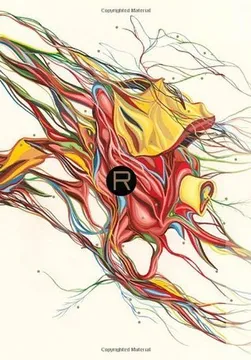


Plot Summary
The Bereavement Fare
On a flight, car salesman Wallace Boyer meets a scarred, foul-smelling man who says he is traveling to collect his dead son. The stranger, Chester Casey, identifies that son as Buster Landru Casey, better known as Rant, the notorious carrier blamed for a rabies epidemic and thousands of infections.
Chester recounts a life so grotesque that Boyer suspects he is being sold a story, yet the details lodge in his memory. The book begins with this uneasy testimony, then gathers many more voices to reconstruct Rant's life: childhood in rural Middleton, a departure for the city, a public catastrophe, and the questions left by his disappearance. Even his father cannot agree with the world on what Rant was.
The opening makes reputation the first contagion. Boyer encounters Chester only after Rant's death, when a stranger can convert a private loss into a public story. The salesman is trained to manufacture intimacy, so his uncertainty about who is pacing whom makes the interview feel like a contest over authorship. The book's many witnesses inherit that contest: each remembers a different Rant, and no single account can claim the whole person. This structure is not merely a puzzle device. It makes testimony itself part of the plot, exposing how fame, fear, and grief reshape the dead.
The Spider Beneath Esther's Hat
As a boy, Rant walks to church with his grandmother Esther Shelby. A black widow bites her on the road; she makes him inspect the spider, then sends him running for help. Rant bursts into church and alerts the adults, but the delay proves fatal. By the time he and the others return, the roaming dog packs have reached Esther and torn her apart.
Later witnesses suggest the episode may have been Rant's first encounter with death, and some even accuse him of causing it. His mother, Irene, remembers a frightened child trying to obey his grandmother. The competing versions leave Rant carrying an uncertain burden: he did run for help, but the memory links love, helplessness, and danger from the beginning.
The episode plants the book's recurring uncertainty about intention. Rant acts as a child should, obeying Esther and seeking help, but the dogs turn his obedience into a failure he can never verify or undo. The witnesses' suspicion that he caused her death reflects Middleton's hunger for a culprit as much as it reflects evidence. For Rant, the moment joins bodily vulnerability to a strange attraction toward danger. His later appetite for bites and poisons can be read as an attempt to master the helplessness of that first loss, though the testimony never offers a clean diagnosis.
The Snot Constellation
When Rant is small, Irene puts him down for daily naps beneath glow-in-the-dark stars. He secretly decorates the wall above his pillow with dried mucus, pressing each clump into a fingerprint. One afternoon, Irene notices the spreading marks. In the version preserved by Rant's friends, her disgust breaks their closeness and leaves him feeling that he has become a monster to her.
Irene later denies the accusation and insists that she loved her beautiful child. That contradiction matters: no witness can settle what she saw or said, but the story marks the moment Rant learned that his private creations could become another person's evidence against him. He begins to experience identity as something assigned by whoever is looking.
The wall turns a child's bodily habit into a dispute about who gets to define him. Irene's version protects the memory of maternal devotion; the friends' version gives Rant a formative rejection that explains his later habit of provoking disgust. Neither account can erase the other. The stars and fingerprints also establish two competing kinds of making: the idealized image a parent places above a child's bed, and the imperfect trace the child leaves himself. The scene's psychological force comes from their collision, not from deciding which witness is truthful.
Easter Eggs Become Grenades
During an Easter egg hunt, a black widow bites Rant's hand until it swells. His father, Chester, refuses to take him for care until he has found every hidden egg, and the family leaves for church while the boy searches through Irene's garden. Rant retrieves only three. Later, he secretly keeps the others and places them in the path of Chester's lawn mower, so each rotten egg bursts across the yard.
He also uses dye from Irene's egg work to fake illnesses and escape school or work. The episode converts his mother's careful Easter ritual into a private arsenal. Adults teach him that attention and help can be withheld; he answers by finding ways to make their ordinary routines stink, fail, or become impossible to ignore.
Neglect becomes a lesson in tactics. Rant cannot persuade Chester to respond to pain, so he learns to alter the conditions around him until the adults must notice. His retaliation is childish in scale but exact in method: the ruined eggs exploit the very lawn and garden that divide his parents' domains. The episode also links creativity to concealment. Irene's invisible wax designs and secret colors give Rant tools he can repurpose, while the resulting sabotage turns a loving craft into evidence of family conflict.
Gold for Baby Teeth
Rant and his friend Bodie Carlyle collect abandoned paint cans, finding that some contain gold and silver coins hidden by dead hoarders. To make the sudden wealth seem plausible, they pay children for lost teeth and tell them the Tooth Fairy left the coins.
The children spend freely, and Middleton's shops, schools, and families reorganize around their money. Adults join the shared pretense rather than admit they know the coins cannot be ordinary tooth payments. The boom damages trust even as it improves children's lives.
Around the same period, Rant's grandmother Bel dies after breathing dust contaminated by mouse droppings in her makeup. Her death advances Irene in the family's rigid seating hierarchy, but it also deepens the suspicion that Rant's discoveries and Middleton's accidents are connected.
Rant's scheme demonstrates how belief becomes material when enough people have something to gain from it. The coins do not merely buy candy or Scout uniforms; they force adults and children into a common lie, making the town's social order briefly negotiable. Yet prosperity corrodes the very trust that sustains it. The episode echoes the novel's larger concern with consensus: value, family status, and even the truth of an event depend on collective agreement. Bel's death complicates the comedy by making Rant's practical ingenuity inseparable from possible harm.
The Bee Picnic
At a family Independence Day picnic, bees suddenly cover the Casey adults gathered at their privileged table. The relatives swat at the swarm, which draws more bees and turns the sunny gathering into a lethal attack. Rant's uncles Clem, Cleatus, and Walt, and his aunt Patty, die.
Investigators wonder whether a powerful swarm attractant was involved, but nobody publicly calls the deaths murder. With several elders gone, the next Thanksgiving passes without the usual generation of adults claiming the best seats.
The children who once ate from folding tables in the kitchen see the family hierarchy shift. Rant's relatives have treated authority as an inheritance; now an unexplained disaster has taken enough heirs and elders to make that inheritance suddenly less secure.
The picnic turns a private family hierarchy into a visible casualty list. The adults have long controlled the Casey table, while younger relatives resent their exclusion; the swarm changes who can claim authority without requiring anyone to openly challenge the custom. The attack's possible artificial cause remains unproven, preserving the book's tension between accident and design. That ambiguity is essential to Rant's portrait: his actions may be experiments, pranks, or crimes, while the community's willingness to accept each catastrophe as natural lets the social order absorb violence.
The Grange Hall Heart
For Middleton's annual haunted house, children expect blindfolded bowls of macaroni and grapes presented as brains and eyes. Rant instead fills the tunnel with real slaughterhouse organs, including lungs, intestines, kidneys, and a cow's heart.
The children touch the remains before realizing they are not props; they emerge smeared with blood, and many vomit over the party food. The adults cannot restore the old harmless ritual or agree on what Rant intended. The children give him the nickname Rant after repeatedly shouting his name while throwing up.
Before leaving Middleton years later, he gives Bodie milk jugs packed with lost teeth, preserving the collection he has made from the town's children. The grotesque game gives the community an event it cannot pretend was ordinary.
Rant's substitution of actual remains for familiar props makes the town confront the gap between ritual and lived experience. Adults have taught children to accept make-believe in exchange for pleasure, yet Rant insists on the material thing beneath the story. His intervention is not simply honesty: he chooses shock, recruits other people's bodies, and leaves the children to carry the memory. The nickname born from their sickness marks a shift from a private boy to a communal character, created through a reaction the town repeats.
Poison as a Prayer
Rant spends summers pushing his hand or foot into animal burrows, inviting bites from snakes, spiders, and other creatures. He treats pain and venom as a way to make fear manageable, but black widow toxin also causes prolonged erections, which he later uses to disrupt classes and evade embarrassment.
He contracts rabies repeatedly and passes it to girls through kisses; classmates and teachers become infected, though many cases go unnoticed during the virus's quiet incubation.
Bodie sometimes joins his animal hunts, while other friends see them as tests of loyalty. Rant's risk-taking is not just bravado: he is trying to feel something that belongs to him rather than a safe, secondhand life. The cost is that other people become exposed to the dangers he seeks out.
Rant treats danger as both sensation and proof of agency. His repeated bites convert passive fear into a chosen encounter, but the rabies he carries makes that private strategy socially contagious. The story resists a simple distinction between self-harm and harm to others: Rant experiences infection as stimulation, while the people he kisses inherit a threat they did not choose. His sexuality, appetite for pain, and desire for authentic experience therefore become bound to a disease that erases consent and spreads through intimacy.
The Erection Revolution
At school, Rant turns poison-induced erections into a protest against teachers and administrators who cannot discipline him without risking a lawsuit. He encourages boys to claim a shared medical burden, and the classroom disruptions grow into a student campaign.
When the school board negotiates, Rant slips out through a hidden door with ten thousand dollars and a certificate awarding him top grades and athletic honors. His classmates are left exposed, their protest collapsing without its organizer.
Rant has secured an exit from Middleton, but he has done it by making other boys pay for his strategy. Before leaving, he packs the embroidered clothes Irene made for him, then burns one of her handmade shirts, unable to wear it without exposing her to ridicule.
The revolt reveals Rant's talent for turning institutions' own rules into leverage. He reads the school's fear of liability more accurately than the adults read his motives, then converts collective anger into an individual settlement. His departure is both escape and betrayal. The burned shirt sharpens that contradiction: he rejects the visible expression of Irene's love while preserving the garments she made. Rant wants distance from the family that shaped him, yet he cannot leave without carrying its marks.
Brides in the Traffic
In the city, most people live by day or by night under curfews, and many use neural ports to experience recorded sensory transcripts called boosted peaks. Rant cannot boost through his port, so he drifts through the night until Echo Lawrence's Party Crashing team picks him up.
Echo drives; Shot Dunyun and Green Taylor Simms fill lookout roles. They dress as newlyweds and ram other teams in staged traffic games, turning ordinary cars into temporary arenas.
Echo is a sex worker with lasting injuries from a childhood collision, and she uses the night streets to manage her fear by choosing when to pursue a crash. Rant enters this improvised community with little money but a rare coin, a damaged port, and an appetite for the real encounters the others are seeking.
The city offers Rant a community built around chosen risk, but its rituals are also a response to lives constrained by curfew, work, and mediated entertainment. Party Crashing lets participants exchange status inside a car, where a lookout's identity matters more than their daytime position. Echo's control of the wheel contrasts with her helplessness in the collision that injured her. Rant's arrival fits the group's desire for genuine contact, though his presence also imports dangers the team cannot yet recognize.
Taste Knows Everything
Rant's unusual sense of taste and smell lets him identify what Echo has eaten and detect details about her life that she has not told him. At first, she suspects he is manipulating or stalking her. When he handles a large black widow spider gently instead of killing it, she begins to trust him.
Their intimacy grows in the back of a car, where Rant's attention differs from the transactional encounters Echo has learned to expect. Shot, meanwhile, tests positive for rabies after being kissed by Rant and warns Echo not to let Rant kiss her. Rant continues to court her, sends roses, and gives her cars to wreck in Party Crashing. His tenderness and his capacity to infect people remain inseparable.
Rant's sensory gift creates intimacy by making attention feel almost absolute: he notices what Echo ate and what she tries to conceal. But the same closeness is ethically unstable, since his saliva can transmit rabies and his knowledge can feel like surveillance. Echo's trust develops through a small act of care toward a spider, not through a grand promise. The detail matters because she recognizes a gentleness that her work and injury have taught her to doubt, even as Shot's warning makes that trust dangerous.
A City Divided by Rabies
The rabies Rant carries spreads through the city, often before victims know they are infected. As people become aggressive and impaired, Nighttimers are increasingly treated as a biological threat.
Authorities extend curfews, quarantine suspected carriers, and place the burden of the epidemic on a population already segregated by time and work. Political leaders defend containment as public safety, while Nighttimer witnesses describe the loss of jobs, services, and ordinary public space.
Rant's friends begin to understand that a kiss or a shared night out can have consequences far beyond their team. The disease makes Party Crashing harder to separate from the public crisis: a subculture built on collision and contact becomes an easy target for a government eager to police the people who participate in it.
The epidemic transforms a medical threat into a political category. Because rabies can incubate without visible symptoms, the state can treat suspicion as evidence and quarantine as a substitute for due process. Nighttimers are already defined as outsiders by their schedules, so infection intensifies an existing system rather than creating prejudice from nothing. The witnesses' competing explanations, including claims of deliberate state policy, keep the reader alert to how fear can make both official accounts and conspiracies persuasive.
The Tree Night Trap
Before the final Tree Night, Rant hears Green describe a journey into the past and a plan to strengthen his own lineage. Green wants Rant to travel backward through a crash and kill Irene, Rant's mother, in order to escape his origins.
Rant is skeptical, knowing rabies has damaged his ability to retain information, but he leaves with the problem unresolved. On Tree Night, he takes the team's Cadillac, hoses its roof-mounted Christmas tree with gasoline, and drives away with the lights still burning.
Party Crashers and police chase him as collisions strip the car and set the tree alight. Rant reaches a radio broadcast and declares his love for Echo while making clear that his purpose is to save his mother. The Cadillac goes over the viaduct into the river.
The chase converts Rant's private decision into a spectacle that the entire city can witness and misinterpret. Green's proposed mission is built on violence against Irene, but Rant redirects the journey toward protection. His burning tree fuses the night's celebratory decoration with the danger of the car game, turning a communal ritual into a public emergency. The radio confession gives Rant a last chance to author his own motive, though the people watching cannot know whether he has chosen suicide, time travel, or both.
The Empty Cadillac
Authorities recover the scorched Cadillac from the river with its doors locked, keys still in the ignition, and no body inside. News coverage turns Rant's apparent death into a national event, while police begin treating the case as an unsolved disappearance and issue a warrant for him. Party Crashing loses some of its appeal once participants have seen how easily a game can end in fire and death.
Rant's absence leaves his friends grieving but also gives the public room to invent a surviving fugitive, martyr, or monster. The epidemic continues, and the government can keep using Rant's name to explain its policies. The missing body does not prove he escaped, yet it prevents his friends from burying the story with certainty.
The absent body is a physical fact with narrative consequences. It denies the authorities a complete conclusion and lets each group use Rant differently: the state needs a culprit, the Nighttimers may want a martyr, and his friends need an explanation for their loss. The collapse of Party Crashing shows how spectacle changes behavior. Participants once treated collision as a controlled dose of danger; Rant's disappearance reveals the limit of that fantasy without resolving what happened to him.
Coins Behind the Wall
After the crash, Chester travels to the city and enters Rant's apartment with Echo and the landlord, Lew Terry. Echo has gathered private belongings she does not want Rant's parents to find, but Chester identifies them and explains that Rant hid coins behind the small dark marks on his walls. He finds gold coins embedded in the plaster, revealing that the old hoard was larger than anyone knew.
Chester also recognizes what Echo must do after Rant's exposure and urges her to seek rabies treatment. His certainty unsettles Echo and the landlord, who cannot explain how a country farmer knows so much about Rant's habits. Chester's arrival offers practical help, but it also adds a new mystery to a death already lacking a body.
The hidden coins turn the wall from a childhood image of shame into a secret store of value. Rant has transformed the marks once associated with rejection into a private inheritance, leaving treasure where others see only something repulsive. Chester's knowledge complicates his role as a bereaved father: he understands Rant's methods intimately, but the witnesses cannot explain that intimacy. The scene also shifts Echo from mourning toward self-preservation, grounding the mystery in an immediate medical consequence.
Waxman Leaves Time
Tina Something recounts her history with Karl Waxman, a Party Crashing hit man hired to destroy luxury cars. Waxman treated each vehicle as somebody else's cherished dream and relished dismantling it. After Rant disappears, Tina encounters Waxman again in a Rolls-Royce decorated for a game. He claims he has severed his own origins by killing his parents in the past and now exists outside time.
He offers to make Tina immortal too, but she refuses to join him. Soon afterward, traces of Waxman begin vanishing from photographs and records, leaving Tina unsure whether he has escaped history or whether she is losing her memory of him. His story provides a dark parallel to Green's theories, without proving either man's account.
Waxman's strand offers a distorted mirror of Rant's crisis. Where Rant's story turns on attachment and the wish to protect his mother, Waxman describes freedom as the destruction of the relationships that made him. His work as a hit man already treats other people's attachments as targets; his alleged immortality extends that logic to his own origins. Tina's refusal is a crucial counterpoint. She rejects endless life when its price is complicity in Waxman's violence.
The River's Second Father
Echo, Shot, and Neddy travel to Middleton to check on Irene and to test the claim that Rant returned to the past. Irene's account supplies the answer. On a frozen river, a stranger attacks her and threatens to return if she does not bear his child. After he leaves, a nearly naked young man emerges from the reeds, injured, shivering, and recognizable by his blackened teeth and bite scars.
He helps Irene off the breaking ice and gives her his clothes. Irene later understands that this is Rant, returned from the crash to prevent the assault and save her. The young man becomes the Chester who will raise him. The loop closes not with murder, but with Rant taking his father's place in his own beginning.
The revelation makes the novel's inherited violence recursive. Rant's attempt to save Irene does not remove him from the chain of family history; it places him inside it as the father who raises himself. The rescue is emotionally different from Green's proposed act of origin-destruction: Rant protects the person whose suffering made his life possible, accepting dependence rather than erasing it. Yet the account remains one testimony among many, so the time loop functions as both explanation and myth.
The Myth Keeps Driving
The book ends without settling whether Rant's return is history, delusion, or a story his friends need. Green dismisses the time-travel account and resents being cast as a villain; Tina insists that people can alter the past; Shot and Echo imagine different versions of what would happen if they followed.
Meanwhile, Party Crashing persists as a ritual of danger and companionship, and young people claim to descend from Rant's infection. The government presents him as a continuing threat, while admirers turn him into a hero. Even his friends admit that memory changes the person they remember. Rant's biography therefore closes where it began, with witnesses trying to make a dead or missing man fit the reality they can bear.
The ending refuses the comfort of a final, authoritative account. Rant's disappearance becomes a test of how people manage death, political fear, and the possibility that their reality is less stable than they assume. The book's shifting testimonies do not merely obscure truth; they show how memory and collective belief actively construct a usable past. Rant's legend can sustain rebellion, excuse state control, or help survivors endure loss. None of those meanings cancels the others, which leaves the reader inside the same interpretive struggle as the witnesses.
Analysis
Rant treats reality as something people jointly maintain, then repeatedly demonstrates how easily those agreements can be broken or redirected. The Tooth Fairy economy works because children, parents, and merchants all benefit from pretending not to know where the coins came from. The school protest works because administrators fear liability. Party Crashing works because players agree that a collision can be both threat and game. In each case, a shared fiction produces real consequences, from money and status to bodily injury.
The book's oral-biography form extends this idea to memory. Rant's mother preserves an innocent son; his enemies describe a criminal; his friends remember a source of intimacy and danger. Their accounts are not neutral records. They are acts of attachment, accusation, self-protection, and grief. The reader is asked to recognize that an unreliable account can still reveal something true about the person telling it.
Rant's pursuit of intense sensation arises from a childhood in which care is repeatedly withheld, affection is conditional, and the ordinary world feels secondhand. His experiments with venom, illness, sex, and traffic give him moments of agency, but they also turn other people into involuntary participants. The novel therefore refuses to romanticize authenticity. A real experience can be more vivid than a recorded peak and still be cruel, contagious, or fatal.
The political strand makes that cost collective. Rabies gives officials a tool to intensify a society already divided by curfew, while Nighttimers become easier to exclude under the language of public health. Yet the conspiracy accounts remain uncertain, exposing how legitimate fear and political manipulation can coexist. The final time loop offers a fragile alternative to origin-destruction: Rant returns not to erase the person who made him, but to protect her. Even that rescue arrives as testimony, not proof. The ending leaves the reader with the book's central unease: people need stories to live together, but stories can also make violence seem inevitable.
Review Summary
Rant receives mixed reviews, with many praising its originality, complex plot, and unique narrative style. Critics appreciate Palahniuk's exploration of themes like time travel, dystopian society, and unconventional characters. Some readers find the book confusing and overly graphic, while others consider it one of Palahniuk's best works. The novel's structure as an oral biography and its blend of science fiction and social commentary are frequently highlighted. Overall, reviewers note the book's ability to provoke thought and evoke strong reactions.
People Also Read


Characters
Rant Casey
The danger-seeking outsiderKnown as Buster, Buddy, and Rant by different people, he grows up in rural Middleton before entering the city's night culture. He is intensely curious about sensation, especially pain, poison, food, and the hidden lives of other people. His unusual sensory acuity makes him observant, but his experiments often draw others into risks they did not choose. Rant distrusts inherited routines and prefers experiences he can touch directly, even when the pursuit becomes destructive. His relationships with his parents, Bodie, Echo, Shot, and Green expose different versions of him, none wholly compatible. He is at once an ingenious prankster, a difficult son, a sexual presence, and a figure onto whom others project their hopes and fears.
Echo Lawrence
The wounded driverEcho is a skilled Party Crasher who drives through the city with a damaged arm, a limp, and lingering fear of traffic accidents. She makes a living through sex work and manages other people's expectations by controlling what they see and believe about her. Her injuries have made ordinary travel frightening, yet she seeks situations where she can choose the danger rather than wait helplessly for it. Echo is perceptive, sharp-edged, and more vulnerable than she lets clients or teammates assume. Her relationship with Rant challenges her practiced defenses, while her loyalty to Shot and the Party Crashing crew gives her a community outside conventional daytime life.
Shot Dunyun
The wary storytellerShot is a Party Crasher and script artist who works with sensory recordings and is proud of his musical judgment. He often approaches experience through sound and analysis, turning even a dangerous event into something he might later record or score. That habit gives him distance from fear, but it can also make him slow to recognize what a situation demands of him. Shot joins Echo's crew and becomes one of Rant's closest urban companions. His skepticism and loyalty pull in opposite directions as Rant's choices begin to affect the people around him.
Green Taylor Simms
The ambitious historianGreen is an educated historian and Party Crasher who keeps field notes on Middleton, its families, and the rituals of the city. He is analytical, status-conscious, and convinced that systems reveal more than individual memories do. Green's interest in accidents and time gives him a commanding role in explaining the world, though his explanations are not necessarily trustworthy. He becomes a guide and intellectual rival for Rant, interpreting Rant's life through theories of power, history, and human behavior. His precision can illuminate events, but it can also conceal self-interest.
Chester Casey
The guarded farm fatherChester is Rant's father in the account most people know, a farmer who remains rooted in Middleton while his son longs to leave. He can be hard and emotionally withholding, yet he understands Rant's habits with an intimacy that unsettles outsiders. Chester does not explain himself easily, and his knowledge of his son's secrets suggests that fatherhood in this family is more complicated than the town assumes. His memories frame the story after Rant's reported death, giving the reader both a father's grief and a warning not to accept every account at face value.
Irene Casey
The inventive young motherIrene becomes a mother while still young, giving up ambitions that once included art and a life beyond Middleton. She expresses care through making: embroidered clothes, decorated eggs, elaborate meals, and household rituals. Her creativity can comfort others, but it can also become a source of embarrassment or conflict when her family rejects what she makes. Irene's memories of Rant are tender and protective, though other witnesses describe a more painful relationship. Her competing accounts reveal a woman trying to preserve the child she loved from the public monster others claim to remember.
Bodie Carlyle
The childhood witnessBodie is Rant's closest childhood friend and the keeper of many memories from Middleton. He joins Rant's early schemes, including the collection of hidden coins, but he does not always share Rant's appetite for danger. His testimony is colloquial, intimate, and sometimes uncertain, giving the story a view of Rant that is neither official nor detached. Bodie's loyalty persists alongside his awareness that friendship with Rant often means being tested.
Neddy Nelson
The tactile conspiracistNeddy is a young Party Crasher who learns through touch and tends to stand close to people. He supplies theories about time travel, government schemes, and historical conspiracies, often with more confidence than evidence. His eccentric speculations make him easy to dismiss, but his questions repeatedly touch the book's central uncertainties. Neddy also finds companionship in the team, where his physical presence and willingness to participate matter more than his ability to fit conventional expectations.
Karl Waxman
The luxury-car hit manWaxman is a technically knowledgeable Party Crasher who accepts money to destroy expensive cars. He studies each vehicle closely and treats its owner's attachment as part of the target. Tina becomes his teammate and romantic companion for a time. Waxman's confidence, appetite for damage, and fascination with luxury make him a darker counterpart to Rant, whose own relationship with risk is bound to family and intimacy.
Tina Something
The traffic-voice witnessTina is a Party Crasher and the recognizable voice behind the city's vivid traffic reports. She has her own place in the night-driving culture and becomes closely involved with Karl Waxman. Her account of him is intimate but incomplete, shaped by love, anger, and the difficulty of trusting a man whose life is built around destruction. Tina's bluntness and independence make her one of the witnesses most willing to challenge the stories others tell.
Sheriff Bacon Carlyle
Middleton's hostile lawmanBacon Carlyle is Bodie's older brother and Middleton's sheriff. He distrusts Rant and interprets his childhood behavior as evidence of bad character. His law-and-order posture reflects the town's suspicion of outsiders and its preference for simple explanations. Bacon's testimony is confident, but it is also plainly shaped by personal hostility.
Dr. David Schmidt
The local physicianDr. Schmidt treats Middleton residents and offers medical explanations for Rant's bites, infections, and unusual behavior. He is one of the witnesses who can describe disease without resolving the moral questions surrounding it. His clinical perspective grounds the town's stranger events in bodies and symptoms, while his observations also show how little the medical system understands about Rant's repeated illnesses.
Phoebe Truffeau
The epidemic expertPhoebe is an epidemiologist whose testimony explains rabies transmission, incubation, and historical outbreaks. Her factual framing gives the oral history a scientific counterweight, though it does not settle the political claims surrounding the epidemic. She describes how a disease moves through populations and how institutions interpret that movement.
Wallace Boyer
The practiced salesmanBoyer is a car salesman who studies posture, speech, and attention in order to build rapport with customers. His encounter with Chester introduces the story's framing account. Because he is trained to read and mirror people, he notices that the conversation may be manipulating him as much as he is trying to understand it.
Esther Shelby
Rant's beloved grandmotherEsther is Irene's mother and Rant's grandmother. She walks with him to church and gives him a rare experience of uncomplicated affection. Her presence connects the Casey family to the rural world of spiders, dogs, and inherited fear.
Plot Devices
Oral testimony
Conflicting witness accountsThe story is assembled from interviews, field notes, medical testimony, police records, and personal memories rather than a single continuous narrator. Each speaker contributes concrete incidents but also exposes a bias, a private grievance, or a need to protect someone. The format lets Rant appear as a different person to his mother, friends, enemies, and public observers. It also makes the reader weigh evidence instead of receiving a settled account. The changing voices are therefore both the book's structure and its argument about how fame, memory, and collective belief manufacture a life story.
Neural ports and peaks
Recorded experience as entertainmentIn the city, people use ports at the backs of their necks to experience sensory recordings taken from another person's perspective. The recordings can be remixed, sharpened, softened, or marketed as commercial entertainment. This technology makes mediated sensation ordinary and gives Shot a profession, while Rant's inability to use his port separates him from the dominant culture. The device also sharpens the contrast between manufactured experience and the risky, unscripted encounters of Party Crashing. Its presence helps explain why the night-driving crews value bodily contact even as their games can become dangerous.
Party Crashing
A collision-based social ritualParty Crashing is a nighttime game in which teams decorate cars with recognizable flags, search for rival teams, and ram or tag vehicles according to agreed rules. Participants occupy assigned roles as drivers and lookouts, then gather after impacts to argue, socialize, and share the moment. The game gives isolated people a temporary community and a way to confront the possibility of accidents on their own terms. It also exposes them to real injury and death. The rituals, costumes, and flags make the collisions legible as play, even when the difference between staged danger and catastrophe begins to collapse.
Rant-serotype rabies
Intimacy becomes transmissionThe epidemic strain can spread through saliva and remain hidden during an incubation period, so carriers may infect others before they appear ill. Rant experiences repeated rabies infections, and kissing links his private risk-taking to a much wider public crisis. The disease disrupts neural-port use, changes behavior, and gives authorities a justification for extending curfews and quarantining suspected carriers. Because symptoms can resemble ordinary anger or adolescent hostility, the spread is difficult to identify early. The virus operates as both a biological plot engine and a political instrument, but testimony disputes how much of the epidemic is attributable to Rant or to the institutions responding to it.
Liminal time
History as a possible loopSeveral characters describe time as something that may be entered through a crash, a trance, or a break from ordinary consciousness. Green's account of falling into the past, his theory about Rant's origins, and Waxman's claims about immortality offer competing versions of how history might be changed. Rant's reported return to Middleton appears to close a family loop, but the oral format never verifies that the event happened as described. Liminal time gives the novel a mechanism for linking accidents, ancestry, and repeated identities while preserving the possibility that these accounts are delusion, manipulation, or myth.
About the Author
Other books by Chuck Palahniuk




Download PDF
Download EPUB
.epub digital book format is ideal for reading ebooks on phones, tablets, and e-readers.








