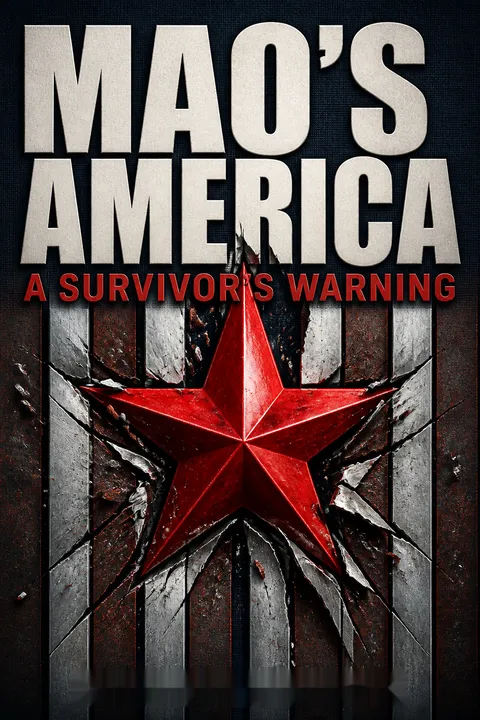


Key Takeaways
Use a survivor’s history as a warning, not a shortcut to certainty.
A personal alarm. Xi Van Fleet was six when Mao launched China’s Cultural Revolution in 1966. Decades later, she heard echoes of it in American politics and education, then spoke at a Loudoun County school board meeting in 2021. Her short speech compared school programs she opposed with the Mao-era campaigns she had witnessed. The video spread widely and moved her from private political observer to public activist.
Her central claim. The book argues that the American culture war repeats Maoist methods: dividing people, mobilizing youth, stigmatizing dissent, and attacking inherited institutions. Van Fleet presents her experience as a reason to recognize danger early, before political pressure hardens into state coercion.
The memoir’s distinctive strength is its ground-level memory of how political campaigns feel to a child: bewilderment first, then fear, then adaptation. That perspective can help readers notice mechanisms that abstract political debate misses. But analogy is not proof of equivalence. A contentious curriculum dispute and a one-party dictatorship differ enormously in law, force, and political choice. The comparison is most useful when it prompts specific questions about coercion, dissent, and institutional power, rather than treating resemblance as identity.
Ask what ideological schooling replaces when ordinary learning disappears.
A childhood rerouted. Van Fleet describes schools closing for nearly two years after the Cultural Revolution began. When classes resumed, academic study had largely given way to Mao’s writings, political criticism, and lessons in loyalty. Students also spent time in factories, fields, and military training. At ten, she cut rice with a sickle during a school assignment; as a teenager, she was sent to rural labor for three years.
The cost lasted. She says the lost schooling narrowed her prospects and left her unprepared for the university entrance exam when it returned. She eventually passed after months of intense study. The story makes her argument concrete: when education becomes a vehicle for political conformity, students lose both knowledge and choices about their futures.
Van Fleet’s account gives education a material measure: time, literacy, and future options, not just classroom messaging. It also shows why examining curricula matters, especially when ordinary academic content is displaced rather than supplemented. The comparison becomes less precise when modern programs are grouped with Mao-era schooling without showing equivalent control or consequences. A useful test is to ask what students actually learn, whether they can question it, and whether schools permit competing interpretations.
Watch movements turn inherited labels into permanent moral verdicts.
Class became destiny. In Mao’s China, people were assigned political identities such as Red Class or Black Class, often based on family background. Van Fleet learned as a child that her paternal grandmother had been classified as a landlord. That fact could exclude her from the Little Red Guards, a children’s group modeled on Mao’s revolutionary youth. The label attached not just to her grandmother, but to her family’s standing.
Division was organized. Van Fleet describes campaigns that encouraged poor villagers to recount grievances, direct anger toward landlords, and participate in public denunciations. The new authorities promised land to peasants, but the book says the campaigns also cultivated class hatred and helped the Party consolidate control. Later, redistributed land was collectivized again, deepening the author’s distrust of promises made in the name of equality.
The account highlights how administrative categories can shape behavior once they determine belonging, reputation, or access to opportunity. The danger is not simply that labels exist, but that they become inherited and difficult to contest. That insight applies broadly to political classification. Still, a comparison between Maoist class categories and contemporary identity categories needs care: the histories, purposes, and consequences are not interchangeable. The key question is whether a framework describes people’s experiences or assigns them fixed moral status.
Notice when leaders mobilize young zealots, then lose control of them.
Mao empowered students. Van Fleet recalls watching Red Guards rally for Mao and wanting to join them. The movement grew after Mao publicly backed students who rebelled against school authorities. The book estimates that the Red Guards eventually numbered more than eleven million. They attacked teachers, officials, and people marked as enemies, while enjoying a level of impunity that ordinary citizens could not challenge.
Revolution turned inward. Red Guard factions fought one another over who best represented Mao’s line. The violence escalated, including battles with firearms, before Mao sent in the army and ordered young people to the countryside. Van Fleet sees a recurring hazard in the episode: leaders can unleash a movement to weaken rivals, but its factions may pursue their own power and produce chaos beyond the leader’s control.
This episode illustrates a familiar political problem: leaders may find mobilized supporters useful while underestimating the incentives those supporters develop. Once status depends on proving loyalty, moderation can look like betrayal. That dynamic helps explain why movements can radicalize internally. The American comparison in the book is more persuasive as a warning about intimidation and mob pressure than as a direct equivalence to Red Guard violence. Scale, organization, and state protection remain essential distinctions.
Track cultural power through institutions, not only elections.
A long strategy. Van Fleet draws on Antonio Gramsci’s idea of hegemony: the influence of prevailing beliefs that come to feel like common sense. She links this idea to a gradual effort to change cultural institutions, including universities, schools, media, and the arts. The phrase “long march through the institutions” describes this patient strategy of gaining influence from within rather than seizing power in a single revolt.
Her American timeline. The book traces today’s progressive activism to the 1960s counterculture, then argues that ideas from academic movements spread into institutions over time. Van Fleet treats critical race theory, diversity initiatives, and “woke” politics as parts of this transformation. This is her account of the movement’s genealogy, not a claim that every participant shares one plan or ideology.
The emphasis on institutions usefully broadens political analysis beyond elections and legislation. Schools and workplaces shape language, norms, and what people consider legitimate, often without a dramatic change in formal power. Yet an intellectual lineage does not by itself establish coordination or a single political destination. Ideas are borrowed, revised, and contested. Readers can take the institutional question seriously while checking each claimed link between thinkers, movements, and present-day policies.
Question any politics that makes identity determine guilt or innocence.
A changed dividing line. Van Fleet compares Mao’s class conflict theory, which sorted people into oppressors and oppressed, with what she calls identity-based Marxism in America. She argues that critical race theory can turn race into a lens through which every social interaction is interpreted, assigning responsibility or victim status by group membership. In her account, this echoes the way class labels shaped a person’s political standing in China.
The categories multiply. She also discusses intersectionality, a framework for considering how identities such as race, sex, and class can overlap in a person’s experience. Van Fleet argues that political movements can use expanding identity categories to rank oppression and sustain conflict. Her own story complicates fixed labels: she was marked by class background in China, while in the United States she describes being alternately treated as a minority and as “white adjacent.”
The most incisive part of this comparison is its concern about turning group membership into a moral verdict. That concern can coexist with examining discrimination and unequal treatment. The analogy is weaker when it treats critical scholarship on race as equivalent to Mao’s coercive class system; the presence of categories alone does not establish the same political function. Readers should distinguish analysis of structural patterns from claims that individuals inherit guilt, innocence, or political authority.
Defend open debate without equating every offense with state terror.
The Four Olds. Mao’s campaign to destroy the “Four Olds” targeted old ideas, traditions, customs, and habits. Red Guards renamed streets and institutions, raided homes, and destroyed books, religious objects, and historic sites. Van Fleet remembers a cherished landmark in Chengdu replaced by a Mao exhibit, and families watching possessions disappear from their homes.
A modern parallel. She connects that destruction to contemporary disputes over statues, school names, books, and public language, which she calls cancel culture. Her concern is that removing symbols can weaken a society’s memory of its past and make room for a new official story. The comparison ranges from social pressure to institutional decisions, not all of which carry the same consequences as state-directed destruction in China.
The chapter is strongest when it asks who gets to decide what a community remembers, and whether people can contest that decision. Renaming or removing a monument can be a legitimate act of historical debate; coercive destruction and punishment are different matters. Treating them as identical blurs the very distinction the historical comparison should clarify. A democratic response can preserve contested history, add context, and permit disagreement without pretending every inherited symbol is beyond criticism.
Protect family and faith as independent sources of loyalty.
The state as parent. Van Fleet describes Mao’s “revolutionary big family,” an idea that redirected loyalty from biological families to Mao and the Party. During the Cultural Revolution, children were encouraged to denounce relatives. She recounts the case of a teenage boy who reported his mother after she criticized Mao; she was executed. The episode shows how political conformity could penetrate the most intimate relationships.
Faith as a rival allegiance. The book also describes the CCP’s efforts to control churches and suppress religious practice, presenting independent faith as a challenge to party authority. Van Fleet sees family and religion as institutions that can teach obligations beyond the state. She draws a parallel to American debates over parental authority, schools, and Christianity, arguing that weakening these ties makes people more dependent on government.
The historical cases make clear why authoritarian governments may target institutions that form loyalties outside the state. Families and religious communities can support care, moral learning, and social cooperation. They can also be sources of coercion or exclusion, so their value depends on whether members retain rights and choices. The strongest civic principle here is not that one family model or faith should dominate, but that no institution should monopolize people’s attachments.
Teach students how to think, not whom to obey.
A prescribed transformation. Van Fleet calls Maoist ideological conversion “Thought Reform.” She describes a process of studying official doctrine, performing manual labor, taking part in political struggle, obeying the Party, and engaging in criticism and self-criticism. The intended outcome was a “New Man,” someone whose beliefs and identity were remade around the revolution. Former emperor Puyi’s prison reeducation serves as the book’s example of this system.
School as the delivery system. Van Fleet says Mao’s schools replaced academic subjects with political content, including quotations from Mao woven into math and language lessons. She compares this with modern programs such as critical race theory and social-emotional learning, which she fears can train students to become activists rather than independent thinkers. Her practical warning is to scrutinize what schools teach and whether parents and students can question it.
The contrast between education as knowledge and education as political formation is useful, since no curriculum is value-free and choices about history always matter. The crucial distinction is whether students are invited to examine claims or pressured to affirm them. The book sometimes treats broad educational approaches as if their political effects were uniform. Assessment should be specific: inspect lessons, transparency, teacher practice, and room for reasoned disagreement rather than judging an entire program by its label.
Get involved locally, but test alarming analogies against evidence.
From the kitchen table. Van Fleet had followed politics privately until she joined local Republican groups and spoke at a school board meeting. Encouragement from other parents helped her take that step. Her story turns her warning into a civic prescription: attend local meetings, ask what schools are teaching, speak publicly, and build relationships with people willing to challenge institutions.
Freedom is not automatic. The epilogue points to Deng Xiaoping’s economic reforms after Mao, while emphasizing that market opening did not bring political freedom. Van Fleet argues that Xi Jinping has revived Maoist practices in China and warns that America could follow a similar path. She calls for teaching the history of Communism and rebuilding institutions. The book’s closing message is urgent, but its political predictions remain the author’s interpretation of current events.
The personal arc makes participation tangible: public life can begin with one local meeting, not a national platform. Civic scrutiny is especially valuable when it includes listening, document-checking, and willingness to revise claims. Urgent language can mobilize people, but it can also encourage them to treat opponents as enemies, the very habit the book warns against. The most defensible response to the author’s alarm is active democratic engagement governed by evidence, pluralism, and due process.
Analysis
Mao’s America is best read as a conservative political memoir organized around a historical analogy. Van Fleet’s account of childhood in Maoist China gives the argument emotional force: schools closed, inherited class labels shaped opportunity, young activists gained extraordinary power, and political doctrine displaced ordinary learning. Her later American activism supplies the second narrative arc, from private observer to school board speaker. The combination makes the book vivid, but it also means its historical comparisons carry the weight of a present-day political case.
The central analytical value lies in the mechanisms the author asks readers to notice: political categorization, loyalty tests, institutional influence, youth mobilization, and the replacement of independent associations with state or ideological authority. These are legitimate subjects for democratic scrutiny. The difficulty is that the book frequently moves from resemblance to equivalence. It groups diverse American policies and intellectual traditions under a single Marxist project, while Mao’s China involved a one-party state capable of imprisonment, forced labor, and lethal violence. Similar language or social pressure does not demonstrate identical institutions, intentions, or outcomes.
A careful reader can preserve the warning without accepting every analogy. Each comparison should be assessed on its own evidence: Who has coercive power? Can people dissent without losing basic rights? Are contested ideas debated, or imposed by the state? Can institutions correct mistakes? This method neither dismisses Van Fleet’s testimony nor treats it as proof about every American institution. The book’s most durable contribution is the insistence that freedom depends on habits and civic structures, not only constitutional text. Its most important limitation is its tendency to treat a politically diverse society as if it were already moving along one predetermined revolutionary path.
Review Summary
Mao's America: A Survivor's Warning receives mostly positive reviews for Xi Van Fleet's firsthand account of China's Cultural Revolution and her warnings about similar trends in America. Many readers find her comparisons between Maoist tactics and current progressive movements compelling, though some criticize her conservative bias and hyperbole. The book is praised for its historical insights and accessibility, but critiqued for lack of nuance in analyzing contemporary American issues. Overall, readers appreciate the author's unique perspective and cautionary message, even if not all agree with her conclusions.
People Also Read






Glossary
Great Proletarian Cultural Revolution
Mao’s mass political campaignThe campaign Mao launched in China in 1966 and that continued until his death in 1976. Van Fleet describes it as an effort to purge political rivals, destroy traditional culture, and remake society around Maoist doctrine. It involved school closures, public denunciations, Red Guard mobilization, political violence, and major disruption to education and family life.
Red Guards
Maoist youth activistsStudent groups mobilized during the Cultural Revolution and publicly supported by Mao. They attacked people and institutions they considered politically suspect, including teachers, officials, and cultural sites. Van Fleet emphasizes that the Red Guards gained authority through Mao’s endorsement, then divided into rival factions and were eventually suppressed and sent to rural areas.
Four Olds
Culture marked for destructionMao-era targets described as old ideas, traditions, customs, and habits. The campaign against them sought to remove features of pre-revolutionary Chinese culture, including names, books, religious objects, monuments, and private possessions. Van Fleet uses the term to frame her comparison between Maoist cultural destruction and contemporary disputes over symbols and historical memory.
Thought Reform
Political remaking of beliefsThe term Van Fleet uses for the CCP’s effort to transform people’s beliefs and loyalties. Her account describes ideological study, manual labor, participation in political struggle, obedience to the Party, and criticism and self-criticism. It was presented as a continuing process of replacing supposedly bourgeois ideas with Maoist beliefs.
New Man
Ideologically remade citizenThe ideal person sought by Maoist political education: someone whose identity, beliefs, and behavior were aligned with Communist doctrine and the Party. Van Fleet presents this goal as the intended result of Thought Reform and contrasts it with education aimed at independent judgment and academic competence.
class conflict theory (CCT)
Politics organized by classVan Fleet’s label for the Maoist practice of dividing society into opposing classes, especially exploiters and oppressed people. In her account, class identity could be assigned by family background and used to determine a person’s political status. She compares this system with contemporary frameworks that organize social analysis around racial or other identities.
cultural Marxism
Ideology changing cultural institutionsVan Fleet’s term for Marxist-influenced efforts to challenge established cultural norms and institutions through ideas, education, media, and activism rather than solely through economic revolution. She links it to Gramsci, the Frankfurt School, and the American counterculture. The term expresses her interpretive framework and is not used here as a neutral label for all scholarship or progressive politics.
long march through the institutions
Gradual institutional influenceA phrase Van Fleet uses for a strategy of gaining influence within established institutions over time. In her account, the institutions include universities, schools, media, corporations, and government. She connects the phrase to the claim that cultural change can precede or outlast changes in elected leadership.
intersectionality
Overlapping social identitiesA framework for considering how multiple identities, such as race, gender, and class, can combine to shape a person’s experience of power or disadvantage. Van Fleet describes it as a way some activists rank overlapping forms of oppression and argues that this can deepen social divisions. The term has wider uses beyond the particular political application she criticizes.
revolutionary big family
Party as national parentVan Fleet’s term for Mao’s ideal of China as one political family, with Mao and the Party taking the place of traditional family authorities. She argues that this language redirected citizens’ loyalty toward the state and helped justify children reporting parents and other relatives who criticized Mao or the Party.
FAQ
What's Mao's America: A Survivor’s Warning about?
- Personal Experience: The book is a memoir by Xi Van Fleet, detailing her experiences during Mao's Cultural Revolution in China.
- Cultural Critique: Van Fleet draws parallels between her past experiences and current events in America, particularly focusing on ideological shifts.
- Warning Against Ideology: She warns that tactics from the Cultural Revolution are resurfacing in America, threatening freedoms and traditional values.
Why should I read Mao's America: A Survivor’s Warning?
- Unique Perspective: Van Fleet offers a firsthand account of life under a totalitarian regime, providing insights relevant to today's political climate.
- Cultural Reflection: The book encourages readers to reflect on the implications of cancel culture and identity politics in America.
- Call to Action: It serves as a warning to recognize and resist ideological shifts that could lead to a loss of freedom.
What are the key takeaways of Mao's America: A Survivor’s Warning?
- Historical Parallels: The book highlights similarities between Mao's Cultural Revolution and contemporary movements in America.
- Importance of Tradition: Van Fleet stresses the significance of family, religion, and traditional values as foundational to a stable society.
- Awareness and Resistance: Readers are urged to be vigilant against Marxist ideas and to actively defend their rights and freedoms.
What are the best quotes from Mao's America: A Survivor’s Warning and what do they mean?
- "This can’t happen here.": Reflects the author's disbelief that cultural revolution tactics could manifest in America, urging recognition of these issues.
- "Critical race theory has its roots in cultural Marxism.": Highlights Van Fleet's view of CRT as a modern form of Marxist ideology.
- "Cancel culture is one of the core elements of the Marxist Cultural Revolution.": Emphasizes the author's belief that cancel culture mirrors tactics used to suppress dissent.
How does Xi Van Fleet define Critical Race Theory (CRT) in Mao's America: A Survivor’s Warning?
- Marxist Ideology: Van Fleet describes CRT as a Marxist framework categorizing individuals based on race.
- Division Tactics: She argues CRT is designed to sow division, similar to Mao's class conflict theory.
- Impact on Education: The author warns that CRT indoctrinates children, undermining traditional values.
What parallels does Van Fleet draw between Mao's Cultural Revolution and today's America?
- Ideological Indoctrination: Both revolutions use indoctrination to manipulate youth, with Mao's Red Guards and today's social justice warriors as enforcers.
- Cancel Culture: Van Fleet compares today's cancel culture to the public shaming practices of the Red Guards.
- Destruction of Tradition: Both movements aim to dismantle traditional values, promoting division and conflict.
How does Xi Van Fleet compare the Red Guards to modern movements?
- Similar Tactics: Both the Red Guards and modern movements use intimidation and public shaming to silence opposition.
- Ideological Control: They aim to reshape societal norms, prioritizing ideological conformity over individual rights.
- Historical Lessons: Understanding the past is crucial to recognizing and resisting similar patterns today.
What is the significance of the "Four Olds" in Mao's America: A Survivor’s Warning?
- Cultural Destruction: The "Four Olds" were targeted to eradicate traditional Chinese culture, paralleled with efforts to dismantle Western norms.
- Ideological Purity: The campaign aimed to create a new socialist identity, reflecting today's desire for ideological purity.
- Warning Against Erasure: Van Fleet warns that erasing cultural heritage can lead to societal chaos and loss of identity.
How does the book address the concept of cancel culture?
- Definition and Impact: Van Fleet defines cancel culture as a modern form of ideological control, similar to the Cultural Revolution.
- Consequences for Society: It undermines free speech and creates a climate of fear, stifling differing opinions.
- Call for Resistance: The author encourages standing against cancel culture, advocating for open dialogue and protection of rights.
What role does education play in Mao's America: A Survivor’s Warning?
- Indoctrination vs. Education: Van Fleet critiques the educational system for promoting ideology over critical thinking.
- Historical Revisionism: Education is used to rewrite history to align with progressive ideologies, similar to Mao's China.
- Importance of Critical Thinking: She advocates for education that fosters independent thought, essential for democracy.
How does Van Fleet suggest Americans can combat cultural Marxism?
- Engagement in Politics: She encourages political activity, attending school board meetings, and voicing concerns.
- Education and Awareness: Emphasizes educating oneself about Marxism's historical context and implications.
- Community Involvement: Advocates for building coalitions to push back against cultural Marxism in communities.
What role does personal identity play in Mao's America: A Survivor’s Warning?
- Identity Politics: Van Fleet critiques identity politics as a tool for division, mirroring class-based divisions in Mao's China.
- Victimhood Culture: Discusses how individuals are categorized into oppressor and oppressed, leading to a culture of victimhood.
- Rejection of Individualism: Stresses recognizing individuals as unique, advocating for a return to individualism.
Download PDF
Download EPUB
.epub digital book format is ideal for reading ebooks on phones, tablets, and e-readers.








