

Key Takeaways
Treat the ocean as one connected life-support system, not a distant backdrop
One global ocean. The five named oceans are connected parts of a single body of water covering 71 percent of Earth. Currents move heat, oxygen, nutrients, and plankton across enormous distances. The deep circulation system takes roughly a thousand years to complete its global route, linking the Atlantic, Indian, Pacific, and Southern oceans. Ocean ecosystems also support people directly: they supply food, help protect coasts, stabilize climate, and produce about half the oxygen humans breathe.
A buffer under strain. The ocean absorbs most of the excess heat trapped by greenhouse gases and at least a quarter of human carbon dioxide emissions. That buffering slows atmospheric warming, but it changes ocean conditions. Carbon dioxide makes seawater more acidic, reducing the carbonate available to corals and other animals that build shells or skeletons. The ocean protects life on land, but its capacity to do so is not unlimited.
The key shift is from seeing the sea as scenery to seeing it as infrastructure: a planetary system that quietly supports food, climate, and coastal safety. Infrastructure can be out of sight until it fails, which makes its benefits easy to undervalue. The ocean's role as a heat and carbon sink is especially easy to misread as a solution. It is better understood as a buffer that buys time while accumulating stress. The same process that shields the atmosphere can alter habitats and weaken organisms.
Follow the microbes: nearly every marine food web begins invisibly
The ocean's invisible pasture. Much of the ocean's primary production, the creation of organic matter using sunlight, comes from microscopic organisms in the sunlit surface layer. Marine microbes account for more than two-thirds of ocean living biomass, and the ocean produces roughly half of the planet's annual primary production. One tiny photosynthetic bacterium, Prochlorococcus, is so abundant that it contributes about 5 percent of global primary production.
Energy takes side roads. Small microbes are too tiny for many larger plankton to eat directly. Instead, flagellated and ciliated protists feed on them, then become food for larger animals. Organic material also leaks from cells, sinks as particles, or is released when viruses infect and break down microbes. This recycling pathway is called the microbial loop. Because each transfer loses much of its energy, only a small fraction of the original production reaches top predators.
The microbial story corrects a powerful visual bias. Forests announce their productivity with trunks and leaves; the ocean's productive foundation is mostly invisible, rapidly dividing cells. That difference also explains why a small standing biomass can sustain substantial output: marine producers turn over quickly rather than storing their production in long-lived bodies. The food web is not a simple ladder from plant to fish to whale. Recycling and microbial consumption create many linked routes, so disruptions to microscopic life can travel far beyond what the surface reveals.
Look for nutrient delivery, not just sunlight, to find ocean abundance
Light is only half the story. Phytoplankton need sunlight, but they also need nutrients such as nitrogen, phosphorus, and iron. In tropical open waters, sunlight is plentiful while a permanent thermocline blocks nutrient-rich deep water from reaching the surface. These waters can therefore function like marine deserts. In polar regions, nutrients are often available, but production surges only when seasonal light returns.
Upwelling feeds fisheries. Along some coasts, winds move surface water offshore, drawing cold, nutrient-rich water upward. This coastal upwelling can support productivity above 500 grams of carbon per square metre per year, comparable to highly productive land ecosystems. The Peruvian anchoveta fishery depends on this process. During El Niño events, weaker trade winds suppress upwelling, warm water spreads east, and anchovy, seabird, and marine mammal populations suffer. Some nutrient-rich regions still lack enough iron, a condition called high nutrient-low chlorophyll, or HNLC.
Productivity is best understood as a meeting of ingredients, not as a simple consequence of bright sunshine. In this account, wind, ocean layering, seasonal light, and trace nutrients act like valves controlling the flow of biological energy. That model helps explain why apparently similar waters can support radically different food webs. It also highlights a management risk: adding a missing ingredient, such as iron, may trigger a bloom without guaranteeing lasting carbon storage or predictable effects on other organisms. Ecological bottlenecks rarely come with a risk-free shortcut.
Protect ecological relationships, because removing one species can remake a habitat
Predators can shape landscapes. In kelp forests, sea otters eat sea urchins, limiting the grazing that can strip kelp from the seabed. When otters were heavily hunted, urchin numbers rose and kelp beds in some regions became barren. After protections and reintroductions helped otters recover, kelp returned in some areas. A keystone species is one whose ecological influence is much greater than its abundance alone would suggest.
Herbivores matter, too. Green turtles and dugongs graze seagrass, opening space for different plants to coexist. Their decline can change the structure of meadows. Meanwhile, seagrass loss removes nursery grounds, food, and natural protection against coastal erosion. The same principle appears on coral reefs: when fishing removes both predators and algae-eating fish, the community can shift toward seaweed-covered reef. These are not isolated losses. They are changes to relationships that hold habitats together.
The important unit of protection is not always a species considered alone. It can be a relationship: predator and grazer, herbivore and plant, or habitat and nursery fish. That perspective makes ecological recovery less like replacing a missing part and more like restoring a working network. It also cautions against treating every disturbance as equivalent. The effect of losing one animal depends on its role, the other species present, and the pressures already acting on the system. Abundance is a poor substitute for ecological importance.
Darkness, ice, and pressure still support intricate food webs
Life uses more than sunlight. The deep ocean, defined here as waters and seafloor below 500 metres, occupies roughly 90 percent of ocean volume and remains poorly explored. Many deep-sea animals use bioluminescence to find prey, communicate, or avoid predators. Each night, an estimated five billion tonnes of animals migrate toward the surface to feed, then return to deeper water. Most deep-ocean food arrives as marine snow, organic particles sinking from surface waters.
Other energy sources exist. At hydrothermal vents, microbes use chemical energy from compounds such as hydrogen sulphide to produce organic matter. Tube worms, clams, and other animals depend on these microbes, often through symbiotic partnerships. Polar seas show a different dependence: microbes grow in brine channels within sea ice, and Antarctic krill link this production to whales, seals, penguins, and fish. Shrinking sea ice threatens both habitat and food supply.
These examples widen the meaning of a habitable environment. Darkness does not mean lifelessness, and food need not originate from photosynthesis at the same place where consumers live. The deep sea depends largely on material exported from above, while vents support local production from chemical energy. Polar food webs add a further twist: ice itself can be living habitat. The contrast is a useful reminder that ecosystems are shaped by energy pathways, not just by familiar scenery. Their apparent remoteness also makes damage difficult to detect promptly.
Coral reefs need both local protection and a stable climate
A crowded, fragile oasis. Coral reefs occupy a small fraction of the ocean but support an estimated quarter to a third of marine species. Corals build their skeletons while hosting photosynthetic microbes that supply much of their food. Overfishing, sediment, sewage, and excess nutrients weaken reefs locally. On the Great Barrier Reef, repeated outbreaks of the coral-eating crown-of-thorns sea star have contributed to major losses of coral cover.
Heat can overwhelm recovery. When waters become too warm, corals may expel their photosynthetic partners and bleach. A prolonged or severe event can kill them. During the 2015-17 global bleaching event, about 49 percent of corals along a 1,600-kilometre stretch of the Great Barrier Reef died. Acidification also makes it harder for corals to build skeletons. Protecting reef refuges from fishing and pollution can strengthen resilience, and research explores heat-tolerant corals, but these measures cannot substitute for reducing greenhouse-gas emissions.
Reef conservation illustrates the difference between managing local pressure and changing the conditions that set the system's limits. Reducing pollution and overfishing can improve a reef's chance of surviving heat stress, but local management cannot cool the ocean. Proposed interventions such as breeding or moving tolerant corals may preserve important sites, yet their scale and consequences remain uncertain. The strongest case for these tools is as targeted support, not as permission to treat climate change as a problem that biotechnology can neatly repair.
Stop land-based pollution at its source before coastal ecosystems suffocate
Runoff can remove oxygen. Fertilizer and sewage add nitrogen and phosphorus to coastal water, stimulating large phytoplankton blooms. When the bloom dies and decays, oxygen is consumed. If oxygen falls too low for most marine life, a dead zone forms. The book reports more than 500 such zones, up from fewer than 50 in 1950. The Gulf of Mexico's seasonal dead zone is linked to nutrient runoff carried by the Mississippi River.
Waste travels far. The book estimates that about 10 million tonnes of plastic enter the marine environment each year, with roughly 80 percent coming from land. Plastic persists, fragments into microplastics, and harms animals through ingestion and entanglement. Ships also transport non-native species in ballast water. One introduced comb jelly in the Black Sea consumed zooplankton and young fish, contributing to fisheries collapse. Better sewage treatment, careful fertilizer use, waste collection, and ballast-water controls target these problems before their consequences spread.
Coastal damage often begins far from the shore, in farm fields, cities, and shipping routes. That distance can make responsibility seem diffuse, but it also reveals where prevention is possible. Cleaning up a dead zone or removing marine plastic is harder than reducing the nutrients and waste entering the water in the first place. The different examples share a systems lesson: mobility creates unexpected links. Rivers carry land-based pollution, currents transport debris, and ships move organisms across ocean basins. Effective solutions have to follow those pathways.
Treat wild fish as a finite harvest, not an endlessly scalable supply
Catch limits matter. Industrial fishing expanded into coastal waters, the deep sea, and the open ocean, while historical records show that depletion began long before modern fleets. Reported global marine catches peaked at 86 million tonnes in 1996, but estimates that include unreported and discarded catch place the peak higher. The book describes 60 percent of assessed stocks as fully exploited and 33 percent as overfished. Bottom trawling can also flatten long-built habitats and capture unwanted species.
Food webs feel the loss. When cod collapsed in the northwest Atlantic, lobster numbers rose as a major predator disappeared. Off southwest Africa, collapsed sardine and anchovy fisheries were followed by increases in less nutritious gobies and jellyfish, alongside declines in animals that had relied on the former prey. These shifts show why fishery management must consider the surrounding ecosystem, not just the target catch. Consumers can use sustainability guides and certified products, but governments must monitor stocks, enforce limits, and curb illegal fishing.
A fishery is not just a pipeline from ocean to market. It is an intervention in a food web, and the value of a catch can obscure the costs borne elsewhere in the ecosystem. Historical comparisons help counter shifting baselines, the tendency to mistake a depleted present for a normal past. Still, catch data are incomplete, and ecological change can have several causes at once. That uncertainty strengthens the case for careful monitoring and precaution rather than making overfishing impossible to diagnose.
Protect at least 30 percent of ocean, and enforce it
Protection must be real. No-take marine protected areas exclude fishing, allowing animals to grow larger and reproduce more often. Eggs, larvae, and mobile adults can replenish nearby fishing grounds, creating benefits beyond the reserve. The book reports that protected areas covered about 7.5 percent of the oceans at the time of writing, while many scientists argued that more than 30 percent needed protection. An area on a map is not enough: management and enforcement determine whether fishing actually stops.
Restoration needs coordination. The book's 2050 vision combines protected waters with sustainable fisheries, better monitoring, reduced plastic and nutrient pollution, and international rules that apply beyond national borders. It also envisages climate adaptation, including carefully protected coral refuges. The starting point is stark: when climate stress is included, the analysis cited in the book finds no ocean wilderness untouched by human influence. The goal is therefore not simply to preserve what remains, but to stop further degradation and restore ecological function.
The strongest part of this vision is its insistence that protection depends on institutions, not just good intentions. A reserve without oversight may leave fishing pressure unchanged, while a well-managed network can connect ecological recovery to durable livelihoods. Yet protected areas cannot block warming, acidification, or pollution that crosses their borders. Their value lies in reducing pressures that people can control while broader climate and governance efforts address those they cannot solve locally. The ocean's scale makes cooperation a practical necessity, not a decorative ideal.
Analysis
The book's organizing insight is that marine biology cannot be separated from ocean physics or human use. Water movement, temperature, light, pressure, and nutrient supply set the conditions for life, while microbes convert energy and recycle matter through food webs. Habitats such as kelp forests, sea ice, reefs, and the deep seafloor are not isolated curiosities. Each is a particular expression of those physical and biological processes.
This structure also explains why the book moves between minute organisms and planetary-scale change. A microbial community can support fisheries; a current can shape climate; a predator can help maintain an underwater forest. Scale is not a hierarchy of importance. It is a chain of dependencies. Human impacts enter that chain at many points, from fertilizer runoff and fishing to greenhouse-gas emissions, and their effects can compound or trigger shifts that are difficult to reverse.
The book is especially effective when it uses concrete ecological stories to make these links visible. Sea otters and urchins show how removing a predator can transform habitat. The Peruvian anchoveta shows how climate variability can disrupt a productive food web. Coral bleaching shows how global forcing can outrun local conservation. Together, these examples suggest that conservation should protect processes and relationships, not merely attractive species or mapped areas.
A central tension remains between the scale of the crisis and the scale of available interventions. Local management can reduce overfishing, nutrient pollution, and habitat destruction. Protected areas can create refuges and help populations recover. But these tools cannot, by themselves, stabilize ocean temperature or chemistry. The book's hopeful future is therefore most persuasive when treated as a coordinated program rather than a technological rescue story: manage what can be managed, measure changing conditions, share responsibility across borders, and reduce the pressures that operate globally. Marine biology becomes urgent because the ocean is both a living system and a foundation of human welfare.
Review Summary
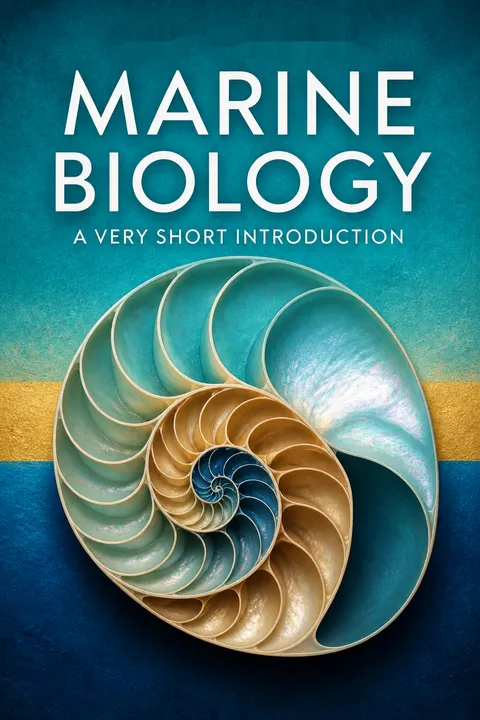
Marine Biology: A Very Short Introduction is widely praised for its comprehensive overview of marine ecosystems, biodiversity, and environmental challenges. Readers appreciate the book's accessible writing style, informative content, and systematic approach to covering various aspects of marine life. Many find it an excellent introduction to the subject, highlighting its ability to pack a wealth of information into a concise format. The book is commended for raising awareness about human impacts on oceans and inspiring further interest in marine biology.
People Also Read




Glossary
Microbial loop
Microbes recycling ocean foodA pathway through which dissolved and particulate organic matter is consumed by marine bacteria and archaea, which are then eaten by small protists and passed to larger plankton and animals. It connects microscopic producers and decomposers to the larger marine food web, especially in waters where tiny microbes cannot be eaten directly by large zooplankton.
Viral loop
Viruses recycling microbial matterThe rapid cycle in which viruses infect marine microbes, causing host cells to break apart and release dissolved and particulate organic matter. Other bacteria and archaea consume this material, and some are infected in turn. The cycle returns organic matter to microbial use rather than transferring all of it directly to larger consumers.
Thermohaline circulation
Deep circulation driven by densityLarge-scale movement of deep ocean water driven by density differences associated with temperature and salinity. In polar regions, cold, salty water becomes dense and sinks, then flows through ocean basins and eventually returns toward the surface. This circulation moves heat, oxygen, and nutrients around the planet over long timescales.
High nutrient-low chlorophyll
Nutrient-rich, low-growth ocean regionAn ocean region where nutrients such as nitrogen and phosphorus are abundant but phytoplankton growth remains low because another essential factor, often iron, is scarce. The low chlorophyll reflects the limited abundance of photosynthetic organisms. The book discusses these regions in connection with proposed, but ecologically uncertain, iron fertilization.
Keystone species
Species with outsized ecosystem influenceA species whose effect on the structure of an ecological community is disproportionately large compared with its abundance. In kelp forests, sea otters can act as keystone species by eating sea urchins and limiting their grazing. If otters disappear, urchins may multiply and transform kelp forests into less diverse barren grounds.
Ocean acidification
Seawater chemistry altered by carbon dioxideThe decline in seawater pH caused when the ocean absorbs carbon dioxide and its chemistry shifts toward greater acidity. The change reduces the availability of carbonate ions used by corals, shellfish, and other organisms to build calcium carbonate structures. Acidification can slow growth, weaken structures, and increase vulnerability to other stresses.
Marine snow
Sinking organic particlesSmall particles and aggregates of organic matter that sink from sunlit waters toward the deep ocean. They include dead plankton, fragments of organisms, and faecal material. Marine snow supplies much of the food for deep-water animals and seafloor communities, although microbes consume a substantial share as it descends.
Marine protected area
Ocean area with managed protectionsA defined part of the ocean managed to protect habitats, species, or ecological processes. No-take marine protected areas prohibit harvesting, allowing animals to grow and reproduce with less fishing pressure. Their benefits depend on effective management and enforcement, and they cannot by themselves prevent climate change or pollution that crosses their boundaries.
Deep Scattering Layer
Sonar reflection from migrating animalsA layer detected by ship sonar when large numbers of marine animals gather at particular depths and reflect sound waves. Many organisms that contribute to it migrate toward surface waters at night and descend during daylight. The layer is a visible acoustic trace of a vast daily movement through the ocean.
FAQ
What is "Marine Biology: A Very Short Introduction" by Philip V. Mladenov about?
- Comprehensive overview: The book provides a concise yet comprehensive introduction to marine biology, covering the oceanic environment, marine life, and the processes that sustain ocean ecosystems.
- Human impact focus: It emphasizes the profound changes humans have brought to the oceans, especially in the Anthropocene era, and discusses the urgent need for sustainable management.
- Structure and scope: The book is organized into chapters that explore ocean environments, biological processes, coastal and deep-sea life, polar and tropical systems, food resources, and the future of the oceans.
- Accessible for all: Written for a general audience, it aims to make marine biology accessible, engaging, and relevant to both students and curious readers.
Why should I read "Marine Biology: A Very Short Introduction" by Philip V. Mladenov?
- Essential for understanding oceans: The book explains why healthy oceans are vital for human survival, climate stability, and biodiversity.
- Up-to-date science: It incorporates the latest research and discoveries in marine biology, including the impacts of climate change and ocean acidification.
- Actionable knowledge: Readers gain insight into the challenges facing marine ecosystems and the actions needed for their protection and restoration.
- Broad appeal: Whether you are a student, educator, policymaker, or ocean enthusiast, the book offers valuable perspectives on the state and future of our oceans.
What are the key takeaways from "Marine Biology: A Very Short Introduction"?
- Oceans are critical: Oceans cover 71% of Earth’s surface, produce half the oxygen we breathe, and regulate climate.
- Human impacts are severe: Overfishing, pollution, habitat destruction, and climate change are rapidly degrading marine ecosystems.
- Marine biodiversity is immense: From microbes to whales, the diversity and adaptations of marine life are extraordinary and essential for ecosystem function.
- Urgent need for action: Sustainable management, marine protected areas, and global cooperation are crucial to restore and protect ocean health for future generations.
How does "Marine Biology: A Very Short Introduction" define and explain the oceanic environment?
- Structure of the oceans: The book details the physical structure of the global ocean, including continental shelves, slopes, abyssal plains, ridges, and trenches.
- Key environmental factors: It explains the importance of salinity, temperature, light, pressure, oxygen, and pH in shaping marine habitats.
- Ocean circulation: Surface currents, gyres, and deep thermohaline circulation (like the Great Ocean Conveyor Belt) are described as drivers of nutrient and heat distribution.
- Human-induced changes: The text highlights how climate change is warming oceans, altering currents, and causing acidification, with significant biological consequences.
What are the main marine biological processes discussed in "Marine Biology: A Very Short Introduction"?
- Microbial dominance: Marine microbes (bacteria, archaea, protists, viruses) are the foundation of oceanic food webs and account for most marine biomass.
- Primary production: Phytoplankton, especially cyanobacteria like Prochlorococcus, drive half of global primary production through photosynthesis.
- Nutrient cycling: The book covers how nutrients like nitrogen, phosphorus, and iron limit or enhance productivity, and discusses phenomena like upwelling and the microbial loop.
- Energy flow: It explains classic and microbial food chains, energy transfer efficiencies, and the unique inverted biomass pyramid of marine systems.
How does "Marine Biology: A Very Short Introduction" describe life in the coastal ocean?
- Diverse habitats: Coastal zones include kelp beds, seagrass meadows, soft-bottom communities, and are among the most productive and biodiverse marine areas.
- Human pressures: Coastal regions face intense impacts from pollution, eutrophication, overfishing, habitat destruction, and invasive species.
- Ecological roles: The book details the importance of keystone species (like sea otters in kelp forests) and the cascading effects of their loss.
- Conservation challenges: It discusses the decline of habitats like seagrass meadows and mangroves, and the need for better management and restoration.
What are the unique features of polar marine biology according to "Marine Biology: A Very Short Introduction"?
- Arctic vs. Antarctic: The Arctic Ocean is landlocked with extensive sea ice and river input, while the Southern Ocean is open, nutrient-rich, and surrounds Antarctica.
- Sea ice ecosystems: Both regions have complex microbial and animal communities living in and under sea ice, supporting unique food webs.
- Keystone species: Antarctic krill and Arctic cod are central to their respective food webs, supporting whales, seals, penguins, and polar bears.
- Climate change impacts: Rapid warming is reducing sea ice, altering productivity, and threatening iconic species and ecosystem stability.
How does "Marine Biology: A Very Short Introduction" explain coral reefs and tropical marine life?
- Coral reef structure: The book explains the biology of reef-building corals, their symbiosis with zooxanthellae, and the formation of atolls, fringing, and barrier reefs.
- Biodiversity hotspots: Coral reefs are described as the "rainforests of the ocean," supporting a quarter to a third of all marine species.
- Threats and resilience: Overfishing, pollution, disease, and especially climate change (bleaching and acidification) are causing rapid reef decline.
- Conservation strategies: The text discusses emerging approaches like identifying climate refugia, assisted gene flow, and active restoration to save coral reefs.
What does "Marine Biology: A Very Short Introduction" reveal about deep-ocean biology?
- Vast, unexplored habitat: The deep ocean (below 500m) makes up 90% of ocean volume but is the least studied environment on Earth.
- Extreme adaptations: Deep-sea organisms have evolved to survive high pressure, cold, darkness, and scarce food, with features like bioluminescence and unique reproductive strategies.
- Chemosynthetic communities: Hydrothermal vents and cold seeps support life based on chemical energy, not sunlight, with remarkable symbioses (e.g., tube worms and bacteria).
- Human impacts: Deep-sea fisheries and potential mining threaten fragile, slow-growing communities like seamount corals and long-lived fish.
How does "Marine Biology: A Very Short Introduction" address food from the oceans and fisheries management?
- Historical overexploitation: The book traces the long history of overfishing, showing that many stocks have been depleted for centuries.
- Modern fishing methods: It explains the impacts of trawling, longlining, and bycatch on marine ecosystems and non-target species.
- Sustainability limits: Global catches have plateaued or declined, with most stocks fully exploited or overfished, and little room for increased wild harvest.
- Solutions: The text advocates for marine protected areas, improved management, consumer awareness, and the role of aquaculture in meeting future food needs.
What future scenarios and solutions for ocean health are proposed in "Marine Biology: A Very Short Introduction"?
- End of wilderness: The book argues that true marine wilderness is nearly gone, with human impacts now global and pervasive.
- Vision for 2050: It outlines a hopeful scenario where international cooperation, better governance, reduced pollution, and expanded marine protected areas restore ocean health.
- Technological advances: Real-time monitoring, improved fisheries management, and new restoration techniques (like gene editing for corals) are highlighted.
- Societal change: The author stresses the importance of public engagement, education, and political will to drive the necessary changes for ocean recovery.
What are the best quotes from "Marine Biology: A Very Short Introduction" by Philip V. Mladenov and what do they mean?
- “How inappropriate to call this planet Earth, when clearly it is Ocean.” — Arthur C. Clarke, quoted to emphasize the dominance and importance of oceans on our planet.
- “The value of healthy, intact ocean ecosystems is thus incalculable—life on Earth as we know it would not exist without them.” — Highlights the essential, irreplaceable services oceans provide to humanity and all life.
- “The challenge for humans now is to find ways to stabilize and prevent the further degradation of marine ecosystems and embark on a path of ocean restoration.” — Calls for urgent action and a shift from conservation to active restoration.
- “The actions humans take in the next few decades will decide the outcome.” — Stresses the critical window of opportunity for reversing ocean decline and ensuring a sustainable future.
Very Short Introductions Series Series















Download PDF
Download EPUB
.epub digital book format is ideal for reading ebooks on phones, tablets, and e-readers.








