

Key Takeaways
Understand why the Koran is scripture, not simply a classic
A text with authority. Michael Cook begins by distinguishing an important kind of book: a text a culture preserves because its words carry exceptional authority. The Koran is central to Muslim religious life and to the civilization that grew around Islam. It is a defined collection of 114 sūras, revealed in Arabic and understood by Muslims as God’s speech, not merely a human work about God. Its status is intensified by doctrines that it cannot be imitated and, for most Sunnīs, is uncreated.
A compact, living canon. Compared with the sprawling and sometimes disputed collections of other major traditions, the Koran is a remarkably bounded book. Its authority is not only historical. It remains a shared reference for Muslim communities across languages and continents, and its recitation and interpretation continue to shape daily life.
What's striking is that scripture here functions as both a text and a social bond. A shared canon gives dispersed communities a common religious vocabulary, while the belief that its words are divine makes that bond unusually demanding: interpretation cannot simply treat the text as a human artifact without changing what the text is understood to be. This distinction helps explain why debates about translation or historical analysis carry more than academic stakes. It also cautions against treating the Koran as interchangeable with a classic whose cultural prestige does not depend on divine authorship.
Read the Straight Path as faith, conduct, and dependence on God
A moral map. The opening sūra, the Fātiḥa, asks God for guidance along the Straight Path. The phrase names the right way of living as the Koran presents it, under the care and judgment of the one God. The opening prayer sets out a stark contrast between those who receive blessing and those who go astray, while also asking for help rather than assuming that anyone is already safe.
Belief becomes behavior. The Koran associates being on the right side of God with belief, prayer, charity, good deeds, and worshipping God alone. Yet people can repent and return to the path, and divine guidance arrives publicly through messengers and scripture. A tension remains: some passages present people as responsible for their choices, while others say God guides or misguides whom He wills. Cook notes that the Koran does not resolve this as a theological system would.
The opening prayer works like a compact moral orientation: it joins what a person believes, what that person does, and the recognition that guidance is not entirely self-generated. That combination resists two easy readings, morality as mere rule-following and faith as private feeling. The tension around divine choice and human responsibility is also instructive. A sacred text can preserve claims that remain difficult to reconcile instead of presenting a frictionless theory. Readers should distinguish that unresolved tension from a simple contradiction, while still acknowledging the ethical question it raises.
Mass distribution unified recitation while sharpening the Arabic-language divide
Technology widened access. Before printing, producing a Koran meant copying a long text by hand. Printing reached the Muslim world slowly, but in the twentieth century it transformed availability. The Egyptian edition prepared in 1924 became a widely reissued standard; recordings and, later, digital access also made recitation available beyond the place where it was performed. More literacy and school exposure helped believers encounter the text directly.
Access brought uniformity. A small number of influential presses and prestigious reciters displaced some local variation. Yet Arabic remains the Koran’s language, while most Muslims speak other languages. Translation can explain the Arabic, but Cook describes strong resistance to treating a translation as scripture’s replacement. Modern communication therefore creates a tension: the words travel farther and sound more alike, but many believers still need to cross a language barrier to understand them.
The pattern is familiar from the history of communication: technologies that increase access can also concentrate authority in standard editions and prominent voices. Here that trade-off is especially consequential because pronunciation, language, and divine status are intertwined. Wider circulation can strengthen shared practice without guaranteeing shared comprehension. The distinction between a translation as aid and a translation as replacement is therefore not a minor publishing preference; it marks competing answers to what makes scripture scripture. Cook's account also suggests that local variation is not simply lost, but placed under pressure from institutions with greater reach.
Watch modern values steer interpretation, even when interpreters claim fidelity
Commentary has its own moment. Cook compares traditional interpretation with modern readings shaped by science, religious tolerance, and women’s equality. When the Koran describes Sabbath-breakers becoming apes, modernist commentators such as Muḥammad ‘Abduh and Rashīd Riḍā favor a metaphorical reading that fits a more regular, scientific picture of nature. Other interpreters insist that the passage means what it says.
Disagreement is selective. The verse often called the no-compulsion verse can be presented as support for broad tolerance, while other passages prescribe fighting or conditional toleration. A verse assigning husbands authority over wives has likewise drawn efforts to limit its reach, even among commentators who retain male dominance. Cook’s point is not that all readings are arbitrary: interpreters work with inherited methods and sources, but modern concerns influence which possibilities they emphasize.
This account makes interpretation visible as a negotiation between inherited authority and present-day moral expectations. The same text can sustain different readings because commentators select among linguistic possibilities, earlier authorities, and other passages. That does not mean every interpretation is equally persuasive; it means the rules of interpretation and the pressures acting on interpreters both deserve scrutiny. A useful question is not simply whether a reading is modern, but whether it explains the text consistently or makes an exception only where contemporary discomfort is strongest.
See the Koran as a sacred object as well as divine message
The book itself matters. In much Jewish and Christian practice, scripture’s words are sacred while the physical copy is not necessarily a sacred object. Cook describes how many Muslims came to extend reverence to the Koranic codex itself. Observers recorded care not to place a copy below the waist or beneath other books, and Korans were commonly given a raised stand.
Reverence creates practical questions. Scholars debated whether a person in ritual impurity, or a non-Muslim, could touch the book; whether Koranic verses on coins could be handled; and how to dispose of a worn copy without treating it casually. Burying or securely storing old manuscripts were among the accepted solutions. These practices sometimes conflicted with the wish to circulate God’s words widely, as when coins bearing scripture passed through many hands.
The physical book shows how belief becomes material practice. Rules about touch, placement, and disposal make reverence observable, turning an abstract claim about divine speech into habits embedded in homes, schools, and markets. The resulting dilemmas are not merely quaint details: a tradition that wants scripture widely encountered must also decide how to protect its perceived sanctity. Cook’s examples reveal how religious communities manage that tension through practical distinctions, while also showing that reverence can produce rules whose application is difficult to keep consistent.
Track the text through manuscripts, memory, and competing readings
Transmission had several safeguards. The Koran was preserved through written copies, memorized recitation, and a large scholarly tradition that examined wording and pronunciation. Cook distinguishes the basic consonantal text from marks that guide reading. Early manuscripts could leave short vowels unstated; later systems added vocalization and other reading aids without treating them as part of the original consonantal skeleton.
Variation was real but bounded. Many recitation traditions circulated in the early centuries. In the tenth century, Ibn Mujāhid selected seven influential traditions for scholarly attention. Today, the reading known as Ḥafṣ from ‘Āṣim is dominant, although other readings survive. Differences can alter a vowel or nuance without changing the basic consonantal text. The result is neither perfect sameness at every level nor free textual change, but a tradition that preserved a stable core while recording accepted variation.
This is a useful model for thinking about textual stability: preservation need not mean that every reader, manuscript, and performance is identical. A community can maintain a recognizable text by combining redundancy, oral expertise, and scholarly comparison. At the same time, the survival of multiple readings complicates simplistic claims that there has only ever been one form in every detail. Cook’s distinction between the stable consonantal base and variation in recitation helps keep two questions separate: what wording a community recognizes, and how that wording is voiced.
Hear recitation as worship, disciplined sound, and public performance
The Koran is recited in prayer. In the five daily prayers, worshippers recite the Fātiḥa and another passage while standing. The Koran’s role in formal worship is limited in length but essential. Memorization is highly valued, and recitation also appears in settings beyond prayer, from personal devotion to gatherings where trained reciters perform substantial portions of the text.
Sound has rules and artistry. Cook distinguishes tartīl, a measured style suited to prayer and instruction, from tajwīd, the more elaborate performance associated with skilled reciters. Both involve careful pronunciation, but tajwīd gives greater scope to melody and emotional force. Audiences may respond audibly or weep. Scholars have debated when musical embellishment crosses a line, reflecting a persistent distinction between honoring the words through beautiful recitation and turning scripture into entertainment.
Recitation makes the Koran an event, not just an object of study. Its sound links memory, bodily discipline, and collective attention, while the contrast between measured reading and artistic performance shows that devotion has aesthetic dimensions without being reducible to them. This also helps explain why recordings matter: they transmit not only wording but a model of how the text should sound. The question of when artistry becomes excess is a broader problem for ritual performance, where emotional impact can deepen attention but can also compete with the message.
A standard Koran emerged quickly, but its collection history remains contested
The standard text is linked to ‘Uthmān. Muslim tradition says the Caliph ‘Uthmān ordered a standard copy made around 650, distributed copies to major centers, and suppressed competing versions. This text is called the Uthmānic codex. The account fits the striking uniformity of the Koran that Muslims use today, but reports disagree about what ‘Uthmān actually received and how much collecting remained to be done.
The evidence complicates the story. Accounts also credit earlier caliphs, Abū Bakr and ‘Umar, with collecting the revelation, and describe materials gathered from scattered sources. Early quotations, inscriptions, and manuscript fragments preserve differences that suggest the text was not immediately uniform everywhere. Cook’s careful conclusion is that the early Islamic state helped establish a canonical text unusually rapidly, while the precise path from revelation to standard codex cannot be reconstructed with confidence.
The distinction between a stable surviving text and a fully known origin story is essential. Institutional authority can explain how a standard becomes dominant without proving every detail of the narrative that legitimizes it. Conversely, evidence of early variation does not by itself establish that the received text is unreliable. Cook models a productive historical stance: separate what the sources strongly support, such as rapid standardization, from what they leave disputed, such as the stages of collection. That discipline is valuable wherever communities remember the formation of their foundational texts.
Treat textual gaps as clues, not invitations to invent certainty
The Koran often alludes rather than narrates. It invokes familiar people and events without supplying a complete story. In the account of Sabbath-breaking, for example, the Koran leaves key actions unstated; later commentators fill the gaps with detailed scenes. Such explanations may illuminate how readers understood the passage, but they are not details supplied by the text itself.
Roughness preserves evidence. The Koran also contains obscure terms, repeated stories with meaningful differences, and passages whose grammar shifts unexpectedly. Cook argues that the final editors appear not to have smoothed every rough edge. These features can help historians ask how material developed, but they do not yield easy answers. The Koran offers too few biographical details to reconstruct Muḥammad’s life by itself, so historians must distinguish textual evidence from the later traditions used to explain it.
The gap between a text and its commentary is analytically valuable. An explanation can be evidence for the concerns and assumptions of the community that produced it, even when it cannot establish what happened in the distant past. That distinction guards against two opposite errors: treating later narrative as if it were in the scripture, and dismissing commentary as irrelevant because it is not the original wording. The same method applies to any inherited text: preserve the difference between what the source says, what readers infer, and what history can independently support.
Analysis
Cook’s central achievement is to show that the Koran cannot be understood through a single lens. It is simultaneously a religious message, a fixed but historically formed text, a material object, a performed sound, and a source of authority for a civilization. Each aspect constrains the others. Belief in divine speech makes translation and historical criticism consequential; recitation and memorization reinforce textual continuity; state-backed standardization helps explain why a compact canon became widely shared; and commentary mediates the distance between an old text and new readers.
The book’s method is comparative without making the Koran merely an instance of a universal category. Comparisons with other scriptures clarify what is distinctive: the unusually direct claim to divine speech, the sanctity often attached to the codex, and the enduring centrality of Arabic. At the same time, Cook resists presenting tradition as static. Local recitation styles, variant readings, legal disagreements, and competing commentaries show a culture that preserves authority through active argument, not through the absence of disagreement.
The most consequential tension is between historical inquiry and confessional certainty. Cook treats both as intelligible positions, then identifies where evidence becomes firm and where it remains incomplete. That is a strength, although readers should remember the book’s date and scope. Its account of modern Muslim debates is a snapshot around the turn of the twenty-first century, not a final map of contemporary Islam. Its emphasis on text and scholarship also gives less space to the varied lived experiences of Muslim communities than a social history would. Still, the book offers a durable framework: ask what the text says, how communities preserve and interpret it, and what assumptions authorize each answer. The Koran’s influence emerges not from one of these dimensions alone, but from their interaction.
Review Summary
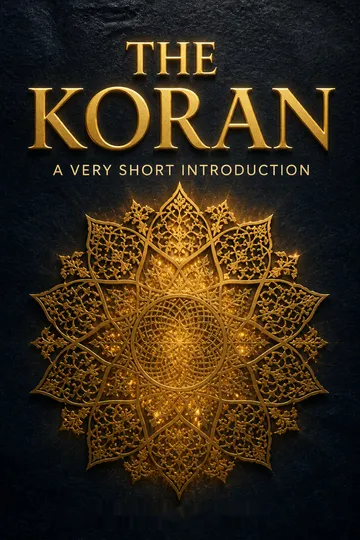
The Koran: A Very Short Introduction receives mixed reviews. Some praise its concise yet comprehensive coverage of the Quran's history, linguistics, and interpretation. Others criticize its focus on technical details rather than content. Readers appreciate Cook's scholarly approach but find the writing dry and sometimes difficult. The book is commended for its insights into Arabic language and Quranic recitation but criticized for lacking a clear summary of the Quran's teachings. Overall, it's seen as a valuable starting point for academic study, though perhaps not ideal for general readers seeking basic information.
People Also Read



Glossary
Fātiḥa
Opening prayer of the KoranThe Koran’s first sūra, whose name means opening. It praises God, identifies Him as merciful and as judge, and asks Him for help and guidance along the Straight Path. Muslims recite it in each unit of the five daily prayers, giving this short chapter a central place in worship.
Straight Path
The way of divine guidanceA recurring Koranic image for the way of life aligned with God. In the Fātiḥa, worshippers ask to be guided onto this path and distinguished from those who are lost or under divine anger. The image links belief, conduct, dependence on God, and the hope of a favorable judgment.
Uthmānic codex
Standard consonantal Koran textThe standard form of the Koran associated in Muslim tradition with the Caliph ‘Uthmān, who is said to have commissioned copies around 650 and sent them to provincial centers. The surviving standard text is remarkably uniform, though historical reports and early evidence indicate that other forms and readings circulated during the text’s formation.
Variant readings
Recognized recitation differencesDifferences in how passages of the Koran are read, often involving vowels, pronunciation, or small changes in wording. Early Muslim scholars recorded many traditions of recitation, and later scholarship gave special standing to seven selected traditions. Some variants affect nuance while leaving the underlying consonantal text unchanged.
abrogation
One verse superseding anotherAn interpretive principle according to which one Koranic ruling or statement can be treated as superseding another. Muslim scholars could use it to address apparent tensions between passages, such as different instructions concerning relations with non-Muslims. Because it can effectively limit a verse’s ongoing force, scholars often regarded it as a powerful device requiring caution.
tartīl
Measured, clear recitationA relatively plain and measured style of Koranic recitation associated especially with prayer and religious instruction. Its priorities include clear articulation and adherence to pronunciation rules. Cook contrasts it with tajwīd, a more musically elaborate performance style associated with professional reciters.
tajwīd
Elaborate Koranic recitationA skilled style of Koranic recitation combining precise pronunciation with melodic and emotional performance. Its sound is shaped by rules for articulating the text, while its musical phrasing allows substantial artistry. Cook describes it as especially associated with professional reciters and public performances.
Meccan and Medinan revelations
Two traditional revelation periodsA classification that associates Koranic passages with the period before Muḥammad’s move from Mecca to Medina in 622, or with the period after it. Meccan material is often characterized by short, urgent passages about God, judgment, and earlier communities; Medinan material more often includes extended instruction and communal norms. Scholars also assign individual passages within a sūra to different periods.
uncreated word of God
Eternal divine speechA major Sunnī theological doctrine that the Koran is God’s uncreated speech rather than something brought into existence. The doctrine became central after controversy in the ninth century, when caliphs attempted to impose the opposing view that the Koran was created. It underpins the Koran’s status as more than a human text.
FAQ
What's "The Koran: A Very Short Introduction" about?
- Overview of the Koran: The book provides a concise introduction to the Koran, exploring its role as the central religious text of Islam. It examines the Koran's historical context, its compilation, and its significance in Islamic culture.
- Scripture and Authority: It discusses the concept of scripture, comparing the Koran to other religious texts like the Bible and the Vedas, and highlights its unique status as the unaltered word of God in Islam.
- Cultural and Historical Context: The book delves into the historical and cultural backdrop of the Koran's revelation, including the life of the Prophet Muhammad and the early Islamic state.
- Modern Relevance: It also addresses the Koran's role in the modern world, including its interpretation, dissemination, and the challenges it faces in contemporary society.
Why should I read "The Koran: A Very Short Introduction"?
- Comprehensive Introduction: The book offers a thorough yet concise overview of the Koran, making it accessible to readers unfamiliar with Islamic texts.
- Cultural Insight: It provides valuable insights into the cultural and historical context of the Koran, enhancing understanding of its significance in Islamic civilization.
- Modern Relevance: The book discusses the Koran's role in the modern world, including its interpretation and the challenges it faces, making it relevant for contemporary readers.
- Comparative Analysis: It compares the Koran with other religious texts, offering a broader perspective on the concept of scripture and its role in different cultures.
What are the key takeaways of "The Koran: A Very Short Introduction"?
- Central Role of the Koran: The Koran is the central religious text of Islam, regarded as the literal word of God and a guide for all aspects of life.
- Historical Compilation: The Koran was compiled shortly after the death of the Prophet Muhammad, with the Caliph 'Uthman playing a key role in its standardization.
- Interpretation and Transmission: The book explores the various ways the Koran has been interpreted and transmitted over the centuries, highlighting the role of oral and written traditions.
- Modern Challenges: It addresses the challenges the Koran faces in the modern world, including issues of translation, interpretation, and its place in a globalized society.
How does Michael A. Cook define the concept of scripture in the book?
- Scripture as Authority: Cook defines scripture as a text that claims authority, often seen as sacred and central to a culture's identity.
- Preservation Methods: He discusses how societies preserve authoritative texts, whether through oral traditions or written forms, and the challenges involved.
- Comparative Perspective: The book compares the Koran with other scriptures like the Bible and the Vedas, highlighting differences in preservation and authority.
- Koran's Unique Status: Cook emphasizes the Koran's unique status as a scripture that is both oral and written, with a strong emphasis on its unaltered transmission.
What is the historical context of the Koran's revelation according to the book?
- Prophet Muhammad's Role: The Koran was revealed to the Prophet Muhammad in the early 7th century, primarily in Mecca and Medina, through the angel Gabriel.
- Arabian Peninsula: At the time, the Arabian Peninsula was a tribal society with a mix of polytheistic and monotheistic beliefs, setting the stage for Islam's emergence.
- Early Islamic State: Muhammad's success in Medina led to the establishment of an Islamic state, which played a crucial role in the Koran's dissemination and preservation.
- Cultural Interactions: The book also touches on the interactions between early Muslims and other religious communities, influencing the Koran's content and interpretation.
How was the Koran compiled and standardized?
- 'Uthman's Role: The Caliph 'Uthman is credited with standardizing the Koran around 650 CE, creating a single authoritative text to prevent divergent recitations.
- Collection Process: The compilation involved collecting various written and oral fragments of the Koran, with contributions from Muhammad's companions and scribes.
- Destruction of Variants: 'Uthman ordered the destruction of non-standardized versions to ensure uniformity, a move that solidified the Koran's text.
- Historical Challenges: Despite 'Uthman's efforts, some early variants persisted, and the book discusses the challenges of maintaining textual fidelity.
What are the main themes and messages of the Koran as discussed in the book?
- Monotheism and Guidance: The Koran emphasizes monotheism, the oneness of God, and provides guidance for moral and legal conduct.
- Prophetic Stories: It includes stories of past prophets, such as Moses and Jesus, to illustrate moral lessons and divine intervention.
- Judgment and Afterlife: The Koran frequently addresses themes of judgment, the afterlife, and the consequences of one's actions.
- Community and Law: It outlines the duties and responsibilities of the Muslim community, including social justice and legal principles.
How does the book address the interpretation of the Koran in the modern world?
- Modern Challenges: The book discusses the challenges of interpreting the Koran in a modern context, including issues of scientific compatibility and gender equality.
- Diverse Interpretations: It highlights the diversity of interpretations, from traditional to modernist and fundamentalist perspectives, reflecting varying cultural and historical influences.
- Role of Commentaries: Commentaries play a crucial role in interpreting the Koran, with modern commentators often grappling with contemporary values and issues.
- Global Influence: The book also examines the Koran's influence in a globalized world, including its role in shaping Islamic identity and its interaction with other cultures.
What are some of the linguistic and textual challenges of the Koran mentioned in the book?
- Obscure Words: The Koran contains words and phrases that remain obscure or ambiguous, posing challenges for translators and interpreters.
- Rhyme and Rhythm: Its use of rhyme and rhythm, while poetic, can complicate translation and interpretation, as these elements may not carry over into other languages.
- Variant Readings: The book discusses the existence of variant readings in early manuscripts, highlighting the complexities of textual transmission.
- Translation Issues: Translating the Koran is fraught with challenges, as it involves not only linguistic but also cultural and theological considerations.
How does the book compare the Koran to other religious texts?
- Scripture vs. Classic: The book distinguishes between scriptures like the Koran and classics like the Homeric epics, emphasizing the Koran's religious authority.
- Preservation and Authority: It compares the methods of preservation and the authority ascribed to the Koran with those of other texts like the Bible and the Vedas.
- Cultural Centrality: The Koran's centrality to Islamic culture is contrasted with the roles of other religious texts in their respective cultures.
- Unique Features: The book highlights the Koran's unique features, such as its compactness, late emergence, and status as the unaltered word of God.
What are the best quotes from "The Koran: A Very Short Introduction" and what do they mean?
- "The Koran is the Muslim scripture, that is to say the scripture of the followers of Islam." This quote underscores the Koran's central role in Islam, serving as the foundational text for the religion.
- "The Koran is as much a written text as the Bible." This highlights the Koran's dual nature as both an oral and written scripture, emphasizing its importance in Islamic tradition.
- "The Koran is a book sent down ‘to make everything clear’." This reflects the Koran's purpose as a guide for believers, providing clarity on moral, legal, and spiritual matters.
- "The Koran is the paradigmatic scripture, the word of God in the most immediate, uncompromising sense." This quote emphasizes the Koran's status as the ultimate scripture, embodying the direct word of God without human alteration.
How does the book address the dissemination of the Koran in the modern world?
- Printing and Technology: The book discusses the impact of modern technology, such as printing and the internet, on the dissemination of the Koran, making it more accessible than ever.
- Oral Tradition: Despite technological advances, the oral tradition of Koranic recitation remains strong, with modern media amplifying its reach.
- Educational Role: The Koran continues to play a central role in Islamic education, with many Muslims learning to recite and understand it from a young age.
- Cultural Homogenization: The book notes the trend towards cultural homogenization in Koranic recitation and interpretation, influenced by the global reach of modern media.
Very Short Introductions Series Series


Download PDF
Download EPUB
.epub digital book format is ideal for reading ebooks on phones, tablets, and e-readers.








